
Tigers Sniff the Rose (2026): When the Romance Plays the 'Reverse' Card | Dropped Drama Club
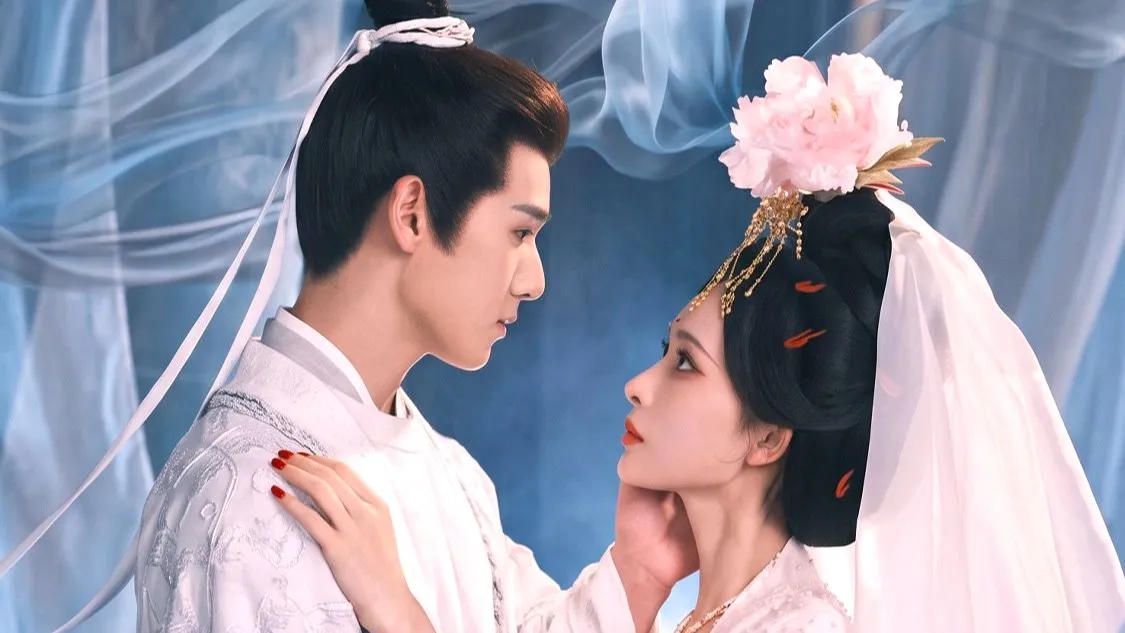
Tigers Sniff the Rose Poster - Courtesy of Tencent Video

|
DetailsRATING OF EPISODES WATCHED: (6/10)
NATIVE TITLE: 尚公主 - Shàng gōngzhǔ YEAR: 2026 TOTAL EPISODES: 40 WATCHED EPISODES: 16 DURATION: 45’ DIRECTOR: Qin Zhen SCREENWRITER: He Fang, Cao Ting Yue ORIGINAL CREATOR: Yi Ren Kui Kui (尚公主 - To Marry a Princess) ORIGINAL DISTRIBUTOR: Tencent Video STATUS: 🔴 (permanently dropped) |


Disclaimer: the opinions expressed in this review refer exclusively to the drama. As I have not read the original work, I cannot say with certainty whether the issues identified can be attributed to the screenplay or to the source material. For this reason, my comments on the writing should be understood as an assessment of the adaptation rather than a judgment on the original work.
IN A NUTSHELL
Short on time? Here you’ll find the quick verdict, including the drama’s main strengths, weaknesses, and key features to help you decide if it’s right for you. For a more in-depth analysis, continue with the No Spoiler Review.
- What to expect: Tigers Sniff the Rose is a historical drama that weaves political intrigue and romance into a tale centered on the fight against patriarchy. The series stands out for its refined visuals, evocative direction, and a flowing narrative pace, supported by numerous twists and turns. However, behind the convincing aesthetic lies a less solid script, which ultimately penalizes the complexity of the characters and the coherence of the narrative in favor of the relationships between the protagonists. Between excessively unbalanced relationships, repetitive romantic dynamics, and sometimes overly convenient narrative solutions, the result is a story with interesting potential, but hampered by a writing that seems to favor some aspects at the expense of others.
- Strengths: the interesting premise, the tension-filled plot twists, the polished visuals.
- Weaknesses: the political plot sacrificed for the sake of the romance, the overly archetypal characterisation, the romantic push and pull, the Forced plot developments.
- Who might still enjoy it: fans of Meng Ziyi and Li Yunrui, viewers who enjoy domineering female leads who mistreat their male counterparts, those who prefer strongly feminist narratives centred on the protagonists' love story, anyone who enjoys romantic moments sprinkled throughout the story, viewers who don't mind dramas where the protagonists frequently find themselves in seemingly inescapable situations.
Read on to find out which episode made me quit the drama.
Tigers Sniff the Rose seemed to have all the makings of a compelling political drama, but the narrative gradually lost credibility amid increasingly improbable plots, a cumbersome romance, and characters sacrificed to a rather schematic depiction of relationships between men and women.
Some aspects of the story received disproportionate attention to the detriment of others, inevitably exposing the script's weaknesses and prompting me to include this title in the Dropped Drama Club, Red Taotie's column of abandoned dramas.
Plot
On her return journey to the capital, the eccentric princess Mu Wanyao accidentally encounters the young rural scholar Yan Shang, unaware that their encounter will forever change both their lives.
Determined to overturn the balance of power that allows the tyrannical eunuch Yu Cheng'an to dominate the court, the two form an alliance that will lead Yan Shang to place third in the imperial examination and secure a position in the state administration, enabling him to reshape the empire's political structure.
Between personal ambitions, court rivalries, and a quietly growing romance, Mu Wanyao and Yan Shang will find themselves alone against the dangerous machinations of their enemies. Will they be able to focus on their goal even as their bond deepens?

THIS SECTION TAKES A CLOSER LOOK AT THE SCRIPT, CHARACTERS, CAST, AND TECHNICAL ASPECTS WITHOUT REVEALING MAJOR PLOT DEVELOPMENTS. FOR A COMPLETE ANALYSIS OF THE DRAMA, CONTINUE WITH THE SPOILER REVIEW.
Tigers Sniff the Rose Drama Review (No Spoilers)
Why I Started
Even though I promised myself I wouldn't watch any more historical romance dramas until the end of the year, I ended up giving in to the temptation to start Tigers Sniff the Rose. The pleasant surprises in store for me by Against the Current and A Prophet had indeed rekindled my optimism for the 2026 period drama season, giving me hope for some other noteworthy productions.
What piqued my interest was the return of the Meng Ziyi-Li Yunrui couple, whom I had greatly appreciated in Blossom: I was genuinely curious to see them together again and hoped their chemistry would work equally well.
Then there were expectations tied to the two actors: on the one hand, I hoped that the interlude of eccentric protagonists played by Meng Ziyi had definitively ended with Blossoms of Power; on the other, that Li Yunrui had finally played, this year, a character with a powerful presence and something interesting to say, capable of redeeming him from the bland presence in Rebirth.
In short, the conditions were there to give this drama all my faith, but perhaps I got too carried away by the return to the screen of a couple of actors I had loved very much and who, this time, did not receive particularly flattering roles.
Review of Episodes Watched
Tigers Sniff the Rose is a historical drama that focuses on female emancipation, but it does so through a rather schematic representation of relationships between men and women. The political plot and the love story both seem to be constructed to serve this narrative: women are systematically victims of a patriarchal society, and men are mostly oppressors, with the exception of Yan Shang, who embodies the positive male model through almost absolute subordination to the woman he loves. Even the questionable behavior of the female characters tends to find justification in the chauvinism of the society in which they live.
The narrative pace is quite fluid, and the story is not without its twists and turns, but these often end up replacing an organic progression of events. The screenplay frequently resorts to dramatic and dangerous situations to foster the relationship between the protagonists, offering Yan Shang new opportunities to demonstrate his loyalty and declare his devotion to Mu Wanyao. The result is that the romantic component ends up taking up considerable space, often to the detriment of the political plot.
The building of suspense suffers from this jerky plot progression. The protagonists tend to get themselves into complicated situations through rash decisions, and as the episodes progress, it becomes increasingly clear that they only manage to escape each time thanks to some script trick. The plans elaborated by the characters often seem excessively intricate and are revealed only when they succeed, without the viewer having had a chance to follow their logic. The script thus seems to confuse the right to keep the protagonists' intentions secret with the need to make the narrative progression understandable: not knowing what a character is planning can fuel curiosity, but not even knowing whether they actually have a plan risks undermining trust in the story.
The characterization of the protagonists is influenced by the story's profoundly feminist approach. Mu Wanyao is a nonconformist heroine, intolerant of impositions and openly hostile to men, but her often arrogant attitude and the way she relates to others seem primarily a way of flaunting the power that comes with her status, rather than the manifestation of a complex and multifaceted character. Yan Shang, for his part, is the perfect romantic hero: he puts himself completely at the service of the woman he loves, sacrifices himself for her, accepts her every decision without opposition, and never misses an opportunity to reaffirm his loyalty. This conception of the romantic relationship leaves little room for a genuine confrontation between two autonomous personalities.
The love story also follows a rather repetitive pattern, made up of constant comings and goings. When it seems the protagonists are finally overcoming their resistance, something pulls them back apart again, giving the impression that the dynamic is repeating itself without any real evolution.
The antagonists are more interesting, at least on paper, although I personally prefer stories in which adversaries must operate in the shadows, develop strategies, and move cunningly to gain power, rather than those in which villains can afford to act openly because no one seems to have the political strength to counter them.
Overall, Tigers Sniff the Rose is a story driven by a precise vision of relationships between men and women, but the rigidity of this approach ends up penalizing the complexity of the characters and the coherence of the narrative. The fluid pace and constant twists alone aren't enough to compensate for a screenplay that seems more interested in supporting its message than in building a story capable of standing on its own.
The cast's performances also left me with mixed feelings.
Meng Ziyi is cute, but her acting tends to emphasize every emotional moment, even those that would work better if left to the viewer to interpret. This pursuit of intensity, however, doesn't necessarily translate into greater expressive variety: wide eyes, furrowed brows, a more pronounced voice, and clearly recognizable expressions of pain or indignation clearly convey the emotion, but they don't necessarily lend it greater depth.
I appreciate Li Yunrui's acting more, as he works primarily by subtraction: he controls his expressions, measures his glances, and maintains a certain composure. It's a style that works very well with characters who need to convey self-control, intelligence, or restrained emotions. There's a risk, however: his characters always end up appearing too composed. Freer gestures, at times, could convey unexpected nuances and characterize them more humanly.
In this sense, I found Quan Yilun much more natural. Her gestures, reactions, and posture convey the spontaneity of someone experiencing what's happening to her, rather than that of an actor simply communicating the character's feelings to the viewer. This is why I found it much easier to warm to Liu Wenji than to Yan Shang.
I also appreciated the cool, measured performances of Yu Ai Lei as the tyrannical eunuch Yu Cheng'an and Wang Zi Rui as his cunning advisor, as well as Zhang Shu Lun, whose spontaneity brought a touch of humanity to Mu Wanyao's bodyguard. I also found Shen Jia Yu convincing as Mu Wanyao's naive maid, especially in her initial characterization.
Visually, Tigers Sniff the Rose stands out for its remarkably meticulous production. The direction appears professional, with never banal shots and frequent use of drone footage, particularly evocative in the opening sequences, where natural landscapes take center stage. The cinematography is also solid: the colors are vibrant, as expected from a production set in the Tang Dynasty, but without being overbearing, while the soft lighting avoids the overexposed effect that characterizes some period productions.
The sets are equally convincing: the interiors are exceptionally refined and sumptuous in the noble palaces, yet rustic and believable in the peasant homes. The exterior shots create realistic and immersive landscapes, helping to give depth to the settings.
The work on the costumes, hair and makeup is also excellent, recreating the eccentricity of the Tang aesthetic without indulging in excess: the clothes are rich and colorful, yet always refined and appropriate, while the hairstyles, showy and elaborate, maintain a remarkable balance.
The soundtrack of Tigers Sniff the Rose draws heavily from the now consolidated repertoire of historical period romances: slow rhythms, Western-style strings, and the inevitable forays into traditional Eastern instruments, just to remind us that we are still in Asia. All this to appropriately accompany the numerous moments of angst: sighs, melancholy, yearning, and tragedy all have their own musical undertones, each calibrated to the appropriate degree of suffering. The only song that attempts to stand out is 同风起 (Rise with the Wind), an epic ballad complete with electric guitar solos, which, however, fails to truly depart from the genre's conventions.

WARNING!
SPOILERS AHEAD. IN THIS SECTION I GIVE MY PERSONAL OPINION ON THE DRAMA AND SPECIFICALLY ANALYZE SOME ASPECTS OF THE SERIES. DO NOT CONTINUE IF YOU DON’T WANT TO KNOW ALL THE DETAILS OF THE DRAMA
Tigers Sniff the Rose Drama Review (Spoilers)
Breaking Point
My intolerance for Tigers Sniff the Rose peaked between the fifth and sixteenth episodes, when Chun Hua is raped, becomes pregnant, and attempts to terminate the pregnancy by taking mercury, potentially jeopardizing her health in order to rid herself of that unwanted child.
What particularly perplexed me was the way the screenplay used this story, primarily to delve into Mu Wanyao's past: when she was married to a regional military governor for political reasons, she too found herself pregnant by a man she hated, and in an attempt to rid herself of that child and that marriage at all costs, she resorted to the same method.
The choice to have Chun Hua undergo a traumatic experience so similar to the one Mu Wanyao had already faced could have offered an interesting starting point for exploring how different women react to similar experiences. The screenplay, however, seems to use the tragedy of a secondary character close to the protagonist primarily to focus attention on the latter and the extraordinary determination with which she managed to overcome a similar experience.
Added to this is a second aspect: the rape suffered by Chun Hua and the resulting pregnancy seem also constructed to serve the subsequent development of the political plot, namely, making that child the heir to the throne and allowing Mu Wanyao to assume the regency of the country. Consequently, Chun Hua's suffering ends up being subordinated to the needs of another character's story: rather than becoming an opportunity to delve deeper into her experience, her will, and the consequences of the rape she suffered, it becomes primarily a tool to exalt Mu Wanyao's qualities and advance her story.
The problem, therefore, is not the comparison between the two experiences, but the hierarchy the narrative ultimately constructs between their respective sufferings. Chun Hua becomes the point of comparison through which to reaffirm Mu Wanyao's centrality, while her own tragedy seems to progressively lose importance, to the point where her only option is to accept marriage to her rapist, lacking the same resilience and determination as her mistress. And it is here that a particularly difficult-to-ignore contradiction emerges: a story that seeks to denounce women's condition of subjugation ends up using the body and pain of a secondary female character as a tool to exalt the protagonist.
Chun Hua's story thus becomes emblematic of a more general limitation of the writing in Tigers Sniff the Rose: in attempting to narrate female emancipation, the series seems more interested in women who succeed in asserting themselves and gaining power than in those who remain in a subordinate position, ultimately denying them the ability to exercise their own will and maintain their autonomy. A contradiction that, in my case, ultimately compromised my engagement with the story.
Why I Dropped It
The Chun Hua episode made me realize that, although patriarchy and the extreme precariousness of women's status in contemporary society are central themes of Tigers Sniff the Rose, they also represent one of the screenplay's weaknesses.
On the one hand, we have men who exercise power over women, influencing their fates and treating them as little more than tools for their own interests; on the other, we have Yan Shang, who seems to exist primarily to demonstrate that a different kind of man is possible. The fact is that, to construct this positive exception, the writers gradually stripped the character of autonomy, pride, ambition, and even the ability to oppose Mu Wanyao.
The result is a rather artificial juxtaposition: men are generally oppressors, women are oppressed, while Yan Shang represents the ideal male model because he is willing to put himself completely at the service of the woman he loves. Other men, however, even when positively characterized, like Liu Wenji, end up revealing a weakness, an ambition, or a personal goal that conflicts with the women's interests. Yan Shang, on the other hand, forgoes any form of autonomy that might conflict with the protagonist. To demonstrate his difference from the others, the screenplay ends up constructing a protagonist who is not necessarily more emancipated, but simply subordinate. An equal relationship, however, does not require a man to give up his own autonomy to respect a woman's, nor to become her servant to recognize her strength. Mudan and Jiang Chang Yang, in Flourished Peony, demonstrate how much more compelling it can be to tell the story of two strong people who choose and support each other without mutually canceling each other out.
This simplification of relationships between men and women is also reflected in Mu Wanyao's characterization. Her painful past seems to become an almost universal justification for her behavior, including her tyrannical behavior toward Yan Shang. She continues to keep him at a distance, initially out of distrust and later to avoid being distracted by her feelings, preferring to focus on revenge. Having a traumatic past can certainly influence the way a person approaches relationships, but it shouldn't become a preemptive solution for everything. In Tigers Sniff the Rose, Mu Wanyao's traumas seem to justify everything.
This is also evident in the way Yan Shang interprets her desire not to marry and have children, tracing it back to the trauma of her previous pregnancy and subsequent abortion. His respect for this decision thus seems to stem more from an understanding of the woman's past suffering than from a recognition of her autonomy. And this is a problem: female autonomy shouldn't be a concession motivated by the wounds she's suffered, but a prerequisite for the relationship.
The comparison with The Legend of Zhouhua is illuminating: there, the male protagonist's respect for the ambitions of the woman he loves doesn't need to be justified by a previous tragedy; it's simply part of his way of loving her. If the message of Tigers Sniff the Rose is that love transcends social conventions, why does the screenplay feel the need to justify the acceptance of Mu Wanyao's choices through her painful past? Shouldn't it be enough for Yan Shang to love her to respect them? Paradoxically, the protagonist's trauma thus ends up taking on an almost normative value: it is her suffering that makes it understandable and acceptable for the man she loves to refuse to marry her.
This dynamic also ends up having repercussions on the narrative balance: the constant push and pull between Mu Wanyao and Yan Shang occupies such a significant portion of the story that it relegates political revenge to the background. The plots and strategies thus end up proceeding more through a succession of twists and turns than through true narrative evolution. In Tigers Sniff the Rose, the danger seems to arise primarily from the reckless decisions of the protagonists themselves, who end up getting themselves into increasingly difficult situations. At that point, the viewer's question is no longer "How will they get out of this?" but "How will the writers get them out of trouble this time?" After repeatedly witnessing seemingly hopeless situations, one ends up expecting the solution to come through a deus ex machina or a Machiavellian plan whose success seems already decreed by the script.
The difference compared to productions like Legend of Zang Hai and Against the Current is clear: in these dramas, the danger arises from the circumstances, the adversaries, and the obstacles the protagonists face, and the viewer wants to find out how they will overcome them. In Tigers Sniff the Rose, however, we end up looking more at the script than the story, gradually losing faith in the protagonists: not because they make mistakes, which are an integral part of any story, but because their actions no longer seem to follow a credible strategic logic. And that's not exactly a compliment for a drama based on political intrigue.
I believe the fundamental problem with Tigers Sniff the Rose is precisely this: the authors seem to have sacrificed the complexity of the characters and the coherence of the events to advance a specific idea of female emancipation. But when the characters cease to be people and become arguments to support a thesis, the narrative inevitably suffers. Female discrimination can and must be narrated, even with all the harshness that historical reconstruction requires. But women should not be reduced to their own suffering, just as men should not all be oppressors, with the exception of a male protagonist transformed into a model of absolute devotion. Female emancipation does not coincide with the reversal of relationships of subordination, nor should a woman's strength be measured by her ability to not need anyone. And above all, female suffering should not become the only means through which a screenplay demonstrates its social sensitivity.

Characters and Cast
Primary Characters
Mu Wanyao (Meng Ziyi) Princess Danyang and the Emperor's favorite daughter. After rising to power with the eunuch Yu Cheng'an, she was married to the military governor of the Beijing military garrison, but she managed to free herself from her husband and return to court. To free the country from Yu Cheng'an's tyrannical rule, she decides to ally herself with the scholar Yan Shang, whom she meets by chance in the countryside of Santu County, and together they manage to restore imperial power.
Yan Shang/Er Lang/Su Chen (Li Yunrui) is a young scholar who took refuge in the countryside with his family after the outbreak of the Rebellion of the Seven Regional Military Governors. Having lost his mother and younger brother to the Shence Army, which intervened to quell the revolt, he decided to take revenge, but his humble position had always prevented him from doing so. Taking advantage of his meeting with Mu Wanyao, he had reached the capital and killed his enemy, but once there he had decided to stay to help the princess on her perilous journey to restore imperial power.
Supporting Characters
Yan Family
Xie Jing Hui (Xu Bai Hui) Yan Shang's late mother. She was killed by Zhang Ren Jing ten years earlier during the suppression of the Rebellion of the Seven Regional Military Governors.
Yan Zhan Zhi (Gong Lei) Yan Shang's father. He is a renowned scholar who fled the capital ten years earlier with his family during the Rebellion of the Seven Regional Military Governors and was paralyzed by the Shence Army.
Yan Da Lang (Ji Ling Chen) Yan Shang's older brother. He was injured during his mother's murder and his brain was damaged.
Yan Xiao Zhou (Pei Jia Xin) Yan Shang's younger sister.
Imperial Court
Mu Yu (Liu Jun) Emperor and father of Mu Wanyao.
Li Ying (Pang Yang) Late Empress and mother of Mu Wanyao.
Mu Ning Shuang (Myolie Wu) Grand Princess Luling and paternal aunt of Mu Wanyao. She is a long-widowed woman and, thanks to her old friendship with Yu Cheng'an, enjoys great freedom, so much so that she regularly surrounds herself with talented young men, whom she lavishes with money and recommendations.
Mu Xun (Xu Hai Qiao) Crown Prince and older brother of Mu Wanyao.
Yu Niang (He Ziyi) advisor to the Crown Prince.
Mu Ti (Wu Bi) Prince Jin, brother of Mu Xun and Mu Wanyao. He becomes infatuated with Chun Hua and manages to win her hand by bribing her relatives.
Liang Lingyi (Zhang Yue) consort of Prince Jin and sister-in-law of Mu Wanyao. She has not yet managed to bear Mu Ti a son, and her position is threatened by the arrival of Chun Hua.
Yu Cheng'an (Yu Ai Lei) eunuch, Duke of the State Zhao, Grand General of the Swift Cavalry (骠骑大将军) and Commissioner for the Supervision, Pacification, and Management of Military Operations (观军容宣慰处置使) of the Shence Army. Thanks to his decisive intervention during the Rebellion of the Seven Regional Military Governors, he gained unparalleled political power, so much so that he effectively ruled the empire.
Wei Qiao (Wang Zi Rui) Yu Cheng'an's advisor and Wei Shu's cousin.
Yu Xian Yao (Huang Sheng Chi) Yu Cheng'an's sadistic adopted son.
Zheng Xing (Cui Zhi Gang) eunuch, palace attendant and Yu Cheng'an's godson. He is responsible for the expropriation of peasant lands around the capital and is therefore greatly hated by the people.
Imperial Academy
Wei Shu (Li Xiao Qian) young master from a cadet branch of the Wei family and a protégé of Li Zhi, who wishes to marry him to Mu Wanyao. He is a brilliant young scholar and wins first place in the Imperial Examination.
Feng Xian Yu (Yan Zi Dong) student at the Imperial Academy who befriends Yan Shang and Wei Shu. To secure a place on the Imperial Examination list, he enters the service of Grand Princess Luling, but the position he receives is Yan Shang's, and Yan Shang doesn't let him get away with it.
Cao Miao Zhen (Sun Xiao Han) Feng Xian Yu's ailing wife. She conveniently dies just as he enters the service of Grand Princess Luling.
Feng Guiniang Feng Xian Yu's daughter. She is sent back to her hometown by her father while he enters the service of Grand Princess Luling.
Other Characters
Chun Hua (Shen Jia Yu) Mu Wanyao's personal maid. She becomes pregnant by Prince Jin and is forced to marry him.
Fang Tong (Zhang Shu Lun) Mu Wanyao's bodyguard.
Li Zhi (Ma Wen Zhong) Mu Wanyao's maternal uncle and deputy division director of the Ministry of Rites (礼部员外郎). He tries to convince Mu Wanyao to enter into a marriage of convenience so he can enter Yu Cheng'an's circle. To prevent this, Mu Wanyao tricks Wei Qiao and has him transferred to the remote province of Qiongzhou.
Liu Wenji (Quan Yilun) student at the Lingnan School, the son of a minor local official and a friend of Yan Shang. He falls in love at first sight with Chun Hua.
Liu Huaiyan (Hou Chang Rong) former chancellor and friend of the Emperor. He is favorably impressed by Yan Shang and decides to use his skills to fight corruption at court.
Yang Si (Wu Han Kun) third young lord of the Yang family and a fellow student of Mu Xun. He fights in the army, but Mu Xun calls him back to Sheng'an in the hope of marrying Mu Wanyao and assigns him to the post of judicial auditor at the Court of Judicial Review (大理寺评事).
Zhao Ling Fei (Bai Bing Ke) General Zhao's only daughter and Yang Si's cousin.
Zhang Ren Jing (Sha Bao Liang) Captain of the Shence Army. He is the murderer of Yan Shang's mother and, during a fight with her, was injured in the eye.
Meng Baiyu (Shao Feng) Military governor of the Beijing Military Garrison (中鎮節度使) and Mu Wanyao's deceased husband.
Meng Zaizhi (Tang Xiao Tian) son of Meng Bai Yu and new Military governor of the Beijing Military Garrison.
Recommended
Thank you for reading all the way to the end!
I hope you enjoyed this article and found it helpful.
🈷️ Did you come across a term you weren't familiar with? Check out my Chinese Historical Drama Glossary, where you'll find explanations of official titles, government institutions, religion, myths, and many other aspects of Chinese culture.
☕ If you enjoy my content and would like to support Red Taotie, you can buy me a coffee on Ko-fi. Every contribution helps me continue creating reviews and in-depth articles.