
Chinese Historical Drama Glossary
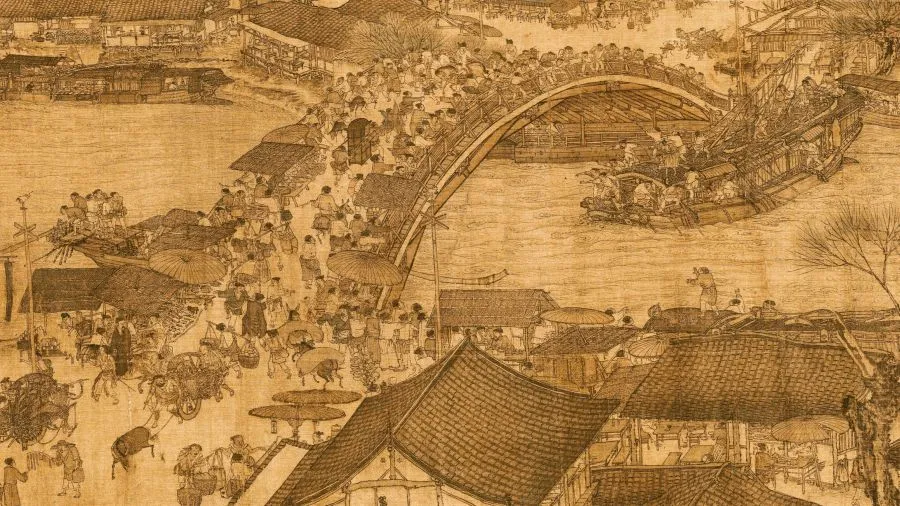
A section of the painting Along the River During the Qingming Festival (清明上河图) - Courtesy of Zhuwq on zh.wikipedia
IN A NUTSHELL
Contents: C-dramas are rich in historical, cultural, and mythological references that may be unfamiliar to Western audiences. This collection brings together all the insights published on the blog to help you navigate traditional ceremonies, imperial institutions, folk figures, titles, and recurring terms. The entries are organized by category and alphabetically for ease of reference. This article is continually updated and will be expanded over time.Read on to discover the meaning behind the cultural references that enrich your favorite Chinese series.
🏯 HISTORY AND INSTITUTIONS

L
Liù Bù (六部): The Six Ministries of the Tang Era
Appears in the following dramas: Yummy, Yummy? Yummy!
The Liù Bù (六部, Six Ministries) were the six main departments of the Chinese imperial administration in the Tang era. Responsible for the implementation of imperial policies, they managed civilian personnel, state revenues, official rites, military affairs, the administration of justice and public works.
| Chinese Name | Translation | Function | Chief Official |
|---|---|---|---|
吏部 |
Ministry of Personnel |
It managed appointments, promotions, examinations, and merit evaluations of imperial officials. |
吏部尚书 |
户部 |
Ministry of Revenue |
It was responsible for the administration of taxes, the census, the land registry, the population registers and state expenditures. |
户部尚书 |
礼部 |
Ministry of Rites |
It was in charge of court ceremonies, imperial protocol, education, imperial examinations, and foreign relations. |
礼部尚书 |
兵部 |
Ministry of War |
It was responsible for military organization, the appointment of commanders, military conscription, and the registers of troops and horses. |
兵部尚书 |
刑部 |
Ministry of Justice |
It dealt with judicial administration, sentence review and appeals. |
刑部尚书 |
工部 |
Ministry of Public Works |
It was responsible for the construction and maintenance of public infrastructure and state buildings, roads, canals and the required technical supplies. |
工部尚书 |
| Chinese Name | 吏部 |
|---|---|
| Translation | Ministry of Personnel |
| Function | It managed appointments, promotions, examinations, and merit evaluations of imperial officials. |
| Chief Official | 吏部尚书 |
| Chinese Name | 户部 |
| Translation | Ministry of Revenue |
| Function | It was responsible for the administration of taxes, the census, the land registry, the population registers and state expenditures. |
| Chief Official | 户部尚书 |
| Chinese Name | 礼部 |
| Translation | Ministry of Rites |
| Function | It was in charge of court ceremonies, imperial protocol, education, imperial examinations, and foreign relations. |
| Chief Official | 礼部尚书 |
| Chinese Name | 兵部 |
| Translation | Ministry of War |
| Function | It was responsible for military organization, the appointment of commanders, military conscription, and the registers of troops and horses. |
| Chief Official | 兵部尚书 |
| Chinese Name | 刑部 |
| Translation | Ministry of Justice |
| Function | It dealt with judicial administration, sentence review and appeals. |
| Chief Official | 刑部尚书 |
| Chinese Name | 工部 |
| Translation | Ministry of Public Works |
| Function | It was responsible for the construction and maintenance of public infrastructure and state buildings, roads, canals and the required technical supplies. |
| Chief Official | 工部尚书 |
Local Administrative Division in the Warring States Era (c. 475–221 BC)
Appears in the following dramas: The Prisoner of Beauty
| Chinese Name | Translation | Function | Chief Official |
|---|---|---|---|
州 (zhōu) |
Province |
Large regional subdivisions (macroregions) that grouped together various commanderies (郡 jùn) and counties (县 xiàn). They had administrative, fiscal, and military purposes. |
州牧 (zhōu mù) |
郡 (jùn) |
Commandery |
Intermediate local administrative unit that included multiple counties (县 xiàn). It managed local resources and had security and judicial functions. |
郡守 (jùn shǒu) |
县 (xiàn) |
County |
Basic local administrative unit. |
县令 (xiànlìng) |
村 (cūn) |
Village |
Basic territorial unit. Its purposes were taxation, military conscription, and law enforcement. |
村长 (cūn zhǎng) |
| Chinese Name | 州 (zhōu) |
|---|---|
| Translation | Province |
| Function | Large regional subdivisions (macroregions) that grouped together various commanderies (郡 jùn) and counties (县 xiàn). They had administrative, fiscal, and military purposes. |
| Chief Official | 州牧 (zhōu mù) |
| Chinese Name | 郡 (jùn) |
| Translation | Commandery |
| Function | Intermediate local administrative unit that included multiple counties (县 xiàn). It managed local resources and had security and judicial functions. |
| Chief Official | 郡守 (jùn shǒu) |
| Chinese Name | 县 (xiàn) |
| Translation | County |
| Function | Basic local administrative unit. |
| Chief Official | 县令 (xiànlìng) |
| Chinese Name | 村 (cūn) |
| Translation | Village |
| Function | Basic territorial unit. Its purposes were taxation, military conscription, and law enforcement. |
| Chief Official | 村长 (cūn zhǎng) |
Local Administrative Division in the Tang Era (618 – 907 AD)
Appears in the following dramas: Flourished Peony / In the Name of Blossom
| Chinese Name | Translation | Function | Chief Official |
|---|---|---|---|
道 (dào) |
District |
Regional subdivision (macroregion) created for administrative, control, and fiscal purposes at the beginning of the Tang era. Initially there were ten. |
观察使(guānchá shǐ) |
州 (zhōu) |
Prefecture |
Local administrative unit that includes multiple counties and has fiscal, military, and judicial functions. |
刺史 (cìshǐ) |
县 (xiàn) |
County |
Basic local administrative unit. |
县令 (xiànlìng) |
| Chinese Name | 道 (dào) |
|---|---|
| Translation | District |
| Function | Regional subdivision (macroregion) created for administrative, control, and fiscal purposes at the beginning of the Tang era. Initially there were ten. |
| Chief Official | 观察使(guānchá shǐ) |
| Chinese Name | 州 (zhōu) |
| Translation | Prefecture |
| Function | Local administrative unit that includes multiple counties and has fiscal, military, and judicial functions. |
| Chief Official | 刺史 (cìshǐ) |
| Chinese Name | 县 (xiàn) |
| Translation | County |
| Function | Basic local administrative unit. |
| Chief Official | 县令 (xiànlìng) |
S
Sān Shěng (三省): The Three Departments of the Tang Era
Appears in the following dramas: Yummy, Yummy? Yummy!
The Sān Shěng (三省, Three Departments) were the three main organs of the central administration of the Tang dynasty. They served to draft, examine, and implement imperial orders, creating an administrative system that distributed these functions to separate bodies to prevent a single minister or institution from monopolizing the management of the state.
| Chinese Name | Translation | Function | Chief Official |
|---|---|---|---|
中书省 |
Central Secretariat (or Imperial Secretariat) |
It drafted imperial edicts, transforming the Emperor's will into formal texts. |
中书令 |
门下省 |
Imperial Court Chancellery (or Secretariat of the Imperial Gate) |
It reviewed and countersigned edicts from the 中书省. |
侍中 |
尚书省 |
Council of State Affairs |
It carried out the approved acts and decisions. It supervised the Six Ministries (六部). |
尚书令 |
| Chinese Name | 中书省 |
|---|---|
| Translation | Central Secretariat |
| Function | It drafted imperial edicts, transforming the Emperor's will into formal texts. |
| Chief Official | 中书令 |
| Chinese Name | 门下省 |
| Translation | Imperial Court Chancellery |
| Function | It reviewed and countersigned edicts from the 中书省. |
| Chief Official | 侍中 |
| Chinese Name | 尚书省 |
| Translation | Council of State Affairs |
| Function | It carried out the approved acts and decisions. It supervised the Six Ministries (六部). |
| Chief Official | 尚书令 |
Z
Zhiqing (知青)
Appears in the following dramas: Love Story in the 1970s
Introduction
From the mid-1960s, China's life was profoundly affected by the Cultural Revolution (whose full name is 无产阶级文化大革命 or Great Proletarian Cultural Revolution), a policy launched by Mao Zedong in 1966 with the declared aim of defending the ideological purity of socialism and radically transforming society. To carry out the campaign, Mao relied heavily on the student mobilization of the Red Guards (a movement born in 1966 in Beijing's schools and universities), who between 1966 and 1968 took part in the persecution of alleged political enemies, the destruction of symbols of China's historical and religious tradition, and advocated the suspension of higher education, causing a profound upheaval in the education system. For four years, between 1966 and 1970, universities remained closed, and when they reopened, admission was no longer based on passing examinations (高考, gaokao), but on political credibility, social background, and work performance.1
The "Down to the Countryside" Movement
To stem the political chaos and the collapse of industrial production, in 1968 Mao promoted the policy of rural re-education, which took shape in the "Down to the Countryside" Movement (上山下乡). Millions of young university and middle school students — known as zhiqing (知青) or educated youth — were sent to the countryside with the official goal of learning from farmers, contributing to agricultural production, and reducing urban unemployment. The zhiqing were assigned to remote regions such as Inner Mongolia, Yunnan, and Xinjiang, where they had to adapt to extremely harsh living conditions, including heavy agricultural labor, precarious living conditions, and difficulties integrating with local communities.
One of the most emblematic destinations was Beidahuang (北大荒 or Great Northern Wilderness), a vast marshy area located in Heilongjiang province, in northeastern China. Here, approximately 500,000 zhiqing contributed to the reclamation of uncultivated lands, transforming what was considered a wilderness into one of the country's main agricultural areas.2 Life in Beidahuang was extremely harsh, marked by backbreaking work, harsh climate, and isolation; for women, it was even more so, because the daily hardships were compounded by sexual harassment, forced marriages, and violence.
Many zhiqing were told they would remain in the countryside for two years. In reality, most remained for a decade or more, without permission to return home or to change their hukou (户口, the residence registration system that depended on local services such as food rations, jobs, housing, and medical care) from rural to urban. Once they returned, many found that their peers had established careers and degrees, while some of them were even refused city work permits, ending up taking temporary, low-paying jobs. For many Zhiqing, the countryside was not a place of learning and moral awakening, but of isolation, humiliation, and wasted youth. Others, while acknowledging that they had learned important lessons, felt that the social cost to them had been too high.3
---
SOURCES

🪭 RITUALS AND TRADITIONS

F
Feng Shan (封禪)
Appears in the following dramas: Legend of Zang Hai
Introduction
The term Fēng Shàn (封禪) refers to the great ceremony with which the emperors of ancient China paid homage to Heaven and Earth during times of peace and prosperity or when favorable omens appeared from Heaven. The ceremony was also known as Fengsi (封祀), Fengluan (封峦), and Fengyue (封岳) and was generally performed by the emperor himself on Mount Tai.1
According to traditions and unofficial testimonies, rituals related to Fengshan already existed in ancient times and during the Xia, Shang and Zhou dynasties; however, it was under the Qin and Han dynasties that this practice acquired particular political and religious importance.
Meaning of the Term
The term is composed of two distinct elements: fēng (封), meaning "to sacrifice to Heaven," and shàn (禪), meaning "to sacrifice to Earth." The Feng rite consisted of the Son of Heaven, or the emperor, ascending to the summit of Mount Tai, where an altar was erected for celestial sacrifices. The Shan rite, on the other hand, generally took place on a small hill at the foot of the mountain, previously purified through specific rituals, where sacrifices were offered to the Earth.
In its essence, Fengshan represented an instrument of legitimization of imperial power, since it reaffirmed the principle according to which the authority of the sovereign derived directly from the Mandate of Heaven.
Historical Sources and Interpretations
Already during the Warring States period, some Confucian scholars from the states of Qi and Lu maintained that Mount Tai was the highest and most prestigious of the Five Sacred Mountains and that, for this very reason, the emperors had to go there to perform ritual sacrifices.
The first attestation of the term, however, appears in the chapter "Fengshan" of the Guanzi (管子), a political-philosophical work compiled at the beginning of the Han dynasty. Later, the Grand Historian Sima Qian included and reworked some of this material in the "Book of Fengshan" contained in the Shiji (史记, The Grand Scribe’s Records).
During the Tang Dynasty, commentator Zhang Shoujie further explained the meaning and purpose of the ceremony. According to his interpretation, a circular altar was built on the summit of Mount Tai to give thanks to Heaven, while a square altar was erected at the foot of the mountain to honor the Earth.
---
SOURCES
J
Ji Li (笄礼)
Appears in the following dramas: The Glory, A Splendid Match
Introduction
The Ji Li Ceremony (笄礼), also known as the “hair pinning ceremony” or “shangtou rite” (上头礼 - Shàngtou lǐ), was the traditional rite of passage into adulthood for Han girls and, together with its male counterpart Guan Li (冠礼) (the so-called “capping ceremony”), was considered by the Book of Rites (禮記 - Liji) as “the beginning of all rites”.1
The term 笄 (jī) refers to a hairpin. According to tradition, a girl who had turned fifteen and was already engaged to be married could perform Ji Li before her wedding. During the ceremony, her hair was gathered and secured with a hairpin: together with the change of ritual clothing, this gesture symbolized the woman's reaching maturity and her entry into her husband's family.
The Ji Li had above all an educational function and represented the assumption of the responsibilities that came with entering adulthood (which for women included respect for "feminine virtues" and maintaining appropriate behavior). In ancient times, in fact, both boys and girls normally wore their hair loose or gathered in two small buns called zongjiao (总角, literally "child horns"). As they grew up, however, the hairstyle took on a ritual and social value that identified the individual as an adult and respectable member of the community.
Performance of the Ritual
Traditionally, Ji Li was held at the family ancestral temple, preferably during the Shangsi Festival (上巳节), the third day of the third lunar month, also known as “Daughters’ Day”.
Originally, the rite was closely tied to marriage: it was celebrated at the girl's fifteenth birthday if she was already engaged, or within twenty if she was not. Over time, however, the connection with engagement gradually disappeared, and the age became standardized at fifteen.
A few days before the celebration, guests were invited, and a woman considered virtuous and respectable was chosen from among relatives and acquaintances to take on the role of zhengbin (正宾), or chief guest (a role often filled by the girl's mother). The ceremony was officiated by an elder woman of the family, while the chief guest pinned the hairpins.
The heart of the ceremony consisted of the so-called “Three Additions” (三加礼 - Sān jiā lǐ), during which three different hair ornaments were applied accompanied by three changes of dress, symbolizing the various stages of female growth:
- Beginning of the rite. The girl initially appeared with the traditional child buns and wearing a caiyi dress (采衣, brightly colored childish dress), a symbol of childhood innocence.
- First addition. A simple hairpin was applied, accompanied by a ru qun skirt (襦裙, wide skirt that ties at chest height), which represented the purity and freshness of adolescence.
- Second addition. An ornamental hairpin was then added, combined with a quju shenyi robe (曲裾深衣, robe with wide sleeves and the lower hem wrapped diagonally around the body), a symbol of the splendor of youth.
- Third addition. The final stage involved the application of a crown with a pin, accompanied by a formal dress with wide sleeves, an emblem of elegance and adult dignity.
Historical evolution
The origins of Ji Li date back to the Zhou Dynasty. During the Han Dynasty, with the affirmation of Confucianism, the rite experienced its first great period of diffusion. It subsequently suffered a decline during the Northern and Southern Dynasties, due to political and social instability, only to be partially recovered under the Sui and Tang Dynasties.
During the Song period, Ji Li came back into fashion again and the ritual underwent a significant change: girls could celebrate it upon turning fifteen regardless of whether they were already engaged.
---
SOURCES
🐉 RELIGION, MYTS AND FOLKLORE

L
Lei Zu (嫘祖), the silk goddess
Appears in the following dramas: Brocade Odyssey
Introduction
Lei Zu (嫘祖), also known as Xi Ling Shi (西陵氏, Xī Líng Shì), the first empress of China and consort of the Yellow Emperor (黄帝, Huángdì, also known by the name 公孙轩辕, Gōngsūn Xuānyuán), is a key figure in Chinese mythology: according to tradition, she is the discoverer of silk and the founder of sericulture in China.1
Legend has it that, while she was drinking tea under a mulberry tree in the royal garden, a silkworm cocoon fell into her cup. The cocoon began to unravel in the hot water, and Lei Zu noticed that it was a very long and strong thread. Intrigued, she collected more cocoons and began studying the spinning process, devising techniques for raising Bombyx mori caterpillars and weaving the precious yarn.
Symbolism
Lei Zu is revered as the goddess of silk and cultural mother, as her invention had a tremendous impact on Chinese civilization and its economic and artistic development.
In traditional symbolism, she represents feminine knowledge, domestic care, ingenuity, and transformation. She is also associated with the moon, fertility, and social order (sericulture was, in fact, strictly regulated and entrusted to women).
Lei Zu is mentioned in Sima Qian’s The Grand Scribe’s Records (史记, Shǐjì), where sericulture is celebrated as one of the civilizing innovations of the mythical age, and in the Book of Rites (礼记, Lǐjì), which narrates how the Empress, every spring, symbolically inaugurated the silk season by personally spinning the cocoons alongside the ladies of the court.
For her economic and cultural contributions, Lei Zu has joined the pantheon of Chinese spiritual mothers, alongside Nüwa (creator of humanity), Chang’e (goddess of the moon), and Xi Wang Mu (Queen Mother of the West).
---
SOURCES
Y
Yecha (夜叉)
Appears in the following dramas: The Eternal Fragrance
Introduction
Yaksha o Yecha (夜叉) is a minor semi-divine spirit of Indian origin introduced to China through Buddhism. While it has never achieved the popularity of ghosts, fox spirits, or other supernatural creatures in Chinese tradition, it has undergone a surprisingly rich evolution.1 Over the centuries, folk tales and legends have progressively transformed its image, giving rise to a complex figure that continues to influence Chinese narratives and dramas today.
The figure of the Yaksha in Buddhist texts
According to the Piposha Lun (毗婆沙世论), the Yaksha and the Rakshasa (罗刹) were born from the womb and feet of Brahmā, respectively, and constituted two distinct categories of supernatural beings. In early Buddhist texts, the Yaksha were not at all the demons that frequently appear today in xianxia dramas, but predominantly positive figures linked to the protection of the Dharma.
In the Daji yi shenzhou jing (大吉义神咒经, lit. Sutra of the Divine Spells of Great Auspiciousness) they are described as beings capable of discerning good from evil and of watching over the behavior of human beings. The Jin guangming jing (金光明经, Golden Light Sutra) defines them as protectors of Buddhism and attributes to them extraordinary strength, the ability to shapeshift and fly, while in the Fa hua jing (法华经, Lotus Sutra) they become part of the army of deities charged with defending those who recite the Buddhist sutras. Even when the Miaofa lianhua jing xuanzan (妙法莲华经玄赞 lit. Profound Commentary on the Lotus Sutra) accentuates their ferocious and terrifying aspect, the Yaksha continue to be presented as guardians of the Dharma.
The evolution of the Yaksha figure in later writings
However, their image began to change with the progressive sinicization of Buddhism. Over the centuries, the Yaksha absorbed elements of Chinese popular culture and gradually distanced themselves from the sacred Indian model. This transformation is particularly evident in the Taiping Guangji (太平广记), the great collection of fantastic tales compiled during the Song Dynasty.
The fourteen tales dedicated to the Yaksha in the Taiping Guangji now depict creatures very different from those described in the sutras. While retaining some traits of Buddhist tradition, the Yaksha take on the appearance of gigantic and terrifying beings, with dark faces, enormous eyes, and protruding fangs. The transformation in their behavior is even more profound: they become kidnappers of women, children, and travelers, and devourers of men, fully entering the Chinese tradition of cannibalistic demons. This evolution, however, is not linear. Alongside the image of the monster, deeply human traits continue to emerge: some Yaksha feel love, friendship, and gratitude, protect humans, or establish family relationships with them.
During the subsequent dynasties, especially in Ming fiction, demonization became even more pronounced. The Yaksha became the guardian of Hell, the subordinate of the Dragon King, or a monster in the service of other deities, taking on the image by which it is best known today in Chinese fiction and audiovisual works.
Conclusion
This transformation is the result of a combination of several factors: the adaptation of the Buddhist religious tradition to Chinese culture, the influence of popular beliefs, the development of the fantastic narrative of the chuanqi (传奇) and the progressive construction of the Yaksha as a fictional literary character.
It is precisely this evolution, more than its popularity, that makes the Yaksha a unique figure: while remaining relatively marginal in Chinese religious tradition, its path is an exemplary example of how a foreign sacred figure can be reinterpreted to the point of becoming an integral part of Chinese folkloric imagery. Even today, this evolution continues to be reflected in fantasy novels and dramas, where the term 夜叉 is often used with very different meanings than its original meaning.
---
SOURCES
- Song, Xianke (宋献科). ⟪夜叉形象之演变⟫ [The evolution of the Yaksha image]. 魅力中国, n. 32 (2019): 234-235. ↩
🈷️ TERMS AND TITLES

D
Dàrén (大人)
The term Dàrén (大人) means "My Lord" or "Your Excellency" and is a courtesy title used to address an official or high-ranking court official.
Dàshī (大师)
The term Dàshī (大师) means "Grand Master" and is an honorific for a figure of great expertise or authority in religious, artistic, or martial fields.
G
Gōngzǐ (公子)
The term Gōngzǐ (公子) means "Young Lord" and is the term used to designate young men from noble or bourgeois families.
Gōngzhǔ (公主)
The term Gōngzhǔ (公主) means "Royal Princess" and is the title given to the Emperor's daughters.
Gōng (公)
The term Gōng (公) means "Duke" and represents the most prestigious noble title in the Empire. Among the dukes, the Guógōng (国公), or Duke of the Realm, is the one with the highest rank and, usually, this title identifies the most important political and military figures of the state.
Guìfēi (贵妃)
The term Guìfēi (贵妃) means "Imperial Consort" and refers to the high-ranking concubines of the Emperor. To address high-ranking imperial consorts is used the honorific title 娘娘 (niángniang), meaning "Your Grace".
Gūniáng (姑娘)
The term Gūniáng (姑娘) means "Miss" or "young girl" and is the term used to designate unmarried girls from non-aristocratic families or those whose social status is unknown.
H
Hóu (侯)
The term Hóu (侯) means "Marquis" and represents the second most prestigious noble title in the Empire, after Duke. To address a Marquis, is used the courtesy title 侯爷 (hóuyé), meaning "His Lordship [the Marquis]".
Huángdì (皇帝)
The term Huángdì (皇帝) means "Emperor". To address the Emperor is used the honorific title Bixià (陛下), meaning "Majesty" or "Your Majesty".
Huánghòu (皇后)
The term Huánghòu (皇后) means "Empress" and refers to the Emperor's main wife. To address the Empress is used the honorific title 娘娘 (niángniang), meaning "Your Majesty" or "Your Grace" (sometimes also in the variant Huánghòu niángniang (皇后娘娘))
Huáng tàihòu (皇太后) / Tàihòu (太后)
The term Huáng tàihòu (皇太后) means "Senior Empress" or "Empress Dowager" and refers to the Empress of the late Emperor.
J
Jiāng jūn (将军)
The term Jiāng jūn (将军) identifies a Chinese military title generally translated as "general." Historically, it indicated a high-ranking military position, whose role and prestige varied depending on the dynasty and period. Among the military hierarchies there was also the title dà jiāngjūn (大将军), literally “great general”, which indicated a military position of higher rank than jiāngjūn, with functions that varied depending on the historical period.
Jùn zhǔ (郡主)
The term Jùn zhǔ (郡主) means "Princess of Commandery" or "Princess of the Second Rank" and is a title given to the daughters of imperial princes (王, wáng), that is, the granddaughters of the Emperor or, sometimes, the daughters of nobles appointed Princes by the Emperor.
L
Lángjūn (郎君)
The term Lángjūn (郎君) is a respectful address for a young man of good family or, in domestic settings, a form used by a wife to address her husband. Depending on the context, it can be translated as "young gentleman," "lord," "my lord," or "husband."
Lǎoyé (老爷)
The term Lǎoyé (老爷) means "Lord" or "Master" and is a respectful term used to address the master of the house or the head of the family who has a high social status (official, aristocrat, landowner).
N
Niángzi (娘子)
The term Niángzi (娘子) is a feminine polite term often used to address a young woman of good family or, in marital matters, as the feminine equivalent of lángjūn (郎君). Depending on the context, it can be translated as "young lady," "my lady," "consort," or "wife."
Q
Qiánbèi (前輩)
The term Qiánbèi (前輩) is a respectful term used for a person with greater experience, seniority, or prestige in a given field, such as a martial school, sect, profession, or discipline. It can be translated as "elder," "senior," or "veteran." It is not an official title, it is simply a way of indicating the interlocutor's greater experience.
S
Shīfù (师傅)
The term Shīfù (师傅) means "master" intended as an expert in a subject who passes on his knowledge to a disciple.
Shìzǐ (世子)
The term Shìzǐ (世子) means "heir apparent" and is the term that identifies the son officially designated to succeed his father in possession of a noble title.
Shìzǐfēi (世子妃)
The term Shìzǐfēi (世子妃) means "Consort of the Heir Apparent" and is used to designate the principal wife of the son officially designated to succeed his father in the possession of a noble title.
T
Tàifēi (太妃)
The term Tàifēi (太妃) means "Senior Consort" or "Dowager Consort" and usually refers to the concubines of the deceased Emperor.
Tàihuáng tàihòu (太皇太后)
The term Tàihuáng tàihòu (太皇太后) means "Great Empress Dowager" and refers to the mother of the late Emperor, grandmother of the current sovereign.
Tàizǐ (太子)
The term Tàizǐ (太子) means "Crown Prince" and is used to designate the Prince appointed by the Emperor as heir to the throne.
Tàizǐ fēi (太子妃)
The term Tàizǐ fēi (太子妃) means "Crown Princess" and is used to designate the main wife of the Crown Prince.
W
Wáng (王)
The term Wáng (王) is used to designate a nobleman of the highest rank. In imperial times, it generally indicated a male member of the imperial family, and can be translated as "Prince." In later dynasties, an internal hierarchy also developed that distinguished the 亲王 (qīnwáng), the son or brother of the emperor, from the 郡王 (jùnwáng), the prince of lower rank. In the era before the unification of China, the term could also indicate an independent ruler, translatable as "King". To address a prince was usually used the honorific Diànxià (殿下), meaning "His Highness".
Wángfēi (王妃)
The term Wángfēi (王妃) means "Prince's Consort" and is used to designate the main wife of a Prince (王, wáng).
X
Xiǎojiě (小姐)
The term Xiǎojiě (小姐) means "Miss" and is the term used to designate young unmarried women from noble or bourgeois families.
Xiānsheng (先生)
The term Xiānsheng (先生) is an honorific used to address a teacher, scholar, preceptor, or person of great culture. In historical dramas, it can be translated as "Master" or, depending on the context, "Mr." Unlike Shīfu (師父), it does not necessarily indicate the existence of a master-disciple relationship between the speaker and the person addressed.
Z
Zhǎng gōngzhǔ (长公主)
The term Zhǎng gōngzhǔ (长公主) means "Eldest Princess" or "Grand Princess" and is a title often given to the Emperor's elder sister, or sometimes to a particularly important aunt of the Emperor or the Emperor's eldest daughter.
Thanks for reading this far!
I hope you enjoyed my article. If you like my work and want to support me, buy me a coffee☕