
A Splendid Match (2026): Refined Romance or Watered-Down Adaptation? | Review & Cast
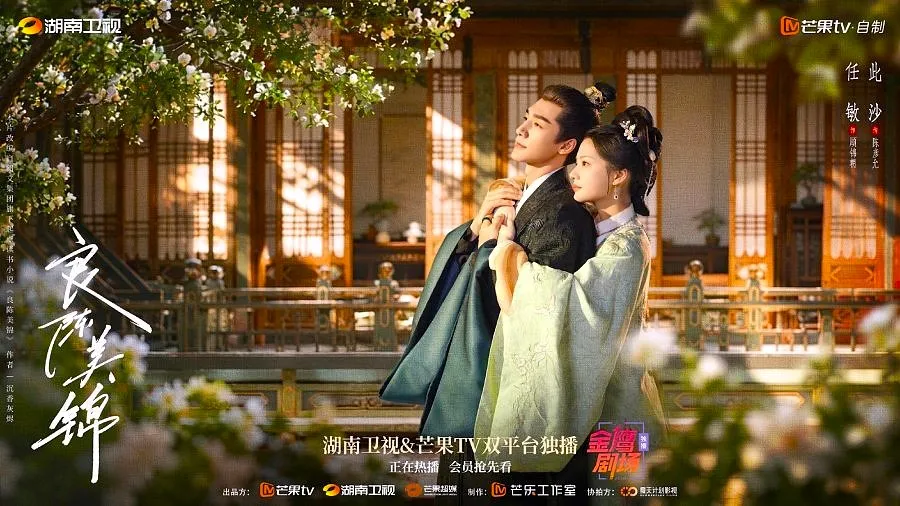
A Splendid Match Poster- Courtesy of HunanTV

|
DetailsRATING: (7/10)
NATIVE TITLE: 良陈美锦 - Liáng chénměijǐn YEAR: 2026 EPISODES: 40 DURATION: 45’ DIRECTOR: Jin Xiong Hao SCREENWRITER: You Er ORIGINAL CREATOR: Chen Xiang Hui Jin (梁陈美景 - Liang and Chen’s Beautiful Scenery) RESPECTED CLICHÉS: 1 - 2 - 4 - 6 - 9 - 10 - 11 - 12 - 14 - 18 - 20 |


IN A NUTSHELL
- What to expect: A Splendid Match is an essentially domestic historical drama, more interested in family relationships, social hierarchies, and the slow evolution of emotional bonds than in action or grand court intrigue. The series alternates moments of melancholy and, at times, dramatic romance, family tensions and rivalries, and power plays that are more personal than political, crafting a story with a measured pace and an elegant, often contemplative atmosphere. While there are references to the dynamics of the court and the state of the kingdom, the heart of the narrative remains anchored in the characters, their conflicts, and the relationships that bind them, in a story that favors emotional progression, restrained feelings, and quiet tensions over spectacular twists.
- Strengths: the refined aesthetic, the interesting construction of the characters, the romantic love story between the protagonists.
- Weaknesses: the superficial development of the female-related theme, the overly simplified adaptation of the novel, the stereotypical romantic dynamics.
- Recommended if you like: historical family dramas, resolute and independent female protagonists, intense love triangles (quadrilaterals), passionate and rebellious SML, scenes of domestic intimacy between the protagonists.
- Would I rewatch it? Yes.
Read on to find out if this drama is for you.
A Splendid Match is a drama that slowly envelops the viewer in an atmosphere of melancholy elegance, silent tensions, and pent-up emotions, seemingly overwhelmed by dramatic twists and turns or relentless political intrigue. From aristocratic residences suffocated by unresolved resentments, to marital strategies and family relationships frayed by the weight of convention, the drama constructs a narrative with a controlled, contemplative pace, capable of conveying the constant sensation that, behind every gesture and every word, lies an emotional balance ready to be shattered.
In this review of the drama A Splendid Match, after watching all episodes, I will analyze not only the technical and narrative aspects of the series, but also the types of themes it presents to its audience, seeking to understand to what extent the drama truly succeeds in transforming its narrative delicacy and domesticity into a winning element.
Plot
Gu Jin Zhao is the legitimate heir of the fourth branch of the Gu family, but a prophecy revealed at her birth — that she would hinder her father's career — leads her to be removed from the family home and entrusted to her maternal grandmother, a wealthy merchant from Tongzhou.
Far from the capital, Jin Zhao grows up happy, surrounded by her grandmother's affection and the attention of her cousin, leading a carefree life for years. However, everything changes on her sixteenth birthday, when her father suddenly shows up in Tongzhou, determined to take her home.
Jin Zhao is reluctant to return to a place that brings back painful memories, especially after she discovers that her grandmother has pledged to help the strict imperial official Chen Yan Yun implement a controversial land and tax reform.
Despite her resistance, the girl has no choice but to return to the capital, where she can count on the support of the impulsive Ye Xian, who is deeply smitten with her, the reserved Chen Xuan Qing, and Chen Yan Yun himself, who gradually begins to take an interest in her.
In the Gu residence, Jin Zhao finds herself immersed in a suffocating family environment, marked by profoundly distorted domestic dynamics: a fragile mother dominated by her husband, a manipulative and calculating concubine, and old grudges that have never truly been resolved.
Amidst family conflicts, hidden truths, and increasingly dangerous power games, the young woman develops emotional bonds with the three men who gravitate toward her, but it will ultimately be the rational and trustworthy Chen Yan Yun who wins her heart and hand.
United by mutual respect and a deepening feeling, the two find themselves facing political rivalries, court intrigues and hidden threats, discovering that their bond may be the only thing strong enough to withstand the chaos that surrounds them.

A Splendid Match Drama Review (No Spoilers)
Plot and Screenplay
From the very first episodes, A Splendid Match appears to be a historical drama particularly attentive to the social reconstruction of its context. The series, in fact, goes beyond merely aesthetically depicting the Ming era, but also seeks to meticulously portray its daily family life. For example, I greatly appreciated the inclusion of rituals and customs rarely shown in television productions of this type — such as the hairdressing ceremony associated with a woman's coming of age — because they contribute to the series' sense of a lived-in and culturally layered world. The plot also consistently follows this direction, choosing to focus primarily on the internal life of the great aristocratic families, their domestic balance, strategic marriages, and the emotional tensions that arise within a rigidly hierarchical system.
Despite frequent references to the kingdom's political situation and the tensions that permeate the court, I had the feeling that A Splendid Match almost always chose to focus its gaze within the confines of the Gu family. Power struggles, official duties, and the political balance of power in the capital remain a constant undercurrent, but it's above all the domestic dimension — family rivalries, marital strategies, unresolved grudges, and suffocating blood ties — that truly dominates the narrative.
This approach allowed the series to focus more closely on Gu Jin Zhao's emotional evolution and to give more space to her interactions with the various men who gravitate toward her, each with a different kind of affection, ambition, and approach. At the same time, however, the drama almost always maintains a rather controlled pace and rarely truly gripping: the political intrigues end up functioning more as narrative devices than as a true central storyline, and even the most difficult conflicts are constantly filtered through family and romantic dynamics.
Personally, I didn't experience this as a limitation, partly because the series still manages to maintain a good level of immersion and an atmosphere very consistent with the type of story it seeks to advance. However, I believe it's important to clarify from the outset that A Splendid Match doesn't focus primarily on action or political tension. For this reason, those who enjoy "domestic" historical dramas, built more on troubled family relationships, conflicted emotions, and the slow evolution of emotional connections, might find a welcoming setting and an engaging story here. Those seeking an action-driven narrative with intense court maneuvering, constant plot twists, or aggressive political intrigue might find the series decidedly slower and less eventful than other costume dramas.
The screenplay, overall, also seemed quite aware of its narrative mechanisms. The romantic clichés, which in this genre often risk appearing predictable or constructed, are handled with a certain measure and end up integrating quite well into the story without seeming like mere devices to force the emotional tension between the protagonists. Even the classic rescues of the female protagonist by the ML feel less artificial than usual, because they're inserted into situations that appear fairly consistent with the dynamics of the plot and the narrative context. Of course, some narrative license remains evident—her survival after falling from a cliff with a "simple" sprained ankle definitely made me smile—but overall, I rarely felt the drama overused forced solutions.
Even the dialogue, while not striving for a particularly high-flown or sophisticated tone, works well within the series: it flows smoothly, clearly, and effectively conveys the characters' thoughts, emotions, and personalities, often managing to immediately convey even the subtlest nuances of their moods at different moments in the story.
Characters and Love Story
Among the most successful aspects of A Splendid Match is undoubtedly the characterization, because the drama almost always avoids reducing its characters to entirely positive or irremediably negative presences. Instead, the writing continually highlights both their best and their roughest sides, building a web of fragility, resentment, selfishness, and often contradictory emotional outbursts that makes them, depending on the moment, deeply empathetic or surprisingly repulsive, but always profoundly human. Personally, I found this moral oscillation one of the most interesting elements of the series, because it helps give depth to the relationships between the characters and prevents the narrative from falling into an overly simplistic representation of their motivations.
From a romantic perspective, however, the drama left me a bit divided. The feelings that the various male characters develop towards Gu Jin Zhao in the first part of the story rarely seemed truly mature to me: rather than arising from a fully conscious love for the person she is, they often seem to stem from the emotional role the protagonist ends up assuming in their lives, becoming for each of them a source of comfort, recognition, or personal transformation. For this reason, all the infatuations revolving around the protagonist remain suspended in a sort of gray area, where emotional attachment, emotional need, desire for protection, and desire for possession continually overlap without ever transforming into truly impactful or fully convincing romantic bonds.
This construction is further ambiguous due to Gu Jin Zhao's apparent emotional indecision, which at the beginning of the drama repeatedly oscillates between different moods, without these shifts always being supported by motivations as solid or in-depth as those present in the original work. I often felt that the series was more interested in exploring the characters' internal conflicts and unresolved needs than in building truly mature romantic relationships, and this inevitably ended up weakening, at least in part, the overall emotional strength of the romantic dynamics.
In the second half of the drama, however, things change significantly. After the marriage of the female lead and the male lead, their relationship takes on much more defined and believable contours: the two finally begin to demonstrate a deeper, more stable, and more evident attachment to each other than previously seen, and it is precisely at that moment that the couple truly begins to function as the true emotional center of the story, bringing the plot closer to that of a true romantic drama.

Cast
The cast of A Splendid Match seemed remarkably well-rounded and, overall, one of the components that contributed most to the series' success. Even when certain characters or narrative dynamics didn't entirely convince me, I rarely felt the problem lay with the actors, who demonstrated credible screen presence and good emotional intensity.
Ci Sha, in particular, struck me as a very talented and probably still underrated actor, perhaps also due to the fact that he has less delicate features than some of his colleagues and a naturally more mature and authoritative appearance. It is precisely this more severe and adult presence, however, that ends up working very well in A Splendid Match, especially in the more formal moments and political scenes. I found him equally convincing in the romantic scenes, not to mention that his performance in the action sequences is also very good.
Ren Min also convinced me very much in the role of Gu Jin Zhao. Her remarkably youthful face perfectly fits the protagonist's adolescent image and helps lend credibility to her emotional immaturity. While I didn't always appreciate the character herself, I found her performance authentic, natural, and immersive enough to allow me to clearly perceive the protagonist's inner anxieties and fragilities.
Among the performances that struck me the most was definitely that of Win Win as Ye Xian: her character is constantly suspended between an almost disarming tenderness and an emotional madness always ready to explode, often giving the impression of being on the verge of becoming a true villain without ever truly abandoning her humanity.
Zuo Ye's work is also very interesting, managing to make her character both disturbing and difficult to decipher, constantly torn between her feelings for the protagonist and her desire for social revenge. A characterization almost opposite to the role he played in Back From the Brink, and for this very reason even more commendable.
Praise also goes to the other young actors in the cast, including Zhang Yao — who I had already appreciated in Legend of Zang Hai — Huang Ri Ying, Gong Zheng Ye — who for me was unforgettable in Melody of Golden Age — and Wang Si Yi. A special mention, however, goes especially to the very young Gong Jue Rui, whom I found surprisingly brilliant and credible in the role of the young Emperor Sheng De.
Finally, a mention for the veterans, from Yang Qing to Wu Gang, who certainly did an excellent job, but above all to Yin Xiao Tian, who manages to give his Gu De Zhao that irritating mix of arrogance, opportunism and cowardice that ends up making him simultaneously detestable and almost unintentionally comical.
Visual Aspects and Soundtrack
The direction of A Splendid Match is overall solid and clearly cinematic, with a clear focus on image construction: the shots are often refined, the lighting well-calibrated and designed to enhance both faces and spaces, while some visual elements, such as the simulated drowning sequences, are rendered with particularly effective realism and attention to detail. This visual quality is also significantly supported by the unique and evocative outdoor locations and the realistic and believable interior sets, most of which come from CCTV's Wuxi Studios, which give the drama a remarkable aesthetic solidity.
The work on costumes and set design also deserves special mention: the clothes appear extremely detailed and refined in both materials and workmanship, while women's hair accessories and men's headgear contribute to giving the series a very convincing sense of visual authenticity. The same goes for the interior furnishings, rich in details that make the spaces feel lived-in, believable, and consistent with the drama's elegant, aristocratic tone.
That said, there are some directorial details that personally left me more perplexed. The first is the use of flashbacks, which are perhaps excessively frequent: instead of relying on a simple verbal reconstruction of events, the series often chooses to revisit past events through continuous forays into the past, to the point that the repetition of these inserts ends up feeling redundant, almost as if the viewer might not remember what was recalled just a few scenes earlier.
Another device that I found less convincing is the frequent use of montages of romantic scenes between the protagonists, used to highlight the mental evolution of their feelings for each other: a choice that, at least on a personal level, I've always found a bit forced and somewhat unnecessary.
Even the action scenes didn't entirely convince me in terms of editing: the black frames inserted between takes of the fight scenes, seemingly included to increase tension and break up the pacing, actually end up breaking the fluidity of the sequence, making the action more confusing than frenetic and more difficult to decipher than truly intense.
The soundtrack by A Splendid Match accompanies the drama with a soundtrack that's fairly consistent with the overall tone of the series, alternating slow, melancholic songs, built on more classical arrangements, with romantic pieces with a slightly more modern and upbeat tempo. The attempt to blend different musical sensibilities is clearly evident: orchestrations featuring Western instruments often intertwine with those featuring traditional Eastern instruments, which are sometimes used to soften the melody and make it more emotional and enveloping, while others emerge in short solos with a more distinctive feel, helping to give the series a more pronounced historical tone.
Personally, I really appreciated the fact that the musical accompaniment almost always manages to support the emotional tone of the scenes without being invasive. At the same time, however, no piece truly gave me the feeling of being in front of a particularly memorable soundtrack or one that clearly stood out from the now typical sounds of Chinese historical romances.

WARNING!
FROM THIS POINT ON THE SPOILER SECTION BEGINS. DO NOT CONTINUE IF YOU DO NOT WANT TO KNOW ALL THE DETAILS OF THE DRAMA.
A Splendid Match Drama Review (Spoilers)
What Works
The Characterization
I find that one of the strengths of A Splendid Match is, without a doubt, the characterization of its characters, which the drama almost always avoids turning into completely positive or irremediably negative figures. Instead, the writing chooses to highlight both their best impulses and their rougher sides, building a continuous web of contradictory emotional reactions that makes the characters at times deeply empathetic and at others almost repulsive, but always incredibly human. It is precisely this moral vacillation that creates much of the drama's charm: one rarely feels like one is dealing with characters constructed solely to be loved or hated, because almost everyone seems to navigate fragilities, resentments, and desires that inevitably end up influencing even their worst actions.
This complexity emerges particularly in Ye Xian, arguably one of the most emotionally interesting characters in the series. Raised as the sole male heir of a powerful noble family, but plagued by a chronic heart condition that prevents him from following in his father's footsteps, Ye Xian lives constantly crushed by family expectations, feelings of inadequacy, and the need for recognition. His social position also leads him to perceive his romantic involvement with Gu Jin Zhao as inevitably doomed to failure, fueling a frustration that often explodes in impulsive and violent behavior. Some of his actions are difficult to justify and contribute to making him, at times, almost disturbing to watch; yet the drama still manages to reveal behind that anger a deeply lonely, insecure young man incapable of managing the weight of the family legacy weighing on his shoulders. In quieter moments—when he cares for an injured kitten or sincerely tries to help the protagonist—a much more fragile and caring version of himself emerges, making him impossible to reduce to a simple "toxic" character or romantic antagonist.
Concubine Song also left me with surprisingly mixed emotions, because despite being indirectly involved in many of the family's cruelest dynamics, I never perceived her as a true villain. The drama clearly exposes her responsibilities and weaknesses, but at the same time, it allows us to glimpse how her entire existence has been shaped by her husband's choices and ambition. The feeling is that she has become, rather than a true architect of family conflict, a woman trapped by the consequences of her own emotional naiveté and by a patriarchal system that has pushed her to sacrifice dignity and position in order to gain the love of a man incapable of loving anything beyond his own social prestige. Precisely for this reason, in the end, it's almost inevitable that the moral burden of the story shifts onto the protagonist's father, transforming him into the figure truly responsible for the rivalry and resentment that poison the entire family unit.
Fu Hai Lian also benefits from this same attention in building his character. Although portrayed as a farsighted minister intent on limiting the aristocracy's excessive power at court, his character gradually reveals the limits of his idealistic vision, revealing how the blind pursuit of his political goals sometimes leads him to distance himself from the more concrete needs of the kingdom and the people. The drama thus portrays an official who never appears either entirely heroic or truly corrupt, but simply human in his attempt to reconcile principles, ambition, and political rivalries.
The Main Love Story
Another thing I found particularly successful in A Splendid Match is the growth that the relationship between the female protagonist and the male protagonist undergoes in the second half of the series. After their marriage, their relationship takes on much more defined, mature, and believable contours: the two finally begin to demonstrate a deeper, more stable, and more evident attachment to each other, and it is precisely at that moment that the couple truly begins to function as the true emotional center of the story, bringing the narrative closer to that of a true romantic drama.
What makes their union particularly engaging, in my opinion, is the way their bond ultimately evolves into an emotional exchange that goes beyond simple romantic attraction. A very strong bond of mutual trust develops between the two, accompanied by a constant sense of protection towards one another that emerges both in the most intimate moments and in situations of danger or vulnerability. Added to this is the mutual respect and esteem that already characterized their relationship, and which, once the marriage was finalized, ceased to appear as mere elements of narrative compatibility and became the very foundation of their relationship. It is precisely this combination of affection, trust, protection, and mutual respect that makes their love story so romantic and compelling, finally giving the feeling of being in the presence of a couple truly united on both a human and emotional level.

What Doesn't Work
The Development of the Female-Related Theme
One of the aspects that least convinced me about A Splendid Match concerns the way the drama approaches the novel's central theme: the relationship between husband and wife in a patriarchal society and the social constraints that aristocratic marriage imposes on women. The series repeatedly introduces themes related to the loss of personal freedom, the rigidity of family hierarchies, and the vulnerability of married women within this system, but rarely gives these elements the emotional and narrative weight necessary to be truly impactful.
Consequently, faced with a serious yet nuanced portrayal of women's condition—in which the protagonist's mother's marital suffering appears more like the exception than the norm—the protagonist's resistance to marriage ends up taking on the characteristics of simple youthful reluctance, that is, a refusal to give up her freedom and charms too soon, rather than a clear fear of entering a marital system that is structurally biased in favor of men and often severely disadvantageous to women.
This effect is also amplified by certain adaptation choices that portray the male protagonist as emotionally reliable and more inclined to romance than his literary counterpart, attenuating the perception of his full immersion in the patriarchal system and consequently reducing the emotional and social tension that should arise from the formalization of his bond with the FL. In this way, even the concept of marital union loses some of its social brutality: what in the source material was a constant negotiation between economic security, social status, and female vulnerability is partially translated into a more linear and less conflictual romantic dynamic.
The protagonist herself, while retaining many of the novel's themes in the drama, loses the inner toughness and social awareness of what it means to be a woman that gave her depth and psychological coherence in the original text.
The comparison with the drama The Sword and the Brocade highlights this contrast even more. In that series, in fact, aristocratic marriage is portrayed as a profoundly pragmatic and unequal reality, in which a man's having multiple wives is presented neither as exceptional nor morally reprehensible, but simply as an integral part of the social order of the time. The male protagonist is fully immersed in this system and initially doesn't question the idea of having multiple women by his side: it is his romantic journey with FL that allows him to discover the benefits of having a single partner by his side, one who is intellectually and emotionally more in tune with him. At the same time, the protagonist is confronted with a much more suffocating and rigidly regulated family structure, dominated by strict domestic hierarchies and a mother-in-law who is extremely strict in demanding respect for the roles imposed by patriarchal society. Despite being intelligent, independent, and often intolerant of the limitations that surround her, in this drama, the protagonist cannot openly oppose that system, both because of her role and her fragile social position as the daughter of a concubine. And it is precisely this constant tension between the desire for personal autonomy and the concrete impossibility of escaping society's rules that makes the position of women within marriage much more evident and unjust than in A Splendid Match, where many of the harshest implications of the patriarchal system are only hinted at.
The Romantic Dynamics
Another critical aspect of A Splendid Match concerns the construction of the romantic dynamics involving the protagonist, which tend to conform to a rather stereotypical pattern and end up suggesting the absence of truly genuine feelings for her on the part of the various suitors. The various romantic trajectories seem, in fact, to develop more as reactions to an idealized vision of her and to what her behavior inspires in the male characters, rather than as the expression of an autonomous and conscious desire.
In Ye Xian's case, the perceptible feeling is closer to gratitude than to love in the strict sense: the protagonist is, in fact, the only person to have recognized him as an individual and not as a simple extension of his social status, thus generating an attachment that arises primarily from a need for personal recognition. Similarly, Chen Xuan Qing's bond seems to be rooted in a more indirect form of gratitude, linked to the protagonist's ability to interrupt her monotonous existence, entirely devoted to social revenge, introducing a more human emotional dimension into her rigidly oriented life. The protagonist's feelings, initially, are not fully romantic, oscillating between an almost protective tenderness toward a female figure perceived as fragile and neglected, and the personal need to overcome the pain of his wife's death through a new relationship.
In this already unbalanced context, even the relationship with her cousin Ji Yao cannot be precisely traced back to either a fulfilled romantic love or simple familial affection, but rather falls somewhere in between, intertwining attachment, a desire for closeness, and a form of protective intent and possessive desire that are difficult to define. Ji Yao's feelings seem to be driven primarily by his rejection of Gu Jin Zhao's progressive distancing from his emotional and social world and the perception of his replacement as a significant presence at his cousin's side.
Additionally, this construction is further disjointed by the protagonist's apparent emotional indecision. Throughout the drama, she seems to constantly oscillate between different love interests — first hinting at an involvement with Chen Xuan Qing, then developing an ambiguous relationship of attraction and repulsion with Ye Xian, and finally showing an unexpected fascination with Chen Yan Yun. Unlike the novel, however, the drama doesn't provide as solid or in-depth motivations to support these emotional shifts, significantly slowing the actual progress of the romantic component and the drama as a whole — it's therefore not surprising that the first kiss between the protagonist and the ML only occurs in the twenty-first episode.
It is precisely this constant emotional ambiguity that makes the romantic dynamics less impactful than they would like: the drama, in fact, seems to develop around the protagonist a series of internal reflections, unresolved needs, and forms of attachment that end up demeaning the emotional maturity of the male characters.

Characters and Cast
Primary Characters
Gu Jin Zhao/Zhao Jie'er (Ren Min) legitimate daughter of the fourth branch of the Gu family. Due to a Taoist priest's dire prediction at her birth, she is removed from her residence and entrusted to the care of her maternal grandmother. With her, the girl grows up free and happy, even receiving the attention of her cousin, who becomes like a brother to her. When her father later decides to take her back home to avoid being criticized, he finds himself having to confront tense family relationships and distorted domestic dynamics created by a system that penalizes women and allows men to dispose of their wives and children at will.
Chen Yan Yun/Jiu Heng (Ci Sha) Third Lord of the Chen family, disciple of Grand Secretary Fu. He is an honest and upright official whose primary concern is the well-being of the people, who finds himself having to thwart his master's ambitions for power to avoid harming the common people. For this reason, he tacitly allies himself with Ye Xian and agrees to collaborate with him despite knowing Ye Xian's feelings for Gu Jin Zhao, with whom he is also in love. After completing the land and tax reform in Tongzhou, he is appointed Zhanshi (director) of the Crown Prince's Office and Deputy Chief Censor of the Revenue Section. Following the Emperor's death, the new ruler Li Lin Zhang appoints him as Vice Minister of the Left of the Ministry of Revenue and Grand Secretary of the East Hall.
Ye Xian/Xian'er (Winwin) heir apparent to Marquis Changxing, his only son. He is stubborn and strong-willed and cannot accept that everyone underestimates him due to the heart disease that has afflicted him since birth. The only one who seems to understand him is Gu Jin Zhao, and for this reason, he falls in love with her. Thanks to Chen Yan, Yun becomes a fellow student of the Crown Prince and manages to gain his trust, obtaining protection for his family. After the death of Emperor Jing Ning, he is appointed Division Commander of the Criminal Investigation Bureau and, following his father's death, is awarded the title of Commander of the Xuanfeng Guard (an elite corps under the direct command of the sovereign, charged with investigating by all means the crimes committed by imperial officials).
Supporting Characters
Gu Family
Gu De Zhao (Yin Xiao Tian) Fourth Lord of the Gu family and father of Gu Jin Zhao. He is selfish and ambitious, and when a Taoist priest tells him that the birth of his first legitimate daughter will hinder his career, he immediately has her removed from the residence. He is Director (Langzhong) of the Deposits Section of the Ministry of Revenue, but after the scandal involving the substitution of food aid destined for Pingyang Prefecture with bran, he is demoted to County Magistrate and sent to the area to help alleviate the suffering of the population.
Ji Han (Yang Tong Shu) madam of the fourth branch of the Gu family, daughter of the Old Madam Wu and mother of Gu Jin Zhao. She is gentle and accommodating and does not oppose her daughter's removal from the residence but agrees to entrust her to her mother. After this event, she falls ill, and not even her daughter's return can revive her. Indeed, the final humiliation she suffers at the hands of Concubine Song ultimately drives her to suicide.
Nanny Zhao (Li Jia Wei) and Mo Lan (Jimg Yun) Ji Han's personal maids.
Qing Pu (Wang Si Yi) Gu Jin Zhao's personal maid. She is an expert in martial arts and is a great help to her mistress in every circumstance.
Madam Song/Song Miao Hua (Li Fei Er) Gu De Zhao's concubine and daughter of the former Minister of Ceremonies Song Shi Qi. In order to marry Gu De Zhao, she goes against his wishes and agrees to become his concubine. However, despite her husband's favor, she never manages to gain his unconditional affection and ends up punished for Ji Han's suicide.
Nanny Zhou (Yan Jing Yao) Song Miao Hua's personal maid. She is devious and scheming, and does everything she can to eliminate her madam's rivals, including Ji Han. She is eventually sent to work in the fields, where she dies.
Liu Xiang (Liu Ling Wei) Song Miao Hua's personal maid. At Nurse Zhou's suggestion, she adds rhubarb to Ji Han's medicinal concoction, causing her illness to worsen significantly.
Luo Liu (Liu Ling Peng) Song Miao Hua's servant. He is the one who collects the herbs for Ji Han's concoction from the pharmacy and helps Liu Xiang alter the ingredients.
Gu Lan/Lan Jie'er (Hiang Yi) second madam of the Gu family and daughter of Song Miao Hua. She is a gentle and honest girl, but the rivalry between her mother and Ji Han drives her to commit cruel acts, such as finding a woman who accuses her stepmother of murder. Initially, when Mu Zhi Di proposes to her, she firmly rejects him, claiming he is simple-minded and unattractive, but eventually changes her mind and agrees to marry him.
Zi Ling (Wang Xi Ping) Gu Lan's personal maid.
Gu Jin Rong (Xu Rui Hao) legitimate son of the fourth branch of the Gu family and younger brother of Gu Jin Zhao. Initially, to accumulate his own capital, he acts as a middleman for gambling houses, procuring their clients, but he runs into trouble. To help Gu Jin Zhao get him out of the business, Ye Xian stages his kidnapping, frightening him enough to give up his shady dealings.
Shuang Li (Lin Han Ming) Gu Jin Rong's personal servant.
Old Madam Feng (Yang Kun) Matriarch of the Gu family of Daxin. She is greedy and favors the second branch of the family much more because it will perpetuate the clan's surname. However, the Daxin family is in dire straits, so she attempts to steal Ji Han's dowry first and then the entire estate of the fourth branch of the Gu family, often finding herself at loggerheads with Gu Jin Zhao.
Nanny Su (Jiang Zi Teng) Personal maid to the Old Madam Feng.
Gu De Yuan (Xu Jian) Second Lord of the Gu family and older brother of Gu De Zhao. He is an inept and pretentious fourth-rank official and Commissioner of the Censorship, but he aspires, without having the right, to the position of Deputy Minister of the Right in the Ministry of Personnel.
Second Madam Gu (Lu Ling) madam of the second branch of the Gu family, Gu Lian's mother and Gu Jin Zhao's aunt on his father's side. Like her husband, she is haughty and pretentious and tries her best to belittle the fourth branch of the family.
Gu Lian (Wang Zi Fei) daughter of Gu De Yuan and Gu Jin Zhao's cousin on his father's side. She is spoiled and capricious, constantly harassing her cousins and boasting about her high-class engagement, unaware that her fiancé is courting other women.
Xiao Tang (Chen Qian Yu) is Gu Lian's personal maid. She is sent to work in the fields for spreading rumors of a secret meeting between Gu Jin Zhao and Wang Zan.
Fifth Madam Gu (Chen Jia Wen) madam of the fifth branch of the Gu Family, mother of Gu Jin Xian and aunt of Gu Jin Zhao on his father's side. She is Ye Xian's older sister and often acts as mediator between her brother and his parents.
Gu Jin Xian (Zhang Mian Chen) legitimate son of the fifth branch of the Gu Family, cousin of Gu Jin Zhao on his father's side and nephew of Ye Xian.
Yun Xiang (Pu Tao) Dowager's maid to Ji Han who became concubine to Gu De Zhao. She dies in the seventh month of pregnancy from ingesting an abortive drug.
Yu Ping (Ren Wan Jing) Dowager's maid to Ji Han. Having become Yun Xiang's personal maid after her promotion to concubine, she administers the abortive drug that causes her death. For a fee, she agrees to accuse Ji Han of Yun Xiang's murder, thus causing his suicide.
Ji Family
Old Madam Wu (Yang Qing) Matriarch of the Ji merchant family of Tongzhou and maternal grandmother of Gu Jin Zhao. She took in her granddaughter when she was just a month old because a Taoist priest predicted that the child would harm her father's career.
Nanny Tong (Shi Yan) personal maid to Old Madam Wu.
Ji Can (Wang Jian) First Lord of the Ji family and uncle of Gu Jin Zhao on his mother's side. He is a gentle and modest man who often follows his wife's instructions.
Madam Ji Madam of the first branch of the Ji family and mother of Ji Yao. She is a decisive and authoritarian woman, but never manages to impose her will at home because she often clashes with Old Madam Wu.
Ji Yao/Yao Ge'er (Zhang Yao) Gu Jin Zhao's cousin on his mother's side. He is very adept at business but rather traditionalist, which is why he sometimes chastises his cousin for her overly casual attitude.
Luo Yong Ping (Xing Jie) Chief Butler of the Ji Residence. He is assigned to serve Gu Jin Zhao upon his return to the capital.
Chen Family
Old Madam Chen (Ding Jia Li) mother of Chen Yan Yun, Chen Yan Wen, and Chen Yan Ying, and grandmother of Chen Xuan Qing. She is proud and traditional, and initially disapproves of the marriage between her precious son Chen Yan Yun and the merchant Gu Jin Zhao.
Chen Yan Zhang (Wang Bin Guang Nian) second lord of the Chen family, elder brother of Chen Yan Yun, and provincial administrative governor of Shaanxi. He is a dutiful and honest man and devotes himself to his work.
Qin Xian Lan (Lin Yuan) Old Madam Wu of the second branch of the Chen family. She is intelligent and capable, and has been managing the Chen family's finances alone for years, despite not permanently residing in the capital.
Chen Xuan Song (Pei Mao Xu) and Chen Xuan Bai (Wang Nian Jiang Cheng) children of the second branch of the Chen family.
Chen Yan Wen (Gong Zheng Ye) Fourth Lord of the Chen family and younger brother of Chen Yan Yun. He is an idle and resentful young man, and despite being the favorite son of the Old Madam Chen, he is deeply envious of Chen Yan Yun. Over time, he has been guilty of all kinds of heinous crimes, including the murder of his fifth brother and the kidnapping of Gu Jin Zhao.
Madam Wang (Wu Mei Jing) madam of the fourth branch of the Chen family.
Chen Zhong (He Fa Li) Chen Yan Wen's servant who helps him kidnap Gu Jin Zhao.
Chen Xuan An (Zang Sheng Bo) only son of the fourth branch of the Chen family.
Chen Yan Ying (Fan Jing Wen) Sixth Madam of the Chen family and younger sister of Chen Yan Yun. She is a cheerful and spontaneous girl and immediately takes a liking to Gu Jin Zhao, so much so that she is thrilled at the prospect of having her as a sister-in-law.
Bao Ling (Jin Mei Lan) Chen Yan Ying's personal maid.
Chen Xuan Qing/Xu Ruo (Zuo Ye) adopted heir of the Fifth Lord of the Chen Family. He is a serious and aloof student whose sole goal is to pass the Imperial Exam and become an official: the only person who seems able to offer him a bit of lightheartedness is Gu Jin Zhao. After pretending to be her savior in Tongzhou, he becomes fascinated by her, but, although she loves him back, he is forced to choose between her and his career. This choice will be his greatest regret and a serious obstacle to his future happiness with Yu Wan Xue.
Yun Ting (Guan Jun Jie) Chen Xuan Qing's personal servant.
Jiang Yan (Li Xiao Ning) advisor to Chen Yan Yun.
Chen Yi (Xu Jun Zun) Chen Yan Yun's bodyguard.
Madam Jiang late wife of Chen Yan Yun.
Marquis Changxing's Residence
Ye Guang Sheng (Wang Li) Marquis Changxing, Ye Xian's father. He is one of Da Yan's most valiant generals, but his powerful position at court makes him an unwelcome rival for Fu Hai Lian, who attempts to eliminate him by accusing him of high treason. His greatest regret is that he cannot pass his title on to his son, who suffers from a heart condition and is therefore unsuitable for military life.
Marchioness Changxing (Zhang Yu Fei) Ye Xian's mother. She is very fond of her son and always tries to justify his excessive behavior to the Marquis.
Xiao Qi Shan/Xiao You (Guo Dong Hai) late Prince Chengquing's right-hand man, who has disappeared after the latter's failed coup. To avenge the Prince's death, caused by Marquis Changxing, he infiltrates the latter's residence, assuming the role of Ye Xian's physician and teacher, and attempts to have the Marquis accused of rebellion.
Li Xian Huai (Yang Yun Shen) Ye Xian's bodyguard.
Imperial Court
Li Qi/Emperor Jing Ning (Yang Zi Hua) Emperor of Da Yan. He is fearful and weakened by illness and does not dare implement the land equalization law and tax reform suggested by Fu Hai Lian's faction, so as not to displease the nobles. Only after the sacrifice of Nie Feng Ming does he commission Chen Yan Yun to implement the reform in Tongzhou and, subsequently, in all the provinces of the empire.
Empress Wu (Man Ning Xi) wife of Li Qi and mother of Li Lin Zhang.
Li Lin Zhang/Emperor Sheng De (Gong Jue Rui) Crown Prince. After his father's death and his uncle's attempted usurpation, he ascends to the throne at the tender age of eleven with the title of Emperor Sheng De. He is an enlightened ruler, and thanks to him the people experience a period of prosperity and good governance.
Zhang Fang (Jing Jun Wei) Crown Prince's attendant and becomes chief eunuch after the latter's accession to the throne.
Li Zhi (Chunyu Shan Shan) Prince Ruichang, Emperor Jing Ning's brother, and the younger brother of Prince Chengquing. After his brother's death following an attempted rebellion, he vows revenge on Emperor Jing Ning. He attempts to usurp the throne during Li Qi's funeral ceremony, but is stopped by Fu Hai Lian, Chen Yan Yun, and Ye Xian.
Li Chong Guang (Zhou Cheng Ao) heir apparent of Prince Ruichang. He is killed by Chen Yan Yun on the hill behind the Ji Residence for attempting to blackmail him.
Yun Tao (Bai Ying Xiong) commander of the North City Guard Post. He supports Prince Ruichang's rebellion but is arrested.
Fu Hai Lian/Xuan Weng (Wu Gang) Grand Secretary of the Da Yan and mentor to Chen Yan Yun. Over time, he transformed from a virtuous minister into an ambitious and power-hungry official who uses any means to eliminate political opponents. After the death of Emperor Jing Ning, he was appointed Grand Secretary of the Zhongji Pavilion and Grand Preceptor to the Crown Prince.
Dai Yu Zhu (Li Yuan) Fu Hai Lian's wife presides over the meetings of the Grand Secretaries' wives and attempts to act as a matchmaker for Chen Yan Yun by introducing him to Xue Qing Lan.
Wang Xuan Fan/Yuan Weng (Huo Zheng Yan) Grand Secretary and Vice Minister of Public Works. He is a member of Fu Hai Lian's faction and Chen Yan Yun's secret rival.
Dong Pei Qin (Isabelle Huang) Wang Xuan Fan's wife. She is a greedy and mean woman who will do anything to gain money and support, even at the cost of jeopardizing her husband's career.
Yao Ping (Huang Ji) Deputy Minister of the Ministry of Punishment/Ministry of Justice. He is a member of Fu Hai Lian's faction and Gu Lian's future father-in-law.
Yao Wen Xiu (Yan Jun Yi) Yao Ping's fourth son and Gu Lian's fiancé. Like his parents, he is a hypocrite and tries to gain Gu Lan's attention at the spring outing organized by Fu Hai Lian's wife.
He Wen Xin/Zhong Lu (Qi Sheng Han) Grand Secretary and Vice Minister of Personnel. He is part of Fu Hai Lian's faction and is the only one without strong ambitions for power.
Xiang Ming Hui (Li Si Qi) wife of He Wen Xin. She is a gentle and virtuous woman, which is why Chen Yan Yun chooses her as a matchmaker to convey his marriage proposal to the Gu family.
Nie Feng Ming (Wu Wen Jing) First-Class Knight (Yunqiwei) and close friend of Chen Yan Yun. He sacrifices his life to push Emperor Jing Ning to implement the land equalization law and tax reform.
Lady Fang (Zhang Yi) wife of Nie Feng Ming. After her husband's execution, she is kicked out of her home by his relatives, and Gu Jin Zhao finds her a place in an embroidery workshop.
Nie Xiang Yun (Shi Xin Chen) daughter of Nie Feng Ming.
Fan Chuan (Qian Bo) Grand Secretary and Deputy Preceptor of the Crown Prince. He is Fu Hai Lian's main political opponent.
Lin Xian Zhong (Cheng Guo Dong) Grand Secretary and Deputy Minister of the Right of the Ministry of Revenue. He is Fan Chuan's right-hand man and Gu De Zhao's mentor. After being threatened by Chen Yan Yue, he resigns from his post as Deputy Minister of the Right, sparking a power struggle among various candidates for the position, including several loyal followers of Fu Hai Lian.
Liu Si Yu Chief official of the Zhejiang branch of the Ministry of Revenue and disciple of Fu Hai Lian. He is one of the candidates for Deputy Minister of the Right of the Ministry of Revenue.
Liu Xian Cheng (Liu Jia Lin) Liu Si Yu's eldest son and Gu Jin Zhao's suitor. He is a vicious womanizer, so to avoid marrying him, Gu Jin Zhao hires the Taoist Qing Xu to persuade Gu De Zhao that marriage would harm his career.
Mu Shi An, fourth-ranking official, Deputy Director (Shao Zhanshi) of the Crown Prince's Office. He is ultimately promoted to Deputy Minister of the Right in the Ministry of Personnel.
Mu Zhi Di (Shao Jun Ze) Chen Xuan Qing's classmate and Mu Shi An's legitimate son. He falls in love with Gu Lan at the Old Madam Chen's peony banquet and insists on marrying her, refusing to be engaged to anyone else.
Other characters
Xue Qing Lan (Huang Ri Ying) only daughter of Grand Preceptor Xue and granddaughter of Dai Yu Zhu. Fu Hai Lian hopes to marry her to Chen Yan Yun to better control the disciple, but he indulges her, and she dislikes him and falls in love with the rebellious Ye Xian instead.
Yu Kai Ji (Liu Gu Hao) Minister of Rites and former official in charge of the Jiaodong trade at the Grain Transportation Bureau. He is the only one who knows about the crime committed by Chen Xuan Qing's father, which is why Chen Yan Yun wants his grandson to marry his daughter.
Yu Wan Xue (Ding Zi En) daughter of Yu Kai Ji and the fiancée of Chen Xuan Qing. She is shy and modest and deeply loves her fiancé.
Madam Yu (Mei Ling Zhen) wife of Yu Kai Ji and the stepmother of Yu Wan Xue. She is severe and unsympathetic toward Yu Wan Xue, which is why she wants to marry Chen Xuan Qing as soon as possible and leave the family home.
Song Wen He, grain merchant from Shanxi who bribed several officials, including Zhao Ji Chang, Dong Pei Qin, and Zhang Ling, and collected evidence of the corruption in a ledger he entrusted to his accountant.
Zhao Ji Chang, provincial civil administrator of Shanxi and brother-in-law of Fan Chuan, who received bribes from Song Wen He.
Zhang Ling (Jin Chong) Commander of the Criminal Investigation Bureau. He is part of Fu Hai Lian's faction and deeply hates Ye Xian because he was appointed Commander of the Criminal Investigation Bureau like him by Emperor Sheng De.
Zhou Kuo Hai, commander of the Divine Machine Battalion, a military corps directly commanded by the Ministry of War and Fu Hai Lian.
Wang Shen Zhi (Sun Wei) President of the Court of Judicial Review.
Wang Zan (Sun Yu Fan) son of Wang Shen Zhi. He falls in love with Gu Jin Zhao during the spring outing organized by Fu Hai Lian's wife and does everything to win her hand, including confirming rumors of a late-night rendezvous with her at the Gu residence.
Taoist Master Qing Xu (Pan Xu Chuan) Taoist priest of the Xuanmiao Temple who predicts Gu Jin Zhao's ill-fated future, causing her to be removed from the residence as a baby.
Lin Zheng Wei, biological father of Chen Xuan Qing. He had sold the information regarding the route of the ship carrying the annual grain tribute to water bandits, causing the ship's sinking and the deaths of countless soldiers and transport officials. For this, he was sentenced to immediate execution, leaving his son an orphan.

Favorite Character: Ye Xian
He is one of the most tragic and humanly complex characters in A Splendid Match.
Behind his apparent arrogance, dominant temperament, and often aggressive manner lies a deeply lonely boy, consumed by the insecurity and frustration stemming from his heart disease.
Aware that he cannot follow in his father's footsteps by joining the army, earning military merit, and ensuring the continuity of his family's prestige, he constantly lives with the burden of feeling inadequate in the eyes of society, especially his father, who never misses an opportunity to belittle him because of his physical weakness.
Precisely for this reason, Gu Jin Zhao's attitude takes on enormous meaning for him. She is, in fact, the only person who is not intimidated by his difficult character and social position, demonstrating instead sincere concern for his safety and the fate of his family. From the moment she saves him from a heart attack outside the Xuanmiao Temple to her hasty return to the capital to warn him of the conspiracy against his father, Gu Jin Zhao becomes an emotional anchor for him, bringing out his most tender, vulnerable, and sentimental side. However, the very intensity of this attachment sometimes pushes him to act impulsively, provoking sudden outbursts of anger when he feels ignored, rejected, or replaced by other men in the protagonist's heart.
Having been trained since childhood to never compromise with anyone and to react aggressively to protect his pride, Ye Xian often commits impulsive and violent actions, such as when he whips Gu Jin Zhao in a fit of rage or kidnaps Gu Jin Rong to teach him a lesson, indirectly causing his mother to become ill.
Yet beneath this brutal exterior, he repeatedly reveals a genuine sensitivity and a nature far less ruthless than he pretends to be, as demonstrated by the gentleness with which he helps Gu Jin Zhao care for an injured stray kitten at the Gu family's ancestral home in Daxin. The harshness he displays is, above all, a necessary mask for survival in a cruel aristocratic environment, ready to trample on and humiliate him for his physical fragility.
Despite his difficult relationship with his father and the constant sense of inferiority that accompanies him, he never stops trying to protect his family from the machinations of his political enemies, even humbly accepting the help of his rival, both at court and in love, Chen Yan Yun.
However, the loss of the only woman he has ever truly loved, combined with the progressive worsening of his illness, ultimately drives him toward increasingly reckless and self-destructive decisions, culminating in his tragic death on the battlefield.
And it is precisely this mixture of vulnerability, pride, repressed anger and desperate desire to be loved that makes Ye Xian one of the most romantically tragic characters in the entire series.
Un-Favorite Character: Gu De Zhao
He is one of the most morally questionable characters in A Splendid Match, not so much for his manifest cruelty as for his constant selfishness, emotional insensitivity, and utter inability to view family ties as anything other than simple tools for his own personal gain.
From the beginning, he shows himself willing to sacrifice even his own legitimate daughter to protect a career that, moreover, doesn't appear to be particularly brilliant: he agrees to separate Gu Jin Zhao from her mother immediately after birth only out of fear that her supposed "negative aura" might damage his political future. A cruel decision that not only reveals his complete lack of empathy towards his wife and daughter, but also his remarkable ignorance and susceptibility to influence by those who only wish to exploit his naivety.
His marriage to Ji Han also stems from purely opportunistic motivations: he chooses to marry her to appropriate her large dowry, supported by a greedy family that, now in decline, seems to have squandered all his wealth. However, after the marriage, he continues to behave extremely selfishly, moving his residence to the capital under the pretext of getting closer to the court but in reality to avoid having to share his wife's wealth with other relatives.
The same utilitarian logic also guides his relationship with Song Miao Hua, daughter of the former Minister of Ceremonies Song Shi Qi: he takes her as a concubine primarily to gain political prestige and consolidate his own social standing, taking advantage of her feelings, who even agrees to permanently break with her family in order to pursue a love destined to turn only into bitterness and disappointment.
The most disturbing thing, however, is his inability to understand how much pain he causes those around him. Although he doesn't truly love any of the women around him, he nevertheless manages to drag them into a constant struggle for his favor and attention. He is even indirectly responsible for the tragic death of Yun Xiang, Ji Han's meek dowry maid who became his concubine. She was murdered in the seventh month of her pregnancy by another maid consumed by jealousy over not having been chosen over her.
Throughout the narrative, Gu De Zhao thus ends up destroying or poisoning every relationship he touches: he pits two women against each other, separates a daughter from her mother, ruins the childhood of an innocent little girl, and even attempts to use his own daughters' marriages as tools to further his own political ascent.
More than a wise and respectable patriarch, he appears as a man incapable of seeing others as autonomous human beings, viewing them merely as expendable pawns on the altar of his own utopian personal ambition.
Focus:
What is the Ji Li Ceremony (笄礼)?
Introduction
The Ji Li Ceremony (笄礼), also known as the “hair pinning ceremony” or “shangtou rite” (上头礼 - Shàngtou lǐ), was the traditional rite of passage into adulthood for Han girls and, together with its male counterpart Guan Li (冠礼) (the so-called “capping ceremony”), was considered by the Book of Rites (禮記 - Liji) as “the beginning of all rites”.1
The term 笄 (jī) refers to a hairpin. According to tradition, a girl who had turned fifteen and was already engaged to be married could perform Ji Li before her wedding. During the ceremony, her hair was gathered and secured with a hairpin: together with the change of ritual clothing, this gesture symbolized the woman's reaching maturity and her entry into her husband's family.
The Ji Li had above all an educational function and represented the assumption of the responsibilities that came with entering adulthood (which for women included respect for "feminine virtues" and maintaining appropriate behavior). In ancient times, in fact, both boys and girls normally wore their hair loose or gathered in two small buns called zongjiao (总角, literally "child horns"). As they grew up, however, the hairstyle took on a ritual and social value that identified the individual as an adult and respectable member of the community.
Performance of the Ritual
Traditionally, Ji Li was held at the family ancestral temple, preferably during the Shangsi Festival (上巳节), the third day of the third lunar month, also known as “Daughters’ Day”.
Originally, the rite was closely tied to marriage: it was celebrated at the girl's fifteenth birthday if she was already engaged, or within twenty if she was not. Over time, however, the connection with engagement gradually disappeared, and the age became standardized at fifteen.
A few days before the celebration, guests were invited, and a woman considered virtuous and respectable was chosen from among relatives and acquaintances to take on the role of zhengbin (正宾), or chief guest (a role often filled by the girl's mother). The ceremony was officiated by an elder woman of the family, while the chief guest pinned the hairpins.
The heart of the ceremony consisted of the so-called “Three Additions” (三加礼 - Sān jiā lǐ), during which three different hair ornaments were applied accompanied by three changes of dress, symbolizing the various stages of female growth:
- Beginning of the rite. The girl initially appeared with the traditional child buns and wearing a caiyi dress (采衣, brightly colored childish dress), a symbol of childhood innocence.
- First addition. A simple hairpin was applied, accompanied by a ru qun skirt (襦裙, wide skirt that ties at chest height), which represented the purity and freshness of adolescence.
- Second addition. An ornamental hairpin was then added, combined with a quju shenyi robe (曲裾深衣, robe with wide sleeves and the lower hem wrapped diagonally around the body), a symbol of the splendor of youth.
- Third addition. The final stage involved the application of a crown with a pin, accompanied by a formal dress with wide sleeves, an emblem of elegance and adult dignity.
Historical evolution
The origins of Ji Li date back to the Zhou Dynasty. During the Han Dynasty, with the affirmation of Confucianism, the rite experienced its first great period of diffusion. It subsequently suffered a decline during the Northern and Southern Dynasties, due to political and social instability, only to be partially recovered under the Sui and Tang Dynasties.
During the Song period, Ji Li came back into fashion again and the ritual underwent a significant change: girls could celebrate it upon turning fifteen regardless of whether they were already engaged.
---
SOURCES
RECOMMENDED:
Thanks for reading this far!
I hope you enjoyed my article. If you like my work and want to support me, buy me a coffee ☕