
Against the Current (2026): The Drama That Saved This Year’s Historical Dramas | Review & Ending
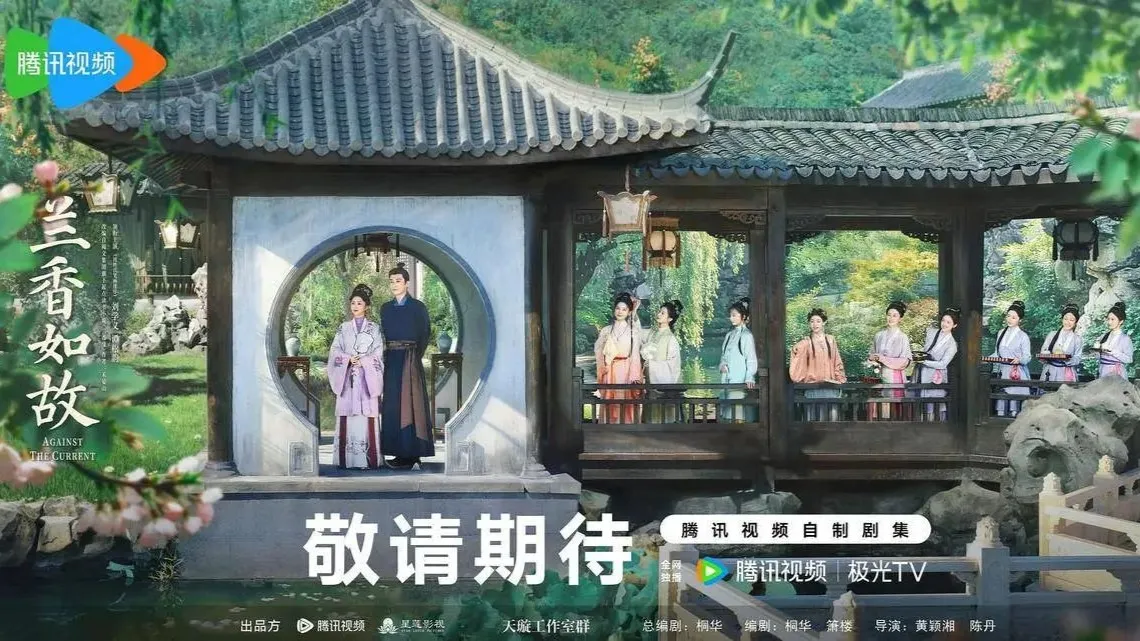
Against the Current Poster - Courtesy of Tencent Video

|
DetailsRATING: (8.5/10)
NATIVE TITLE: 兰香如故 - Lán xiāng rúgù YEAR: 2026 EPISODES: 47 DURATION: 45’ DIRECTOR: Huang Ying Xiang SCREENWRITER: Tong Hua, Xiao Lou ORIGINAL CREATOR: He Yan Shan (兰香缘 - The Orchid’s Fate) RESPECTED CLICHÉS: 1 - 4 - 6 - 7 - 9 - 10 - 11 - 13 - 17 - 18 - 20 |


Disclaimer: the opinions expressed in this review refer exclusively to the drama. As I have not read the original work, I cannot say with certainty whether the issues identified can be attributed to the screenplay or to the source material. For this reason, my comments on the writing should be understood as an assessment of the adaptation rather than a judgment on the original work.
IN A NUTSHELL
Short on time? Here you’ll find the quick verdict, including the drama’s main strengths, weaknesses, and key features to help you decide if it’s right for you. For a more in-depth analysis, continue with the No Spoiler Review.
- What to expect: Against the Current is a historical drama set in the Ming Dynasty that places family affairs, daily life, and character growth at the heart of the story. Although it is not an action drama, and the political intrigue remains largely in the background, the narrative does not rely on major plot twists to hold the viewer's attention. Its strength lies primarily in character development, the portrayal of family and social dynamics, and a female lead who successfully carves out her own space without needing to become an invincible heroine. Less convincing, however, are certain narrative choices that render the male lead selfish and arrogant at times, and the story more meandering than necessary. Overall, though, it is precisely this patient, immersive approach to storytelling, focusing on people and relationships, that makes Against the Current a far more engaging watch than one might expect.
- Strengths: the realistic portrayal of social dynamics, the compelling female characters, the simple but engaging plot.
- Weaknesses: the unhurried pace of the narrative, the large number of supporting characters, the male lead's initially selfish attitude.
- Recommended if you like: Liu Xueyi and Tan Songyun, historical family dramas, stories in which one of the protagonists hides their identity, series that spend a lot of time showing the evolution of relationships, dramas that address the theme of female emancipation, love stories that aren't overly passionate.
- Would I rewatch it? Yes, it's one of the historical dramas that most involved me this year.
Read on to find out why you shouldn't miss this drama.
Set amidst quiet courtyards, whispered secrets, and family dynamics constantly on the verge of shifting, Against the Current is an intense drama that invites viewers to slow down and savor every moment. Its plot allows characters time to evolve, relationships time to mature, and small turning points the chance to leave a lasting mark. It is precisely through getting to know the characters that we grow attached to them, ensuring that the consequences of their choices do not simply slip away without a trace. Engagement stems not from an urgent need to know what happens next, but from a desire to keep following the lives of figures who have truly earned a place in the viewer's heart.
In this review of the drama Against the Current, after watching all episodes, I will analyze how the series sustains a slow, intimate narrative without losing the viewer's attention. I will focus on character development, the portrayal of family and social dynamics, and Lan Xiang’s personal growth, evaluating how effectively these narrative choices create a story worth following.
Plot
Shen Jia Lan and Lin Jinqi are the grandchildren of two important ministers and are bound by a marriage agreement. The agreement, however, falls through when their families end up under accusation following the ascension to the throne of one of the emperor's brothers who is a political opponent of the guys' grandfathers.
To save his clan, Lin Zhao Xiang decides to recant his theses and retire to Jinling. Shen Qi Han, however, refuses to back down from his position, resulting in the death sentences of the male members of the family and the assignment of the women to the Imperial Music Bureau.
Before committing suicide along with the others, Jia Lan's mother manages to entrust her daughter to a couple of servants to whom she had previously given money to pay for the treatment of their sick — now deceased — daughter.
Under the name Xu Lan Xiang, Jia Lan grew up with her new parents and moved with them to Jinling, where her adoptive father worked in one of the Lin family's shops.
Meanwhile, Jinqi had married, but the conflictual relation with his wife and the need to produce an heir pushed his mother to hire new maids, including Lan Xiang. Thus, the girl began a struggle for survival within the Lin residence, where she had to learn to navigate the hierarchies of the family and befriended some of the other maids.
Once divorced from his wife, Lin Jinqi began spending much more time with Lan Xiang and ended up falling in love with her. Therefore, he asked the new emperor for a marriage decree so he could marry her.
Having unwillingly become part of the Lin family, Lan Xiang has to rely on her intelligence to face the family and marital difficulties she encounters and try to make work a marriage that, at least initially, she perceives as an imposition and a threat to her survival.
"My wife has shown me kindness, loyalty and love.
If I betrayed her for the sake of a son I’ve never even met, what kind of man would I be?"

THIS SECTION TAKES A CLOSER LOOK AT THE SCRIPT, CHARACTERS, CAST, AND TECHNICAL ASPECTS WITHOUT REVEALING MAJOR PLOT DEVELOPMENTS. FOR A COMPLETE ANALYSIS OF THE DRAMA, CONTINUE WITH THE SPOILER REVIEW.
Against the Current Drama Review (No Spoilers)
Plot and Narrative Pace
When I started Against the Current, I expected something very similar to Legend of Zang Hai: a story of plots, revenge, conspiracies, and political intrigue destined to subvert the imperial order. Instead, I found myself faced with a drama much closer to The Sword and the Brocade, in which family events and the characters' daily lives carry much more weight than grand conspiracies, and, honestly, I didn't mind that at all.
Against the Current is not a drama that focuses on a particularly complex story or exceptionally adventurous events. The story begins by showing Shen Jia Lan's struggles to adapt to a modest new life after the extermination of her family and to navigate the complex domestic hierarchies of the Lin family, before gradually expanding to the more familiar political intrigue surrounding succession to the throne. Yet the narrative doesn't need spectacular twists and constant escalations to maintain attention: despite its lack of action-based plot, Against the Current manages to be engaging because it devotes considerable space to exploring the inner worlds of its characters and manages to engage the viewer with what happens to them, even when the events aren't particularly epic.
The pacing reflects this approach, appearing slow and contemplative at times but never boring: instead of piling up twists and turns, the drama leaves room for everyday life, relationships, and the consequences of what happens, allowing scenes to breathe and giving relationships time to develop and strengthen. For this reason, I didn't perceive the simplicity of the plot and the slow pace of the narrative as a flaw: the time dedicated to the characters and their relationships makes us grow fond of them, and even seemingly small events take on enough narrative weight to engage us. Furthermore, tension is guaranteed by the small family intrigues and the challenges the protagonist faces in her daily life.
Characters and Love Story
If the plot of Against the Current manages to entertain even when it doesn't feature particularly elaborate plots, it's mainly thanks to its characters. Xu Lan Xiang is a deeply human, resilient, and resolute protagonist who possesses the rare ability to read people and situations even when she finds herself at a clear disadvantage: despite the sometimes difficult social dynamics in which she finds herself involved, she never stops finding solutions, making decisions, and trying to carve out a space for herself within a reality that isn't always benevolent.
This is also reflected in her relationship with Lin Jinqi: she can't tolerate him making decisions for her or trying to protect her by depriving her of her ability to choose. Their relationship initially works particularly well because the two are shown as a couple made up of two competent and autonomous people, capable of complementing each other without one necessarily having to replace the other. And this is precisely why Jinqi's attitude becomes a bit problematic when, in the middle of the drama, her love for Lan Xiang begins to transform into the belief that she has the right to choose what's best for her. However, the relationship subsequently evolves, and the couple regains its balance, working together again precisely because of each other's ability to recognize each other's skills. It must be said, however, that those looking for a love story filled with great romantic impulses may find Against the Current less engaging in this regard, as the relationship between Xu Lan Xiang and Lin Jinqi is built on a progressive understanding and the ability to support each other rather than on particularly overwhelming or passionate interactions.
Aside from the main couple, the supporting cast is generally well-developed, especially the female ones: the characters have their own relationships, interests, and conflicts, and don't seem to exist solely for the benefit of the protagonists, helping to lend credibility to the family and social network in which the story unfolds. The antagonists, on the other hand, are the least explored part of the cast: they remain more elusive and seem to be defined primarily by the plans they devise and the actions they implement rather than by their personalities or motivations. This choice works to keep the focus on the protagonists and their story, but it also makes the drama feel decidedly more biased toward their ordeals than the motivations of those who oppose them.
Cast
The cast is one of the aspects of Against the Current that I appreciated most, and I believe the casting choices contributed significantly to elevating a story that doesn't rely on action or the complexity of its plot.
Liu Xueyi and Tan Songyun once again prove themselves to be very capable actors, capable of offering performances that are both immersive and moving, and I must admit I'm particularly pleased that they were chosen for this drama, because they manage to make the protagonists' relationship believable even in its most complex phases. Although Lan Xiang, as is often the case with protagonists played by Tan Songyun, rarely shows a particularly overwhelming affection for Jinqi, I found their dynamic extremely successful: a few glances are enough for them to understand each other and a few words are enough for them to gradually grow fond of each other, and this also leads them to resolve misunderstandings in a rational, non-melodramatic manner.
The supporting cast also proved particularly well-rounded: I really appreciated Li Meng, who had already won me over this year in Rebirth, in the role of Grand Secretary Zhao's calculating and ruthless daughter, as well as Chen Chuang and Guo Ke Yu as the protagonist's loving and caring adoptive parents.
I also appreciated Guo Jia Nan's calm yet intense acting, Wang Jia Xuan's more light-hearted performance, and Zheng He Hui Zi's versatility, capable of switching between extremely positive characters and more devious roles while always maintaining a certain credibility.
Overall, all the actors seemed up to their roles and capable, with their acting, of bringing variety and depth to a plot that was at times rather slow and focused on psychological themes.
Visual Aspects and Soundtrack
The technical and visual aspects are probably the elements that contribute most to making Against the Current such a successful drama, because the aesthetic care that characterizes it doesn't just make it enjoyable to watch, but actually contributes to building its world and characters.
The direction often uses cinematic cuts and shots, as well as symbolic images that visually translate concepts just expressed by the characters: the weed that turns out to be an orchid or the orchid trampled when the soldiers arrest the women of the Shen family are images that add further weight to the story.
The homes are also particularly carefully crafted, both in terms of furnishings and spatial composition, which effectively frame the numerous domestic scenes that constitute the drama's core. Even the royal palace, represented by the Palace of the Ming and Qing Dynasties at Hengdian World Studios, offers picturesque views and visually sophisticated compositions, while the exterior settings, though sparse, manage to convey a sense of real places.
The cinematography helps maintain this impression of concreteness through the use of natural lighting, not overly saturated colors, and a sharp image without, however, slipping into the artificial look that often makes a historical drama seem like a studio production.
Costumes, makeup, and hair also play an important role in the reconstruction of the Ming era: the clothing is sumptuous but never excessive, the hairstyles elaborate without becoming whimsical, and the hair ornaments are consistent with the character and their social standing. The visual distinction between the different social classes is one of the most successful objectives, as the differences in status are made immediately perceptible without resorting to caricature.
Even the action scenes contribute to this quest for realism: the fights performed by Liu Xue Yi are engaging, but without transforming the protagonist into an infallible warrior, managing to convey the fatigue and difficulty of combat for a real soldier.
The soundtrack for Against the Current is probably the most substantial I've encountered this year in a romantic historical drama, and yet it's also one of the most enjoyable to listen to. Considering the number of songs, the risk of the melodies repeating themselves or becoming easily confused was far from remote, but in reality, that doesn't happen: on the contrary, thanks to the admirable work of composer Dong Dong Dong, it's one of the soundtracks I've found most varied.
The songs are predominantly slow and melancholic, exploiting the combination of Western and Eastern instruments to construct delicate, romantic, and nostalgic melodies, without ever slipping too far into the dramatic. Each piece effortlessly accompanies the drama's scenes and discreetly conveys its emotions, becoming a pleasant and coherent presence without overpowering the scene. Even individually, the songs are enjoyable to listen to and overall manage to maintain a certain originality, without resorting to those combinations of strings and traditional instruments so often found in historical drama soundtracks, which end up making them easily interchangeable.
The song that touched me most was 花开满篱院 (Flowers Bloom Along the Courtyard Walls), sung solo by the two leads: its delicacy is so subtle it almost moved me.

WARNING!
SPOILERS AHEAD. THIS SECTION PROVIDES A DETAILED ANALYSIS OF SPECIFIC ASPECTS OF THE SERIES. DO NOT CONTINUE IF YOU DON’T WANT TO KNOW ALL THE DETAILS OF THE DRAMA
Against the Current Drama Review (Spoilers)
What Works
The Realistic Portrayal of Social Dynamics
One of the things I appreciated most about Against the Current is the realistic yet not overly cynical way in which it depicts the society in which its characters live, and the fact that each character seems to have a life of their own beyond their relationships with others.
I liked that the story didn't use the family simply as a plot and a plot for revenge, but rather that it focused on everyday life, domestic balance, and family relationships, and that it presented the family as a place where affection, collaboration, and a sense of belonging can exist, and not just as a battlefield where everyone tries to dominate the others.
I really appreciated the way the Lin family treats their servants respectfully, without turning them into objects completely at the mercy of their masters' whims. This is precisely why I found Lan Xiang's treatment after her marriage all the more bitter: the fact that people who recognized her abilities and value when she was a maid then come to despise her for her humble origins when she becomes their daughter-in-law shows how social hierarchies could influence how a person was perceived in that era, even within the same social circle.
And it is precisely this attention to hierarchies and the consequences of social status that makes the dynamics of Against the Current effective: the drama doesn't simply use the historical context as a simple backdrop for the love story, but shows how family, marriage, reputation, and social position concretely influence the characters' possibilities and the way they are treated by others. At the same time, however, it doesn't transform these hierarchies into something irreversible.
In fact, the drama demonstrates repeatedly that occupying a seemingly disadvantaged position doesn't necessarily mean being powerless. Lin Jin Lan is perhaps the most obvious example: despite her physical fragility, during Prince Han's rebellion she becomes crucial to the family's salvation, overturning the paradigm whereby the physically weak must necessarily be the one to be protected. The same principle is found, in a different way, in Zhao Xing Tang, who, despite being a woman rejected by her husband, manages to maintain her dignity and resist being trampled upon. It is precisely this attention to the way people navigate social structures, without being completely defined by their position, that, for me, gives Against the Current a much richer dimension than that of a simple love story set in the past.
The Simple Yet Engaging Plot
Another thing I really appreciated is that Against the Current manages to keep the audience engaged even without constantly resorting to big twists or a particularly turbulent political plot.
Especially in the first half, when the series is still primarily a family drama, its narrative engine is almost simply the curiosity to see how Lan Xiang will overcome the daily challenges she faces. And it works because the series manages to give enormous weight to problems that, on paper, would seem relatively small: Lan Xiang doesn't have to foil an international conspiracy or go to war, but figure out how to behave with a specific person, protect someone from someone else's abuse, obtain information without exposing herself, or navigate a family hierarchy she doesn't know. These are situations much less spectacular than a battle for the throne, but for Lan Xiang, they have concrete consequences and therefore manage to generate tension without needing to constantly raise the stakes.
The pace also helps maintain a high level of engagement, thanks to a constant alternation between tension and relaxation: one problem is followed by a respite, then a moment of daily life, before a new difficulty emerges. Against the Current isn't an uninterrupted succession of potentially destabilizing events, but rather allows you to inhabit its world, and for this very reason, the moments with family and friends never seem like simple parentheses or filler. On the contrary, it is also through these moments that Lan Xiang builds a new network of relationships after losing her family of origin, and this places an ever-increasing importance on her survival: she's no longer simply trying to stay alive, but is starting to find people worth living for, and whom she, in turn, wants to protect. Consequently, the stakes rise, not only because the problems become bigger, but because the more connections Lan Xiang builds, the more she has to lose, and even a seemingly small problem can take on a much greater narrative importance.
This is probably also why I found the drama's family component so enjoyable: when there's a protagonist you truly care about, the question "What will happen to this person tomorrow morning?" can be enough to maintain interest even in the absence of conspiracies or wars. Following Lan Xiang's marriage to Jinqi, the political dimension takes on greater weight, as her husband's role ends up directly involving Lan Xiang in the events surrounding the stability of the throne. But even then, the drama doesn't abandon its family dimension, which remains one of the series' most satisfying subplots.

The Characterization of Female Characters and the Protagonist
Beyond the family and political plot, a theme that defines Against the Current and makes it, in my opinion, particularly unique and interesting, is that of the female condition. The drama portrays women not through a single exceptional heroine, but through a whole range of female characters who demonstrate how different the way of being in the world can be when that world is constructed according to rules established by men. Wives, daughters, mothers, widows, women who conform like Zhao Xing Tang, women who compromise like Lin Xiu Lai, women who seek autonomy like Lv Ji Er: each one confronts in her own way the limits imposed by sex, family, marriage, and social position.
It is precisely in this mosaic that Xu Lan Xiang emerges as a particularly successful protagonist. Not because she's one of those usual C-drama badasses, the rebellious and unconventional ones who are always one step ahead of the rest and seem born with the sole purpose of proving how extraordinary they are. Her strength is more subtle and, precisely for this reason, more interesting: Lan Xiang knows how to observe, read situations and people, use words, adapt to circumstances, find a way out when seemingly none exists, and turn even a position of extreme vulnerability into an advantage. Above all, she doesn't let circumstances dictate who she becomes. She can be fragile without becoming passive, she can need others without becoming dependent on them, she can make mistakes without losing her autonomy. And above all, she doesn't need to be transformed into a "strong" woman according to male standards to be a heroine.
One of the aspects I most appreciated about her characterization, however, is that this strength isn't present from the beginning nor does it arise from nowhere: Lan Xiang grows through what happens to her. At the beginning, she's a young woman who has lost literally everything: her family, her social standing, the future she was promised, and even her identity. Her survival is far from triumphant: on the one hand, she was incredibly lucky to have found two people who saved her and welcomed her with love; on the other, she finds herself living in poverty, assuming the identity of the couple's dead daughter, and when she discovers that the Lin family has already arranged another marriage for Lin Jinqi, she doesn't even have the chance to reclaim the place she should have occupied.
But the script gives her something that many dramas seem to forget: time to process the trauma. Her evolution follows a very human progression: first she must survive, then process what has happened, then realize what she has lost and what her new life now holds, and finally develop the desire to fight back. And even as she grows progressively stronger, Lan Xiang never stops carrying what she has experienced with her. When she returns to the Lin family as a daughter-in-law thanks to the marriage decree requested by Jinqi, she does not do so as a young woman finally achieving social redemption: she returns to that family burdened by the memories of the life she lost and the trauma she endured. The death sentence of the men in her family and the suicide of the women are still fresh in her memory, and the fact that the Lins end up rejecting her again, this time because of her humble origins, makes her stay among them even more painful. It is precisely this continuity between past and present that makes her evolution believable: Lan Xiang can learn to live, love, and defend herself without forgetting the past.
Lan Xiang's strength also emerges in her relationship with Lin Jinqi. She doesn't need the male protagonist to get out of dangerous situations: she can handle herself and, over the course of the story, even proves to him that her capabilities are greater than he had imagined. Jinqi believes that his love gives him the right to decide what's best for the woman he wants by his side, but Lan Xiang forces him to reconsider through her actions: contrary to what he thinks, she doesn't claim the right to love another man, but the right to choose her own life. And if Jinqi ends up understanding this, it's because Lan Xiang concretely demonstrates to him that she's not a woman to be protected at all costs.
The most significant example is when Lan Xiang saves his life: when he is wounded and hunted by rebels, she carries him to safety, keeps him alive, and resists until help arrives. It's a scene that perfectly reverses the model of the damsel in distress saved by the hero: Lan Xiang doesn't have to become stronger than men to be the heroine of her own story, she simply needs to be able to act. And so it is she, the woman Jinqi had thought to honor by making decisions for him, who shows him that she is perfectly capable of making it on her own and, when necessary, even saving him.
Lan Xiang is strong because she continues to choose, to reason, to love, and to defend her right to decide her own life even when the starting conditions seem designed to deprive her of any possibility of choice. And when the world tries to decide what's best for her, she doesn't need to proclaim herself a rebel: she simply continues to act according to her principles and move forward. And perhaps this is precisely what makes Against the Current so interesting in its portrayal of its women: it doesn't pretend they are invulnerable in order to recognize their strength and their right to be protagonists of their own stories.

What Doesn't Work
The Large Number of Supporting Characters
One aspect of Against the Current that I found a bit problematic is the high number of supporting characters that appear throughout the story, as it sometimes makes it difficult to navigate the plot.
And further complicating matters is the way some of them are introduced: it's quite common for a character to appear for a handful of seconds or a single scene and be introduced with such emphasis that it seems like they're destined to play a major role in the story. In some cases, their presence may actually be relevant to what's happening at that precise moment, but many of these characters are then dismissed a few minutes later and never seen again.
This ends up creating some confusion, because the viewer naturally tends to register a character introduced in this way as a supporting character in the story and wonder what their role will be, only to discover shortly thereafter that they were essentially a passing appearance.
The problem, therefore, is not only the number of characters, but also the way the drama attributes a narrative importance to them that often isn't maintained, making it more difficult to know which figures are truly worth keeping in mind.
The Male Lead's Initially Selfish Attitude
Another aspect of Against the Current that I found less successful is Lin Jinqi's attitude toward Lan Xiang in the central part of the drama. His love for her ends up transforming, at least for a while, into a sort of right to decide for her. This becomes especially evident when, unbeknownst to everyone, he asks the emperor for a decree to marry her, later telling her that, in this life, she could only be his wife. Even more serious is the fact that he drugges her to force her to follow him to the capital: it's true that he does this to prevent her from being alone in a residence where everyone is hostile and devalued, but in doing so, he not only protects her against her will, he also prevents her from making her own decisions, just when she was about to decide to go along with him.
Jinqi's problem is not only an excess of possessiveness, but also a certain egocentrism: he interprets everything starting from what he feels and wants, to the point of reading Lan Xiang's rejection through his own jealousy. In fact, he convinces himself that she rejects him because she loves Han Liang, instead of wondering if it's his behavior that hurts her. And here lies the real misunderstanding: Lan Xiang is not claiming the right to love another man, but the much more basic right to decide about her own life.
For a few episodes, I had the distinct feeling that the drama was about to fall back into the usual cliché of male paternalism masquerading as romance — I decide because I love you, I hide things from you because I want to protect you, I stop you from doing something because I know what's best for you — and, above all, I feared that this might compromise the very dynamic I appreciated most about their relationship: their complementarity. Jinqi and Lan Xiang initially worked because they were two independent people, capable of managing on their own and becoming even more effective when they chose to collaborate. This is why I hoped that marriage would strengthen that partnership, not turn it into the usual relationship in which he takes care of political matters while she stays home to take care of the servants, worrying about him when he's away, and bringing him cups of tea when they're together, as I perceived in the second part of The Road to Splendor.
Fortunately, the drama didn't take this path to its extreme consequences: Jinqi gradually comes to understand that loving Lan Xiang doesn't mean having the right to make decisions for her or solve her problems without being consulted, but learning to trust her and to consider her again as a partner, not as someone to be protected at all costs.

Ending
I particularly appreciated the ending of Against the Current for its decision not to consider the marriage and birth of their children as the culmination of the story. After recounting the events that in a traditional drama would have constituted the natural "happily ever after," the series continues to follow Lan Xiang and Jinqi, demonstrating that even after reaching those milestones, their lives aren't over. I find this a particularly successful choice because it finally allows us to see what happens to the protagonists after their youth, rather than relegating the rest of their years to a final frame or a post-credits scene.
And, above all, the ending shows that their marriage isn't just about living together: while they aren't a particularly passionate couple, Jia Lan and Jinqi share much more than just physical closeness. There are several scenes in which they seek each other out, share pain, thoughts, and worries, and make important decisions together, which affect not only their family, but even the safety of the entire clan. It's a simple yet effective way to convey that the two truly continue to share their lives as a couple. I'm thinking, for example, of the scene where Jinqi returns home after more than a year spent on a mission in the capital, and Lan Xiang helps him bathe while he tells her what happened during their separation. Or the scene where, before going to sleep, he explains that he went to the temple of the god of marriage to ask if they can still be a couple in the future, and he pulls out a red thread that ties him to her.
Even the decision to bring back Du Cui Que as the pirate leader, after sixteen years of silence during which everyone thought she was dead, a scene I would normally have viewed with some suspicion, proved interesting. It's not about artificially resurrecting a defeated villain to create a new conflict, but rather showcasing the resilience of a woman who managed to survive adversity, reinvent herself as a pirate leader, and return not only to settle scores with the protagonists but also with an ambitious plan to conquer the kingdom. Her return doesn't erase the previous defeat: we don't suddenly discover that "she was actually very strong and no one had understood anything." Du Cui Que had indeed been defeated; simply, the conclusion of the first battle doesn't coincide with the end of her life. This is an element I find consistent with the way Against the Current portrays its women: resilient and capable of reinventing themselves even when they don't have the same means and opportunities as men. And there's also an important narrative advantage: Du Cui Que's return allows us to test the protagonists' evolution and demonstrate that consequences don't disappear simply because they've managed to overcome a problem.
The ending of Against the Current finally reveals another aspect that many dramas merely hint at: the passage of time. Some characters, like Xue Gui Hua, are taken away by old age; others, like Qin Shun Hua, by illness; some, like Marquis Yongchang, die in the line of duty. Meanwhile, however, new bonds are formed, like that between Zhou Gan Tang and Du Da Song or that between Du Xiao Lan and Nan Ke, while other relationships are rekindled, like that between Lin Xiu Wan and Xie Zhao. And perhaps it is precisely this that makes the ending of Against the Current so consistent with what the series has shown up to that point: it doesn't simply tell us what happens after "happily ever after," but tries to show us what it really means to continue living.

Characters and Cast
Primary Characters
Shen Jia Lan/Xu Lan Xiang (Tang Song Yun) first young lady of the Shen Family. After her family's conviction, she manages to escape from the Imperial Music Bureau by replacing the deceased Xu Lan Xiang, a child she had previously helped pay for her medical care. She then moves with Xu Lan Xiang's parents to Jinling, where her adoptive father finds work as a clerk in the Lin Family's antique shop. When First Lady Lin seeks a concubine for Lin Jinqi, she is hired as a third-rank maid at the Lin residence. Thus begins a struggle for survival in a world of conflict, secrets, and rigid hierarchies, culminating in her marriage to the man who had abandoned her years earlier.
Lin Jinqi/Feng Tai (Liu Xue Yi) first young lord of the Lin Family. To escape the control of his wife's powerful family, he abandons his studies and joins the army, where he earns merit in the field. When he returns home with the rank of deputy commander of the Shence Regiment (卫指挥佥事), he discovers that his wife is secretly running a loan sharking business and, under the pretext of having exposed her infidelity, forces her to agree to a divorce. The end of their marriage leads him to spend more time with Xu Lan Xiang, with whom he eventually falls in love. Having gained the Crown Prince's favor, he then asks for a marriage decree allowing him to marry Lan Xiang despite his family's opposition, a decision that, however, incurs her ire. With her cooperation, he later succeeded in suppressing Prince Han's rebellion, obtaining the title of Grand Commander of the Left of the Grand Rearguard Command (後軍都督府左都督) and that of Marquis Jing'an, but he then resigned from the post to return with his wife to Jinling.
Supporting Characters
Shen Family
Shen Qi Han (Zhang Shen) Minister of Rites (礼部尚书), a senior second-rank official (正二品 ), Grand Secretary of the Wenhuang Pavilion (文渊阁大学士) and paternal grandfather of Shen Jia Lan.
Gu Xuan (Yan Xiao Pin) wife of Shen Qi Han and paternal grandmother of Shen Jia Lan.
Shen Bo Ru (Zhang Duo) first lord of the Shen Family, father of Shen Jia Lan and judge of the Court of Judicial Review (大理寺左寺丞), a senior fifth-rank official (正五品).
Cui Xue Mei (Ke Lan) first lady of the first branch of the Shen Family and mother of Shen Jia Lan.
Sun Wu Jing (Wu Qian) housekeeper of Cui Xue Mei.
Qiu Kui (Meng Xu Zhou) personal maid of Shen Jia Lan.
Xu Chun (Zhou Zhi) first lady of the second branch of the Shen Family and aunt of Shen Jia Lan.
Shen Jia Lian (Li Zhi Mo) younger cousin of Shen Jia Lan and daughter of Xu Chun.
Shen Qi (Xing Jing Yang) second lady of the second branch of the Shen Family and concubine of Shen Jia Lan's second uncle.
Chu Heng (Xi Wang) first lady of the third branch of the Shen Family and aunt of Shen Jia Lan.
Lin Family
Lin Zhao Xiang (Hou Chang Rong) Minister of Personnel (吏部尚书), a senior second-rank official (正二品) and paternal grandfather of Lin Jin Qi.
Jiang Lantian (Wang Ya Jun) wife of Lin Zhao Xiang and paternal grandmother of Lin Jin Qi.
Lin Chang Zheng (Zhang Yi) administrative head of the Office of Sacrificial Rites (太常寺典簿), a senior seventh-rank official (正七品) and father of Lin Jin Qi.
Qin Shun Hua (Kong Ling Mei) first lady of the first branch of the Lin family and mother of Lin Jin Qi and Lin Xiu Shu.
Lin Xiu Shu (Liu Jia Xi | Lu Wen Xin) fourth young lady of the Lin family, daughter of Qin Shun Hua and younger sister of Lin Jin Qi.
Yang Cong (Zhang Jia Shuo) husband of Lin Xiu Shu.
Lin Xiu Lai (Pu Tao) first young lady of the Lin family, daughter of Qiao Hong Dou, first concubine of Lin Chang Zheng.
Lu Ying Zhi (Wang Xing Yi | Peng Duo Er) daughter of Lin Xiu Lai and Lu Jian.
Lu Juan (Gao Jia Ze | Yang Rui) son of Lin Xiu Lai and Lu Jian.
Zhou Gui Zhi (Ma Ding) second lady of the first branch of the Lin family, concubine of Lin Chang Zheng, and mother of Lin Jin Lan and Lin Xiu Ru.
Lin Jin Lan/Sui Yun (Guo Jia Nan) second young lord of the Lin family, son of Zhou Gui Zhi. He has a heart condition that prevents him from taking on heavy duties.
Tan Su Hua (Wu Tian Qi) wife of Lin Jin Lan.
Lin Zhangrui Son of Lin Jin Lan and Tan Su Hua.
Lin Xiu Ru (Ma Fan Ding) third young lady of the Lin family, daughter of Zhou Gui Zhi. She will marry Marquis Yongchang.
Lin Changmin (Wei Zi Xin) lord of the second branch of the Lin family and uncle of Lin Jin Qi.
Wang Ling Xiao (Zhao Qin) first lady of the second branch of the Lin family and aunt of Lin Jin Qi.
Lin Xiu Wan (Wu Tian Tian) second young lady of the Lin family, daughter of Wang Ling Xiao and cousin of Lin Jin Qi.
Lin Jin Qiao (Wang Jia Xuan) third young lord of the Lin family, son of Wang Ling Xiao and brother of Lin Xiu Wan.
Cheng Fengxian (Fang Yue Qiao) wife of Lin Jin Qiao.
Lin Jin Chen (Shan Yu Hao) fourth young lord of the Lin family, son of Wang Ling Xiao and brother of Lin Xiu Wan.
Gao Qiuluo, wife of Lin Jin Chen.
Lin Zhang Cheng (Zhang Cheng Yi | Qi Xin Rui) eldest daughter of Xu Lan Xiang and Lin Jinqi.
Lin Zhang Run (Nie Jia Yan) second son of Xu Lan Xiang and Lin Jinqi.
Servants of the Lin Family
Jiu Gao (Pan Yi Hong) attendant to Lin Jin Qi (亲随). After Lin Jin Qi puts down Prince Han's rebellion, he is appointed Battalion Commander.
Nan Ke (Wang Hong Xin) attendant to Lin Jin Qi (亲随). After Lin Jin Qi puts down Prince Han's rebellion, he is appointed Deputy Battalion Commander.
Han Dong Qing (Jia Shu Yi) housekeeper to Lin Jin Qi.
Yu Chan (Ye Qing) first-rank maid of the Zhichun court and personal servant to Lin Jin Qi. She will become first-rank maid to Xu Lan Xiang, then marry Jiu Gao.
Feng Cang'er (Shi Yu Feng) Zhao Xing Tang's housekeeper. She is killed by the Zhao family when it is discovered that Zhao Xing Tang was having an affair with his cousin to avoid gossip.
Qing Xiang (Gao Rong) Zhao Xing Tang's first-rank maid who helps her keep the accounts of her loan sharking business. She is married to Mr. Yang, the butler of the Lin Mansion in Jiangnan, when First Lady Lin discovers her daughter-in-law's loan sharking activity.
Zi Jin (Yuan Yi) Zhao Xing Tang's first-rank maid. She is killed when it is discovered that Zhao Xing Tang was having an affair with his cousin to avoid gossip.
Lu Cao (Cai Ze Min) Zhichun court second-rank maid. She is sold by the Zhao family when Lin Jinqi discovers that Zhao Xing Tang is having an affair with his cousin.
Jin Zhan (Yang Kui Kui) second-rank maid at the Zhichun court who tends the garden.
Bao Gai (Tang Meng Jia) second-rank maid at the Zhichun court who tends the tea room and hot water supply. She later becomes a first-rank maid to Xu Lan Xiang.
Zhou Gan Tang/Ying Ge (Li Jia Xin) daughter of a dower maid of Qin Shun Hua. She is hired as a third-rank maid at the Lin residence. She later becomes a first-rank maid to Xu Lan Xiang, then marries Du Da Song and opens the Zhize Weaving Workshop.
Du Xiao Lan (Song Fang Yuan) daughter of a retainer of the Second Lord of the Lin family. She is hired as a third-rank maid at the Lin Mansion. She will become Xu Lan Xiang's first-rank maid, then marry Nan Ke.
Lv Ji Er/Miss Shuang (Liu Mei Han) niece of the second manager of the Lin farm and Xu Lan Xiang's neighbor in Jinlin. She is hired as a third-rank maid at the Lin Mansion but is sold along with her entire family when Zhao Xing Tang discovers she is trying to curry favor with Lin Jinqi.
Yang Zhong (Ding Zheng Yong) head butler of the Lin Mansion in Jinling.
Yang Fu (Wei Yu) head butler of the Lin Mansion in the capital.
Wu Suan'er (Hong Hua) Qin Shun Hua's housekeeper and Jiu Gao's mother.
Yin Chen (Kui Yuan) Qin Shun Hua's first-rank maid.
A'Wei (Guo Rong Rong) Qin Shun Hua's first-rank maid.
Nan Xing (Wang Jia Xin) Wang Ling Xiao's first-rank maid.
Zhou Ci'er, nanny of Lin Xiu Wan.
Yin Xian (Xu Nuo) Lin Xiu Wan's second-rank maid.
Tong Cao (Ding Zi En) Lin Xiu Ru's second-rank maid.
Zhao Family
Grand Secretary Zhao Jin (Qu Gang) Junior Guardian (少保), Minister of Personnel (吏部尚书), a junior first-rank official (从一品) member of the Grand Secretariat (大学士) and grandfather of Zhao Xing Tang.
Zhao Xue De (Wang Yu Ning) lord of the first branch of the Zhao family and father of Zhao Xing Tang. He is the judicial officer of the Zhejiang Administrative Department (浙江布政使司理问), a junior sixth-rank official (从六品).
An Mo Li (Xie Cheng Ying) lady of the first branch of the Zhao family and mother of Zhao Xing Tang.
Zhao Gang (Sun Zhong Qiu) young lord of the first branch of the Zhao family and older brother of Zhao Xing Tang.
Zhao Xing Tang (Li Meng) first young lady of the Zhao family and wife of Lin Jin Qi. The two divorce after he discovers she is having an affair with his cousin.
Zhao Xing Hui, young lady of the second branch of the Zhao family and cousin of Zhao Xing Tang.
Zhao Xing Luo, sixth young lady of the third branch of the Zhao family, cousin of Zhao Xing Tang and wife of Xie Zhao.
Qian Shao Ze/Miss Qian (Ma Wen Yuan) Zhao Xing Tang's cousin with whom she has an affair and who helps her run her loan sharking business.
Xie Family
Xie Zhao/Xian Zhang (Wu Jia Kai) scholar young lord from the Xie family of Meizigang and a suitor of Lin Xiu Wan. After Lin Jinqi divorces Zhao Xing Tang, his family pressures him to marry Zhao Xing Luo.
Xie Feng (Luo Yu Tian) Xie Zhao's younger sister.
Dai Family
Dai Qing (Yang Jun Bai) Dai Rong's father and Zhao Xing Tang's new husband. After his son's conviction, he is demoted and then appointed Superintendent of the Imperial Banquet Bureau (光禄寺卿), a junior third-rank official (从三品).
Dai Rui (He Bin) eldest son of Dai Qing, judge of Shuntian Prefecture (顺天府推官), a junior sixth-rank official (从六品).
Dai Rong (Su Dong Qing) secretary of the Jinling Ministry of Revenue (金陵户部主事), a senior sixth-rank official (正六品), son of Dai Qing and an opponent of Lin Jin Qi.
Yin Lan’e (Yan Zhi Yao) wife of Dai Rong.
Lu Family
Lu Jian (Xin Peng) husband of Lin Xiu Lai. He is a scholar who, after passing the provincial imperial examination, was unable to advance his career and therefore used his wife's dowry to try, in vain, to gain the favor of public officials.
Lu Ju (Ren Xue Hai) Lu Jian's father and head of the Works and Construction Bureau of the Ministry of Works (工部营缮所正), a senior seventh-rank official (正七品).
Sun Bao Zhu (Xu Yu Lan) old lady of the Lu family and mother of Lu Jian.
Jin Rui (Guo Xiao Yuan) first-rank maid to Lin Xiu Lai.
Lu Xie's Residence
Lu Xie/He Zhi/Zong Bai (Su Ke) seventh lord and sole survivor of the Lu family of Jinling. He is a rather eccentric man, the author of plays and the owner of the calligraphy and painting supplies shop where Xu Wan Quan is employed.
Tu Wu (Chen Xu Ming) former servant of the Lu family and Lu Xie's butler.
Han Liang/Yi Zhen (Niu Jun Feng) scholar who works for Lu Xie and falls in love with Lan Xiang. He ranks third in the Imperial Metropolitan Examination and becomes a compiler (編修) of the Hanlin Academy. Following the capture of the Emperor by the Wona and the ascension of Prince Chen to the throne, he is appointed Minister of War.
Han Ju, Han Liang's older sister. Widowed and childless, she is taken to live with her brother in the Lu Residence.
Feng Lin (Zheng Wei Li) Han Liang and Han Ju's mother.
Marquis Yongchang's Residence
Yuan Shaohui (He Peng) Marquis Yongchang (永昌侯) Commander of the Xinjiangkou Naval Unit (新江口水师营 指挥使 ). When Jinqi becomes involved in the case of the defective military jackets, he asks for his help, and the two become friends.
Chen Shaoxin (Jin Shun Zi) Venerable Lady of the Yuan family and mother of Yuan Shaohui.
Huang Mainiang (Zhao Shi Meng) Wife of the late Marquis's younger cousin.
Yuan Jiarong (Fang Ruo Xi | Du Luo Tong) Twelve-year-old daughter of Yuan Shaohui and his late wife.
Yuan Jiawei (Li Mei Ru | Lu Qiao Yi) first daughter of Yuan Shaohui and Lin Xiu Ru.
Yiuan Jiaqin (Li Yu Cheng | Wang Yi Jin) second daughter of Yuan Shaohui and Lin Xiu Ru.
Yuan Jiaming (Luo Zi Qi) third daughter of Yuan Shaohui and Lin Xiu Ru.
Ding Peng (Liu Bang Hao) assistant deputy commander (卫指挥佥事) and attendant (亲随) of Yuan Shaohui.
Mr Fu, head butler of Marquis Yongchang's residence.
Bi Wu (Zhang Yan) daughter of Mr. Fu and Chen Shaoxin's first maid. The Venerable Lady would like her to become Yuan Shaohui's concubine.
Residence of the Duke of the State Xian
Zheng Baichuan (Shen Tai) Duke of the State Xian (显国公), joint commander of the defense of Jinling (金陵协同守备), commander of the Grand Rear Command (后军都督府都督) and in charge of the Grand Rear Command prison.
Wei Tian Xuan (Yang Qi) mother of Zheng Manyi and Duchess of the Xian Kingdom.
Zheng Yun (Pan Yin Fei) second son of Zheng Baichuan and patrol commander of the Grand Rear Command (后军都督府巡逻将领), a senior fifth-rank official (正五品).
Zheng Manyi (Jia Ze) is the youngest daughter of the Duke of the State Xian, who enjoys the sympathy of Consort Dowager Zheng.
Imperial Court
Crown Prince/Emperor (Kong Lian Shun) is the Emperor's more moderate son, to whom he hands the kingdom on his deathbed.
Wang Cheng (Meng Xiang Liang) eunuch in the service of the Crown Prince (太子内侍). When the prince ascends the throne, he becomes a eunuch of the Qianqing Palace (乾清宫近侍), a senior fourth-rank official (正四品) of the Secretariat of Rites (司礼监太监).
Hai Tao (Ge Xing Jia) eunuch of the Qianqing Palace [Hall of Heavenly Purity] (乾清宫近侍), a senior fourth-rank official (正四品) of the Secretariat of Rites (司礼监太监).
Xie Shilian (Ren Wei) Junior Preceptor of the Crown Prince (太子少傅), a senior second-rank official (正二品).
Prince Han (Li Hong Liang) Crown Prince's authoritarian brother. After the latter's coronation, he attempts to usurp the throne but is stopped by Lin Jinqi's intervention.
First Prince/Emperor (Yang Kai Cheng) Crown Prince's son. He ascends the throne following his father's sudden death, but is captured by the Wona during a military campaign against them.
Wang Yi, chief eunuch of the Secretariat of Rites (司礼监掌印太监) and attendant to the First Prince. When the First Prince ascends the throne, he becomes one of the most powerful court officials and appoints Lin Jinqi as Commander of the Longjiang Regiment (龍江卫指揮使).
Eunuch Cao, a senior fourth-rank official (止四品) of the Superintendence of Imperial Apparatuses (司设监太监) and attendant to the First Prince. When the First Prince is freed by the Wona, he persuades him to impeach the ministers who had replaced him with Prince Chen.
Eunuch Mao (Guo Han) a senior fourth-rank official (正四品) of the Secretariat of Rites (司礼监太监) during the reign of the First Prince. He is in league with Du Cui Que's pirates.
Prince Chen/Emperor, provisional emperor elected after the First Prince is captured by the Wona.
Shence Regiment
Du Zheng/Cong Yi (Ye Xiao Wei) Squad Commander (小旗) of the Jinzhou Shence Regiment, who became a close friend of Lin Jinqi after saving his life.
Sun Yong (Zhao Zi Chong) Platoon Commander of the Shence Regiment (神策卫总旗) and Lin Jin Qi's subordinate. After opposing him over the defective military jackets, he will change his mind and become his closest collaborator.
Liang Yu (Li Hong Kai) Commander of the Shence Regiment (神策卫指挥使), a senior third-rank official (正三品) and Lin Jin Qi's superior. Lin Jin Qi takes his place after he is convicted of colluding with the Japanese and attempting to kill Marquis Yongchang.
Lu Dalang/Lord Fujiwara (Yang Sen Huan) is a merchant who supplies winter jackets to the Shence Regiment, but their poor quality causes the deaths of some soldiers. In reality, he is a Japanese man smuggling cotton from China to his country and agrees to help Dai Rong frame Lin Jin Qi in exchange for impunity.
Shenji Army
Chen Qi (Geng Yi) is the deputy commander of one of the Grand Military Commands, overseer of the Shenji Army (提督神机营), Lin Jin Qi's superior, and a former comrade-in-arms of Prince Han. He will support Prince Han's attempted rebellion.
Zhang Liu (Yu Ya Nan) wife of Chen Qi.
Other Military Officials
Liu Xiao Chuan (Yao Yi Qi) Commander of the Military Bureau of the Southern District (南城兵马司指挥使) of Jinling.
Duke of the State Ying (Wang Bo Qing) Grand Preceptor (太师), Superintendent of the Wujun Army (提督五军营), and Grand Commander of the Left of the Grand Central Command (中军都督府左都督).
Xu Guang Yi (Cheng Guo Dong) Duke of the State Xiang (襄国公) commander of the Grand Central Command (中軍都督府都督) and Commander of the Jinling Defenses (金陵守备).
Xu Sizi (Li Kun Lin) son of Xu Guang Yi and Deputy Commander of the Jinling Brocade Guards (金陵锦衣卫指挥佥事), a senior fourth-rank official (正四品).
Yang Pu (Yuan Shuai) deputy commander of the Brocade Guards (锦衣卫指挥同知) of Jiangnan, a junior third-rank officer (从三品).
Commander Tian, commander of the Tiance Imperial Guard, under Prince Han's command.
Magistrate Qian (Bai Hai Tao), military magistrate of the Tiance Imperial Guard (天策卫镇抚), a junior five-rank official (从五品) under Prince Han's command.
Wei Bao (Fan Yi Ning), commander (千戶) of Prince Han's personal guard.
Other Characters
Xu Lan Xiang (Xue Yu Fei), a sickly little girl to whom Shen Jia Lan's mother gives money to pay for her medical treatment. On the day of her death, her parents accidentally encounter Cui Xue Mei and Shen Jia Lan at the Imperial Music Bureau and decide to save Shen Jia Lan by replacing her with her body.
Xu Wan Quan (Cheng Chuang) father of Xu Lan Xiang. Thanks to Shen Jia Lan's help, he is appointed third manager of the Lin's antique shop in Jinlin.
Xue Gui Hua (Guo Ke Yu) mother of Xu Lan Xiang.
Mr. Lv (Gong Ping Xiang) patriarch of the Lv family and grandfather of Lv Ji Er.
Wang Jin Pan (Ru Tian) mother of Lv Ji Er.
Liu Wu Jiu (Wang Xiao Long) the Xu's neighbor in Jinling.
Hu Sui Er (Wang Zhi Yuan) wife of Liu Wu Jiu.
Mai Lan Zi (Liu Hui Yi) Du Xiao Lian's grandmother.
Chen Cui Zhu (Peng Sai) mother of Du Xiao Lian.
Du Da Song (Shao Wei Tong) Du Xiao Lian's older brother.
Du Cui Que (Zheng He Hui Zi) Du Zheng's younger sister, who is hosted at the Lin residence and attempts to marry Lin Jinqi by framing him.
Ling Dang (Ao Hua Xiao) Du Cui Que's personal maid.
Fu Rong (Guan Chang) actress and head of the Jinling theater troupe, a friend of Lu Xie.
Fang Yu/Shou Yi (Wu Xiao Dong) great scholar from Qixia Academy (栖霞书院大儒), whom Lin Jin Qi takes to Mrs. An's birthday party.
Liu Yue Niang (Wang Yi Chan) owner of the Qingyan brothel in Yangzhou.
Xiao Pu (Xu Ling Ruo) Lv Ji Er's personal maid at the Qingyan brothel.
A'Zhi (Wen Qing) girl Lan Xiang meets at the Qingyan brothel and redeems.
Ting Lizi (Zhao Yi Jia) head of the Xiaofurong theater troupe in the capital.
Xiao Shun Qing (Gong Zheng Ye) performer of the Xiaofurong theater troupe in the capital.
Dong Qingzhu (Dong Qing) daughter of the vice-magistrate (县丞) of Wanping County. She will marry Han Liang.
Prefect Liu, prefect (府尹) of Shuntian, a senior third-rank official (正三品) and brother-in-law of the Duke of the State Ying. He is the official in charge of ruling on Lin Xiu Lai's divorce petition.
Doctor Yao (Yu Qing Hui) physician of the Imperial Medical Hall (太医院御医), a senior eighth-rank official (正八品) who examines Lin Xiu Lai after she decides to divorce Lu Jian.
Gu Youzi/Mrs. Peng (Yang Kai Chun) weaver from the Zhize workshop. She is kidnapped by Du Cui Que pirates along with Lin Xiu Wan.
Zhang Shuizai (Xin Hao Jiang) second leader of the pirates and right-hand man of Du Cui Que.

Favorite Character: The Xus
They are a simple, generous, and altruistic couple, who never forget the kindnesses they have received and strive to repay them in every way. Indeed, the two do not hesitate to return the favor done for them by Cui Xue Mei in paying the medical bills for her sick daughter. When they find her at the Imperial Music Bureau, desperate to save Jia Lan's life, they entrust her with their daughter's lifeless body, thus allowing Jia Lan to escape, knowing that, if discovered, they risk being punished for escaping justice for the daughter of a criminal.
To protect her, they give up their jobs in the capital and move to Jinling, where, despite their status as slaves, they do everything they can to give her a dignified life.
Seeing her struggle to adapt to her new reality and overcome the grief of her family's death, they treat her with affection and support her in every way, never weighing on her for the sacrifice she made to save her or for not being able to give their daughter a proper burial.
Even when their social status makes them vulnerable, they try to protect her and prevent her from living like a slave, going as far as to ensure she doesn't have to work as a maid for wealthy families and even attempting to bribe anyone who can prevent her from entering the Lin family's service. Their kindness, however, sometimes leads them to be overly trusting: they are courteous even to jealous and selfish neighbors and often end up being deceived.
At the same time, they have great faith in Jia Lan's judgment and often follow her advice. Xu Wan Quan agrees to work as a clerk in Lu Xie's painting and calligraphy shop, even though his salary is tied to sales. They even give her their meager savings when Jia Lan, to avoid charges of concealing her owner's illicit affair, ruins the dress of a customer at the Jinxiu shop and finds herself having to compensate her.
They always try to make things easy for her and offer her a peaceful life, so much so that they decide to accept the marriage proposal of Han Liang, a promising student who is clearly in love with her.
In the end, thanks to Jia Lan, they manage to free themselves from slavery and build a better life. More than a reward for what they did for her, however, their happy ending seems like a natural recognition of all the love, care, and sacrifice with which they raised a child who was not their own.
Un-Favorite Character: Lin Chang Zheng
He is a mediocre, selfish, and ambitious man, lacking the talent to build a career of his own and therefore determined to place all his ambitions in his son.
After arranging an advantageous marriage for Jinqi to the Shens, when the family is accused of high treason, he does not hesitate to abandon his future in-laws and daughter-in-law to their fate, supporting his father's decision to retire with the entire family to Jinling.
Later, to repay Grand Secretary Zhao for putting in a good word for his father, he has no qualms about marrying his son to the proud Zhao Xing Tang. He then resents Jinqi when, discouraged by his wife's attitude and destined to become a puppet in Zhao Jin's hands, he gives up his career as an official to join the army and build a position for himself through his own merits.
His resentment toward his son grows further when Jinqi, concerned about his wife's secret loan sharking and exasperated by her behavior, decides to divorce her, fearing that the decision would compromise the family's prestige and invite retaliation from the Zhao family.
The height of his hostility toward Jinqi, however, comes when his son decides to ask the emperor for a marriage decree to marry Xu Lan Xiang, a commoner and former maid in their residence, without asking his permission or informing the family of the decision.
His attitude quickly changes, however, when he discovers that Jinqi has been summoned to the capital by the emperor as his trusted official and, after quelling Prince Han's rebellion, receives the title of Marquis Jing'an. Faced with his son's newfound prestige, he suddenly becomes much more accommodating.
His selfishness and lack of consideration for others are also evident in his treatment of women. Despite having a capable and reasonable wife who has given him a male heir, he continues to seek the favor of other women, even throwing the residence into chaos over the ambition of one of his concubines. It is when she causes a miscarriage and the near death of Jinqi's mother that the relationship between him and his son begins to strain. Experience, however, seems to teach him nothing: instead of becoming more farsighted, he takes another concubine, with whom he fathers two more children.
RECOMMENDED:
- THE SWORD AND THE BROCADE
- THE AUTUMN BALLAD
- BLOSSOMS IN ADVERSITY
- SI JIN
- THE PRINCESS'S GAMBIT
Thank you for reading all the way to the end!
I hope you enjoyed this article and found it helpful.
🈷️ Did you come across a term you weren't familiar with? Check out my Chinese Historical Drama Glossary, where you'll find explanations of official titles, government institutions, religion, myths, and many other aspects of Chinese culture.
☕ If you enjoy my content and would like to support Red Taotie, you can buy me a coffee on Ko-fi. Every contribution helps me continue creating reviews and in-depth articles.