
Si Jin (2025): Zhang Wan Yi Shines Alongside Jing Tian | Review & Cast
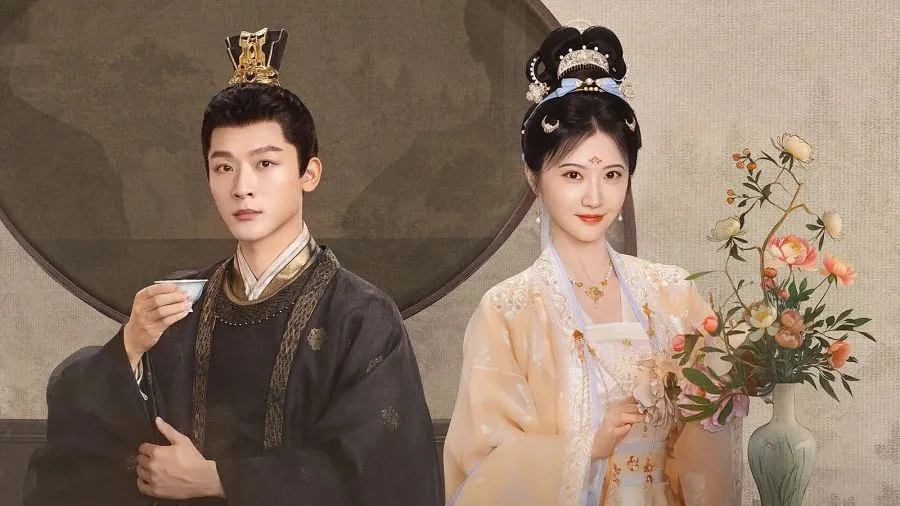
Si Jin Poster - Courtesy of Tencent Video

|
DetailsRATING: (8/10)
NATIVE TITLE: 似锦 – Sì jǐn YEAR: 2025 EPISODES: 40 DURATION: 45’ DIRECTOR: Li Cai, Wang Wei SCREENWRITER: Li Wen Ting, Cai Cai, Liu Jia Si, Wang Ke, Dong Fang Chen, Wang Xiang ORIGINAL CREATOR: Dong Tian De Liu Ye (似锦 – The Brocaded Tale of the Girl Si) |


IN A NUTSHELL
- What to expect: Si Jin is a compelling historical fantasy drama that intertwines classic themes of revenge and rebirth with more contemporary and challenging issues, such as violence against women and institutional corruption. The story initially focuses on the protagonist's family and the numerous cases of domestic violence involving them, before gradually shifting its focus to the relationship between the two protagonists, the trials they face, and their collaboration to uncover the Princess Royal's plots. Balancing lighthearted moments with dramatic moments and court intrigue, the series constructs a compelling tale in which the love story between Jiang Si and Yu Jin emerges as one of the most successful elements, thanks to a tender, deep, and mutually supportive bond.
- Strengths: the love story between the protagonists, the management of female themes, the structure of rebirth.
- Weaknesses: The management of subplots, the fragmentary nature of the flashbacks, the weak antagonists.
- Recommended if you like: Zhang Wan Yi and Jing Tian, close-knit couples, rebirth dramas, stories that deal with the theme of patriarchy, series with powerful women as antagonists.
- Would I rewatch it? Yes, Yes, I love dramas with Zhang Wan Yi and Jing Tian.
Read on to discover the drama’s strengths.
There are dramas that captivate due to the spectacular nature of their intrigues and others that remain impressed due to the characters that inhabit them. Si Jin manages to do both. Between mysteries linked to rebirth, court intrigues, stories of women in search of their independence and one of the most convincing love stories of recent times, the drama accompanies the viewer on a journey full of emotions, alternating lightness, tension and moments of authentic emotion.
In this review of the drama Si Jin, after watching all episodes, I will try to analyze the strengths and weaknesses of the series, focusing in particular on its narrative structure, the characters and the themes it addresses in order to understand why this drama with Zhang Wan Yi and Jing Tian works so well.
Plot
In the tenth year of the Qingyan Era, the Princess Royal of Da Zhou wields enormous influence over the imperial court. Her ambition and tyranny fuel internal tensions and constant conflicts with the kingdom of Nanwu, dragging the empire toward an increasingly uncertain fate.
When the Nanwu army invades Da Zhou, Jiang Si, Fourth Lady of the Residence of the Duke of Dongping and unwitting Saintess of Nanwu, enters the Imperial Palace and kills the Princess Royal. This act, however, costs her life when she is pierced by an arrow shot by her beloved husband, Yu Qi.
An unexpected event follows her death, however. Jiang Si awakens in an inn and discovers that she has traveled ten years back, to the twenty-third year of the Jingming Era, when many of the events that have shaped her life have yet to unfold.
At the time, she was still engaged to Ji Chong Yi, the legitimate heir to the Duke of Anguo. Determined to rid himself of her, he attempted to kill her by throwing her into the Jinshui River, but Jiang Si was saved by Yu Qi, Commander of the Red Plume Cavalry and Seventh Prince of Da Zhou, under a false identity.
As memories of her previous life resurface through increasingly frequent flashbacks, Jiang Si decided to seize the second chance she had been granted to change her destiny. To avoid the tragedies that destroyed her family and led to her death, her first move was to break off her engagement to Ji Chong Yi and embark on a path completely different from that of her previous life.
Meanwhile, her path continued to intertwine with that of Yu Jin, who had returned to the capital to investigate the identity of the mysterious Saintess of Nanwu. Despite the attraction that still binds her to him, Jiang Si can't forget the role he played in her death and struggles to give him another chance.
After reconciling, Jiang Si and Yu Jin will try to rewrite their future together and stop Princess Rong Yang's plans. However, one final twist from her could once again jeopardize the destiny they worked so hard to build.
“Know thyself and know thy enemy, and in a hundred battles thou wilt never be in danger.”

Si Jin Drama Review (No Spoiler)
Plot and Narrative Pace
At a time when the offer of revival dramas is increasingly wider, Si Jin manages to stand out thanks to an approach that combines entertainment and social reflection. Behind its fantasy premise made of second chances and the desire for revenge, the series tackles surprisingly current issues such as violence against women, abuse within the family and the corruption of institutions, building an engaging story but also full of introspection.
The plot captures attention from the first episodes and initially follows the family events of the protagonist Jiang Si, focusing on the young woman's attempts to avoid the mistakes and tragedies that marked her previous life. As the episodes progress, however, the focus gradually shifts to the relationship between the two protagonists and their collaboration to unmask the machinations of the Royal Princess, giving life to a particularly successful couple dynamic.
One of the most interesting aspects of Si Jin is the way it handles the theme of rebirth. Unlike many dramas that adopt a "narrow" rebirth model, in which the protagonist turns back when events are already in motion and can only attempt to deflect the consequences, Si Jin chooses a much broader and more strategic structure. Jiang Si is in fact reborn with a considerable time margin available, which allows her to observe, experiment, make mistakes and correct her choices, gradually modifying the course of events and interacting with a reshapeable future.
Precisely for this reason, following its evolution is particularly satisfying. The pleasure of viewing comes from observing how each decision produces new consequences and contributes to the growth of the protagonist. More than the fight against an already written conclusion, the heart of the story thus becomes the construction of a new possibility and Jiang Si's path to maturation.
The narrative skilfully alternates light and funny moments with more serious and dramatic passages, keeping the viewer's curiosity constant. In particular, the mystery linked to the events preceding Jiang Si's rebirth contributes to creating strong suspense and pushes us to follow the slow emergence of his memories with interest. In this respect, however, the series also presents one of its main limitations. The flashbacks are in fact extremely fragmented and, if on the one hand they fuel the mystery, on the other they end up leaving some important questions unresolved: how did Jiang Si manage to escape the persecution of the Royal Princess and take refuge in the territories of the Southern Border? Under what circumstances did you meet Yu Qi and how did such a deep relationship develop that led to marriage? These are questions to which the series never provides a truly complete answer, leaving the feeling that a significant part of their story has been left off screen.
Some subplots also appear partially sacrificed during the narrative, especially the one linked to the protagonist's role as Saintess of Nanwu. Considering that the search for the Saintess constitutes the initial driving force of the story - it is to investigate her identity that the protagonist goes to Lang'an, and it is after noticing the symbol of the Flame of Nanwu on Jiang Si's neck that he becomes interested in her - it is surprising that this thread is progressively overshadowed in favor of the numerous stories of domestic violence faced by the protagonist. Although these are often very well-constructed events and consistent with the feminist themes of the series, the choice leaves the feeling that one of the most important subplots of the drama is not developed with the same attention reserved for other elements of the story.
Characters and Love Story
The characterization of the characters, especially the female ones, is one of the most successful aspects of Si Jin. Considering that the drama openly addresses themes such as patriarchy, self-determination, and the condition of women, I found the choice to create female characters that are very different from each other, yet all possess strengths, weaknesses, and understandable motivations, to be a positive. The series avoids proposing a single model of a "strong woman," preferring instead to show different paths, united by the search for greater autonomy and awareness.
On the other hand, I found the characterization of the antagonists decidedly less successful. While the positive characters benefit from a certain emotional and moral complexity, the villains appear to be constructed around a few dominant character traits. In particular, the female antagonists often end up appearing rather superficial in their motivations and behavior, driven almost exclusively by ambition and arrogance. Despite playing a central role in the plot, they rarely achieve the same level of characterization as the other women, creating a rather stark contrast between the richness of the positive female characters and the relative simplicity of the negative ones.
Love stories are another of Si Jin's strengths. While they occupy a significant space within the narrative, they never feel invasive or overly melodramatic, but develop naturally through the characters' choices, obstacles, and growth. In particular, the relationship between Jiang Si and Yu Jin is characterized by the strong connection between the protagonists and the emotional depth that characterizes their bond, making their reunion and every difficulty meaningful to the viewer.
At the same time, the secondary couples also contribute to enriching the series with different yet equally believable dynamics, offering romantic moments that never feel forced or out of place. The most remarkable thing is that feelings are not only used to drive the plot, but become a tool through which to explore the protagonists' personalities and their journey of maturation. The result is an engaging, well-written, and emotionally moving romantic component that contributes to increasing narrative coherence.

Cast
The entire cast deserves special mention because it undoubtedly represents one of the series' greatest strengths. The quality of the performances helps lend credibility to the characters and makes even the less central subplots engaging.
The pairing of Zhang Wan Yi and Zhang Chi, who were already appreciated together in Are You the One, is particularly successful. Their interactions are often irresistibly funny, and the complicity between the two actors brings a great naturalness to their scenes. I also really appreciated Zhang Wan Yi individually: I consider him a spontaneous and convincing performer, capable of conveying emotions very naturally, especially in romantic scenes. Although I sometimes feel that his facial expression is slightly limited — perhaps due to cosmetic surgery — he still manages to compensate through gestures, tone of voice, and stage presence.
Jing Tian once again proves herself to be an extremely solid actress. Her acting is clean and elegant, but never cold or detached, and always manages to emotionally engage the viewer. I particularly appreciated the way her character was written: despite addressing issues such as patriarchy and the condition of women, Jiang Si avoids any form of rhetoric and never takes on the role of the protagonist dispensing moral lessons to the other characters. Her strength emerges instead through the actions and choices she makes throughout the story. Furthermore, her chemistry with Zhang Wan Yi is truly remarkable and helps make the relationship between the two protagonists extremely believable.
Another pleasant surprise was Bai Bing Ke, who, after her role as the capricious and unreasonable princess in Everlasting Longing, finally had the opportunity to play a lighter, more spontaneous, and sympathetic character, showcasing a different side of her acting abilities.
I also really enjoyed Yue Yang, who returns as a loving and well-meaning father figure. While retaining a certain indecisiveness, her character is more self-aware and less naive than her uncle in Guardians of the Da Feng, managing to convey a sincere affection for her daughter.
Finally, a special mention goes to Wu Mian, who flawlessly brings to life the odious Venerable Lady Jiang. The actress manages to make her so irritating and detestable that she arouses genuine aversion in the viewer, a sign of a truly effective performance. In my case, the resentment towards her characters dates back to The Sword and the Brocade, and this time too, she succeeded perfectly.
Visual Aspects and Soundtrack
**Si Jin's direction is distinguished by a very professional approach, featuring technically solid and well-studied shots that enhance both the characters and the settings without resorting to unnecessary virtuosity. I especially appreciated the cinematography, characterized by a rather natural lighting and a very pleasing use of warm lighting, particularly in the sunset scenes, where the golden hues contribute to creating an evocative atmosphere. The color palette is also well-balanced: vibrant and colorful, but without the oversaturation that sometimes characterizes more recent historical dramas, nor the excessive desaturation that risks darkening the image.
I also found the visual device used to distinguish Jiang Si's frequent flashbacks from the present very effective. The choice to slightly narrow the frame and mute the colors allows the viewer to immediately orient themselves in the narrative without interrupting the flow of the story, resulting in an elegant and functional effect.
Special praise goes to the costume design department, which creates rich, refined, and visually pleasing outfits, enhanced by elaborate fabrics and cuts inspired by the aesthetics of the Song Dynasty. The work done on the wigs and hairstyles is equally impressive, and I found them excellent in their variety and attention to detail. The hair accessories are often magnificent and effectively define the characters, while some costumes truly stand out: especially Jiang Si's wedding dress, which I found enchanting.
The choice of locations is also very successful. The series offers varied and pleasant settings, with particular attention to the urban views along the river, which are among the most evocative of the entire production. Likewise, the interiors and noble residences appear meticulously crafted and believable, contributing to a more immersive narrative world. While not central to the story, the action scenes are ultimately convincing, with battles and kung fu sequences well-executed and dynamic enough to support the drama's adventure component without detracting from its overall tone.
The soundtrack by Si Jin fits perfectly into the romantic and melancholic atmosphere that characterizes much of the series. The songs favor slow, emotional melodies, capable of accompanying both the more sentimental and introspective moments. In terms of arrangements, the soundtrack alternates distinctly Western-inspired solutions — primarily based on piano, guitar, and strings — with others more closely tied to traditional Chinese music, in which traditional instruments are used more or less forcefully depending on the song's needs.
While not particularly original or experimental, the songs effectively fulfill their purpose and contribute to strengthening the drama's emotional tone without ever feeling out of place. What struck me most were the vocal performances, all sharing intense, soft, and particularly expressive timbres. Among these, Yisa Yu undoubtedly stands out, whose velvety voice lends great elegance and sensitivity to 望余生 (Looking Forward To The Rest Of My Life), one of the most representative songs of the entire soundtrack.

WARNING!
FROM THIS POINT ON THE SPOILER SECTION BEGINS. DO NOT CONTINUE IF YOU DO NOT WANT TO KNOW ALL THE DETAILS OF THE DRAMA.
Si Jin Drama Review (Spoiler)
What Works
The Structure of Rebirth
One of the most interesting elements of Si Jin is its narrative structure, which exploits the theme of rebirth differently than many other dramas of the genre. Stories of reincarnation or a return to the past often place the protagonist close to the tragic event that marked her previous life, forcing her to react to a series of events already in motion and almost inevitable. In Si Jin, however, Jiang Si is granted much greater leeway. The protagonist is not only focused on averting an impending tragedy, but also has time to observe situations, test her intuitions, correct mistakes, and gradually change the course of events.
This choice makes the future an open and unpredictable territory, and contributes to the story's sense of continuous evolution. Every decision Jiang Si makes has consequences that are reflected in subsequent episodes, creating a narrative progression based less on immediate survival than on building a new chance at life. The viewer is prompted to wonder not only whether the protagonist will be able to avoid her fate, but also how her way of thinking will change, what lessons she will learn from her mistakes, and what impact her actions will have on the world around her.
It is precisely this sense of evolution that makes the drama particularly engaging. Jiang Si doesn't possess miraculous solutions or perfect knowledge of the future: she only has the experience accumulated in her previous life, and she must learn to use it increasingly consciously. As a result, her growth appears gradual and believable, while the audience has the satisfaction of observing how small changes produce alterations in the story that allow the protagonist to avoid a repetition of the tragic events she experienced in her previous life.
The overall pacing of the series also benefits from this approach. Despite alternating between mystery, political intrigue, romance, and family events, Si Jin almost always manages to maintain the sense that the plot is advancing thanks to the characters' choices and not simply out of narrative necessity. For this reason, rebirth is not reduced to an initial expedient useful for starting the story, but becomes the structural principle that supports the entire drama and makes following Jiang Si's path towards building a different future particularly satisfying.
The Love Stories
Another aspect I particularly appreciated about Si Jin is undoubtedly the romantic component, which manages to be engaging without ever completely overshadowing the other narrative threads. The love story between Jiang Si and Yu Jin is probably one of the most satisfying I've seen in recent times and represents one of the drama's main strengths. What makes it so effective is the fact that their bond isn't born during the course of the story we see on screen, but is rooted in the protagonist's previous life. From the few and fragmentary memories shown, a portrait emerges of two people united by loneliness and marginalization: Jiang Si, forced to live on the run from the Royal Princess, and Yu Jin, the Emperor's unwanted son. Despite being far from the comfortable life and privileges of the court, the two had built a simple yet dignified existence together, founded on mutual support and sincere affection.
Precisely for this reason, the trauma that accompanies Jiang Si after her rebirth becomes even more poignant. His death, caused by Yu Jin's arrow, is an event the protagonist cannot forget and initially pushes her to distance herself from him. Yet her attraction to him continues to resurface, making it increasingly difficult to ignore. As much as she tries to avoid it, she inevitably ends up giving him a new chance. Meanwhile, the viewer gradually discovers that the tragedy in her previous life was not the result of a voluntary choice: Yu Jin was in fact acting under the control of the Royal Princess, and once he realized he had fatally struck the woman he loved, he sacrificed his own life to allow her to be reborn.
This awareness gives their relationship a rare emotional depth. The obstacles, choices, and trials they face in the new timeline seem to continually echo the bond they built in their previous life, giving rise to a story that utilizes elements of enemies to lovers without ever turning them into a forced conflict. Yu Jin may appear wary and suspicious, but she can't help but be indifferent to Jiang Si's determination, intelligence, and altruism. Likewise, she ends up falling in love once again with this seemingly cold and calculating young man, who, however, hides a thoughtful, ironic, and adorably stubborn side in his attempts to attract her attention. The result is a relationship that manages to be simultaneously sweet, mature, and deeply moving.

The love story between Princess Fu Qing and Deputy Magistrate Zhen is also very successful. Zhen Heng is a character I particularly appreciated because he represents a rare figure in historical dramas: a truly upright official. After witnessing countless stories in which magistrates and judges easily bow to the pressures of power, such as Judge Tao in A League of Nobleman, seeing a character willing to uphold justice even at the cost of compromising his own career was almost a breath of fresh air. His sense of duty is so ingrained that he cannot justify unfair methods even when they would serve worthy goals, a characteristic that clearly sets him apart from many other male protagonists in the genre and probably also explains why he would never have been the ideal partner for someone like Jiang Si.
His relationship with Fu Qing develops slowly and delicately. For a long time, Zhen Heng struggles even to consider her as a potential partner, seeing her exclusively as his student. On the other hand, the princess is also burdened by responsibilities and concerns that go beyond personal feelings: the desire to stay close to her mother and protect her from the dangers of the court makes it difficult to imagine a different future. This mutual hesitation makes their story particularly tender. Both gradually realize their deep feelings, but neither is willing to put their desires ahead of their duties. For this reason, their happy ending is all the more gratifying: after so much sacrifice and hesitation, seeing the two ask the Emperor for permission to marry provides a romantic and fulfilling conclusion to one of the series' most touching subplots.
The Characterization of Female Characters
Since the theme of female emancipation occupies a central role within the narrative, I greatly appreciated the characterization of the female characters, which I found overall to be solid and multifaceted. Aside from the antagonists, whom I'll discuss later, the series presents women with a wide range of ages, experiences, and personalities, while avoiding reducing them to mere stereotypes.
One of the most successful examples, in my opinion, is Jiang Yi. At the beginning of the story, she appears submissive, resigned to her role as wife and mother and unable to imagine a future other than the one society has assigned her. The failure of her marriage, however, becomes an opportunity for her to rediscover her autonomy and realize that she can be independent, as well as a positive role model for her daughter. What I appreciated most about the character is that this experience doesn't make her bitter or vindictive. On the contrary, Jiang Yi retains a profound humanity and a great capacity for understanding. She demonstrates this when, after her ex-husband's fall from grace, she chooses to help him despite everything, or when she senses that Jiang Si's often distant behavior hides suffering that she can't openly share and decides to offer her support without demanding explanations. It's precisely these small gestures that make Jiang Yi such a successful character: a woman who grows, gains self-awareness, and finds her own strength without losing the kindness and empathy that distinguish her.

What Doesn't Work
The Antagonists
While the characterization of the positive female characters seemed generally convincing to me, I can't say the same for the antagonists, who are probably one of the less successful aspects of the series. The female antagonists, in particular, end up appearing rather superficial in their motivations and behavior. Ming Yue, for example, is little more than a spoiled and capricious girl: she acts almost exclusively out of boredom, is incapable of accepting rejection or contradiction, and demands to get everything she wants. When she can't achieve it on her own, she systematically takes refuge behind her mother's authority.
Rong Yang, despite occupying a much more important role in the plot, also suffers from similar limitations. Her belief that she is above the law and can achieve anything simply because of her position makes her a rather predictable antagonist. Although the writers attempt to give her some depth through her grief over her daughter's death and the progressive deterioration of her marriage, these elements fail to truly transform her into a complex character. Her motivations remain essentially those of a woman convinced that the world exists to serve her and who treats everyone like tools or, worse still, like "ants," making it difficult to feel any kind of understanding or moral ambivalence toward her.
Cao Yong, who embodies the classic power-hungry opportunist, is also not particularly memorable. His actions are driven almost exclusively by personal ambition and the desire to exploit the Princess Royal's desire for revenge to further his own revenge and political rise. While he effectively plays the role of a behind-the-scenes manipulator, the character lacks the complexity that could have made him a truly interesting antagonist.
Precisely this unconvincing villain development has left me with some unanswered questions about the plot. In particular, I'm not entirely clear to what extent the Princess Royal's plan for usurpation is the result of genuine political ambition and how much is fueled by her obsession with Jiang Si. The series suggests both possibilities, without definitively clarifying which one prevails. Events in the previous timeline also contribute to this uncertainty. When Jiang Si kills Rong Yang in the throne room, it's unclear what the political situation was at the time: we don't know whether the Princess Royal had deposed the Emperor and was effectively ruling in his place, or whether she simply continued to wield enormous influence as Empress Dowager after adopting the Crown Prince. This ambiguity doesn't compromise the overall understanding of the story, but it probably deserved a little more explanation, especially considering the weight the events of her previous life have on the entire narrative.
Subplots Management
Another of the most obvious limitations of Si Jin is, in my opinion, the difficulty in coherently managing all the numerous subplots and themes it introduces. The series is full of interesting ideas and tackles issues that could have given the narrative great depth, but it often feels like it's opening up promising narrative threads without adequately developing them, or resolving them too quickly and conveniently. The result is that several subplots end up feeling less impactful than they could have been.
A clear example is the theme of patriarchy and violence against women, which in the early episodes is addressed with a certain seriousness through the experiences of the female protagonists. As the story progresses, however, this thread gradually loses its strength and leads to episodes that are difficult to take seriously, such as the story of Jiang Si's kidnapping by a gang of human traffickers led by a woman and her son. The latter, who disguises himself as a girl to avoid arousing the victims' suspicions and invariably ends up falling in love with the women he kidnaps, introduces an almost grotesque element that ultimately weakens the impact of a theme that until then had been treated much more realistically.
A similar fate befalls the mystery of Jiang Si's rebirth and her role as Saintess of Nanwu. Although this subplot initially seems destined to be one of the mainstays of the entire story, it is gradually sidelined for much of the series and only revived in the final moments, when a rather cursory explanation links the protagonist's mother's origins to Yu Jin's sacrifice and Jiang Si's ability to go back in time while retaining her memories. Given the importance of this element to the drama's entire premise, I would have expected greater exploration.
The themes of justice and moral integrity, embodied by characters like Deputy Magistrate Zhen, also lose some of their force over the course of the story. For many episodes, the drama emphasizes the importance of applying the law fairly and protecting victims regardless of their social standing, but some narrative twists seem to contradict this message. In particular, Jiang Si's withdrawal of the attempted murder complaint and the Emperor's subsequent intervention in Cao Xing Yu's case ultimately undermine the trust in institutions that the series had sought to build through Zhen Heng's character.
The dispute over the succession to the throne also finds a conclusion that I found all too convenient. The Crown Prince's death at the hands of the Princess Royal suddenly simplifies a political conflict that seemed destined to develop more complexly, paving the way for Yu Jin's rise to power without requiring any particular sacrifices or compromises.
Finally, I was rather perplexed by the speed with which the conflict between Nanwu and Da Zhou was resolved. Jiang Si's idea of opening a trade route between the two territories to facilitate the exchange of resources certainly makes sense, but the fact that such a seemingly simple solution can so quickly resolve years-old hostilities and tensions seems unlikely. It's hard not to wonder why no official, scholar, or local leader has ever before considered such a strategy to initiate dialogue between the two sides.
Overall, rather than actual plot holes, these are a constant tendency toward simplification. Si Jin presents numerous highly interesting narrative and thematic ideas, but often prefers to quickly close them out to focus on advancing the main story, thus forgoing insights that could have made the drama even more solid and memorable.

Characters and Cast
Primary Characters
Jiang Si/Si’er (Jing Tian) Fourth Miss of the Residence of the Count of Dongping and daughter of the Duke of Dongping and Su Ke. Following the rise to power of the Royal Princess, her family is exterminated and she is forced to go into hiding, fleeing to the territories on the Southern Border. Here she meets Yu Qi and falls in love with him, but is forced to give him up due to the infatuation of the Royal Princess’ daughter for the man. After being forced to throw herself off a cliff, she is saved and cared for by the Nanwu Grand Elder, of whom she becomes a disciple and who teaches her to recognize plants and create fragrances. Having joined the expedition to conquer Nanwu, she manages to enter the Royal Palace of Da Zhou and kill the Royal Princess, but is fatally pierced by an arrow shot by Yu Qi and when she wakes up she has gone back in time by ten years.
Yu Qi/Yu Jin (Zhang Wan Yi) Commander of the Yangui Red Plume Cavalry. After years spent at the Southern Border, he secretly goes to the capital to investigate the Nightingale Sect and the identity of the Nanwu Saintess, saving Jiang Si from drowning. In reality, he is the Seventh Prince of Da Zhou, removed from court when he was still a baby because of an unfortunate prediction regarding his birth. However, the documents of the Astronomical Observatory were altered at the request of the Royal Princess who wanted to use him as a scapegoat to justify the heavy defeat suffered by her husband at the Southern Border and to avoid the promotion of Concubine Xian to Imperial Consort.
Zhen Heng (Cui Hang) Deputy Magistrate of the Capital Administration Office, responsible for the Eastern Government Office. He is in charge of conducting the city trials of the capital of Da Zhou. When Jiang Si goes to the Capital Administration Office accusing her fiancé of attempted murder, he begins to take an interest in her, but stops courting her when he discovers that she is in love with Yu Qi. He falls in love with Princess Fu Qing and, after realizing his feelings, asks her to marry him.
Princess Rong Yang (Huang Yi) Royal Princess of Da Zhou and the Emperor’s favorite sister. With her help, Jing Ming succeeded in ascending to the throne and foiled Prince Xiang’s attempted rebellion, and for this reason he holds her in high regard. In her previous life, Jiang Si killed her to avenge the death of her family and her husband, while in this life she was killed by Cui Xu while trying to assassinate the Emperor. Jing Ming is so attached to her that he lied about her attempted usurpation, allowing her to be buried in the imperial mausoleum with the posthumous title of Royal Princess Xian Jing.
Cui Ming Yue/Ya Zhi (Xu Hao) daughter of the Royal Princess of Da Zhou and General Cui Xu. Due to her infatuation with Yu Qi, in her previous life Jiang Si was forced to give up on him and throw herself off a cliff, surviving only thanks to the care of the Nanwu Grand Elder, whose disciple she later became. Even in Jiang Si’s new life she targets the family of the Duke of Dongping, but this time she fails to prevail against her rival and is killed by Zhu Zi Yu.
Supporting Characters
Nanwu
Grand Elder (Dai Chun Rong) ruler of Nanwu. In her previous life Jiang Si becomes her disciple to repay her for saving her after the Royal Princess forced her to throw herself off a cliff. In her new life Jiang Si helps her to raise the fortunes of the Nanwu people by instructing its inhabitants on how to develop the fragrance trade with Da Zhou.
Du’er (Chen Ze Xuan) leader of the Nightingale Sect, a sect formed by spies from Nanwu who are tasked with finding the Saintess. In her previous life Jiang Si saves him from death and then becomes his shimei when she is taken in as a disciple of the Grand Elder of Nanwu. In Jiang Si’s new life he dies to allow her to safely reach Mount Shenjian after escaping from the Da Zhou’s Heavenly Prison.
Sang Qi (Xue Yu Bin) spy for the Nightingale Sect. He sells the drug Divine Journey on the black market of Da Zhou and is captured by Yu Qi. Jiang Si frees him from the prison of the Capital Administration Office and reunites him with Du’er and Yan’er because in her previous life he was her shixion.
Liu Yan’er (Zhang Xuan) leading courtesan of the Divine Fragrance Pavilion pleasure house who is skilled in preparing sophisticated fragrances. In reality, she is a spy for the Nightingale Sect and, in Jiang Si’s previous life, was her shijie and taught her the art of blending fragrances.
Dongping Count’s Residence
Venerable Lady Jiang (Wu Mian) widow of the late Dongping Count and grandmother of Jiang Si.
Jiang An Cheng (Yue Yang) First Lord of the Dongping Count’s Residence and former Director of the Astronomical Observatory. When his wife dies, he leaves his official position at the Astronomical Observatory and his branch loses prestige, falling under the control of his sister-in-law who has no qualms about mistreating him and his children. He is aware of the tampering with the records of the celestial signs that appeared on the night of the Seventh Prince’s birth, but he has never told anyone because he knows that it is the work of the Royal Princess and he is afraid that she may take revenge on his family.
Su Ke (Zhou Zi Xin) Lady of the first branch of the Dongping Count’s Residence and wife of Jiang An Cheng. She is the daughter of a merchant from the South and her beauty is renowned throughout the capital. She dies of a heart problem shortly after giving birth to Jiang Si, but in reality she was poisoned by her sister-in-law at the instigation of the Royal Princess, who was jealous of her. Later Jiang Si finds out that her mother was an orphan from Nanwu who was adopted by the Su Family when she was still young and raised in the Southern Border Territories of Da Zhou.
A’Man (Zhuang Ke Ren) Jiang Si’s personal maid.
Jiang Yi (Cao Fei Ran) First Miss of the Dongping Count’s Residence and elder sister of Jiang Si and Jiang Zhan. She lives in Lingshui with her husband Zhu Zi Yu and their only daughter Yan Yan. In Jiang Si’s previous life she committed suicide after being repudiated by her husband, but in this life she gets a divorce and can happily raise her daughter at the Dongping Count’s Mansion.
Jiang Zhan (Zhang Chi) Second Young Lord of the Dongping Count’s Residence and Jiang Si’s older brother. In Jiang Si’s previous life, he drowned at the hands of Ming Yue, but this time he managed to avoid the sad end thanks to the help of Yu Qi and Lu Chu Chu. After a troubled beginning, he fell in love with Chu Chu, but it took a long time before he was able to declare his love.
A’Ji (Li Cheng Xi) Jiang Zhan’s servant.
Jiang An Mou (Liu Ting Zuo) Second Lord of the Dongping Count’s Residence. He is an imperial official who is only interested in his career, the family’s honor and surpassing his older brother in merit.
Lady Xiao (Ma Su) First Lady of the second branch of the Dongping Count’s Residence. Due to pressure from her mother-in-law and husband, she always felt inferior to her sister-in-law, so she ended up poisoning her with the Nanwu Eternal Slumber Flower, at the instigation of the Royal Princess. Later, she tried to poison Jiang Si in the same way, but Jiang Si was saved and forgave her.
Lady Ruan/Shu’er (Guo Zhang) Second Lady of the second branch of the Dongping Count’s Residence. She is An Mou’s concubine, but because of her calm and condescending attitude, she is his favorite consort. Although she is always cautious and prudent, she tries to oppose Lady Xiao’s plans, especially the marriage plans involving her daughters.
Jiang Qian/Qian’er (Zhao Xin) Second Miss of the Dongping Count’s Residence, daughter of Lady Xiao and cousin of Jiang Si. She is married to Cao Xing Yu, who uses the drug Divine Journey and mistreats her. Her husband wants her to lure Jiang Si into a trap so he can abuse the girl, but, mindful of what happened in her past life, Jiang Si manages to avoid it and helps her cousin get a divorce.
Jiang Qiao (Jia Ze) Third Miss of the Dongping Count’s Residence, daughter of Lady Ruan and cousin of Jiang Si. To increase the family prestige, Lady Xiao would like to marry her to Xiao Lang, the sick son of the Governor of Lingbei, but her sister Jiang Pei will help her avoid the unwanted marriage.
Jiang Pei (Tian Ai) Fifth Miss of the Dongping Count’s Residence, daughter of Lady Ruan and cousin of Jiang Si. Pushed by Lady Xiao, she drugs Jiang Si to ridicule her in front of Deputy Magistrate Zhen, whom she wants to marry, but Yu Qi saves the situation and the girl confesses the plan to her cousin. Thanks to Jiang Si’s help, she manages to marry a former classmate of Zhen Heng, Chief Secretary Lin.
Duke of Anguo's Residence
Ji Chong Yi (Sun Zu Jun) Third Young Lord and legitimate heir of the Duke of Anguo and Jiang Si’s fiancé. To avoid marrying her, he pushes her into the river, but the girl is saved by Yu Qi and reports him for attempted murder in front of the Capital Administration Office. Thanks to Sun Qiao Niang’s help, Jiang Si will be able to break off the engagement with him, giving a first twist to the adverse fate that had led her to death in her previous life.
Sun Qiao Niang (Xin Kai Li) owner of the Skilled Fragrance Shop and long-time friend of Jiang Si. She is Ji Chong Yi’s secret lover and wants to exploit the fact that she is expecting a child from him to become his legitimate wife and elevate her rank as a humble merchant. She therefore agrees to accuse Ji Chong Yi of having attempted to kill Jiang Si and then blackmail him into replacing her friend in the marriage agreement with him. The blackmail works and she manages to marry the Young Duke as his legitimate wife.
Ji Chong Li (Qiu Bai Hao) Second Young Lord of the Duke of Anguo’s Mansion and Ji Chong Yi’s older brother.
Ji Fang Hua (Zhang Yi Yue) Miss of the Residence of the Duke of Anguo and younger sister of Ji Chong Li and Ji Chong Yi.
Marquis of Changxing's Residence
Cao Xing Yu (Gao Xu Yang) First Young lord and legitimate heir of the Marquis of Changxing and husband of Jiang Qian. He is lured by the Nightingale Sect who control him through the drug Divine Journey. Under its influence, the man kidnaps and tortures nine young women whose bodies are found in the garden of the Cao Residence. Despite his attempts to mislead and his father’s political influence, he is sentenced to death for murder by the Emperor.
Cao Yong (Zhang Yi) Marquis of Changxing and father of Cao Xing Yu. He is the Commander of the Imperial Guards and the holder of the military power of Da Zhou. To take revenge on Jiang Si, he agrees to testify that she is the Saintess of Nanwu and supports the rebellion of the Royal Princess.
An Zi (Dao Shao Dong) servant of the Residence of the Marquis of Changxing who takes the blame for the murders committed by Cao Xing Yu and is arbitrarily executed by Cao Yong.
Fu Lv (Xue Wei) servant of the Marquis of Changxing Mansion who helps Chi Shu Ying, one of Cao Xing Yu's victims, escape from the mansion.
Princess Royal's Residence
Cui Xu (Zhang Cheng He) General of Da Zhou, Prince Consort of Rong Yang and father of Cui Ming Yue. Years before marrying the Royal Princess he was engaged to Su Ke and, for this reason, his wife had her rival poisoned by Lady Xiao, shortly after Jiang Si was born.
Nanny Xu (Zhang Yi Xin) Rong Yang’s maid. She is aware of her contacts with the Nanwu spies and her shady plans to poison Su Ke and the late Empress Qing Rong, as well as to blind Princess Fu Qing, but she always remains loyal to her.
Shi Jiu (Zhou Tian Yu) Commander of the Royal Princess’s Personal Guards.
Han Ran (Chen Bo Hao) Commander of the Gale Guards, an elite corps of soldiers under the direct control of the Emperor. Their task is supposed to investigate popular dissent and supervise the work of officials, but in reality they are under the orders of the Royal Princess.
Yu Qi/Yu Jin's Residence
Lu Chu Chu (Bai Bing Ke) daughter of the General of Huaihua. Her father took care of Yu Qi and trained him in his military camp on the Southern Border, so he is like a brother to her. As soon as she arrives in Lang’an she has her first disastrous meeting with Jiang Zhan. The two will not get along right away, so much so that he will risk drowning because of her, but in the end they will discover that they love each other.
Long Dan (Ji Hao) Yu Qi’s attendant.
Leng Ying (Xu Ling Chen) Deputy Commander of the Red Plume Cavalry of Yangui.
Er Niu (Da Huang) Yu Qi’s dog. He is a military dog trained to follow tracks and catch criminals.
Imperial Court
Jing Ming (Guo Tao) Emperor of Da Zhou. In Jiang Si’s previous life he was killed by Nanwu spies during a solar eclipse, in the Mid-Autumn Hunt. In his new life, thanks to Yu Qi’s help, Jiang Si manages to save him and in the end he will abdicate in favor of the Seventh Prince.
Liu Bao Ping (Niu Bao Ping) Chief Eunuch and Palace Attendant.
Yu Lang (Zhang Jia Xin) Second Prince, son of the late Empress Qing Rong and Crown Prince of Da Zhou. He is under the control of the Royal Princess and she hopes to rule in his place once he ascends to the throne. To stop his aunt’s rebellion he decides to kill her during a banquet, but fails and is assassinated by Shi Jiu.
Yu Zhang (Xuan Yan) Prince Qi, Fourth Prince and blood brother of Yu Jin. He is very ambitious and cunning, but he knows he has no chance of becoming Crown Prince because his mother is not the Emperor’s favorite. Initially he appears to be jealous and competitive with his brother, but later he helps him foil the rebellion of the Royal Princess by obtaining the Government of the Northern Protectorate.
Sixth Prince (Zheng Zi Jian) Prince Shu, son of Imperial Concubine Zhuang. He is killed by the Princess Royal to force the Emperor to abdicate in her favor.
Empress Qing Rong, Late Empress of Da Zhou, beloved wife of Jing Ming and mother of Yu Lang. Apparently dies of leprosy but is actually poisoned by the Nanny Duo at the request of the Royal Princess.
Empress Di (Deng Ying) low-ranking Imperial Concubine appointed Empress of Da Zhou by the Royal Princess to prevent Princess Fu Qing from revealing that she is responsible for poisoning the late Empress. She will take a liking to Yu Jin and Jiang Si after they cure her daughter’s blindness and will try to help them convict Rong Yang of her crimes.
Princess Fu Qing/Qing’er (Xia Qian) daughter of Empress Di. When she is about five years old she sees the Royal Princess plotting with someone to poison the late Empress Qing Rong by making her appear to have died of leprosy. To silence her, Rong Yang decides to make her blind by having the Nanwu Needle Insect implanted in her eyes by the Nanny Duo. Thanks to Jiang Si’s help, the insect is extracted and the Princess can see again, so to repay her debt, the girl agrees to testify against the Royal Princess. During her wanderings through the courtyards of the Imperial Palace, she meets Deputy Magistrate Zhen, for whom she develops feelings that will culminate in marriage.
Nanny Hua (Yang Yue) Empress Di’s maid who mainly takes care of Princess Fu Qing.
Nanny Duo (Liu Jing) Empress Di’s maid. In reality, she is a Nanwu spy infiltrated into the Empress’s apartments by the Royal Princess. When she discovers that Jiang Si is the Nanwu Saintess, she helps her cure Princess Fu Qing’s eyes and testifies against the Royal Princess.
Imperial Concubine Zhuang (Wang Lan) mother of the Sixth Prince.
Imperial Concubine Xian (Lin Jing) mother of Yu Jin and Yu Zhang.
Nanny Lin (Xu Meng Yao) maid of Imperial Concubine Xian.
Yang Nian Zhi (Li Bo) Director of the Astronomical Observatory. He is a supporter of the Royal Princess and helps her alter the minutes on the celestial signs that appeared on the night of the Seventh Prince’s birth and the documents on the marriage compatibility between Yu Jin and Jiang Si by suggesting that the Prince marry Ming Yue to rebalance the Star of Desolation present in Jiang Si’s birth chart.
Zhou Yi, Minister of Rites involved in the assassination of the Emperor during the Mid-Autumn Hunt. In exchange for the cancellation of the gambling debts incurred in the secret gambling den of Nanwu, he is persuaded by the Nightingale Sect to replace the candles in His Majesty’s supply with defective ones. He reports that A’Ling, a maid from the Imperial Food Bureau, has also been bribed and offers to provide an identikit of her so that Yu Qi and Deputy Magistrate Zhen can identify her.
A’Ling, a maid from the Imperial Food Bureau involved in the assassination of the Emperor during the Mid-Autumn Hunt. In exchange for the cancellation of the gambling debts that her brother incurred in the clandestine gambling den of Nanwu, she agrees to poison the food that will be served to His Majesty during the event, but is arrested by Yu Qi and Zhen Heng.
Other Characters
Mrs. Xiu (Yue Jia Yi) tofu seller at the Ling’an market. Her daughter Niu Niu looks a lot like Jiang Si and disappears after going to deliver tofu to the Residence of the Marquis of Changxing. Her lifeless body is found by the men of the Capital Administration Office in a well in the backyard of Cao Yong’s house. Thanks to her plea before the Emperor, the case is taken directly into the hands of the sovereign who condemns Cao Xing Yu for murder.
Chi Shu Ying (Li Chen Yang) victim of Cao Xing Yu who is freed by Jiang Si and made to escape from the Residence of the Marquis of Changxing thanks to the help of Fu Lv. She will testify at the trial against the Young Marquis causing him to be convicted of murder.
Zhu Zi Yu (Zhang Lin Qing) Young Lord of the Zhu Family of Lingshui, husband of Jiang Yi and father of Yan Yan. At the instigation of Cui Ming Yue he tries to compromise his wife, but is exposed by Jiang Si and, in order not to be reported to the authorities, grants her a divorce. Later, to punish the Princess, he shows the promise of marriage written by Ming Yue and forces the Emperor to grant her to him in marriage. On the first night of the wedding, he stabs her to death and sets fire to the residence, thus avenging the extermination of his family and atoning for his sins towards his ex-wife.
Fei Niang (Song Yi Xing) star of the Colorful Clouds dance troupe. Her dance troupe is hired by Jiang Yi to perform at the Lingshui Water Festival, but her performance is exploited by Zhu Zi Yu to set a trap for his wife. She helps Jiang Si prove her sister’s innocence because at fifteen she was saved from a gang of human traffickers and hosted for a year at the home of the girls’ mother, Su Ke.
Meng Nan (Chou He) musician of the Colorful Clouds dance troupe. He was hired by Princess Ming Yue to be discovered in shady behavior with Jiang Yi and have her repudiate her husband.
Xu Qing’er (Zhang Da Bao) and Xu Yu’er (Zhang Xiao Bao) twins hired by Zhu Zi Yu to make Jiang Yi fall into Meng Nan’s trap and be able to repudiate her. Jiang Si promises them that they will get their respective indenture contracts back and that they will be free if they help her reveal to everyone that Zhu Zi Yu cheated on his wife. Jiang Si’s plan works and her brother-in-law is discovered by everyone while he secretly meets Ming Yue, so the girls get their freedom.
Xie Yin Lou (Ma Ang) Commander of the Lingshui County Administration Office. He is an orphan who grew up with the Jiang Family before they moved to the capital and has always been in love with Jiang Yi. For this reason, he helps her when she is the victim of her husband’s plot and, after the divorce, he follows her to the capital hoping to convince her to marry him. In Lingshui he becomes friends with Yu Qi and helps him quell the rebellion of the Royal Princess, obtaining the position of Commander of the Capital Administration Office.
Chief Secretary Lin, classmate of Zhen Heng who obtains the rank of sixth-level official and is hired as Chief Secretary in Ling’an. At Jiang Si’s intercession, he marries Jiang Pei.
Mrs. Shen (Jia Shu Yi) owner of the Shan’an Hall spice shop in Lingwu that she runs with her son. In reality, she runs a trafficking ring in women who she kidnaps by luring them to her spice shop and then resells to the highest bidders.
Shen Xin’er (Guan Yue) son of the owner of the Shan’an Hall spice shop who pretends to be a girl so as not to arouse the suspicion of the women who go to the spice shop and then manage to kidnap them. He has a weakness for women and Jiang Si takes advantage of his naivety to obtain evidence of human trafficking and have him and his mother convicted.
Qin Feng (Liu Yi Jiang) Jiang Zhan’s martial arts teacher. He lives in Lingwu with his wife A’Rong. He helps Yu Qi and Jiang Zhan investigate the human trafficking of the Shan’an Hall and tries to kill its owners after his wife’s suicide.
A’Rong (Ju Ke Er) Qin Feng’s wife. She is kidnapped by the owners of the Shan’an Hall and becomes pregnant by Xin’er after he abuses her. She commits suicide out of shame before being able to reunite with her husband.
Favorite Character: Yu Qi / Yu Jin
He is a protagonist capable of combining determination, moral integrity, and profound emotional sensitivity.
Raised far from his family in the Southern Border lands due to the machinations of the Princess Royal, he developed an independent, forthright personality, disinclined to courtly formality.
His experience in the army has made him decisive and resolute, but also deeply devoted to the nation and the well-being of the people, qualities that emerge consistently throughout the story. Behind his apparent self-assurance, however, lies a man marked by loneliness and nostalgia for lost loved ones, a trait that makes his character particularly human and multifaceted.
Despite being inevitably drawn into the capital's political struggles, Yu Qi maintains a surprisingly simple outlook on life: more than power or honor, he desires to live peacefully with the woman he loves, far from the intrigues of the court.
In love, he is passionate, impulsive, and extraordinarily sincere. He is unafraid to openly express his feelings for Jiang Si and offers her constant support, protecting her even when it means coming into conflict with her parents or those in power. His affection is so unwavering that, when he discovers that his wife is the Priestess of Nanwu, he promises to care for her and defend her even if she sides with the enemy. His devotion to Jiang Si reaches its peak in his previous life, when he chooses to sacrifice himself to give her a chance at rebirth and change her destiny.
It is precisely this combination of courage, loyalty, selflessness, and profound capacity for love that makes Yu Qi such a memorable and endearing protagonist.
Un-Favorite Character: Venerable Lady Jiang
While not one of Si Jin's true antagonists, she is probably one of the most irritating characters in the series. Behind the image of the respectable matriarch lies a deeply narrow-minded and hypocritical woman, incapable of seeing her family members as individuals and interested almost exclusively in the prestige, reputation, and social standing of the Jiang clan.
Her rigid and backward-looking view of the family has devastating consequences for those around her. The incessant competition she has fostered between her sons contributes to turning her second-born son into a cold, careerist, while the constant pressure she exerts on her daughters-in-law leads to avoidable tragedies and suffering, such as Su Ke's murder by Lady Xiao and Jiang Qian's marriage to a sadistic and perverse man whose only virtue is holding a noble title.
Rather than caring about the happiness of the women in the family, she judges every situation solely based on its impact on the family's good name, even approving patently unhappy or even dangerous marriages as long as they guarantee prestige and political advantages.
Particularly frustrating is her attitude toward Jiang Si and the other young women in the family. Instead of supporting them in difficult times, she tends to systematically criticize them when their choices deviate from social conventions. She disapproves of Jiang Si reporting her fiancé for attempted murder, criticizes her intervention on behalf of her cousin, a victim of domestic violence, and continues to condemn Jiang Qian and Jiang Yi for abandoning husbands who had proven unworthy of their affection and respect. Even when it comes to the future of her nieces, her interest seems more focused on the spouses' rank than on their happiness or safety.
What makes her particularly unsympathetic, however, is her obvious inconsistency. On the one hand, she chastises Jiang Si for standing out during the Flower Banquet, arguing that attracting too much attention could spark envy and harm the family; on the other, she doesn't hide her excitement when she discovers her niece will marry a prince, demonstrating how much her principles are actually subordinated to expediency.
In this sense, Venerable Lady Jiang perfectly embodies the conservative mentality that the drama often seeks to criticize: a woman who considers herself the guardian of tradition, but who ends up sacrificing the well-being of her family on the altar of appearances and social prestige.
RECOMMENDED:
- THE ONLY GIRL YOU HAVEN'T SEEN
- LOST TRACK OF TIME
- LOVE BEHIND THE MELODY
- LADY REVENGER RETURNS FROM FIRE
- IN BLOSSOM
Thanks for reading this far!
I hope you enjoyed my article. If you like my work and want to support me, buy me a coffee☕