
Key to te Phoenix Heart (2026): The Drama Some People Judged Before Giving It a Chance | Review & Ending
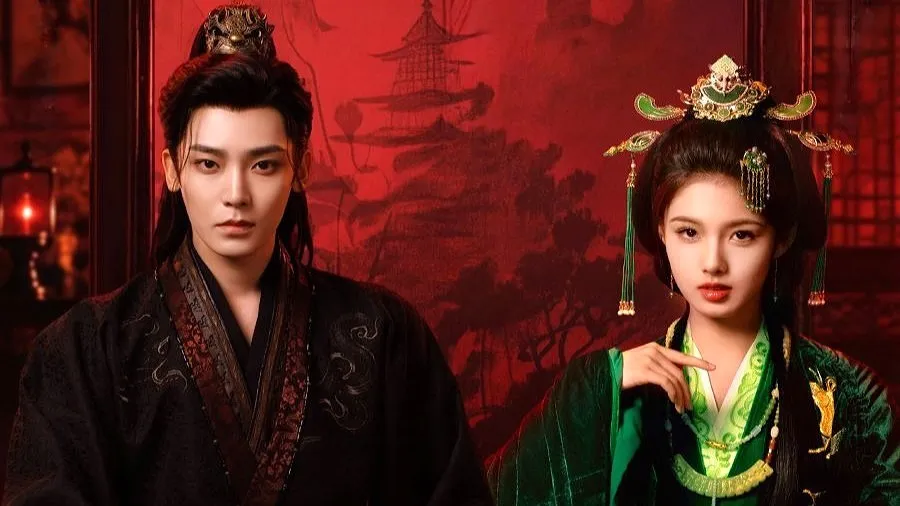
Key to te Phoenix Heart Poster - Courtesy of iQIYI

|
DetailsRATING: (8/10)
NATIVE TITLE: 雀骨 - Què gǔ YEAR: 2026 EPISODES: 28 DURATION: 40’ DIRECTOR: Gao Yi Jun, Sun Meng Fei, Cheng Lu SCREENWRITER: Wu Meng Zhang, Yan Zhao RESPECTED CLICHÉS: 1 - 2 - 3 - 4 - 5 - 6 - 7 - 10 - 11 - 12 - 15 - 18 |


IN A NUTSHELL
Short on time? Here you’ll find the quick verdict, including the drama’s main strengths, weaknesses, and key features to help you decide if it’s right for you. For a more in-depth analysis, continue with the No Spoiler Review.
- What to expect: Key to the Phoenix Heart is an ambitious historical drama that intertwines political intrigue, mysteries of the past, and a love story built on the characters' growth. The series is characterized by its meticulous character development and a script that builds a complex plot while maintaining a balanced pace. The story is also made engaging by elegant direction, realistic cinematography, and a powerfully emotional soundtrack. However, the narrative is at times challenging, choosing to reconstruct the past through fragmented revelations and partial points of view that accompany the protagonists throughout the story. Likewise, some stylistic choices overemphasize the most intense scenes, giving the impression of trying to suggest to the viewer which emotions to experience. The result is a drama capable of standing out for its attention to detail, the depth of its characters, and an unusual and interesting narrative structure.
- Strengths: the nuanced characters, the sweet love story, the sisterly bond between the women of the ML.
- Weaknesses: the complex narrative structure, the unclear SML characterization, the forced final arc.
- Recommended if you like: Hou Ming Hao, Ai Mi and Wang Yilun, seemingly cold and aloof male protagonists, intelligent and enterprising female protagonists, love triangles with an SML who doesn't become the villain, tender love stories with few misunderstandings, series in which the characters act realistically and the women support each other.
- Would I rewatch it? Yes.
Read on to find out why this drama works despite the criticism.
Key to the Phoenix Heart is a drama that asks the viewer to abandon all certainties from the very beginning: each episode adds a new piece to the puzzle, but instead of clarifying the picture, it often forces us to question what seemed already established. The story unfolds like a long journey of reconstruction in which the present and the past continually intertwine, transforming each revelation into an invitation to reread events from a different perspective.
In this review of the drama Key to the Phoenix Heart, after watching all episodes, I will not simply express an opinion on the story, but will also try to analyze its main elements with the aim of understanding why some of its choices are extremely successful while others end up weakening a story that had all the potential to become something truly memorable.
Plot
Xie Jiayu, beloved daughter of Grand Tutor Xie Huai Gui and Princess Yunzhao, dreams of marrying Li Mao, a fallen prince and her father's disciple, with whom she has been in love for years. However, when political pressure seems destined for her marriage to the cruel Prince Changsha, the Empress Dowager intervenes and forces her to marry Xiao Wuyi, heir to the Prince of Jing'an and commander of the Beifu Army, the most powerful battalion in the Nanye Army.
Xie Jiayu, however, is unaware that behind the general's apparent arrogance and brusque nature lies a man deeply in love with her. Knowing of her feelings for Li Mao and bonded to the prince by a sincere friendship, Xiao Wuyi decides to help them elope together on their wedding day. His plan, however, fails: while he goes to the palace to thwart Prince Changsha's rebellion, Xie Huai Gui convinces the gravely ill emperor to appoint Li Mao as provisional regent of the Nanye.
Forced to enter the Xiao residence, Xie Jiayu finds an environment far different from what she imagined. Warmly welcomed by her husband's family and his consorts, she also begins to get to know the real Xiao Wuyi and discovers that behind his stern demeanor lies a man willing to sacrifice everything to protect his nation and the people he loves.
As court intrigues, betrayals, and truths buried for years upend the balance of power in the kingdom, the arranged marriage between Xie Jiayu and Xiao Wuyi slowly transforms into a genuine love. Together, the two find themselves confronting the power struggles that threaten the future of the Nanye and do everything they can to support Li Mao's definitive ascension to the throne.
But when it seems that the kingdom has finally found peace, a new threat from Beiqin calls everything into question, threatening to separate Xiao Wuyi and Xie Jiayu forever.
"Yaoyao, since you’ve made your promise, no matter who tries to take you away in the future, I will never let you go again."

THIS SECTION TAKES A CLOSER LOOK AT THE SCRIPT, CHARACTERS, CAST, AND TECHNICAL ASPECTS WITHOUT REVEALING MAJOR PLOT DEVELOPMENTS. FOR A COMPLETE ANALYSIS OF THE DRAMA, CONTINUE WITH THE SPOILER REVIEW.
Key to te Phoenix Heart Drama Review (No Spoiler)
It's difficult to discuss Key to the Phoenix Heart without first addressing, at least briefly, the controversy that preceded its broadcast. The drama was at the center of a heated debate over its casting decisions, which profoundly affected the way some viewers approached the series, often discouraging viewing and preventing a sincere evaluation of the work. For this reason, I feel it appropriate to dedicate a few lines to this matter before moving on to the actual review.
The controversy primarily revolved around the decision to cast Ai Mi, who was still a minor at the time of filming, in the lead role, alongside Hou Ming Hao, then twenty-seven. Some viewers deemed this decision morally unacceptable, even calling on viewers to boycott the drama and questioning not only the production's choices but also the professionalism of the actors involved.
I understand the discomfort this casting choice may cause some people, and I consider the decision of those who chose not to watch the series for these reasons to be legitimate. At the same time, however, I disagree with turning an individual rating into a campaign aimed at discouraging other viewers from watching the series.
In fact, I believe that imposing one's own moral stance as the sole criterion risks obscuring the work of dozens of professionals who contributed to the series, including Hou Ming Hao and Ai Mi themselves, without taking into account one important factor: Key to the Phoenix Heart carefully avoids any explicit romantic representation between the two protagonists. Their relationship is depicted through extremely restrained gestures of affection — hugs, glances, and a single kiss on the forehead — without ever resorting to intimate scenes or kisses on the mouth.
For this reason, while I believe it is legitimate to discuss the ethical implications of involving underage actors in the entertainment industry, I do not believe that such a debate automatically justifies a call to boycott a work that, in fact, has chosen to represent the protagonists' relationship with particular caution.
Plot and Narrative Pacing
Speaking of the story itself, one of the most distinctive elements of Key to the Phoenix Heart is its narrative structure. Although it begins with a love triangle and a series of political conflicts in the present, the true crux of the story is the progressive reconstruction of a past that continues to influence the characters' choices. The writers construct the narrative almost like a backwards investigation: the viewer knows the consequences of events, but must slowly discover what really happened twenty-five years earlier, what secrets led to the collapse of the previous dynasty, and what dangers past events pose for the protagonists in the present.
This approach makes for engaging viewing because each new revelation changes the perception of the events already revealed, but it also entails certain risks. The series relies largely on testimonies, confessions, and often incomplete or conflicting versions of events, transforming the viewer into an active participant, continually asked to piece together the various pieces of the plot. An ambitious structure that gives depth to the political plot, but which at times risks diverting attention from the protagonists' journey to the mystery of the previous generation.
Despite the complexity of the political plot, the narrative maintains a brisk yet balanced pace, leaving room for both plot development and the emotional and personality development of the characters. Scenes are given time to breathe, allowing the protagonists to reflect on their choices and the central love affair to develop gradually, coherently, and consciously.
The screenplay is also solid in its construction of events: the story follows a precise internal logic, avoids cuts and omissions, and relies largely on believable dialogue, in which the characters reason and discuss their experiences without resorting to excessive rhetoric.
Another particularly successful element is the drama's ability to alternate different narrative registers with great naturalness. The more dramatic and reflective moments are often balanced by lighter, more ironic scenes, which lighten the tension without ever diminishing the emotional engagement or feeling out of place.
Characters and Love Story
The characterization is undoubtedly the most successful aspect of Key to the Phoenix Heart. In a television landscape where characters are often defined by a single dominant trait, the writers, in this case, have chosen a different path. No one is completely good or completely evil: everyone, from the protagonists to the supporting characters, is driven by virtues, weaknesses, ambitions, and fears that make them believable people rather than mere narrative archetypes.
Xie Jiayu is an intelligent, determined, and unconventional heroine, but also capable of questioning her own prejudices and rethinking her beliefs in light of the facts. Xiao Wuyi starts from the archetype of the loyal and upright general, but is enriched by internal conflicts, complex relationships, and an identity that could change her destiny. Even more interesting is Li Mao's journey, whose evolution stems not from a sudden desire for power, but from the accumulation of disappointments and frustrations that lead him to question the values on which he had built his identity.
The supporting cast also benefits from the same attention to detail: antagonists and supporting characters don't simply fulfill a narrative function, but possess motivations, ambitions, and contradictions that make them relatable and contribute to the overall story.
The love story in Key to the Phoenix Heart is another very positive aspect of the series, because it isn't treated as a simple romantic element separate from the political plot, but as an integral part of the characters' evolution.
The relationship between Xie Jiayu and Xiao Wuyi develops gradually, through confrontation, mutual discovery, and the overcoming of character differences and external obstacles. Indeed, feelings arise from understanding each other's motivations, responsibilities, and weaknesses, not from immediate idealization. The screenplay leaves room for doubts and conflicts, without turning them into mere plot devices, but instead allowing the relationship to develop coherently.
This way, the bond between the protagonists is believable, depicting two people who consciously choose to support each other in a context where their relationship is constantly tested by family obligations, political ambitions, and secrets from the past.

Cast
The cast is another of Key to the Phoenix Heart's strengths. The actors successfully enhance the characters' writing, adding nuance through their sensitive interpretations that make the protagonists and supporting characters even more believable and engaging.
Despite her young age, Ai Mi once again proves herself to be an extremely promising actress. Personally, I would have considered it a real shame not to cast her in this role, because the character almost seems tailor-made for her: an inexperienced and idealistic young woman, longing for freedom but forced to navigate an environment dominated by intrigue and power games. What I appreciate most about her acting is the fact that her expressiveness isn't based on overly emphatic reactions, but on a very conscious use of microexpressions, thanks to which she manages to make both the lighter moments and the more emotionally charged ones believable. Among the young actresses on the contemporary Chinese scene, she is certainly one of the performers I consider the most promising and with the greatest potential.
Hou Ming Hao is now a regular feature in major Chinese projects, and his strong screen presence naturally captures the viewer's attention. However, this time I had the feeling that the character didn't completely match the image the actor conveys on screen. The role of the strong, resolute, and commanding general likely required a different level of physicality and intensity, and for this very reason, he sometimes seemed less convincing. Despite his evident commitment, I still sense a certain lack of that micro-expressiveness that would make his performances more nuanced and which, in my opinion, could help him be fully credible even in roles less in keeping with his natural screen presence.
Wang Yilun returns as the second male lead alongside Hou Ming Hao after Back From The Brink, but this time he takes on a much less over-the-top character, while still retaining a certain moral ambiguity. Prince Qi is a man desperately seeking recognition, and I appreciated how Wang Yilun portrayed his vulnerable yet determined side. His performance remains as enjoyable as ever, but I think his character would have required a greater ability to suggest through body language and expressions what the script chooses not to make explicit. From this point of view, Wang Yilun doesn't always manage to fill the gaps in the writing, at times penalizing the character's overall impact.
One of the most positive surprises in the cast is definitely Peter Ho, an actor who always amazes me with his ability to completely transform from one role to another. Although in this drama he can't rely on the physical presence that characterizes many of his more famous roles, he still manages to create a believable and enigmatic antagonist almost exclusively through acting. I had already appreciated his adaptability in Unchained Love, where he was able to transition with great ease from a seemingly fragile and accommodating figure to a much more ambiguous and disturbing presence. He then impressed me once again in The Prisoner of Beauty, thanks to a completely different performance as the scholar. With Key to the Phoenix Heart, he returns to a character with darker traits, once again confirming a versatility that I consider one of his greatest strengths.
I was also very happy to reunite with Merxat, an actor I continue to consider unfairly underrated. His stage presence, elegant bearing, and remarkable equestrian skills make him, in my opinion, particularly suited to historical dramas. His way of interpreting characters, combined with his ability to communicate through subtle changes of expression, are rare qualities in an actor, and it's a shame that, despite this, he continues to receive fewer opportunities than he deserves.
Finally, praise also goes to the supporting cast, especially veterans Shao Tong, Tao Xin Ran, Wang Li Kun, and Dang Tao, who successfully brought credibility and emotion to their respective characters, helping to solidify the entire narrative.
Visual Aspects and Soundtrack
From a technical standpoint, Key to the Phoenix Heart confirms its excellent quality. The direction is solid and demonstrates a clear cinematic flair, alternating clean, professional shots with more visually refined compositions, especially in the more emotionally charged sequences, where the frequent use of close-ups helps enhance the actors' performances without being overbearing. The cinematography also impresses with its realistic approach: the color palette remains consistent with the historical period depicted, and the lighting almost always favors natural light, helping to make the settings believable and free from the artificiality that characterizes many contemporary historical productions.
This is precisely why I was surprised by the abrupt shift in visual language during the opening battle of the first episode. After an introduction that had won me over with its atmosphere, shot composition, and photography, the scene suddenly adopts a much more emphatic register, accompanied by an invasive soundtrack and an almost celebratory construction of the protagonist. The result isn't technically flawed, but it took me out of the story: for a few minutes, I stopped perceiving the sequence as a battle and began to experience it as a succession of spectacular images, almost like a promotional video. I almost had the impression that this celebratory construction served to visually reinforce Hou Ming Hao's image as a great general, lending the spectacular direction an authority that the character should have earned through the narrative. This tendency toward exaggeration also resurfaces in other scenes, where the sound design sometimes tends to emphasize emotions through music when the actors' performances and dialogue would already be perfectly capable of communicating everything necessary. It's a stylistic choice that reminded me, in some ways, of the way tension is built, typical of some Hong Kong productions, a style the director evidently shares.
Otherwise, the technical quality remains consistently high. The editing is fluid and rarely gives the impression of missing scenes or narrative passages, while flashbacks are distinguished from the present through a slight desaturation and a slight blurring of the image, a simple but effective solution that helps the viewer orient the complex narrative structure. The CGI panoramas of the capital used as connecting scenes are also very successful, as are the numerous transitions that accompany the passage of time without being repetitive.
Finally, sets, costumes, hairstyles, and accessories contribute significantly to the believability of the setting. The interiors of the Nanye court, recreated in the Palace of Emperor Qin of Hengdian World Studios, appear particularly well-crafted, while the costumes favor sober fabrics, cuts, and decorations consistent with the historical period depicted. In this case, therefore, it seems that the production deliberately chooses to forgo excess in favor of verisimilitude, reinforcing the impression of a realistic and visually elegant historical reconstruction.
The soundtrack is also one of the most successful elements of Key to the Phoenix Heart. The songs that make up the OST have a clearly recognizable musical identity: the arrangements have strong Western influences, but still manage to maintain their own personality without giving the impression of being simply variations on formulas already used in other historical dramas. The epic and romantic sounds of the songs integrate perfectly with the tone of the series, accompanying both the action moments and the more intimate ones. Particularly evocative is the opening duet 炙光 (Scorching Light), which, thanks to the introduction of the violins and the progressively more intense construction, conveys a sense of breadth and drama that is well suited to the story. Energetic and featuring a more modern arrangement, 一诺成川 (A Promise Becomes a River), performed by Hou Ming Hao, features strings and piano blended with electric guitar and drums, creating a powerfully impactful piece. My favorite track, however, remains 知我 (Know Me), a slower-paced romantic ballad whose delicate arrangement highlights Xin Liu's intense and heartfelt performance.
Precisely for this reason, I found the way the musical accompaniment is sometimes used to emphasize emotions that the actors' performances alone would be sufficiently powerful, unsatisfactory. This choice doesn't diminish the value of the soundtrack, but at times risks detracting from the power of the images and performances, making the music more of a protagonist than it should be.

WARNING!
SPOILERS AHEAD. THIS SECTION PROVIDES A DETAILED ANALYSIS OF SPECIFIC ASPECTS OF THE SERIES. DO NOT CONTINUE IF YOU DON’T WANT TO KNOW ALL THE DETAILS OF THE DRAMA
Key to te Phoenix Heart Drama Review (Spoiler)
What Works
The Concept of Diffused Responsibility
One aspect of the screenplay that I found particularly interesting is the way it addresses the theme of responsibility. Key to the Phoenix Heart seems to reject a simplistic view of history, according to which every tragedy can be traced back to the actions of a single culprit. Instead, it suggests that the most dramatic events are almost always the result of a web of decisions, omissions, ambitions, and compromises attributable to different people, each convinced they are acting for the greater good. The fall of the previous dynasty, wars, and court intrigues never depend solely on the evil of a single individual, but on a long chain of responsibilities that ultimately overwhelms everyone. It's a surprisingly realistic reading of politics, because it rejects the reassuring idea that eliminating the "bad guy" of the moment is enough to solve every problem.
Even more interesting is the fact that almost no character acts out of pure evil. Emperor Wenxi is not simply a tyrant, but a ruler determined to reduce the power of the aristocracy; Xie Huai Gui plots not out of personal ambition, but rather in an attempt to clear the name of the An and Lu families, whom he believes to be innocent; Prince Jing'An is not silent about the An-Lu case out of cowardice, but because he believes those same noble families are guilty of grave crimes; Empress Dowager He and Empress Dowager Beiqin are both willing to commit ruthless acts to protect the position of their respective dynasties; Princess Pingning kills Princess Yunzhao in an attempt to preserve her brother's position of power. Each places an absolute value on something they deem more important than all else: the stability of the state, justice, family, succession to the throne, or the rehabilitation of their clan. Their actions, even when they produce dire consequences, are almost always presented as the price they are willing to pay to achieve that goal.
This doesn't mean the drama absolves them, but it allows us to understand their motivations without reducing them to simple archetypes of "good" and "bad." In this sense, Key to the Phoenix Heart offers an incredibly mature reflection on politics: tragedies almost never arise from the presence of a single villain, but from the inability of different people to find a balance between principles that, taken individually, might even seem shared.
Character Development
Another aspect I appreciated most about Key to the Phoenix Heart is undoubtedly the character development. In a television landscape where it's increasingly common to encounter protagonists built around a single defining trait — the flawless hero, the evil antagonist, or the "girl boss" protagonist — this drama instead chooses to portray people rather than archetypes. All the characters, but especially the three protagonists, constantly oscillate between virtues and weaknesses, altruism and selfishness, courage and fear, resulting in a much more human and believable outcome.
Xie Jiayu is my favorite character and is probably the most successful example of this approach. She's unconventional enough to reject the future her father has planned for her, but without turning into the classic capricious rebel who opposes every rule just out of principle. She's intelligent, resourceful, and determined, but she also retains a certain naiveté that leads her to trust people and stubbornly believe in the love she's chosen. Her fight isn't just to marry Li Mao, but above all to reclaim the right to decide her own life.
What makes her even more interesting, however, is her profoundly rational approach to people. Xie Jiayu isn't guided by pride or prejudice: when she receives new information, she's perfectly capable of revising her judgment. After initially being offended when Xiao Wuyi tries to keep her away from his family problems, she listens to Rui Sheng's story and, discovering everything the general has done for her—even taking the responsibility of recognizing a child that wasn't his—she realizes that behind that apparent harshness lies a deeply loyal and honest man. Similarly, when Xiao Wuyi opposes the project to build stirrups designed to allow her brother to return to combat, rather than automatically attributing her refusal to malice, she comes to understand that her decision stems from a desire to keep a promise she made to her mother. Even when Cui Jun insinuates that Xiao Wuyi is using her to obtain the Phoenix Heart Seal from his mother, Xie Jiayu isn't held captive by suspicion: she initially wavers, but the relationship she has built with him and the trust they've developed over time quickly lead her to recognize the accusation's groundlessness. It's a quality that may seem obvious, but is surprisingly rare in historical dramas: instead of creating conflicts based on misunderstandings that drag on for entire episodes, the writers choose a protagonist who observes, reflects, and adjusts her conclusions when the facts force her to do so.
The same rejection of more conventional characterizations also emerges in the character of Xiao Wuyi. At first glance, he appears to be a classic cold and aloof protagonist, but the screenplay gradually highlights his more altruistic side, highlighting his loyalty to the nation and the strong sense of justice that guides his actions. Furthermore, his sincere friendship with Li Mao prevents him from confessing his feelings for Xie Jiayu and even leads him to refuse the girl's mother's request to separate them. Adding to the character's appeal is his secret identity as a potential pretender to the throne, a power he seems unwilling to exploit for personal ambition.
It is precisely the relationship between Xiao Wuyi and Li Mao that allows the series to further develop this idea. While clearly privileging the protagonist's point of view, the screenplay avoids turning the second male protagonist into a classic rival destined to become the morally wrong alternative. Even when Li Mao makes questionable choices, he continues to act on the basis of understandable motivations and retains a moral complexity that distinguishes him from both the flawless hero and the simple antagonist. It's a choice that makes the love triangle less predictable and demonstrates once again the authors' desire to build multifaceted characters rather than figures rigidly pigeonholed into their respective roles.
This same attention is also reflected in the treatment of secondary female characters. In a more conventional historical romance, Xiao Wuyi's first wife and concubine would inevitably become rivals to the protagonist, jealous women, or mere obstacles destined to disappear the moment the protagonist falls in love with the protagonist. Key to the Phoenix Heart, however, avoids even this stereotype.
The initial situation is far from simple: Xiao Wuyi has a wife imposed on him by Empress Dowager He to control him, a concubine he took in to save her and her child from a tragic end, and, ultimately, he marries Xie Jiayu both for strategic reasons and because he genuinely falls in love with her. The writers, however, reject the easy solution. The other two women are not transformed into antagonists or suddenly rendered irrelevant, but remain characters with their own dignity and perspective. Although they dislike Xiao Wuyi, they recognize the respect with which they have always been treated and choose to support, rather than hinder, her relationship with Xie Jiayu.
It's a choice that reflects the philosophy with which the entire series builds its characters: each has their own desires, motivations, and feelings; they are not simply pawns on someone else's chessboard. Even characters who might have been limited to serving as narrative "obstacles" retain their autonomy and are not sacrificed to facilitate the protagonists' love story.
The same care is evident in the other supporting characters. Xie Huai Gui is a manipulative antagonist who hides her ambition behind a respectable facade; Li Fu Hua manages to be simultaneously a strong woman, a loving mother, and a character marked by her past; Li Le Jun quickly abandons the role of the naive sister to reveal a surprising ambition. Even secondary characters like Qing Long and Yan Yue possess well-defined personalities and aren't limited to the all-too-common role in historical dramas of mere assistants tasked with asking the protagonist questions or approving his every decision. It's precisely this constant desire to avoid one-dimensional characterizations that makes the characters in Key to the Phoenix Heart one of the series' most successful aspects.
The Main Love Story
The love story between Xie Jiayu and Xiao Wuyi is another of the most successful elements of Key to the Phoenix Heart, precisely because it isn't constructed as a simple romantic element inserted into a broader political plot. Their relationship develops gradually through confrontation, conflict, and the progressive discovery of their respective personalities.
At first, the two protagonists become closer from very different positions. Xie Jiayu is determined to defend her right to choose her own future and her desire to marry Li Mao, the man she loves, rejecting a marriage arranged for her by her family. Xiao Wuyi, on the other hand, is a man accustomed to carrying the weight of his responsibilities and putting duty before personal desires. His decision to marry Xie Jiayu stems not only from his immediate attraction to her, but also from a desire to protect her from the political intrigues surrounding her family and to offer her a freedom of choice that other candidates would likely never have granted, even going so far as to accept the possibility that she might choose to leave him for Li Mao. It is precisely this initial distance that makes their relationship interesting, because the feeling doesn't stem from an immediate idealization of the other, but from a progressive ability to understand and accept even the most complex aspects of their partner's character.
One of the most compelling aspects of their relationship is the way trust builds over time. Xie Jiayu doesn't simply fall in love with the image of the valiant general, and Xiao Wuyi appreciates more than just her courage or stubbornness: both come to understand the motivations, fears, and responsibilities that lie behind their actions. The screenplay leaves room for moments of doubt, conflict, and misunderstanding, but avoids turning them into artificial obstacles that only slow down the story. Instead, every difficulty becomes an opportunity to deepen the relationship and allow the protagonists to consciously choose each other.
This is precisely why their love story is consistent with the central theme of the series: in a world where characters are constantly conditioned by family obligations, political expectations, and secrets from the past, the bond between Xie Jiayu and Xiao Wuyi represents, above all, the possibility of asserting a personal choice. It is not a love built on the idea of inevitable fate, but on the progressive mutual understanding between two people who decide to support each other despite their mutual goals.

What Doesn't Work
Narrative Structure
One of the most controversial aspects of Key to the Phoenix Heart is its narrative structure. It is not simply a political drama complicated by numerous court intrigues, but a story constructed on two narrative levels: on the one hand, the account of present-day events, on the other, the slow and fragmented reconstruction of a past that continues to influence the protagonists' every choice.
The series begins with the love triangle between Xie Jiayu, Li Mao, and Xiao Wuyi, but the true focus of the narrative soon shifts to the tragedy that led to the collapse of the previous dynasty, of which Xiao Wuyi is the sole survivor. The writers structure the story almost like a backwards investigation: the viewer knows the present, but the real mystery is what happened twenty-five years earlier. As a result, each episode no longer answers the question "What will happen next?" but rather "What really happened?"
This choice makes the viewing experience extremely engaging, as each new revelation changes the perception of events already told. However, this very mechanism also represents the series' main limitation. At a certain point, the twists no longer seem to progressively clarify the overall picture, but simply increase the number of variables. Each new piece of information forces the viewer to question what they had just assimilated, while the past is reconstructed almost exclusively through partial testimonies, confessions, documents, and conflicting versions of the characters who lived it. Rather than witnessing the events, we therefore find ourselves reconstructing a historical process through often incomplete or unreliable sources.
The idea itself is extremely fascinating. The problem is that Key to the Phoenix Heart doesn't tell the story of investigators interested in solving a mystery out of simple curiosity: Xiao Wuyi, Xie Jiayu, and Li Mao must understand the past because it continues to concretely interfere with their present. And it is precisely this difference that makes the narrative structure both ambitious and, at times, frustrating.
In most historical dramas, past events form the starting point of the story. They influence the present, but are reconstructed especially when the final confrontation with the antagonist necessitates a comprehensive explanation. Through confessions, memories, or flashbacks, all the pieces gradually fall into place and allow the viewer to reinterpret what they have seen up to that point.
In Key to the Phoenix Heart, however, the past is not simply the remote cause of current conflicts: it continues to constantly accompany present events and guide the actions of almost all the characters from the previous generation, from Xie Huai Gui to Li Fu Hua, to the two Empress Dowagers of Beiqin and Nanye. Consequently, even the protagonists' choices seem to hinge on secrets that neither they nor the viewer fully understand.
This approach produces a rather unusual narrative effect. Usually, the previous generation serves to give depth to the protagonists; Here, however, one often gets the opposite feeling: Xiao Wuyi, Xie Jiayu, and Li Mao seem to exist primarily as tools through which the viewer can reconstruct the history of those who came before them. The political intrigue of twenty-five years earlier thus ends up having such significant narrative weight that it sometimes seems as if the real story is that of the previous generation, while that of the protagonists is the means by which a buried past is brought to light. In other words, Key to the Phoenix Heart seems to recount, above all, the sins of the previous generation through the eyes of the next.
This choice also has another consequence: the previous generation has already played its political game, while Xiao Wuyi, Xie Jiayu, and Li Mao spend much of the story trying to understand the rules of that game. The risk is that the protagonists constantly appear a step behind the plot, forced to react to events they don't yet fully understand rather than truly guiding the course of the story.
Making this construction even more challenging is the limited use of explanatory flashbacks. Rather than directly show the events of twenty-five years earlier, the drama prefers to reconstruct them through dialogue and progressive revelations. This choice maintains a high sense of mystery, but also risks leaving crucial information unanswered for the story. I understand the writers' desire not to immediately reveal all the details, but distributing fragments of the puzzle throughout the series ends up, at times, transforming the viewing experience into an exercise in historical reconstruction in which the viewer almost has to take notes to keep track of the ongoing revelations.
The limitations of this choice become even more apparent as the story nears its conclusion. After dedicating much of the narrative to reconstructing the events that led to the fall of the previous dynasty, Key to the Phoenix Heart finally seems to reach a resolution to the main conflict: the responsibilities of the previous generation are clarified, the injustices are acknowledged, and the characters involved in that tragedy seem to have completed their journey. However, just when the viewer feels they've finally grasped the bigger picture, the script introduces a new layer of conflict, reconnecting those events to the Beiqin threat.
The problem isn't the introduction of a new antagonist per se, but the way this threat is integrated into the narrative structure. For much of the series, the Beiqin appears as a parallel element to the internal intrigues of the Nanye: a dangerous political and military adversary, but not necessarily the root cause of all the conflicts described up to that point. In the finale, however, the role of the Beiqin is suddenly expanded to the point of becoming the true perpetrator behind the story's latest events, creating a connection that, rather than being set up by the previous narrative, seems more functional to the need to prolong the drama.
This choice ends up weakening the effect of the previous revelations, because after carefully crafting a tragedy based on the Nanye's internal responsibilities, personal ambitions, and the mistakes of the previous generation, the drama seems to suddenly shift the burden of blame onto an external enemy. The political complexity that characterized the first part thus gives way to a more conventional dynamic: after having analyzed how tragedies arise from the intertwining of many individual responsibilities, the conclusion risks tracing the chaos back to a more easily identifiable external threat.
Li Mao's Characterization
In a drama where character development is one of the most carefully crafted aspects, the poor justification for Li Mao's changes in attitude is probably one of the most glaring flaws. In the first part of the story, Li Mao appears as one of the most positive characters: he embodies the ideal of the virtuous man, deeply loves Xie Jiayu, is willing to give up everything to build a life with her, is loyal to his friends, faithful to his nation, and sincerely altruistic.
This is precisely why his initial crisis works so well. The writers don't portray it as a simple consequence of romantic jealousy or a sudden change in personality, but as the result of an accumulation of frustrations: the lack of political recognition, the feeling of being constantly overshadowed, helplessness in the face of events bigger than himself, and the belief that his willingness to help others is mistaken for weakness.
His relationship with Xie Jiayu also plays a key role in this journey. When he realizes that she admires Xiao Wuyi's qualities, such as her determination, her ability to take responsibility, and her determination, Li Mao inevitably enters a crisis. What I appreciated is that this moment isn't presented as the cause of his transformation, but rather as the confirmation of a long-standing malaise. It's as if he gradually comes to the conclusion that the model of man he had tried to embody—based on modesty, availability, and personal sacrifice—has brought him neither political nor emotional recognition.
Precisely for this reason, however, the subsequent handling of the character is particularly problematic. The limitation isn't so much that Li Mao takes a different path than initially imagined, nor that he ends up making questionable choices: on the contrary, his conflict had all the makings for a much more complex narrative arc. The problem is that the screenplay makes it extremely difficult to understand his true intentions.
Throughout much of the story, Li Mao seems to constantly oscillate between opposing positions: at times, he appears sincerely intent on reconciling with Xiao Wuyi, acknowledging the bond and trust that had united them in the past; at others, he seems determined to hinder him and pursue goals seemingly opposed to his own. Only towards the end, however, does it become clear that many of his actions were part of a larger plan agreed upon with Xiao Wuyi: Li Mao was to assume political control of the country, while Xiao Wuyi would continue to defend the frontier, renouncing the throne and allowing Xie Jiayu to freely choose her own path.
The idea behind this development is actually interesting, as it allows Li Mao to transcend being simply the "defeated rival" and opens up the possibility of a more complex interpretation of his character. The problem is that the screenplay doesn't provide the viewer with enough elements to arrive at this interpretation on their own. A mystery works when information is withheld but clues still allow the truth to be reconstructed; in this case, however, Li Mao and Xiao Wuyi's plan becomes understandable only when it is explicitly explained to other characters.
Consequently, the viewer does not have the sensation of witnessing an ambiguous character who is hiding his own designs, but a series of apparently contradictory behaviors: Li Mao seems sincere when he reconciles with Xiao Wuyi, he seems sincere when he betrays him, he seems sincere when he protects him and he seems sincere when he hinders him. The difficulty therefore does not arise from the moral complexity of the character, but from the lack of readability of his path. This choice is particularly weighty because the relationship between Li Mao and Xiao Wuyi is one of the most complex relationships in history. Two men who loved each other, but who represent different ways of relating to power - Xiao Wuyi considers it mainly a responsibility, while Li Mao initially sees it as the possibility of freeing himself - could have had a much more nuanced comparison. Their relationship, however, is often filtered through conflict and, while the writing focuses much of the attention on Xiao Wuyi, always making his good intentions and willingness to sacrifice himself for the good of others clear to the viewer, Li Mao remains trapped in a gray area that ends up generating more confusion than suspense.
Wang Yilun's performance also ends up accentuating this problem. A character built on ambiguity would have needed a performance capable of communicating through hesitations, silences and small changes in behavior what was not expressed openly in the script. The actor manages to convey some aspects of Li Mao's attitude, but does not always manage to fill the gap left by too cryptic writing.
The disappointment, therefore, does not arise from the fact that Li Mao necessarily had to remain an exclusively positive character or that he could not become more distrustful and calculating. On the contrary, his initial characterization offered the possibility of building one of the most interesting narrative arcs of the series. The problem is that the drama fails to transform its ambiguity into a narratively engaging element: instead of intriguing the viewer, it often simply forces him to wait for someone to explain what Li Mao was really thinking and doing.

The Choice to Cast Hou Ming Hao as the Lead Role
Another aspect I found less convincing in Key to the Phoenix Heart is a casting choice that, in my opinion, ends up penalizing the very character meant to represent the heart of the story. The decision to cast Hou Ming Hao as Xiao Wuyi seems to stem more from a desire to focus on one of the most popular and recognizable actors in the current Chinese drama landscape than from a search for the most suitable actor to embody a protagonist with the required characteristics.
The problem isn't the actor's acting ability, but rather the gap between his screen persona and what Xiao Wuyi is supposed to convey. Xiao Wuyi is a prince with a broken destiny, grown cynical and suspicious, a military commander forged by years of war, and a man capable of inspiring awe both on the battlefield and at court. Such a figure should immediately convey strength, charisma, and a certain toughness, even through physical presence alone. Instead, every time the protagonist enters the scene, my immediate reaction is closer to "how cute" than "how charismatic." Hou Ming Hao visibly puts effort into portraying the protagonist's tougher, more resolute side, but, for my part, he still doesn't strike me as truly believable as a general.
It's precisely this constant feeling of disbelief that makes me suspect a casting error. Hou Ming Hao possesses a very particular charm, blended with elegance, mischief, and an almost unreal aura, qualities that make him extremely suited to ethereal roles, such as immortal spirits or characters belonging to the xianxia world. In that context, his almost otherworldly appearance becomes a strength and allows him to be believable even during action scenes, because it's perfectly consistent with the character's nature. Transferring the same image to a general hardened by war and political struggle, however, creates a dissonance that's hard to ignore: what the script tells and what the actor visually communicates seem to belong to two different worlds.
I don't consider this a professional failing on the part of Hou Ming Hao; on the contrary, I believe he was simply chosen for a role that doesn't showcase his best qualities. While the xianxia seem to enhance his almost divine elegance, a protagonist like Xiao Wuyi would likely have required a performer with a more earthy, authoritative, and immediately believable screen presence as a military commander. In a cast like Key to the Phoenix Heart, where almost every actor seems to perfectly embody the essence of their character, this choice stands out even more and represents, for me, one of the very few discordant notes in an otherwise extremely polished production.
Ending
The main problem I identified with the ending of Key to the Phoenix Heart is that, after having built a conflict centered on the sins of the previous generation and the consequences of the power struggles within the Nanye for much of the story, the series suddenly changes direction, bringing Beiqin, the true villain, back to the center of the narrative. The previous development had, in fact, led to the reconstruction of the events of twenty-five years earlier, which had led to the death of Princess Yunzhao, Xie Jiayu's adoptive mother, the deposition of Empress Dowager He, and the restoration of the An and Lu families, falsely accused of collaborating with the enemy, causing the fall of the Da Ye capital and the collapse of the previous dynasty. It seemed, therefore, that the main conflict had been resolved, but the writers chose to suddenly reopen the game by introducing a new external threat.
The connection between the two narrative threads is achieved through a series of rather forced coincidences. In a particularly daring narrative twist, the screenplay transforms the death of Grand Tutor Xie Huai Gui into yet another piece of the Beiqin conspiracy. After regretting his actions—actions that had nearly led to Xiao Wuyi's death—and agreeing to resign following the clearing of the An and Lu families, Xie is apparently killed by Xiao Ju. It is later revealed that the assassin was actually a Beiqin spy wearing the familiar mask capable of making one person indistinguishable from another. His goal was to sow chaos within the Nanye and fuel the rift between Li Mao and Xiao Wuyi, thus weakening the country and allowing the Eagle King to organize a new campaign of conquest.
The idea of introducing a final external conflict isn't necessarily problematic, but the handling feels unnatural because it almost seems like an attempt to prolong a story that had already reached its narrative climax. The result is that the drama quickly shifts from a reflection on individual responsibilities, historical memory, and the consequences of the choices of the previous generation to a succession of intrigues, sacrifices, and twists that seem to belong to another story.
Added to this is a sudden buildup of romantic angst that leads the story to pack enough drama into the final episodes to sustain the entire series. Xie Jiayu discovers that Xiao Wuyi is suffering from a cerebral edema that could cause his death within months, but also that he and Li Mao have orchestrated a fake breakup to allow him to infiltrate the ranks of the Beiqin. The plan involves Xiao Wuyi pretending to flee his country, being captured by the Eagle King, and gaining his trust to lead him into a trap set up with the Baifu Army. In other words, just when the main couple could finally openly face their feelings, the script decides to add a new obstacle, this time built around the ML's suicide mission. The final battle leads to the Nanye's victory, but also to dramatic consequences: Prince Jing'An dies saving his son Xiao Yao, and numerous soldiers lose their lives to incendiary bombs invented by Xie Jiayu and used on the battlefield by Li Mao. Xiao Wuyi also seemingly disappears, only to be found alive by Li Mao himself, who brings him back to the capital. Here, yet another unrealistic solution comes into play: the miracle doctor hired to treat his aneurysm manages, through a series of complex and mysterious surgical operations, not only to save him from death but also to completely eliminate the disease that should have killed him months earlier.
Evidently, however, the screenwriters felt the happy ending was still too undeserved, because even after overcoming an incurable disease and a suicide mission, Xiao Wuyi must face one final obstacle: memory loss. When he awakens, he no longer remembers his own identity or Xie Jiayu. Naturally, no one sees fit to inform the protagonist that her husband is still alive: for three years, she is kept in the dark about his survival for fear that the enemies of the Beiqin might find him and take revenge on him, now weakened even in his martial abilities.
The conclusion therefore tries to delay the couple's reunion as long as possible through a series of increasingly contrived obstacles. When Xie Jiayu finally returns to the capital to deliver to Li Mao, now Emperor, the map of the mineral deposits discovered thanks to the Phoenix Heart Seal, she encounters the very man she thought was lost. Xiao Wuyi, now commander of the imperial guards and forced to wear a mask to hide from his enemies, suddenly regains his memory, allowing the two to be reunited.
The happy ending of Key to the Phoenix Heart is consistent with the series' desire to offer its protagonists a positive conclusion, but the path chosen to get there seems excessively tortuous and contrived. The Beiqin spy mask capable of deceiving anyone, the protagonist who survives every tragedy, the miracle doctor capable of curing seemingly irreversible diseases, and memory loss as the ultimate romantic obstacle are all familiar devices to the genre, but here they end up undermining the credibility of a story that, until that point, had attempted to construct a realistic narrative. After a first part characterized by a greater focus on the coherence of the characters and the consequences of their choices, the finale instead opts for more conventional solutions of historical romance, sacrificing some narrative coherence in favor of a conclusion that is as reassuring as possible.

Characters and Cast
Primary Characters
Xiao Sheng/Wuyi (Hou Ming Hao) Prince Jing'an's heir apparent and commander of the Beifu Army, one of the strongest battalions in the Nanye army, is a man who, following the death of 30,000 soldiers at the Battle of Jiuzhang Plains due to the faulty repeating crossbow designed by the Young Lord with the Golden Hands, returns to the capital to investigate. There, he not only discovers that the Young Lord with the Golden Hands is actually Xie Jiayu, the young daughter of the Grand Tutor, but is also so fascinated by her that he asks Empress Dowager He for a marriage decree, which is granted. Only later does he discover that she is in love with his lifelong friend Li Mao, so he decides to facilitate their romantic elopement, but Li Mao is forced to become provisional regent of the Nanye, and their plan thwarts him. Upon A'Mao's appointment as regent, he was appointed State Auxiliary General (辅国将军). He subsequently became increasingly entangled in the power struggles of the Nanye, especially given his secret identity as Crown Prince of the previous dynasty. This only brought him closer to Xie Jiayu, who eventually fell in love with him.
Xie Jiayu/Yaoyao (Ai Mi) adopted daughter of Grand Tutor Xie Huai Gui, is a bright and enterprising girl, passionate about weapons and mechanisms, which she builds and sells under the alias of Young Lord with Golden Hands. Unfortunately, her design for a repeating hunting crossbow was purchased by an emissary of Empress Dowager He, who had it produced for the Beifu Army, resulting in the deaths of 30,000 soldiers. This puts her in the crosshairs of Xiao Wuyi, who, upon discovering her true identity, falls in love with her and asks Empress Dowager He for a marriage decree to marry her. However, she is in love with Li Mao and plans to elope with him, but his appointment as provisional regent disrupts their plans. The girl is thus forced to become the wife of what she considers a tyrant, but in reality she discovers a man completely different from how she imagined him and slowly falls in love with him.
Li Mao/Yizhi/A'Mao (Wang Yilun) Prince Qi of Qizhou and cousin of Xie Jiayu. He is a meek and modest man who, after escaping the massacre of his family at the hands of the enemies of the Beiqin, is taken in, along with his sister, by the Cui family, where, however, he is not very welcome. Before reaching the capital, he accidentally runs into Xiao Wuyi, whom he becomes very close to and with whom he will maintain excellent relations until she announces her upcoming marriage to Xie Jiayu, his master's daughter and his childhood sweetheart. After Prince Changsha's attempted rebellion, Xie Huai Gui forces him to assume the role of Regent (監國) and permanently renounce Xie Jiayu, so he decides to seize the opportunity to amass power and no longer be manipulated by others. Ultimately, he decides to make peace with Xiao Wuyi and work together to eliminate the Beiqin threat once and for all.
Supporting Characters
Xie Residence
Xie Huai Gui (Peter Ho) Grand Tutor (太傅) of the Nanye, adoptive father of Xie Jiayu and true father of Li Mao. He is obsessed with clearing the name of the two noble families, the An and Lu, who were unjustly accused of boycotting the construction of the military supply canal, thus aiding the Beiqin invasion of Da Ye. To this end, he will do everything he can to have Li Mao appointed provisional regent and to have Xiao Ju accused of treason, guilty of concealing the innocence of the two clans.
Li Fu Hua (Jin Sha) Princess Yunzhao, younger sister of the late Emperor Wenxi and adoptive mother of Xie Jiayu. She is among the supporters of Crown Prince Wenxi's return to the throne, and will do everything she can to convince Xiao Wuyi to reveal himself. She also possesses one of the pieces of the Phoenix Heart Seal that Empress Wenxi asked her to deliver to Xiao Wuyi once he was ready to claim the throne.
Ye Xing (Jiao Jian) shadow guard of Princess Yunzhao, who is later taken in by Xie Jiayu.
Cang'er (Wang Jing Wen) Xie Jiayu's personal maid. She is killed by Xie Huai Gui the night of her daughter's attempted escape from her arranged marriage to Xiao Wuyi.
Nan Xing (Qu Zhi Han) Xie Jiayu's personal maid who follows her to the Xiao residence. She become the shop manager of the Young Lord with the Golden Hands.
Bing Zhu (Liang Xiao Feng) butler of the Xie Residence.
Residence of the Prince of Jing'an
Xiao Ju (Shao Tong) Prince Jing'an, father of Xiao Yao and Xiao Sheng. He was a stableman of the Cui family appointed commander of the imperial guards at the recommendation of Empress Wenxi. During the Beiqin siege of the capital, which resulted in the death of Empress Wenxi, he was tasked with escorting the noble clans south, earning him the title of Prince Jing'an. After A'Mao became regent, he was appointed Grand General Protector of the State (护国大将军).
Yao Yunzhi (Cheng Li Sha) Prince Jing'an's consort. She is the daughter of a butcher and loves the simple life. She is very attached to her children but cannot forgive Xiao Wuyi for causing the death of her firstborn.
Xiao Yao/Anmin (Su Jun He) eldest son of Prince Jing'an and former Left Wing Commander of Beifu Army (左羽中郎將). Li Mao appoints him Director of Waterways (都水監) for the construction of the military supply canal, but Xie Huai Gui takes advantage of the situation to accuse the Xiao family of embezzling funds intended for the project.
He Yuanji (Zheng Ye Wen) Xiao Wuyi's principal consort. She is the niece of Empress Dowager He and, being a passionate bookworm, dreams of taking the Imperial Examination. After Xiao Wuyi grants her a divorce, she becomes a teacher.
Yu Rui Sheng (Liu Ling Zi) Xiao Wuyi's attendant concubine (侍妾). She was the wife of one of Xiao Wuyi's deputy commanders who had died in battle. Her family wanted to bury her husband after discovering she was pregnant. To save her, Xiao Wuyi assumed paternity of the child and took her to the Xiao Residence, where she was able to continue her medical studies. After Xiao Wuyi granted her a divorce, she continued to practice medicine in the capital.
Xiao Ziqi (Ni Yue Chen) Rui Sheng's son, whom Xiao Sheng decided to recognize as his own to allow Rui Sheng to remain at the Xiao Residence and continue his medical studies.
Duan Ying/Ziqi Commander of the White Horse Battalion of the Beifu Army and late husband of Rui Sheng, who died in the Battle of Yuezhou, one of the three prefectures disputed with the Beiqin.
Qing Long (Shi Yan Pei) and Yan Yue (Zheng Yu Xuan) Xiao Wuyi's bodyguards. They are shadow guards selected by Liu Yu'e to protect him.
Beifu Army
Zhang Ji (Wang Pei Gen) and Feng Wu (Li Guan Lin) Deputy commanders of the Beifu Army (北府兵副将) and Xiao Wuyi's aides.
Lu Dayong (Peng Shi Jie) and Fang Shiba (Guo Ni Er) Deputy Commanders of the Beifu Army (北府兵副将) who collude with Empress Dowager He in trying to frame Xie Jiayu for the deaths of the 30,000 Beifu Army soldiers who fell in the Battle of Jiuzhang Plain and causing a mutiny during the commemoration ceremony for the dead soldiers.
Imperial Court of Nanye
Emperor (Sheng Yi Lun) Prince Yan and son of Empress Dowager He. When she administered poison to Princes Su and Ning, he was also poisoned, and his health was severely damaged.
Empress Dowager He (Tao Xin Ran) wife of Emperor Rui, chosen by the nobles as the new ruler after the death of Emperor Wenxi and the disappearance of the Crown Prince. To secure her son's throne, she had Princes Su and Ning poisoned and also wants to eliminate Xiao Wuyi because she fears he might rebel.
He Tian (Jiang Zhong Wei) chief eunuch and attendant to the Emperor and Empress Dowager.
Prince Changsha (Zhang Yu Jian) Prince of Nanye and grandson of the late emperor. He is cruel and arrogant and hopes to obtain the title of crown prince, but the emperor refuses to grant it to him, so he decides to stage a coup.
Li Lejun (Ma Qiu Yuan) Princess Pingning and sister of Li Mao. To keep Li Mao under control, Empress Dowager He makes her her lady-in-waiting and then decides to offer her in marriage to Mulian Yu to ensure the success of the peace agreements with Beiqin. After managing to avoid the arranged marriage, she kills Princess Yunzhao to prevent her from revealing Li Mao's true identity, forcing her to flee to Beiqin. There, she marries Mulian Yu to gather secret information on the enemy to relay back home, but is discovered and ultimately dies.
A'Da (Lei Hao Xuan) Li Mao's personal servant. Thanks to the help of Xie Jiayu and Xiao Wuyi, he manages to join the Imperial Guards, and after Empress Dowager He is deposed, Li Mao appoints him Commander of the Guards.
A'Chan (Chen Yi Nuo) A dancer in the service of Prince Changsha, whom Xie Jiayu saves from a suicide mission and whom, given her resemblance to Xie Jiayu, Li Mao takes as a concubine. In reality, she is a spy for the Beiqin Army.
Feng An (Wang Yi) Chief eunuch of the Eastern Palace and Li Mao's attendant. In reality, she is a spy for the Beiqin Army.
Hong Qi (Jin Chao) A young eunuch who, on the orders of Empress Dowager He, impersonates Xiao Wuyi and commissions Xie Jiayu to create the repeating crossbow that causes the deaths of 30,000 soldiers of the Beifu Army.
Yue Qingyang (Sun Li Bin) Commander of the Imperial Guard (禁军统领) who is deposed after the conviction of Empress Dowager He.
Judge Lu Supreme Judge of the Empire (廷尉) who investigates the case of the Xiao family's embezzlement of funds intended for the construction of the military supply canal.
Beiqin Imperial Court
Shao Yang (Wang Li Kun) Empress Dowager of Beiqin. Before marrying the Emperor of Beiqin, she was in love with Mulian Ying, but later had her entire family exterminated to gain the Emperor's trust.
Mulian Yu/Ying Wang (Merxat) known as the Eagle King (鹰王), he is the Emperor's uncle and commander of the Black Eagle Army of the Beiqin. He is the most powerful general in the Beiqin and has been plotting a coup for years, hoping to carry it out with the help of Xiao Wuyi, unaware that the latter has already planned his defeat.
Other Characters
Chen Guangtong, official in charge of military affairs at the prefecture (兵曹参军). He is killed by Xiao Wuyi in the case of the defective repeating crossbows that caused the deaths of 30,000 soldiers of the Beifu Army.
Jing Lan (Pang Bo) owner of the Xiyue Restaurant. He has reserved one of his private rooms for the Young Lord with Golden Hands to negotiate with in exchange for a fee. After his marriage to Xie Jia Yu, Xiao Wuyi buys the restaurant and turns it into his intelligence gathering agency.
Jing Chuan (Liu Kai) Jing Lan's long-lost younger brother, whom Xiao Wuyi finds to repay the innkeeper.
Liu Yu’e (Yang Kai Chun) First Lady of the Palace to Empress Wenxi. In reality, she is one of the Empress's Shadow Agents charged with hiding and protecting the Crown Prince.
Liu Zhaolin/Pei Runheng (Bo Er Ji Te) A student of humble origins who leads the protests against the peace agreements with the Beiqin. To gain Xie Huai Gui's patronage, he agrees to falsify the Xiao family records relating to the construction of the military supply canal, and to do so, he approaches He Yuanji. In reality, Pei Runheng, the scholar with whom the girl was in love, is believed to be dead following her arranged marriage to Xiao Wuyi, who had lost his memories of the past despite having survived.
Yuan Xiaoliu/Mulian Ying/Shaoying (Deng Tao) A gunsmith expert in mechanisms and explosives who was saved by Xiao Wuyi. The general invites him to the Xiao Residence to help Xie Jiayu improve his plans. In reality, he is Mulian Ying, the youngest son of the Sage King of the Right (左賢王) of Beiqin, the youthful love of the Empress Dowager of Beiqin, and the sole survivor of the massacre of his clan.
Chief Clerk Cui (Xue Jing Zhi) Lord of the Cui clan in the capital, the family of Empress Wenxi, to whom Li Mao turns to stop the political marriage between Lejun and Mulian Yu.
Cui Xi (Li Yang) Butler of the Cui Residence in the capital.
Cui Jun/Chu Zhu/Ashina Qi (Man Jiang) Head of the Cui clan of Guazhou and elder brother of the late Empress Wenxi. In reality, Ashina Qi is a Beiqin spy who twenty-five years earlier impersonated the real Cui Jun to steal his piece of the Phoenix Heart Seal and discover the iron deposits he supplied to Beiqin.
Cui Saho'an (Cheng Yu Feng) is Cui Jun's idle son. After discovering the truth about his father and witnessing his sister's death, he decides to serve Xie Jiayu to help her create the explosive weapons needed to defeat the Beiqin army.
Cui Lingyi (Zhang Qian Ye) is Cui Jun's daughter. Li Mao promises to marry her in exchange for the noble families' intervention to stop the political marriage between Lejun and Mulian Yu. In reality, she wants to expose her family's illegal iron mining and takes advantage of Xiao Wuyi's arrival at Lingfeng Fort to do so, but is killed by the fake Cui Jun.
Yang Zhang, a security officer (县尉) of Gaunzhou County who, on Xie Huai Gui's orders, contaminated the Beifu Army's rations with poisoned water from the Cui family's illegal iron mine, making the soldiers ill.
Qin Sheng (Chen Yu Ning), an imperial physician who, on Empress Dowager He's orders, poisoned Princes Su and Ning to allow Prince Yan to ascend the throne.

Favorite Character: Xiao Wuyi
He is probably the character who most subverts the viewer's expectations. Initially, he appears as a harsh, ruthless general, willing to resort to any means to achieve his goals. As the story progresses, however, it becomes clear that many of his decisions, even the most questionable, are motivated by a profound sense of responsibility to his nation and the people he loves.
An orphan and the last heir of the previous dynasty, he grows up within the Xiao family, who welcomes him as their own, but his life is marked from childhood by the burden of war and a position he never chose. Considered by the great noble families as a threat to the new political balance, he is forced to renounce his identity and live in the shadows.
Even within his adoptive family, he does not find complete peace: his stepmother holds him responsible for the death of her eldest son and the wounding of her second son, forcing him to spend much of his life in military camps. To ease her worries, Xiao Wuyi even takes it upon himself to prevent his wounded half-brother from returning to the battlefield, agreeing to strain their relationship in order to keep a promise he made to his mother.
His marriage to Xie Jiayu perfectly reflects this complexity. His decision to request an imperial decree to marry her certainly stems from strategic reasons, but also from his sincere admiration for the young woman. From that moment on, his every decision is guided above all by the desire to protect her and make her feel free. Although he is in love with her, he repeatedly avoids openly declaring his love for her so as not to force her, organizes her elopement with Li Mao on their wedding day, and refuses her mother's subsequent request to separate them, convinced that his well-being comes before his own feelings.
The same sense of duty characterizes his relationship with power. Despite being the legitimate heir to the throne, he never attempts to claim it out of personal ambition. Aware that his illness could prevent him from ruling for long, he chooses to put the stability of the Nanye before his own dynastic rights, supporting Li Mao as the future ruler and continuing to put his military capabilities at the service of the country. Even his risky infiltration of the Beiqin, during which he accepts becoming a traitor in the eyes of his own compatriots, stems from the desire to definitively eliminate the enemy threat.
It is precisely this constant gap between who Xiao Wuyi appears to be and what his actions reveal about him that makes him one of the most positive characters in the series. Behind his impetuous nature and often undiplomatic attitude lies a man willing to sacrifice his reputation, personal happiness, and even his own future to protect the people he loves and ensure the peace of his country.
Un-Favorite Character: Li Lejun
She is probably one of the most controversial characters in Key to the Phoenix Heart. Marked by a painful childhood and a life spent under the control of others, she initially appears primarily as a figure to be pitied: a fragile young woman, raised without the ability to truly choose her own destiny and forced to depend on her brother's protection.
The problem arises, however, when Li Mao takes on the role of regent. For her, power gradually becomes the only means through which she and her brother can finally free themselves from the manipulation of others, until it becomes her primary obsession. The need to preserve it ends up prevailing over any other moral consideration.
It is precisely this mentality that leads her to commit one of the most difficult actions to forgive. When she discovers that Li Mao is actually the son of the Grand Tutor and that the crown prince of the previous dynasty is still alive, she becomes convinced that Xie Jiayu's mother wants to reveal the truth about her brother's origins to allow the legitimate heir to return to the throne. To prevent this from happening, she doesn't hesitate to eliminate her, despite the fact that that same woman was one of the few people who had offered her protection and affection. It was she who had welcomed Li Lejun when, still an orphan and without any support, she arrived in the capital with her brother; it was she who cared for her fragile health and treated her with the love and care of a mother.
What makes her choice even more serious is her complete lack of remorse following the murder and the fact that she doesn't seem to truly confront the most painful consequence of her actions: having deprived her best friend of her mother, the person who had repeatedly tried to protect her. Xie Jiayu, in fact, had not only always considered Li Lejun an important person, but had even risked everything to save her when Empress Dowager He decided to sacrifice her to ensure the success of the peace agreements with Beiqin, destining her to marry the cruel Eagle King.
After being discovered and convicted of her crimes, she manages to escape prison with her brother's help. When Xie Jiayu discovers the truth, he surprisingly chooses to forgo revenge and allows her to escape to Beiqin, where she decides to become a spy. Here too, however, her inability to truly understand power dynamics puts her in a dangerous position: she doesn't realize she's being used by the Eagle King to gain information about the Nanye's plans, and she once again becomes a pawn in the hands of those who hold more power than she does.
She ultimately decides to sacrifice her life to allow Li Mao's plan against Beiqin to succeed. A choice that might appear to be a final act of altruism, but it also has profound consequences for the relationship between Li Mao and Xiao Wuyi: her plan calls for Xiao Wuyi to kill her, thus making her alleged betrayal more credible and pushing Li Mao to sever ties with him and rule without external pressure or influence. Once again, therefore, Li Lejun ends up accepting that she is a pawn in a political game bigger than herself, but she also contributes to making the rift between two men who were once deeply connected irreparable.
RECOMMENDED:
- LOVE LIKE THE GALAXY
- EVERLASTING LONGING
- THE PRISONER OF BEAUTY
- A SPLENDID MATCH
- THE FIRST JASMINE
Thank you for reading all the way to the end!
I hope you enjoyed this article and found it helpful.
🈷️ Did you come across a term you weren't familiar with? Check out my Chinese Historical Drama Glossary, where you'll find explanations of official titles, government institutions, religion, myths, and many other aspects of Chinese culture.
☕ If you enjoy my content and would like to support Red Taotie, you can buy me a coffee on Ko-fi. Every contribution helps me continue creating reviews and in-depth articles.