
Everlasting Longing (2025): Angelababy and Song Wei Long Deliver Without Surprising | Review & Cast
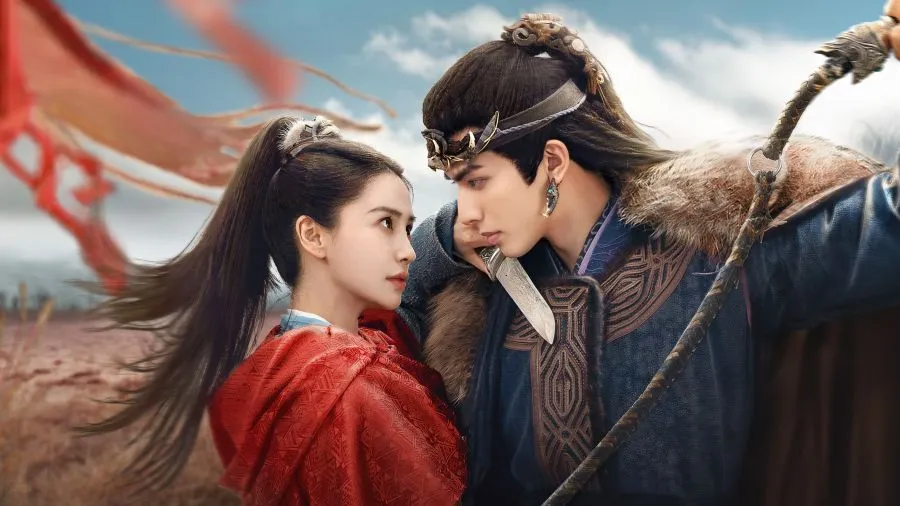
Everlasting Longing Poster - Courtesy of Tencent Video

|
DetailsRATING: (7/10)
NATIVE TITLE: 相思令 – Xiāngsī lìng YEAR: 2025 EPISODES: 30 DURATION: 45’ DIRECTOR: Mai Guan Zhi SCREENWRITER: Qing Mei ORIGINAL CREATOR: Xi Juan (抢来的新娘 - The stolen bride) |


IN A NUTSHELL
- What to expect: Everlasting Longing is a historical drama with a fairly classic structure that revisits many of the genre's most recurring themes, from family vengeance to the protagonist forced to pose as a man, to the impossible love between two young people from rival states. The narrative generally flows smoothly and manages to alternate political intrigue and romantic adventures with reasonable effectiveness, but often ends up privileging the latter to the detriment of the strategic component. The script also relies heavily on the most traditional romance clichés—misunderstandings, sacrifices, fortunate coincidences, and forced separations—making some developments seem almost too predictable. Despite this, the love stories are engaging enough to at least partially compensate for the script's limitations and end up representing the most distinctive element of the entire series.
- Strengths: the engaging love stories, the solid political storyline, the studied aesthetics.
- Weaknesses: the overuse of romantic clichés, the minor inconsistencies in the script.
- Recommended if you like: series that talk about the cultural clash between different peoples, passionate enemies-to-lovers dramas, troubled love stories, female protagonists who disguise themselves as men to escape patriarchal conventions.
- Would I rewatch it? Yes.
Read on to find out what sets this series apart from other historical romance dramas.
Everlasting Longing is a series that, despite telling a familiar story, still manages to engage thanks to the balance with which it intertwines emotions, intrigue, and characters. It's a story of rival kingdoms, broken promises, and feelings destined to collide with the weight of politics, alternating moments of genuine engagement with others in which the use of genre clichés ends up weakening its narrative strength.
In this review of the drama Everlasting Longing, after watching all episodes, I analyze the aspects that make it enjoyable to watch despite its limitations, focusing on the plot construction, the development of relationships, and the quality of the production, and trying to understand whether the series truly stands out within the panorama of historical romantic dramas.
Plot
The land is divided into three kingdoms, Beixuan, Yannan, and Xixiang, separated by the dangerous Lawless Zone, a bandit-infested free zone. Beixuan is the dominant military power, but its Five Tribes (Xuan, Xi, Luo, Sun, and Su) are torn by constant power struggles following the death of their military leader, the Wolf Lord. Yannan enjoys thriving trade and is able to resist neighboring pressure thanks to the sophisticated weapons designed by the Baigong Heir, the eldest son of the main branch of the Jun family. Meanwhile, the weaker Xixiang tries to maintain peace by constantly sending tribute to the other two states.
While Beixuan prepares to elect a new Wolf Lord, in Yannan, the Baigong Heir, Jun Fei Fan, is put under pressure to perfect the Ten-Arrow Crossbow, a revolutionary weapon that could change the balance of power between the kingdoms. To complete it, he sets out with a caravan to Xixiang in search of the rare black iron crystal, essential for making strong joints. His journey, however, is interrupted in the Lawless Land by a bandit attack, during which Jun Fei Fan is separated from his bodyguard Shao Qi Min and captured by the mysterious Xuan Lie.
Son of the late Wolf Lord, Xuan Lie searches for the Baigong Heir, believing he knows the truth about his father's death, killed twelve years earlier by an arrow fired from the Ten-Arrow Crossbow. He is unaware, however, that Jun Fei Fan is merely a fictitious identity: that name actually hides Jun Qi Luo, the eldest daughter of the Jun family, forced to live in disguise to circumvent the ban on women leading the family business.
Initially distrustful and determined to exploit each other to achieve their goals, Jun Qi Luo and Xuan Lie soon end up falling in love. Between secrets, rivalries, and old grudges destined to resurface, the two have to fight against the political forces trying to keep them apart and against a conflict between kingdoms that seems never-ending.

Everlasting Longing Drama Review (No Spoilers)
Plot and Narrative Pace
Everlasting Longing is a fairly classic historical drama that reworks well-established themes in the genre: revenge for the death of her parents, a corrupt official weaving his machinations in the shadows, the protagonist forced to pose as a man to gain the freedom denied her by family and society, all against the backdrop of a centuries-old rivalry between two states destined to influence the protagonists' destinies.
The plot, while not particularly original, is nevertheless interesting and fits into the tried-and-tested genre of lovers from opposing factions forced to overcome the political conflicts between their respective kingdoms before being able to openly live their love.
The narrative maintains a good pace overall and follows a fairly fluid development, but the constant sentimental skirmishes and numerous romantic interludes often detract from the political intrigues that should constitute the main storyline. Added to this is a rather insistent use of romance clichés — misunderstandings, providential rescues, fortunate coincidences, and predictable romantic dynamics — which ultimately makes some narrative twists less effective and weakens the impact of twists that might have been more surprising with less conventional writing. While still a pleasant and fluid read, Everlasting Longing sometimes gives the impression of preferring the safety of tried-and-true formulas to the risk of exploring more original narrative paths.
Characters and Love Story
The characterization is overall convincing. Despite moving within well-established archetypes of the genre, the protagonists and antagonists almost always act consistently with their personalities and their motivations, even if in some cases they end up appearing rather predictable in their gestures of absolute loyalty or, conversely, extreme evil.
The only character I struggled to appreciate was Princess Xuan Qing Kou: although her frailties can be explained by her traumatic past, her characterization often comes across as excessively childish and capricious, especially in her dynamic with Shao Qi Min, making her less likable than she could have been.
I found the antagonists particularly successful, because they never fall into the trap of underestimating the protagonists. Among these, Xi Chang Kun stands out, constantly maintaining a cautious and suspicious attitude toward Jun Qi Luo and continuing to view her as a potential threat even when she declares herself willing to ally herself with him. This behavior further confirms his clarity and pragmatism, making him, in my opinion, the most effective antagonist of the entire drama.
The love stories are among the most engaging aspects of the series, despite the frequent use of clichés typical of the genre. The relationship between Jun Qi Luo and Xuan Lie develops naturally and convincingly, gradually moving from mistrust to mutual trust, although in the second half of the drama it occasionally slips into melodramatic dynamics and misunderstandings that end up weighing down the plot.
Among the supporting couples, the tender relationship between Luo Qi and Jun Jiang Juan stands out, but the one that, in my opinion, deserves the most attention is the story of Luo Zhi Zhou and Li Fan Yin: a love shattered by reasons of state and built on constant sacrifices and painful renunciations, which make it, in my opinion, the most intense and moving relationship in the entire drama. Less convincing is the couple formed by Princess Qing Kou and Qi Min, whose relationship is based on repetitive skirmishes and rather stereotypical dynamics that, instead of engaging, end up annoying.

Cast
The cast of Everlasting Longing proves overall worthy of the production, especially the younger actors, who managed to sustain even the most dramatic sequences with credibility.
Song Wei Long delivers a solid and realistic performance, further enhanced by Yi Fan's excellent dubbing. Although I change my mind about him after his disappointing performance in A League of Nobleman, where he likely suffered from a less effective characterization, I still consider his acting only half-convincing: in the more emotionally intense scenes, a certain lack of micro-expression emerges, which sometimes makes his performance less impactful than it could be.
Angelababy delivers an overall dignified performance: without reaching any particular expressive heights, she still manages to bring Jun Qi Luo to life, offering a performance that I would describe as more solid than exceptional.
Among the supporting cast, Xia Nan and Yao Chi stand out, lending their faces to the series' most intense couple: the former is particularly convincing in conveying the suffering and dignity of Consort Li, while the latter effectively conveys the desperation and determination of Luo Zhi Zhou.
Also very good are the performances of Johnny Zhang, always at ease in the most nuanced and morally ambiguous roles, and Ren Hao, who manages to imbue Shao Qi Min with the right balance of loyalty, opportunism, and internal conflict, making him one of the drama's most interesting supporting characters.
Visual Aspects and Soundtrack
The direction and cinematography are probably the least memorable aspects of Everlasting Longing. While they perform their roles effectively, both struggle to give the series a real visual identity. The direction relies excessively on close-ups and close-ups, which limit the perception of the environments and end up making the staging rather static. Meanwhile, the cinematography, characterized by an overall realistic color palette, often overdoes the lighting, uniforming the image and sacrificing some visual depth. While this choice makes the scenes, especially the nighttime ones, more readable, it also sacrifices some of their atmosphere, leaving the impression that a more balanced use of light and shadow would have made the staging decidedly more evocative.
The scenography, however, is meticulously crafted: costumes, hairstyles, and hair ornaments stand out for their attention to detail and effectively characterize the different cultures represented, contrasting the more traditional aesthetics of the central plains with the nomadic-inspired Beixuan. I particularly appreciated the richness of the embroidery, furs, and jewelry, especially the elaborate earrings worn by tribal leaders, as well as the wigs, which, while not aiming for rigorous historical accuracy, meticulously capture the elaborate hairstyles of the different populations.
The sets also consistently reflect this cultural contrast, alternating elegant imperial complexes with sumptuous tribal tents, although some settings sometimes feel more theatrical than authentic. The digital aspect is more mixed: while the natural settings serve their purpose adequately without being particularly memorable, CGI, fortunately used sparingly, makes them appear rather artificial at times (such as the desert reconstruction).
Finally, the fight choreography is of a good standard: dynamic, readable, and well-performed by the actors, even if at times overly spectacular.
The soundtrack of Everlasting Longing doesn't leave a particularly memorable impression. The music follows the more traditional canons of romantic drama, offering slow, melancholic arrangements that lean heavily toward Western orchestration, occasionally interspersed with accents from traditional Chinese instruments. While they adequately accompany the images, the songs struggle to establish a distinct personality and often end up blending into the scenes, failing to significantly contribute to the series's aural identity. Furthermore, in the more romantic or nostalgic sequences, their use becomes rather insistent, resulting in overemphasizing emotions that the narrative and the actors' performances were already perfectly capable of sustaining on their own.

WARNING!
FROM THIS POINT ON THE SPOILER SECTION BEGINS. DO NOT CONTINUE IF YOU DO NOT WANT TO KNOW ALL THE DETAILS OF THE DRAMA.
Everlasting Longing Drama Review (Spoilers)
What Works
The Premise
Despite operating within a fairly classic narrative structure, I found the premise of Everlasting Longing to be one of the series' greatest strengths. Rather than the originality of its individual elements — often rooted in well-established tropes of the genre — its strength lies in the way it constructs a coherent and narrative-enhancing political system, in which relations between states, internal hierarchies, and border conflicts are not simply a backdrop, but actively influence the characters' choices and the direction of events.
In this sense, the drama doesn't simply evoke a generic "historical" imagery inspired by medieval China, but transforms it into an autonomous narrative device, in which territorial fragmentation, internal competition among the Five Tribes, and the presence of an unstable border zone contribute to the political and geographical balance within which the protagonists navigate and shape their experiences. Even more markedly fictionalized elements, such as the contest for the title of Wolf Lord or the almost symbolic role of the Heir of Baigong, work precisely because they are inserted into this balance of forces, which makes the conflict between personal choices and reasons of state credible—or at least coherent.
The result is a premise that stands out not for its novelty, but for its solidity. It doesn't attempt to reinvent the genre, but it manages to instill enough coherence in its world to make even its most predictable parts work. And it is perhaps this very architecture, rather than the single idea, that constitutes the true strength of the series: a reality that doesn't claim to be historically accurate, but still manages to be believable.
The Love Stories
Despite the frequent use of typical romance clichés, the love stories in Everlasting Longing are perhaps one of the most engaging aspects of the entire series.
The relationship between Jun Qi Luo and Xuan Lie develops quite spontaneously and believably: from initial mutual distrust, they gradually transition to a cautious collaboration that, aided by the growing respect between the two protagonists, evolves into a deep feeling without ever feeling forced. I especially appreciated the writers' choice to make Xuan Lie realize from the first episodes that Jun Qi Luo is actually a woman, thus avoiding the predictable "he's a man but I'm falling for him" misunderstanding.
In the second half of the drama, however, their relationship takes on a decidedly more melodramatic tone, and the script increasingly resorts to classic genre devices to make their love more tormented: avoidable misunderstandings, unconvincing sacrifices, and prolonged separations thus end up replacing the couple's natural conflicts. A prime example is the long sequence of episodes set in Yannan, during which Jun Qi Luo continually rejects Xuan Lie, claiming she must protect her family from the Emperor's suspicion. While I understand the protagonist's motivations, I found this constant push-pull and the repeated arguments between the two extremely frustrating, especially since they drag on for several episodes without producing any real narrative evolution.
Fortunately, by the twenty-sixth episode, the relationship finally regains its authenticity: Jun Qi Luo becomes aware of her feelings, openly admits that she hurt Xuan Lie by playing dead, and the couple can finally evolve into a more mature phase, culminating in the romantic, official marriage proposal that represents one of the most satisfying moments of the entire series.
Even the secondary couples often manage to carve out a meaningful space for themselves. I found the relationship between Luo Qi and Jun Jiang Juan particularly sweet, its lightheartedness offering a pleasant counterpoint to the more dramatic tones of the main story.
The couple that moved me the most, however, was Luo Zhi Zhou and Li Fan Yin. Childhood friends who grew up together in Xixiang, the two fall in love very quickly, but their future is shattered when Li Fan Yin is forced to marry the ruler of Beixuan to preserve peace between the two kingdoms. From that moment, their love becomes one of constant sacrifice: she finds herself alone in a foreign court that never truly accepts her, while he is forced to helplessly witness the suffering of the woman he has never stopped loving. Both repeatedly choose to sacrifice their own happiness to protect the people they care about: Li Fan Yin even asks Zhi Zhou to compete for the title of Wolf Lord to ensure her son's future, despite knowing this would inevitably put him in conflict with Xuan Lie; when Zhi Zhou is imprisoned, she doesn't hesitate to sacrifice her own freedom to allow him to escape, condemning herself to a sad end. It is precisely this constant succession of sacrifices and renunciations, culminating in a tragic epilogue, that makes their love story, in my opinion, the most intense and moving of the entire drama.
The only relationship I didn't appreciate was that between Princess Qing Kou and Qi Min. While I understand the psychological reasons for the princess's infatuation, having grown up in isolation after the trauma of her kidnapping as a child, their relationship is based almost exclusively on repetitive and dynamic skirmishes that I found rather childish and artificial. The result is a story that struggles to engage on an emotional level and only manages to inspire a bit of compassion at the end, when Qing Kou, unable to accept the death of the man she loves, continues to imagine him alive. It's a touching epilogue, but it comes too late to redeem a couple that, overall, I consider the least successful of the series.

What Doesn't Work
The Overuse of Romantic Clichés
One of the main limitations of Everlasting Longing is its excessive use of romantic clichés. Despite an interesting plot and well-developed characters, the screenplay often relies on extremely predictable narrative devices that, rather than heightening emotional engagement, ultimately trivialize certain story points and make several narrative twists feel rather artificial.
The first example is the inevitable love triangle between Jun Qi Luo, Xuan Lie, and the faithful Shan Qi Min, the protagonist's childhood friend who grew up alongside her and who swears eternal protection and, as expected, ultimately sacrifices himself for her. There's also the classic argument that suddenly turns into passion, with the heated confrontation between the two protagonists escalating, within moments, into a romantic scene in bed. Similarly, the sequence set in the valley of the flowers that bloom onlyoOnce every ten years, in which Xuan Lie promises eternal fidelity to Qiluo, revisits one of the most traditional scenarios of Chinese historical melodrama.
Even less convincing are some of the devices inserted in the second half of the series, such as Xuan Lie, distraught over the protagonist's presumed death, single-handedly confronting and defeating an entire gang of bandits, sustaining only a few superficial wounds, or the classic "almost meeting" in which the two protagonists find themselves in the same place, just a few steps apart, incredibly unable to see each other. Even the sequence in which the ML sneaks into the FL's room to beg her not to marry Qi Min, only to be rejected in the name of the "greater good," reiterates a device used more to artificially prolong the couple's separation than for any real narrative necessity.
Taken individually, none of these episodes would pose a real problem; It is their constant accumulation that gives the impression that the screenplay prefers to take refuge in the conventions of the genre instead of valorizing the solidity of the political plot and the excellent cast, which would have had all the credentials to support the story without resorting so insistently to formulas that have by now been all too tried and tested.
The Minor Inconsistencies in the Script
Despite being fairly coherent overall, the script for Everlasting Longing occasionally seems to forget the rules of common sense, especially when the romantic component takes precedence over narrative rigor. In these moments, the credibility of events clearly takes a back seat, giving way to situations that openly challenge the internal logic of the series and giving rise to scenes that oscillate between the unconvincing and the unintentionally comical.
The first signs of this appear in the first episodes, when Jun Qi Luo plans his escape by pretending to wash a wound but, due to an obvious continuity oversight, ends up exposing the wrong shoulder. Shortly thereafter, she and Xuan Lie spend a drunken night out on the mountain overlooking the capital of Beixuan without suffering any consequences, as if the harsh northern winter were little more than a scenic detail. The same narrative ease is evident when Qi Luo pulls out the sword she received as a gift from Xuan Lie, without it ever being explained why she had it with her or why she didn't use it during the ambush she and her companions had just suffered.
As the story progresses, however, the inconsistencies become even more evident. Often, at key moments in the plot, logic is sacrificed for dramatic effect, as when Jun Qi Luo manages to slip through the city gates, locked on Xuan Lie's orders, without anyone seeming to notice, or when she survives a leap from a cliff tens of meters high unscathed, without even affecting her unborn child. Even crucial plot information is sometimes gleaned through unlikely coincidences, such as the discovery of the bride swap during Qi Luo and Qi Min's wedding, based on a "hunch" from the matchmaker who noticed that the voice of the girl on the sedan chair was different from that of the real bride.
The consistency of some characters is also uneven. Xuan Lie, depicted throughout the series as an extremely lucid and calculating man, continues to grant surprisingly broad trust to people who make no effort to hide their conflicting interests, while Qi Luo's extremely cautious family members discuss her pregnancy with doors and windows wide open, allowing Zheng Shu Ting to learn one of the most sensitive pieces of information in the entire affair simply by walking past the room.
Overall, these narrative liberties don't compromise the enjoyment of the series, but they contribute to giving the impression that, in Everlasting Longing, logic is often an option rather than a supporting structure: useful when needed, easily expendable whenever it risks hindering the emotional tension.

Characters and Cast
Primary Characters
Jun Qi Luo/Jun Fei Fan (Angelababy) twenty-five-year-old eldest daughter of the main branch of the Jun Family. She has always pretended to be a man to manage the family business and the Yannan weapons design work, a task entrusted to the Baigong Heir for generations. She decides to join the caravan setting out for Xixiang to find the black iron crystal needed to improve the Ten-Arrow Crossbow she invented, unaware that this journey will forever seal her destiny.
Xuan Lie/A’Lie (Song Wei Long) son of the former Wolf Lord, Xuan Shu, General of the Xuanyi Army and cousin of the King of Beixuan. He yearns to avenge his father, but to do so, he must earn the title of Wolf Lord. He has always searched for the Baigong Heir, seeking clues to his parents' death, but when he finds him, he discovers that she is a woman and, over time, falls in love with her.
Shao Qi Min/Qing Ming/Qylin (Ren Hao) Jun Qi Luo/Jun Fei Fan's bodyguard and commander of the secret special force called Royal Surveillance under the command of the King of Yannan. He is the only outsider to the Jun family who knows that Jun Fei Fan is actually a woman, but despite working for the king, he never reveals this secret to him.
Xuan Qing Kou/Kou'er (Bai Bing Ke) Princess of Beixuan, sister of Xuan Xu and daughter of Xiao Yan. She falls in love at first sight with Shao Qi Min and buys him at the slave auction where he was taken after being separated from Jun Qi Luo.
Supporting Characters
Beixuan Royal Court
Xuan Xu (Johnny Zhang) King of Beixuan who resides in the Royal City of Beixuan. He supports his cousin Xuan Lie in the race for the title of Wolf Lord and promises to reopen the investigation into his parents’ case if he succeeds in obtaining the position.
Xiao Yan (Lily Tien) Queen Dowager of Beixuan. She is related to the Xi Tribe.
Xiao Jian Qiao (Zhou Yi Dan) Queen of Beixuan and mother of Prince Xuan Yu. She is related to the Queen Dowager and the Xi Tribe.
Xuan Yu Crown Prince of Beixuan.
Li Fan Yin (Xia Nan) Concubine of the King of Beixuan who entered the palace with the title of Consort Li and mother of Prince Xuan Yi. She is the childhood love of Luo Zhi Zhou.
Xuan Yi (Li Zhen Zhen) Second Prince of Beixuan.
Beixuan Xuan Tribe
Xuan Shu (Andy Zhang) late Chief of the Xuan Tribe. He was killed along with his wife twelve years before the events narrated by a weapon created by the Heir of Baigong, during an ambush near the Leather City in the Lawless Land.
Luo Qi (Chen Tao) Vice-general of the Xuan Tribe and right-hand man of Xuan Lie.
He Ji Yao (Qin Xiao Xuan) Vice-general of the Xuan Tribe and subordinate of Xuan Lie.
He Wo Shan (Qin Xiao Xuan) twin brother of He Ji Yao, an expert geologist. He is sent by Xuan Lie to conduct geological surveys of the black iron crystal deposits found in Beixuan.
Beixuan Luo Tribe
Luo Zhi Zhou (Yao Chi) Chief of the Luo Tribe, old friend of Xuan Lie and childhood love of Consort Li.
Dong Yin (Li Shu Ting) secret agent that Luo Zhi Zhou infiltrated into Xuan Lie’s residence. Her father is from Beixuan and her mother is from Yannan, that’s why Qi Luo chooses her as her personal maid when she stays at Xuan Lie’s house.
Beixuan Xi Tribe
Xi Chang Kun (Shao Bao Liang) Chief of the Xi Tribe of Beixuan and General of the Cangshui Army. His fiefdom is the city of Cangzhou. He is responsible for an illegal arms trade between Yannan and Beixuan.
Xi Mo (Yan An) eldest son of Xi Chang Kun and Young Lord of the Xi Tribe. He is accidentally killed in the contest for the election of the Wolf Lord by Xuan Lie and Qi Luo.
Xi Ji Xin (Chen Qian Yu) daughter of Xi Chang Kun and Princess of the Xi Tribe. The Queen Mother is her aunt. She is in love with Xuan Lie and wants to marry him, but her father object.
Xi Lin (Yu Xuan Chen) Vice-general of the Xi Tribe and right-hand man of Xi Chang Kun.
Beixuan Sun Tribe
Sun Ba (Ren Zhong) Chief of the Sun Tribe and father of Min Min. He is married to Xi Chang Kun's cousin, Ayuli. His fiefdom is Liangzhou, a rather poor city on the border between Beixuan and Xixiang, just outside the Lawless Zone.
Sun Zhao Min/Min Min (Wang Yi Ting) Daughter of Sun Ba and Princess of the Sun Tribe. She wishes to succeed her father as Chief of her tribe, but the Beixuan succession system does not allow it. To ensure her loyalty, the king arranges for her to marry Xuan Lie.
Beixuan Su Tribe
Su Yan De, Chief of the Su Tribe who would like to take Jun Qi Luo as his concubine. He will die in the clash with the Yannan Army, killed by an arrow from the modified Ten Arrow Crossbow.
Yannan Royal Court
Zhao Huang (Gallen Lo) King of Yannan, resides in the Royal Capital of Yannan.
Song Wei (Fu Jun) Grand Chancellor of Yannan. He is Xi Chang Kun's accomplice in the illegal arms trade between Yannan and Beixuan.
Zheng Yuan (Sun Xin Hong) Song Wei's attendant and right-hand man.
Jun Family
Jun Cheng Liu (Yu Bo) father of Jun Qi Luo and lord of the first branch of the Jun merchant family.
Liu Yun Yi, mother of Jun Qi Luo, who died in childbirth when she was still young.
Jun Xiu Kun (Long Shui Ting) second daughter of the main branch of the Jun family. She is initially engaged to the scholar Zheng Shu Ting, but later leaves him due to his petty and backward personality.
Zheng Shu Ting (Ashley Zhang) scholar awaiting the Imperial Exam and Xiu Kun's fiancé. She agrees to steal the silk gauze sample destined for the Royal Provisioning Office and the instructions needed to reproduce it on behalf of Jun Yu Jue.
Jun Jiang Juan (Chen Cheng) third daughter of the main branch of the Jun family. She will fall in love with Luo Qi.
Ling Bo, Chief Accountant of the first branch of the Jun family.
Jun Cheng Song (Li Shuai) Lord of the second branch of the Jun family and uncle of Jun Qi Luo.
Jun Yu Jue (Wu Ti Jia) eldest son of the second branch of the Jun family and cousin of Jun Qi Luo. He tries every means to get rid of her so he can take over the family business.
Xuan Chu and Jun Shuo, children (presumably twins) of Xuan Lie and Jun Qi Luo.

Favorite Character: Shao Qi Min
He is one of the noblest and most tragic characters in Everlasting Longing. Despite being a secret emissary in the service of the King of Yannan, he immediately demonstrates unwavering loyalty to the Jun family, who welcomed and raised him. His sense of duty, therefore, stems not from simple obedience, but from a profound gratitude to those who gave him shelter and purpose.
The bond that unites him to Jun Qi Luo is the trait that best defines his personality. Deeply in love with her, he nevertheless chooses to live his feelings with great discretion, always putting her happiness before his own desires. To protect her, he keeps his true identity a secret from the king, continues to support her even after discovering her love for Xuan Lie, and, when he learns of her pregnancy, does not hesitate to offer his help again without expecting anything in return. His devotion reaches its peak when, after saving her from the Rock of Despair, he asks the king for permission to marry her, thus saving her from her fate as the prince's concubine. Similarly, once he realizes that Qi Luo's heart now belongs to Xuan Lie, he voluntarily renounces the marriage, demonstrating rare altruism.
This same integrity emerges during the exchange of brides on their wedding day: upon realizing that he has married Princess Qing Kou instead of Qi Luo, his primary concern is not his own fate, but the consequences that might befall the Jun family for deceiving the king. Always to protect the Jun family, he continues to demonstrate absolute loyalty to Zhao Huang, unflinchingly accepting the harsh punishments inflicted on him for disobeying his orders, even to the point of drinking poisoned wine.
Despite maintaining a difficult relationship with Princess Qing Kou for much of the story, he eventually develops a sincere affection for her, suggesting the possibility of a deeper feeling. Fate, however, denies him this opportunity: faithful to his principles to the end, he ultimately chooses to sacrifice his life rather than be forced to decide whether to kill Xuan Lie or the child Jun Qi Luo is carrying. It is precisely this constant ability to put the good of others before his own that makes Shao Qi Min one of the most altruistic and humane characters in the entire drama.
Un-Favorite Character: Jun Cheng Song and Jun Yu Jue
They represent the authors' attempt to lighten the narrative with a pair of bungling antagonists. The two embody the classic archetype of "incompetent villains" à la Home Alone: they continually hatch plans to detriment Jun Qi Luo, only to be systematically anticipated or humiliated by the protagonist. On paper, they should constitute the drama's lighter side, but the script ends up characterizing them with such a dose of greed, cowardice, and pettiness that it's difficult to feel sympathy for them.
Their actions, in fact, go far beyond the petty pranks typical of comic antagonists. They are the ones who organized the bandits' attack on Jun Fei Fan's caravan and deliberately directed Jun Cheng Liu to Chiyan Gorge (rather than the Valley of Executions) for assassination. They subsequently have no qualms about using Zheng Shu Ting to steal from Jun Xiu Kun the silk gauze sample intended for the Royal Provisioning Bureau and the instructions needed to reproduce it, demonstrating their unscrupulousness in using any trick to achieve their goals.
Their vileness becomes even more evident in the second part of the series, when they publicly spread the news of Jun Qi Luo's pregnancy and fueled rumors of a bride swap at her wedding to Shao Qi Min, deliberately endangering the honor and safety of the entire Jun family.
Faced with such despicable behavior, their farcical side inevitably fades into the background, preventing the viewer from experiencing the sympathy that usually accompanies "bad bungling villains." For this reason, their epilogue represents one of the rare cases in which the punishment inflicted is fully satisfying and perfectly deserved.
RECOMMENDED:
- THE LOVE BY HYPNOTIC
- LOVE IN THE DESERT
- LOVE OF NIRVANA
- SHADOW LOVE
- THE PRINCESS'S GAMBIT
Thanks for reading this far!
I hope you enjoyed my article. If you like my work and want to support me, buy me a coffee☕