
The First Jasmine (2026): Bai Lu Delivers, the Writing Not So Much | Review & Cast
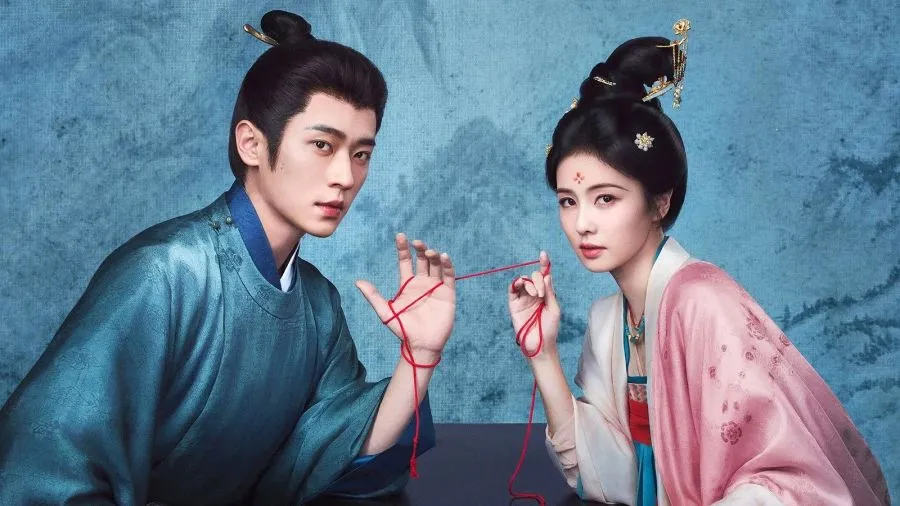
The First Jasmine Poster - Courtesy of Tencent Video

|
DetailsRATING: (7/10)
NATIVE TITLE: 莫离 - Mò lí YEAR: 2026 EPISODES: 40 DURATION: 45’ DIRECTOR: Lam Yuk Fan, Leung Sing Kuen SCREENWRITER: Zhao Na, Li Zongchen, Guan Shengnan, Chen Chen, Zhong Heng, Xu Bo ORIGINAL CREATOR: Feng Qing (盛世嫡妃 - The First Wife of a Prosperous Era) RESPECTED CLICHÉS: 1 - 2 - 5 - 6 - 9 - 10 - 12 - 13 - 15 - 19 - 20 |


IN A NUTSHELL
- What to expect: The First Jasmine is a historical drama that stands out for its unconventional protagonists and a deliberately enigmatic narrative. Among the most appreciable aspects of the series are its non-stigmatizing depiction of psychological suffering and its desire to present more complex and less archetypal characters than usual. At the same time, however, the series suffers from a very slow pace and an often frustrating management of information. Many plot elements, as well as the motivations of the protagonists and antagonists, are only clarified much later, making it difficult to distinguish between genuinely intended mysteries and simple gaps in information. This choice contributes to an atmosphere of constant uncertainty that ends up making some conflicts less interesting than they could be.
- Strengths: the unconventional protagonists, the compelling revenge storyline, the normalization of mental health struggles.
- Weaknesses: the slow pacing, the deliberately opaque storytelling, the contrived coincidences.
- Recommended if you like: Bai Lu and Cheng Lei, dramas with arranged marriages and slow-burn romance, revenge stories, series with unconventional protagonists.
- Would I rewatch it? Yes, but only because I'm a huge fan of Bai Lu.
Read on to find out if this drama is really worth the hype it has generated.
Watching The First Jasmine means accepting entry into a story that defies the canons of classic narrative. It's like being faced with a mosaic of which a few pieces are revealed at a time: enough to sense a larger pattern, but not enough to clearly discern it. Yet it is precisely this feeling of uncertainty that makes the drama so special. Behind the fog of unsaid words, we glimpse unconventional characters, complex relationships, unhealed wounds, and a story that possesses all the elements to become a great tale of revenge, redemption, and love.
In this review of the drama The First Jasmine, I have attempted to analyze both the aspects I found most successful and those narrative choices that, in my opinion, ended up limiting the potential of a story that could have left a much deeper impression.
Plot
Ye Li, the eldest daughter of the second branch of the Ye family, returns to the capital after eight years spent in seclusion at Mountain Li Academy. Her return is arranged by the Empress Dowager to celebrate her arranged marriage to Mo Xiu Yao, Prince Ding, who was left paralyzed in the legs after the Battle of Suixue Pass against enemy forces from Cangbei.
In reality, his downfall is the result of a vast political plot: before the battle, the Da Chu front is weakened by the retreat of the Heiyun Cavalry, led by his brother Mo Xiu Wen. However, the man was the victim of a plot: the imperial decree authorizing his return to the capital was stolen, and he was accused of treason and collusion with the enemy. His death sentence overwhelms the entire family, marking the downfall of the dynasty and leaving a wounded and disillusioned Mo Xiu Yao to suffer the consequences.
For Ye Li returning from Mountain Li isn't simply a return to social life. Mountain Li Academy was for her a place of suspension, far from the capital and its power games, but also a place marked by isolation, hardship, and traumatic events. She emerges from there with a complex emotional baggage, made up of internal wounds and never-openly confessed revenge goals.
When she enters Mo Xiu Yao's life, the two find themselves sharing more fragilities than certainties. However, between initial mistrust and a trust built day by day, Ye Li becomes the one who pushes him to open up to life again: she helps him regain the use of his legs and, above all, to look to the future with hope.
Meanwhile, between the plots of the Marquis of Muyang, the plan to reconquer the throne of the son of the late Crown Prince and the power games of the imperial court, secrets linked to Ye Li's past and her connection to Mountain Li emerge and progressively put the relationship of the couple to the test, to the point of threatening to divide them just when it seems they have found a balance.
"Whether the road ahead is stormy, smooth or filled with thorns, I will always be with you. You will never be alone again."

The First Jasmine Drama Review (No Spoilers)
The First Jasmine hit screens amid particularly high expectations, fueled both by the popularity of the original novel and by Bai Lu's starring role.
Further fueling public interest in the series were the controversies surrounding its production. The most controversial involved screenwriter Meng Qiqi, who initially accused the actress of pressuring her to replace the writing team, only to publicly retract her statements a few days later.
The story dominated Chinese social media for some time, becoming one of the most discussed topics in the weeks leading up to its broadcast and fueling a surge in attention around the drama.
Plot and Narrative Pace
The plot of The First Jasmine is overall intriguing and, while not overly complex, manages to stand out thanks to some unconventional choices. The two protagonists, in particular, significantly depart from the genre's most common archetypes: Mo Xiu Yao is not the classic disgraced hero thirsting for revenge, while Ye Li is a protagonist whose strategic clarity coexists with a psychological trauma that seems to profoundly alter her perception of reality. The political dimension also doesn't follow traditional narrative rhythms: many intrigues and power relations remain outside the viewer's immediate grasp, who is often forced to piece them together independently from a few clues scattered throughout the narrative.
This very choice, however, ends up negatively impacting the drama's pace, which feels decidedly too slow and contemplative. Information is revealed extremely sparingly, often through fragments of images or memories, and a significant part of the tension arises not from events or intrigue, but from the emotional ambiguity of the characters and the difficulty in precisely understanding their thoughts, motivations, and intentions. I sometimes felt that the screenwriters deliberately avoided clarifying the protagonists' reasoning in order to maintain suspense through what was left unsaid; personally, however, I find that this approach ends up further slowing down a narrative that is already very cautious in leading the viewer toward the solution of the puzzles.
Added to this is a narrative construction that often proves difficult to read. Scenes tend to show only what is immediately necessary, while the connections between events, characters, and past events are left implicit or clarified only much later. The overall coherence of the story thus emerges primarily in hindsight, through the viewer's retrospective reconstruction. Details about the characters' pasts, their secret activities, or the motivations behind their actions are frequently omitted or barely hinted at, making it difficult to distinguish between a narrative thread actually proposed by the series and a simple hypothesis formulated to fill an information gap.
Rather than following a gradually unfolding mystery, I often felt like I was having to piece together the plot from isolated fragments and connections that hadn't been shown to me as they unfolded. In my opinion, this ends up weakening the narrative tension: instead of fueling curiosity, it makes it harder to orient oneself in the story and turns a potentially very interesting plot into an experience that is at times disjointed and less engaging than it could have been.
Characters and Love Story
The characters in The First Jasmine are also constructed according to a logic of strong motivational opacity, which often makes it difficult to truly understand what they think, feel, or desire. This is especially evident in Mo Xiu Yao in the first part of the story. Unlike the classic fallen-from-grace protagonist, who behind an impassive facade hides anger, ambition, and a plan for revenge that gradually emerges, Mo Xiu Yao appears emotionally exhausted, disillusioned, and now reduced to a sort of survival mode. This is a potentially interesting choice, but it often ends up translating into a perception of passivity: in the early episodes, he gives the impression of observing rather than acting, weakening his narrative impact.
The contrast with Ye Li makes this dynamic even more evident. She too is characterized by strong ambiguity: many of her emotions remain implicit, and several aspects of her story are understood only retroactively. The difference is that Ye Li remains constantly at the center of the action: even when it's unclear what he's thinking, it's always clear what he's doing. Mo Xiu Yao, on the other hand, appears more static and ends up appearing less impactful than the story would have us believe.
As the narrative progresses, it becomes clear that this approach doesn't just apply to the protagonists. Even secondary characters like Mo Jing Liver are portrayed with a constant reticence regarding their motivations and perspective. Despite their strong influence on events, they remain difficult to decipher for long periods because the narrative constantly postpones explanations of their true intentions. The same happens with the antagonists: not because they lack goals, but because these are systematically hidden from the viewer's knowledge. For long stretches, we see them acting and influencing the plot without clearly knowing what they want to achieve or why. As a result, the conflicts are effective on a practical level, but less engaging on an emotional and intellectual level, because we often witness the clash without fully understanding what's at stake.
This same logic is also reflected in the relationship between the two protagonists. Ye Li isn't a completely transparent figure, and Mo Xiu Yao's initial caution is understandable. However, for much of the story, he continues to treat her as a potentially hostile person, even when the facts suggest otherwise. As a result, many of their dynamics end up developing through silences, innuendos, and misunderstandings that prolong the conflicts longer than necessary, making them at times artificial and frustrating.
In the second half of the drama, this balance shifts somewhat: the relationship between Ye Li and Mo Xiu Yao becomes more open, and he appears progressively more affectionate, trusting, and attentive to his wife's needs. While not reaching particularly intense levels of passion, their relationship takes on a more affectionate and harmonious dimension, making it overall much more enjoyable to follow.
The same cannot be said of secondary relationships. Several dynamics that seem to be introduced as potential romances are given enough space to generate expectations, but not enough to transform into actual narrative events. They remain suspended in a no man's land: too present to be mere background details, too underdeveloped to be truly satisfying, often leaving the sensation of untapped potential.

Cast
The cast of The First Jasmine seemed overall adequate to the production, with some positive highlights, especially among the supporting actors.
As always, I found Bai Lu very convincing, her performance successfully conveying the character's psychological distress even before it's made explicit in the plot. Even in the romantic moments, her performance remains believable and natural, although I perceived a less explosive chemistry with Cheng Lei than in her previous collaborations, such as the one with Luo Yunxi in Till the End of the Moon.
Cheng Lei, on the other hand, was the actor I found the least convincing: perhaps also due to a less incisive character in terms of writing, his performance seemed rather restrained and, at times, lacking in expression compared to his previous roles.
Much more interesting, however, were the performances of Sui Yong Liang and Xuan Yan, whom I found spontaneous and particularly incisive, to the point of wishing I could see them on stage more often. Also positive were Liu Xing Chen and Zhang Shu Lun (the latter also commendable in A League of Nobleman), who, even in minor roles, manage to give their characters a defined and recognizable presence.
More disappointing, however, is the performance of Xu Wai Luo (who has recently appeared in several major productions, including Love beyond the Grave and Zhan Zhao Adventures), who never truly manages to emerge in the role of the Emperor. Due in part to the limited stage space and a rather rigid character, his performance often remains flattened by a constantly frowning expression that prevents him from achieving any particular acting prowess.
Finally, a special mention goes to Jiang Rui Lin, who manages to give Mo Wu You a very successful combination of character vivacity and emotional realism, making him one of the most vivid secondary characters.
Visual Aspects and Soundtrack
Visually, The First Jasmine maintains a very good level overall. The direction is solid and effective, with interesting cuts and coherent shots that enhance both the ensemble scenes and the more intimate moments. The cinematography also works well: the lighting tends to be natural, never excessively dark or too flat, while the color palette recalls the Tang tradition with bright but never overly saturated colors, maintaining a pleasant and believable balance.
The sets are also very successful, especially the interiors, rich in details that make the shops and homes feel lived-in and realistic, helping to give depth to the world depicted. The exterior settings are equally functional and believable, without ever appearing artificial or purely decorative. The fight scenes, particularly the kung fu ones, are generally well-choreographed and quite believable, despite some inevitable overtones. Another strong point is the Tang-style costumes, decidedly refined and sumptuous: intricately patterned fabrics, well-constructed cuts, elaborate hair ornaments, and sumptuous hairstyles, complemented by hua dian consistent with the aesthetics of the period, contribute significantly to the overall visual impact.
Some critical issues, however, emerge in the editing. At various points, frames or details are inserted that appear to function as visual cues, but their meaning is not immediately apparent and is only clarified later, when the scene is re-shot or reinterpreted. More than a true technical flaw, this is likely a directorial choice, but one that I found in some cases slightly alienating and not conducive to immediate comprehension.
The use of flashbacks also seemed inconsistent and not always effective in supporting the reconstruction of the plot: rather than clarifying the main narrative points, they seem to focus on moments tied to the emotional construction of the characters, such as Ye Li and Mo Xiu Yao's falling in love or Feng Zhi Yao and Princess Ling Yun. Interesting on a sentimental level, but less useful on an informational level.
More peculiar, and somewhat disorienting, is the choice to alternate a dual narrative in the first episodes, first from her point of view and then from his. The idea is fascinating because it allows us to compare the same events from two different perspectives, but the lack of a clear distinction between the two lines sometimes risks creating confusion between what belongs to memories that have already occurred and what is instead introduced as a new situation.
Finally, in some scenes I noticed a slight asynchrony in the dubbing, a detail that isn't particularly serious and is especially noticeable if you pay attention to the images or follow the subtitles.
The soundtrack of The First Jasmine, while fitting into the fairly classic vein of historical romantic dramas, manages to stand out for its original arrangements and a good variety of sounds.
The drama's main theme, 心世界 (Inner World), more epic and melancholic, is characterized by a predominantly Western orchestration, enriched however by accents of traditional Chinese instruments that amplify its dramatic dimension and give it a more recognizable sonic identity. In a different direction, more typically romantic and contemplative songs such as 吻合 (Perfect Match), built on a slow and enveloping structure, or 见幸福 (Finding Happiness), which focuses more on intense emotional delivery through an almost entirely Western orchestration, dominated by strings and piano. Also noteworthy is the duet 方寸之间 (Between Us), performed by Bai Lu and Cheng Lei, which stands out as the only song on the OST to maintain a strongly sentimental nature but with a lighter and brighter tone, almost suspended between sweetness and nostalgia.
What really makes the difference, however, are the vocal performances: Yisa Yu's powerful and velvety voice stands out in particular, capable of giving her song a strong emotional charge without ever being excessive, while the softer and more intimate interpretations of Tia Ray and Zhang Yuan blend perfectly into a duet that expresses a very successful balance between delicacy and emotional involvement.

WARNING!
FROM THIS POINT ON THE SPOILER SECTION BEGINS. DO NOT CONTINUE IF YOU DO NOT WANT TO KNOW ALL THE DETAILS OF THE DRAMA.
The First Jasmine Drama Review (Spoilers)
What Works
The Premise
If there's one aspect that struck me positively about The First Jasmine, it's undoubtedly the premise. At the center of the story is a protagonist marked by profound trauma who seeks to avenge her mother's death and clear the name of a general accused of treason; a protagonist who, after sacrificing his health for the kingdom, has been marginalized and robbed of all faith in the future; an arranged marriage that offers both an unexpected opportunity to pursue their goals; an imperial court riddled with ambiguous power relations and unstable political balances; and in the background, a potential international conflict destined to influence the fate of several kingdoms.
What makes this premise particularly fascinating is the fact that none of these elements exist in isolation. The protagonists' personal stories are continually intertwined with court intrigues, family tensions are reflected in the political balance, and the wounds of the past influence the choices that will shape the kingdom's future. Even the protagonists themselves eschew many of the genre's most common archetypes: Ye Li isn't the classic brilliant and invincible heroine, while Mo Xiu Yao isn't the usual vengeful strategist waiting for the right moment to strike. Both bring vulnerabilities and contradictions to the story that help make the premise even more original.
Precisely for this reason, I find it a shame that the series doesn't always fully exploit the potential of its premise. The choice to tell much of the story through omissions, allusions, and withheld information often ends up making the plot more difficult to follow than it actually is. Meanwhile, several antagonists, despite occupying important positions within the plot, rarely manage to establish themselves as memorable adversaries. The result is that a plot that has all the makings of a compelling and tense story sometimes ends up feeling less engaging than its premise would suggest.
The Normalization of Mental Health Struggles
One of the aspects I most appreciated about The First Jasmine is the way the drama addresses the theme of psychological suffering. Despite all the ambiguities that characterize Ye Li's writing, I found it significant that her mental fragility is never used to transform her into an unstable or morally questionable figure. Many works tend to associate psychological distress with infirmity or even danger; here, however, suffering is treated as a component of the person, not as something that exclusively defines them. In this sense, the drama makes a rather rare choice, normalizing the presence of mental distress without denying its impact.
This approach is also reflected in the way the other characters react to Ye Li: while they interpret her actions and behavior differently, they do not automatically consider her someone to be marginalized or feared. Ye Li continues to be perceived as an intelligent, competent woman, capable of emotional bonds and responsibility, even when trauma affects her relationship with reality. In many ways, then, The First Jasmine succeeds in portraying psychological suffering as part of the human experience, not as a distortion of it.
However, this positive portrayal coexists with an approach I find more controversial. Several moments related to her distress are constructed as clues or fragments of an enigmatic past, rather than as simple traits of a psychological condition. In this way, the trauma functions not only as an element of characterization, but also as a narrative device that generates suspense, fueling questions and curiosity in the viewer. This choice might be acceptable in itself, were it not for the fact that in some cases the distress is also dramatized and transformed almost into a form of "special ability," as in the scenes in which Ye Li suddenly enters dissociative states that allow her to demonstrate extraordinary martial arts skills learned from Master Zhu, only to then remember nothing of what she did.
Added to this is a simplification that I find problematic due to the implicit message it conveys. When Mo Xiu Yao discovers that Ye Li is seeing and speaking with her former maid, Qing Shuang, whom the screenplay suggests is dead, the resident doctor interprets the situation as a simple consequence of loneliness and suggests the husband's emotional closeness as the solution. It's true that affection and the presence of loved ones can play a fundamental role in healing, but reducing the remedy to this risks being oversimplified. Trauma isn't resolved solely through emotional closeness: it requires processing, awareness, and often even adequate professional support. It's clear that in a historical context like The First Jasmine, one cannot expect an explicit reference to modern psychotherapy, but the risk remains that it conveys a misleading message, according to which love and the partner's presence can be sufficient to "cure" mental distress. Such an approach risks suggesting to the viewer that emotional healing is primarily a relational issue, when the reality is much more complex.

What Doesn't Work
Mo Xiu Yao's Characterization
One of the aspects that least convinced me about The First Jasmine is the way Mo Xiu Yao was constructed. Unlike the classic fallen protagonist, who behind an impassive facade continues to harbor anger, ambition, and a desire for revenge, Mo Xiu Yao enters the scene as a man who seems to have already given up on everything. He has lost his health, his reputation, much of his family, and any faith in the future. He is no longer a man plotting revenge, but an emotionally exhausted, disillusioned, and apathetic person who no longer expects anything from the world and who now lives in a sort of survival mode.
This is a potentially interesting choice, because it replaces the traditional path of revenge with that of a slow rebirth. However, resignation, unlike anger, tends to generate immobility, and for much of the first half of the drama, Mo Xiu Yao gives the impression of observing events rather than influencing them. This feeling is further accentuated by his attitude toward the few people who remain close to him. On several occasions, he witnesses situations involving his sister-in-law and nephew with apparent detachment, making it difficult to understand his true emotional priorities or to perceive him as a strong protagonist or a romantic hero.
The comparison with Ye Li further highlights this limitation. She, too, is an opaque character and often difficult to interpret, but she remains the figure who sets the story in motion: she observes, plans, manipulates events, and reacts to threats before they even become concrete. She is the one who takes the initiative, identifies enemies, and reacts to difficulties. Mo Xiu Yao, on the other hand, especially in the initial stages, assumes a much more passive role, limiting himself to observing her. The author's intention was likely to show how it was Ye Li who gradually brings him back to life after years of disillusionment, but when this phase drags on too long, the audience risks seeing not a wounded man slowly healing, but rather a character who leaves the initiative to others.
The same problem also emerges in their relationship. I completely understand why Mo Xiu Yao is wary: she has experienced systemic betrayal, and Ye Li is anything but transparent. Behind the public image of a docile and naive young woman lies a methodical, manipulative person, haunted by trauma and deeply obsessed with revenge. She often uses manipulative and morally questionable methods to achieve her goals, even when those goals are worthy. A certain caution is therefore more than justified. What I found less convincing is the duration of this wariness. Most of the time, Ye Li openly attacks her own enemies, contributes to his safety, and never shows any intention to harm him. Yet Mo Xiu Yao continues to treat her as a potential threat even when the facts suggest otherwise.
For this reason, I often had the feeling that the suspicions between the two responded more to narrative necessity than to a real need of the story. In dramas like The Prisoner of Beauty, mistrust stems from a real political conflict between rival factions. Even when the protagonists begin to grow closer, there are always concrete political reasons that justify the suspicion. Trust must be built because there is a real conflict to overcome. Here, however, the protagonists have never been real enemies and have shared largely compatible interests from the beginning. Ye Li even helped him survive his imprisonment; between them there exists a form of mutual moral debt and a bond of indirect loyalty through his brother. As a result, many frictions end up seeming artificial, and Mo Xiu Yao, instead of appearing a brilliant man who updates his assessments based on evidence, sometimes appears incapable of reconsidering his own conclusions.
This is particularly evident because the series often emphasizes his extraordinary intelligence without displaying it as often. While Ye Li identifies enemies, assesses threats, and develops countermeasures, Mo Xiu Yao's strategic skills are more talked about than demonstrated. Also due to his extremely indecipherable nature, the audience rarely has access to the mental processes that should confirm his genius, and this contributes to creating an emotional distance from the character.
I admit that Mo Xiu Yao also possesses several fascinating aspects: his calm, self-control, the respect he shows towards Ye Li, and the fact that he isn't the typical dominant protagonist. These are characteristics I appreciated, and they emerge more forcefully in the second half of the drama. However, I struggled to truly connect with him because for too long the writers prevented me from understanding what he wanted, what he feared, and what he was really thinking. Even Mo Jingli, despite being morally much worse, sometimes ends up being more engaging because he constantly demonstrates his desires, frustrations, and goals. Mo Xiu Yao, on the other hand, remains shrouded in an emotional fog for a long time, which weakens his impact. And for a character who should be one of the story's fulcrums, this remains a limitation for me.

The Construction of Narrative Tension
Analyzing characters like Mo Xiu Yao and Ye Li, I got the impression that one of the main limitations of The First Jasmine lies not so much in their characterization as in the way the writers chose to build narrative tension. Very often, suspense seems to arise not from events, political intrigue, or external conflicts, but rather from the difficulty of understanding what the characters are thinking, feeling, or intending to do. The series is indeed based on motivational opacity: the viewer sees what the characters do, but rarely has access to the mental process that explains why they do it, resulting in them having to interpret their origins independently. I often felt that the writers assumed that making the protagonists' reasoning too transparent would reduce the sense of mystery and, consequently, the narrative tension.
The protagonists clearly embody this approach. Ye Li and Mo Xiu Yao are both characterized by a strong degree of motivational opacity. In Ye Li's case, this choice is partly balanced by her constant agency: even when it's unclear what she thinks, it's almost always clear what outcome she hopes to achieve through her actions. Mo Xiu Yao, on the other hand, especially in the first part of the story, makes the problem more evident precisely because she appears more thoughtful: her actions are less impactful than Ye Li's, and therefore the logic behind them remains more ambiguous.
Mo Jing Li represents well the ambivalent nature of this mechanism. Unlike Mo Xiu Yao, she communicates her desires, frustrations, and immediate goals more directly, thus being more readable on an emotional level. However, a significant part of her strategies and true intentions remain hidden, and this means that the tension she creates stems not only from the events she sets in motion, but above all from the uncertainty about what she is really trying to achieve. This ambiguity ultimately turns him into one of the characters most open to interpretation in the entire series: not so much because he lacks emotional clarity, but because the narrative constantly postpones the moment when the audience can make a definitive judgment on his actions.
The result is that a significant portion of the tension arises not from the events themselves, but from the uncertainty surrounding the characters. Rather than wondering what will happen, the viewer is often forced to question why someone is acting a certain way or what they are really thinking. Personally, I find this approach less effective than a suspense built on intrigue, hidden plots, and truths that gradually emerge. When the mystery lies in the plot, a certain motivational ambiguity can enrich the story; however, when the mystery resides primarily in the characters' minds, suspense tends to shift from the narrative to the interpretative level: instead of being generated by the story, it arises from the effort to decipher intentions that systematically remain off-screen. And this, at least for me, ends up reducing the overall involvement, because it replaces the progression of events with a continuous mental reconstruction activity.
This choice becomes even more problematic because it affects not only the characters' reasoning, but also the management of information. Very often, The First Jasmine favors the immediate impact of a single scene over the progressive construction of the bigger picture. Information is provided only when it becomes relevant to the current action, while the connections between current events and previous ones, the relationships between characters, or the plots developing behind the scenes are often left implicit or clarified only later.
As a result, the viewer's understanding of the story tends to develop more through retrospective reconstruction than through a clear, linear progression. Many elements only gain meaning after several episodes, when new information finally allows them to be connected to what was seen previously. The problem is not so much the presence of mysteries or gray areas, but the fact that there is often a lack of sufficient reference points to understand which details are truly significant and which simply represent undeveloped aspects of the story.
This dynamic emerges clearly, for example, in episode 22, when Li Fei Bai enters Mountain Li Academy to discover the fate of his shixiong and teachers. The sequence shows only a few very quick frames of apparently empty and ruined buildings, but provides no clues to the discovery. Was the Academy abandoned recently or years ago? What happened to its inhabitants? Were they still present when Ye Li lived on Mountain Li, or has she spent the last eight years completely alone? The scene raises potentially huge questions, but it doesn't provide sufficient insight into whether these questions are truly important to the narrative or whether they are simply suggestions generated by overly cryptic images.
A similar mechanism appears in episode 11 with the introduction of Pang, the man who blackmails Mrs. Wang and who appears to have been her lover. The series hints at a relationship between the two and even suggests possible implications for Ye Ying's paternity, but it doesn't clarify who the character really is or what role he played in her life. The viewer thus finds themselves having to independently deduce information that the narrative doesn't bother to explain, relying almost exclusively on the innuendo of a conversation and the intervention of Li Fei Bai, who exploits this very relationship to force Mrs. Wang to collaborate with Ye Li.
For this reason, I often felt like I wasn't following a mystery that gradually unfolds with precision, but rather having to piece together the story from scattered fragments, unable to verify whether the connections I was identifying were actually suggested by the series or the result of my own interpretation. When this happens, the suspense ceases to arise from curiosity about what will happen and transforms into a constant effort of reconstruction. For me, this is precisely where the drama loses some of its effectiveness: instead of enhancing a plot that on paper has many interesting elements, it sometimes ends up making the viewing experience dispersive and less engaging than it could be.
The Forced Coincidences
Among the aspects that less convinced me were some narrative coincidences and simplifications that I found difficult to accept. The most obvious example is probably the scene in which Ye Li's grandmother is struck by a branch struck by lightning just as she is trying to kill her granddaughter. The premise itself seemed unbelievable to me: I struggle to imagine an elderly woman physically overpowering a young adult who, moreover, is depicted as trained and perfectly capable of defending herself. However, what left me most perplexed was that the situation was suddenly resolved by a force completely external to the characters' will.
I fully understand the narrative function of the scene. The screenwriters are faced with a difficult situation: Ye Li cannot kill her grandmother without moral, familial, and legal consequences; at the same time, the grandmother cannot succeed in her intent because the story must continue. The lightning bolt thus allows the conflict to be interrupted without declaring a clear winner, preventing one side from crossing the point of no return. From this perspective, the solution is convenient but also appears extremely artificial.
It feels like a narrative reset designed to put all the pieces back in place without truly addressing the consequences of the conflict. And what makes the scene even more forced, at least in my opinion, is the fact that it is also used to further foster a rapprochement between Ye Li and Mo Xiu Yao. After discovering that Venerable Lady Ye is responsible for her mother's death, Ye Li finds herself in the perfect position to take advantage of the situation. It is precisely at that moment that Mo Xiu Yao arrives, successfully bringing her to her senses, preventing her from taking that step.
In theory, this should be an important moment in the growth of their relationship, as it demonstrates the strong attachment he has developed towards her and the trust she places in him. In practice, however, I struggled to get emotionally involved because the entire sequence hinges on such an unlikely coincidence that it continually drew attention to itself. Instead of focusing on the outcome, I kept thinking the entire situation had been engineered to achieve that specific emotional outcome.
Unfortunately, this is not an isolated case. On several occasions, I felt that the screenplay resorted to particularly convenient coincidences to connect elements that needed a more solid construction. The very premise of the story is based on the fact that Ye Li is married to Mo Xiu Yao, the brother of the man whose innocence her mother lost her life to prove. Taken individually, this may seem like an acceptable coincidence, but it is part of a series of similar connections that end up accumulating. Even the fact that Ye Li's Third Uncle is the favorite disciple of Zhou Xian Kun—the man beloved by Consort Dowager Qin and potentially involved in the disappearance of Mo Xiu Wen's summoning decree—contributes to the feeling that many plot threads are tied together more by narrative necessity than by any real internal plausibility.
Added to this are some simplifications that concern not so much coincidences as the handling of consequences. One example is Mo Xiu Yao's physical recovery: after years spent with severe mobility limitations, he suddenly returns to fighting at the same level as eight years earlier as soon as he regains the use of his legs. This despite Ye Li herself warning him against overexerting himself to avoid jeopardizing his recovery. In a story that devotes so much space to realism, such a rapid and complete recovery seemed difficult to accept.
Taken individually, none of these elements would be enough to compromise the viewing experience. Taken together, however, they contribute to the feeling that the screenplay sometimes prefers the more convenient solution to the more believable one. And when coincidences or narrative shortcuts become too visible, the risk is that we stop focusing on the events and instead begin to constantly sense the screenwriter's hand behind them.

Characters and Cast
Primary Characters
Ye Li/Yuan Niang/A'Li (Bai Lu) eldest daughter of the second branch of the Ye family. After eight years of seclusion at Mountain Li Academy, she returns to the capital to marry Prince Ding, the fiancé chosen for her by the Empress Dowager. In reality, her stay at Mountain Li, where the school run by her maternal grandfather is located, was not voluntary: it was the result of a court conspiracy involving her mother due to her relationship with the late Prince Ding, the older brother of her current fiancé. Determined to exact revenge, she willingly accepts a union with Mo Xiu Yao, whom she has long admired and wants to help regain the use of her legs, but her enemies and her past seem unwilling to let her go.
Mo Xiu Yao (Cheng Lei) current Prince Ding, former general and cousin of the young Emperor. Paralyzed in both legs during the battle of Suixue Pass against the enemy forces of Cangbei, he is haunted by the infamy caused by his brother's alleged betrayal. Despite the imperial pardon, he is viewed with suspicion by the court and forced to atone for his brother's sins until Ye Li enters his life and slowly pushes him to recover, helping him regain the use of his legs and, above all, regain faith in the future. Sadly, however, the secrets of her past seem incompatible with their happy union.
Supporting Characters
Ye Residence
Old Madam Ye (Li Wen Ling) Ye Li's paternal grandmother. She is a cunning and calculating woman who feigns dementia to secretly confront her granddaughter. Ye Li, however, manages to escape her assassination attempt and, after discovering that the woman is her mother's killer, attempts to take revenge, but a fortuitous accident leaves her near death.
Ye Wen Ding (Hei Zi) Lord of the first branch of the Ye family. He is the stern head of the Ye clan and was the one who forced Xu Wan Zhou to hand over the decree summoning Mo Xiu Wen to him to avoid political implications.
Ye Wen Hua (Qiu Xin Zhi) Lord of the second branch of the Ye family and father of Ye Li, Ye Ying, and Ye Rong. He is a cowardly and mediocre man, so much so that he agreed to divorce Xu Wan Zhou to prevent the Ye family from being implicated in the affairs of Mountain Li Academy.
Xu Wan Zhou (Yao Tong) late madam of the second branch of the Ye family and mother of Ye Li. She is the only daughter of the rector of Mountain Li Academy and one of the most prominent noblewomen in the capital, so much so that she was a friend of the Empress and Imperial Concubine Qin. At 19, she fell in love at first sight with Ye Wen Hua and insisted on marrying him despite her father's opposition, unaware that years later he would divorce her to avoid political implications for the Ye family. She had, in fact, agreed to retrieve, on behalf of Mo Xiu Wen, the decree with which the late Emperor had summoned him to the capital, in exchange for his help in clarifying the position of Mountain Li Academy at court. Unfortunately, the summoning decree fell into the hands of Ye Wen Hua, who handed it over to Imperial Consort Qin, sealing the fate of the general and his wife.
Yan Lu (Zhang Yun Ying) personal maid to Xu Wan Zhou. She died in the commotion that followed the search of Lady Xu's room for Mo Xiu Wen's summoning decree. Her body was thrown into the pond at the Ye Residence, and eight years later, Ye Li exploited the discovery of her corpse to land the entire family in trouble.
Qing Yu (Xiao Man), Xing'er (Zhang Xi Wei), and Tao'er (Zhu Zhi Lin) Ye Li's personal maids.
Qing Shuang (Feng Xue Ya) Ye Li's personal maid who accompanied her to Mountain Li and appears to her in moments of solitude at Prince Ding's Residence.
Madam Wang/A'Yuan (Zhao Ke) Second Madam of the second branch of the Ye family and mother of Ye Ying and Ye Rong. She is a foolish and opportunistic woman who, over time, took over all of Xu Wan Zhou's businesses, although she was unable to run them profitably. When Ye Li returns from Mountain Li, she tries to seduce her, but the girl takes back everything she owns and eventually forgives her.
Ye Rong/Rong Er (Wang Jun Rui) Young Lord of the second branch of the Ye family and younger brother of Ye Ying. He is a smart and loyal child who helps Ye Li regain what is hers, agreeing to deceive his parents.
Ye Ying (Yang Shu Yi) second daughter of the second branch of the Ye family and older sister of Ye Rong. She is naive, but at the same time, she is extremely jealous of Ye Li and tries every way to outshine her. After her sister's engagement to Mo Jing Li is annulled, she manages to marry the prince, unaware that he is still madly in love with Ye Li. Therefore, he will do everything to erase the girl from his mind, even going so far as to order her murder, but in the end he makes peace with her.
Ye Wen Shen (Li Mu Feng) Lord of the third branch of the Ye family. He is a former disciple of the famous astronomer Zhou Xian Kun and the owner of the Changshengfang (House of Longevity). He was a close friend of Xu Wan Zhou and therefore helps Ye Li after her return from Mountain Li.
Li Fei Bai/Li Zhao (Zhang Shu Lun) head of the guards at the Ye Mansion. He is actually one of Ye Li's shixion and a talented disciple of Master Zhu Yun. He will help Ye Li complete her quest for revenge.
Sun Fu, butler of the Ye Mansion. He is convicted of hiding Yan Lu's corpse in the pond at Ye Mansion.
Prince Ding's Residence
Mo Xiu Wen (Liu Qing) Commander of the Heiyun Cavalry and older brother of Mo Xiu Yao. For years, he and his father had defended the borders of Da Chu from the enemies of Cangbei, but with the death of the Crown Prince, the late Emperor had summoned him back to the capital. This had prompted an enemy invasion, which was exploited by the Marquis of Muyang to accuse him of collusion with Cangbei and have him sentenced to death. Unable to produce the summoning decree, which the Marquis destroyed, he was executed, but not before entrusting his brother to the care of Ye Li.
Wen Ran (Wen Yu) widow of Mo Xiu Wen and sister-in-law of Mo Xiu Yao. After her husband's death, she was devastated and, following several failed suicide attempts, began to turn to mediums and holy men in the hope of speaking with her beloved husband again. Ye Li will help her overcome the loss and return to care for her son.
Mo Wu You (Jiang Rui Lin) son of Mo Xiu Wen and nephew of Mo Xiu Yao. He is a lively and intelligent child who has learned to fend for himself because his uncle and mother did not take much care of him after Mo Xiu Wen's death. With Ye Li's help, he will be able to bring his mother back to her senses and gain the attention she deserves for the young heir of an important noble family.
A'Jin (Liu Xing Chen) Mo Xiu Yao's personal servant.
A'Ding (Han Yu) young servant at Prince Ding's Mansion assigned to Ye Li.
Mr. Cui (Li Dong) old butler at Prince Ding's Mansion.
Feng Zhi Yao (Xuan Yan) third young lord of the Feng family and a friend of Mo Xiu Yao. Although he appears to be an idle man with little inclination for responsibility, he is a skilled merchant and has been profitably managing Prince Ding's shops for eight years. He is also the manager of the Qingfeng Mingyue Lou, one of the capital's main entertainment venues. During a trip to Saibei, he encounters the Grand Princess of Cangbei, who has fled her abusive husband and is looking for a way home. Unaware of her true identity, he agrees to escort her for a stretch of the road and, eventually, falls in love with her, and she reciprocates.
Prince Li's Residence
Mo Jing Li (Cai Zheng Jie) Prince Li, son of the late Crown Prince who died in the fire at the Eastern Palace eight years earlier. In his youth, he attended Mountain Li Academy, where he fell in love with Ye Li, but decided to annul their engagement, granted by the late Emperor, so as not to involve her in his plan for revenge. His goal is to restore dynastic order by reclaiming the Da Chu throne, but his methods are far from acceptable. Although he was only a boy at the time of his father's death, he was used by the Marquis of Muyang to frame Mountain Li Academy for rebellion, earning Ye Li's resentment.
Sui Xin (He Lei) Chief Secretary of Prince Li's Residence. He is Mo Jing Li's advisor and the one who helps him maintain his cover as an idle and vicious prince.
Jiang Qing Bao (Zhou Zi Jie) eunuch in charge of the Eastern Palace. He is one of Mo Jing Li's closest associates and one of the few aware of his plans for revenge.
Chi Hu (Yang Zhen) Prince Li's man implicated in Yuan Fang's murder. When his hiding place is discovered, Mo Jing Li personally intervenes to save him, increasing Mo Xiu Yao's suspicions and forcing the Prince to fake his own suicide to further his plans.
Imperial Court
Mo Yan Qi (Xu Wei Luo) Emperor of Da Chu. He is very young and inexperienced, but he is fair and in need of political support, so Mo Xiu Yao agrees to help him fight against his court enemies and his mother.
Gao Wen Huan (Tang Hao Yuan) Palace eunuch in attendance on the Emperor.
Guo Jin (Dong Jie) Empress Dowager of Da Chu. She is a cunning and calculating woman. Ever since the burning in the Eastern Palace, her goal has always been to reign, so she placed her young son on the throne to pull the strings with the help of Imperial Consort Qin and the Marquis of Muyang.
Shun Xi (Chen Xuan Ming) Palace eunuch in attendance on the Empress Dowager.
Qin Zheng (Zhang Yue) eldest daughter of the Prince of Nanyi and consort of the late emperor. She falls in love with Zhou Xian Kun after he escorts her to the capital for her wedding to the Emperor and appoints him as her confidant at the palace. He later prophesies a close bond between his life and that of Consort Guo, so she will help her rise to power. At court, she also meets Xu Wan Zhou, whom she becomes friends with, but whom she betrays by stealing the decree summoning Mo Xiu Wen.
Zhou Xian Kun (Ji Xiao Fei) official of the Imperial Astronomical Bureau, very close to Consort Dowager Qin and shifu to Ye Wen Shen. Following the burning of the Eastern Palace, he was sentenced to death, but knowing his connection to Qin Zheng, Ye Li hopes she has confided in him the secret hiding place of the stolen summons decree and that he has reported it to Ye Wen Shen.
Murong Shen (Wang Shuo) Chairman of the Council of State Affairs (Shangshu Sheng). He is a wise and just minister who will help Ye Li clear himself of the charge of killing Princess Ling Yun and will later collaborate with Mo Xiu Wen to frame the Marquis of Muyang for his crimes.
Duke of Hua (Yu Yang) Duke of the Kingdom and general of Da Chu. He was Mo Xiu Yao's superior during the Battle of Suixue Pass, where the guy lost the use of his legs fighting the Cangbei invaders.
Zhong Xing Tong (Li Kun) Deputy Section Director of the Ministry of Public Works. He is the one in charge of developing Da Chu's new weapons, and for this reason, Cangbei asks Zhang Heng Yuan to eliminate him. The letter with the order is intercepted by Mo Xiu Yao, who saves him, having the Marquis of Muyang's collaborator arrested.
Lin Ting Lan (Zhang Zi Xin) young noblewoman favored by the Empress Dowager, known throughout the capital for her many talents and her travel journals. She falls in love with Qin Cang after they save a worker from pneumothorax and eventually decides to accompany him in his exile in Qianchuan.
Marquis of Muyang Faction
Zhou Jing (Yu Jin Wei) Marquis of Muyang and President of the Court of Judicial Review (Dali Si). He belongs to the prestigious Zhou family of Huaixi and is the Empress Dowager's main political ally.
Zhou Tian Yang (Yi Ze) Heir apparent to the Marquis of Muyang. He is naive and capricious, and is very fond of his father and jealous of the positions of responsibility he entrusts to his half-brother Qin Cang. His attitude, however, changes radically when he discovers that his father has ordered Qin Cang's elimination after he kills Zhang Heng Yuan in prison.
Zhao Ting (Zhou Xiao Rui) Chief of the guards at the Marquis of Muyang's residence.
Zhang Heng Yuan (Han Xiu Yi) Commissioner of Maritime Trade. He is one of the Marquis of Muyang's closest associates and is tasked with killing Zhong Xing Tong, but is arrested by Mo Xiu Yao.
Lv Chang Fu (Li Hong Quan) General of the Jinwu Guard is a follower of the Marquis of Muyang. He is responsible for the persecution and death of several students at Mountain Li Academy. For this reason, on the day of his appointment as Military Commissioner of Huaixi to replace Yuan Fang, Ye Li sends him a robe made of highly flammable material that causes his death by spontaneous combustion.
Lv Cheng/Lv Bo Ying (Guo Dong Hai) Grand Historian of the Imperial Astronomical Bureau is a follower of the Marquis of Muyang. He is tasked with making Mo Xiu Yao atone for his deceased brother's alleged sins through complex religious rituals that include daily copying of sutras. In reality, he was sent to Prince Ding's residence to keep an eye on him and prevent him from regaining political power. What no one knows is that, in the past, posing as a feng shui expert, he had tormented the then Imperial Consort Guo on the orders of the former Empress. Once she learned of this, the Empress Dowager had him arrested and sentenced, thus freeing Mo Xiu Yao from his oppression.
Qin Cang/Zhou Lang (Yang Ze) personal bodyguard of the Marquis of Muyang. In reality, he is the son of the Marquis of Muyang from his affair with the daughter of a secretary of the Eastern Palace, whom the Empress Dowager allowed him to raise under a false name. His unwavering loyalty to the Marquis led to him being charged with the worst atrocities, including arms trafficking between the Huaixi military arsenal and Cangbei. After being nearly killed by Tian Feng and saved by Gu Zheng, he decides to confess to all the crimes he committed on behalf of the Marquis of Muyang. For this, he is exiled to Qianchuan.
Chen Long Xiang (Hou Jun Jie) Marquis of Muyang's right-hand man, killed seven people one night after getting drunk, so the Marquis decided to secretly send him to Huaixi to manage the arms trafficking ring with the Cangbei. Thanks to Qin Cang's revelations, Mo Xiu Yao manages to arrest him and convince him to testify against the Marquis.
Jingzhao Prefecture
Gongshu Yang (Yuan Hang Ming) Governor of Jingzhao Prefecture (Fu) and a trusted man of the Empress Dowager. After the death of Lv Chang Fu, he is appointed Military Commissioner of Huaixi. Thanks to his cooperation, Mo Xiu Yao manages to arrest Zhang Heng Yuan and reveal all the details of the arms trafficking between Da Chu and Cangbei.
Zheng Zuo Shi (Dong Jing Chuan) Deputy Governor of Jingzhao Prefecture. He is actually a spy for the Marquis of Muyang, but is eliminated by Mo Xiu Yao.
Li Yu Feng (Han Qiu Chi) Civil Affairs Officer of Jingzhao Prefecture.
Wang Su Wu (An Jun Qi) Military Affairs Officer of Jingzhao Prefecture. Initially a staunch opponent of Mo Xiu Yao because his entire family was wiped out by his enemies following the fall of Suixue Pass, he eventually becomes his most loyal collaborator. After the conviction of the Marquis of Muyang, he is appointed Chief Secretary of the Ministry of War and charged with assisting the Court of Judicial Review.
Qiu Xian (Mu Tong) unit leader of the Jingzhao Prefecture Military Section and subordinate to Wang Su Wu. He is the one who helps Chi Hu escape the raid organized by Prince Ding.
Gu Zheng (Li Yu) honest imperial official who was imprisoned for publicly protesting and insulting the Marquis of Muyang and the Empress after learning of the deaths of the scholars of Mountain Li Academy, burned alive by Lu Chang Feng. His death sentence was never carried out because all attempts failed, so he remained imprisoned for eight years in the imperial prison. Mo Xiu Yao has him released and appointed administrative secretary at Jingzhao Prefecture, entrusting him with the most sensitive investigations. After the conviction of the Marquis of Muyang and his associate Zheng Zuo Shi, he is appointed Deputy Governor of Jingzhao Prefecture.
Mountain Li Academy
Xu Qing Yun (Hou Chang Rong) director of Mountain Li Academy and Ye Li's maternal grandfather.
Zhu Yun/Master Zhu (Yan Jie) martial arts expert and master at Mountain Li Academy.
Master Helai (Wang Zhao Lian) famous doctor and master at Mount Li Academy from whom Ye Li learns the technique to cure Mo Xiu Yao's legs.
Wei Zhuang (Miao Chi) former student of Mountain Li Academy, very adept at mathematics and very close to Ye Li. After leaving the academy, he lived a frugal life for fear of being persecuted as an Academy alumnus, so Ye Li decides to hire him as manager of the Shengde Pavilion.
Other Characters
Yuan Fang (Wang Xing Han) Military Commissioner (Jiedushi) of Huaixi and a trusted man of the Empress Dowager. He is assigned to investigate the trafficking of weapons from the Huaixi military arsenal, but is killed outside the capital while trying to deliver crucial evidence to the Emperor. The murderer is Prince Li, who intends to sow conflict within the court and take advantage of the confusion to regain his throne.
Han Ming Yue (Hei Ze) leader of the Tianyi Pavilion. His family was exterminated by the Marquis of Muyang after the fire at the Eastern Palace, and he, in revenge, became Prince Li's right-hand man.
Han Ming Xi (Lin Mu Ran) younger brother of Han Ming Yue. After fleeing the Tianyi Pavilion, he fell ill and was rescued along the way by Ye Li. The two later separated, only to meet again when he accepted the task of killing Princess Ding, unaware that it was Ye Li. He therefore decided to stay close to her, working for her at the Shengde Pavilion.
Ling Yun (Li Mu Yun) Grand Princess of Cangbei, Cangbei's peace envoy to Da Chu. She is the elder sister of the new ruler of Cangbei. After being sent to Saibei for an arranged marriage, she fled her abusive husband and returned home to help her brother secure the throne. During her escape from Saibei, she met Feng Zhi Yao and fell in love with this not-so-shrewd but certainly generous dandy.
Lei Teng Feng (Zhao Yu Tong) General of the Cangbei and bitter enemy of Mo Xiu Yao, who escorts Grand Princess Ling Yun to Da Chu.
Su Zui Dier (Sun Xue Ning) personal maid to Grand Princess Ling Yun. She is actually the daughter of the Commander of the Left Guard of the Eastern Palace of Da Chu and Mo Xiu Yao's ex-fiancée, who was exiled along with her sister after the fire at the Eastern Palace. During her exile, she joined the Tianyi Pavilion and infiltrated Cangbei on Han Ming Yue's behalf, becoming close to the Grand Princess. Her mission was to derail the peace negotiations between Cangbei and Da Chu, but she made the mistake of implicating Ye Li in Princess Ling Yun's death, a mistake that backfired.
Yu Sheng (Chen Xi) courtesan at the Xiangqi pleasure house, with whom Li Fei Bai is in love. She will help Ye Li on several occasions.
Master Wang/Zhao De Sheng, taoist master who claims to be able to help Wen Ran see her husband's spirit. In reality, he is a small-time criminal from Hongzhou, on the run from the authorities for causing the death of the son of the Prefect of Hongzhou, who is posing as a taoist master. He will be exposed and arrested by Ye Li.

Favorite Character: Feng Zhi Yao
He is one of the most genuinely positive characters in The First Jasmine.
Optimistic, cheerful, and gifted with a natural ability to connect with others, he represents much more than a friend to Mo Xiu Yao: he is a loyal and constant presence, one of the few people who hasn't abandoned him even in the most difficult moments.
Always ready with a joke and a prank, he often helps lighten the most tense situations and stands out for his ability to put those around him at ease. This trait emerges particularly in his relationship with Ye Li, whom he immediately welcomes with warmth and spontaneity, repeatedly trying to foster greater understanding between her and Mo Xiu Yao and to smooth over the mistrust that characterizes the early stages of their marriage.
His light-heartedness, however, doesn't stem from superficiality, but from a conscious choice to face difficulties with optimism and to care for the people he loves.
The third son of a merchant family, he was always considered the least promising of his brothers because he never achieved any remarkable success in business. Behind the carefree young man's appearance, however, lies an extremely capable and reliable man, who for years managed Mo Xiu Yao's business, transforming it into some of the most thriving businesses in the capital. Even Ye Li, whose business prowess is repeatedly highlighted in the series, recognizes Feng Zhi Yao's businesses as his most formidable competitors.
His contribution to Mo Xiu Yao, however, goes far beyond commercial success. During the time his friend lives under close surveillance and isolated from the outside world, Feng Zhi Yao becomes his eyes and ears, gathering information, conducting investigations, and carrying out delicate tasks on his behalf.
His generous, selfless, and sometimes naive nature emerges especially in his love story with Princess Ling Yun. During a trading trip in Saibei, after being robbed and abandoned in the desert, he meets a young traveler he believes to be a boy. Despite being in dire straits himself, he decides to share his few remaining supplies with her and accompany her to safety. From that meeting, a spontaneous and profound bond is born, fueled by a correspondence that continues even after their return to their respective countries. When they finally have the opportunity to meet again in Da Chu, however, fate intervenes tragically: Ling Yun dies before either can reveal their identities and openly confess the feelings that now unite them.
This loss highlights one of Feng Zhi Yao's most positive traits: his resilience and his ability to never lose his optimism and trust in others despite the suffering life imposes on him.
Un-Favorite Character: Zhou Jing
He is perhaps the most despicable antagonist of The First Jasmine.
Ambitious, manipulative, and deeply greedy for power, he is a man willing to sacrifice any human connection to consolidate his position. Having risen from the lowest ranks of society to the title of marquis thanks to the favor of the Empress Dowager and his ability to exploit her political ambitions, he builds his fortune through intrigue, betrayal, and abuse of power.
Over the years he does not hesitate to destroy anyone who stands between him and his goals. He is among those primarily responsible for the downfall of Mo Xiu Wen, falsely accused of treason and collusion with the enemy, and the ruin of Prince Ding's Residence. He also orchestrated the persecution of Mount Li Academy, going so far as to have students arrested and tortured in an attempt to extract confessions that would discredit its prestige and reduce its influence at court.
He gathers a network of petty criminals and corrupt officials, turning them into loyal collaborators and using them to further his plans, including illegal arms trafficking to the enemy.
Particularly despicable is his treatment of his own family. To gain prestige and power, he renounces the woman he loves and arranges for the son born from that relationship, Qin Cang, to be raised as a mere subordinate in his service. For years, he uses him as his right-hand man, entrusting him with the most risky and compromising tasks, while fueling rivalry and mistrust between him and his legitimate son with Lady Kang. Finally, when he fears that Qin Cang might reveal his crimes, he attempts to eliminate him, demonstrating that for him even blood ties matter less than his own political survival.
Not even his downfall stops him from continuing to do evil. After his arrest, following the revelation of his numerous crimes and the reappearance of the imperial decree proving Mo Xiu Wen's innocence, he uses his final moments to sow discord. He reveals to Mo Xiuyao the involvement of Ye Li's mother in the disappearance of the decree, seeking to destroy the fragile balance between the protagonists. Thus, to the very end, he remains true to his nature: a man incapable of taking responsibility for his actions and willing to drag anyone down with him.
RECOMMENDED:
- LEGEND OF YUN XI
- BLOSSOM
- MELODY OF GOLDEN AGE
- FIGHT FOR LOVE
- THE PRINCESS'S GAMBIT
Thank you for reading all the way to the end!
I hope you enjoyed this article and found it helpful.
🈷️ Did you come across a term you weren't familiar with? Check out my Chinese Historical Drama Glossary, where you'll find explanations of official titles, government institutions, religion, myths, and many other aspects of Chinese culture.
☕ If you enjoy my content and would like to support Red Taotie, you can buy me a coffee on Ko-fi. Every contribution helps me continue creating reviews and in-depth articles.