
Fight for Love (2025): When Simplicity Becomes Narrative Strength | Review & Cast
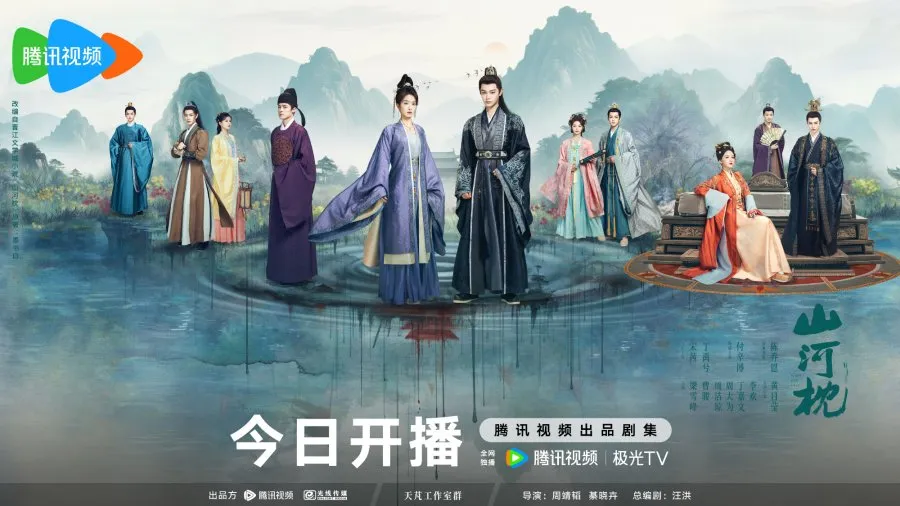
Fight for Love Poster - Courtesy of Tencent Video

|
DetailsRATING: (7.5/10)
NATIVE TITLE: 山河枕 – Shānhé zhěn YEAR: 2025 EPISODES: 40 DURATION: 45’ DIRECTOR: Zhou Yuan Zhou, Qi Xiao Hui, Liang Jing Yu SCREENWRITER: Wang Hong ORIGINAL CREATOR: Mo Shu Bai (山河枕 – Mountain and River Pillow) RESPECTED CLICHÉS: 1 - 2 - 4 - 5 - 6 - 7 - 8 - 9 - 10 - 11 |


IN A NUTSHELL
- What to expect: Fight for Love is an historical romance in which the protagonists' relationship begins with conflict but evolves into a realistic and respectful bond. It's a story about love and loyalty, but also — and perhaps above all — about growth and choice: how we learn to be strong without becoming tough, to stay true to ourselves even when the world around us changes. This series manages to transform individual journeys into a broader reflection on the concepts of loyalty, sacrifice, self-determination, and empathy.
- Strengths: strong female characters, engaging secondary love stories, intense performance by Ding Yu Xi, convincing direction and cinematography.
- Weaknesses: slow plot, romantic push and pull, weak main antagonist.
- Recommended if you like: slow-burn romance, not-too-complex plots with intrigue, visually impactful battle scenes.
- Would I rewatch it? Certainly yes.
If you're interested in understanding why this drama works, keep reading.
Fight for Love is a story that wants to reveal itself little by little. It's a tale where every gesture, every word, every silence conceals a deeper resonance, and it's striking not for the action or the unpredictability of the plot, but for its atmosphere. It has a quiet, almost contemplative pace, allowing the characters to breathe, to evolve, to exist in the time and space the story gives them.
In this review of the drama Fight for Love, after watching all episodes, I'll try to explain how the measured pace, the direction, the performances, and the narrative choices manage to shape a story that says much more than it seems, leaving an echo that lingers even after the final scene.
不是風動,不是幡動,仁者心動。
[It is not the wind that moves, it is not the flag that moves,
it is the mind of the wise that moves.]
Plot
Following the tragic death in battle of her father, the esteemed General Chu Jiang Chang, Chu Yu begins to suspect that a Bei Qi spy is revealing important military secrets to the enemy.
Determined to uncover the truth, she enlists the help of young General Wei Jun, Commander of the Da Sui Arsenal Bureau, but he too falls victim to the enemy, along with his father and five brothers, during the clash in the Baidi Valley.
Left with no other options, Chu Yu then chooses a risky path: joining the Wei family as the widow of the late Wei Jun to try to steal the Arsenal Bureau’s pass and continue her investigation.
The mission, however, proves far from simple due to the outcry the “marriage” causes among the townspeople, the distrust of Wei Yun, the last heir of the Wei family, and the determination of the political enemies to annihilate the Wei clan.
Thanks to her cunning, her brother’s support, and the crucial assistance of Princess Li Chang Ming, Chu Yu manages to revive the Wei family’s fortunes and earn Wei Yun’s trust, convincing him to join forces to uncover the enemy’s machinations.
Fighting side by side, the two discover that they have developed a deep feeling for each other that will lead them to defy the condemnation of their families, the prejudices of society, and even the hostility of the Emperor.
Strengthened by this unexpected and intense bond, Chu Yu and Wei Yun, together with their allies, will confront the expansionist ambitions of Bei Qi and fight for the truth of the past to emerge and justice to prevail.

Fight For Love Drama Review (No Spoilers)
Fight for Love is a historical drama featuring a compelling blend of romance, political intrigue, and personal growth. The story sensitively explores themes of loyalty to one's country, sacrifice, and the stubborn fight for one's feelings in a world where betrayal and power plays can upend lives in an instant.
The drama is inspired by the novel 山河枕 (Mountain and River Pillow). Not having read it, I don’t know how far the drama’s script diverged from the original text, nor whether the changes altered or improved the story’s substance. However, I can say that, as presented in the series, the story seemed quite solid and well-crafted: linear in progression, consistent in tone, and capable of finding its own internal balance.
I must also confess that I welcomed the choice to omit the element of rebirth — apparently present in the original novel — as a welcome relief from the long string of reincarnations, second lives, and time travels that dramas have been feeding us incessantly fed to us lately. Plots like this certainly have their charm, but when they become the norm, they end up detracting from a narrative device that should make the story original precisely because it’s exceptional.
Plot and Narrative Pace
At first glance, the plot appears fairly linear — the twists and turns don’t follow one another, and the protagonists’ plans aren’t particularly Machiavellian — but it draws much of its strength from its simplicity.
The conspiracy story that is the main storyline of the series, doesn’t aim to captivate the viewer with shocking revelations or complex machinations, but rather focuses on the internal coherence and believability of human dynamics. The court intrigues don’t require lengthy explanations because they are narrated with a restraint that conveys rationality and logic, also revealing a certain plausibility in the characters’ behavior.
The plot unfolds — undeniably — somewhat slowly, because the screenwriter seems to have wanted to give more space to the emotional dynamics of the protagonists and supporting characters. This choice might seem counterproductive, but in reality the structure holds up well: the story never feels dragged on, because the narrative creates fixed points that allow the narrative to advance fluidly and coherently, constantly offering new directions for the story.
It's a measured progression, favoring logic and gradual construction over frenetic plotting, yet still managing to hold the viewer's interest. In this sense, I don't recommend watching it to those who enjoy dramas with rapid-fire twists and thrilling love stories. Because in Fight For Love,the calmness is the added value: the investigations, machinations, and alliances are compelling precisely because they're realistic and not overly abstruse.
Love Stories
The main love story, like the rest of the narrative, unfolds slowly and is described with simplicity, naturalness, and without excess. The feelings between the protagonists grow gradually and authentically, moving from suspicion to trust and ultimately to deep affection. Ding Yu Xi portrays the emotional and sentimental evolution of his character with great sensitivity: it’s a silent yet powerful transformation, which makes his relationship with Chu Yu credible and touching.
The same naturalness also characterizes the secondary love stories, crafted with discretion and realism. Small plots that, while remaining in the background, add human warmth and complete the picture, complementing the main relationship admirably.
Although some argue that Fight for Love isn’t a strictly romantic drama because it doesn’t indulge in scenes of overwhelming passion or bold gestures of love, in my opinion, it’s quite the opposite. The series explores a different, more mature and rarer kind of love, one that doesn’t require dramatic displays to be believable. It’s a feeling that grows through the difficult choices, sacrifices, and daily struggles the protagonists face to stay together.
The love in Fight for Love is a love that is demonstrated, rather than shown: a bond that goes beyond physical contact and is rooted in respect, loyalty, and the stubborn will to fight for a feeling you believe in. And it is precisely this ability to transform emotions into actions — sometimes painful, sometimes courageous — that makes the story profoundly romantic in the truest sense of the word.

Cast
The element I appreciated most about this drama is undoubtedly the cast, capable of giving the series a narrative solidity that goes beyond the simple staging.
Ding Yu Xi proves himself to be an extremely talented and expressive performer: his Wei Yun combines the naive freshness of a boy who still doesn't truly know love with the clarity of a young strategist determined to redeem his family's honor. Aesthetically, he's also a perfect choice, thanks to youthful features that effortlessly convey the image of a man still suspended between adolescence and maturity.
Alongside him, Song Qian brings to life a combative and resolute protagonist, yet capable of genuine tenderness in the more intimate scenes — a performance that, in its intensity and restraint, is somewhat reminiscent of the memorable Ren Ru Yi in A Journey to Love.
Supporting the balance of the story are Zhou Da Wei and Li Huan, whose lighthearted and brilliant presence lightens the darkest moments, offering a sincere and human counterpoint to the political and emotional tensions.
Fu Xin Bo is also completely convincing, flawlessly portraying the dual nature of his character: on the one hand, the strictness and coldness of the court official, on the other, the passionate vulnerability of a man in love struggling to accept rejection.
Similarly, Cao Jun's performance is particularly captivating, crafting a character balanced between determination, self-sacrifice, and sensitivity, making him both admirable and profoundly human.
More delicate but equally incisive is Huang Ri Ying's performance, which sculpts a seemingly naive Tuan Tuan, revealing a silent and determined strength.
Finally, Chen Qiao En delivers a truly impactful performance: she portrays a regal Royal Princess Li Chang Ming, driven by intense passion, both in love and in politics, and unwilling to accept defeat even at the cost of giving up everything.
Liang Xue Feng's performance, on the other hand, is less compelling: undoubtedly beautiful to watch, but hampered by limited expressiveness that makes her less engaging than the rest of the cast.
Visual Aspects and Soundtrack
The battle and siege scenes in Fignt for Love are among the most spectacular and convincing I’ve seen in this year’s historical dramas.
The direction intelligently exploits space, perspective, and movement, conveying the ordered chaos of military maneuvers without falling into choreographic excess. The battles are raw enough, realistic in their depiction of strategy and physical impact, and supported by cinematography that amplifies the tension and makes the harshness of the fight tangible.
Each battle has a clear narrative weight and helps define the pace and drama of the story. This rare attention to detail distinguishes the series and sets it apart from other productions.
The direction also deserves mention for its sensitivity in capturing details and transforming them into narrative language. Every glance, every hesitation, every silence of the characters is enhanced with a care that reveals a deep emotional understanding of the story.
The cinematography also contributes significantly to the story’s atmosphere: luminous when lightness is needed, opaque and restrained in moments of tension or melancholy. The use of dark filters to block out excessive light is particularly successful, a rare but extremely effective visual device that perfectly conveys the gloom and sadness of rainy or snowy days or tense battlefields. A highly balanced work, capable of blending aesthetics and emotion into a single, harmonious vision.
The soundtrack moves in a rather classically romantic register: it is built on slow and deliberately discreet melodies, designed more to accompany than dominate the scenes. It is an elegant but not very bold musical structure, in which only two songs really stand out, primarily due to the performances offered by Wang Heye and Jin Runji: 浪迹 (Wander) and 望春归 (Longing for Spring’s Return).

WARNING!
FROM THIS POINT ON THE SPOILER SECTION BEGINS. DO NOT CONTINUE IF YOU DO NOT WANT TO KNOW ALL THE DETAILS OF THE DRAMA.
Fight For Love Drama Review (Spoilers)
What Works
The Main Love Story
The main love story in Fight for Love is what struck me most about the series because it possesses a rare sweetness: tender, natural, spontaneous, free of the melodramatic artifice that often weighs down historical dramas. It’s a feeling that builds in the silence of glances, in timid gestures, in hesitations. The scenes in which the ML realizes — almost with surprise — that he’s starting to love the FL are among the most touching: that slow transition from suspicion to trust, and from trust to tenderness, is told with a captivating delicacy.
Ding Yu Xi manages to make every nuance of this transformation visible: the exact moment when the wary and wounded boy stops defending himself and, without even realizing it, begins to see Chu Yu no longer as a potential threat, but as a companion with whom he can imagine a future. It’s a moving evolution, because behind love lies the growth journey of a young man who, after the loss of his family, finds himself forced to become an adult too soon — and it is precisely through love that he learns to become a man, with all the burdens, responsibilities, and vulnerability that entails.
Song Qian, for her part, offers a measured and profoundly human performance. Her Chu Yu is a strong, but not invincible, young woman; clear-headed, but not cold. She possesses a sensitivity that never lapses into weakness, and a determination that doesn’t need to raise her voice to be heard.
Chu Yu isn’t the classic omnipotent and infallible “Mary Sue” who can and can solve anything. On the contrary, she is a woman forced to confront her own limitations, who must ask for help, create alliances, and sometimes even bend to achieve her goals. Song Qian manages to maintain this balance with a rare realism, crafting a character who is loved not so much for what she says, but for how she acts.
The chemistry between her and Ding Yu Xi is palpable: it’s a complicity that slowly grows, like an understanding discovered step by step. Together, they manage to convey that precious feeling of two souls who, despite coming from different experiences and wounds, find support in each other — and, perhaps, a form of salvation.
The Secondary Love Stories
The same thread that characterizes the main love story also characterizes the secondary love stories. The bonds in Fight for Love are built discreetly and develop spontaneously and genuinely.
Despite remaining in the background, the relationships between the other characters also manage to engage and convey emotion, precisely because of their simplicity and authenticity. These small twists and turns complete the overall picture, adding depth and human warmth without ever distracting from the main story.
All of this fits into a plot that paints a vivid portrait of relationships in a precarious era, where wars and power games can drag a family from glory to collapse in an instant.
The story recounts these bonds with rare delicacy and sensitivity: Tuan Tuan’s choice to reject a life confined to the inner courts as Princess Consort; Chu Lin Yang’s hesitation to accept her love because she fears he cannot offer her a stable future; the struggles of Chu Yu and Wei Yun, forced to defend a love considered scandalous by their own families; Chu Jin’s refusal to marry a man who could die in battle like her father; and the indecision of the Princess Royal, torn between duty and gratitude for a man who is both enemy and savior.
These emotional details enrich the story, conveying not only romance but also the weight, fragility, and courage of relationships in a world where death is a tangible shadow and no one is truly safe from war and disease.

The Characters and, in Particular, the Female Ones
All the female characters in Fight for Love demonstrate a distinctive, very human and realistic feminine strength: a strength that comes not from power, arrogance, or blatant intellectual superiority, but from resilience, from the courage to keep moving even when all seems lost. It’s a representation of women’s moral strength, measured not by victories, but by the ability to remain true to oneself despite fear, pain, and loss.
This strength is beautifully represented in episode 6 when the wives of the deceased Wei brothers kneel before the gates of the imperial palace to demand Wei Yun’s release, enduring hunger, cold, and exhaustion. Or in episode 17 when they confront and defeat General Yao’s henchmen. Or again in episode 40 when the Princess Royal, after wreaking havoc in the Bei Qi court, even giving up her child, decides to stick to her plan of revenge and fatally poisons Zhao Yue, even though a part of her still loves him.
Another positive feature of the characters in Fight for Love is the fact that the ML and the SML, despite being separated by a feeling impossible to share — love for the same woman — still manage to collaborate, respect each other, and recognize each other as indispensable to the stability of the kingdom.
Their relationship, marked by differences but also by a surprising mutual loyalty, is part of a mosaic of carefully and complexly delineated characters: men and women who, even when not the main characters, possess distinctive traits and precise motivations. This approach creates a striking contrast, for example, with Youthful Glory, another ensemble drama burdened by often stereotypical and two-dimensional characters.
In short Fight for Love chooses the path of positive characterization: not only the women, but also (almost) all the male characters reveal deeply human and touching qualities, even those the plot would like to place as antagonists. This choice makes the film not only highly enjoyable, but also surprisingly modern.
What Doesn't Work: the Main Villain
The main weakness of Fight for Love lies, in my opinion, in the characterization of its main antagonist, Zhao Yan, a villain who struggles to assert himself.
In the first two-thirds of the series, his figure remains elusive, almost evanescent: he is present in the narrative, but his role as an enemy is never clearly revealed, leaving the viewer in doubt as to his true intentions. When he finally reveals himself in the final story arc, he takes an unexpected and not entirely convincing path: instead of the ambition, political ferocity, and desire for revenge one might expect from a man raised undercover in a foreign country, rejected by his own country as the illegitimate son of the Princess Royal, Zhao Yan is portrayed as a ruler subservient to his mother and consumed by his amorous obsession with Li Chang Ming.
A choice that, while intended to humanize him, ends up weakening him: his internal conflict does not translate into truly incisive antagonism, and his story thus remains less powerful than his personal history might have suggested.
Paradoxically, the true villain of the story seems to be someone else: Emperor Chun De. In an attempt to ensure stability at court, he sacrifices the feelings of his beloved sister by marrying her to the violent Military Governor of Jinxi; he tries to shift the Crown Prince’s military blame onto General Wei; he hinders the love between Wei Yun and Chu Yu; and he stubbornly refuses to clear the name of Chancellor Gu, unjustly accused of high treason in the Lord of Qin affair.
His decisions, more than those of Zhao Yan, generate the injustices and fractures that drive much of the plot, making the Emperor — even without overtly evil intentions — the most cumbersome and morally ambiguous shadow in the entire story.

Characters and Cast
Primary Characters
Chu Yu/A’Yu (Song Qian) eldest daughter of the Chu family and daughter of General Chu Jiang Chang. She is known for her outspoken and unconventional personality, which in the past led her to follow the young Gu Chu Sheng, son of the criminal Chancellor Gu, into exile to protect him. After her father’s death, she decides to investigate the Bei Qi espionage network in Da Sui, but becomes entangled in a scandalous and universally opposed love affair with the young general Wei Yun. Her courage is ultimately rewarded, and she is appointed General of the Beifeng by the new emperor Li Huan, paving the way for women to pursue public careers.
Wei Yun/Xiao Qi/Qi lang (Ding Yu Xi) seventh son of the Wei family, son of the Marquis of Zhenguo and Young General of the Wei Army. He is the sole survivor of the battle in the Baidi Valley against the Bei Qi army, in which his father and six brothers died. Thanks to Chu Yu’s help, he manages to avoid the death sentence and regain his father’s title of Marquis of Zhenguo. Because of their forbidden love, however, he is tormented, demoted, and imprisoned by the Emperor, but in the end, he manages to obtain a pardon from the sovereign in exchange for the defeat of the enemy and three years of border protection.
Gu Chu Sheng/Gu lang (Fu Xin Bo) son of Chancellor Gu, exiled to the southeast six years earlier due to his father’s involvement in the Lord of Qin’s high treason case. He later ranked first in the Imperial Examination and was appointed Compiler of the Hanlin Academy. Despite his love for Chu Yu, he decides to marry the Duke of Ning’s daughter to rise through the ranks and secure the post of Minister of Justice, hoping to uncover the truth about his father’s unjust conviction. After the victory in the Battle of Qingzhou, he is appointed Minister of Personnel and later takes over his father’s post as Chancellor.
Li Chang Ming (Chen Qiao En) Princess Royal of Da Sui and former wife of the Military Governor of Jinxi. After a difficult relationship with her husband, which left her physically and psychologically scarred, she regains her balance thanks to her courtiers, including the refined Xue Han Mei. Due to a series of circumstances, she becomes very fond of Chu Yu and helps her out of the most difficult situations, also taking advantage of her status as the Emperor’s beloved sister. When Han Mei reveals himself to be the Crown Prince of Bei Qi and kidnaps her, she decides to do everything she can to hinder his ascension to the throne, even going so far as to sacrifice the child they had conceived together in order to drive a wedge between him and the Bai Qi court.
Xue Han Mei/Zhao Yue (Liang Xue Feng) courtier of Princess Li Chang Ming, saved from lynching years earlier and become her close confidant. In reality he is Zhao Yue, the son born from the relationship between the Lord of Qin and the Royal Princess Yun Yang of Bei Qi, instructed by his mother to steal the enemy’s military secrets and pass them on to the homeland. It is his fault that General Chu and General Wei were killed in battle, and his ambition poses a serious threat to the stability of Da Sui that only his devotion to Li Chang Ming can avert.
Supporting Characters
Chu Jiang Chang (Gao Yi) Supreme General of the Northwest, commander of the Chu Army and father of Chu Yu. He dies defending the city of Fengling from the enemies of Bei Qi, fatally struck by an arrow shot from an octagonal crossbow, the design of which mirrors that of the Da Sui Arsenal Bureau.
Chu Lin Yang (Cao Jun) Young General of the Chu Army and older brother of Chu Yu, who was seriously wounded in the Battle of Fengling. He is a loyal man, faithful to his country and devoted to his family. He supports and staunchly defends Chu Yu and tries in every way to be more understanding and show his affection to Chu Jin and his mother, from whom he has been separated for many years. Although he is in love with Tuan Tuan, he refuses to marry her because he feels he cannot provide her with a stable future. He risks his life during the second siege of Fengling, demonstrating extreme devotion to the nation, and does not regret his choices even when confined to a wheelchair due to his injuries.
Chu Shan (Yuan Ruo Hang) Chu Lin Yang’s attendant.
Chu Jin (Zhou Jie Qiong) second daughter of the Chu family and Chu Yu’s younger sister. She is determined and strong-willed, sometimes to the point of brazenness. Initially, she hates her sister because of the affection her father and older brother have always shown her, but over time, she learns to appreciate her. Initially, she accepts the court of Song Wen Chang, heir to the Duke of Hu, only for his social prestige and easily manipulated personality, but later discovers that she is truly in love with him.
Quan Er (Liang Rui Long) Chu Jin’s personal maid.
Xie Yun (Xu Rong Zhen) Chu Jiang Chang’s wife and mother of Chu Yu, Chu Lin Yang, and Chu Jin. She is a very strict woman who cannot tolerate Chu Yu’s eccentricities, so much so that she disowns her when she announces her intention to marry the deceased Wei Jun. Eventually, thanks to Chu Lin Yang’s mediation, she reconciles with her eldest daughter, even approving her relationship with Wei Yun.
Wan Yue (Sun Yi Ning) Chu Yu’s personal maid.
Wei Zhong (Xiu Qing) Marquis of Zhenguo, commander of the Wei Army and father of Wei Yun. He dies in the Battle of Baidi Valley along with his sons, also killed by the octagonal crossbow.
Liu Xue Wang (Fang Xiao Li) Marchioness of Zhenguo and mother of Wei Yun. She is extremely devoted to her husband and sons, so much so that, to prove their innocence to Minister Cao, she kills herself during the funeral procession.
Wei Jun (Zhang Tian Yang) eldest son of the Wei family, Young General of the Wei Army and Commander of the Arsenal Bureau. He is a very upright, loyal, and nationally faithful man, which is why Chu Yu turns to him for help in investigating the theft of the octagonal crossbow design by the Bei Qi. Unfortunately, before finding any clues to the case, he dies in the Battle of Baidi Valley along with his father and brothers, but he entrusts the task to Wei Yun.
Wei Shu (Wang Sen) second son of the Wei family and General (归德良将 – Valiant General of Return to Virtue) of the Wei Army. He dies in the Battle of Baidi Valley along with his father and brothers.
Jiang Chun (An Yue Xi) wife of Wei Shu. At the request of the late Marchioness, after her husband’s death, she remains at the Wei Manor with her son to help Wei Yun manage the household.
Wei Ling Chun (Lu Yu Hao) son of Wei Shu. He remains at the Wei Manor with his mother, uncle, and cousins.
Wei Qin (Lang Peng) third son of the Wei family and Captain (昭武校尉 – Captain of Manifest Martial Valor) of the Wei Army. He dies in the Battle of Baidi Valley along with his father and brothers.
Zhang Han (Zhao Shi Yi) wife of Wei Qin. After her husband’s death, she agrees to return to her father’s home, entrusting her daughter to the guardianship of her sister-in-law.
Wei Ling Ling (Sun Yu Xuan) daughter of Wei Qin. When her mother leaves the Marquis of Zhenguo Mansion, she is entrusted to the guardianship of Jiang Chun.
Wei Feng (Ding Ye) fourth son of the Wei family and Captain (昭信校尉 – Captain of Manifest Loyalty) of the Wei Army. He dies in the Battle of Baidi Valley along with his father and brothers.
Yao Jue (Jiang Zhuo Jun) wife of Wei Feng and cousin of Yao Yong. After her husband’s death, she agrees to return to her father’s house under the guardianship of her cousin. Yao Yong uses her to blackmail Wei Yun and Chu Yu and dissuade them from investigating him, but they manage to rescue her and send her to live outside the city with her son.
Wei Ya (He Lei) the fifth son of the Wei family and Vice-Captain of the Wei Army (昭武副尉 – Vice-Captain of Manifest Martial Valor). He dies in the Battle of Baidi Valley along with his father and brothers.
Xie Jiu (Han Yun Yun) Wei Ya’s wife, the great-nephew of the Grand Tutor. After her husband’s death, she agrees to return to her father’s home.
Wei Rong (Shao Wei Tong) the sixth son of the Wei family and Vice-Captain of the Wei Army (昭信副尉 – Vice-Captain of Manifest Loyalty). He dies in the Battle of Baidi Valley along with his father and brothers.
Wang Lan (Ma Meng Wei) Wei Rong’s wife. Despite being pregnant, she refuses the release letter and decides to remain at the Wei Manor with her sister-in-law.
Wei Ling Shu, Wei Rong’s daughter, born after Wei Rong’s death.
Wei Qiu (Ma Hao) Wei Yun’s attendant.
Song Zhao (Yue Yao Li) Duke of Hu, a retired Da Sui general and a longtime friend of General Wei. He is strict and rigorous with his sons, hoping they will get the recognition they deserve.
Song Wen Chang (Zhou Da Wei) the idle and hedonistic eldest son of the Duke of Hu and a close friend of Wei Yun. Despite his military upbringing, he is a good-natured fellow who spends a lot of time in entertainment venues, but he is driven by a strong sense of justice and always tries to help Wei Yun. It is thanks to him that Wei Yun manages to arrest Yao Yong and reconquer Qingzhou, where he travels at his request as General of the Left.
Song Shi Lan (Ding Jia Wen) second son of the Duke of Hu. He is so diligent and studious that he was appointed Deputy Minister of the Court of Judicial Review at a young age. With her help, Wei Yun manages to arrest Yao Yong and recapture Qingzhou, where he had gone as the General of the Right. Following Wei Yun’s defection, he is awarded the title of General of the West, defending Qingzhou and Fengling.
Song Qing Ping/Tuan Tuan (Huang Ri Ying) daughter of the Duke of Hu, passionate about medicine and initially engaged to the Crown Prince. Because of the latter’s frivolity and his desire for freedom, she falls in love with Chu Lin Yang and tries in every way to win him over.
Lu Qi Ba (Li Huan) Deputy Commander of the First Division of the Arsenal Bureau, responsible for managing the entire department and developing new weapons for the Da Sui. His design for the octagonal crossbow was stolen by Zhao Yue and killed Generals Chu and Wei. He proves a valuable ally to Wei Yun and Chu Yu during battles and sabotage operations against the enemy.
Wei Tong Feng (Hou Yun Peng) Official in charge of the Arsenal Bureau. In reality, he is a Bei Qi spy working for Zhao Yue.
Emperor Chun De (He Zhong Hua) Emperor of Da Sui and older brother of Li Chang Ming. He is a man troubled by the long-standing rivalry with Bei Qi, and his fear of leaving the kingdom in the inexperienced hands of the young Crown Prince causes him to often make questionable decisions.
Eunuch Huang, Palace Superintendent and secretary to Emperor Chun De.
Li Huan (Li Qing) Crown Prince of Da Sui. He is a frivolous and naive guy who indulges in life’s pleasures, often neglecting his duties as heir to the throne. This will lead to the estrangement of his beloved Song Qing Ping and the tragedy of the Wei family.
Yao Yong (Wu Hong) State Support General charged with protecting the Crown Prince during the campaign against Bei Qi, in which the Wei family perishes. In reality, he is a subordinate of the Lord of Qin who, out of revenge, allied himself with Bei Qi, and Zhao Yue uses him as a scapegoat to cover up his espionage operations in Da Sui.
Wang Jing Zhi (Zheng Guo Lin) Duke of Ning and Grand Chancellor of Da Sui. He is a devious and power-hungry man who seeks to exploit the death of the Wei General and his daughter’s marriage to Gu Chu Sheng for his own gain. He is eventually removed from office by the Emperor and sent back to his hometown.
Wang Lin Lang (Xu Mu Chan) daughter of the Duke of Ning. Thanks to her father’s designs, she manages to marry Gu Chu Sheng, the man she loves, but he treats her coldly because he still has strong feelings for Chu Yu. She eventually agrees to divorce him, but she never fully forgives him.
Zhang Deng (Luo Yi Hang) Gu Chu Sheng’s page boy.
Xie Ming Yi (He Yong Sheng) Grand Tutor of the Empire and uncle of Xie Jiu. He intervenes at Chu Lin Yang’s request to prevent Cao Yan from desecrating the coffins of the deceased Wei family members and Wei Yun from being arrested during the funeral.
Cao Yan (Cheng Cheng) Minister of the Court of Judicial Review who attempts to have the Marquis of Zhenguo accused of leading 70,000 soldiers to their deaths in the Battle of Baidi Valley and to have Wei Yun condemned to death as his heir. In reality, he acts at the instigation of the Duke of Ning and to satisfy his desire for revenge against Wei Yun, who had humiliated him in front of everyone in defense of Chu Yu. He is ultimately convicted of abuse of power and relieved of his post.
Zhang An (Jiang Zhen Hao) Deputy Minister of Personnel. A cautious and thoughtful young minister who does not aspire to high office, but works to maintain peace and harmony within the court.
Lord of Qin, man of humble origins who had risen through the military ranks, obtaining a noble title thanks to his significant military successes. Twenty years before the events narrated, during a trip to the south, he had fallen in love with a woman who later turned out to be Yun Yang, the Royal Princess of Bei Qi, with whom he had a son. She had exploited him to steal Da Sui’s military secrets, thanks to which Bei Qi had conquered the three border cities of Yuncheng, Baicheng, and Yingzhou. The Princess subsequently fled to her homeland, leaving him to face charges of high treason, which led to his and Chancellor Gu’s execution.
Princess Yun Yang (Zhen Xiao Nan) Royal Princess of Bei Qi and mother of Zhao Yue. Twenty years earlier, she had seduced the Lord of Qin to steal Da Sui’s military defense plans and allow Bei Qi to seize three enemy cities. During her escape, she was forced to abandon her son, whom she had borne to the Prince, in Da Sui. She then used him as a spy in enemy territory, obtaining from him the design for the octagonal crossbow developed by Da Sui’s Arsenal Bureau.
Xiang’er (Liu Di) personal maid to the Princess Royal of Da Sui. In reality, she is the adopted daughter of Princess Yunyang and a spy for Bei Qi.
Su Can (Liu Zhiyi) King of Bei Qi and nephew of Princess Royal Yun Yang. He was killed by Wei Yun to stop the attack on Fengling and lift the siege of Qingzhou.
Shen You (Lin Jun Yi) Deputy General of Bai Qi and spy in the service of Zhao Yue during his stay in Da Sui.
Commander Gao (Sun Li Bin) commander of the Bei Qi troops leading the siege of Qingzhou.
Gonsun Lan/Qi Lan (Chang Cheng) member of the Sixth Division of the Da Sui Arsenal Bureau and friend of Wei Zhong. He has been a spy planted in the Bei Qi court for years and is the Lord of Yuncheng.
Mrs. Shen (Wang Ya Ni) a peasant who finds and takes in Chu Yu and Wei Yun after they escaped Yao Yong’s men following the ambush in Dingfeng Valley and fell off a cliff.
Cui Yi (Wu Yi Jia) future husband of Mrs. Shen. In reality, he is a Bei Qi spy who, after being saved by Lady Shen, defected and decided to live undercover in Da Sui.
Xu Ling Zhang (Liu Yu Qiao) Military Governor of Qingzhou. He is in league with the Bei Qi and embezzles most of the taxes paid by its citizens. To thwart his plans, the Emperor sends Wei Yun and Gu Chu Sheng to Qingzhou to investigate, but following his arrest, the two become embroiled in the Bei Qi’s siege of the city.
Young Master Sun (Ding Nan) noble scion and friend of Chu Jin. He attempts to discredit Chu Yu at the banquet celebrating Wei Yun’s appointment as Marquis by locking her in a room with Gu Chu Sheng. He later attempts to discredit her again by spreading gossip about her inappropriate relationship with Wei Yun. He is ultimately sentenced to flogging by Gu Chu Sheng.

Favorite Character: Chu Lin Yang
He is a man who embodies loyalty to country and family with a rare purity, devoid of ostentation yet deeply rooted in his actions and choices.
In family relationships, he displays a calm and tolerant nature, as when he tries in every way to bridge the emotional distance with Chu Jin, seeking to compensate with care and thoughtfulness for the shortcomings his sister accuses him of.
At the same time, when his principles are at stake, he demonstrates unyielding firmness: neither his sister’s affection, nor family pressure, nor the indifference of the court can shake him from his convictions of loyalty, honor, and integrity.
Deeply devoted to the nation, he carries a heavy sense of guilt for his forced retirement from the army after the wounds sustained at Fengling: a pain that translates into an almost obsessive desire for atonement. This desire for revenge leads him to volunteer to defend the city during the second siege of Bei Qi, even though this second battle threatens to cost him his life.
His sense of duty, however, never prevails over the affection he shows for his loved ones: this is evident in the way he resolutely supports Chu Yu, even when her unconventional behavior becomes the target of gossip and accusations. He does not hesitate to stand by his sister, defending her both at home and in front of strangers, rejecting the idea that reputation can be more important than loyalty.
Despite his sincere feelings for Tuan Tuan, he is reluctant to marry her: not for lack of affection, but for excessive responsibility, convinced he cannot guarantee her the stability she deserves.
He is a complex and luminous figure who combines rigor and tenderness, pragmatism and sensitivity. A man who is not afraid of honesty and who, precisely because of his composure and integrity, reveals a quiet strength that leaves its mark.
Un-Favorite Character: Princess Yun Yang
She is a figure who perfectly embodies the ambiguity of power when it becomes obsession.
Her life is marked by a long trail of manipulation and betrayal, beginning with the seduction of the Lord of Qin to obtain Da Sui’s defense plans and allow his state to conquer three border cities.
Once she had obtained what she wanted, she fled across the border, leaving her companion to pay the price of being accused of high treason and even abandoning the son born from that relationship, destined to grow up in Da Sui as a foreigner despised and humiliated by all.
Returning home to claim the recognition she deserved, she continued to move with the same cold strategic precision: becoming an advisor to the sovereign, she pushed her nephew — the young king of Bei Qi — into a military campaign that she knew would be risky and, indeed, hoped would prove fatal, to pave the way for her son’s rise even at the cost of destabilizing the kingdom.
She had transformed the young Zhao Yue into a political tool, encouraging him to infiltrate Princess Li Chang Ming’s courtiers to steal military secrets and the design for the Da Sui octagonal crossbow, the weapon responsible for the deaths of the Chu and Wei generals.
Her greed reached its peak when, thanks to her son, she succeeded in becoming Queen Mother, effectively reducing Zhao Yue to a mere puppet and even attempting to separate him from the woman he loved, going so far as to threaten his life for reasons of political expediency.
But the most revealing aspect of her nature emerges in the finale: when power and survival found themselves in conflict, she did not hesitate to sacrifice Zhao Yue himself, confirming that her loyalty belonged to no one — except her own ambition.
RECOMMENDED:
- WONDERLAND OF LOVE
- A JOURNEY TO LOVE
- LOVE OF NIRVANA
- THE PRINCESS'S GAMBIT
- THE PRISONER OF BEAUTY
Thanks for reading this far!
I hope you enjoyed my article. If you like my work and want to support me, buy me a coffee☕