
Zhan Zhao Adventures (2026): the Best Wuxia of 2026? | Review & Explanation of the Ending
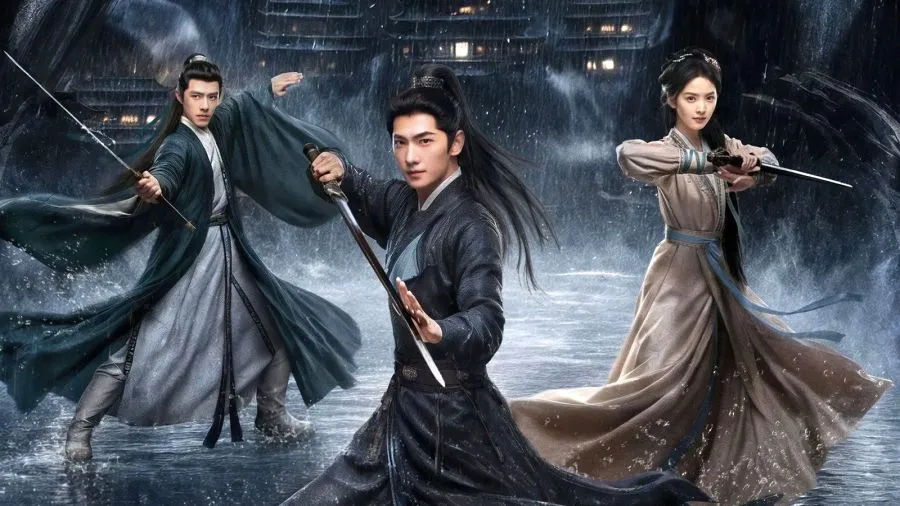
Zhan Zhao Adventures Poster - Courtesy of Youku

|
DetailsRATING: (7.5/10)
NATIVE TITLE: 雨霖铃 - Yǔ lín líng YEAR: 2026 EPISODES: 37 DURATION: 45’ DIRECTOR: Liu Hong Yuan SCREENWRITER: Wu Tong ORIGINAL CREATOR: Minifish (雨霖铃 - The Rain Bell Tune) RESPECTED CLICHÉS: 1 - 2 - 4 - 5 - 6 - 13 - 15 |


IN A NUTSHELL
- What to expect: Zhan Zhao Adventures is a historical investigative drama that blends investigation and moral conflict in a tale that unfolds through leads, suspicions, and gradual revelations, as the bonds between the protagonists strengthen and are tested. The drama combines elements of classic wuxia and the gong'an tale, prioritizing investigative detail, introspection, and the gradual construction of the mystery over pure action. The narrative unfolds through a series of cases that, step by step, intertwine with a broader political agenda, bringing hidden alliances and personal conflicts to light. Surrounded by shady figures and unstable associations, Zhan Zhao navigates a balance between heroism and rigorous legality, seeking to unravel the web of conspiracies threatening the balance of the court.
- Strengths: the care put into the character development, the remarkably consistent storytelling, the outstanding wuxia aesthetic.
- Weaknesses: the deliberately paced storytelling, some contrived coincidences, an occasional overreliance on introspection.
- Recommended if you like: Yang Yang and Alen Fang, martial arts fights, investigative wuxia, introspective dramas that analyze the protagonists' moral doubts, martial art heroines who are not too dominant and charismatic, series with only a hint of romance.
- Would I rewatch it? Yes, I find it one of the most successful wuxia of recent times.
Read on to discover all the strengths and weaknesses of this gong'an wuxia.
Zhan Zhao Adventures is a wuxia that leaves an ambivalent feeling, made up of involvement and slowness, a fascination with the jianghu and a constant doubt about the series' focus. It's a drama that doesn't simply recount an investigation, but delves into the emotional and moral consequences of the characters' choices, inviting the viewer to immerse themselves in its slow pace and introspective analysis.
In this review of the drama Zhan Zhao Adventures, after whatching all episodes, I will therefore try to understand how the solid narrative construction, the attention to characterization, and the structural choices manage to meet the audience's tastes, resulting in a story that is both enjoyable to watch and satisfying to follow.
Focus: How did "The Seven Heroes and the Five Gallants" come to be?
Plot
When Imperial Guard Zhan Zhao receives an unexpected plea for help from his former classmate Liu Hong Yi, whom he hasn't seen in many years, he certainly doesn't imagine that the mission entrusted to him will change the fate of the Empire. The task is to bring back to the capital a compromising letter stolen from a spy exchanging information between Da Song and Xi Xia. However, the situation soon escalates, and while protecting the letter, Zhan Zhao is seriously injured and poisoned.
Seeking refuge, he stops at an inn where he finds himself caught in the middle of a clash between the disciples of the Tang Sect and those of Shengyun Manor, both intent on taking in a mysterious child. To defend the child steps in Huo Ling Long, the young lady of Linglong Manor, who has fled to escape an arranged marriage to the arrogant Commander of the Xiangzhou Guard, Shao Ji Zu. Zhan Zhao decides to help her, and after saving the child, Ling Long offers to deliver the secret letter to Prince Hui, the Emperor's cousin and her longtime friend.
At that juncture, Bai Yu Tang, a figure known in the jianghu as the Brocade Fur Rat, appears. Having long wanted to challenge Zhan Zhao, he instead helps Ling Long escape her enemies and takes care of his rival, entrusting him to the Jin family of Tanxi. From that moment, the three become inseparable and decide to investigate together the mysterious conspiracy hatched against the Emperor by a devious opponent and his four powerful underlings.
Crossing the jianghu in search of clues, Zhan Zhao, Bai Yu Tang, and Huo Ling Long encounter allies and adversaries, old acquaintances and new, all somehow connected to the intrigue slowly unfolding before them. Through buried secrets, unexpected revelations, and increasingly uncomfortable truths, the three gradually draw closer to the heart of the conspiracy: a rebellion destined to shake the very foundations of the Empire.
"Fighting violence with violence is not justice, and slaughter is never a virtuous act"

Zhan Zhao Adventures Drama Review (No Spoilers)
Plot and Narrative Pace
From the very first episodes, it's clear that Zhan Zhao Adventures isn't your typical wuxia, focusing on the adventures of a wandering hero in the jianghu. On the contrary, the series immediately takes shape as a gong'an wuxia, or detective story with martial arts elements: Zhan Zhao isn't a wandering hero seeking adventure, but is first and foremost an official who gathers evidence, follows leads, and operates within an institutional framework. Consequently, the narrative's focus isn't on righting wrongs while wandering the jianghu or on the exaltation of the martial hero's individual freedom, but rather on the tensions arising from the clash between a sense of justice, institutional responsibility, and personal convictions. This setting is no accident: Zhan Zhao Adventures is in fact based on the novel 雨霖铃 (The Rain Bell Tune) by Minifish, a work that reworks characters and themes from the great wuxia classic The Seven Heroes and the Five Gallants (七侠五义, Qīxiá Wǔyì), maintaining its strong ties to the detective tradition and to the figure of Zhan Zhao as a defender of the law as well as a martial arts master.
For this reason, it's important to approach the series with appropriate expectations: Zhan Zhao Adventures offers more introspection than action, more investigation than jianghu, and more moral conflict than martial adventure. Personally, I found this choice particularly interesting because it allows the drama to develop both its characters and the themes it addresses in greater depth. Those willing to accept this setting may discover a rich, coherent, and surprisingly nuanced story; Those looking for a traditional wuxia genre centered primarily on wandering, fighting, and individual freedom may find themselves faced with a very different experience than they expected.
The screenplay is solid and follows Zhan Zhao and his companions' investigative journey with remarkable coherence, gradually intertwining seemingly unrelated cases that ultimately lead to the uncovering of the conspiracy orchestrated by the main villain.
The pace is undoubtedly controlled and noticeably slows at times, but I rarely felt the story was lagging behind. The slowdown stems primarily from the decision to devote a lot of space to the emotional development of the characters, their relationships, and the moral dilemmas that accompany the investigation. This is a decision that could be frustrating for those seeking action and a jianghu experience, but I personally appreciated it because it allows for a deeper understanding of the protagonists' motivations and a greater sense of responsibility for their choices. Zhan Zhao Adventures isn't so much interested in building a rapid succession of twists and turns, but rather in revealing how the investigation and the injustices encountered along the way shape the characters. For this reason, those seeking action might perceive some introspective moments as slowdowns, while those who appreciate highly character-driven stories might find some of the series' most successful aspects precisely in these passages.
The excellent management of comic moments also contributes to this approach. Humor emerges naturally from the interactions between the characters and never feels artificially inserted to lighten the mood. On the contrary, the lighter scenes integrate seamlessly into the narrative, offering valuable pauses between the more dramatic moments without interrupting the emotional tension. The comic timing is generally very effective, and several characters, particularly Bai Yu Tang and the supporting characters surrounding the main group, contribute to creating amusing situations that lighten the tone of the story without compromising its credibility.
If I had to identify a limitation in the plot, I would look for it in the tendency to converge a very large number of events and characters around the same narrative core. While on the one hand, this choice makes the plot compact and free of superfluous subplots, on the other, it sometimes risks making the narrative world seem a little too small, giving the impression that too many events are connected to each other in an overly convenient way.
Characters and Romance
Character development is undoubtedly one of the elements on which Zhan Zhao Adventures focuses most. The script devotes constant attention to them, taking the time to explore their desires, fears, weaknesses, and contradictions. Many of the series' most significant moments stem not from the investigation itself, but from the uncovering of the wounds, regrets, and internal conflicts the protagonists have been carrying for years.
The story seeks to show how they became the people they are, gradually revealing their past and the experiences that shaped their characters, and showing how the trials they face ultimately profoundly influence their beliefs, often leading them to question themselves and their way of seeing the world.
Even the antagonists, despite receiving less screen time and psychological insight than the protagonists, seemed generally well-constructed to me. The series doesn't devote the same level of introspection to them as it does to the heroes, but it still manages to make them believable, consistent in their actions, and understandable in their motivations, thus helping to make the conflict more solid and convincing.
This attention to the human dimension of the characters is one of the strengths of Zhan Zhao Adventures: even when the plot slows down, each insight contributes to making the story more complex, nuanced, and authentic.
From a romantic perspective, Zhan Zhao Adventures isn't a series from which to expect overwhelming passions or particularly compelling love stories. And this isn't due to the actors' poor skill or lack of chemistry, but rather to a specific writing choice: the drama is much more interested in developing the investigative and introspective dimensions of the narrative, leaving romance decidedly marginalized.
The characterization itself seems to go in this direction, delineating figures who don't appear particularly inclined to romantic dynamics. Zhan Zhao, in particular, is portrayed as a man deeply devoted to his institutional role and rather reluctant to indulge in emotional ties, almost too "respectful" to openly express his feelings. Similarly, Huo Ling Long appears too young and inexperienced to have a true understanding of love, and more oriented toward a path of personal growth than the romantic dimension. The result is a very subtle romantic element, almost always in the background, which never truly attempts to penetrate the narrative, but remains subordinate to the investigative dynamics and the characters' inner journeys.

Cast
From a casting perspective, I found the choices in Zhan Zhao Adventures to be very consistent. In addition to selecting a group of actors who are generally well-versed in action scenes, the drama relies on performers capable of effectively carrying the emotional weight of the story and lending credibility to often complex and multifaceted characters.
Yang Yang is extraordinarily effective in the fight sequences, and this role finally allowed him, after a long time, to embody a heroic and luminous character, driven by a sincere desire to protect others and fight for what he believes is right. It's a dimension that fits his image perfectly and enhances his screen presence. Acting-wise, however, I continue to perceive a certain uniformity in his performance: while I found him convincing in the most intense and dramatic moments, his performance often seemed to lack the small expressive nuances that allow one to grasp the more subtle changes in the character's mood.
The real revelation of the cast, at least for me, was Alen Fang. After some roles (especially in the dramas Les Belles and Whispers of Fate) that had not been able to fully valorize him, here he finally returns to play a character that seems tailor-made for him: ironic, bold, funny, but also generous, loyal and deeply heroic. As in A Journey to Love, she manages to be an excellent comic foil without ever becoming a caricature, demonstrating, on the contrary, remarkable versatility in moving from lighter moments to more dramatic ones. Added to this is her excellent presence in the martial arts scenes, where she stands out for her fluid, precise, and particularly elegant movements. She's one of those actors who, when the script gives her the opportunity, truly elevates the material entrusted to her, almost overshadowing her co-stars.
My impression of Zhang Ruo Nan, however, is more mixed. I found many of the criticisms leveled at her expressiveness to be correct, although at times I did find her a bit limited. At the same time, however, I believe that part of the audience's confusion also stems from the very nature of the character, conceived not as a dominant and charismatic warrior, but as a young, inexperienced girl still discovering the world. As for the action scenes, I didn't find all the weaknesses highlighted by other viewers: she certainly seems less prepared than her colleagues with more martial arts backgrounds, but without feeling out of place. I also attribute the fact that her chemistry with Yang Yang isn't particularly memorable more to the writing of the characters than to the actors' performances.
Among the supporting actors, I particularly appreciated Zhang Yu Xi, who was able to effectively convey both the more human and the more tormented and vengeful sides of his character, and Xu Wai Luo, a young actor I had already appreciated in Love Beyond the Grave and in his previous works, and whom I continue to consider extremely promising. In this production, paired with Lin Xin Meng, she naturally helps lighten the often dark tone of the story, adding a touch of spontaneity and comedy that makes the narrative more enjoyable.
I was surprised to find Zuo Ye in a role so different from the one I just saw in A Splendid Match. While I believe her expressiveness still has room for growth, I appreciated her ability to adapt to a much more frivolous and impulsive character than the one she played in that drama.
I was equally happy to revisit Zhang Ming En, even if I wasn't entirely convinced by the role he was given. I really appreciated him in Love on the Turquoise Land because, despite his edgy, reckless, and often controversial character, he retained a humanity and a charm that was hard to ignore. In Zhan Zhao Adventures, however, he plays a very conventional antagonist, defined above all by his obsession with power and the protagonist.
Finally, a special mention goes to the very young Chen Yu Zhe, who truly struck me with the sensitivity and naturalness with which he played the little Chang Hong Bi, providing some of the most touching moments of the entire series.
Visual Aspects and Soundtrack
Visually, Zhan Zhao Adventures is a series that pleasantly surprised me in many ways. Personally, I really appreciated the choice to show a dirty, rugged, and lived-in jianghu, far from the glossy aesthetic that characterizes many recent productions: run-down inns, dusty streets, dimly lit alleys, and interiors illuminated primarily by candles and lamps contribute to creating a lived-in, believable world.
The direction is rich and meticulous, with remarkable attention to detail and frequent use of cinematic shots, while the cinematography favors dark atmospheres, natural lighting, and an extremely desaturated palette that perfectly conveys the roughness of the world the protagonists move in. The locations also seemed particularly successful: villages, inns, streets, and homes consistently convey the feeling of being truly inhabited places, thanks to sets rich in small details that contribute to making everything appear more realistic.
The fight scenes are probably the series' most defining element and, in my opinion, one of its greatest strengths. The fights are numerous, meticulously choreographed, and performed by actors who demonstrate remarkable preparation: I can't imagine how many hours of training the main actors must have required to master such a wealth of martial arts sequences. Adding to the appeal is the direction, which leaves room for body movement and allows the viewer to clearly follow the unfolding of the fights without obscuring the actors' work behind excessively frenetic editing.
I also appreciated the costume design which, while not overly opulent, is consistent with the narrative context and tone of the series. The characters really seem to belong to the world of jianghu, with practical and lived-in clothes that contribute to the credibility of the setting, avoiding that "costume idol" effect that I had happened to perceive in The Journey of Legend.
The only elements that slightly detracted from the charm were some aesthetic details. On occasion, the prosthetic makeup clearly showed its limitations — the severed arm in the opening sequence is probably the most obvious example — but what bothered me most was the consistently overly perfect makeup of the protagonists. In a series that constantly strives to convey frugality, hardship, and toughness, seeing characters with skin as smooth as porcelain even after long fights or days spent on the road created a certain alienation — I confess that one of the things that annoyed me most was the inevitable lip balm on Yang Yang's lips.
Another choice that left me a bit torn was the depiction of the kung fu scenes. While I found the fights extremely engaging and visually satisfying, I also noticed, like many other viewers, a tendency toward spectacularization and excessive overemphasis on certain movements, with improbable jumps, nearly impossible changes of direction, and a representation of internal energy that at times almost verges on superpower. This choice makes the fights more spectacular and immersive, but at times it seemed to me to clash with the realistic and human aesthetic that the drama so carefully constructs throughout its production.
Regarding the soundtrack, Zhan Zhao Adventures chooses a rather traditional path, perfectly consistent with the drama's identity. The compositions make extensive use of traditional Chinese musical instruments, alternating epic and pressing pieces with slower, more melancholic pieces. I appreciated the way the arrangements blended traditional and modern sounds, sometimes verging on power metal without losing their distinctly oriental character.
Overall, however, the OST seemed more effective in supporting the narrative atmosphere than in leaving a lasting impression once the film was over. Most of the songs, in fact, move within the epic imagery now typical of wuxia and xianxia dramas, without particularly distinguishing themselves from many other productions of the genre. The only real exception, at least as far as I'm concerned, is 碎梦为刃 (Dreams as Blades), performed by Curley Gao, who, thanks to her powerful, recognizable, and extremely emotional voice, manages to convey such emotional intensity to his piece that it clearly stands out from the rest of the soundtrack. Beyond this track, none of the vocal performances particularly impressed me, not even Alen Fang's, which while enjoyable is not memorable enough to leave a lasting impression.
Trigger Scene Warning
Finally, I would like to point out that the drama contains strong scenes of violence with broken bones and teeth and mutilations which may be a little disturbing.

WARNING!
FROM THIS POINT ON THE SPOILER SECTION BEGINS. DO NOT CONTINUE IF YOU DO NOT WANT TO KNOW ALL THE DETAILS OF THE DRAMA.
Zhan Zhao Adventures Drama Review (Spoliers)
What Works
The Screenplay
It only takes a few episodes to understand that Zhan Zhao Adventures chooses a different path than more traditional wuxia. While maintaining a strong martial element, the drama emphasizes the investigative aspect, following Zhan Zhao not so much as a wandering warrior as a man of law committed to pursuing the truth through investigation, evidence, and deduction. Even when he comes into contact with the jianghu, it is almost always because his investigations lead him there. If the heart of the drama were truly classic wuxia, it would likely be the figure of Bai Yu Tang who occupies the center of the narrative; instead, the drama's fundamental conflict revolves around the relationship between justice and institutions, between public duty and personal morality — themes that belong much more to the stories of magistrates, investigators, and officials like those told in The Seven Heroes and the Five Gallants than to those of the wandering hero.
This very approach, in my opinion, constitutes one of the script's greatest strengths. The plot has a clear goal and follows a surprisingly rigorous investigative line: uncovering Prince Xiangyang's network of alliances and understanding how the various events are connected to his rebellion.
I particularly appreciated the coherence with which events unfold over the course of the series. Except perhaps for the first case — the secret letter — which serves more of an introductory function than a true narrative, the other stories follow Zhan Zhao and his companions' investigations step by step, while the various subplots gradually converge toward the solution to the initial puzzle—who is the true enemy and what goal is he pursuing — without revealing too much too soon. The individual cases intertwine organically with the larger plot of political intrigue, helping to build a narrative framework that manages to maintain interest throughout the drama.
Zhan Zhao's Moral Dilemmas
If there's one aspect on which Zhan Zhao Adventures focuses much of its narrative energy, it is undoubtedly the construction of the characters' human dimension. The screenplay devotes considerable time to analyzing their emotional nuances, gradually revealing their pasts and, above all, the wounds that have marked their journey. Through this process, the drama builds multifaceted and complex characters, profoundly influenced by their experiences but never trapped by them, capable instead of evolving, maturing, and continually questioning their own beliefs.
One of the most interesting examples of this approach is the way the drama seems to construct a sort of "moral triangle" in which Huo Ling Long and Bai Yu Tang end up embodying Zhan Zhao's two opposing inner drives.
Huo Ling Long represents the belief that the system, however corrupt and imperfect, can still retain its value if there are upright people willing to support it from within. She doesn't deny injustice, but she constantly reminds Zhan Zhao that his role has a concrete human meaning: protecting the innocent, preventing chaos, offering hope to others. In this sense, she is the figure who prevents him from slipping into total cynicism.
Bai Yu Tang, on the other hand, functions almost as the voice of repressed doubt and frustration. He sees the hypocrisy of institutions much more clearly and refuses to accept the idea of sacrificing real justice in the name of formal order or law. When he questions Zhan Zhao, he often seems to give voice to the very thoughts the protagonist dares not express openly: is it really worth serving this system? How much injustice can be tolerated in the name of stability? When does obeying the law mean becoming complicit in its indifference?
The drama seems to use Bai Yu Tang to represent the temptation of classic wuxia: the free hero, free from bureaucratic constraints, who follows exclusively his own personal morality. And Bai Yu Tang is perfect for this role because, in the tradition of The Seven Heroes and the Five Gallants, she is almost always the character who destabilizes Zhan Zhao: she provokes him, challenges him, and brings to light the contradictions he would normally repress behind his composure. Huo Ling Long, on the other hand, represents the opposite drive: to remain in a compromised and unjust reality while still trying to improve it. For this reason, Zhan Zhao often appears torn between two identities: on the one hand, the loyal official who believes in order and justice, on the other, the knight-errant who wishes to act without constraints.
Moreover, I find it very significant that Huo Ling Long and Bai Yu Tang do not simply express two opposing visions, but rather represent two sides of the same coin. Both, in fact, are right, and this is precisely what makes Zhan Zhao's internal conflict so interesting. If one of the two positions were clearly wrong, the protagonist would inevitably end up rejecting it and his internal conflict would dissolve, causing much of the drama's moral complexity to vanish.

What Doesn't Work
The Narrative Pace
While I understand and appreciate the choice to devote considerable time to character development, I must admit that its slow pace remains one of the drama's most obvious limitations. The problem isn't that the plot doesn't know where to go — in fact, the investigation's direction always seems quite clear — but rather the screenplay's tendency to dwell at length on the emotional consequences of events, the characters' internal conflicts, and the dynamics that develop between them. I find this approach interesting because it allows for the creation of credible and multifaceted characters, but it sometimes ends up slowing the investigation's progression more than necessary, sapping some of the momentum one would expect from an investigative story.
In some passages, one gets the impression that the series dwells more than necessary on the same moral dilemmas or emotional states, repeatedly returning to themes and conflicts the viewer had already grasped. These aren't meaningless scenes, but rather a certain tendency toward reiteration that risks diluting the narrative tension. As a result, while I never felt the story was moving in vain, I did sense a gap between the speed at which the characters process events and the speed at which the investigation actually progresses.
This aspect is certainly linked to the very nature of the drama. Zhan Zhao Adventures seems to use investigative cases primarily as tools to test the protagonists and bring out their convictions, rather than as simple narrative devices aimed at generating suspense. The question that constantly haunts the viewer is not only "who is the culprit?", but also "how do these characters react to the injustices they encounter along the way?" It's a narrative choice that I find consistent with the series' identity and that helps give depth to its protagonists. At the same time, however, I understand why it could be a source of frustration for some viewers: in some passages, the script lingers so long on the emotional processing of events that it significantly slows the progression of the investigation. Personally, I didn't find it a particularly penalizing limitation, but I think that a greater synthesis in some moments would have made the pace more balanced without sacrificing the depth of the characterization.
The Forced Coincidences
If I had to identify another flaw in the series, it would be its worldbuilding. Indeed, as the episodes progress, almost all threads ultimately converge on Prince Xiangyang and, above all, the protagonists. While there's an internal logic that justifies these connections, at times one senses the author's hand perhaps tightening the web of connections a little too much: Bai Yu Tang finds himself personally implicated in the conspiracy due to his ties to the Jin family and his brother's conviction for murder; Ling Long is in turn tied to the central events of the story due to her engagement to Shao Ji Zu and the connection between her paternal aunt's death and the Jin family conspiracy; while Zhan Zhao's friends, such as the Ding brothers or Liu Hong Yi, also have unfinished business with some of the main antagonists. Consequently, most of the conflicts and subplots end up leading back, directly or indirectly, to the same narrative core.
This is a choice with undeniable advantages. On the one hand, it makes the story extremely compact, strengthening the sense of plot cohesion, and ensuring that almost no subplot feels superfluous or unrelated to the main conflict. On the other hand, however, it sometimes gives the impression that the narrative world revolves entirely around the protagonists. As new characters, mysteries, and antagonists are introduced, the viewer tends to expect some hidden connection to previous events, and in most cases, this expectation is promptly confirmed. The result is that some revelations risk losing some of their impact, because instead of broadening the story's scope, they end up narrowing it further.
Over time, I felt that the world of Zhan Zhao Adventures progressively shrank until it almost became too small. Instead of conveying the idea of a vast and ramified conspiracy involving people from different backgrounds, the narrative tends to continually bring events back to the protagonists and their small circle of acquaintances. It's a solution that ensures clarity and facilitates emotional engagement, because it doesn't introduce significant new characters and makes everything deeply personal, but at the same time it highlights a certain degree of narrative convenience. The further the story progresses, the harder it becomes to believe that so many vicissitudes, personal tragedies, and rivalries all originate from the same set of events. While this choice doesn't compromise the overall solidity of the plot, it sometimes ends up making the narrative world less believable than it could have been.
Explanation of the Ending
The ending of Zhan Zhao Adventures leaves the feeling of a deliberately compressed conclusion, in which several clues seem to point to a broader epilogue than what is actually shown — as if the final part of the story existed in a complete form but was delivered to the viewer in a "shortened" version.
The closing sequence, which suggests the survival of Bai Yu Tang and Zhan Zhao through the announcement, at Ling Long Manor, of the arrival of two visitors using the pseudonyms the two adopted at the beginning of the story (Ding Zhao Hui and Zhan Ri Fei), combined with the post-credits sequence that portrays them recovering, with injuries consistent with those sustained during the battle at the Chongxiao Pavilion, as they discuss a new "mission," reinforces the impression that the protagonists' recovery and the emotional closure following the final battle were given excessively limited space in the final episode.
Similarly, it is implied that Zhan Zhao managed to survive the poisoning that afflicted him, although how this happened remains completely off-screen (it is possible that the rare herb needed for the antidote was indeed Qingyu Herb, the herb that hosts the Day-Long Cocoon and which Bai Yu Tang had brought back from the mountains for the review of his brother's trial). The fate of the Prince of Xiangyang is also left to implication: the arrow that strikes him at the Chongxiao Pavilion suggests either his death or a defeat that would lead to his capture by the authorities, without the series dwelling further on the matter. In this context, even the accusations leveled against Zhan Zhao for impersonating Yaksha the Avenger seem to have been shelved, since the very last frame before the credits shows him entering Kaifeng Prefecture in uniform, suggesting a full reinstatement in his official role.
It's plausible that this choice stems from the need to condense the latest developments or adapt the overall running time of the series, rather than from the desire to construct a deliberately open ending — although the presence of a post-credits scene in which the two protagonists discuss a mysterious assignment suggests a certain desire to keep the door open to a possible sequel. The result is a conclusion that doesn't truly dwell on the "aftermath," that moment in which the characters should physically and emotionally re-emerge from the wounds and consequences of the events they've just experienced, but leaves it in the background, as something that exists but isn't fully explored.
This inevitably shifts the perception of the ending: not so much an elliptical conclusion as an abbreviated closure, in which the echoes of events arrive forcefully, while the healing phase, the resolution of the final narrative consequences, and the necessary emotional confrontation remain off-screen, leaving the viewer to reconstruct in detail the epilogue of the characters' journeys.

Characters and Cast
Primary Characters
Zhan Zhao/Zhan Ri Fei (Yang Yang) A fourth-rank Imperial Guard known as the Imperial Cat and known in the jianghu as the Southern Knight. After being tasked by his sworn brother Liu Hong Yi to deliver a compromising letter stolen from a Xi Xia spy to the court, he uncovers a dangerous plot against the Emperor, risking his life several times.
Huo Ling Long/Huo Xiao Di (Zhang Ruo Nan) First Lady of Linglong Manor. Despite her young age and inexperience, she is a rather capable martial artist. Her weapon is the Yin Yang An sword, and she has mastered the lightness skill of Fleeting Glimpse and the Art of The Silent word Within Earshot, which allows her to hear inaudible sounds. After her father promises her in marriage to the arrogant Shao Ji Zu, she runs away and wanders the jianghu until she meets Zhan Zhao and decides to join his mission.
Bai Yu Tang/Xiao Shi Qi (Alen Fang) martial artist known as Jin Mao Shu (Brocade Fur Rat). He is a member of the Five Rats gang of Xiankong Island, notorious figures in jianghu who adopted him after saving him from drowning fifteen years earlier. Initially, he sees Zhan Zhao as a rival to challenge, but ultimately, despite constant provocations and clashes, he becomes one of his most valuable allies.
Supporting Characters
Five Rats
Lu Fang (Jin Song) known as Zuan Tian Shu (Rat Piercing the Sky), is the leader of the Five Rats (also known as the Five Gallants) of Xiankong Island and Bai Yu Tang's first sworn brother.
Han Zhang (Li Yu) known as Che Di Shu (Rat Piercing the Earth), is Bai Yu Tang's second sworn brother.
Xu Qing (Li Qian Kun) known as Chuan Shan Shu (Rat Piercing the Mountains), is Bai Yu Tang's third sworn brother.
Jiang Ping (Gan Lin) known as Fan Jiang Shu (Rat Stirring the Waters), is Bai Yu Tang's fourth sworn brother.
Linglong Manor
Huo Tian Xing (Zheng Guo Lin) leader of Linglong Manor and father of Ling Long. To prevent the extermination of his sect, he agrees to marry Ling Long to Shao Ji Zu, a henchman of Prince Xiangyang.
Huo Feng/Feng'er (Ji Xiao Bing) young lord of Linglong Manor and older brother of Ling Long. He loves his sister dearly and cannot bear to sacrifice her happiness for the future of the sect.
Huo Ling Long (Lin Jin Yan) paternal aunt of Ling Long, who, as per Linglong Manor tradition, was named Ling Long, being the first daughter. Her niece was very fond of her but had to leave the sect to avoid the arranged marriage that had been arranged for her. She was murdered in Tanxi, and Jin Xue Wen, Bai Yu Tang's brother, was convicted of her murder.
Great-Aunt Huo/Huo Gu Nainai/Huo Zi Yan (He Miao) sister of Ling Long's grandfather who married into the Baihua Sect, a sect expert in poisons, to whom her great-granddaughter asks for help in curing Zhan Zhao from the Old Friend at First Sight poison.
Tang Sect
Tang Ji (Chang Lu Feng) leader of the Tang Sect and uncle of Tang Tian Hao. He belongs to Prince Xiangyang's faction, and his sect specializes in poisons.
Tang Tian Hao/Xiao Tang (Wang Run Ze) young master of the Tang Sect and a childhood friend of Huo Ling Long. He is an expert toxicologist and will be the one to monitor the poison in Zhan Zhao's system.
Shengyun Manor
Jiao Chao Gui (Chen Zhi Hui) leader of Shengyun Manor. Once a friend of Huo Tian Xing, he developed a strong rivalry with him, leading him to form a group to counter the power of the Yin Yang An sword. He is captured by He Bo, who wants to force him to convince the other sects to join him, and is killed during the escape.
Madam Jiao (Zhao Zi Qi) wife of Jiao Chao Gui and a friend of Ling Long's late aunt. She is one of the witnesses who accused Jin Xue Wen of his murder, but later helps the protagonists exonerate him.
Jiao Si Yuan (Shao Wei Tong) young master of Shengyun Manor and the son of Jiao Chao Gui. He is convinced that his father's murderer is Ling Long, but the two eventually come to terms.
Mu Xiu Quan (Wang Yi) Second Master of Shengyun Manor. He was killed by Zhan Zhao during the fight against Ling Long at the Shanbei Inn (Nort Slope Inn).
Ge Yun Fei (Liu Yi Jiang) Third Master of Shengyun Manor. He was killed at the Shanbei Inn by disciples of the Tang Sect while attempting to bring Chang Hong Bi to Shengyun Manor.
Shangqing Sect
Jing Yi Ming/He Bo (Xiu Qing) leader of the Shangqing Sect. To subdue the other sects and dominate the jianghu, he becomes one of Prince Xiangyang's Four Divine Lords. He runs the Zhongxiao Pavilion, a secret pleasure house in Xiangzhou frequented by officials the Prince seeks to control.
Madam Jing (Deng Sha) wife of Jing Yi Ming, the sole survivor of the Bawang Manor massacre. She has endured her husband's excesses for ten years, so she decides to help Zhan Zhao arrest him.
Jing Xing Ze (Wang Zhuo Da) legitimate son of Jing Yi Ming. He is foolish and incompetent, but he is the designated heir of the Shangqing Sect, a fact that arouses the envy of Zhi Hua, who kills him.
Zhi Hua (Lu Nuo) known as Hei Yaohu (Black Demon-Fox), is Jing Yi Ming's illegitimate son and his right-hand man. Despite being skilled and loyal, Jing Yi Ming prefers Jing Xing Ze. In the end, it is he who betrays Jing Yi Ming, killing Jing Xing Ze and confessing all of He Bo's misdeeds to Zhan Zhao.
Su Yi Zhou, seer who predicted the fall of Bawang Manor at the hands of the Linyuan Sect. In reality, he is an agent of Jing Yi Ming who, after inciting the massacre at Bawang Manor, pushed Chang Hong Bi to flee the Hanshui Palace.
Hanshui Palace
Chang Hong Bi/Xiao Di (Chen Yu Zhe) Bashu child with a constitution that tolerates poison. By drinking the Emerald Flame Elixir of the Hanshui Palace daily, he develops a powerful atidote in his blood, making everyone covet it. When he manages to escape from the Hanshui Palace, he is constantly hunted, and the only one who tries to help him escape is Huo Ling Long, to whom he develops a strong attachment.
Venerable Matriarch Hanshui (Kang Qun Zhi) leader of the Hanshui Palace. She is a determined and authoritarian woman, but she also cares deeply about the fate of the women she saves and turns into her disciples. After the escape of Chang Hong Bi, her sect's greatest treasure, she is blackmailed by He Bo into helping him manage his shady dealings.
Zhang Yue Shi/Moon Envoy/Ding Yue Hua (Zhang Yu Xi) young lady of the Ding family, sister of Ding Zhao Hui and Ding Zhao Lan. After discovering that Jing Yi Ming raped and attempted to sell her maid to a brothel, she attempts to kill him, but fails, so she flees home and is taken in by the Hanshui Palace. There, she becomes a martial arts expert and manages to obtain the title of Moon Envoy and the Eternal Lovesick whip. She later helps Zhan Zhao dismantle the Zhongxiao Pavilion and brings Chang Hong Bi home.
Zhang Ri Shi/Sun Envoy (Jiang Yi) senior disciple of the Hanshui Palace and partner of the Moon Envoy. His weapon is the Rainbow-Piercing Sun Saber, a powerful sword capable of killing with a single blow.
Fu Feng (Su Rui Ying) disciple of the Hanshui Palace and attendant of Zhang Yue Shi.
Clan Jin
Fifth Great-Uncle/Wu Shu Gong (Zhang Yong Jian) patriarch of the Jin family of Tanxi. He appears upright and honest, but in reality, he is more concerned with the family's honor and prestige than with fairness. His clan is expert in medicine and is the creator of the miraculous Lament Pill, an antidote capable of counteracting any poison. Members of the clan develop Alchemist Blood from a young age, a special blood composition that enables them to defeat diseases and neutralize poisons faster than others.
Jin Zhen Ping/San Lang (Shi An) head of the Jin family. He is ambitious and calculating, and although his healing skills are mediocre, he managed to win the family competition and become clan leader.
Madam Zhang/Fourth Aunt/Si Shenshen (Zhang Yan Yan) widow of the Fourth Lord of the Jin family. She was formerly engaged to Tang Ji, and the two continued to see each other even after her marriage, meeting secretly at the Flying Petals Col outside Tanxi.
Xu An (Zhang Hao) elderly butler of the main branch of the Jin family and Jin Xue Wen's main accuser.
Jin Xue Wen/Jiu Lang (Zuo Ye) eldest son of the fifth branch of the Jin family and older brother of Bai Yu Tang. Despite his frivolous and idle nature, he has a genuine talent for medicine and could have become the head of the Jin clan had he not died in prison on a false murder charge.
Xiang Cai (Teng Bao Cai) servant of the fifth branch of the Jin family. A loyal and sensible man, he cared for Jin Xue Wen and Bai Yu Tang after their parents' deaths and tragically died saving little Yu Tang from drowning.
Clan Ding
Ding Yuan (Li Hai Dong) head of the Ding clan of Mohua Village (Songjiang Prefecture), father of Zhao Lan, Zhao Hui, and Yue Hua. He is an upright and honest man and is brutally murdered for opposing Jing Yi Ming and his desire to dominate the jianghu.
Ding Zhao Lan (Wang Zi Rui) first young master of the Ding family. He is one of the Ding Twin Hero and a longtime friend of Zhan Zhao and Bai Yu Tang. After Jing Yi Ming returns his father's remains to him, he begins to suspect him, but he mysteriously ends up in a coma.
Ding Zhao Hui (Wang Zi Rui) second young master of the Ding family. He is one of the Ding Twin Hero and a longtime friend of Zhan Zhao and Bai Yu Tang. After his brother falls into a coma and his sister runs away from home, he is left alone to investigate their father's death and joins Zhan Zhao in his investigation of Jing Yi Ming.
Xiao Yun (Zhao Dai Xi) Ding Yue Hua's personal maid, claims to have been raped and sold to a brothel by Jing Yi Ming, but Ding Yue Hua's brothers struggle to believe her, and she is found dead a few days later.
Imperial Court
Zhao Zhen (Qiao Zhen Yu) Emperor of Da Song. He is a just and wise ruler, but his tenure on the throne is threatened by his uncle's ambitions for power.
Zhao Zhuo Qing/Xiao Zhao (Zhou Hao Qi) Prince Hui, Lord of the Nanqing Palace and cousin of the Emperor. He is a longtime friend of Huo Ling Long, whom he secretly hopes to marry. He has repeatedly aided Zhan Zhao, providing him with the necessary support during his investigations.
Zhao Zi Er (Lin Xin Meng) butler of Prince Hui's residence. He is a very intelligent and capable young man and will support Zhan Zhao during the investigations, acting as an intermediary between him and the Prince.
Cheng Hao (Chen Mu Yang) President of the Court of Judicial Review.
Bao Zheng Judge of Kaifeng Prefecture, the Capital Prefecture of Da Song.
Lord Chu (Li Pei Ming) Imperial envoy charged with investigating the case of Yaksha the Avenger. He will attempt to frame Zhan Zhao but will ultimately help him complete his mission.
Prince Xiangyang Faction
Prince Xiangyang (Yin Zhu Sheng) the Emperor's uncle. He is a devious and power-hungry man who is plotting a revolt against his nephew. He controls most of the local officials and martial sects' leaders through the actions of his Four Divine Lords: He Bo, Si Ming, Dong Jun, and Shan Gui.
Shao Ji Zu/Zhao Yue An (Zhang Ming En) Supreme Commander of the Xiangzhou Guard and Huo Ling Long's fiancé. He is actually Prince Xiangyang's illegitimate son, whom he hid for years to avoid being discovered by the Emperor. Until the age of sixteen, he lived in Gucheng County with the Zhao family, under the name Zhao Yue An, but after killing Yuan Jin Niang, he was forced to return to his father by faking his own death.
Feng Shao (Wang Xin) Commander of the Xiangzhou Guard and subordinate of Shao Ji Zu.
Yan Zi Qing (Zu Ka Er) disciple of the Yunying Sect with remarkable skill at levity. He is tasked by Mo Dao to track down and kill Zhan Zhao, but is ultimately killed in the fight between the latter and Mo Dao.
Mo Dao (Yan Jie) leader of the Xiuluo Cult, killed by Zhan Zhao for taking innocent people hostage to blackmail him.
Zhou Ji Liang (Liu Feng Chao) new leader of the Xiuluo Cult. He is an old acquaintance of Zhan Zhao, who previously impersonated him as the avenger Yaksha, indiscriminately killing those involved in crimes, including Ming Zhu Er's family.
Liu Yan (Guo Zi Heng), Gui Mu (Huang Bi Xing), Mei Ying (Wang Jiang Yi), and Han Feng (Yu Liu), known as the Five Poisons of the Xiuluo Cult, are Mo Dao's most talented disciples.
Zhong Xiong (Miao Yun Tong), known as Taibao (champion) of the Flying Trident, is a chieftain and the commander of the Tiexue Guards (Iron Blood Guards).
Si Ming/Qiu Han (Yue Yang) former clerk of the Xiangyang County Court, who, thanks to his meticulousness and astute memory, has become one of Prince Xiangyang's Four Divine Lords. He is aware of all the judicial wrongs that have occurred in Xiangyang County and controls all local officials who frequent the Zhongxiao Pavilion.
Dong Jun/Hu Xiao Chen (Jiang Zhen Hao) Wanshan County magistrate whose authority and persuasive powers have made him one of Prince Xiangyang's Four Divine Lords. He runs a secret gold mine on the prince's behalf. As a former student of Jiacheng Academy and an old classmate of Zhan Zhao, Zhan Zhao initially trusts him.
Other characters
Ming Zhu Er (Xu Wai Luo) Zhan Zhao's servant. He is an orphan Zhan Zhao took in after Zhou Ji Liang, disguised as Yaksha the Avenger, killed his entire family.
Liu Hong Yi (Pang Han Chen) Yicheng County Constable. He is a former classmate and sworn brother of Zhan Zhao. Before dying, he entrusts him with a compromising letter he obtained while investigating the disappearance of Fan Yu Lang.
Fan Zhong Yu (Han Yu Chen) student who reports his sister's disappearance to the Yicheng County Bureau, but is ignored. The only one interested in the case is Liu Hong Yi, who before dying leaves instructions for the boy to contact Zhan Zhao.
Fan Yu Lian, embroiderer and sister of Fan Zhong Yu. She is kidnapped by Hua Chong while trying to sell her work at the Ruzhen embroidery shop and sold to the Zhongxiao Pavilion.
Hua Chong (Chen Tian Ming) womanizer who is beaten by Bai Yu Tang for molesting a girl. In reality, he is a trafficker who kidnaps and sells girls from Jiangnan to the Zhongxiao Pavilion.
Magistrate Li (Feng Peng) Yicheng County Magistrate and former clerk of the Tanxi City Court. He is a regular visitor to the Zhongxiao Pavilion and therefore turns a blind eye to the atrocities committed by its manager.
Mr. Fang (Wei Wei) clerk of the Yicheng County Office. Despite being only a minor official, he is a regular visitor to the Zhongxiao Pavilion and is the one who tells Zhan Zhao about the pavilion's operations.
Hui Dai (Fang Si Qing) young woman kidnapped by Hua Chong in Qingyuan County and sold along with Fan Yu Lian to the Zhongxiao Pavilion. She is killed after Zhan Zhao manages to enter the Pavilion.
Meng Kui (Bu Yu Xin) commander of the Guanghua Army of Yicheng County and a friend of Zhan Zhao.
Qiu Chan (Yi Ling) courtesan who Bai Yu Tang ransoms at the Fenglai Pavilion. She is an old friend of his brother Jin Xue Wen.
Wang Xing and Yao Yu Shan (Yang Tong) judicial officials of the Xiangyang County Court who investigated the murder of Ling Long's aunt. Wang Xing is killed, while Yao Yu Shan agrees to testify in favor of Jin Xue Wen.
Cui Tian (Yang Qi Yu) hunter from Jiang Village who, while in the woods outside Tanxi, repeatedly witnesses the secret meetings between Lady Zhang and Tang Ji and agrees to testify in favor of Jin Xue Wen.
Luo Wen Jie (Cong Rui Lin) Prefect of Xiangzhou and former Magistrate of Xiangyan. He is the one who convicted Jin Xue Wen of murder and who Zhan Zhao tricks into luring to the Jin family's Sunwen Assembly to re-examine the case.
Zhu Ming Yuan (Chunyu Shan Shan) chief instructor and archivist of the Wanshan County Court. He is Dong Jun's main accomplice.
Luo Chang Shui (Xu Shuai) servant of the Zhao family who helps Zhao Yue An escape conviction by bribing witnesses and the coroner. He is disfigured by Zhan Zhao as punishment.
Zhao Zheng De (Feng Hui) squire from Gucheng County and Zhao Yue An's adoptive father. He is contacted by Zhan Zhao to identify Prince Xiangyang's secret son, but at Dong Jun's suggestion, he identifies Huo Feng instead of Shao Ji Zu.
Yuan Jin Niang, woman who delivers meals to Jiacheng Academy and several wealthy families in Gucheng. She is brutally murdered after her husband, Duan Shi Lang, disappears after accepting a job in Wanshan County.
Liu Wen Long, Zhang Zhao's academy classmate, accuses him of theft to blackmail him and prevent him from reopening Yuan Jin Niang's case. This incident prompts Zhan Zhao to leave the academy and become Yaksha the Avenger.
Zhong Shou (Feng Shuo) relative of Yuan Jin Niang, to whom Zhan Zhao entrusts the woman's body after stealing it from the morgue. He sells it to a family seeking a ghost bride for their deceased son, thus entering the ghost bride business. This activity leads him to cross paths with Zhan Zhao again, eventually resulting in his arrest.
Wang Qing, young man from Wanshan County who died at a young age, whose family contacts Zhong Shou to procure a ghost bride for him. This incident prompts Zhan Zhao to investigate the suspicious deaths that have occurred in the county in recent years.
Wang Heng and Liu San Lang (Guo Dog Hai) young men from Wanshan County killed by the Xiuluo cult after Zhan Zhao begins investigating the suspicious deaths in the county.
Qing Tian Zi, ruler of Xi Xia. He is in league with Prince Xiangyang and hopes to obtain territories from Da Song in exchange for his aid in the Prince's revolt.

Favorite Character: Bai Yu Tang
He is one of the most charismatic and multifaceted characters in Zhan Zhao Adventures.
Behind his cocky attitude, sharp tongue, and constant tendency to get into trouble lies a deeply generous, loyal guy, driven by a strong sense of justice. This sensitivity also stems from the tragedies that marked his childhood: when he was just ten years old, his older brother Jin Xue Wen was falsely accused of a brutal murder and convicted by the public even before the law. Too young and scared to fight the charges, he didn't find the courage to defend him, and that remorse haunted him for years, turning into a wound that never fully healed.
After losing his brother and risking his own life in a shipwreck that killed his faithful servant Xiang Cai, he found a new family in the Five Rats of Xiankong Island, who had since become his sworn brothers. From them, he inherited a strong sense of belonging and unwavering loyalty: when his companions are threatened, he is willing to do anything to protect them, even questioning his own alliances and sacrificing himself.
His impulsive and rebellious nature initially leads him to view Zhan Zhao as a rival to challenge, but behind that rivalry lies a sincere admiration. Despite constant provocations and clashes, he is among the first to aid him in times of need and quickly becomes one of his most valuable allies. His exceptional martial arts skills, combined with the medical knowledge inherited from the Jin family, allow him to repeatedly contribute to the success of investigations and save the lives of his companions when all seems lost.
He also displays a surprisingly caring and protective side towards those he loves. The relationship he develops with Huo Ling Long is that of a loving and encouraging older brother, so much so that the discovery of the girl's connection to the case that destroyed his brother's life fills him with such a deep sense of guilt that he even doubts his right to be by her side.
Stubborn, proud, and often unable to curb his impetuous temper, he frequently makes mistakes and makes rash decisions, but it is precisely this combination of flaws and virtues that makes him such a human character. Behind his almost arrogant self-assurance lies a man who knows the weight of remorse, who does not tolerate injustice, and who constantly fights to do what he believes is right. Perhaps precisely for this reason, he is the only person truly capable of challenging Zhan Zhao's convictions, forcing him to confront the limits of the law, the contradictions of institutions, and the very meaning of justice.
Un-Favorite Character: Jin Zhen Ping
He is probably one of the most despicable characters in Zhan Zhao Adventures and perfectly represents the meanest face of ambition and opportunism. Behind the impeccable image of the perfect heir to the Jin family lies a devious, mediocre, and deeply careerist man, willing to sacrifice anyone to increase his prestige and consolidate his position within the clan.
To ensure victory at the Sunwen Assembly and become the new head of the Jin family, he does not hesitate to plot with Si Ming to have his cousin Jin Xue Wen, the only person truly capable of developing a cure for the epidemic ravaging Tanxi, arrested. He thus manages to achieve a double advantage: remaining unpunished for the murder of the only woman who knew the true cause of the contagion and steal his cousin's research, definitively eliminating a threat to his ascension. His cruelty is even more evident in his treatment of young Bai Yu Tang, leaving him for hours in the rain and freezing temperatures as he desperately begs for help to save his imprisoned brother.
What makes him even more detestable is his profound arrogance in the face of obvious mediocrity. Unlike Jin Xue Wen, he possesses neither the talent nor the intuition to match the great doctors of the Jin family and spends much of his life appropriating the work of others to gain fame and recognition. Even one of the clan's most treasured secrets — the location of the Day-Long Cocoon needed to produce the invaluable Lament Pill — remains a mystery to him, demonstrating how his prestige is built more on appearances than on actual skill.
Throughout Zhan Zhao's investigation, he continues to behave in the same way: he hinders the search for the truth, attempts to prevent Bai Yu Tang from clearing her brother's name, and even goes so far as to blackmail the protagonists by exploiting their desperate need for an antidote to save Bai Yu Tang's sworn brothers. Even when his entire guilt is now evident, he shows no remorse and continues to trust in his status and the protection afforded him by the Jin family.
Paradoxically, it is precisely this ability to hide his true nature behind a respectable facade that explains why he is so beloved by the patriarch and other members of the clan. Jin Zhen Ping embodies the public image the family wishes to project: composed, authoritative, and irreproachable. Behind that mask, however, lies a man willing to lie, betray, and kill to preserve his power. While Zhan Zhao Adventures features far more powerful and dangerous antagonists, few characters are as morally repugnant as he, which is why his final downfall at the hands of Zhan Zhao is one of the most satisfying moments in the entire series.
Focus:
How did "The Seven Heroes and the Five Gallants" come to be?
The Seven Heroes and the Five Gallants (七俠五義 - Qīxiá Wǔyì) was not born directly as a novel. Before assuming the form by which it is known today, the work circulated orally for a long time and underwent numerous editorial revisions and reworkings.1 Its origins are generally traced back to the Lóngtú gōng'àn (龙图公案, literally "The Court Cases of Longtu"), a collection of stories dedicated to Judge Bao (包公, Bāo gōng or 包龙图, Bāo lóngtú) associated with the famous storyteller Shi Yukun (石玉昆), active in Beijing during the reign of the Daoguang Emperor (1820–1850). Starting from tales handed down since the Song and Yuan dynasties, Shi Yukun collected and connected the events of the famous magistrate, transforming them into a broader and more coherent narrative.
During his performances, some listeners transcribed these stories, creating the Lóngtú ěrlù (龙图耳录, literally "Records from Listening to Longtu"). However, this was not a simple transcription: the compilers rearranged the plot, eliminated secondary episodes, changed the names of characters and locations, and adapted the oral tradition material to a form closer to that of the novel. This work was never printed and survived only in manuscript copies.
Over the following years, the text continued to be reworked until it reached its final form of 120 chapters. A key role was played by the mysterious Wenzhu Zhuren (問竹主人), who revised its content and gave it the title Zhōngliè xiáyì chuán (忠烈侠义传, The Tale of Loyal Heroes and Righteous Gallants). After further revisions by him and his colleagues Rùmí dàoren (入迷道人) and Tuìsī zhǔrén (退思主人), the novel was published in 1879 by the Beijing publishing house Juzhentang (聚珍堂). While officially maintaining the title Zhōngliè xiáyì chuán, the internal title page already contained the name that was to make him famous: Sānxiá Wǔyì (三俠五義, The Three Heroes and the Five Gallants).
A turning point in the work's history came in 1889, when the renowned philologist Yu Yue (俞樾) published a new version. Considering the initial story "The Crown Prince Replaced at Birth" (狸猫换太子) unlikely, he completely rewrote the first chapter. He also noted that the main heroes were not three but at least seven: in addition to Zhan Zhao, Ouyang Chun, and the brothers Ding Zhaolan and Ding Zhaohui, Ai Hu, Zhi Hua, and Shen Zhongyuan also deserved to be counted among the knights. For this reason, he renamed the novel Qīxiá Wǔyì (The Seven Heroes and the Five Gallants). From then on, the two versions continued to circulate side by side, but thanks to Yu Yue's prestige, the new title gradually ended up overshadowing the original one, especially in Southern China.
In the 1920s, in the wake of the New Culture Movement (新文化運動), the novel enjoyed a new wave of success. The Yadong Publishing House (亚东图书馆) prepared a modern edition, entrusting the work to Yu Pingbo (俞平伯), Yu Yue's great-grandson. The 1925 edition contributed significantly to the preservation and dissemination of the text, so much so that Hu Shi (胡适), one of the central figures of the New Culture, called it a "beautiful story" not only for the Yu family, but for the history of Chinese literature itself.
---
SOURCES
RECOMMENDED:
- ANCIENT DETECTIVE
- HEROS
- THE BLOOD OF YOUTH
- THE INGENIOUS ONE
- THE JOURNEY OF LEGEND
Thanks for reading this far!
I hope you enjoyed my article. If you like my work and want to support me, buy me a coffee ☕