
The Journey of Legend (2025): A Drama That's Far From Legendary for Cheng Yi | Review & Ending
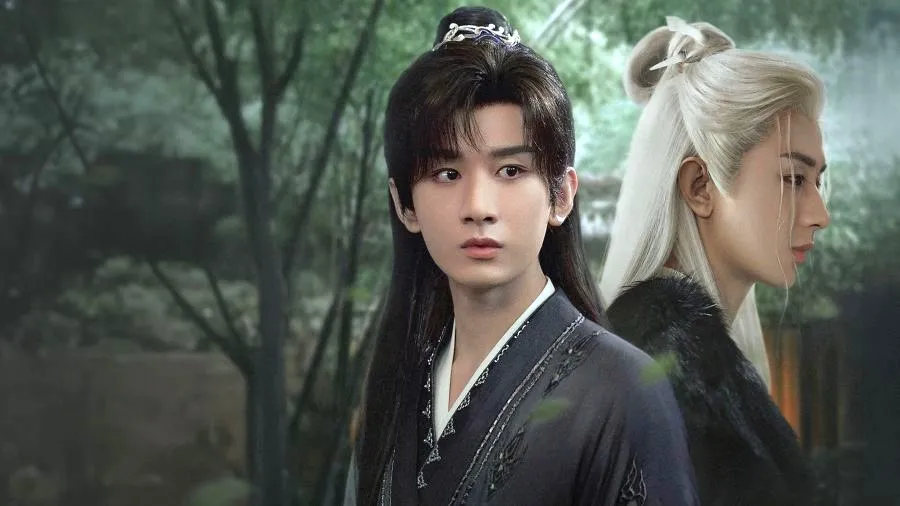
The Journey of Legend Poster - Courtesy of Tencent Video

|
DetailsRATING: (6.5/10)
NATIVE TITLE: 赴山海 – Fù shānhǎi YEAR: 2025 EPISODES: 40 DURATION: 45’ DIRECTOR: Ren Hai Tao, Lin Feng SCREENWRITER: Liu Fang, Li Hui Min, Wang Wei, Chen Qun Xing, Liu Lin Qing, Hai Shan, Jennie Park ORIGINAL CREATOR: Wen Rui An (神州奇侠 – Heroes of the Divine Land) RESPECTED CLICHÉS: 1 – 2 – 3 – 4 – 5 – 6 – 10 |


IN A NUTSHELL
- What to expect: The Journey of Legend is a journey into the jianghu that takes its cue from a great classic of contemporary wuxia literature, but ends up falling into the trap of excessive modernization. In an attempt to update the story, the screenwriters transform it into yet another tale of transmigration where the protagonist is drawn into the novel, forced to follow the directives of a bossy "system" that guides him through a universe structured like a video game, imposing him rigid rules. The result is a visually spectacular wuxia, that is fragile in every other respect, particularly the romantic one, with a protagonist whose excessive emotionality ends up accentuating the weaknesses of a writing that is anything but "legendary."
- Strengths: the respect for wuxia elements, the spectacular fight scenes, the engaging soundtrack.
- Weaknesses: the slow narrative pace, the exaggerated emotionality, the open ending.
- Recommended if you like: Cheng Yi doing acrobatics and aerial combat, classic wuxia with little romance, stories with an element of transmigration, heroic plots with a hint of mystery.
- Would I rewatch it? Honestly, no.
Read on to get to the heart of the criticism of this drama.
In The Journey of Legend, Cheng Yi returns to the hero's role, confirming his ability to balance action, emotion, and pathos. In this series, he plays Xiao Qiu Shui, a young and tormented protagonist, driven to fight by a thirst for justice and the weight of destiny, on a journey that tests not only his strength, but also his humanity.
In this drama review of The Journey of Legend, after watching all episodes, I will try to understand whether the series truly lived up to the promises made in its promotional campaign, analyzing not only the plot and characters, but also its impact on audiences and the production choices that made it one of the most talked-about titles of 2025.
Plot
Xiao Ming Ming is a dissatisfied ghostwriter and a fan of wuxia novels.
One day, while working on a new version of the classic 神州奇侠 (The Heroes of the Divine Land) on the Demon Codex platform, he is drawn into the story and assumes the identity of Xiao Qiu Shui, third son of the Xiao family and a member of the Huanhua martial arts sect.
Qiu Shui is a skilled swordsman and secretly performs good deeds alongside his friends Zuo Chu Chao Ran, Deng Yu Han, and Tang Rou, but to everyone he is the indolent third son of the esteemed master Xiao Xi Lou, known for leading the Daxi martial arts sects against the enemies of the Northern Wilds.
Knowing the novel's plot, Xiao Ming Ming wants to prevent the Xiao family from being exterminated for possessing the Hero's Seal, an artifact said to contain a highly advanced martial arts manual. However, the Demon Codex prevents him from doing so, forcing him to fight for the title of sect leader.
To complete the mission and change history, Xiao Qiu Shui will face dangerous challenges and confront hidden enemies in a world where reality and fiction seem dangerously intertwined and the distinction between good and evil is not always so obvious.
On his heroic journey, Xiao Qiu Shui will be supported by the allies he meets along the way and by the most famous masters of Daxi, who will teach him the true values of the jianghu, passing on their knowledge and guiding him in the fight against his fearsome adversaries.
"Broken swords can be remade and wilting flowers can bloom.
It’s never too late to start over."

The Journey of Legend Drama Review (No Spoilers)
The Journey of Legend was one of the most anticipated dramas of 2025 months before its release. The mere news of Cheng Yi's casting had put the project in the spotlight and fueled audience expectations. The first official photos from the set and the trailers gradually released by streaming platforms contributed to an almost feverish climate of anticipation: the aesthetics, settings, and battle sequences shown in the promotional clips convinced many fans that the drama could further raise the bar compared to Cheng Yi's previous titles, including Love and Redemption, Immortal Samsara, and the highly acclaimed Mysterious Lotus Casebook.
After its broadcast, however, the drama proved far from the promises and expectations created by its massive promotional campaign, attracting criticism not only for its production but also for its actors and crew.
One incident in particular quickly made the rounds on Chinese social media, immediately contributing to a negative perception of the series. Some viewers noticed a glaring editing error in episode 14: during a dramatic scene, Cheng Yi is visibly clutching a script, complete with the unmistakable blue underlining that highlights an actor's key lines.
The image quickly went viral, sparking a wave of irony and criticism for what many called a blooper that was mistakenly included in the final cut. Some even attacked Cheng Yi for what they deemed unprofessional behavior, because holding the script during filming would be tantamount to admitting that he hadn't memorized all the lines properly.
The hashtag related to the incident quickly trended, accompanied by comments questioning the overall quality of the drama, pointing out poor special effects and poorly crafted sets, further undermining the credibility of what should have been one of the season's flagship series.
Plot and Narrative Pace
First of all, it's worth noting that the plot is based on the famous classic wuxia novel 神州奇侠 (The Heroes of the Divine Land) by Wen Rui An. The plot, however, was almost completely overturned by the screenwriters, who decided to modernize it, turning it into yet another story of transmigration. This didn't contribute to making the narrative more engaging; rather, it seemed to have added even more complexity to an already convoluted exposition and made the numerous twists even more unsettling, but not always in a positive sense.
The story is full of melodramatic moments, which the narrative dwells on almost obsessively, detracting from the melodrama-like nature of the original novel and making a 45-minute episode feel like three hours.
The plot moves slowly partly because, to progress, the protagonist is required to defeat a series of enemies and face a series of video game-like challenges, making the narrative fragmented and the secondary plots disjointed.
The political intrigue subplot that serves as a sort of thread throughout Xiao Qui Shui's adventures is overused and remains hidden for most of the drama, so much so that it seems inserted solely for the purpose of inventing a (useless) connection between Daxi and modern reality.
Furthermore, as in many other "serious" dramas, the writers failed to properly balance comedy with drama, making the funny scenes seem out of place and out of context, ultimately resulting in them becoming awkward.

Characters and Love Story
The character development, especially the secondary ones, is sometimes superficial, almost sacrificed to the need to give more space to the protagonist. The story revolves almost entirely around Xiao Qiu Shui, relegating the other characters, especially the female ones, to mere supporting roles. One of the main examples is Xiao Xue Yu, played by the splendid Gulnezer Bextiyar, who, despite being touted as one of the drama's main protagonists, appears for a brief time and in a rather modest role, so much so that many wonder why she was cast in the series.
Moments of camaraderie between the protagonist and his friends and siblings are extremely rare and are often conveyed by flashbacks in which the protagonist recalls carefree moments spent with his family or his fellow adventurers. This is insufficient to engage the viewer in the story's relational dynamics, giving the impression that the bonds emerging over the course of the narrative are more affirmed than actually existing.
The screenplay also features some of the classic clichés of period dramas, such as endless misunderstandings and extreme sacrifice for the sake of loved ones, which make it at times irritating to watch.
The romance is very nuanced and the love stories inconsistent. The plot, in fact, introduces a series of romantic moments that, however, are never properly developed by the writers and seem inserted completely at random to spice up the plot: there are a lot of glances, gestures, and conversations between the ML and FL left unfinished, which never get to the point.
The vague love storyline and the only hinted-at romantic relationships left me skeptical, as I couldn't figure out whether this inconsistency was due to the fact that the original novel lacked romance, and therefore the writers found it difficult to insert an entire piece of new story into an already complete work, or whether they simply couldn't do better.
Cast
As for the cast of The Journey of Legend, the choice of actors seemed generally consistent with the characters, but not even the solidity of their performances could lift a series hampered by a slow and confusing plot.
Cheng Yi undoubtedly stands out in the fight scenes, executed with great precision and impressive screen presence; however, his portrayal of the lively Xiao Qiu Shui occasionally lacks spontaneity and incisiveness, only truly convincing when he plays the more measured and introspective Li Shen Zhou, a role that seems to me to suit him much better.
Edward Zhang, on the other hand, is much more natural and immediate, his expressiveness emerging forcefully, confirming the strong momentum already glimpsed in other works such as The Immortal Ascension and New Life Begins.
Among the most pleasant surprises is the emerging talent Xu Zhen Xuan: while still showing some uncertainty, he manages to bring Liu Sui Feng to life in a surprisingly engaging way, making him one of the most memorable characters.
On the female side, however, no performance truly stands out, although the young Liu Meng Rui offers an overall admirable performance, giving her Song Ming Zhu a human and believable dimension.
As is often the case, it's the veterans who provide the most solidity: Qiu Xin Zhi and Ji Chen manage to imbue their characters with the ambiguity and ruthlessness necessary to make them convincing antagonists.
Finally, a special mention goes to Li Jun Yi, who left a great impression on me and whom I had already appreciated in Arsenal Military Academy, confirming himself here as an interesting presence to keep an eye on.
Visual Aspects and Soundtrack
On a technical level, despite the visual impact, some editing and cinematography choices ended up being flawed, detracting from the atmosphere and making certain scenes less engaging than the narrative would have required. The direction was uneven, alternating between sophisticated shots and scenes where the green screen was evident and the shots were poorly cut. The settings seemed, at times, very artificial, so much so that a large portion of the audience wondered whether the final product was worth the high initial investment.
The costumes and hair ornaments are aesthetically pleasing, but they seem "excessive" and unsuitable for a wuxia: many use light, transparent fabrics, have bulky sleeves and capes, and are full of frills, flowers, and appliques—all characteristics that make them uncomfortable for combat and make them seem more suitable for a xianxia or a xuanhuan.
I do, however, applaud the martial arts choreographers, who were among the few production staff to create something truly memorable within a work with few strengths and many flaws.
The soundtrack is sometimes used too insistently, almost overwhelming the emotions rather than accompanying them (the karaoke in the final episode killed me). The music is nevertheless evocative, with its alternation of heroic, comradely, and motivating melodies, like the main theme 风将起 (The Wind Will Rise) or the song 赴红尘 (Travel to the Mortal World) performed by Cheng Yi, and melancholic pieces such as 浣花落 (Blossoms Fall).

WARNING!
FROM THIS POINT ON THE SPOILER SECTION BEGINS. DO NOT CONTINUE IF YOU DO NOT WANT TO KNOW ALL THE DETAILS OF THE DRAMA.
The Journey of Legend Drama Review (Spoilers)
What Works
Worldbuilding and Fight Scenes
Among the few elements that truly stand out is the fact that The Journey of Legend at least partially captures the authentic charm of the jianghu, likely because its plot draws directly from one of the most famous modern wuxia sagas.
The story incorporates several archetypes of the genre: the rivalries and alliances between martial arts sects, the mysteries surrounding their occult activities and the plans orchestrated by their leaders to dominate other organizations, the friendships and enmities between martial artists and the motivations that fuel them, all the way to the secret moves and fighting techniques passed down from generation to generation through hidden manuals, capable of sparking real power struggles — as happens with the Book of Oblivion in this drama. In this sense, the worldbuilding and the resulting web of intrigue are undoubtedly the most interesting aspect of the series: while at times nuanced and not always adequately explored, they are the elements that bring the series closest to the spirit of a true wuxia tale.
Alongside this narrative dimension, the martial arts dimension also manages to carve out a compelling space. Fights are visually satisfying and engaging, thanks to well-constructed choreography and a use of wire maneuvers that, while spectacular, maintains a certain internal credibility. Cheng Yi proves particularly at ease in this type of context, once again demonstrating his experience even in the most complex and acrobatic action scenes. At the same time, the rest of the cast also holds its own, with special mention for veterans like Qiu Xin Zhi and Zhang Bo Nan, who contribute greater solidity and credibility to the fight sequences.
What Doesn't Work
The Narrative Pace
The narrative is characterized by a highly uneven pace, marked by subplots left hanging and issues resolved too easily, which create a bothersome alternation in the background of an often slow and tedious narrative.
The first episodes are entirely dedicated to Xiao Qiu Shui's attempts to become the leader of the Huanhua sect to prevent the massacre of the Xiao family, with the inevitable monotony resulting from the fact that the protagonist's entire effort is focused on a single goal, while everything else remains secondary.
Subsequently, the siege of the Sword Hermitage by the Quanli Gang and the protagonist's desperate search for help introduce moments of intense emotional tension, built, however, on misunderstandings between the brothers, as exasperated as they are predictable, that made it difficult for me to finish episodes 13, 14, and 15. These are classic dynamics inserted to artificially slow down the narrative, prevent a rapid resolution of the conflict, and forcefully lead to the tragedy that should motivate the protagonist to work to change the course of events.
The unexpected revelations — from the true identities of Li Shen Zhou, Heavenly King Zhu, and Xiao Xue Yu, to that of the killer of Xiao Xi Lou and Sun Hui Shan — accumulate in large numbers, forcing themselves into the narrative and giving the impression of a story that thrives on shock rather than coherence.
The narrative is finally marked by sudden shifts in tone, moving, in the space of a few seconds, from tragedy to comedy. These sudden changes in register generate confusion in the viewer and make some scenes unintentionally paradoxical and unlikely rather than funny, such as the meeting between Qiu Nan Gu, Tie Xin Yue and Xiao Qiu Shui at the Ferry Inn (episode 11) or the one between Xiao Qiu Shui and the four bandits (episode 16).

The inconsistencies related to transmigration
The screenplay seems to overindulge: it starts out as a wuxia drama about transmigration and ends up devolving into a sort of ambiguous spy story, getting lost in unfinished subplots and poorly developed ideas.
The transmigration, in particular, creates several logical flaws. Despite the premise, the protagonist slips too easily into the role of the Xiao family's third son, almost forgetting that he's in a fictional world. Furthermore, this is the first transmigration drama in which I see the protagonist also acquire the memories of the character he's replacing: an all-too-convenient and cleverly employed device to justify his extreme attachment to the novel's characters without the need for further explanation from the screenwriters.
Even the missions assigned to Xiao Ming Ming by the Demon Codex — such as becoming a sect leader or reforming Liu Sui Feng — are absurdly complex and effectively useless to the plot, as they are accomplished almost automatically over the course of the narrative, without the protagonist having to invest significant effort. For example, Xiao Qiu Shui becomes a sect leader simply by acquiring the Changge Sword, the location of which his father told him in the letter/will accidentally delivered to him by Liang Dou. Similarly, Liu Sui Feng "redeems" himself after discovering that his gang leader's true goal was to unite the Wulin to defend Daxi from the invasion of the Northern Wilds.
Adding to the confusion is the way Xiao Ming Ming comes to openly defy the Demon Codex, bending the "rules" of the fictional world to his liking rather than trying to circumvent them. Initially, the system forces him to strictly adhere to the plot and not reveal any information to the other characters that might alter its course. To enforce this rule, the AI even equips him with a device — the Boiling Blood Cocoon — capable of inflicting excruciating pain if he attempts to share details about the story's progression. However, after a few episodes, this element disappears completely, as if it had never existed: when the protagonist later reveals plot details to San Cai, he suffers no consequences, in clear contradiction to what was previously established.
Finally, what were the chances that after having the King of Swords' meridians severed, being struck by the latter's destructive energy, being fatally poisoned by Liu Sui Feng, and taking the Supreme Elixir Yang Pill, Xiao Qiu Shui would be able to find someone who could restore his meridians and be bitten by a white snake that could stabilize his internal energy, granting him the power equivalent of sixty years of cultivation?
Characterization and Romantic Relationships
The characters are generally poorly developed, and their relationships are only vaguely sketched, making it seem as if they were all introduced solely to assist the protagonist. No scenes of daily life are ever shown between Xiao Qiu Shui and his family, nor between him and his friends. Consequently, the secondary characters are introduced almost exclusively through the narrative or through flimsy flashbacks that are offered to suggest a modicum of camaraderie between the siblings.
Some roles, such as Xiao Xue Yu, Yan Kuang Tu, or Li Shen Zhou, could have benefited from more space, but are eliminated or sidelined shortly after their introduction; others, however, receive far too much screen time, ending up constantly repeating the same lines for the sole purpose of padding the narrative—such as Noble Lady Wu, Tang Fang's father, Xiao Yi Ren, and Xiao Kai Yan. Meanwhile, new characters are introduced at a rapid pace, only to be quickly forgotten or just as easily killed, contributing to a general sense of narrative disarray.
The protagonist, for his part, suffers from an inconsistent, almost bipolar characterization, oscillating between exaggerated sentimentality and unjustified heroism.
In the very first episodes, he behaves like a modern person suddenly catapulted into a fantasy dimension: he is prudent, cautious, and oriented toward self-preservation. However, as soon as he discovers that he can save the Xiao family's lives by obtaining the title of sect leader, he seems to suddenly transform, as if possessed by the "spirit of the hero," and begins to do increasingly senseless things, eventually getting himself injured, poisoned, having his meridians severed, and throwing himself headlong into missions with an uncertain outcome just to change the story's ending.
This turn of events, however, is not supported by adequate psychological development: the screenplay doesn't even offer a moment of reflection that allows us to understand how and why Xiao Ming Ming comes to consider the Xiaos his family and decides to protect their lives and the honor of the Huanhua sect at all costs, despite finding himself in a potentially lethal world governed by power dynamics he doesn't understand (also because he himself admits he doesn't fully remember the plot of the original novel).
From this perspective, his reaction to the death of his "parents" also seems implausible: while a certain emotional involvement is understandable, the intensity with which he grieves — despite knowing he isn't really their son — seems excessive at times, bordering on the ridiculous.
The screenplay also attributes to him unjustifiably advanced martial arts skills, which he is able to utilize without difficulty, despite being a modern boy who has presumably never practiced martial arts or is familiar with ancient fighting techniques.
Even more contrived is the speed with which he acquires new skills: in episode 13, for example, Xiao Qiu Shui learns a sword technique in record time to escape the underground cave where he was imprisoned by the King of Swords. Added to this is the fact that, on several occasions, he receives internal energy or martial skills from various Daxi masters completely randomly and with weak motivations — as in the case of the transfer of the eight masters' techniques in episode 27, justified solely by the fact that "this also happened in the original novel."
The romance, as already mentioned, remains extremely nuanced, to the point that the relationships between the characters become perceptible only when explicitly stated. This is the case, for example, of the love affair between Zuo Chu Chao Ran and Qu Mu Shuang or that between Xiao Kai Yan and Xiao Xue Yu, dynamics that do not emerge organically from the narrative but are simply stated, without any real development.
The relationship between Xiao Qiu Shui and Tang Fang is no exception: here too we are faced with a vague and inconsistent relationship, lacking structure and real emotional involvement. Their bond appears so fragile that it's hard not to think—without fear of contradiction—that a possible love story between the protagonist and Liu Sui Feng would have been decidedly more intense and passionate.
What makes everything even more absurd is the very premise on which the relationship between Tang Fang and Qiu Shui is based: the idea that it all stems from her vow that any man who glimpsed even a part of her naked body would have to die or marry her seems so forced that it seriously calls into question the screenwriters' narrative skills.
Ending
Starting in episode 29, the writers suddenly decide that everything we've seen so far requires a further level of understanding, so they introduce a new, unnecessary subplot. After reading the word "Reset" on the palm of her deceased mother's hand, Xiao Ming Ming recovers memories of her life in the real world: she discovers that her transmigration into Xiao Qiu Shui's body followed a fight with her boss, who was caught selling classified military photographs to foreign spies. This addition, rather than enriching the narrative, contributes to making it even more confusing and convoluted.
This development leads to the finale, which—as is obligatory—takes place in the present, but still fails to redeem the drama from the critical issues that have emerged throughout the narrative. The conviction of Ming Ming's leader for revealing state secrets, followed by his sudden death in the hospital before even serving his sentence, can hardly be interpreted as a satisfying conclusion.
The epilogue for the protagonist makes the picture even more bitter: Xiao Qiu Shui dies after irreparably damaging his meridians and exhausting his life force using the fifteenth-level martial arts techniques contained in the Book of Oblivion against Xiao Kai Yan. His alter ego Xiao Ming Ming, however, is still in a coma** in the real world and imagines himself wandering aimlessly through the streets of jianghu. This ending, far from coherently closing the narrative circle, leaves the feeling of a tale dissolving without finding a true conclusion.

Characters and Cast
Primary Characters
Xiao Qiu Shui/Xiao Ming Ming (Cheng Yi) third son of the Huanhua Sect (Pure Flower Sect). Known to all as the indolent and spoiled son of master Xiao Xi Lou, he is a skilled swordsman who secretly performs good deeds with his group of friends and is one of the founders of the Shenzhou Alliance. In modern reality, Xiao Ming Ming is a dissatisfied ghostwriter who writes wuxia novels that his boss systematically steals, without ever giving him credit.
Tang Fang (Eleanor Lee) Young Mistress of the Tang Clan, a member of the Tang Sect and Tang Rou’s older sister. Initially intent on obtaining the Book of Oblivion to cure her ailing father, she befriends Xiao Qiu Shui and aids him in his fight against the enemies of the North Wasteland.
Liu Sui Feng (Xu Zhen Xuan) deputy leader of the Quanli Gang (Power Gang). After being poisoned by the Purple Phoenix, he steals the identity of Feng Lang, a character created by Xiao Ming Ming, thus gaining his trust and managing to infiltrate the Xiao Mansion. In reality, he is the Young Lord of the Herbal Valley of Jinzhong, the sole survivor of the extermination perpetrated by the martial sects against his sect over suspicions of having supplied the Xingjun Pill to the Wastelanders. After being rescued by Li Chen Zhou, he welcomed him into the Quanli Gang.
Song Ming Zhu (Liu Meng Rui) known as the Red Phoenix, is a member of the Quanli Gang and Liu Sui Feng’s attendant.
Li Chen Zhou (Cheng Yi) leader of the Quanli Gang, bears a striking resemblance to Xiao Qui Shui. In reality, he is the secret brother of the Emperor of Daxi who wants to prevent the latter from removing the military garrison at Xianren Pass to prevent an invasion by the North Wasteland.
Supporting Characters
Huanhua Sect
Xiao Xi Lou (Ding Yong Dai) head of the Xiao family and leader of the Huanhua Sect of Jinzhong, and the father of Xiao Qiu Shui. He is an esteemed martial artist who once led the wulin against the enemies of the North Wasteland.
Sun Hui Shan (Hu Ke) mistress of the Xiao family, mother of Xiao Qiu Shui, and a member of the Huanhua Sect. She is very fond of Qiu Shui and spoils him more than her other children. In modern reality, she is the late mother of Xiao Ming Ming.
Xiao Yi Ren (Zhang Junning) eldest son of Xiao Xi Lou and the older brother of Xiao Qiu Shui. He is serious and ambitious and hopes to become an honored and respected sect leader like his father.
Xiao Kai Yan (Edward Zhang) second son of Xiao Xi Lou and the older brother of Xiao Qiu Shui. He is calm and diplomatic and always follows Yi Ren’s instructions, but within himself he harbors a never-ending resentment and a secret devotion to Xue Yu.
Xiao Xue Yu/Yuan Er (Gulnezer Bextiyar) Xiao Qiu Shui’s half-sister, adopted as a child by Xiao Xi Lou. In reality, she is Yan Kuang Tu’s younger sister, who was kidnapped by the Jiang brothers to obtain the Hero Token, but who subsequently disappeared.
Qiu Yuan (Liu Xu) butler of the Xiao Mansion and a spy for Liu Sui Feng. He poisons the water in the Sword Retreat’s well during the Quanli Gang’s siege.
Quanli Gang
Zhao Shi Rong (Fing Xiao Ying) wife of Li Chen Zhou, is a skilled martial artist, and her secret technique is the Flowing Cloud Sleeve Technique.
Gao Si Lan (Cao Xi Yue) known as the Purple Phoenix, is a member of the Quanli Gang and a subordinate of Liu Sui Feng. On the orders of the Sword King, she attempts to poison her boss during the raid on the Changle (Everjoy) Escort Agency, which Noble Lady Wu had entrusted to escort her to her son.
Mo Yan Xia (Chen Yu Qi) known as the White-Robed Guanyin, is the leader of the Hengshan Sect. In reality, she is the White Phoenix of the Quanli Gang.
Qu Han Shan (Qiu Xin Zhi) known as the Pillar of Justice of Guangling, is one of the Great Three of Guangling. In reality, he is the Sword King, one of the Eight Kings of the Quanli Gang, and Liu Sui Feng’s bitter rival.
Kang Chu Yu (Ji Chen) known as the Sun Swordsman, a friend of Xiao Xi Lou. In reality, he is the Nameless Demon of the Quanli Gang, one of the Sword King’s subordinates.
Kang Jie Sheng (Li Jun Chen) son of Kang Chu Yu, is a compulsive gambler. When he was tasked with escorting disaster relief funds, he lost them in gambling, forcing his father to cover the shortfall with the family fortune.
Zu Jin Dian (Pan Xu Chuan) known as the Fire King, is one of the Eight Kings of the Quanli Gang.
Ju Xiu Shan (Yang Cheng Yi) known as the Waterway King, is one of the Eight Kings of the Quanli Gang.
Mo Fei Yuan (Gao Yu Qing) known as the Medicine King, is one of the Eight Kings of the Quanli Gang. At Xiao Qiu Shui’s request, he will try to cure Tang Feng’s father.
Deng Yu Ping (Huang Cheng) known as the Mortal King, is one of the Eight Kings of the Quanli Gang.
The Elder (Liu Bei Bo) known as the Snake King, is one of the Eight Kings of the Quanli Gang.
Chi Li (Yuan Yi) known as the Snake Maiden, is the disciple of the Snake King.
Yin Gong (Li Xiong) known as the Ghost King, is one of the Eight Kings of the Quanli Gang.
Zhao Qiu Xi (Wang Yi Cheng) known as the Blade King, is one of the Eight Kings of the Quanli Gang.
Fu Tian Yi (He Gang) known as the Iron Demon, is one of the Nineteen Demons of the Quanli Gang. He is a subordinate of the Waterway King and the owner of the Jinyin Bank in Jihui, which appears to have connections with the Wastelanders.
Liu Qian Bian (Chen Zhi Hui) known as the Shadow Demon, is one of the Nineteen Demons of the Quanli Gang and a subordinate of the Sword King.
Kong Yan Qin (Li Chang) known as the Ultimate Sword Demon, is one of the Nineteen Demons of the Quanli Gang.
Hua Gu Fen (Shi Heng Yi) known as the child-like Poison Demon, is one of the Nineteen Demons of the Quanli Gang.
Sha Qian Deng (Song Shu Xin) known as the Wolf Demon of the Flying Daggers, is one of the Nineteen Demons of the Quanli Gang.
Xin Hu Qiu (Han Bo) known as the Annihilator Demon, is one of the Nineteen Demons of the Quanli Gang, one of the subordinates of the Sword King.
Yan Gui Gui (Zhong Shang Yue | Han Meng Wu) known as the Iron Cavalry Demon, is one of the Nineteen Demons of the Quanli Gang.
Zuo Chang Sheng (Chen Guo Liang) known as the First Cave Demon, is one of the Nineteen Demons of the Quanli Gang, one of the subordinates of the Sword King.
Yu Ku Yu (Yang Chun Rui) known as the Plague Demon, is one of the Nineteen Demons of the Quanli Gang.
Sheng Jiang Bei (Huang You Tian) known as the Fist Demon, is one of the Nineteen Demons of the Quanli Gang.
Sun Ren Tu (Wang Kai) known as the Flying Blade Demon, is one of the Nineteen Demons of the Quanli Gang.
Shenzhou Alliance
Zuo Chu Chao Ran/Li Chao Fan (Cheng Xiang) grappling master and a friend of Xiao Qiu Shui. He is one of the founders of the Shenzhou Alliance.
Deng Yu Han/Deng Zhe (Li Jun Yi) son of the Hailin Sect leader and a friend of Xiao Qiu Shui. He is one of the founders of the Shenzhou Alliance.
Tang Rou/Tang Xu (Zhao Hua Wei) heir to the Tang Sect and a friend of Xiao Qiu Shui. His sect is expert in the use of hidden weapons, and his is the Meteor Needle. He is one of the founders of the Shenzhou Alliance.
Qu Mu Shuang (Lin Jia Hui) First Young Mistress of the Qu family, daughter of Qu Jian Chi.
Qu Min Miao (Chen Xi Xi) Second Young Mistress of the Qu family, daughter of Qu Jian Chi.
Qiu Nan Gu (Wen Jing Yuan) known as Iron Mouth, and Tie Xin Yue (Zhang He), known as the Fart King, are the owners of the Ferry Inn but want to join the Quanli Gang, so they try to lure Xiao Qiu Shui into a trap, kidnapping Tang Fang and handing her over to the Sword King. They eventually become friends with the boy and join the Shenzhou Alliance.
Chang Wu Qi (Sun Li Bin) Yu Wen Dong (Cheng Rang), Jin Bei Wang (Xu Chang Chao), and Meng Dong Lin (Cheng Long) four punks whom Xiao Qiu Shui encounters after escaping Liu Sui Feng. They are kidnapped by Liu Sui Feng, but Xiao Qiu Shui helps them escape so they become his followers and join the Shenzhou Alliance.
San Cai/Li Cai (Wei Wei) music-obsessed swordsman created by Xiao Ming Ming by combining three characters from the original novel and a spy within the Quanli Gang. He helps Xiao Qiu Shui gain the trust of the Sword King and kill him. In modern times, he is Li Cai, Xiao Ming Ming’s friend and colleague.
Tang Sect
Tang Yao Shun (He Zhong Hua) leader of the Jinzhong Tang Sect and father of Tang Fang and Tang Rou. After being seriously injured during the battle against Yan Kuang Tu at Mount Wuxing, he fears he may lose his title as sect leader, so he seeks the Book of Oblivion to heal himself. He was a disciple of Elder Tuo Shen and learned from him the Marrow-Shattering Finger technique, which killed Xiao Xi Luo and Sun Hui Shan.
Tang Song (Lin Ze Hui) Young Master of the third branch of the Tang Clan, cousin of Tang Fang and her betrothed. He is first an ally of the Qianli Gang and later of Heavenly King Zhu.
Tang Qing (Zhang Yi Ge) Young Mistress of the third branch of the Tang Clan, sister of Tang Song and cousin of Tang Fang. She is first an ally of the Qianli Gang and later of Heavenly King Zhu.
Nan Gong Sect
Nan Gong Han (Zhang Ba Bo) heir of the Nan Gong family. He is lustful and violent, but he will obtain Xue Yu’s hand in marriage from Yi Ren in exchange for his help in reestablishing the Huanhua Sect. To prevent his sister from suffering, Xiao Qiu Shui will have the wedding annulled.
Nan Gong Wu Shang (Jin Cheng) Second Young Master of the Nan Gong family. He is devious and opportunistic, and despite his previous ties to the Huanhua Sect, he does not hesitate to abandon the Xiao family to ally himself first with Tang Song and then with Heavenly King Zhu.
Nan Gong Xiao Yi (Xuai Yan) Young Mistress of the Nan Gong family who has always been in love with Yi Ren, who will remain faithful to him even after the fall of the Huanhua Sect.
Wudan Sect
Tai Chan (Guo Jun) leader of the Wudan Sect, one of the three martial arts sects responsible for the creation of the Hero Token. He masters a powerful secret sword technique, but is killed by the traitor Long Hu at the Sword Retreat while attempting to thwart Liu Sui Feng and his men.
Da Feng (Dong Yong) new leader of the Wudan Sect, succeeding Tai Chan after his death.
Jiu Sheng (Guo Jing Bo) Jiu Si (Shen Kai), and Jiu Yi (Zhao Shu Guang), known as the Three Jiu Cultivators, are the three greatest masters of the Wudan Sect.
Tie Qi (Li Pei Ze) and Yin Ping (Ye Peng) leaders of the Zi Xiao Palace of the Wudan Sect. They die in the clash with the Twin Swordsmen and the Exotic Demons during the Emei Sect Golden Summit and pass on their fighting techniques to Xiao Qiu Shui.
Shaolin Monk
Tian Zheng (Shan Bao Ping) abbot of the Shaolin monks, one of the three martial arts sects responsible for the creation of the Hero Token. He masters the Yang energy, which he harnesses in the Wither and Thrive Finger technique. He is killed by the traitor Long Hu at the Sword Retreat while attempting to thwart Liu Sui Feng and his men.
Tian Xiang (Zhang Hai Feng) new abbot of the Shaolin monks who succeeds Tian Zheng after the latter’s death.
Long Hu (Zhang Qiu Yang) Shaolin monk, senior disciple of Tian Zheng. He is actually a spy for the Quanli Gang working for Liu Sui Feng and killing Tai Chan and Tian Zheng on his orders.
Fan Hua (Shi Yan Pei) and Mu Ye (Long Yuan Hua) leaders of the Shaolin Sect’s hall of discipline, die in the clash with the Twin Swordsmen and the Exotic Demons during the Emei Sect Golden Summit and pass on their fighting techniques to Xiao Qiu Shui.
Emei Sect
Zhi Chen (Yang Li Jing) abbess of the Emei Sect, one of the three martial arts sects responsible for the creation of the Hero Token. In the past, thanks to her medical knowledge, she saved Yuan Er’s life. She will support Xiao Qiu Shui during the Emei Sect Golden Summit.
Other Wulin Characters
Yan Kuang Tu (Zhang Zhi Lin) Supreme Master of the Martial World. Thirteen years earlier, he had entered the North Wasteland’s army camp alone, causing panic and was awarded the Hero Token, created by the Three Martial Sects to reward anyone who stopped the advance of the Wastelanders. However, her arrogance was disliked by the wulin, and after an ambush by martial sects on Mount Wuxing, she disappeared without a trace.
Noble Lady Wu (Cao Cui Fen) mother of General Wu Jie. She was tasked by Yan Kuang Tu with guarding the Hero Token, a highly coveted artifact in the martial world as it is said to contain the manual of secret techniques known as the Book of Oblivion. For this reason, she is constantly hunted and forced to take refuge with the Xiao to avoid falling victim to enemy ambushes.
Zhang Lin Yi (Jiang Zhan Hao) known as the Yin-Yang Swordsman, is the bodyguard of Noble Lady Wu.
Wu Jia (Lu Yong) general who defends the Xianren Pass from the Wastelanders and son of Noble Lady Wu. The Emperor wishes to recall him to the capital following the opening of peace negotiations with the North Wasteland, but he fears an invasion and tries to resist the decree.
Jiang Yue (Zhu Rong Rong) Wu Jia’s deputy general. He leads the troops during the siege of Xianren Pass while General Wu is held prisoner by Heavenly King Zhu.
Yu Chi Qing (Zhang Chun Zhong) spy for the North Wasteland. He was tasked with stealing the Xingjun Pill formula from the Herbal Valley, but was discovered and forced to abandon the mission. He was then placed by the Sword King in an underground cave beneath his residence to frame Xiao Qiu Shui and discredit the Xiao family in the eyes of the other martial sects.
Helian Yan (Yin Ze Qiang) commander of the North Wasteland’s army.
Qu Jian Chi (Chen Qiu Guo) known as the Jade Swordsman, a friend of Xiao Xi Lou.
Meng Xiang Feng (Qian Yong Chen), Xiao Xi Lou’s shidi.
Zhu Xia Wu (Lu Song Yan) known as the Ironclad Constable of the Liushan Sect, is a friend of Xiao Xi Lou. In reality, Heavenly King Zhu is the leader of the Waterway Gang.
Feng Lang, known as the Rain Sword, is a disciple of the Ironclad Constable and Xiao Mian Mian’s lucky bag. Liu Sui Feng kills him at the Qunfang Hall and replaces him, gaining Xiao Qiu Shui’s trust.
Shao Liu Lei (Cheng Cheng) former subordinate of Heavenly King Zhu. During the battle with Yan Kuang Tu at Mount Wuxian, he was administered the Yang Pill of the Supreme Elixir, and since then, the excess Yang energy in his body has periodically tormented him. Yan Kuang Tu also entrusted him with another Yang Pill, which many are interested in, but which he intends to use to take revenge on Heavenly King Zhu, administering it treacherously.
Wan Li Ping Yuan (Zhang Xi Lai) Qian Li Gu Mei, and Bai Li Han Ting, known as the Three Foreign Kings of the North Wasteland, collaborate with Heavenly King Zhu to dethrone the Emperor of Daxi.
Liang Dou (Du Jun Ze) known as the Devourer of Crimson Clouds, is a highly respected figure in the Wuling but is also the Emperor’s brother.
Deng Qing Feng (Lu Xing Yu) leader of the Qianxi branch of the Hailin Sect and father of Deng Yu Han. He was a disciple of Elder Tuo Shen, from whom he learned the Marrow-Shattering Finger technique that killed Xiao Xi Luo and Sun Hui Shan. In reality, he was injured during the attack on the Herbal Valley and never recovered, so he allied himself with Heavenly King Zhu to avoid losing power.
Deng Yu Lan (Liu Man) older sister of Deng Yu Han and member of the Qianxi Hailin Sect.
Bai Dan Shu (Zhang Gong) known as the West Swordsman, forms the Twin Swordsmen duo with Lan Fang Qing. He dies in the clash with the Shaolin and Wudan Masters during the Emei Sect Golden Summit and passes on his fighting techniques to Xiao Qiu Shui.
Lan Fang Qing (Wang Jiu Sheng) known as the East Swordsman, forms the Twin Swordsmen duo with Bai Dan Shu. He dies in the clash with the Shaolin and Wudan Masters during the Emei Sect Golden Summit and passes his fighting techniques on to Xiao Qiu Shui.
Zhang Can Jin (Zhang Ji Kun) and Wan Sui Yu (Guo Xin), known as the Exotic Demons, die in the clash with the Shaolin and Wudan Masters during the Emei Sect Golden Summit and pass their fighting techniques on to Xiao Qiu Shui.
Gu Jun Shan (Zhang Bo Nan) known as the Divine Wanderer, is one of the Great Three of Guangling. He is killed by Qu Han Shan after he discovers his secret identity.
Du Yue Shan, leader of the Mengxiang Sect, is one of the Great Three of Guangling. He was imprisoned in an underground cave beneath Qu Han Shan’s residence and died there.
Fei Yu Qiao (Yu Qing Hui) head of the Fei family and leader of the Fei Sect, one of the Three Mystic Sects. He was a disciple of Elder Tuo Shen and learned from him the Marrow-Shattering Finger technique that killed Xiao Xi Luo and Sun Hui Shan. He is also an expert in the lost Thousand Faces Art, which allows him to perfectly assume the appearance of anyone.
Fei Dan Feng, deceased son of Fei Yu Qiao, was killed by his father five years earlier, while returning from a secret imperial mission to discover the true identity of the Heavenly King Zhu, with the Marrow-Shattering Finger technique because he was mistaken for Rou Shui, a subordinate of the Heavenly King.
Healer Dayin (Gu De Chao) abbot of the Beichuan Temple on Mount Yunxia, an expert in healing damaged meridians. He heals Xiao Qiu Shui after his meridians are severed by the Sword King.
Li Nan (Li Xin Ze) writer and Xiao Ming Ming’s employer. He systematically steals Ming Ming’s writings (his novel “Sect Leader II” is a copy of Ming Ming’s “Halfway Hero“) without ever giving him credit. Ming Ming discovers that he stole confidential photos from a military event on behalf of foreign governments and has an argument with him that culminates in a brawl.

Favorite Character: Liu Sui Fen
He is the only sensible, pragmatic, and coherent character in the entire story.
He is intelligent, resolute, and relentless, doggedly pursuing his goal of revenge, showing no mercy to anyone who stands in his way, including Xiao Qiu Shui.
At the same time, he is extremely loyal and willing to risk his life to repay his debts of gratitude, as when he decided to use himself as a guinea pig to practice the Tang Sect’s Secret Pulse-Restoring Art and save Li Chen Zhou.
When his sect was exterminated, Xiao Xi Lou naively handed him over to the Tang Sect, who turned him into a medicine slave on whom all the new herbal preparations developed by their healers were tested. The only person who showed him a shred of compassion was Tang Fang, to whom he grew very fond.
Despite his sad and painful past and his apparent ruthlessness, he has a hidden human side that prevents him from harming the reunited Tang Fang and her devoted attendant Song Ming Zhu, even when they thwart his plans.
His story unfolds much more complexly and intricately than that of any of the other characters, and the intensity of his feelings, whatever their nature, appears much more genuine than that of Xiao Qiu Shui and the other positive figures in the story.
In the end, he somewhat irrationally gives up his plan for revenge, presumably to respect the will of the deceased Li Chen Zhou to unite the wulin to defend Daxi from the enemy invasion of the Wastelanders.
Un-Favorite Character: Xiao Yi Ren
Not only is he stubborn, proud, and authoritarian, but he’s also so arrogant that he believes he’s the only one capable of reviving the Huanhua Sect, remaining shortsighted when all signs point to Qiu Shui as the best candidate.
He considers himself a master judge of people and believes he’s always right, ignoring the fact that he foolishly trusted Qu Han Shan, the Sword King of the Quanli Gang, the Diancang Sect, which once sold the Xingjun Pill to the Wastelanders, and his brother Kai Yan, who turned out to be his parents’ murderer and the architect of his sect’s downfall.
He believes that Qiu Shui constantly lies to him out of competitive spirit or to undermine his authority in front of others, and he is envious of his younger brother’s successes because he believes he doesn’t deserve all he’s achieved, having always been a spoiled and idle son.
He believes he is the only one who cares about his family’s fate and is obsessed with restoring the former glory of the Huanhua Sect, so much so that he is willing to make any compromise to do so, including marrying his sister to the despicable Nan Gong Hua or bowing to the blackmail of Heavenly King Zhu.
Eventually, after endless arguments and tirades against Xiao Qiu Shui, he realizes that his brother was right and sacrifices his life to defend him from Kai Yan in the fight to become the Leader of the Daxi Martial Alliance.
RECOMMENDED:
- WORD OF HONOR
- HEROES (2022)
- THE BLOOD OF YOUTH
- MISTERIOUS LOTUS CASEBOOK
- BLOOD RIVER
Thanks for reading this far!
I hope you enjoyed my article. If you like my work and want to support me, buy me a coffee ☕