
The Eternal Fragrance (2026): Does Originality Really Matter That Much? | Review & Ending
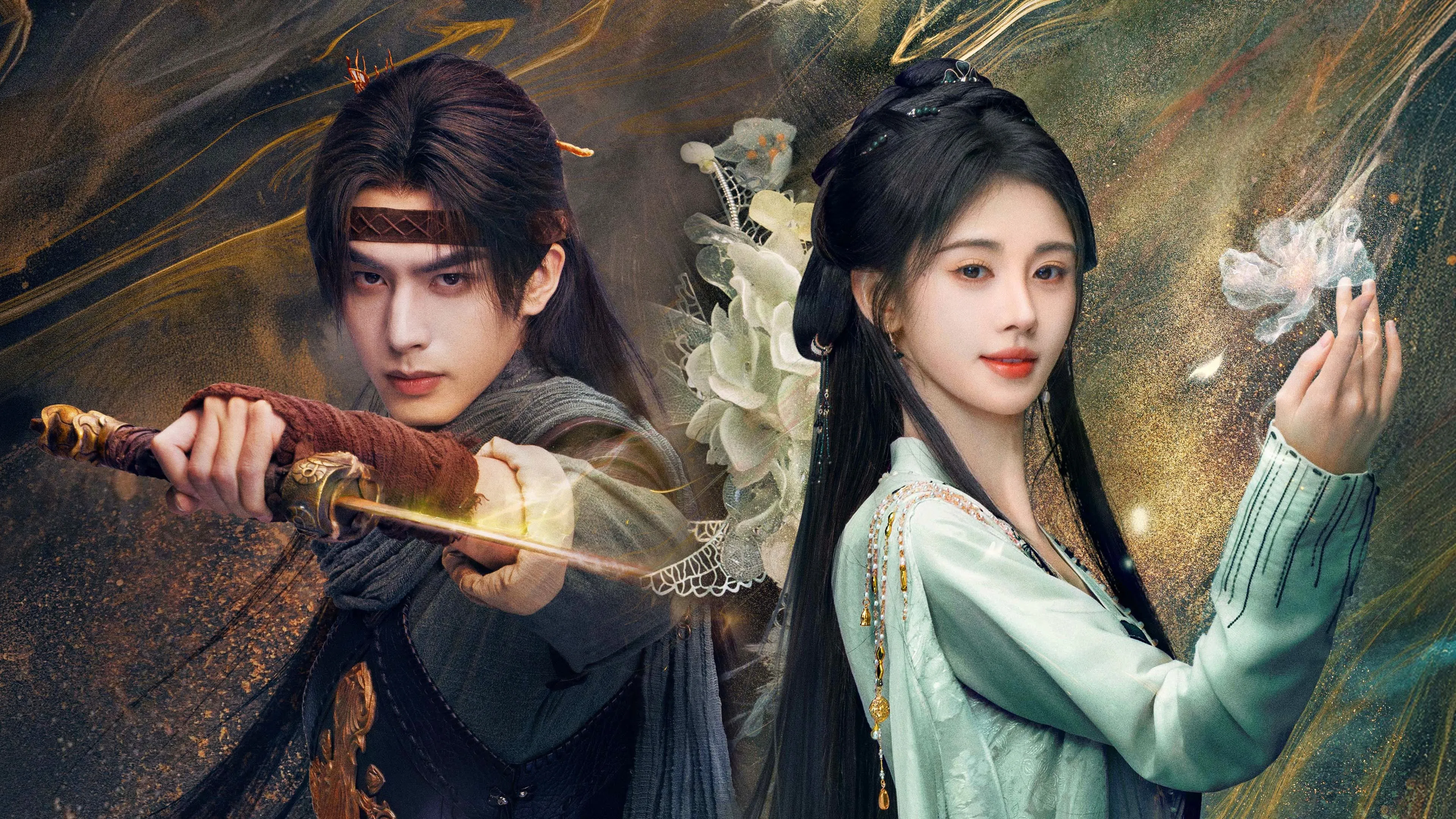
The Eternal Fragrance Poster - Courtesy of Youku

|
DetailsRATING: (7.5/10)
NATIVE TITLE: 千香 - Qiānxiāng YEAR: 2026 EPISODES: 33 DURATION: 45’ DIRECTOR: Ju Jue Liang SCREENWRITER: Shao Xiao Yi, Lei Jun, Wang Li ORIGINAL CREATOR: Shi Si Lang (千香百媚 - The Eternal Fragrance) RESPECTED CLICHÉS: 1 - 2 - 3 - 4 - 6 - 7 - 8 - 11 - 13 |


IN A NUTSHELL
Short on time? Here you’ll find the quick verdict, including the drama’s main strengths, weaknesses, and key features to help you decide if it’s right for you. For a more in-depth analysis, continue with the No Spoiler Review.
- What to expect: The Eternal Fragrance is a xianxia deeply rooted in the genre's canons, in which the mystery surrounding the protagonists' identities intertwines with spiritual cultivation and an impossible love, giving rise to a story that unfolds within patterns well-known to fans. Yet, despite rather conventional characterizations and a narrative structure built on widely recognizable archetypes, the drama manages to maintain interest thanks to a narrative structure that makes curiosity its main strength. The progressive unraveling of the mysteries is not simply a point of arrival, but becomes the driving force of the story, continually transforming the protagonists' present and making the viewer perceive that their destiny is perpetually evolving. It is precisely this constant sense of change that makes their journey exciting and more engaging than the initial premise might suggest.
- Strengths: the compelling storytelling, the turbulent love story between the leads, the CGI visual effects.
- Weaknesses: the archetypal characterization, the underdeveloped world-building, the script cuts.
- Recommended if you like: Song Wei Long and Ju Jing Yi, xianxia with very classical elements, impossible love stories between the leads, not excessively conflictual love triangles, stories of sacrifice.
- Would I rewatch it? Yes.
Read on to understand why this series convinced me so much.
The Eternal Fragrance is a drama that quietly captivates, inviting the viewer to be carried away by events and constantly fueling curiosity about what remains hidden. Episode after episode, each answer raises new questions, and each truth seems destined to alter the protagonists' paths, conveying the feeling that their fate is yet to be written. It is precisely this constant promise of change, rather than the originality of the story or the complexity of its characters, that makes it a surprisingly engaging watch.
In this review of the drama The Eternal Fragrance, after watching all episodes, I will analyze its main strengths and weaknesses, trying to understand why a drama so strongly rooted in the canons of xianxia managed, despite its limitations, to engage me much more than its premise initially suggested.
Focus: Who is Yecha?
Plot
Xiao Bangchui is an orphan who lives in the magical kingdom of Qingqiu with her shifu Wu Gen. When her master suddenly disappears, he leaves her only a brief message: to seek out her shixiong at Chufeng Academy. Thus begins a journey that takes an unexpected turn when she rescues Riyan, a wounded nine-tailed fox hunted by the evil Zhen Yun Zi, who is determined to absorb his spiritual power to achieve immortality.
To achieve his goal, Zhen Yun Zi uses the fugitive Lei Xiuyuan, forcing him to accept the mission in exchange for the safety of his friend Lu Shanhua.
Lei Xiuyuan and Xiao Bangchui meet at the entrance exam to Chufeng Academy and unexpectedly end up becoming classmates. Here they befriend Ye Ye, Baili Chang Yue, Baili Gelin, and Prince Ji Tongzhou, forming a close-knit group that will face not only a harsh cultivation journey but also the fearsome Sea Calamity, a calamity that strikes the Central Plains every five hundred years, allowing demons to invade.
During their journey together, Lei Xiuyuan and Jiang Lifei — the new name taken by Xiao Bangchui — also discover that their past hides a shocking truth.
As their bond grows stronger, Lei Xiuyuan and Jiang Lifei must confront the weight of their origins and attempt to break the cycle of fate, defending the Central Plains from the impending Sea Calamity. But changing a fate that seems written will prove much more difficult than expected.
"Human heart carry dark schemes.
What’s the difference between the immortal sects or the demon clan?"

THIS SECTION TAKES A CLOSER LOOK AT THE SCRIPT, CHARACTERS, CAST, AND TECHNICAL ASPECTS WITHOUT REVEALING MAJOR PLOT DEVELOPMENTS. FOR A COMPLETE ANALYSIS OF THE DRAMA, CONTINUE WITH THE SPOILER REVIEW.
The Eternal Fragrance Drama Review (No Spoiler)
Since its initial broadcast, The Eternal Fragrance has received a highly polarized reception, quickly becoming the target of numerous criticisms from viewers. The main reservations focus on the plot, judged by many to be insufficiently innovative, and the use of elements already widely explored in the xianxia genre, as well as the cast's performances, with particular attention to Ju Jing Yi. However, many of these observations sometimes appear to be linked more to audience expectations of the series and its actors than to a specific analysis of the narrative construction. Rather than questioning the actual effectiveness with which clichés are integrated into the story, some criticisms seem to stem from the simple recurrence of certain already known narrative patterns or the failure to achieve the expected level of originality. These are aspects with which I only partially agree and which I will analyze in more detail in the review.
Plot and Narrative Pacing
Plot-wise, The Eternal Fragrance proves much more effective than its seemingly conventional structure might initially suggest. While it follows the extremely classic xianxia format and makes extensive use of well-established elements — the orphan with a mysterious past, the secret identity, hidden powers, the cultivation academy, a predetermined destiny, and impossible love — I don't think this in itself is a flaw. If the mere use of these archetypes were enough to weaken a story, the same criticism should be leveled at many of the most popular xianxia of recent years.
The drama's strength, however, lies in its ability to construct a solid and engaging plot, which maintains interest through the progressive unraveling of the protagonists' mysteries and the consequences these revelations have on their growth and destiny. Engagement doesn't stem so much from the originality of the story or the complexity of the characters as from the curiosity to discover how each hidden truth will ultimately shift the balance of events and alter their fates. For this reason, those seeking a classic xianxia drama built around the genre's great archetypes will likely find a story that entertains despite its limitations; those seeking a particularly innovative work or a highly refined narrative will likely find The Eternal Fragrance a satisfying experience.
This ability to generate anticipation, however, doesn't always equate to a narrative construction that is effective in every respect. Despite a plot that maintains curiosity, The Eternal Fragrance presents some critical issues related to the management of story elements. The worldbuilding, while rich in interesting ideas and insights, is introduced rather quickly and with a limited level of depth, often leaving the viewer to independently reconstruct the connections, rules, and dynamics of the narrative world. This feeling of incompleteness is compounded by the less-than-satisfactory development of some subplots, which are introduced with significant potential but then peter out without producing truly impactful consequences. The result is a narrative that, at times, feels fragmented and disjointed.
This impression is further reinforced by some issues with the narrative's flow and pacing: the transitions are sometimes abrupt, some passages seem to lack the necessary connections, and the emotional progression occasionally tends to feel rushed. It's impossible to determine with certainty whether these flaws are attributable to the screenplay or to a subsequent compression effort during the editing phase; what stands out most clearly, however, is the final effect, which sometimes leaves the story less cohesive and readable than its potential would have allowed.
Characters and Love Story
The Eternal Fragrance stands out for its lackluster character development. Protagonists and supporting characters are built on highly recognizable archetypes and don't always receive the psychological development commensurate with their premise, often ending up defined more by their roles in the story than by a truly complex personality.
Lei Xiuyuan, despite having an extremely fascinating personality on paper, is developed rather superficially, resulting in an overly passive protagonist, characterized almost exclusively by his devotion to Jiang Lifei. Jiang Lifei, on the other hand, follows the now overused model of the naive and seemingly fragile protagonist, yet endowed with great hidden potential, with little or no personal development that is sufficiently fulfilling.
Even the other supporting characters struggle to make a significant impression due to often poorly developed characterizations: a case in point is Ji Tongzhou, who, despite an interesting premise, ends up being defined primarily by his obsession with the protagonist and the irrational fear of abandonment he develops over the course of the story.
The antagonists are equally penalized by rather schematic characterizations: rather than autonomous figures with complex motivations and real psychological depth, they primarily represent the age-old rivalry between immortal sects and demons, and the prejudice that leads the former to consider the latter a threat to be eliminated because they are by definition associated with evil. This conflict could have offered interesting insights into the rigidity of the opposition between good and evil, but it loses some of its strength precisely due to the lack of truly incisive and nuanced antagonists.
Even the love story between Lei Xiuyuan and Jiang Lifei suffers from the limitations of the protagonists' characterization. While following the structure of a slow-burn romance, the gradual nature of their relationship stems more from the female protagonist's hesitations and the ML's relative passivity than from a truly progressive buildup of feelings. Their relationship develops primarily through silent devotion, a sense of protectiveness, and a desire to defy fate, rather than through strong romantic tension or emotional conflict capable of making their bond more dynamic. Consequently, their relationship may be more engaging for those seeking a delicate and reassuring love story than for those who prefer intense and overwhelming relationships.

Cast
Overall, the cast of The Eternal Fragrance performs its role effectively, even if they don't offer particularly memorable performances.
Ju Jing Yi is probably the most compelling of the main cast: when the character allows her to express her more spontaneous and ironic side, she manages to be genuinely funny. Her acting continues to be characterized by a very exaggerated expressiveness, sometimes verging on farce, but in this case, this approach fits surprisingly well with the lively and light-hearted personality of Xiao Bangchui/Jiang Lifei, resulting in a decidedly less artificial performance than in other roles she has played in the past (such as Lu Wu Yi in Veil of Shadows).
The performances of the two male leads, however, are more mixed. Song Wei Long confirms an undoubtedly impactful stage presence, but continues to show some expressive limitations. His performance should focus on a cold and reserved image, however, the limited range of his micro-expressions often makes it difficult to distinguish emotional detachment from simple inexpressiveness. It's no coincidence that it was only through a line from Jiang Lifei that I discovered that the character's consistently contrite expression was supposed to convey coolness and self-control: a detail that hadn't been apparent to me at all while watching.
A similar consideration also applies to Zhao Hua Hui, who, despite being believable in his screen presence, struggles to effectively convey his character's inner world through her gaze and facial expressions. His performance seemed slightly more convincing than Song Wei Long's, but still far from the intensity required for the more emotional moments.
Among the supporting actors, a special mention goes to Lui Meng Rui, an actress I had already appreciated in The Journey of Legend and which continues to show interesting potential despite its still limited experience, and an overall rather solid supporting cast. In particular, I appreciated Zheng He Hui Zi, always convincing in both positive and more ambiguous roles, Lin Ai Jia and Guo Hao Jun, effective in conveying the nuances of their respective characters, and the veterans Wang Xing Han and Li Jin Rong, who once again confirm their reliability: the former thanks to a brilliant and natural acting in the lighter moments, the latter thanks to his usual authority and a measured and credible interpretation.
Visual Aspects and Soundtrack
The Eternal Fragrance offers an overall compelling visual experience, the strength of which lies in the direction. The shots appear meticulously crafted and decidedly professional, with carefully crafted cuts designed to lend dynamism to the scenes despite the frequent use of very tight close-ups: a choice that, rather than limiting the visual language, often allows for the actors' expressions to be highlighted and strengthens the emotional engagement. However, a rather "old-school" directorial style is evident, especially in the emphatic use of slow motion and some less common devices today, but these are details that do not compromise the overall quality of the production.
The cinematography is also of a good standard. The color palette avoids the excessive saturation typical of many contemporary xianxia and delivers a more balanced image, while the lighting is generally consistent, albeit with some occasional over-brightness likely due to the need to integrate live-action footage and CGI settings.
The production's aesthetic solutions, however, are more divisive. The digital spells and settings are meticulously crafted and integrate effectively with the physical sets, while the design and textures of some creatures, such as the nine-tailed fox and the demonic beasts, are less convincing. Personally, I also found the Qingqiu Forest sprites and those generated by objects to be less than successful, characterized by a decidedly cartoonish aesthetic, though I recognize that this is primarily a matter of personal taste. The prosthetic makeup used for the anthropomorphic demons, however, appears objectively more dated, a solution that in 2026 inevitably shows its age. It is likely these elements that have led some viewers to define The Eternal Fragrance as an "old-fashioned" xianxia aesthetic, especially when compared to more recent productions. A criticism I understand, but one that I personally don't consider a particularly penalizing limitation.
Even the costumes, which adopt a deliberately flashy style, were judged less refined than current standards, as were the sets and settings, which favor a highly stylized and sometimes artificial representation. However, given that this is an avowedly fantasy work, I believe these choices are perfectly consistent with the tone of the series and do not compromise the viewing experience. It is also possible that this feeling of familiarity with the xianxia of a few years ago also derives from the presence of the same director as Till the End of the Moon, whose visual style is still easily recognizable.
The real limitation of the technical side of things, in my opinion, is the editing. On several occasions, the transitions between scenes are abrupt, some narrative connections seem missing, and several sequences appear visibly compressed or deprived of intermediate passages. The result is a narrative and emotional progression that is less fluid than it could have been, with jumps that make some developments unclear and weaken the impact of moments that would have required a more gradual buildup.
The soundtrack of The Eternal Fragrance also contributes positively to the drama's overall atmosphere. Its songs are fully in keeping with the typical sounds of xianxia, but they also manage to stand out with some interesting stylistic choices. The arrangements don't make particularly heavy use of samples and, while often maintaining a slow, contemplative pace, avoid consistently falling into melancholic or overly dramatic tones. The orchestrations, while presenting a certain underlying uniformity and drawing upon the genre's sound through the use of traditional string and wind instruments, are overall modern and possess a distinct identity.
Among the most successful pieces is the duet 开学大吉 (Happy First Day of School), a light-hearted and carefree track in which the two singers' voices alternate with vivacity and harmony, creating a playful atmosphere perfectly in keeping with the tone of the lyrics. On a completely different level is 寸断 (Shattered), an intense and melancholic piece characterized by sounds so reminiscent of Liu Yuning's style, so much so that I was initially convinced he was the singer. The song manages to convey a strong sense of suffering and emotional vulnerability, demonstrating how the soundtrack can range between different atmospheres while remaining consistent with the musical identity of the series.

WARNING!
SPOILERS AHEAD. THIS SECTION PROVIDES A DETAILED ANALYSIS OF SPECIFIC ASPECTS OF THE SERIES. DO NOT CONTINUE IF YOU DON’T WANT TO KNOW ALL THE DETAILS OF THE DRAMA
The Eternal Fragrance Drama Review (Spoiler)
What Works
The Narrative Structure
The main strength of The Eternal Fragrance lies in its ability to build anticipation and maintain viewer engagement through its narrative structure. Despite drawing on many familiar archetypes of the xianxia genre and not distinguishing itself by any particularly original narrative elements, the drama manages to transform mystery into a true driving force of the story. The questions surrounding the protagonists' identities and pasts are not used simply as a narrative goal, but become an element capable of influencing their present and progressively altering their paths. The viewer's curiosity, therefore, stems not only from the desire to discover who they really are, but above all from wondering what will happen when these truths are revealed and how this awareness will change the way the characters view themselves, their destiny, and the people around them.
It is precisely this ability to build anticipation for the story's evolution that makes The Eternal Fragrance more engaging than the archetypal characterizations of its protagonists and the conventionality of its plot initially suggest. The drama isn't necessarily captivating due to the psychological complexity of its characters or particularly innovative writing, but rather due to the constant sense that their fate is still in flux and that each revelation could alter the balance established up to that point. Even when some aspects of the narrative are less in-depth or fully accomplished, the story manages to convey the impression that there is still something important to discover and that the protagonists' journey has not yet reached its final form. It is this ability to foster a sense of anticipation and accompany the viewer through the characters' transformation that, in my opinion, represents the series' true distinguishing feature.
For this reason, despite its numerous critical issues, my viewing experience remains positive: The Eternal Fragrance won me over not because every element was perfectly developed, but because it succeeded in making me want to find out what would happen to its protagonists. In this sense, the drama is an example of how narrative effectiveness and technical perfection do not necessarily coincide: a story can present evident imperfections in the writing and still manage to deeply engage the viewer if it possesses a strong sense of progression and a genuine ability to fuel curiosity.
What Doesn't Work
Character Development
In my opinion, character development is one of the least successful aspects of The Eternal Fragrance. Protagonists and supporting characters are built on easily recognizable archetypes and don't always receive the psychological development commensurate with the premise, ending up embodying familiar narrative roles rather than truly complex personalities.
Lei Xiuyuan, despite being the reincarnation of the powerful Demon Lord, ends up being surprisingly anonymous. It's difficult to reconcile the idea of a being destined to embody such extraordinary strength with a protagonist so lacking in character and personal initiative. The comparison with the protagonist of Till the End of the Moon comes almost naturally: there, too, the Demon Lord chose as his vessel a seemingly weak and powerless mortal like Tantai Jin, but the latter compensated for his condition with a sharp intelligence, fierce ambition, a calculating mind, and an extremely passionate personality. Lei Xiuyuan, on the other hand, beyond the exceptional strength derived from his powerful spiritual roots, seems defined almost exclusively by his absolute devotion to Jiang Lifei. I understand his desire to spend a simple life with his loved one, but his nature seems far too passive: rather than actively pursuing his own goal, he gives the impression of being swept along by events and living solely for the protagonist. The only moments in which a more decisive personality emerges are when he protects her or reacts to the presence of potential rivals. These episodes, while finally showing some personality, remain too sporadic to give the character any truly convincing depth.
Even Jiang Lifei struggles to distinguish herself from a now extremely overused model in the xianxia landscape. She is the classic sunny protagonist, naive and unaware of her own potential, the only one with mediocre spiritual power surrounded by authentic prodigies of cultivation, forced to rely on the male protagonist in the most difficult situations and, at the same time, so special that she inevitably attracts the attention of any man who crosses her path, in addition to possessing a mysterious "constitution" intended to conceal her divine nature. Her kindness and indiscriminate trust in everyone regularly end up backfiring; paradoxically, however, the only person towards whom she continues to harbor a seemingly inexhaustible resentment is Lei Xiuyuan himself, who throughout the story is also the one who tries more than anyone else to protect her and make up for his own mistakes. Even less convincing is her dogged pursuit of her shifu, which constitutes the almost exclusive driving force of her actions. Although he adopted and raised her, the master left her alone, powerless and without any truly useful guidance, merely telling her not to look for him and to go to Chufeng Academy in the vague hope of finding her shixiong. Yet Jiang Lifei continues to devote all her energy to this quest, completely neglecting her own personal growth, cultivation, and even the people around her who, on more than one occasion, sacrifice themselves to help her achieve her goal. This narrative choice, rather than making her determined, ends up making her appear excessively monotonous and unaware of what is happening around her.

This weakness in character development, however, does not only concern the main couple. Even Ji Tongzhou, who on paper should represent one of the most promising cultivators of his time — heir to the Yue clan, brother of the emperor, and grandson of one of the elders of the Xingzheng Hall, gifted with a powerful fire root — ends up seeing his identity reduced almost exclusively to an obsession with Jiang Lifei. His attachment to her becomes so all-encompassing that it even hinders his cultivation, as his every thought is consumed by the fear of losing her or of seeing her choose Lei Xiuyuan over him. After being struck by the power of the Demon of Illusions on Fanghu Island, this fear transforms into a full-blown obsession with abandonment, which, rather than providing an opportunity to deepen his character's psychological depth, ends up accentuating his fragility. The subsequent destruction of his kingdom, which suggests the development of a form of post-traumatic stress, could have added further complexity to his evolution; In practice, however, it primarily contributes to making him even more emotionally dependent on Jiang Lifei and increasingly less worthy of the role his status and extraordinary abilities would suggest.
Overall, all the characters revolving around the main couple suffer from rather superficial characterization: their personalities are weak and poorly defined, a feeling further accentuated by the lack of a real backstory explaining their motivations and growth and by performances that, with a few exceptions, fail to imbue their roles with the necessary charisma and depth.
A similar limitation also concerns the management of the antagonists. The story's "villains" often come across as rather anodyne figures, more representations of a general ideological conflict than characters with any real psychological depth. Their narrative function seems primarily to embody the opposition between the seven immortals and demons, as well as the rigidity of a system of thought based on the idea that what belongs to the "good" side is necessarily right, while what is associated with "evil" must be eliminated regardless. The drama's conflicts thus end up taking on the character of a clash between prejudice and understanding rather than a confrontation between individuals with complex and opposing motivations, and this very approach drastically reduces the dramatic impact of the conflict.
The Worldbuilding and Narrative Continuity
The worldbuilding, in my opinion, is one of the weakest points of The Eternal Fragrance. From the very first episodes, the series introduces a considerable number of characters, factions, and concepts from its narrative universe, but spends very little time contextualizing them before kicking off the main events. The feeling is that of being catapulted into a world that's already perfectly established without being given the tools necessary to truly understand how it works. As a result, many elements end up being unclear or understood only intuitively, forcing the viewer to independently reconstruct narrative connections and implications.
This feeling accompanies much of the viewing, where events that seem to appear suddenly without adequate narrative justification are not uncommon. It's never truly clear, for example, how Xiao Bangchui manages to pass the entrance exam to Chufeng Academy after initially failing, how she forms such a close relationship with the Crown Prince in such a short time, or why he decides to entrust her with the Luminous Ring. Likewise, Riyan's return, suddenly healed, or the appearance of the owner of Yange Hall in the city of Duanming just when his help is needed seem like developments introduced more for plot reasons than as natural consequences of preceding events. The problem isn't so much the lack of immediate explanations, but the fact that numerous characters, objects, and events are introduced without the drama taking the time to clearly illustrate their meaning or role within the story. It's true that, in most cases, their purpose becomes apparent by observing subsequent events; however, this understanding arises more from the viewer's deductions than from a truly organic narrative construction.
The rather superficial development of some subplots also contributes to this impression. Riyan's presence hidden in Jiang Lifei's hair, for example, seems to serve primarily to bring her closer to Lei Xiuyuan, without producing any truly significant narrative consequences. Similarly, Lei Xiuyuan's reunion with the Crown Prince of Gaolu initially suggests political or military developments that, in reality, never materialize: their relationship evolves primarily into friendship, while the only real narrative consequence is the subsequent revelation that Ye Ye's clan is tasked with finding the Divine Lord Yesha, the ancient ruler of his kingdom. Overall, many ideas appear interesting on paper but receive limited development, conveying the sense of a narrative universe rich in potential but only partially explored.
This impression of incompleteness is further accentuated by several issues of narrative transition and continuity. On several occasions, there are rather abrupt transitions between scenes, some emotional sequences seem to unfold unnaturally, and several junctures are unclear, giving the impression that something is missing between one event and the next. It's impossible to determine with certainty whether these critical issues stem from the screenplay or from a subsequent compression effort during the editing stage; what is clear, however, is the final effect on the viewer. Some moments of strong emotional impact seem to arrive too soon, several conflicts are resolved too easily, and some conflicts are resolved before they acquire the dramatic weight they deserve, making the narrative and emotional progression of the story seem less natural and convincing.
Ending
The ending of The Eternal Fragrance is probably the most controversial part of the entire series. On the one hand, the narrative slows down significantly, devoting much more space to the final developments of the story; on the other, this very change in pace ends up further highlighting some of the critical issues that emerged throughout the drama. It is precisely when comparing the final episodes with the rest of the story that the abrupt transitions, narrative leaps, and sometimes unclear connections of the first part stand out more clearly, leaving the feeling that part of the work's narrative potential has not been fully exploited.
Narratively, however, the ending chooses a path quite different from that typical of romantic xianxia. Despite starting from extremely classic premises, the final clash does not pit good against evil, embodied by the two protagonists, but shifts the focus onto Ji Tongzhou, transforming him into the story's true antagonist. The revelation of his origins and the truth about the birth of the Sacred Fire Xuanhua explains how the obsessive desire to hold Jiang Lifei back ultimately causes him to repeat the mistakes of his ancestor, leading him to ally himself with Cuixuan, to sacrifice anyone who stands in his way, including Ye Ye and Chang Yue, and ultimately to become the main threat to the Central Plains. Thus, the final conflict ceases to be a simple clash between immortals and demons and becomes the consequence of a love degenerating into possession and obsession.
However, one final doubt remains that the drama seems to leave unresolved. If the Sea Calamity is traceable to the actions of Ji Tongzhou's ancestor, it is less clear why the curse also involves Yecha, condemning him to devour the Fruit of the Divine Tree in each reincarnation. The screenplay does not offer an explicit explanation of this mechanism, leaving the viewer to formulate their own interpretations. One possible interpretation is that Yecha's love was also, at least originally, tainted by a desire to harness the power of the Divine Tree Fruit; however, this is a deduction rather than a clearly deducible element from the story.
In the finale, after having together averted the Sea Calamity, Lei Xiuyuan and Jiang Lifei finally seem to have escaped their fate and spend ten years away from the Central Plains. Peace, however, is only apparent: in the meantime, Ji Tongzhou, having become the Venerable Immortal Xuanhua, manages to concentrate in his hands such power that he threatens the entire cultivation world, ultimately forcing the protagonists to return to face him one last time. While the choice to make the second male protagonist the ultimate antagonist may seem, in itself, rather conventional, I found the way the drama constructs its conclusion interesting. Rather than simply staging the usual clash between good and evil, The Eternal Fragrance chooses to narrate the possibility of redemption for a character consumed by obsession and the desire for possession. The final conflict is therefore resolved not only with the defeat of the enemy, but also demonstrates the protagonists' determination to save a person they considered a friend, thus offering a relatively original conclusion compared to more traditional models of xianxia.

Characters and Cast
Primary Characters
Xiao Bangchui/Jiang Lifei (Ju Jing Yi), Wu Gen's disciple. She is actually the Fruit of the Divine Tree, whose infinite spiritual power makes her sought-after for enhancing the cultivation of those who absorb her essence. Her inescapable destiny, however, is to attract the Demon Lord only to be devoured by him, in a cycle of endless reincarnations. For this reason, Elder Qingcheng takes her in and decides to raise her as a mortal child, hoping her fate will not be repeated. The master's disappearance, however, triggers a series of events that lead the girl to meet and fall in love with the reincarnation of his worst enemy.
Lei Xiuyuan/Demon Lord Yecha (Song Wei Long), adopted son of Lord Lei, an official of the Gaolu State, with a powerful metal spiritual root. Having become the study companion of the crown prince, he is forced to impersonate him during the massacre perpetrated by the Longming Sanctuary, forcing him to constantly flee, protected only by the loyal guard Lu Shanhua. When Lu Shanhua is seriously injured, the two are forced to seek shelter at the Xingzheng Hall, which, however, demands that the guy seize the spiritual power of the nine-tailed fox Riyan, hidden in Xiao Bangchui's hair, in exchange for his help. In reality, Lei Xiuyuan is the reincarnation of the Demon Lord Yecha, supreme leader of the demon clan, who led the Sea Calamity five hundred years earlier. Due to a curse, he is destined to fall in love with and then devour the Fruit of the Divine Tree, in a cycle of endless reincarnations. This time, however, the feelings he develops for Lifei push him to defy a predetermined fate.
Ji Tongzhou/Venerable Immortal Xuanhua (Zhao Hua Wei) Prince Ying of the State of Yue, fifth brother of the ruler and nephew of one of the Elders of the Xingzheng Hall. He possesses a powerful spiritual fire root with which he can activate the Zhurong Stone, the supreme treasure of the Xingzheng Hall, and the Sacred Fire Xuanhua, the secret technique of the sect. During his studies at Chufeng Academy, he meets and falls in love with Jiang Lifei, and his obsession with her ultimately slows his cultivation, preventing him from saving his brother and fellow disciples from the destructive force of Zong Quan.
Baili Gelin (Liu Meng Rui) Chang Yue's younger sister, is one of the survivors of the massacre in the State of Gaolu. Along with her sister and cousin, she enrolls in Chufeng Academy, where she meets Jiang Lifei and becomes a close friend. She has always been in love with Ye Ye, but he doesn't reciprocate because he's in love with Chang Yue, so she decides to join the Wanxian Sect to forget him.
Baili Chang Yue (Zhu Li Lan) Gelin's older sister, is one of the survivors of the massacre in the Gaolu State. Along with her sister and cousin, she enrolls at Chufeng Academy, where she meets Jiang Lifei, whom she befriends. After joining the Dizang Sect with Ye Ye, she agrees to marry him.
Ye Ye (Zhang Zhi Hao) cousin of Baili Gelin and Baili Chang Yue. Along with his cousins, he enrolls at Chufeng Academy, where he meets Lei Xiuyuan, Jiang Lifei, and Ji Tongzhou, whom he befriends. He is actually the crown prince of the Gaolu Kingdom, who managed to escape the massacre perpetrated by the Longming Sanctuary seven years earlier thanks to Lei Xiuyuan. He has always been in love with Baili Chang Yue and, after they join the Dizang sect together, he will convince her to marry him.
Supporting Characters
Chufeng Academy
Zuo Qiu (He Zong Hua) headmaster of Chufeng Academy. He is a very wise and tolerant man and is the first to understand the supernatural origins of Lei Xiuyuan and Jiang Lifei, which is why he urges them to return to the academy if they are in danger.
Zhu Weng (Li Hong Quan) master of Chufeng Academy and an expert in herbology. He is among the examiners who test students applying to enter the academy.
A'Mu/Lifeng (En Jing) master of Chufeng Academy and is among the examiners who test students applying to enter the academy. She is actually the spirit born from the sword of the Immortal Guangwei. While hunting monsters in Kongsang, her primordial spirit was damaged while saving Hu Jiaping, and her master sent her to Chufeng Academy for healing. However, Hu Jiaping followed her, abandoning his cultivation path, and for years has been searching in vain for a way to reforge her.
Hu Jiaping/Guardian of Yecha (Fu Fang Jun) master of Chufeng Academy. He is a former top disciple of Elder Guangwei, who abandoned his cultivation path to accompany his beloved A'Mu to the Academy. He is also Jiang Lifei's shixiong and one of the Guardians of Yecha.
Xiang Xiang (Deng Shi Yuan) spirit of coriander, Hu Jiaping's spiritual companion.
Mo Yanfan (Song Han Yu) Master of Chufeng Academy who saves Xiao Bangchui when she falls from the carriage carrying her to the academy. He is an expert in magical artifacts and creates the Qianxiang Yin (Bond of a Thousand Fragrances) seal with which Lifei seals his friendship with Xiuyuan and Tongzhou. Years earlier, he had fallen in love with Shen Jiao after saving her, but his then-master, Xuan Shan Zi, had prevented him from bonding with a disciple of a sea sect, and the two were forced to separate.
Lin You (Dai Qi Xuan) Master of Chufeng Academy. She is kidnapped and replaced by Shen Jiao, who is determined to convince Mo Yanfan to marry her.
Bu You Ran (Yao Yi Qi) senior disciple of Chufeng Academy who instructs new students.
Wuyue Court
Elder Dongyang (Li Jin Rong) Master of the Wuyue Court and expert in herbology who resides on Baicao Peak. He saves Xiao Bangchui from Zhen Yun Zi when Riyan hides in her hair.
Elder Guangwei (Wu Jia Hui) Master of the Wuyue Court who resides on Yaoguang Peak. He will become Lei Xiuyuan's shifu, but his rigid and rigorous nature will often cause him to clash with his undisciplined disciple.
Yue Cailing/Luo Sha (Lin Ai Jia) favorite disciple of Elder Guangwei. She is sent to Chufeng Academy to investigate the explosion of power that occurred in the Futu Tower and is traced back to the Divine Tree. Luo Sha is actually one of the Guardians of Yacha, whose soul has taken possession of the mortal Yue Cailing in order to seek the Demon Lord.
Song Feng (Ke Bo Lun) disciple of the Elder Guangwei, who takes a dislike to Lei Xiuyuan and seeks to kill him.
Elder Cuixuan (Li Hao Han) master of the Wuyue Court who resides on Chihua Peak. He is obsessed with power and immortality, which is why he seeks the Divine Tree, which he hopes to use to ascend.
Qin Yangling (Guo Hao Jun) first disciple of Elder Cuixuan. He is sent to Chufeng Academy to investigate the explosion of power in the Futu Tower, which can be traced back to the Divine Tree. In reality, he practices dark techniques to try to increase his long-suppressed cultivation, and for this reason, he wants to become Jiang Lifei's cultivation partner.
Elder Baifu (Li Chi Xing) Master of the Wuyue Court, residing on Fuyun Peak.
Deng Xiguang (Lu Yun Feng) first disciple of Elder Baifu. Given his lazy and idle nature, he quickly befriends Lifei and helps her several times during her stay at the Wuyue Court.
Elder Chongyi (Wang Xing Han) the most carefree master of the Wuyue Court, residing on Zhuiyu Peak. He is unambitious and a food lover, which is why he agrees to take Lifei as his disciple.
Zhao Min (Song Yi Xing) first disciple of Elder Chongyi and Jiang Lifei's shijie. She is the most disciplined disciple at Zhuiyu Peak and often scolds her companions for their lack of commitment.
Si Mo (Zhang Shun Han) Elder Chongyi's youngest disciple and Jiang Lifei's shixiong.
Elder Qingle (Xie Lin Tong) Master of the Wuyue Court.
Xingzheng Hall
Zhen Yun Zi (Wang Li) Elder and head of the Xingzheng Hall, one of the Mountain Sects, and shizun (師尊) of Lu Shanhua. He is determined to achieve immortality, which is why he hunts Riyan. After he hides in Jiang Lifei's hair, he promises Lei Xiuyuan that he will heal Lu Shanhua if she brings him to him, but then breaks his promise and tries to kill Lifei and Xiuyuan.
Mo Chen (Ni Song Yang) disciple of Zhen Yun Zi.
Xuan Shan Zi (Liu Wei Hua) Elder and head of the Xingzheng Hall. He is the uncle of Ji Tongzhou and has mastered the Sacred Fire Xuanhua to the fourth level.
Wanxian Sect
Master Shen (Purba Rgyal) leader of the Wanxian Sect, one of the Sea Sects, and father of Shen Jiao. He is the only one capable of controlling the Sea-Mountain Barrier that separates the Central Plains from the demon realm.
Shen Jiao (Yu Ying) daughter of Master Shen. She infiltrates Chufeng Academy, impersonating Lin You, to convince her beloved Mo Yanfan to elope with her. She possesses an hairpin made from Yacha horn with which she can command spirits.
Lu Li (Ye Sheng Jia) first disciple of Master Shen. In reality, the half-demon leader of the Jiufeng Clan, a spirit clan that inhabits Yincui Island. Although Baili Gelin uses her company to forget Ye Ye, he truly falls in love with her.
State of Yue
Ji Tonghe (Xia Ning) ruler of the State of Yue and older brother of Tong Zhou. He is killed by Zong Quan during his attempt to destroy the State of Yue.
Ji Jingwu (Zhu Bin Yu) son of Ji Tonghe and crown prince of the State of Yue. He is saved and hidden by Miao Qing during Zong Quan's attack.
Situ Lanya (Zheng He Hui Zi) Commandery Princess of the State of Yue and cousin of Ji Tongzhou and Ji Tonghe. She is arrogant and domineering and has always been in love with Tongzhou, but he treats her like a sister. During Zong Quan's attempt to conquer the State of Yue, she aids him, even killing Zhao Zhijie.
Zhao Zhijie (Cao Bo) Zhao Mingli's older brother and Ji Tongzhou's bodyguard. He enters Chufeng Academy with the Prince but then returns to the palace with Lanya.
Zhao Mingli (Xiong Ao Bo) Zhao Zhijie's younger brother and Ji Tongzhou's bodyguard. After failing the Chufeng Academy exam, he is accepted into the Xingzheng Hall at Prince Ying's recommendation.
Miao Qing (Liang Yong Ni) dancer at the Yange Hall of Lugong. To repay Ji Tongzhou for saving her, she enters the palace as a maid and, during Zong Quan's massacre, saves Ji Jingwu and hides him until Ji Tongzhou arrives.
Mr. Yan (Li Jie) mysterious owner of the Yange Hall in Lugong.
Other Immortal Sects
Zong Quan (Chen Zhi Hui) leader of the Longming Sanctuary, one of the Mountain Sects, and godfather of Situ Lanya. He is responsible for the extermination of the Gaolu State and, later, uses the demonic power of the Spirit-Devouring Canon to also destroy the State of Yue and the Xingzheng Hall. He seeks the Divine Tree to increase his spiritual power, which is why he repeatedly attempts to attack Lifei after the energy explosion linked to the Divine Tree at Chufeng Academy.
Master Longjin (Huang Xiao Ge) leader of the Huolian Abbey, one of the Mountain Sects.
Luo Chengji (Cheng Cheng) leader of the Lantian Sect, one of the Mountain Sects.
Miao Lan Xin (Xiao Zong Ling) leader of the Dizang Sect, one of the Mountain Sects joined by Ye Ye and Baili Changyue.
Other Characters
Wu Gen/Qingcheng (Liu Yu Qiao) Xiao Bangchui's shifu who lives with her in Qingqiu. He is actually one of the elders of the Wuyue Court who fought against the demons during the Sea Calamity five hundred years earlier. After the battle, he saved the fruit of the Divine Tree, which was reincarnated as Xiao Bangchui, the spirit of Yacha, which was reincarnated as Lei Xiuyuan, and the spirit of one of Yecha's guardians, which was reincarnated as Hu Jiaping. When Elder Cuixuan discovers his connection to the Divine Tree, he traps him and imprisons him in his miniature kingdom on Hushe Peak, but he prefers death rather than reveal the truth about Xiao Bangchui.
Lu Shanhua (Wang Zi Rui) former disciple of the Xingzheng Hall, is entrusted with defending Lei Xiuyuan while impersonating Ye Ye. They grow very fond of each other, and Lei Xiuyuan will do everything to save him, to no avail.
Riyan (Xue Ba Yi) nine-tailed fox from Qingqiu, a longtime friend of Elder Qingcheng. Injured, he accidentally encounters Xiao Bangchui in the Qingqiu Forest and hides in his hair to escape the hunted Zhen Yun Zi.
Zhuyan, one of the four great demonic beasts and Yecha's subordinate.
Qiongqi (Zhang Shuai) one of the Four Great Demonic Beasts and Yecha's subordinate.
Shi Chengtian (Zhong Lei) leader of the Guangsheng Faction, an organization that dominates the city of Duanming and oppresses the spirits that come there.
Lao Jin (Zhang Yu Hai) Shi Chengtian's right-hand man.

Favorite Character: Qingcheng
He is undoubtedly one of the most noble and positive characters in The Eternal Fragrance.
Despite being one of the most powerful cultivators who fought during the Sea Calamity and having seen numerous comrades fall at the hands of the Demon Lord, he does not let pain and resentment turn to hatred. On the contrary, when he finds Yecha reincarnated as a child with no memories of his previous life, he decides to offer him a second chance, demonstrating an extraordinary ability to distinguish what a person has been from what they can still become.
The same trust also guides his choice to care for the Fruit of the Divine Tree, transformed into little Xiao Bangchui. Despite knowing the tragic fate that binds her and Yecha, he does not give up on protecting them: he seals the two children, separates them, and entrusts Lei Xiuyuan to someone he believes is capable of raising him in goodness and righteousness, in an attempt to break a cycle that everyone considers inescapable.
His kindness also extends to Hu Jiaping, one of Yecha's guardians, reincarnated while retaining his memories of the past and initially determined to kill him. He grows up and then sends Hu Jiaping to the Wuyue Court to free himself of the hatred that still haunts him.
What makes him such a fascinating character is precisely this unshakable trust in others. To raise Xiao Bangchui, he renounces his own cultivation and his dream of immortality, preferring to become a loving, patient, and present shifu for her.
He remains faithful to his principles until the end: even when he falls into the trap of the former shidi Cuixuan and is tortured to reveal the location of the Divine Tree Fruit, he prefers to sacrifice his life rather than betray his promise to protect the two boys.
In a world dominated by prejudice and the belief that fate cannot be changed, Qingcheng represents the voice of hope. He is a deeply wise, just and welcoming man, who chooses to believe in the possibility of change rather than in the condemnation imposed by his origins, perhaps embodying the true message of the drama better than anyone else.
Un-Favorite Character: Cuixuan
He is the character who most faithfully embodies everything Qingcheng rejects. Self-centered, narrow-minded, and deeply power-hungry, he lives with one goal: to achieve immortality and establish himself as the dominant figure among the immortal sects. To achieve this, he does not hesitate to sacrifice any moral principle, convinced that the end justifies any means.
His relentless pursuit of ever-greater power leads him to harness the spiritual energy of the demons captured during the Sea Calamity for his own cultivation, imprisoning their primordial spirits and condemning their souls to never be reincarnated.
His obsession is also reflected in the way he guides his disciples. Rather than educating them according to the values of the immortal sects, he pushes them to pursue strength at all costs, indirectly encouraging them to resort to the dark arts to accelerate their progress. It's no surprise, then, that his first disciple, Qin Yangling, ends up absorbing his same mentality, coming to view Jiang Lifei as nothing more than a tool to further his own cultivation.
His ambition reaches its peak when he betrays his own shixiong, Qingcheng, imprisons him, and subjects him to constant torture in an attempt to discover the location of the Divine Tree Fruit.
He doesn't even show a shred of compassion towards Jiang Lifei: rather than seeing an innocent girl, he paints her as an inevitable threat in order to convince the other immortal sects to eliminate her, when his true goal is to appropriate her spiritual power and finally ascend to immortality.
More than a simple antagonist, he embodies the idea of an ambition that, stripped of any moral restraint, ends up transforming the pursuit of immortality into a path of progressive dehumanization.
Focus: Who is Yecha?
Introduction
Yaksha o Yecha (夜叉) is a minor semi-divine spirit of Indian origin introduced to China through Buddhism. While it has never achieved the popularity of ghosts, fox spirits, or other supernatural creatures in Chinese tradition, it has undergone a surprisingly rich evolution.1 Over the centuries, folk tales and legends have progressively transformed its image, giving rise to a complex figure that continues to influence Chinese narratives and dramas today.
The figure of the Yaksha in Buddhist texts
According to the Piposha Lun (毗婆沙世论), the Yaksha and the Rakshasa (罗刹) were born from the womb and feet of Brahmā, respectively, and constituted two distinct categories of supernatural beings. In early Buddhist texts, the Yaksha were not at all the demons that frequently appear today in xianxia dramas, but predominantly positive figures linked to the protection of the Dharma.
In the Daji yi shenzhou jing (大吉义神咒经, lit. Sutra of the Divine Spells of Great Auspiciousness) they are described as beings capable of discerning good from evil and of watching over the behavior of human beings. The Jin guangming jing (金光明经, Golden Light Sutra) defines them as protectors of Buddhism and attributes to them extraordinary strength, the ability to shapeshift and fly, while in the Fa hua jing (法华经, Lotus Sutra) they become part of the army of deities charged with defending those who recite the Buddhist sutras. Even when the Miaofa lianhua jing xuanzan (妙法莲华经玄赞 lit. Profound Commentary on the Lotus Sutra) accentuates their ferocious and terrifying aspect, the Yaksha continue to be presented as guardians of the Dharma.
The evolution of the Yaksha figure in later writings
However, their image began to change with the progressive sinicization of Buddhism. Over the centuries, the Yaksha absorbed elements of Chinese popular culture and gradually distanced themselves from the sacred Indian model. This transformation is particularly evident in the Taiping Guangji (太平广记), the great collection of fantastic tales compiled during the Song Dynasty.
The fourteen tales dedicated to the Yaksha in the Taiping Guangji now depict creatures very different from those described in the sutras. While retaining some traits of Buddhist tradition, the Yaksha take on the appearance of gigantic and terrifying beings, with dark faces, enormous eyes, and protruding fangs. The transformation in their behavior is even more profound: they become kidnappers of women, children, and travelers, and devourers of men, fully entering the Chinese tradition of cannibalistic demons. This evolution, however, is not linear. Alongside the image of the monster, deeply human traits continue to emerge: some Yaksha feel love, friendship, and gratitude, protect humans, or establish family relationships with them.
During the subsequent dynasties, especially in Ming fiction, demonization became even more pronounced. The Yaksha became the guardian of Hell, the subordinate of the Dragon King, or a monster in the service of other deities, taking on the image by which it is best known today in Chinese fiction and audiovisual works.
Conclusion
This transformation is the result of a combination of several factors: the adaptation of the Buddhist religious tradition to Chinese culture, the influence of popular beliefs, the development of the fantastic narrative of the chuanqi (传奇) and the progressive construction of the Yaksha as a fictional literary character.
It is precisely this evolution, more than its popularity, that makes the Yaksha a unique figure: while remaining relatively marginal in Chinese religious tradition, its path is an exemplary example of how a foreign sacred figure can be reinterpreted to the point of becoming an integral part of Chinese folkloric imagery. Even today, this evolution continues to be reflected in fantasy novels and dramas, where the term 夜叉 is often used with very different meanings than its original meaning.
---
SOURCES
- Song, Xianke (宋献科). ⟪夜叉形象之演变⟫ [The evolution of the Yaksha image]. 魅力中国, n. 32 (2019): 234-235. ↩
RECOMMENDED:
- IN A CLASS OF HER OWN
- LOVE BETWEEN FAIRY AND DEVIL
- BACK FROM THE BRINK
- TILL THE END OF THE MOON
- THE IMMORTAL ASCENSION
Thank you for reading all the way to the end!
I hope you enjoyed this article and found it helpful.
🈷️ Did you come across a term you weren't familiar with? Check out my Chinese Historical Drama Glossary, where you'll find explanations of official titles, government institutions, religion, myths, and many other aspects of Chinese culture.
☕ If you enjoy my content and would like to support Red Taotie, you can buy me a coffee on Ko-fi. Every contribution helps me continue creating reviews and in-depth articles.