
The Legend of Rosy Clouds (2026): A Good Premise Lost in Clichés | Dropped Drama Club
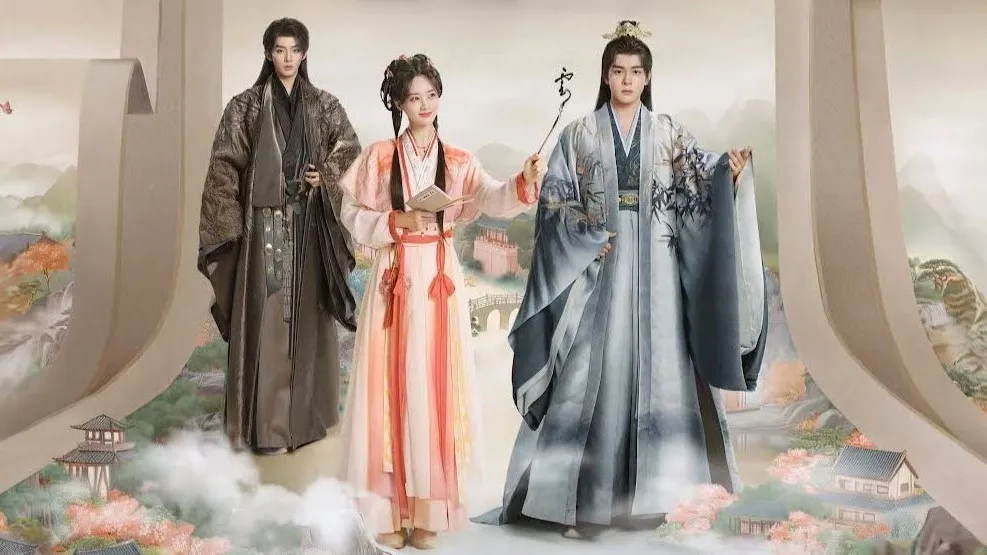
The Legend of Rosy Clouds Poster - Courtesy of iQIYI

|
DetailsRATING OF EPISODES WATCHED: (6/10)
NATIVE TITLE: 云秀行 - Yún xiùxíng YEAR: 2026 TOTAL EPISODES: 36 WATCHED EPISODES: 6 DURATION: 45’ DIRECTOR: Zhu Shao Jie SCREENWRITER: Yu Xiao Qian ORIGINAL CREATOR: Sai Yukino (彩雲国物語 - The Story of Saiunkoku) STATUS: 🔴 (permanently dropped) |


IN A NUTSHELL
Short on time? Here you’ll find the quick verdict, including the drama’s main strengths, weaknesses, and key features to help you decide if it’s right for you. For a more in-depth analysis, continue with the No Spoiler Review.
- What to expect: The Legend of Rosy Clouds is a period romantic comedy that intertwines arranged marriages, political intrigue, and power struggles against the backdrop of a fictional yet believable kingdom. The series focuses primarily on lightheartedness, alternating romantic moments, comic situations, and court dynamics, without abandoning the genre's most classic archetypes. It is supported by a compelling cast and a high-quality technical team, characterized by sumptuous sets, refined costumes, and visually refined direction. The overall result, however, is penalized by a screenplay that insistently resorts to the typical clichés of historical romance: a choice that some viewers might appreciate as integral to the genre, but which, at least for me, ended up making the story excessively predictable.
- Strengths: the show’s comedic vibe, the solid cast, the polished visual style.
- Weaknesses: the use of clichés as a storytelling device, some poorly grounded plot developments, uneven characterisation.
- Who might like it anyway: die-hard fans of Li Yi Tong, Joseph Zeng, and Deng Wei, those looking for a light-hearted, carefree drama with a simple plot, those who prefer enemies-to-lovers with less tense relationships between the protagonists, those who appreciate traditional romantic dynamics and don't mind the heavy use of clichés.
Read on to find out what made me drop the drama.
Between arranged marriages, power struggles, and court intrigue, The Legend of Rosy Clouds seemed to have all the ingredients to win me over: a highly appealing cast, a visually stunning setting, and a narrative premise brimming with potential. However, after six episodes, I decided to stop watching. While I recognized its merits, from the quality of the technical aspects to the cast's performances, I felt that the script gradually ended up relying on overly predictable narrative mechanisms, sacrificing the construction of the story.
This is why The Legend of Rosy Clouds has joined my Dropped Drama Club, the column dedicated to dramas that, despite a good premise, failed to convince me to see the end.
Plot
In the fictional realm of the Nine Cities, Fan Yun, heir to a fallen noble family, accepts, for money, to marry Qi Zheng, the young and ambitious City Lord who pretends to be idle to deceive the strict Three Elders and escape their political control.
What begins as a union of convenience, devoid of love and mutual trust, gradually transforms into a true love, as the two find themselves faced with power struggles, court intrigues, and increasingly dangerous threats that will test both their convictions and their bond.

THIS SECTION TAKES A CLOSER LOOK AT THE SCRIPT, CHARACTERS, CAST, AND TECHNICAL ASPECTS WITHOUT REVEALING MAJOR PLOT DEVELOPMENTS. FOR A COMPLETE ANALYSIS OF THE DRAMA, CONTINUE WITH THE SPOILER REVIEW.
The Legend of Rosy Clouds Drama Review (No Spoilers)
Why I Started
There are several reasons that prompted me to start The Legend of Rosy Clouds. The first was undoubtedly the cast: Li Yi Tong is one of my favorite actresses, and after seeing her shine alongside Liu Yuning in A Dream Within a Dream, I was curious to see her again in a new project. Likewise, I was happy to see Deng Wei again, whom I hadn't seen since Lost You Forever and who, at least from the promotional materials, seemed to be playing an intriguing and ambiguous role.
I was also intrigued by the series' tone. Knowing it was a comedy had given me hope for a bright and lively drama, capable of delivering the same balance of humor and romance that I had so appreciated in A Dream Within a Dream.
Finally, there was another element that for me is almost always a good incentive to start a series: the arranged marriage. It's a dynamic that, when well developed, often creates interesting relationships and believable character development, as demonstrated by dramas I've thoroughly enjoyed, including The Sword and the Brocade, New Life Begins, and Melody of Golden Age.
In short, on paper, The Legend of Rosy Clouds had all the ingredients to win me over, which is why the disappointment was even more evident when I realized my expectations weren't being met in the end.
Review of Episodes Watched
The first six episodes of The Legend of Rosy Clouds left me with a rather mixed feeling. Despite the good premise, the drama immediately struck me as lacking in both plot and narrative pacing. The plot moves slowly and, at least initially, fails to stand out for its originality, preferring to rely on a succession of familiar situations rather than building a well-defined narrative identity.
Contributing to this impression is above all the poor contextualization of some developments. Several story twists seem to arrive before the script has laid the foundation necessary to make them believable. The protagonist's decision to accept an arranged marriage with the City Lord without any particular hesitation, or Lou Qi Yan's sudden infatuation with Fan Yun, which unfolds practically in the space of a few frames after a less than amicable beginning, are examples that gave me the feeling that events were introduced more because the plot required them than because they were truly justified by the story.
The tone of the series also seemed rather uncertain. The Legend of Rosy Clouds alternates between more serious moments, tied to the political dynamics of the Nine Cities, and overtly comic sequences, but without truly finding a balance between the two. The result is a narrative that, at least in the episodes I've seen, constantly oscillates between drama and comedy, with some passages that end up feeling out of place.
The same discontinuity also emerges in the characterization. In some instances, they are presented as mature, strategic figures, perfectly aware of their responsibilities, while in others, they exhibit decidedly naive or over-the-top behavior, making it difficult to grasp their logical coherence. The same goes for the dialogue, which alternates between more intense and meaningful confrontations and others constructed purely for comic relief, which sometimes feels out of context.
On the romantic front, the main couple works only if the viewer accepts without objection a certain amount of narrative conventions. The relationship between Fan Yun and Qi Zheng is born on rather fragile foundations and develops with a speed that I found unconvincing, while the love triangle with Lou Qi Yan reiterates the dynamic of the foolishly obsessed SML, a dynamic already seen many times in the genre, without adding any particularly original elements.
Even the political storyline, which initially seemed one of the most interesting aspects of the series, left me with some doubts right from the start. The conflict between Qi Zheng and the Three Elders, in fact, is not entirely clear in its underlying structure: it is not always clear whether it is an ideological clash over the future of the Nine Cities or a more pragmatic and personal opposition linked to the control of power, with the objectives of the Three Elders remaining at times ambiguous between the defense of the established order and a possible ambition to exercise direct command, without the series ever truly clarifying their true direction.
As for the cast, I found the performances to be overall solid, though not always sufficient to compensate for the script's weaknesses.
Li Yi Tong once again proves to be an extremely natural presence in front of the camera. She manages to make Fan Yun spontaneous and likeable without much effort, although in some comic scenes I felt the acting was a bit too over the top for the type of drama The Legend of Rosy Clouds seems to be aiming for. In an overtly surreal comedy like A Dream Within a Dream, this choice would have worked perfectly; here, however, it occasionally contributes to the series' tone being even more uncertain.
Deng Wei also confirms his impressive screen presence. The character of Lou Qi Yan possesses remarkable charisma, and the actor manages to carry it with authority, but I still feel like he's still lacking something in terms of expressiveness. In the more emotional scenes, I would have liked to see a little more nuance, which would have made the character even more engaging.
The same goes, to some extent, for Joseph Zeng. While he proves to be a solid performer, his acting never fully convinces me. In both the more dramatic and lighter moments, I often felt he lacked the intensity that would make the character fully believable.
Of the supporting cast, Dai Lu Wa is probably the one I enjoyed the most. Her spontaneity and energy work very well, although I still find it a shame that she's often relegated to very similar roles: lively, capricious, and rather exuberant girls. I'd like to see her take on more nuanced characters.
Less convincing, at least in the episodes I've seen, are Wang Yilun and Tian Jia Rui. The former seemed rather undermined by a character that doesn't allow him to fully showcase his strengths, while the latter leaves a decidedly weaker impression, so much so that his presence almost goes unnoticed.
Always reliable, finally, is Yin Zhu Sheng, who confirms his solid performance as the villain. In this drama, however, I found him less incisive than in other recent performances, such as his performance in Zhan Zhao Adventures, where his character managed to convey a much more subtle and effective sense of unease.
Aesthetically, The Legend of Rosy Clouds maintains an overall good level, with some elements more successful and others less convincing. The direction demonstrates a good sense of image composition and often employs visually refined solutions, designed to enhance the staging of individual sequences. Among the most interesting choices is the use of long exposure shots to suggest the passage of time between one scene and the next, a simple yet effective solution in maintaining continuity in the narrative rhythm.
The cinematography also proves generally attentive, with a balanced use of light and color that makes for a pleasant viewing experience and is consistent with the tone of the drama. The settings (clearly located in the Hengdian World Studios) are meticulously crafted: the buildings are richly furnished and decorated, the gardens have an almost fairytale feel, and the backlots are animated by extras and stalls that contribute to a sense of liveliness and depth to the narrative world.
The costumes, while not referring to a specific historical period, appear refined in their cuts and fabrics. The hairstyles are also generally well-crafted and consistent with the characters, with some variations, especially in the solutions adopted for the male characters, but without any particular discordance.
The less convincing aspects emerge on the technical level, particularly in the CGI, which in some cases is still rather rough, especially in the rendering of the animals, and in the editing, which sometimes interrupts the narrative flow by not always managing the transition between one episode and the next correctly.
The soundtrack is built primarily on slow, melancholic songs, alternating between romantic and epic tones, with extensive use of Western-style instruments such as strings and piano, and occasional forays into the electric guitar. Among the songs featured, 心眸 (Soul Eyes), performed by Tian Jia Rui, stands out. While maintaining a romantic ballad feel, it introduces a more modern and recognizable accompaniment than the rest of the soundtrack.
Overall, the soundtrack appears to be carefully orchestrated and, while remaining within the genre's typical musical language, largely avoids the use of overly standardized inserts or recurring samples that often tend to make productions of this genre uniform.

WARNING!
SPOILERS AHEAD. THIS SECTION PROVIDES A DETAILED ANALYSIS OF SPECIFIC ASPECTS OF THE SERIES. DO NOT CONTINUE IF YOU DON’T WANT TO KNOW ALL THE DETAILS OF THE DRAMA
The Legend of Rosy Clouds Drama Review (Spoilers)
Breaking Point
Until the sixth episode, I was still convinced that The Legend of Rosy Clouds would eventually find a more personal narrative path. Even though I had already resorted to several typical historical romance clichés, I was willing to give it the benefit of the doubt, hoping they were merely a starting point and not the foundation of the entire script.
The moment that changed my mind came with the protagonist's kidnapping. During her rescue, Fan Yun steps between Qi Zheng and an arrow that is about to strike him, and is seriously injured. Shortly afterward, it is discovered that the only way to save her is to retrieve a very rare medicinal herb, and once he has luckily obtained it, the protagonist is forced to administer the remedy mouth-to-mouth because she is unconscious.
Taken individually, none of these devices would have bothered me too much: they're clichés that are part of the genre's language and, if inserted into a solid story, I can easily accept. The problem is that here they arrive one after the other, within a few episodes, giving the impression that the screenplay relies on these very mechanisms to create emotional engagement.
It was at that moment that I realized I wasn't looking at a story that used clichés as a simple narrative tool, but a story built around them. And when I felt like every new romantic development would involve yet another familiar device, I realized that continuing to watch would only increase my frustration.
Why I Dropped It
This episode made me realize the main flaw of The Legend of Rosy Clouds: a script that seems to rely on romantic clichés not as a simple narrative tool, but as the true driving force of the plot.
I'd like to clarify: I don't consider clichés a flaw per se. In romantic dramas, they're part of the genre's language, and within certain limits, it's normal to expect to encounter familiar situations. The problem arises when the story seems incapable of moving forward without continually resorting to the same narrative devices, giving the impression that every new development exists primarily to stage yet another ritual romantic moment.
Over the years, I've seen numerous dramas filled with clichés, but those with stronger scripts manage to integrate them more naturally or construct a plot so compelling that they almost fade into the background. Even when the viewer recognizes a familiar plot device, they still continue to follow the story because what happens to the characters arouses genuine interest.
This is precisely the aspect that, in my opinion, is missing from The Legend of Rosy Clouds. After the first six episodes, I was no longer curious to see how the story would evolve, because I had the feeling that every narrative twist would be resolved by resorting to yet another romantic cliché. When curiosity about the story wanes and all that remains is the predictability of its mechanics, the main reason to continue watching also disappears.
For comparison, I had a very different feeling with The Princess's Gambit. That drama was also criticized by many viewers for its use of clichés, yet the plot still managed to keep me engaged. More than the ending, I was interested in seeing how the balance between the characters and the story's events would evolve. In The Legend of Rosy Clouds, however, that curiosity was extinguished too quickly, and it was this, more than the clichés themselves, that convinced me it was time to stop watching.
What Worked
One of the elements that worked best, at least in the first few episodes, is the overall lighthearted tone of the narrative, which is also reflected in the characterization. While they move within fairly recognizable archetypes—the regent who pretends to be idle to mislead his enemies, the female protagonist forced into an arranged marriage for financial reasons, and the classic rich and powerful third wheel who suddenly falls in love with the protagonist—their interactions help maintain a generally lighthearted, comedic tone. From an viewing perspective, this approach helps maintain a lighthearted atmosphere, which can be enjoyable for those seeking light-hearted entertainment.
Another strong point is definitely the cast. Overall, the performances are solid and consistent with the series' tone, even if they don't quite make up for the weaknesses of the writing. The chemistry between the leads, although I only assessed it based on the few episodes I've seen, works well, with a dynamic that's believable, especially in the less passionate interactions. On a personal level, I found Deng Wei's screen presence particularly effective, while Joseph Zeng's seemed less impactful, though still effective.
Aesthetically, the series also holds up well. The direction and photography work synergistically to construct a pleasant and coherent image, while the overall visual structure is refined and pleasing, even if not necessarily historically rigorous. In this sense, the aesthetic represents one of the drama's strongest elements and contributes significantly to its overall enjoyment.
Finally, among the most successful moments of the first episodes, I would like to point out the scene in which Fan Yun tries to get closer to Qi Zheng by preparing the mian that his brother used to cook for him for his birthday. The way the protagonist recognizes the sincerity of the gesture and decides to welcome the protagonist into his circle of trust represents one of the most emotionally effective and mature passages of the initial phase, capable of working precisely because of its simplicity.

Characters and Cast
Primary Characters
Qi Zheng (Joseph Zeng) Qi Hua's youngest son and the current Lord of the Nine Cities. He is intelligent and ambitious, but is forced to feign idleness and incompetence to deceive the conservative Three Elders and escape their political control.
Fan Yun (Li Yi Tong) young lady of the Fan family, one of the Nine Noble Families of the Nine Cities. She teaches at a small neighborhood school, Qingzhuang Academy, and strives by all means to revive the fortunes of her family, which has fallen from grace. For this reason, she accepts the proposal to marry the City Lord in exchange for a large sum of money.
Lou Qi Yan/Zheng Shi (Deng Wei) powerful and shady owner of the Juyun Pavilion. In reality, he is Zheng Shi, the second young lord of the Zheng family and grandson of Zheng Yuan, who studies at the Directorate of Education. He falls madly in love with Fan Yun after hearing her play the er hu.
Gao Ran/Qi Qing Yuan (Wang Yilun) adopted son of the Fan family. Upon Fan Yun's marriage to Qi Zheng, he is appointed commander of Qi Zheng's personal guards. In reality, he is Qi Hua's second son and Qi Zheng's older brother, who disappeared thirteen years earlier during the power struggles that followed his father's death.
Supporting Characters
Qi Residence
Qi Hua, Qi Zheng's late father and former common ruler of the Nine Cities.
Wei Zhu (Zhang Da Bao) Qi Zheng's attendant.
Su Yin (Fan Jing Wen) Qi Residence maid assigned to Fan Yun.
Yan Jiang (Tian Jia Rui) assistant officier of the Bureau of Affairs and Qi Zheng's aide.
Hu Die (Zhang Xian Zi) manager of the Huan'e Pavilion and Qi Zheng's subordinate.
Fan Family
Fan Qi (Zhang Xi Lin) manager of the Qilin Pavilion (palace library) and Fan Yun's father. In reality, he is Black Wolf, the leader of the secret military corps founded by the late Lord of the Nine Cities for his own defense, who answers only to the holder of the Black Wolf Seal, lost thirteen years earlier.
Qiang Wei, Fan Yun's late mother.
Wei Family
Wei Ying (Cheng Hong Xin) Commander of the Left Guard Corps and brother of Wei Shi San and Wei Rong.
Wei Shi San/Wei Ying (Dai Lu Wa) young lady of the Wei Family, one of the Nine Noble Families of the Nine Cities, and Wei Ying's younger sister. She falls in love at first sight with Gao Ran.
Wei Rong (Deng Xiao Ci) young lord of the Wei Family and Wei Ying's younger brother.
Other Characters
Lv Wen Zhong (Bao Da Zhi) one of the Three Elders of the Nine Cities. He is the one who chooses Fan Yun as Qi Zheng's consort.
Zheng Yuan (Yin Zhu Sheng) one of the Three Elders of the Nine Cities and head of the Zheng family, one of the Nine Noble Families of the Nine Cities.
Zheng Yi (Lu Tu) Zheng Yuan's assistant.
Zhao Chang (Zhang Yong Gang) one of the Three Elders of the Nine Cities.
Jiang Shu (Ou Mi De) Head of the Nine Cities Commercial Affairs Bureau. He is the most handsome man in the kingdom, which is why he covers his face with a mask and boasts unparalleled medical skills. He is summoned to the Qi Residence to save Fan Yun after she is injured by the arrow that was about to hit Qi Zheng.
RECOMMENDED:
- GENERAL'S LADY
- NEW LIFE BEGINS
- A DREAM WITHIN A DREAM
- YOUTHFUL GLORY
- THE FIRST JASMINE
Thank you for reading all the way to the end!
I hope you enjoyed this article and found it helpful.
🈷️ Did you come across a term you weren't familiar with? Check out my Chinese Historical Drama Glossary, where you'll find explanations of official titles, government institutions, religion, myths, and many other aspects of Chinese culture.
☕ If you enjoy my content and would like to support Red Taotie, you can buy me a coffee on Ko-fi. Every contribution helps me continue creating reviews and in-depth articles.