
An Ancient Love Song (2023): A Hidden Gem Among Smaller Productions | Retro Drama Talk
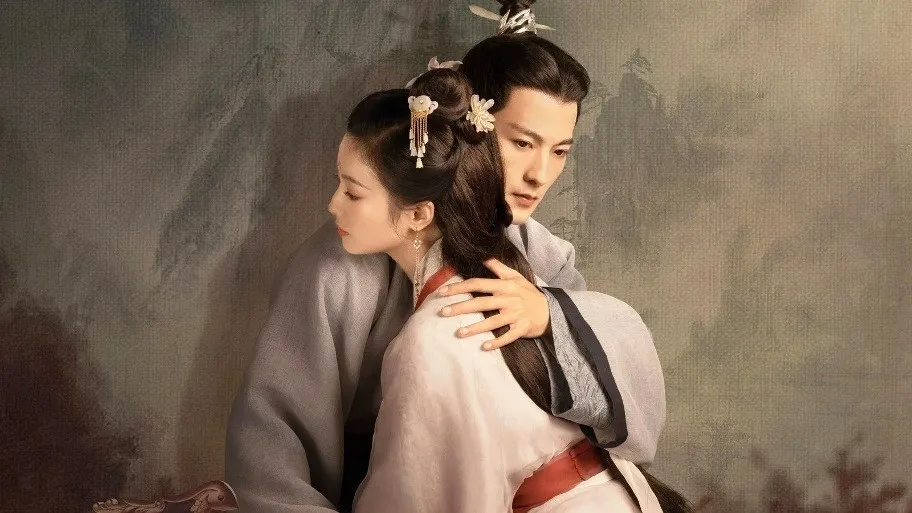
An Ancient Love Song Poster - Courtesy of bilibili

|
DetailsRATING: (9/10)
NATIVE TITLE: 古相思曲 – Gǔ xiāngsī qū YEAR: 2023 EPISODES: 14 DURATION: 30’ DIRECTOR: Zhi Zhu SCREENWRITER: He Li Yun Duan, Dai Chao Chao, San Qian Yu, Cui Xi Xi |


IN A NUTSHELL
- What to expect: in a crowded landscape of romantic dramas built around overwhelming passions and dramatic declarations of love, An Ancient Love Song stands out for its narrative delicacy and subtle emotional impact. This 2023 short drama tells a love story that defies time and fate, weaving romance, court intrigue, and time travel into a surprisingly coherent and engaging narrative. Despite starting from a seemingly familiar premise, the series manages to stand out thanks to a refined script, meaningful dialogue, and multifaceted characters who humanely address themes of sacrifice, duty, and the weight of one's choices. The fast pace, the unusual narrative structure, and an intense melancholy that accompanies the viewer from beginning to end make the story gripping and leave a silent emotion destined to linger well beyond the final credits.
- Strengths: the consistency in the management of time travel, the complex characterization of the characters, the depth of the dialogues.
- Weaknesses: the excessive simplicity of the political storylina, the limited screen time of some characters.
- Recommended if you like: dramas with repeated time travel, delicate and tragic love stories, strong and independent female protagonists, antagonists who are not entirely negative.
- Would I rewatch it? Definitely yes.
Read on to find out what makes this series such a hidden gem.
There are stories that end with the final episode, and others that live on in the silence that follows the credits. An Ancient Love Song belongs to this second category: a story that flows with the lightness of a memory and leaves the viewer with a subtle melancholy that's difficult to describe and even harder to forget.
In this review, after the series has ended, of the drama An Ancient Love Song, I will highlight the series' strengths, trying to explain why it unexpectedly won the hearts of so many viewers, to the point of being called the "dark horse" of 2023 dramas.
Plot
During the presentation of his book History of Southern Sheng Dynasty, the historian of the Nine Kingdoms Shen Bu Yan accidentally comes into possession of an ancient, broken jade pendant. When his blood comes into contact with the artifact, he is suddenly transported to the fifteenth year of the Yuanqi era, right during the Shangsi Festival, the night when, according to history books, the infamous Demon Empress Lu Yuan assassinated the Virtuous Prime Minister Li Yong.
Convinced of a unique opportunity to further his research, Shen Bu Yan enters the palace and he meets Lu Yuan. Soon, however, he realizes that the reality is completely different from what is depicted in historical texts: the supposed Demon Empress is a loyal woman, willing to sacrifice everything for her country, while the respected Li Yong is the mastermind of a dark plot against the Great Sheng.
In an attempt to stop Li Yong, Shen Bu Yan is ambushed and survives only thanks to Lu Yuan's sacrifice, which allows him to return to the present. Unable to accept her death, he decides to use the pendant again to travel back in time and attempt to change her fate.
Each journey, however, takes him to a different moment in Lu Yuan's life, forcing him to piece together the mosaic of his past. As time seems to be working against him and each return to the present diminishes his chances of saving her life, Shen Bu Yan must decide how far he is willing to go to rewrite a story that seems already written.
"Fish are swept along the currents. It is the start and the end. The past is an illusion."

An Ancient Love Song Drama Review (No Spoilers)
An Ancient Love Song is a little gem that has gone almost unnoticed, perhaps because it isn't from a prestigious production company, has a rather modest budget, and lacks a cast of big names. Yet, if you're looking for a drama capable of standing out for its narrative and emotional quality, it's definitely worth a chance.
Plot and Narrative Pace
On paper, the story doesn't seem particularly original: a young woman determined to prevent a powerful minister from betraying her country is intertwined with a story of time travel. These two elements have already been widely explored in Chinese dramas, but what makes the series special is the way these ingredients are developed. The narrative continually upends the viewer's expectations, progressively revealing new pieces of the story without ever giving the feeling of resorting to twists for their own sake. Each revelation finds its precise place within the plot and helps redefine the meaning of events that have already occurred, making the viewing experience engaging until the very last episode.
The narrative pace is one of the series' greatest strengths. Throughout its fourteen episodes, the story manages to maintain a consistently tight pace, without lingering on superfluous subplots or sacrificing the development of the most significant moments. Each scene has a specific purpose and adds a new element to the plot or the development of the characters, creating an extremely cohesive narrative.
Despite extensive use of time jumps, the series never becomes confusing: the different timelines fit together with surprising precision, and the time travel mechanism remains coherent from start to finish, avoiding the paradoxes and contradictions that often plague works of this genre.
The writing is also of the highest quality. The complexity of the narrative structure could easily have compromised the flow of the story, but the authors demonstrate remarkable control of the material, carefully balancing information, foreshadowing, and revelations. The dialogues are natural and rarely seem to exist solely to provide explanations to the viewer. Instead, they reflect the characters' personalities, their moods, and the relationships that bind them, often contributing to the emotional weight of individual scenes. It is precisely this balance between narrative construction and emotional engagement that makes the series so effective.
Characters and Love Story
The characterization is also convincing. Despite its limited running time, the series manages to delineate protagonists and antagonists with sufficient depth, avoiding a simplistic contrast between good and bad. Their motivations are understandable, their choices are consistent with the journeys they take, and, even without exploring every facet of their personalities, each character undergoes a believable development. It's clear that a few more episodes would have allowed for further exploration of some supporting characters, but the limited running time doesn't compromise the overall immersion.
The love story follows the same philosophy as the series. It doesn't focus on overwhelming passion or a succession of romantic moments, but rather delicately builds a bond made of memories, expectations, sacrifices, and encounters destined to defy time. This very choice, far from the more conventional patterns of the genre, makes the relationship between the protagonists particularly intense and leaves the viewer with a melancholy that continues to haunt them even after the drama has concluded.

Cast
The cast is probably the element that struck me most. While not composed of particularly acclaimed actors, the average level of acting is surprisingly high and contributes significantly to the success of the work. The strength of their performances lies not so much in the emphasis or the great dramatic moments, but in the ability to convey authentic emotions through small gestures, glances, and changes in expression. In a drama that makes introspection and restrained feelings one of its main strengths, this type of acting proves fundamental and allows the story to acquire even greater emotional depth.
Although I also appreciated it in the recent Les Belles, I believe it is precisely in this drama that Guo Jia Nan manages to fully express his potential. His character goes through numerous internal changes, and the actor manages to convey them with great naturalness, without ever forcing emotions or overdramatizing. His performance lends great credibility to the protagonist and makes his journey even more engaging. For this very reason, I regret that, at least until now, he hasn't had the opportunity to play the lead role more often in larger-scale productions.
I also have sincere appreciation for Zhang Ya Qin. Her performance as Lu Yuan is crafted with great restraint and sensitivity: she manages to convey the character's strength of spirit, determination, and sense of responsibility without sacrificing her fragility and pain. It's an extremely composed performance, almost never over the top, but precisely because of this, capable of striking a deep chord. I must confess that on more than one occasion, she truly moved me.
Quan Yi Lun also leaves a positive impression. I had already noticed him in the role of Shu Jing Ran in Youthful Glory, but here too he confirms his solid technical foundation and a decent ability to empathize. While he still has room for improvement, especially in terms of micro-expression, he shows himself to be a promising actor who could grow significantly with increasingly complex roles.
Finally, I was also favorably impressed by Zhu Lin Yu. Considering her young age, she already displays a remarkable stage presence and a good ability to communicate his character's emotions. If she continues to perfect her technique, I believe she has all the credentials to carve out an increasingly important space for herself on Chinese television.
Visual Aspects and Soundtrack
Even from a technical standpoint, An Ancient Love Song manages to surprise, demonstrating that a limited budget need not necessarily be a limitation when there's a clear artistic vision behind a production. The direction stands out for its extremely refined approach, with a visual language that on more than one occasion takes on an almost cinematic feel. The shots, never banal or casual, enhance both the more intimate moments—such as the dialogues between the protagonists—and the action sequences, always managing to guide the viewer's gaze toward the most significant elements of the scene.
The cinematography also impresses with its balance and stylistic coherence. The color palette avoids the excessive saturation typical of many recent productions, favoring softer, more realistic colors that help make the historical setting believable. Likewise, the lighting appears well-calibrated: while never completely natural, it chooses not to sacrifice image clarity, allowing for easy viewing even in the numerous nighttime scenes.
The settings, both interior and exterior, are meticulously crafted and convincing, successfully recreating a believable historical context, while occasionally conveying the feeling of uninhabited environments. Despite this, the overall quality of the production remains surprisingly high and significantly contributes to the viewer's immersion.
The editing also deserves special praise, representing one of the most successful technical aspects of the entire production. Unlike many mini-dramas, where pacing is often compromised by sloppy connections or uneven transitions, here each sequence flows seamlessly into the next, lending further impact to an already engaging narrative.
Considering the limited production resources, I was also pleasantly surprised by the quality of the costumes and hair ornaments, which, while not overly ostentatious, still convey great elegance and refinement. The same goes for the dynamic and well-choreographed fight scenes, the merit of which likely goes largely to the experience of martial artist Qian Zheng Zhong.
Overall, the visuals of An Ancient Love Song demonstrate that you don't need extensive resources to create an aesthetically compelling work, as long as every technical choice is guided by skill and attention to detail.
The soundtrack also contributes significantly to the melancholic atmosphere that permeates the entire work. While favoring slow, delicate, and highly emotional compositions, it stands out for its well-defined personality and refined sounds that in no way resemble those of much more famous and renowned productions. The songs discreetly accompany the narrative, never overwhelming the scenes, but constantly amplifying the emotional involvement.
Among the most successful pieces is 相思不言 (Unspoken Longing), a romantic ballad with a spare arrangement in which the singer's voice dialogues with the harp—the same instrument played by Lu Yuan. The fusion of Western strings, Eastern flute, and more modern touches from the electric guitar and drums creates a surprisingly harmonious balance, evoking an atmosphere that's both ancient and contemporary, perfectly in tune with the drama's identity. More traditional is 心弦叹 (Sigh), a slow composition built primarily on Western-style orchestration, enhanced by the introduction and frequent incursions of Eastern string instruments that enrich it with color without altering its delicacy. 溯洄 (Upstream) is more reminiscent of the sounds typical of romantic historical dramas, but still manages to stand out thanks to the singer's intense vocal performance, which gives the song a particular expressive power.
Overall, the soundtrack doesn't rely on the immediacy of easily memorable melodies, but rather on its ability to elegantly accompany the series' intimate and contemplative tone. It is precisely this stylistic coherence, combined with a sound research that is anything but obvious, that makes it one of the elements that contribute most to the identity of An Ancient Love Song.

WARNING!
FROM THIS POINT ON THE SPOILER SECTION BEGINS. DO NOT CONTINUE IF YOU DO NOT WANT TO KNOW ALL THE DETAILS OF THE DRAMA.
An Ancient Love Song Drama Review (Spoilers)
What Works
The Love Story
The strength of An Ancient Love Song probably lies in the fact that, despite departing from the mold of the classic romantic drama, it manages to construct, in my opinion, one of the most intense love stories of recent years.
The relationship between Shen Bu Yan and Lu Yuan is not fueled by grand declarations, overwhelming passions, or constant displays of affection, but rather develops through glances, silences, and small everyday gestures that reveal much more than words ever could. The protagonists manage to convey the depth of their bond with extremely measured acting, letting their suppressed emotions speak for themselves.
The screenplay's choice to almost completely forgo the romantic conventions of the genre is emblematic. Throughout the entire series, Shen Bu Yan and Lu Yuan exchange only one kiss, a quick peck on the cheek before parting, and never openly confess their love. Yet the viewer never has reason to doubt the feelings that unite them. On the contrary, every encounter, every farewell, and every sacrifice reinforces the awareness of a profound bond, built on trust, mutual respect, and the desire to protect the other even at the cost of one's own happiness. The simple "I miss you" that the two exchange through the konghou at the end expresses with extraordinary delicacy everything they have never been able to openly say to each other.
It is precisely this constant melancholy, which runs through the entire narrative without ever descending into melodramatic excess, that makes their relationship so engaging. The affectionate words, the glances, the mutual attention, and small everyday moments—like the meal Lu Yuan prepares for Shen Bu Yan during the Shangsi Festival in the first episode—are far more moving than many scenes constructed to draw tears. The series thus proves that grand declarations or long romantic sequences aren't necessary to tell the story of a memorable love story: sometimes it's precisely moderation and delicacy that leave the deepest impression.
The Screenplay
The depth of the screenplay is evident not only in the construction of the love story, but also runs through the entire drama, lending depth to the political events and secondary characters. Despite addressing weighty themes such as war, power, sacrifice, and a sense of duty, the series almost always avoids offering simplistic or overtly moralistic answers. Instead, it chooses to leave room for the characters' doubts, contradictions, and different points of view, making them more human and allowing the viewer to naturally identify with their choices.
Episode 4 is probably one of the best examples of this approach. Shen Bu Yan offers a particularly interesting reflection on the brutality of war and the impossibility of superficially judging the decisions made by past rulers, reminding us how easy it is to express an opinion when we already know the consequences. In the same episode, Lu Shi also delivers one of the dialogues that struck me most, when he asks Yi Hua whether the choice to reconquer Huofeng Fort by sacrificing the lives of so many soldiers was truly the right one. It's a question that's deliberately left without a definitive answer and perfectly encapsulates the maturity with which the series approaches the theme of sacrifice.
This attention to moral complexity also emerges in subsequent episodes. In episode 12, Lu Shi states that he wants to pursue a military career not to gain personal prestige, but to oppose the injustices perpetrated by the powerful against the weak, while Li Yong surprises the viewer by revealing a hidden side of himself when he reveals that he took the Imperial Exam with the aim of fighting corruption and preventing dishonest officials from compromising the future of the Great Sheng. These moments add depth to the characters and demonstrate how the series consistently seeks to expose their ideals, weaknesses, and motivations, avoiding reducing them to mere plot figures.
Finally, among the scenes that moved me the most is the one in episode 13 in which Lu Yuan and Lu Shi's grandfather confesses with disarming sincerity that he doesn't care about the fate of the nation or the well-being of the people, but only about the happiness and safety of his grandchildren. It's a remarkably simple dialogue that reminds us that, behind the great events of history, there are always ordinary people driven by equally ordinary goals. I believe it's precisely this attention to the purest and most genuine human feelings that makes the series so emotionally engaging.
The examples could go on and on, because the script is full of memorable dialogue and never banal reflections that give meaning to events without slowing the pace of the narrative.

Added to all this is a final element that I consider one of the most notable achievements of the writing: the extraordinary coherence with which time travel is handled. Despite the numerous time jumps and the particular structure of the story, the screenwriters construct a surprisingly precise plot, in which each event finds its place without generating inconsistencies or paradoxes.
Even more interesting is the way in which the chronological inversion also ends up being reflected on the protagonists: at the beginning of the story it is Shen Bu Yan who unconsciously moves within a story already experienced by Lu Yuan, while in the end their roles are reversed, completing a narrative journey of rare elegance. It is an extremely ambitious construction that the authors manage to complete with truly admirable lucidity and coherence.
What Doesn't Work
The Conciseness
If I had to pinpoint a limitation of the work, I would definitely point to its brevity. With just fourteen episodes of about half an hour each, An Ancient Love Song manages to tell a surprisingly rich story without ever feeling rushed, but it's inevitable that some things remain less in-depth than they deserve.
The political component suffers most, which remains effective in supporting the story's events, but without achieving the same degree of complexity and layering as the temporal construction or the love story. The court intrigues and strategies between the various factions are rather linear, and some issues are resolved with a swiftness that leaves little room for tension or confrontation between the parties. Even the conflict between the states remains largely in the background, more relevant to the personal stories of the protagonists than truly explored in its political and military implications. The same goes for the secondary characters, some of whom hint at narrative potential that the limited running time doesn't allow for full development.
This limitation, however, emerges primarily because the writing quality is so high that it makes you want to spend more time with these characters and their narrative universe. Paradoxically, the brevity of the series ends up being its only real flaw: rather than weakening the readability of the story, it simply leaves the feeling that there was still much to tell.

Characters and Cast
Primary Characters
Shen Bu Yan/Setting Sun (Guo Jia Nan) writer famous online for his stories of the Nine Kingdoms. At the launch of his book "History of Southern Sheng Dynasty," he is approached by an old lady who gives him an ancient, broken jade pendant that can transport him back in time to the Yuanqi era.
Lu Yuan/A'Yuan (Zhang Ya Qin) Demon Empress of Southern Sheng. She is the daughter of a soldier killed in battle and grew up with her grandfather and younger brother on the shores of Lake Nanmeng. In the thirtieth year of the Jingping era, she meets Li Yong, then Regional Commander, and agrees to infiltrate the ranks of Northern Lie as a spy on his behalf. After Li Yong poisons the Emperor, rendering him incapable of governing, she enters court as Palace Steward in the first year of the Yuanqi era. In the fifth year of the Yuanqi era, she proclaimed herself Empress, using the Phoenix seal given to her by the Emperor to protect her hometown from invaders. Through a ruse, in the fifteenth year of the Yuanqi era, she managed to prevent Li Yong from delivering the map of Southern Sheng's defenses to Northern Lie. She finally committed suicide to consolidate her adoptive son's position as the new Emperor of Southern Sheng.
Lu Shi/A'Shi/Xiaohua (Quan Yi Lun) Grand General of Southern Sheng, younger brother of Lu Yuan and Commander of the Hubao Battalion (Tiger and Leopard Battalion), known as the God of War for his invincibility. He began his career as a reserve soldier in the Bei'an King's Army and later earned merit in the field until he became a General. In the first year of the Yuanqi era, he is tasked by the Emperor to raise an elite battalion to defeat enemy forces, thus creating the Hubao Battalion.
Yi Hua (Zhu Lin Yu) Lu Yuan's attendant, is the daughter of Mr. Sun, a horse transporter serving the Military Horse Breeding Officer at Fengling Outpost. When her father is executed for causing the death of three hundred horses destined for the Southern Sheng army, the young local lord wants to force her to become his concubine, but Lu Shi and Lu Yuan save her.
Li Yong (Zhuang Han) Prime Minister of Southern Sheng who allies himself with Northern Lie to legitimately usurp the throne. In the thirtieth year of the Jingping era, while serving as Regional Commander of Huofeng Fort, he meets Lu Yuan and Lu Shi and adopts them, recognizing their potential.
Supporting Characters
Zhao Qi Long (Chunyu Shan Shan) spy for Northern Lie who aids Li Yong in his rise to power.
Emperor Yuan Qi (Huang Jing Zhou) Successor to Emperor Jingping. He is a stubborn and reckless young man, and in his first year of reign, he decides to wage war on Northern Lie, establishing the Hubao Battalion. He attempts to convince Lu Yuan to become his Empress and plans to overthrow Prime Minister Li, prompting Zhao Qi Long to poison him with the Herb of Painful Dreams. This causes him to regress mentally at the age of eight due to brain damage and makes him a puppet ruler in the hands of Li Yong.
Chu Tong Chang (Xu Wei Luo | Pu Yi Xing) Lu Yuan's adopted son and the future Shengwu Emperor, destined to unify the Nine Kingdoms. He is the only descendant of King Bei'an left alive after the massacre at Huofeng Fort.
King Bei'an, ruler of Huofeng Fort, brother of Emperor Yuan Qi, and father of Chu Tong Chang. He is killed by the enemies of Northern Lie after the capture of Huofeng Fort on the orders of Li Yong.
Mr. Guo (Li Bin) Chu Tong Chang's grandfather. His daughter was a palace maid who became pregnant with King Bei'an's child. She was the only one to survive the massacre at Huofeng Fort, perpetrated on the orders of Li Yong, who wants to exterminate the imperial lineage.
Yang Chong/Yang Paozhang (Wang Yi Fan) Deputy General of the Hubao Battalion. He is brave and stubborn, and tends to act impulsively. He will replace Lu Shi as leader of the Battalion.
Fan Song/Fan Laobie (Pang Yong) Deputy General of the Hubao Battalion. He is cautious and thoughtful, and tends to avoid rushing headlong into battle, but is loyal to his comrades.
Yuwen Po Jun (Hou Jun Wen) and Yuwen Po Xiao (Hao Ze) Commanders of the Northern Lie Wind Battalion. The former will be defeated by Lu Shi in the Battle of Liuli Valley, while the latter will kill Li Yong when he realizes the Sheng defense map he was given is false.
Young Lord Zhou (Pan Yi Fei) son of the Military Horse Breeding Officer of the Fengling Outpost. His father smuggles horses with the Northern Lie Army and, when he is about to be discovered, has Yi Hua's father accused, but is exposed and denounced by Lu Yuan.

Favorite Character: Lu Yuan
She is a young woman, intelligent, determined, and deeply altruistic. Although she wasn't born with the ambition of becoming a hero, she ends up shouldering a burden far greater than herself. Circumstances force her to sacrifice her dreams, her relationship with her beloved brother Lu Shi, and even her love for Shen Bu Yan in order to protect the Great Sheng and his people, facing every choice with extraordinary dignity and a sense of duty.
Her loyalty, combined with her excellent martial arts skills, convinces Li Yong to choose her as his ally in his quest to the throne. She, however, is not seduced by the image of the virtuous Prime Minister: thanks to her clarity and intuition, she quickly grasps his true intentions and dedicates years of her life to monitoring him in an attempt to thwart his plans.
Along with her firm character, she also possesses a gentle and refined nature. Her grace and talent for playing the konghou captivate Emperor Yuan Qi, who even bestows upon her the Phoenix Seal, hoping to one day make her his Empress. Her heart, however, already belongs to Shen Bu Yan, with whom she builds a deep bond of respect, trust, and mutual sacrifice.
What makes Lu Yuan such a memorable character is, above all, her extraordinary humanity. Her simplicity, the spontaneity with which she cares for others, and her sincere dedication to the people win over even Shen Bu Yan, initially her fiercest detractor, pushing him to question his career as a modern writer in order to remain by her side.
Faithful to her ideals to the very end, she even refuses the opportunity to clear her name, preferring to be remembered as the infamous "Demon Empress" rather than jeopardize the nation's future. For her, it's not titles or the judgment of posterity that define a person's worth, but the actions they take and the sacrifices they make to protect those they love. It's precisely this quiet grandeur that makes her one of the noblest and most moving female protagonists.
Un-Favorite Character: Li Yong
He is undoubtedly the most ambiguous and morally questionable character in the series. Intelligent, calculating, and gifted with extraordinary political skill, he is a man willing to sacrifice any principle to achieve his goals.
What makes his journey particularly bitter is the contrast between the ideals with which he began his career and the person he ultimately becomes. After ranking first in the Imperial Examination at just twenty years old and rapidly rising through the ranks of the administration thanks to his abilities, he seemed sincerely determined to fight corruption and prevent dishonest officials from compromising the future of the Great Sheng. Over time, however, he renounces those same ideals and chooses to ally himself with the enemy, betraying the country he had sworn to serve.
With the help of the Northern Lie spy Zhao Qi, Long orchestrates a ruthless rise to power, poisoning Emperor Yuan Qi, causing severe brain damage, and ordering the assassination of King Bei'an to end the imperial family's lineage. His ambition also leads him to exploit the abilities of Lu Yuan and Lu Shi to gain the Emperor's trust, only to attempt to eliminate them when he realizes their moral integrity is an obstacle to his plans.
His unscrupulousness is even more evident when he goes so far as to kidnap young Chu Tong Chang to blackmail Lu Yuan and secure an escape route from the capital along with the map of the Great Sheng's defenses. He is willing to sacrifice innocents, manipulate allies, and betray anyone to pursue his agenda, demonstrating how, in his eyes, the end consistently justifies any means.
Only in the final stages of the story does a more complex aspect of his personality emerge. Li Yong is not driven by greed or the desire for wealth, but by the sincere conviction that he is acting in the interests of the Great Sheng and that he is the only one capable of ensuring his future. This awareness adds depth to his character, but it is not enough to make him justifiable. His intentions, however noble they may appear, are completely undermined by the betrayal, manipulation, and atrocities he chooses to commit to achieve them. His figure seems to have been created to remind us that no ideal, however lofty, can justify the abandonment of one's moral principles.
RECOMMENDED:
- LEGEND OF THE PHOENIX
- TWISTED FATE OF LOVE
- LOVE BEHIND THE MELODY
- SI JIN
- TWELVE LETTERS
Thanks for reading this far!
I hope you enjoyed my article. If you like my work and want to support me, buy me a coffee☕