
You Have My Heart (2026): When Writing Matters More Than Budget| Review & Ending
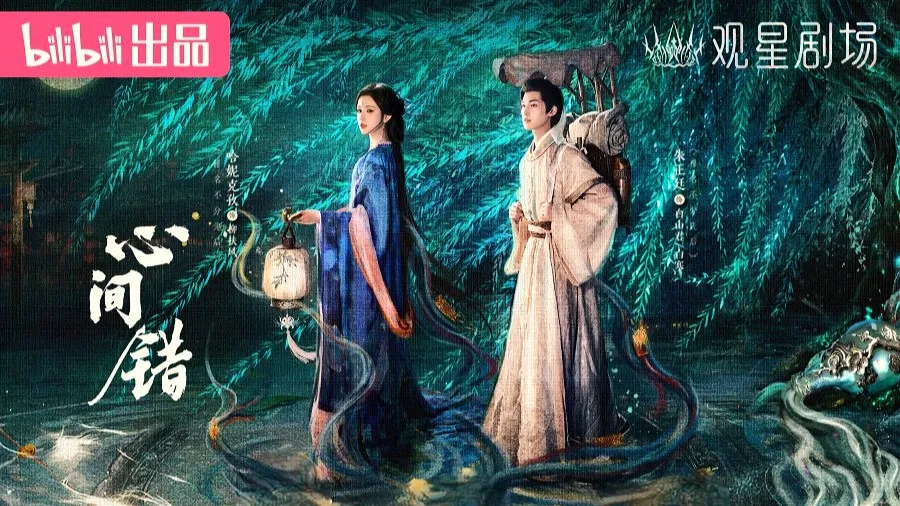
You Have My Heart Poster - Courtesy of bilibili

|
DetailsRATING: (7.5/10)
NATIVE TITLE: 心间错 - Xīnjiān cuò YEAR: 2026 EPISODES: 22 DURATION: 25’ DIRECTOR: Zhao Xi Xi, Zhang Xiao Qi SCREENWRITER: Zhang Yi Xin, Qi Nian RESPECTED CLICHÉS: 2 - 3 - 4 |


IN A NUTSHELL
- What to expect: You Have My Heart is one of those rare dramas that uses fantasy aesthetics and imagery to tell a story that, in essence, belongs to an entirely different genre. While presenting itself as a xianxia, the series adopts the structure of an investigative story, using supernatural elements as the context for a series of gothic-flavored detective cases. Its greatest strength is the balance with which it manages the different narrative elements: the protagonist, while powerful, does not solve every problem; magic does not replace investigative reasoning; the romantic component accompanies the story without stifling the mystery; the fantasy helps build the atmosphere without turning the drama into a simple succession of special effects. Although it presents some limitations in terms of acting and the development of the romance, You Have My Heart knows exactly what kind of drama it wants to be and carries this identity consistently, creating an engaging, flowing, and surprisingly mature story.
- Strengths: the excellent writing, the balance between the narrative elements, the characterization of the supporting characters.
- Weaknesses: the lack of romantic chemistry between the leads, the underdeveloped villain arc, the rushed ending.
- Recommended if you like: supernatural mystery dramas that focuses on investigations, strong female protagonists, shy male protagonists, stories of betrayal, gothic atmospheres.
- Would I rewatch it?
To find out why this drama beats out similar big-budget productions, read on.
There are narrative worlds that captivate not with the roar of battle or the grandeur of spectacle, but with the silence of a dark corridor, a mysterious shadow in the middle of a desolate street, or the doubt that creeps behind a sentence. You Have My Heart is a drama that doesn't seek to dazzle with spectacle, but rather wins you over little by little, building an atmosphere capable of enveloping the viewer until they feel part of its world. It's a story that invites you to slow down, observe, and let yourself be guided by a constant sense of mystery and unease.
In this review of the drama You Have My Heart, after watching all episodes, I tried to understand whether this story truly succeeds in being what it promises, analyzing how every element—from the writing to the direction, from the photography to the characters—truly contributes to shaping that suspended atmosphere that accompanies the viewer from beginning to end.
Plot
The Yin-Yang Crossing is the fragile boundary between the worlds of humans and demons. Watching over this suspended place is Liu Fu Feng, an ancient willow demon who protects its inhabitants from the dark energy that lurks deep within the earth.
When a violent energy release endangers his faithful companion Bai Han, Liu Fu Feng decides to save him by sacrificing half of his spiritual heart. What appears to be a gesture of loyalty, however, turns into the most painful of betrayals: Bai Han flees with the power she has received, condemning her to remain forever a prisoner within the confines of the Ford.
Centuries later, the arrival of new magistrate Bai Shan Jun rekindles Liu Fu Feng's hope: not only does he bear an uncanny resemblance to Bai Han, but he also holds within his chest the very half of her heart that was stolen from her.
However, she soon realizes that she cannot use force to regain it and that her heart must be returned to her voluntarily. Convinced that the only way to achieve this is to win the young magistrate's love, Liu Fu Feng decides to join him in investigating a series of disturbing murders that are rocking the Yin-Yang Crossing, which she attributes to Bai Han's return.
As the two protagonists grapple with demons, curses, and possessions, their relationship deepens, slowly transforming into something more intense.
However, when the shadows of the past resurface and Bai Han reappears determined to carry out his plan, Liu Fu Feng must choose between reclaiming the power that was stolen from her or protecting the person who gave her life new meaning.
"林中語 聲聲泣, 仿人言 奪生氣。舊物 歸心間, 移非其主 禍不息。"
[Whispers echo in the forest, each cry like weeping. Mimicking human speech, it drains away vitality. An old object calls out to its true master. Not its rightful owner — calamity will not cease.]

You Have My Heart Drama Review (No Spoiler)
Plot and Screenplay
You Have My Heart is one of those dramas that can easily be misunderstood. Those expecting a classic xianxia dominated by the battle between immortals and demons, spiritual cultivation, legendary creatures, and spectacular magical battles may be disappointed, as these elements remain in the background here. In reality, the series has a very different identity: it is first and foremost an investigative fantasy, in which magic does not replace reasoning but becomes an integral part of it. Precisely for this reason, I believe You Have My Heart is ideal viewing for those who love dark, gothic atmospheres, mysteries with a strong supernatural component, and, above all, detective stories in which demons, possessions, and curses become an integral part of a true fantasy detective story.
This plot structure is also reflected in the script choices. Each case is developed with the necessary time to gather clues, formulate hypotheses, and gradually arrive at a solution, prioritizing reasoning over action. Fights are few, spectacular displays of supernatural powers are kept to a minimum, and the investigation becomes the true driving force of the narrative. This results in a measured pace, slow enough to allow the viewer to easily follow the investigation's progression, but never so sluggish as to become a source of boredom. I particularly appreciated this choice because it highlights the skills of both protagonists and their teamwork, and prevents each case from becoming a mere pretext to showcase the female protagonist's extraordinary powers.
This approach emerges most clearly when compared to Moonlit Reunion. The two dramas share a very similar premise—a supernatural investigation set in a fictional era where humans and demons coexist—but arrive at very different results. Despite having a smaller budget and a decidedly less well-known cast, You Have My Heart builds stronger cases, a more balanced narrative, and a much more functional use of fantasy elements to further the story. In this sense, You Have My Heart demonstrates how the success of a drama depends much less on the budget, the popularity of the cast, or the success of the original work than on the quality of the writing and the screenplay's ability to transform a good idea into a coherent and engaging narrative.
Characters and Love Story
The screenplay's attention to constructing investigative cases is also reflected in the characterization of the characters, who are overall convincing and well-integrated into the story. The female protagonist, despite being an extremely powerful demon, is so aware of her own superiority that she never feels the need to compete with the male protagonist or continually assert herself over him. I found this dynamic decidedly more mature than that of Moonlit Reunion: here, the two are not enemies destined to fight each other until the very end, but people who, despite pursuing seemingly irreconcilable goals, immediately establish a collaborative relationship. It's true that the protagonist approaches the male protagonist with the intention of charming him and convincing him to voluntarily return her other half of his heart, but this very premise makes their relationship even more intriguing. The question that haunts the viewer isn't so much whether she will succeed in completing her heart, but rather whether, in the end, she will be willing to question her plan and sacrifice her own goal to save the man she's fallen in love with.
The male protagonist also works very well because he represents the perfect foil to the protagonist. He's not a demon, he doesn't possess supernatural powers, and he hasn't been trained in combat: he's simply a young scholar who faces events far greater than himself, relying primarily on his intelligence, observation, and his own sensitivity. This choice avoids a constant power struggle between the two protagonists and highlights their emotional complementarity, despite their profound differences in power and their different ways of experiencing and expressing their feelings.
The same care is taken with the supporting characters. While they don't receive a particularly extensive development, each plays a specific role in the story's development and ends up seeming like a true supporting character rather than a mere extra. I was particularly struck by the attention paid to the characters involved in each case: the drama doesn't simply use them as tools to advance the plot, but also devotes space to their pasts, their motivations, and their emotions. Even when these characters are only on screen for a few minutes, it's easy to develop empathy for them, because their experiences contribute to enriching the narrative world and giving greater depth to the investigative cases.
One element that You Have My Heart shares with some of the more classic xianxia is the presence of an evanescent antagonist who constantly operates in the shadows. Though he appears rarely, his influence is felt from the very beginning, and this very choice makes him even more disturbing. The viewer is constantly left wondering when he will strike, what his next move will be, and, above all, what his final plan is.
On the romantic front, You Have My Heart is a classic slow-burn romance, built on a slow and gradual evolution of feelings. The male protagonist, shy and naive, falls first, while the female protagonist maintains a detached and authoritative attitude for a long time. His reluctance to open his heart is perfectly consistent with the character: not only is he a demon who has lived in solitude for centuries, but he still bears the burden of the betrayal of the person he trusted most, and he finds himself facing the very man chosen by her betrayer to guard the half of her heart that was stolen from her. All these elements lend credibility to his distrust and justify the slow pace at which the relationship evolves.
The romantic tension, however, is hampered both by the limited expressiveness of the two actors and by the few occasions in which the screenplay allows the protagonists moments of genuine intimacy. Their relationship is built almost exclusively through glances, dialogue, and mutual trust, while more explicit displays of emotional commitment are almost entirely absent. Personally, I would have preferred greater emotional intensity and a few more scenes that highlighted their growing closer and the evolution of their bond. For this very reason, I would recommend You Have My Heart above all to those who appreciate love stories built with extreme graduality, in which feelings are suggested rather than shown, rather than to those looking for an intense romantic component, rich in physical tension and overwhelming moments.

Cast
The cast of You Have My Heart does a good job overall, effectively supporting the script without offering particularly memorable performances. None of the actors seem truly out of place, but only a few manage to imbue their characters with the spontaneity and emotional depth that could have made them truly unforgettable.
Hani Kezi is undoubtedly a fascinating actress, but, as in Love in the Desert, she continues to only partially convince me on an expressive level. Her detached and impassive face is well suited to embodying the age-old demon, inscrutable and accustomed to repressing his feelings, and as such, she manages to be believable in the more authoritative and solemn scenes. However, this very same composure ends up penalizing the more intimate scenes: interactions with his co-star struggle to convey real engagement, and moments of greater intimacy often seem more contrived than spontaneous, with unconvincing kisses and a chemistry that never quite clicks.
Zhu Zheng Ting also impresses with his screen presence, but confirms the expressive limitations already evident in Moonlit Reunion. Although he manages to portray a gentle, sensitive, and passionate male protagonist, in the more emotionally charged scenes he struggles to convey the required level of involvement. While he displays slightly more emotion than his co-star, he also contributes to the feeling that many of their romantic scenes feel more like reenactments of love than real-life emotions. Curiously, I found him more effective as the antagonist Bai Han, a role that, in my opinion, better showcases his acting style, particularly suited to conveying coldness and ambiguity.
A pleasant surprise was Zhang Zi Jian, who recently appeared in well-known productions such as Generation to Generation and Pursuit of Jade. He effortlessly brings to life a brilliant, ironic, and multifaceted character, the perfect foil to the more serious protagonist and helps lighten the narrative without ever being overbearing.
Finally, the supporting cast also deserves a mention, offering convincing performances despite limited screen time. I particularly appreciated Shao Wen as Deputy Magistrate Shi, Wu Zhi Qiang as the Wish Fox, and Mao Chong Ya as the courtesan Ming Yuan: three very different characters, yet united by natural and engaging performances, capable of giving depth even to characters destined to remain in the background of the main story.
Visual Aspects and Soundtrack
The aesthetic of You Have My Heart is probably the most successful aspect of the entire production. The drama constructs a coherent and surprisingly immersive visual imagery, in which the settings — both the exterior spaces and the interiors of the Xiqianhua Mansion — manage to avoid the "artificial fantasy" effect typical of many similar productions. The environments feel lived-in and constructed in such a way as to give substance to a world that, while avowedly fantastical, still appears physically believable. This allows the drama to effectively convey its underlying aesthetic, which blends gothic influences with subtle horror imagery, creating an atmosphere of pervasive unease and constant visual tension.
The CGI, too, considering it is a minidrama, is overall adequate and at times even surprisingly effective. It never aims for virtuosity, but it often contributes to the sense of alienation and gloom that pervades the story. The digital effects, precisely because they are consistent, integrate quite well into the scenic context, even if they are occasionally noticeable in more complex sequences or in the rendering of the animals.
The direction is solid, with a deliberate visual language and an often evocative use of framing. There is a clear desire to construct images rich in meaning, sometimes through asymmetrical compositions that emphasize the almost ritualistic nature of certain scenes. At times, however, this pursuit of impact seems a bit excessive, with visual choices that overemphasize the symbolism of the sequence, diminishing its naturalness. The editing, on the other hand, is decidedly functional: it intelligently alternates rhythm and pauses, using cuts and transitions to maintain narrative tension and preserve a constant sense of anticipation.
The cinematography is also very good, representing one of the drama's most compelling elements. The color palette, dominated by cold and dark tones, contributes significantly to the construction of the gothic atmosphere. The scenes are often immersed in a muffled darkness, which amplifies the perception of emotional distance and latent unease. However, there are moments where the lighting becomes excessively obvious: at times, the light sources are deliberately positioned artificially to accentuate the dramatic or supernatural emphasis of the scene, creating a slight detachment from the overall realism. These solutions, while not compromising the overall visual harmony, betray a certain desire to "guide" the viewer's gaze in an overly theatrical manner.
Finally, the costumes are distinguished by the quality of the materials and the careful tailoring, which manage to evoke fantasy imagery without sacrificing a certain aesthetic credibility. The lines of the clothes suggest elegance, but at the same time maintain a more humble and realistic simplicity when dressed on characters from lower social classes.
The soundtrack also significantly contributes to defining the identity of You Have My Heart. While favoring slow, romantic, and melancholic melodies, perfectly in line with the drama's contemplative and nostalgic atmosphere, it surprises with the quality and originality of the arrangements. With the exception of the more traditional main theme 半心 (Half Heart), performed by Yang Ming Qi, which recalls the classic epic style of xianxia, the other songs offer a successful fusion of modern sounds and traditional Chinese instruments. The soundtrack's true added value, however, is the presence of Fan Zhong, whose voice, both soft and powerful, manages to bring emotional depth to every performance, enhancing even the simplest compositions with a measured yet extremely engaging intensity.
A special mention goes to 蒹葭 (Reed), the duet performed by Fan Zhong and He He, which is probably the soundtrack's highlight. The song is built on a refined and unusual arrangement, in which light percussion intertwines with Western strings and traditional Chinese string instruments, creating a delicate, almost fairy-tale-like sonic balance. Making the piece even more evocative is the perfect fusion of the two performers' voices, which amplifies the sense of melancholy and suspense that characterizes the entire drama.

WARNING!
FROM THIS POINT ON THE SPOILER SECTION BEGINS. DO NOT CONTINUE IF YOU DO NOT WANT TO KNOW ALL THE DETAILS OF THE DRAMA.
You Have My Heart Drama Review (Spoiler)
What Works
The Screenplay
The screenplay for You Have My Heart is, in my opinion, the main strength of the entire production. While it follows a path already trod by other fantasy-investigative dramas, it stands out thanks to a writing style that prioritizes the investigative aspect over the purely spectacular. The narrative structure is that of a detective story, in which each case is a piece of a larger story and the investigation constantly occupies center stage, while the supernatural elements become the context within which the mysteries unfold, without ever replacing the protagonists' work of observation, deduction, and analysis.
What I appreciated most is the way the screenplay manages to maintain a balance between all its components, preventing one from overshadowing the others. The protagonist, despite being an extraordinarily powerful demon, never replaces the male protagonist nor resolves every situation by relying exclusively on her own powers. Magic is a constant presence, but it doesn't become a narrative shortcut; Each case is given the time it needs to be introduced, developed, and resolved credibly, allowing the viewer to follow the protagonists' reasoning and participate in the investigation. Likewise, the romantic element accompanies the story without detracting from the mystery, while the fantasy contributes to building the atmosphere without becoming a simple succession of special effects. Even the characters involved in the individual cases, though often appearing for just a few episodes, are given the right amount of space to share their pasts, motivations, and emotions, making each story humanly engaging as well as narratively functional.
This balance is also reflected in the narrative pace, which proceeds at just the right pace to allow the viewer to absorb the clues and follow the investigation step by step, without ever feeling like it's dragging on. While prioritizing analysis over action, the narrative maintains a good level of engagement, preventing the increased attention paid to individual cases from becoming a source of boredom or excessively slowing down the narrative.
It is precisely this balance that, in my opinion, distinguishes You Have My Heart from similar productions like Moonlit Reunion. While sharing many of the same narrative ingredients, the latter seemed to me to favor spectacle and the constant valorization of the female protagonist, sometimes overshadowing both the investigative component and the contributions of the other characters. You Have My Heart, on the other hand, distributes roles and narrative functions more harmoniously, allowing each element of the story to find its own space without dominating the others. It is precisely this ability to manage these same ingredients with moderation that demonstrates the maturity of the screenplay, which perfectly understands the type of story it wants to construct and maintains this identity with remarkable coherence from beginning to end.

What Doesn't Work
The Love Story between the Protagonists
The aspect that least convinced me about You Have My Heart is undoubtedly the main love story. The drama chooses to construct a classic slow-burn romance, in which the male protagonist falls in love first, while the female protagonist maintains a detached and almost impenetrable attitude for a long time.
From a characterization standpoint, this choice is absolutely coherent: as an age-old demon, scarred by the betrayal of the person he loved and determined to recover the half of his heart held within the protagonist's chest, it's perfectly understandable that he struggles to lower his defenses. The problem, however, is that this psychological coherence ends up excessively slowing the relationship's evolution and, for much of the drama, prevents the love story from finding true emotional momentum. For much of the series, the relationship between the two protagonists proceeds with extreme caution, and the script offers few occasions in which they can truly get close on a physical level. Looks and dialogue alone can't always compensate for the near-total absence of intimate moments or gestures that suggest a real shift in their relationship.
This is also compounded by the limited expressiveness of the two actors, which makes it difficult to perceive the growing attraction that should sustain a story built precisely on anticipation. Furthermore, while it's immediately clear that the male protagonist has a soft spot for the female protagonist, she remains highly ambiguous: until the final episodes, it's never truly clear whether her advances towards the ML stem from genuine interest, whether she's simply using him to regain what's hers, or whether she's still torn between the desire to trust him and the fear of doing so again after his betrayal — considering that he's the very person her enemy chose to guard the half of her heart he stole from her.
Emblematic in this sense is the handling of the first kiss, which arrives only in the fourteenth episode and is immediately followed by the moment in which the female protagonist steals half of her heart from the male protagonist, condemning him to certain death. This choice, rather than representing the emotional turning point of the relationship, almost ends up nipping it in the bud, leaving the viewer little time to savor the birth of their bond.
Only towards the end do we finally glimpse signs of a real attachment from the female protagonist to the male protagonist, and no longer simply malicious attempts at seduction aimed at achieving a goal. Consequently, while consistent with the story's premise, the romantic component struggles to achieve the emotional intensity one might initially expect, coming across as more restrained than truly engaging.
The Main Antagonist's Story Arc
The main antagonist's narrative arc is probably the only real weakness of the drama's investigative component. For much of the story, the screenplay chooses to keep him in the shadows, making him a constant but rarely visible presence. At first, this choice proves effective: the fact that he almost always acts through other people fuels a constant sense of unease and pushes the viewer to wonder when he will finally decide to come out into the open, what his next move will be, and what strategy he is preparing to carry out his plan.
As the episodes progress, however, this choice also reveals its limitations. The antagonist's constant absence ends up making him more elusive than truly threatening. The drama emphasizes his evil and cunning, but gives him few opportunities to demonstrate them directly. As a result, the character remains somewhat indecipherable: it's difficult to fully grasp the extent of his powers, the true ways he operates, and even the nature of the threat he poses. Rather than a concrete enemy, he becomes almost an abstract presence, perceived primarily through the consequences of his actions.
This is precisely why his epilogue leaves a certain sense of incompleteness. After nearly twenty episodes spent building the image of a patient, manipulative adversary, seemingly always one step ahead of the protagonists, the final confrontation is resolved surprisingly quickly and unclearly. His defeat comes without the drama truly defining the purpose of his actions or the nature of his powers, leaving the feeling that the protagonists' combined forces are enough to defeat a threat that has been brewing throughout the series. Consequently, even the long journey of ascent born from betrayal loses much of its narrative impact. Rather than an antagonist defeated after a battle worthy of the premise, the impression remains of a character built around a great mystery who, when it comes to finding an answer, fails to deliver on the promises the script had hinted at.
Ending
The epilogue of You Have My Heart, unfortunately, confirms one of the limitations I most often encounter in minidramas: the inability to offer a payoff that truly fulfills the premise established throughout the narrative. After spending countless episodes setting up the clash with an antagonist presented as a seemingly insurmountable threat, his defeat is resolved all too easily, inevitably downplaying the scope of the conflict and making an enemy who until that point seemed destined to truly threaten the protagonists' fate appear less dangerous.
What is most perplexing, however, is what happens immediately afterward. While the male protagonist, a mere mortal who recently became half-demon thanks to the half-heart he received from the female protagonist, emerges essentially unscathed from the final battle, it is the female protagonist — a thousand-year-old demon who for centuries has fought against the evil essence of the Yin-Yang Crossing and continued to live despite possessing only half her heart — who suddenly falls into a long coma. The screenplay doesn't offer a truly convincing explanation for this development, and the impression is that the protagonist's sacrifice is introduced primarily to create a final, artificial separation between the two.
This choice could have worked if it had been an opportunity to give the couple a truly meaningful final emotional arc. After three years, the protagonist awakens with no memory of her past, and only thanks to the patience of the male protagonist, who continues to tell her their story, does she slowly regain her memory. This is a potentially very touching premise, one that deserved more space to showcase the gradual rebuilding of their bond. The drama, instead, resolves everything in a matter of minutes and chooses to end with a simple embrace between the protagonists. After such a long and fraught journey, I would have preferred a more relaxed and emotionally rewarding conclusion, capable of giving their love story the scope that the screenplay had denied us until that point.

Characters and Cast
Primary Characters
Liu Fu Feng (Heni Kezi) known as the Demon Magistrate of Yin-Yang Crossing, is the lady of the Xiqianhua Mansion, a thousand-year-old willow demon who has protected Yin-Yang Crossing and its inhabitants from the dark energy lurking underground for centuries. When her right-hand man, Bai Han, has his heart damaged by an energy leak, she decides to give him half of her spiritual heart, unaware that he will escape with the power he gained, confining her forever to Yin-Yang Crossing. When the new county magistrate, Bai Shan Jun, arrives centuries later, Liu Fu Feng is surprised to discover that he holds within his chest the very half of her stolen heart. The demon then tries everything she can to regain it, but soon realizes that if Bai Shan Jun doesn't willingly return it, she won't be able to regain it, so she decides to make him fall in love with her.
Bai Shan Jun (Zhu Zheng Ting) scholar appointed county magistrate of Yin-Yang Crossing. In reality, he is the human chosen by the demon Bai Han as the vessel for the half of Liu Fu Feng's heart because it is afflicted by the Treebound Curse, which threatens to transform its owner into a tree. Thanks to the purity of his heart, the young man manages to escape the demon's control and reach Yin-Yang Crossing to take up service, but is targeted by the local lady, seemingly intent on killing him. After initial mistrust, the two begin to collaborate, solving the complex murder cases that occur in Yin-Yang Crossing, and the magistrate falls in love with her, unaware that Liu Fu Feng has an hidden agenda.
Bai Han (Zhu Zheng Ting) Liu Fu Feng's right-hand woman. While helping her repress a dark energy outpouring, his heart is severely damaged, and Fu Feng decides to give him half of her spiritual heart. Once he gains power, however, he escapes, condemning her to remain a prisoner in the Yin-Yang Crossing, deprived of much of her spiritual energy. Later, he discovers that the half heart Fu Feng gave him is burdened by the Treebound Curse, which threatens to quickly transform him into a tree, so he decides to find a human vessel to entrust the heart to, until he can find a way to purify it. Unfortunately for him, the chosen human is Bai Shan Jun, who breaks free from his control and falls straight into Liu Fu Feng's trap.
Supporting Characters
Xi Qian Hua Residence and Yamen
Liu Feng Ling (Li Jia Nuo) bell spirit and Liu Fu Feng's assistant. She is very fond of Liu Fu Feng, so much so that she hopes she will never reciprocate Bai Shan Jun's feelings, and is very dutiful, often arguing with Chen Xiaohu.
Chen Xiaohu (Zhang Zi Jian) constable of Yin-Yang Crossing and Bai Shan Jun's assistant. He is an idle and carefree boy and initially resents Bai Shan Jun's dedication, but eventually warms to him.
Shi Quan (Shao Wen) deputy county magistrate of Yin-Yang Crossing. He is a fair and loyal man who helps Liu Fu Feng and Bai Shan Jun administer the Ford's civil affairs.
A’Shuan (Yao Yu Hang) orphan who lives in the temple dedicated to Liu Fu Feng and uses a trained parrot to scare people and earn a living, unaware that the parrot is actually a demon. After the Widow Liu case is closed, he is hired as a handyman at the yamen, but is corrupted by Bai Han's power and remains mentally disabled.
Widow Liu Case
Widow Liu, woman from Shi Village who was found strangled to death in the temple dedicated to Liu Fu Feng. In reality, she was killed by the village chief Zhou, corrupted by the evil energy controlled by Bai Han.
Zhou Ming (Zhang An Wen) chief of Shi Village who killed Widow Liu after being rejected. He was found dead in the mountains by Bai Shan Jun and Chen Xiaohu, and the only clue is a sesame bun wrapped in a wrapper with a soul-corrupting talisman.
Mirror Demon Case
A'Wan (Song Fang Yuan) maid at the Huichun Pleasure House, was found dead and disfigured in a room. In reality, she is alive and is in Lin County with Young Lord Du to raise the money needed to ransom Ming Yuan.
Ming Yuan (Mao Chong Ya) leading courtesan at the Huichun Pleasure House, suspected of killing A'Wan out of jealousy. In reality, she is the victim and committed suicide by arsenic after losing her beauty.
Young Lord Du (Fang Qi Yun) Ming Yuan's patron, who, according to rumors, offered A'Wan a fortune to go with him. In reality, he is raising money to free Ming Yuan so he can take her to live with him.
Tong Jing Jing/Jing'er (Zhang Zhi Lin) bronze mirror demon who can change her appearance at will. Shortly before Ming Yuan's body was found, she assumed the courtesan's appearance and is suspected of her murder. She is actually a friend of Ming Yuan and helped her preserve her youth, but eventually, corrupted by Bai Han's evil energy, she disfigured her, driving her to commit suicide.
Zhi Yan Zhu, face-weaving spider, demon known for his remedies that preserve youth. He is Tong Jing Jing's former employer.
Madam Chun (Qu Yue) madam of the Huichun Pleasure House, who reports A'Wan's death.
Wish Fox Case
Wang Renjie (Ling Chao Chao), Hu Shanming, and Han Ziliang, human academy classmates of Li Mao. After repeatedly bullying Li Mao, they are found strangled to death, their upper limbs severed, and hanging upside down in one of the academy's classrooms.
Li Mao (Zhang Bo Zhi) gecko spirit who attends Qiuzhi Academy and is tormented by his human classmates. After Renjie, Shanming and Ziliang's death he is suspected of their murder, but the real culprit is Yuan Hu.
A'Ji (Chai Zong Li) wild cat spirit who is a academy classmate of Li Mao. When he discovers that the boy's mother is the woman who saved him years before, he decides to protect him and subsequently takes the blame for the deaths of Renjie, Shanming, and Ziliang.
Li Yun (Ren Xiao Yan) Li Mao's human mother, is a washerwoman who once saved A'Ji when he was a kitten. She is found dead in her home, coinciding with the deaths of Wang Renjie, Hu Shanming, and Han Ziliang.
Mao Da, Li Mao's father, was a gecko spirit. He was a street performer before being kidnapped by a wealthy man who forced him to work for him, resulting in his death.
Yuan Hu (Wu Zhi Qiang) Wish Fox. Half-demon who, like many low-ranking spirits of the Yin-Yang Crossing, formerly worked at the Zuiwang Tavern. Being a half-blood, he was often humiliated by customers, so Liu Fufang decided to take him in at the Xiqianhua Mansion to prevent him from succumbing to evil. However, he fell in love with her, and after discovering that half of her heart was missing, he decided to help her restore her spiritual power by offering her an elixir made from the hearts of five hundred demons. This action earned him imprisonment, but after seventy years, thanks to Bai Han's help, he managed to free himself and began absorbing power, fulfilling the perverse desires of the inhabitants of the Yin-Yang Crossing.
Fortune-Turning Master Case
Wu Youdao (Xue Jing Zhi) owner of a ritual supplies shop who believed the story of the Fortune-Turning Master and began following his instructions, even killing a beggar.
Zhao'er (Wang Cheng Long) son of a woman who believed the story of the Fortune-Turning Master and began following his instructions, even committing suicide by hanging herself.
Qiao Wanqian (Xing Min Shan) owner of the Wanqian Bank. He was the first to spread the story of the Fortune-Turning Master, describing how he had helped him become rich, and given his fame, the story quickly spread throughout the Yin-Yang Crossing. In reality, he is Bai Han's right-hand man, who agreed to serve him to save his gravely ill eldest son.
Qiao Yulang (Xing Yi Qing) Qiao Wanqian's eldest son. To save him, his father made a pact with Bai Han and agreed to serve him. In reality, however, Bai Han had possessed his body and gradually consumed it, transforming him into the old man who had passed himself off as the owner of Sun Bakery in front of Bai Shan Jun and Chen Xiaohu.
Qiao Jinlang (Wang Kai Kai) Qiao Wan Qian's second son, was offered by his father to Bai Han after Yulang's death to impersonate the Fortune-Turning Master. Bai Shan Jun manages to free him from the demon's spirit, but his mind has now regressed to that of a child.
Qiao Shulang (Yang Hao Ting) spirit born from Qiao Wan Qian's thumb ring. Liu Fu Feng uses him to discover where the Yin-Yang Crossing residents, taken hostage by the Fortune-Turning Master, are being held captive, and then returns him to Qiao Wanqian, making him his adopted son.
Lao Cha (Cui Li Ming) teapot spirit who helps the inhabitants of the Yin-Yang Crossing select objects that could take human form to become their collaborators or heirs. He helps Liu Fu Feng steal Qiao Wan Qian's thumb ring to discover Bai Han's hideout.

Favorite Character: Bai Shan Jun
He is an upright, loyal man, driven by a deep sense of justice, who approaches every situation with rationality, compassion, and a sincere desire to protect the people.
Although Bai Han chose him as the recipient of the half of Liu Fu Feng's spiritual heart, the purity of his feelings and the strength of his will prevent him from becoming a mere puppet in the demon's hands, allowing him to defy his fate.
Painful childhood experiences initially made him wary of the supernatural. After watching his grandmother try in vain to save his mother using talismans and rituals, he grew up convinced that spirits and magic were nothing more than superstitions. However, his encounter with Liu Fu Feng gradually calls into question all his certainties.
Although she initially attempts to regain her spiritual heart by force, he manages to grasp the profound goodness of her soul, understanding her pain, her sense of responsibility to the inhabitants of the Yin Yang Ford, and the burden of a life spent for centuries with only half of her heart.
His trust in Liu Fu Feng becomes so absolute that he entrusts himself to her completely even in the most desperate moments. When he realizes that returning her spiritual heart could cost him his life, he does not hesitate to sacrifice his own survival to help her recover what was unjustly taken from her. Even after discovering that he has only a few days to live, he continues to fulfill his role as a magistrate with dedication, even volunteering to confront Bai Han and allow himself to be possessed by her spirit in an attempt to save the inhabitants of the Ford.
The same generosity also characterizes the epilogue of his story. Restored to life thanks to Liu Fu Feng's intervention, he unhesitatingly agrees to unite his powers with hers to finally stop Bai Han. When, at the end of the battle, she falls into a long coma, Bai Shan Jun remains at her side for three years, caring for her beloved while also taking on the responsibility of protecting the Yin Yang Ford. When she awakens, he continues to be at her side with the same patience and affection, helping her reconstruct the past she has forgotten and demonstrating, to the very end, a loyalty and dedication that represent the most authentic qualities of his character.
Un-Favorite Character: Qiao Wanqian
He is one of the most morally ambiguous characters in You Have My Heart and represents an example of how greed and ambition can lead a person to justify even the most atrocious actions.
Obsessed with his family's prestige and unable to accept the loss of his eldest son, he begs Liu Fu Feng to save him. When the Lady of the Crossing explains that she cannot, he chooses to entrust himself to Bai Han, seduced by the promise of bringing the boy back to life.
The discovery that the demon has simply taken possession of his son's body, however, is not enough to deter him. Although he realizes he has been tricked, he agrees to become Bai Han's faithful servant and help him procure new bodies to use as vessels for his spirit, knowing that each of them would inevitably be consumed by his dark energy.
His subjugation to the demon reaches its climax when, after letting Bai Shan Jun escape, he even sacrifices his second son, Jinlang, to regain her favor. The result is tragic: the boy is transformed into the Lord of Fortune and, once abandoned by the demon, retains the mind of a child.
Qiao Wanqian becomes complicit in some of Bai Han's worst atrocities, helping spread talismans tainted by dark energy among the inhabitants of the Yin Yang Ford and promoting the cult of the Lord of Fortune, through which the demon attracts new victims to feed on.
Only in the finale does he finally escape her influence thanks to the intervention of Liu Fu Feng and Bai Shan Jun, but redemption comes when the price of his choices is irreparable. His eldest son is dead, Jinlang is severely disabled, and almost nothing remains of the family he had desperately tried to preserve. The only chance to start over is offered to him by Liu Fu Feng, who entrusts him with his thumb ring transformed into a human being in the hope that the responsibility towards this new life can become the opportunity to atone at least in part for the sins of his past.
RECOMMENDED:
- BACK FROM THE BRINK
- CORONER'S DIARY
- LOVE IN THE CLOUDS
- MOONLIT REUNION
- LOVE BEYOND THE GRAVE
Thank you for reading all the way to the end!
I hope you enjoyed this article and found it helpful.
🈷️ Did you come across a term you weren't familiar with? Check out my Chinese Historical Drama Glossary, where you'll find explanations of official titles, government institutions, religion, myths, and many other aspects of Chinese culture.
☕ If you enjoy my content and would like to support Red Taotie, you can buy me a coffee on Ko-fi. Every contribution helps me continue creating reviews and in-depth articles.