
The Difference Between Wuxia, Xianxia and Xuanhuan: a Guide for Beginners
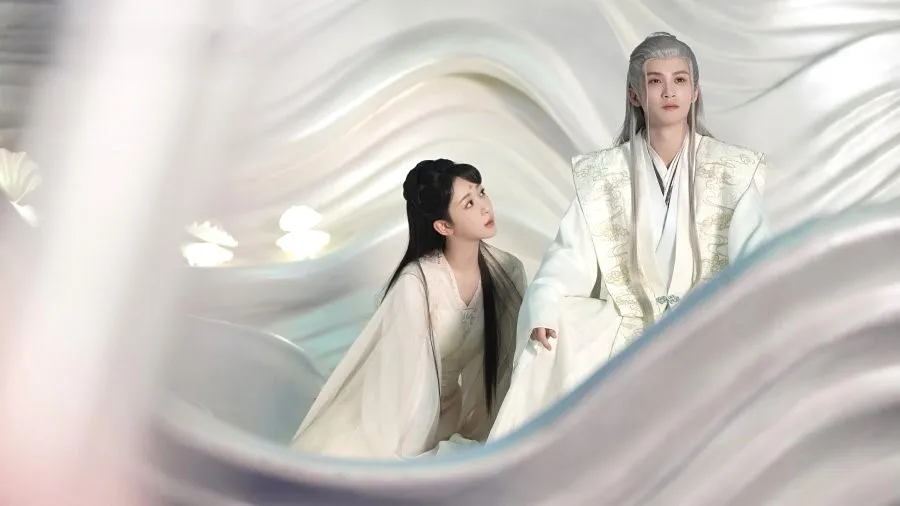
Lost You Forever - Courtesy of Tencent Video
IN A NUTSHELL
- Contents: in this article I will take you to discover the three most popular Chinese narrative genres in the world of drama.
- Genres analyzed:
- Wuxia
- Xianxia
- Xuanhuan
- Conclusion: understanding the difference between these three categories means immersing oneself in three distinct visions of the relationship between man, culture and religion.
Read on to learn the differences between wuxia, xianxia and xuanhuan.
Eastern fiction and film offer a variety of genres that are often difficult for international audiences to categorize. Among the most popular genres in China are wuxia, xianxia and xuanhuan, three categories that share common roots but differ substantially in themes, settings, and religious and mythological references. To navigate the vast panorama of Chinese dramas and appreciate their cultural depth, it is therefore essential to understand the characteristics that make them unique.
Wuxia
The Martial Hero's Solitary Path
The term wuxia (武侠) is composed of wu (武), meaning “martial arts”, and xia (侠), meaning "chivalric hero". This genre has deep roots in traditional Chinese literature and focuses on the adventures of wandering warriors, the so-called youxia, who live by their own code of honor and outside of official law. Their arena of action is the jianghu (江湖), the so-called “martial world”, a world made up of clans, martial arts schools, and rivalries between warriors vying for distinction in the martial arts world.
Modern wuxia, such as The Legend of the Condor Heroes or Word of Honor, take these elements and reimagine them with a strong focus on realistic, albeit spectacular, combat. The protagonists can in fact develop their fighting skills through training and the cultivation of vital energy to the point of being able to make extraordinary leaps, but they are still mortals without magical powers and incapable of resorting to the fighting techniques typical of immortals.

Xianxia
The Journey to Immortality
The xianxia (仙侠) genre arose from the fusion of wuxia with elements of Taoism, Buddhism, and Chinese mythology. The term is composed of xian (仙), meaning “immortal” or “divine being”, and xia (侠), meaning "chivalric hero". Xianxia revolves around the path of spiritual cultivation, known as xiuxian (修仙), through which the protagonists aspire to become immortal, perfecting their body, mind, and vital energy (qi). On their journey to immortality, they often find themselves confronted by enemies with similar powers, belonging to evil sects or clans.
In this context, we often find magical artifacts, divine beasts, celestial worlds, and demons, all elements that transport the viewer into a markedly supernatural dimension. A famous example is Eternal Love (also known as Ten Miles of Peach Blossoms), where the fate of gods and humans intertwines in plots of love, revenge, and reincarnation, or the recent The Immortal Ascension, in which the protagonist strives to achieve immortality through cultivation.
Compared to wuxia, here the visual spectacle is accompanied by strong spiritual symbolism, with direct references to Taoist cosmology and the myths associated with the immortals.

Xuanhuan
The Boundless Universe of Fantasy
The term xuanhuan (玄幻) literally means “mysterious fantasy” and refers to a more recent genre, often referred to as the “Chinese version of fantasy.” Unlike xianxia, xuanhuan does not necessarily adhere to traditional religious or philosophical references. Authors have greater freedom to create narrative universes that combine historical, cultural, and imaginary elements.
This genre may feature fictional kingdoms, original systems of magic, and mythical creatures not necessarily tied to Chinese tradition. The protagonists of this drama genre possess supernatural powers but are not immortal and use cultivation simply to enhance their magic, which they use in everyday life. Examples include the drama Douluo Continent, which blends martial arts and spiritual powers in a fantasy world, or Lost You Forever, in which mortals, immortals, and demons live side by side and interact with each other in a magical realm without any restrictions.
Xuanhuan is often aimed at an international audience, as it offers greater accessibility to those unfamiliar with Taoist philosophy or Chinese literary classics.

Literary Origins of Wuxia, Xianxia and Xuanhuan
The roots of these genres are deep in Chinese literary culture, evolving over time with a progressive expansion of themes and tones.
- Wuxia. The first stories of knights-errant (youxia) date back to the Tang Dynasty, but it was in the Ming-Qing period that modern wuxia fiction emerged, with texts such as The Water Margin (水浒传) by Shi Nai’an and Luo Guanzhong, in which 108 rebellious heroes fight for justice. In the 20th century, wuxia enjoyed its golden age thanks to writers such as Jin Yong, Gu Long, and Liang Yusheng, whose serialized novels radically redefined the genre.
- Xianxia. It represents a spiritual and mythological evolution of wuxia and has become widely popular thanks to the boom in online web novels and the English translations of genre staples such as I Shall Seal the Heavens (我欲封天) by Ergen and Coiling Dragon (盘龙) by Wo Chi Xihongshi.
- Xuanhuan. This freer and more innovative subgenre developed online from xianxia fiction, expanding the imagery with Western or original fantasy elements, novel magical systems, alternate worlds, and supernatural beings not necessarily tied to Taoism or classical mythology. Like xianxia, xuanhuan enjoyed its heyday between 2007 and 2015, with the explosion of Qidian and other digital reading platforms. Among the genre’s greatest successes are Battle Through the Heavens (斗破苍穹) by Tian Can Tu Dou and Against the Gods (逆天邪神) by Mars Gravity.

|
Also known as Outlaws of the Marsh or All Men Are Brothers, the novel The Water Margin (水浒传) is a book written in 1368 by Shi Nai’an (施耐庵) and Luo Guanzhong (罗贯中). It is considered one of the four great classic novels of Chinese literature, along with Luo Guanzhong’s Romance of the Three Kingdoms (三国演义), Wu Cheng’en’s Journey to the West (西游记), and Cao Xue Qin’s Dream of the Red Chamber (紅樓夢/红楼梦) or The Story of the Stone. Scholars consider these four titles to have had the greatest influence on all subsequent traditional Chinese fiction. |
Conclusion
In conclusion, the substantial differences between the three genres are the following:
- Wuxia: concrete, realistic and martial, focusing on codes of honor, brotherhood and fights to the death.
- Xianxia: spiritual, philosophical, and mythological, focusing on the path to immortality populated by gods and demons often in conflict with each other.
- Xuanhuan: free, imaginative and imaginative, with original worlds and magical systems that do not rely strictly on Eastern tradition.
In short, understanding the difference between wuxia, xianxia and xuanhuan means not only engaging with three distinct narrative genres, but also immersing oneself in three distinct visions of the relationship between humanity, values, and the supernatural.
Contemporary Chinese dramas continue to explore and innovate these three categories, offering audiences the opportunity to discover narrative worlds rich in charm and intriguing nods to China’s diverse and ancient culture.
Thanks for reading this far!
I hope you enjoyed my article. If you like my work and want to support me, buy me a coffee☕