
— Retro Drama Talk — Till the End of The Moon (2023) Chinese Drama Review
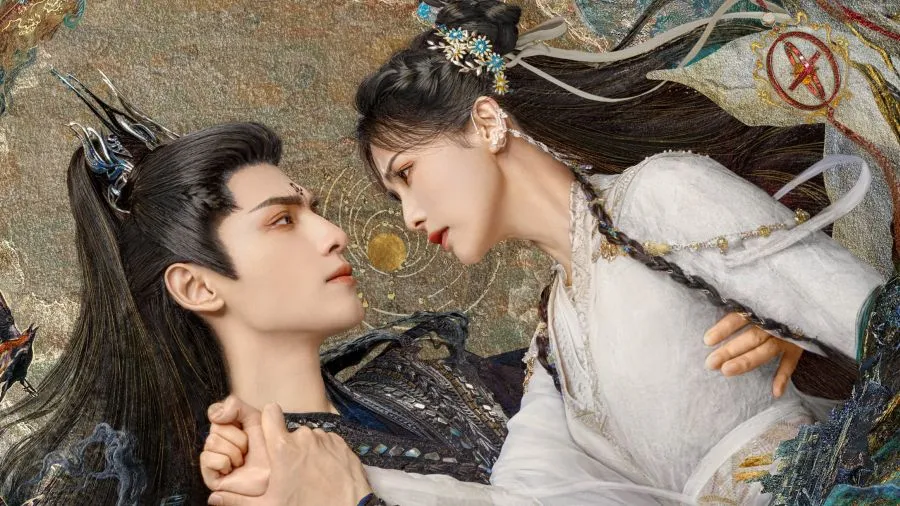
Till the End of the Moon Poster - Courtesy of Youku

|
DetailsRATING: (8/10)
NATIVE TITLE: 长月烬明 – Zhǎng yuè jìn míng YEAR: 2023 EPISODES: 40 DURATION: 50’ DIRECTOR: Kok Leung Kuk SCREENWRITER: He Fang, Luo Xuan ORIGINAL CREATOR: Teng Luo Wei Zhi (黑月光拿稳BE剧本 - Black Moonlight Holds the BE Script) |


IN A NUTSHELL
- What to expect: Till the End of the Moon is a unique xianxia that follows the story of Tantai Jin, an antihero destined to choose the path of heroism thanks to the pure and all-encompassing love he develops for his counterpart, the ingenuous Li Su Su, who, in turn, ends up falling in love with the innocence of the one who should be her enemy. The drama unfolds through a succession of narrative arcs and time travels that keep the viewer constantly on the edge of their seats, leading them to a surprising and unexpected epilogue, as the love story between Tantai Jin and Li Su Su evolves between sweet and bitter moments.
- Strengths: the engaging plot, the love story between Pian Ran and Ye Qing Yu, the fairytale aesthetic.
- Weaknesses: the toxic relationship between the protagonists, the small narrative inconsistencies caused by the time jumps, the fluctuating quality of the CGI.
- Recommended if you like: Luo Yun Xi and Bai Lu, enemy to lovers dramas, xianxia with a strong romantic connotation, series with multiple narrative arcs.
- Would I rewatch it? Yes, even though it's heartbreaking every time.
Read on to find out if this drama is truly the must-see masterpiece everyone is praising.
Dark, romantic, and fairytale-like: Till the End of the Moon is one of the most talked-about and beloved fantasy dramas of 2023. With a plot that intertwines fate, love, and sacrifice, this series has captivated millions of viewers thanks to its refined aesthetic and poignant narrative. But behind the facade of a classic xianxia lies much more: ambiguity, internal conflicts, and moral dilemmas that constantly question everyone's actions.
In this review of the drama Till the End of the Moon, I will analyze the plot, cast, and script of this series, highlighting its strengths and weaknesses to determine whether it truly deserves the hype surrounding it.
"日月不照, 天地不明 "
[If the sun and moon do not shine, the sky and earth are not illuminated]
Plot
In an imaginary land, the Three Kingdoms and the Four Continents are threatened by the advance of the dark Devil Lord, the supreme Infernal Deity who aims to eliminate the pure energy from the world to throw it into chaos and thus allow the infernal spirits to thrive.
In a desperate attempt to stop him, the Immortal Sects send Li Su Su, daughter of the Head of the Hengyang Sect, back in time in order to find Tantai Jin, the mortal destined to become the future Devil Lord, and extract from his heart the Evil Bone, or the demonic essence that will transform him into the Infernal Deity.
Li Su Su then finds herself transported into the body of the arrogant Ye Xi Wu, second daughter of the Great General Ye of the Sheng Kingdom and new bride of Tantai Jin, Third Prince of the Jing Kingdom who has been held hostage by the enemy for years.
From that moment on, she begins a race against time to destroy the Evil Bone and prevent the coming of the Devil Lord, but her constant closeness to Tantai Jin will lead her to develop feelings for him.
While they face together memories of a past life, power struggles, wars and betrayals, Tantai Jin also falls in love with Li Su Su, wandering for centuries in the River of the Underworld in search of her soul, after her supreme sacrifice to tear the Evil Bone from him and give him a divine essence.
Five hundred years later, Li Su Su returns to being the Lady of Spirituality of the Hengyang Sect and Tantai Jin, re-emerged from the River of the Underworld, assumes the identity of Cang Jiumin, the most gifted disciple of the Xiaoyao Sect.
The two eventually meet again, but the rebirth of the Devil Lord is imminent and they are faced with a crossroads: whether to pursue their love or the salvation of all humanity.

Till the End of the Moon Drama Review (No Spoilers)
What's immediately striking about Till the End of the Moon is its originality in reversing the story's perspective: at the center of the story is not the luminous and flawless hero, but the villain, with his weaknesses and shadows. It's fascinating to follow events through his eyes, follow his reasoning, participate in his choices, and witness the evolution of his conscience, which defies expectations and gives new depth to the genre.
Plot
The plot, for the most part, flows naturally: events follow one another logically, and the four narrative arcs intertwine coherently, without ever feeling forced. Yet, towards the middle of the drama, the pace slows: the protagonists' love affairs, while interesting, end up taking up too much space and making some episodes less engaging, as if the story were taking too long to breathe between one twist and turn. The use of flashbacks also contributes to this effect: after a very well-crafted beginning, in which they truly serve to enrich the narrative, they become progressively more frequent and redundant, to the point of giving the impression of needlessly weighing down the story and making it more wordy than necessary. As for the twists, however, they are well present and skillfully placed: each new development seems inevitable and at the same time surprising, integrating naturally into the main plot without ever abruptly interrupting it.
I also can't help but mention a typical flaw of fantasy dramas, which this series also suffers from: the proliferation of locations, spells, artifacts, and magical techniques, which can become, at times, difficult to follow. I found myself taking notes several times so as not to lose track of where a character needed to go to cast a certain spell or what magical item they needed to obtain a certain thing. It's a small price to pay for the richness of the world that Till the End of the Moon has managed to build, but it's certainly a detail to keep in mind if you're looking for a smooth and immediate viewing experience.
Characters and Main Love Story
If there's one thing that truly shines in Till the End of the Moon, it's the construction of the characters: even the secondary ones have a depth that makes them believable, and following their evolution over the course of the episodes was rewarding. In particular, I was struck by the believability with which Li Su Su's internal torment is portrayed: her dilemma over what to do with Tantai Jin is touching, because on the one hand, she knows he will become the future Devil Lord, and on the other, she can't help but pity him, knowing the weight of his sad past. The viewer also finds herself wavering along with her, unable to understand whether the male protagonist's actions are justifiable or not, whether his figure should be considered positive or negative: a constant alternation of hatred and closeness, of empathy and repulsion, makes the relationship between the protagonists complex and painful.
At the same time, however, the drama fails to escape the typical clichés of the romantic genre: the characters' behavior often appears melodramatic, and the protagonists' internal dialogues are at times repetitive and forced, and rather than revealing their psychology, they risk weighing down the viewing experience. The love-hate relationship between ML and FL makes their bond, at times, ambiguous: the protagonists constantly oscillate between devotion and toxicity, leaving the viewer doubtful about the couple's true feelings and at times disrupting the emotional narrative. This alternation certainly contributes to making the story compelling, but the main couple's feelings sometimes seem less natural and justified than the plot would suggest.
Cast
The core of Till the End of the Moon is undoubtedly the actors' performances, even if not all of them manage to handle the complexity of the plot with the same effectiveness.
Luo Yun Xi stands out strongly: his acting is so inspired and expressive that emotions seem to shine through without words, through gestures, glances, and micro-expressions. His ambiguous and evil behaviors, as well as his more passionate and dramatic ones, are so realistic that we wonder if he's really just acting or if he's giving us a glimpse of something authentic.
Bai Lu maintains his trademark spontaneity and naturalness, convincing in both the lighter and more intense scenes, making the film enjoyable and engaging. His love scenes with Luo Yun Xi are sweet and painful at the same time, and their chemistry almost makes up for the terrible exchanges between Deng Wei and Chen Du Ling.
Deng Wei manages to pull it off, though his "goody-goody" face hurts him in the role of the resolute Prince Xiao Lin; he improves slightly toward the end as Gongye Ji Wu. Unfortunately, the chemistry with his co-star Chen Du Ling doesn't quite take off: unlike in Lost You Forever, where their connection with Yang Zi was palpable, here their interactions are cold and distant.
Chen Du Ling faces the challenging task of playing three ambiguous and contradictory women, but the result is rather monotonous. Her expressions remain consistently similar, with minimal emotional impact: she seems sullen even in the most important scenes, and her interactions with Deng Wei fail to convey the bond between the two that the plot would suggest.
Among the veterans, however, they never disappoint: Zheng Guo Lin and Huang Hai Bing shine in positive roles, giving solid and credible performances—as demonstrated, respectively, in Lost You Forever and The Glory.
Finally, a special mention goes to the young Sun Zhen Ni, who plays the seductive little vixen with such skill that we immediately become attached to the character and her romantic adventures, stealing scenes and smiles even from the main characters.
Visual Aspects and Soundtrack
Aesthetically, Till the End of the Moon is undoubtedly one of the most evocative dramas of 2023. The direction appears solid and professional, supported by high-quality CGI, especially in the recreation of the magical settings and spells, helping to bring a rich and believable fantasy world to life. Some sets are truly spectacular: the Ye Residence, the magnificent Yuqing Palace in the Divine Kingdom of Shangqing, but also the Hell Palace and the Hengyang Sect mountain are immediately striking for their scale and attention to detail.
Fun fact: The staircase leading to the Mingwu Hall was supposed to be dismantled after the drama, but the location was so popular that it was used for other productions and is now open to the public (you can find all the information here).
Not everything shares the same level of realism, however. The visual effects are decidedly less convincing when it comes to animals, both real and mythological: birds, though they play a central role in the narrative, present obvious animation problems and unnatural flight movements. Even harder to ignore is the annoying "propulsion effect" with which the protagonists emerge from the water when they use magic, a visual solution that is more comical than spectacular.
While the CGI has its ups and downs, the costume design department produces valid and satisfying solutions. The costumes created by Huang Wei — who previously designed the costumes for dramas such as One and Only, A Dream of Splendor, Back From the Brink, The Last Immortal, and Love of Nirvana — are fairytale-like and refined, decisively contributing to the drama's atmosphere. The makeup and hair are also impeccable and demonstrate remarkable attention to aesthetic detail.
Particularly interesting are the color choices of the clothing, used almost as a narrative language. Tantai Jin, for example, wears light colors when he is still a prince held hostage by the Shang, but as his power grows, his clothes become increasingly dark, until they reach the absolute black of the Devil Lord. Xiao Lin, Ye Bing Chang, and Ye Xi Wu almost always appear dressed in light colors, although the latter two adopt darker colors when their demonic nature emerges. The contrast between the armies is also curious: the Shang army, theoretically the kingdom of the "good guys," wears white under silver armor, while the Jing army, associated with the "bad guys," wears black under burnished armor. Finally, Pian Ran switches from the delicate pastel colors of a carefree fox demon to the red robes she dons when she becomes Tantai Jin's demonic advisor.
Completing this visual spectacle are the inevitable aerial combat scenes and wire maneuvers, which in this series reach truly epic heights. Luo Yun Xi displays extraordinary elegance in his movements, once again demonstrating his background as a dancer and making these sequences not only spectacular but also incredibly beautiful to watch.
The soundtrack also contributes significantly to the drama's atmosphere, though with somewhat mixed results. The opening theme, 我爱的这个世界 (The World I Love), performed by the ever-reliable Liu Yun Ning, has those vaguely epic, almost Wagnerian sounds that immediately manage to give the story a broad and tragic scope, as if preparing the viewer for the grandiose and dramatic dimension of the tale. Also very beautiful is 玄鸟 (Misterious Bird) by Sa Ji, a delicate, dreamy and almost ethereal song, which seems suspended between melancholy and enchantment and perfectly accompanies the most emotional moments of the series. The closing theme 黑月光 (Black Moonlight) is pleasant but definitely less memorable than other songs on the soundtrack: although I really appreciated the performance of the duo formed by Zhang Bichen and Mao Buyi, the song seemed rather banal to me, with that tone a bit like a romantic lullaby that is heard all too often in romantic dramas.

WARNING!
FROM THIS POINT ON THE SPOILER SECTION BEGINS. DO NOT CONTINUE IF YOU DO NOT WANT TO KNOW ALL THE DETAILS OF THE DRAMA.
Till the End of the Moon Drama Review (Spoilers)
What Works
The Construction of Characters
One of the aspects I most appreciated about Till the End of the Moon is the strong identity of its characters: each has a well-defined and recognizable personality, even if they sometimes slip into stereotypical behaviors typical of the romance genre.
Li Su Su, for example, immediately emerges as a determined and courageous protagonist: despite being entrusted with an enormous mission — to change the fate of the world by eliminating the future Devil Lord — she never backs down, even when it means going against her feelings and breaking the fragile bond she's worked so hard to build with Tantai Jin.
Tantai Jin, for his part, is probably one of the most tragic characters you'll encounter in a xianxia. His life is marked from birth by a destiny imposed by others: he is merely a body destined to host the spirit of the Devil Lord, and everything that happens to him is designed to help push him toward that role. Betrayed, abandoned, and constantly deprived of any form of affection, Tantai Jin seems condemned to a life of pain. Precisely for this reason, the rare moments of serenity he manages to achieve—such as when he becomes a disciple of the Xiaoyao Sect or when he finally obtains permission to marry Li Susu—take on an even more poignant meaning. In this sense, I found the drama's narrative device, which recounts his childhood through the dream of his nanny, particularly effective: an elegant way to avoid the classic exposition while simultaneously allowing the viewer to empathize with a protagonist who, at least on paper, should be the "villain" of the story.
Even the secondary characters are very well-drawn and are not spared the cruelty of fate (and the author). Prince Xiao Lin, for example, is forced to suppress his noble and generous nature out of duty to a warmongering and suspicious father, to the point of suffering the most painful betrayal by the very woman he loves, Ye Bing Chang. The latter is the drama's most contradictory character, her existence marked by suffering in every incarnation. As a demon, she sees her primordial spirit damaged by the God of War and is transformed into an object (an umbrella) to retain a shred of consciousness and be reborn in the mortal world to face her tribulations. As a human, she is destined to betray the one she loves in order to return to her demon form. And when she finally regains her power, she is faced with an even more devastating loss: that of her beloved younger sister.
And then there is Pian Ran, the character who best embodies the drama's tragic irony. After giving up centuries of cultivation to leave the Barren Abyss, she believes she has finally found happiness alongside the mortal Jiang Rao, but her hope is dashed by his death and the theft of her Thread of Love. Even when life seems to offer her a new chance alongside Ye Qing Yu, fate returns to exact a heavy toll, forcing her to sacrifice herself to save the one she loves.
Overall, Till the End of the Moon constructs a mosaic of tormented and flawed characters, in which almost no one truly escapes the weight of their fate – and it is precisely this constant tension between personal will and fate that makes their story so compelling.
The Love Story between Pian Ran and Ye Qing Yu
Paradoxically, the part that moved me the most in this drama doesn't concern the main characters, but the secondary love story between the fox demon Pian Ran and the mortal Ye Qing Yu.
Their meeting occurs almost by chance on the battlefield at Jia Pass: he is an inflexible general, a man who seems to live only for duty and the defense of his country; she is a curious and mischievous fox demon, who emerged from the Barren Abyss more for fun and curiosity than for any real interest in mortals. Yet it is Pian Ran who saves him from death, and from that moment on, the memory of her face becomes impossible for Ye Qing Yu to erase.
When he finally finds her and discovers her true nature, he doesn't hold back: even knowing she is a demon, he nevertheless swears eternal love to her with a determination that is striking precisely because it is so simple and disarming.
What makes this story particularly touching is the way Ye Qing Yu refuses to give in to the idea that Pian Ran, having lost her Love Thread, is no longer capable of feeling. Instead of demanding something from her, he chooses to show her what it means to truly love, even going so far as to seek out and give a proper burial to the remains of her late husband, Jiang Rao, who died years earlier in battle. It is a gesture that reveals the nobility of her character and slowly erodes the lightheartedness with which Pian Ran has always treated human feelings.
When the demon finally manages to recover his Love Thread from Ye Bing Chang, it seems that fate will grant them at least a brief moment of happiness. But as often happens in this drama, the serenity is short-lived: Ye Qing Yu is mortally wounded by Tantai Ming Lang's Demon Hunting Crossbow, and Pian Ran once again finds herself facing the prospect of losing the man she loves. The choice she makes is perhaps one of the most painful of the entire series: in order to save him, she decides to sacrifice herself, giving him her demonic essence so that he can live and remember her for centuries. It's a devastating scene, one that lingers long after the episode ends, and one that alone is almost worth watching the entire drama.
The character of Pian Ran itself contributes greatly to the strength of the storyline. At first, she appears as a classic seductive and somewhat opportunistic demon, more interested in having fun than in building relationships. As time passes, however, a much more complex figure emerges: beneath her lightheartedness lies a creature capable of deep affection for the mortals she bonds with and a sincere love for the men who enter her life. It is precisely this evolution that makes her relationship with Ye Qing Yu so memorable.

What Doesn't Work
The Toxic Relationship between the Protagonists
The flaw that, more than any other, ends up making watching Till the End of the Moon frustrating at times is the protagonists' constant emotional swings. Their emotions shift so frequently that any progress in their relationship seems temporary, if not completely undone in the space of a few scenes.
Li Su Su is perhaps the most obvious example of this: on the one hand, she repeatedly considers Tantai Jin a heartless monster and claims she's only there to complete his mission — to make the Soul-Slaying Teardrop produce the nine Soul-Slaying Spikes. On the other, she can't hide her jealousy or sadness when he ignores her and decides to be served by Ye Bing Chang.
The problem is that the very strategy her plan is supposed to be based on would require a certain emotional detachment: if she has to convince Tantai Jin to fall in love with her so she can strike him down, perhaps it's not the best thing to continue falling for her provocations and bombarding him with words of contempt, fueling the very mistrust she should be dispelling. It's therefore not surprising that, every time the two argue or Tantai Jin suspects her intentions, the Soul-Slaying Spikes are reabsorbed and all the persuasion work has to start all over again. At this point, one almost wonders if Su Su wouldn't be better off taking a few lessons in hypocrisy from Ye Bing Chang himself, who—despite having an irreproachable husband—doesn't hesitate to betray him to ensure the protection of the powerful Tantai Jin.
Not even the future Devil Lord, however, stands out for his emotional coherence. After escaping from the Sheng, his behavior toward Ye Xi Wu takes on an almost childish quality: instead of facing the past with the cool, strategic composure one would expect, he prefers to humiliate and provoke her as revenge for the harassment they suffered during the first months of their marriage. And when he finally, in episode 22, openly confesses his love to her, and she seems to reciprocate, promising to stay by his side forever, the situation escalates again within a few episodes: Li Susu drugs Tantai Jin, frees Xiao Lin from prison, and runs away with him. From that moment, the story takes an almost surreal turn: he becomes convinced that she still loves the Prince and even goes so far as to hypnotize her to force her to kill him; after Xiao Lin's supposed death, she returns to the Jing as if nothing had happened and even asks him to remarry—a request Tantai Jin accepts with a ease that leaves even the series' characters, including Ye Qing Yu, perplexed. If even they seem confused, it's not hard to understand why the viewer remains equally perplexed.
This tendency toward melodrama and artfully constructed misunderstandings also emerges in the Bo're Life of the Flood Dragon of the East Sea, where Ming Ye and Sang Jiu (the alter egos of Tantai Jin and Ye Xi Wu) spend entire scenes immersed in streams of consciousness, each convinced that the other hates them. He is convinced that Sang Jiu will never forgive him for divorcing her, while she continues to believe she is only a burden to him.
All these misunderstandings are fueled by Ming Ye's desire to push Sang Jiu away to embark on a suicide mission. This is one of those cases where I naturally wonder why the protagonists, when they are about to embark on a mission that could potentially cost them their lives, feel the need to lie to the person they love by telling her they have no feelings for her: wouldn't it be more sensible to tell the truth? By doing so, they not only leave behind a painful memory, but also condemn those left behind to live with unnecessary remorse when the truth comes out. It's a melodramatic device much loved by the xianxia, but in this series, it's used so casually that it becomes one of the drama's most irritating aspects.

Temporal Inconsistencies
Another aspect that, in my opinion, creates some inconsistencies in the story is the management of time travel and the resulting time jumps, a narrative element that contributes to the appeal of xianxia but is extremely delicate to handle. Till the End of the Moon is no exception to this rule, and in attempting to intertwine past, present, and reincarnation, it ends up introducing some inconsistencies that are difficult to ignore.
Take the case of Li Su Su: we know that he was born from the Spiritual Egg generated ten thousand years before the events related to Tantai Jin and Ye Xi Wu, from the union of the Goddess of the Cosmos with the Lord of the Infernal Monsters. When Qu Xuan Zi manages to escape the Barren Abyss thanks to Di Mian's help, he promises to find that egg and hatch it; She then places him in the Spirit Well of the Heaven Lake and sends the primordial spirit of the future Su Su into the mortal world to face various tribulations and increase her cultivation.
The narrative logic holds up so far, but it becomes more difficult to follow when Su Su herself suggests that these tribulations also include the life of Ye Xi Wu — whose place she had taken upon her return to the past. In this version of events, the mortal Ye Xi Wu would have unconsciously invoked the Lightning Punishment — despite lacking the power and unaware of the danger posed by Tantai Jin — causing Su Su's immortal body to spontaneously combust five centuries later and forcing her to cultivate herself for another ten years in the Spirit Well, thus enabling her to travel back in time. It's a fascinating plot on paper, but its temporal mechanisms aren't always entirely clear.
A similar sense of “chronological slippage” also emerges in the meeting between Li Su Su and Yue Ya – or Yue Fuya as she was called before Li Su Su/Ye Xi Wu gave her a new name. The girl is a mortal of about five years old when she is saved by Ye Xi Wu, an event that takes place five hundred years before her meeting with Li Su Su. Ten years later, when she falls ill, her adoptive parents entrust her to the Hengyang sect; she herself says she never had the opportunity to meet Li Su Su because the latter was in a meditative retreat at the bottom of the Heaven Lake. The problem is that Su Su only stayed there, at least according to what we are told, for ten years. How is it possible then that their lives never crossed paths before, if both gravitated towards the same place? The only plausible explanation would be that the time spent in the Spiritual Well does not correspond at all to the time of the mortal world – perhaps ten years for Su Su are equivalent to five centuries for human beings – but the drama never explicitly clarifies this.
These details don't detract from the story's enjoyment, but they do leave the viewer with a slightly unsettling feeling of a temporal puzzle that doesn't quite fit together.
Other Minor Inconsistencies
A few other random thoughts, the kind that come to mind after watching, when you realize something might not quite add up.
For example, I keep wondering how the helpless hostage prince Tantai Jin managed to make Ye Xi Wu eat the drugged sweets that were actually meant for Ye Bing Chang. He couldn't attend the royal banquet, and no servant in the palace seems even slightly willing to help him... yet the operation is a complete success. Evidently, the future Devil Lord already possessed some magical talent that the script prefers to leave to our imagination.
Speaking of magical talents, I think this is the first time I've seen a wife drugging her husband to force him to make love to her in a drama (I'm referring to Sang Jiu and Ming Ye), despite the fact that the two, among other things, already have feelings for each other. A truly curious moment, one that will probably never happen again.
I found the episodes in which Ye Xi Wu/Li Su Su tries to win over Tantai Jin by asking Pian Ran for romantic advice — and, almost simultaneously, Tantai Jin does the same — quite amusing. Seeing two such tragic and tormented characters awkwardly strategize love affairs adds a touch of lightness to the drama, proving that, every now and then, the writers know how to work well.
I was a little more perplexed by the plan devised by Si Ying and Mo Nv to lure Tantai Jin over to the side of evil. Openly presenting him as the Demon Fetus before the Seven Immortals seems like a slightly… risky strategy. If the Immortals had decided to eliminate him immediately — a possibility far from unlikely — how would the two have managed to revive the Devil Lord? Especially since the Evil Bone, at that point in the story, was no longer even in his body. It's one of those moments where the viewer can't help but raise an eyebrow and decide, with a certain spirit of cooperation, not to ask too many questions.

Characters and Cast
Primary Characters
Devil Lord/Tantai Jin/Ming Ye/Cang Jiumin (Luo Yun Xi) the Devil Lord is the supreme Infernal Deity whose power lies in the Evil Bone and the three Infernal Artifacts (the Bone-Refining Seal, the Soul-Slaying Crossbow, and the Sky-Slashing Sword). In the Sheng and Jing Kingdoms arc, he is Tantai Jin, Third Prince of the Jing Kingdom, son of King Tantai Wu Ji and Consort Rou. He was born with the Evil Bone, the core that holds the Devil Lord's infernal essence. Following his mother's death, his father confined him to the Cold Palace, entrusting him to the care of two wet nurses from the Yiyue Tribe. At the age of six, he was sent to the Sheng as a hostage and from then on he began to hear the voice of the Devil Lord speaking to him. Due to the alexithemia caused by the Evil Bone, he is constantly mistreated by everyone. The only one who shows him any compassion is Prince Xiao Lin, and this drives young Tantai Jin to emulate him in everything, trying to gain acceptance. 500 years later, in the Immortal Sects arc, when he emerges from the Underworld River and is saved by Zhao Yu, he becomes Cang Jiumin, the most gifted disciple of the Xiaoyao Sect. In the Bo're Life of the East Sea Flood Dragon arc, he is Ming Ye, the God of War of the Shangqing Divine Realm and husband of Sang Jiu.
Li Su Su/Ye Xi Wu/Sang Jiu/Mo Zhu (Bai Lu) in the Immortal Sects arc, Li Su Su is the Lady of Spirituality of the Hengyang Sect with the Pure Spiritual Body and the adoptive daughter of Sect Leader Qu Xuan Zi. She is actually the daughter of the Lord of the Infernal Monsters Di Mian and the Cosmos Goddess Chu Huang. In the Sheng and Jing Kingdoms arc, she is Ye Xi Wu, the second legitimate daughter of General Ye and of the Princess of Rong'en Commandery. In the Bo're Life of the East Sea Flood Dragon arc, she is Sang Jiu, Princess of the Unionid Tribe, one of the Water Tribes that inhabit the Mo River, sister of Sang You and wife of Ming Ye. During the latter's convalescence, she passes herself off as the Bamboo Spirit Mo Zhu in the Bamboo Grove.
Mo Nv/Ye Bing Chang/Tian Huan (Chen Du Ling) in the Immortal Sects arc, Mo Nv is a Drought Infernal Spirit and Si Yin's older sister. After her primordial spirit is damaged by the God of War Tian Hao, the Devil Lord sends her to the Mortal World to experience the tribulations that will help restore it. In the Sheng and Jing Kingdoms arc, she is Ye Bing Chang, Ye Xi Wu's older sister, whom the latter hates because she is the beloved of Prince Xiao Lin. Despite being the daughter of a concubine, she manages to make the Prince fall in love with her and marry him, although she later betrays him in favor of Tantai Jin. In the Bo're Life of the East Sea Flood Dragon arc, she is Tian Huan, the Goddess of the Winged Serpent Tribe, daughter of Tian Hao, who has always been in love with Ming Ye.
Gongye Ji Wu/Xiao Lin/Sang You (Deng Wei) in the Immortal Sect arc, Gongye Ji Wu is the Chief Disciple of the Hengyang Sect and Li Su Su's da shixiong. He has always been in love with Su Su and would like to marry her. In the Sheng and Jing Kingdoms arc, he is Xiao Lin, Prince Xuancheng, Sixth Prince of the Sheng Kingdom, Commander of the Dragon Secret Guards, and Crown Prince. He dies after being stabbed with the Soul-Gnawing Wedge by Ye Xi Wu under Tantai Jin's control and is reborn as Gongye Ji Wu thanks to Pang Yi Zhi and the Soul-Gathering Array. In the Bo're Life of the East Sea Flood Dragon arc, Sang You is the Prince of the Unionid Tribe, one of the Water Tribes that inhabit the Mo River, and brother of Sang Jiu.
Pian Ran (Sun Zhen Ni) Nine-Tailed Fox demon with whom Ye Qing Yu falls in love in the Sheng and Jing Kingdoms arc. When the barrier of the Barren Abyss weakens, she gives up two of her tails to escape and marries the mortal Jiang Rao, to whom she entrusts her Thread of Love. When he dies, the Thread of Love is stolen by Ye Bing Chang, and she is unable to fall in love again.
Ye Qing Yu (Geng Ye Ting) second son of General Ye Xiao and younger brother of Ye Xi Wu in the Sheng and Jing Kingdoms arc. He is the general in charge of guarding Jia Pass, the border between the States of Sheng and Jing, and is the Ye Family's unyielding supervisor. He falls in love with Pian Ran after she saves him on the battlefield.
Supporting Characters
Seven Immortals Arc
Qu Xuan Zi (Zheng Guo Lin) Leader of the Hengyang Sect of Mount Changze and adoptive father of Li Su Su. He is protected by Di Mian after falling into the Barren Abyss, so to repay his debt, he agrees to find and hatch the Spiritual Egg from which Li Su Su is born.
Yue Fuya/Yue Ya (Cheng Zi Xia | Huang Xin Yao) Daughter of Jing Lan'An, whom Ye Xi Wu rescues from the Barren Abyss and entrusts to the Yues. Following an illness, at the age of fifteen, she joins the Hengyang Sect as a disciple of master Yao Wei. When she discovers that her savior is the Lady of Spirituality, she becomes very attached to her.
Zhao Yu (Huang Hai Bing) Leader of the Xiaoyao Sect of Mount Buzhao. He becomes Tantai Jin's master and helps him preserve his goodness.
Cen Hao Ran (Lu Yong) Leader of the Chixiao Sect and father of Cen Mi. He is killed by Mo Nv to allow the Devil Lord to regain possession of the Soul-Slaying Crossbow.
Cen Mi (Zong Mu Yi) indolent and conceited son of the Chixiao Sect Leader. He is killed by Si Ying to have Tantai Jin expelled from the Xiaoyao Sect and push him to become the Devil Lord.
Si Ying (Wang Yi Fei) Drought Demon, younger sister of Mo Nv and subordinate of the Devil Lord.
Jing Mie (Roy Wang) demon subordinate of the Devil Lord. He is secretly in love with Si Ying but will never be able to fulfill his dream of love with her.
Sheng and Jing Kingdoms Arc
Xiao Yi (He Zhong Hua) King of Sheng and father of Xiao Lin. He is so paranoid that he does not want Xiao Lin to marry the eldest daughter of the Ye family because he fears that, by exploiting his father-in-law's military power, his son might usurp the throne. Later, at the instigation of Tantai Ming Lang, he steals the body of Consort Ruo from the Jing Royals' burial hall and uses it to stage a ritual meant to kill Tantai Jin, but in reality only unleashes his wrath.
Xiao Liang (Wang Cha Cha) Prince Wuning, Fifth Prince of the Sheng Kingdom and Tantai Jin's main tormentor.
Pang Yi Zhi/Immortal Bu Xi (Li Pei En) disciple of the Xiaoyao Sect and xiao shishu of Prince Xiao Lin. He is appointed by the King of Sheng as a scholar of the Ministry of Rites with the task of eliminating the demons that have escaped from the Barren Abyss. He supports Xiao Lin in the war against the Jing and, when the latter is murdered by Ye Xi Wu, he revives him by collecting Tantai Jin's heartblood and a tear of love from Ye Bing Chang in the Crystal Cup created by Ming Ye. Unable to achieve immortality, he creates the Cloud Spell to place his consciousness in a golden lotus flower kept at the Xiaoyao Sect, allowing him to communicate with his fellow sect members.
Zhong Tai (Zhang Chen Xi) Vice-Captain of the Dragon Secret Guards and Xiao Lin's subordinate.
Tantai Wu Ji (Wang Jia Lin) King of the Kingdom of Jing and father of Tantai Jin and Tantai Ming Lang. He is so fond of Consort Ruo that when she dies of complications during childbirth, he banishes Tantai Jin to the Cold Palace and then sends him to the Sheng as a hostage. Before dying, he expresses the wish to see his son one last time, to see the eyes of the woman he loved, but is strangled to death by Tantai Ming Lang.
Tantai Ming Lang (Xiao Shun Yao) eldest son of King Tantai Wu Ji and the Queen of Jing. His mother dies saving her husband from an attack by beasts that, according to palace rumors, were lured by Consort Rou. Once orphaned, due to his father's indifference, the servants neglect him, and he burns his face and hand when he falls into an uncovered brazier. For this reason, he deeply hates Tantai Jin and wants to kill him.
Yue Ruan Ruan (Choenyi Tsering) Princess of the Yiyue Tribe and mother of Tantai Jin. As the heir of the Yiyue Tribe, she has the innate ability to communicate with animals. She marries the King of the Jing Kingdom with the title of Consort Rou, but dies during childbirth, sparking her husband's hatred for their son.
Yue Ying Xin (Huang Yun Yun) Princess Yue Ruan Ruan's maid and Tantai Jin's wet nurse. When he becomes a hostage of King Xiao Yi, she accompanies him to Sheng and suffers with him all the abuse and harassment inflicted on him in the Royal Palace. To save herself, she agrees to kill the Prince on Tantai Ming Lang's orders, but Tantai Jin discovers this and foils her plan, driving her mad.
Jing Lan'An (Liu Min) Princess Yue Ruan Ruan's maid and Tantai Jin's wet nurse. After some time in the Cold Palace of Jing, she decides to escape to seek help from her tribe and save the young prince, but she disappears. She returns to Sheng years later as High Priestess of the Yiyue Tribe and offers to bring Tantai Jin back to Jing. In reality, she is collaborating with the ruthless Tantai Ming Lang to kill Tantai Jin and secure the release of her daughter Fuya, held hostage by the Prince. She is killed by the bite of a spider controlled by Tantai Jin.
Nian Baiyu (Li Jia Hao) leader of the Moon Shadow Guards, he was saved by the deceased Chief of the Yiyue Tribe along with his sister and mother. He pledges allegiance to Tantai Jin as the son of Princess Yue Ruan Ruan and agrees to work for Jing Mie to find him after he disappears into the Underworld River.
Fu Yu (Zhao Shi Yi) half-demon nad demonic counselor of Tantai Ming Lang.
Ye Xiao (Chang Cheng) Grand General of the Sheng Kingdom and father of Ye Xi Wu. He dotes on his daughter so much that he indulges her in everything, even neglecting his other children to indulge her desires.
Noble Lady Ye (Xu Mei Ling) Grand Princess Royal and grandmother of Ye Xi Wu. It is thanks to her prestige that the Ye family has become one of the most influential clans in Sheng. Her predilection for Xi Wu is so blatant that it justifies the harassment she inflicts on her siblings (especially Bing Chang) and her husband.
Ye Ze Yu (Deng Jing Hong) eldest son of General Ye Xiao and older brother of Ye Xi Wu. He is lazy, useless, and arrogant, and when Tantai Jin becomes his brother-in-law, he takes every opportunity to bully him.
Chun Tao (Tian Jing Fan) Ye Xi Wu's maid.
Jia Hui (Zhao Mu Yan) Ye Bing Chang's maid.
Jiang Rao (Zhang Jia Shuo) Pian Ran's deceased husband. He was one of the soldiers of the Sheng Army who guarded Jia Pass. After being mortally wounded in battle, he attempted to return home to see his wife one last time, but died just outside the capital in the woods where Ye Bing Chang found him. He asked her to return the Thread of Love to Pian Ran, but she kept the thread for herself. After waiting 1,000 days for news of him, Pian Ran went to Jia Pass to look for him and saved Ye Qing Yu's life.
East Sea Flood Dragon Bo're Life Arc
Tian Hao (Feng Wu Sheng) Leader of the Misty Mountain Winged Serpent Tribe and God of War of the Shangqing Divine Realm. He is the predecessor, the mentor and the comrade-in-arms of Ming Ye.
Ji Ze (Chen Bo Hao) God of Time, able to see into the past and the future. He created the Mirror of the Past and the Light Breaking Array, which allows travel back in time. After the battle with the Demon Lord 10,000 years ago, his spirit maintains the Barrier of the Barren Abyss.
Chu Huang (Zhang Zhi Xi) Goddess of the Cosmos of the Phoenix Tribe. She is able to create dimensional portals that she can use to travel through space at will. She is married to Di Mian and is Li Su Su's true mother.
Di Mian (Yu Bo) Lord of the Infernal Monsters is the commander of the Infernal Army and has over 100,000 infernal cultivators under his control. He is the Devil Lord's most powerful subordinate, but his goal is to obtain the Evil Bone to replace him. He is married to the Cosmos Goddess Chu Huang and is Li Su Su's true father.

Favorite Character: Zhao Yu
Among the drama's most luminous characters, he manages to combine lightheartedness and profound wisdom. His cheerful and carefree nature often emerges in everyday life: he loves joking with his disciples and never misses an opportunity to good-naturedly tease his friend Qu Xuan Zi.
This playful streak, however, should not deceive, because when it comes to defending the balance of the world and ensuring peace among the Seven Immortals, he demonstrates an enviable seriousness and clarity.
One of his most admirable traits is his ability to look beyond prejudice. He does not judge others by their origins or the fate that seems to have been imposed on them, and for this very reason, he welcomes into the immortal community figures that many would have rejected without hesitation, such as Di Mian, Tantai Jin, and Nian Baiyu.
In Tantai Jin's case, his gesture takes on an even deeper meaning: despite knowing his true identity and the fate that weighs upon him, Zhao Yu saves him when he emerges from the River of the Underworld, takes him as a disciple in the Xiaoyao Sect, and even gives him his own surname. It's a choice of complete trust, demonstrating his belief in the ability of each individual to choose their own path.
In an effort to help him cultivate his immortal side, she entrusts him with tasks of great responsibility, such as awakening the mystical South Branch Sword and repairing the Heart-Guarding Scale. And when Tantai Jin expresses his desire to marry Li Su Su, Zhao Yu not only supports him but is so enthusiastic about the idea that he personally prepares the marriage proposal to present to Qu Xuan Zi.
What truly makes this character memorable, however, is his unwavering trust. Zhao Yu never stops believing in Tantai Jin, even when everyone accuses him of killing Cen Mi or murdering Qu Xuan Zi to obtain the Evil Bone. For him, fate is not an irrevocable sentence: no one should be judged by an adverse fate imposed at birth. His final words to Tantai Jin reflect this very philosophy, when he urges him to choose the meaning of his life through his own actions, transforming a dark destiny into a potential blessing for the world.
His moral greatness emerges even in the most tragic moment: contaminated by the demonic energy of the All-in-Distress Way and aware of the risk of becoming a hellion, Zhao Yu does not hesitate to ask Cang Jiumin to kill him. It is a painful sacrifice, but one consistent with everything he has always represented: a man willing to pay the ultimate price to protect others.
Un-Favorite Character: Di Mian
He is the character who most embodies the worst human qualities. Ambitious to the point of blindness, treacherous, and constantly thirsty for power, he seems to move through the world guided by one principle: his own gain.
The fact that he is married to the Goddess of the Cosmos does not in the least deter him from betraying his own family and siding with the Devil Lord during the battle between the latter and the Elder Gods, immediately demonstrating how fragile concepts like loyalty and gratitude are for him.
His perfidiousness emerges even more clearly when he unscrupulously uses the phoenix feather given to him by Chu Huang to bypass the formation of the Time Freeze Trap created by Ji Ze and reach her at the Celestial Pillar, where he attempts to possess the Evil Bone. Moreover, when the Devil Lord tries to kill Chu Huang, Di Mian does not lift a finger to help her. On the contrary, he continues to torment her even after Ming Ye intervenes to save her.
Things get worse when, centuries later, he discovers that the Evil Bone is in the body of his daughter Su Su. His paternal instincts, assuming he ever had any, don't seem to kick in, and he doesn't hesitate to deceive her to gain his hands on that power. To achieve this, he even goes so far as to kill Qu Xuan Zi — the man who had welcomed him as a friend — with the Sky-Slashing Sword, placing the blame on the unsuspecting Tantai Jin. A betrayal that perfectly sums up his treacherous ways: exploiting everyone and passing the consequences on to someone else.
Once he absorbs the Evil Bone, his descent into madness becomes even more evident. He allows the Devil Lord's spirit to control him, unhesitatingly killing his own subordinates, Si Ying and Jing Mie, to absorb their demonic power, and activating the terrible All-in-Distress Way. When Zhao Yu attempts to stop him, Di Mian doesn't hesitate to infect him with hellish energy, condemning him to evil: an act that demonstrates how little value he places on the lives of others.
Not even his daughter is safe from his ferocity. After being disowned by Li Su Su, he attempts to kill her without hesitation and, in the chaos he himself has unleashed, forces Tantai Jin to absorb the Evil Bone and transform into the Devil Lord to put an end to his madness and stop the All-in-Distress Way.
In short, if you're looking for an example of a devoted husband, a loving father, and a reliable ally… Di Mian is probably the last figure you look to. A true role model, yes — but of everything a person should never be.
RECOMMENDED:
- TWISTED FATE OF LOVE
- ETERNAL LOVE OF DREAM
- LOVE BETWEEN FAIRY AND DEVIL
- BACK FROM THE BRINK
- LOST YOU FOREVER
Thanks for reading this far!
I hope you enjoyed my article. If you like my work and want to support me, buy me a coffee ☕