
The Prisoner of Beauty (2025) Chinese Drama Review | Plot & Cast
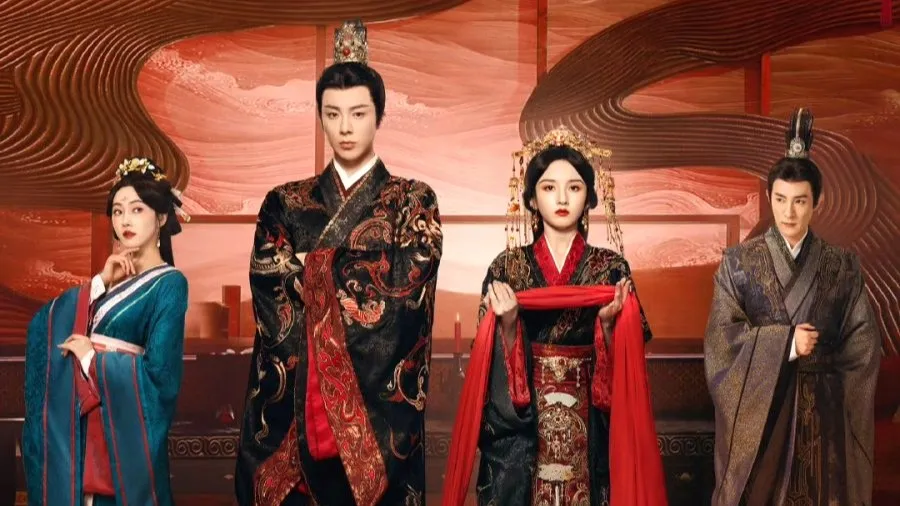
The Prisoner of Beauty Poster - Courtesy of iQIYI

|
DetailsRATING: (7/10)
NATIVE TITLE: 折腰 – Zhé yāo YEAR: 2025 EPISODES: 36 DURATION: 45’ DIRECTOR: Deng Ke, Gao Cong Kai, Wang Yi Ding SCREENWRITER: Nan Zhen ORIGINAL CREATOR: Peng Lai Ke (折腰 - Zhe yao) |


IN A NUTSHELL
- What to expect: a historical drama centered on the enemy to lovers trope where everything revolves around the conflictual relationship between the protagonists and where the enemies are weak and the political machinations are repetitive, in order to prolong the enmity between the ML and the FL.
- Strengths: charismatic supporting characters, visual and historical accuracy, beautiful battle scenes.
- Weaknesses: childish and, at times, toxic ML, insipid enemies, weak political plot.
- Recommended if you like: extremely possessive and jealous MLs, posing FLs, not overly complicated political plots, and conflicted love triangles.
- Would I rewatch it? I don't think I have the strength to see Liu Yu Ning again in such an unflattering role.
Read on to understand what makes me reluctantly endorse this drama.
Rivalry, intrigue, and a love that defies prejudice: The Prisoner of Beauty presents a delicate balance between political alliances and emotional bonds.
In this drama review of The Prisoner of Beauty, we'll explore the characters, setting, and central themes to determine whether this story is captivating… or just another romantic tale.
“A weary scholar lost his way in deep woods.
He wandered into a hidden clearing, where he saw the Goddess at her bath. She moved like drifting mist, graceful and elusive, a beauty to steal one’s breath away.
With one sway, flower blossomed; with another, the grass withered. So serene, like tiger and hare at peace, or sun and moon in quiet grace.
The scholar’s heart stirred. He longed to go to her, yet feared she’d vanish the moment he did.
He was torn between longing and fear.
In love, hesitation is the greatest foe. The more one worries, the heavier the burden until there’s no freedom, only knots and no joy.”
Plot
Wei Shao is the young Governor of Weizhou, the only survivor of the battle of Xindu in which, fourteen years earlier, his grandfather, his father and his older brother died while trying to repel the attack of the enemies of Bianzhou.
For this reason Wei Shao has sworn revenge on Qiao Gui, Governor of Yanzhou, who, after promising reinforcements, had betrayed the commitment with Weizhou causing the death of the guy’s family and many of his fellow citizens.
Fourteen years later Qiao Gui and Wei Shao’s grandmother, Lady Xu, decide to form a marriage alliance between the two Provinces that will allow their families to overcome their ancient grudges and the guy is forced to marry Qiao Man, the granddaughter of his bitter enemy.
At first, the two do not trust each other and, despite their mutual attempts to get closer, the rivalry between the two families always gets the better of them, resulting in the newlyweds being driven apart.
In addition, many enemies plot in the shadows to ruin their marriage and thus destroy the union between the Wei and Qiao clans, including Liu Yan, the heir to the State of Liangya and Qiao Man’s ex-fiancé, and Su E Huang, wife of the Governor of Bianzhou and ex-fiancée of Wei Shao’s brother.
Over time, their loyalty to their people and pursuit of a common cause brings Wei Shao and Qiao Man together and they unexpectedly find themselves developing feelings for each other.
Together the two will face mistrust, envy, tough battles and betrayal and their love will finally blossom.
Focus: Administrative Division of the Empire during the Warring States Period (c. 475-221 B.C.)

The Prisoner of Beauty Drama Review (No Spoilers)
Plot and Characters
The Prisoner of Beauty is a historical drama with a brilliant start, but which loses much of its shine during the narration.
From the first episodes, in fact, the plot is weak because it is supported simply by the events relating to the unification of the Central Plains implemented through the construction of irrigation canals that cross the different territories and by the daily skirmishes of the protagonists that continue throughout the drama and take them from being a couple only on paper to developing real feelings for each other.
The villains reveal themselves immediately and appear anything but cunning as they implement plans that are not very incisive, predictable and perfectly thwarted. Despite this, the protagonists easily manage to fall victim to their machinations because they are always too busy suspecting and plotting behind each other’s backs.
The most positive note of the drama is the “normal” family dynamics: brothers and cousins, in most cases, do not hate each other and do not try to prevail over each other as in other dramas of the genre.
Another detail that made the viewing enjoyable was the presence of Wei Shao’s four subordinates who, as in A Journey to Love, support him and create some funny moments in the face of a love situation between the protagonists that is often tense and conflictual.
Cast
I found the choice of the secondary cast very appropriate with a few more doubts for the protagonists.
Liu Yu Ning is very talented and I was sorry to see him play the role of a fixated and unreasonable man like Wei Shao (I definitely preferred him in the series A Journey to Love and The Legend of Anle).
I didn’t find Song Zu Er particularly convincing. She makes a lot of “faces” and in this drama she only alternated two expressions: a worried one and a childish one. While one minute before she seemed like Machiavelli, the next minute she was making innocent eyes at the ML to gain his sympathy. I think Zhao Lu Si would have been more suitable for the lead role in this drama.
Commendable Liu Duan Duan and Peter Ho who, despite their age perhaps no longer suitable for playing characters in the prime of life, have provided two vivid and emotional representations of two figures a little underestimated by the scriptwriters.
Always good He Hong Shan who manages to surprise me every time with her versatility in playing both positive and negative roles (the latter of which in The Glory) without ever losing credibility.
Honorable mention for Cui Yi who played impeccably in the role of the petulant Lady Zhu making her character truly unbearable and for Zhou Lu La who, after the wonderful interpretation of Sun Jun Hao in Song of Youth, also made me fall in love with Bi Zhi.
Visual Aspects and Soundtrack
The costumes, hairstyles and hair accessories in Han style are remarkable, especially those of the protagonist. The sets and external settings are very well-finished.
The battle and fighting scenes are good even if they suffer a bit from the lack of budget.
It’s a shame about the soundtrack which is rather banal and a missed opportunity to have the opening theme song Lone Wild Goose (孤雁) performed by A Yun Ga instead of Liu Yu Ning.
Trigger Scene Warning
Finally, I would like to point out that the drama contains a couple of scenes of mutilation that, personally, I found a bit excessive and disturbing.

WARNING!
FROM THIS POINT ON THE SPOILER SECTION BEGINS. DO NOT CONTINUE IF YOU DO NOT WANT TO KNOW ALL THE DETAILS OF THE DRAMA.
The Prisoner of Beauty Drama Review (Spoilers)
What Works: the Supporting Characters
The drama offers us some characters of undoubted emotional depth.
Bi Zhi for example. He is the complete opposite of Wei Shao.
Despite being poorly educated and considered by everyone to be stupid because he slavishly follows his wife’s advice, he is a brave and reliable man.
Although he is a simple stableman, in Boya he manages to obtain important military results and does so to ensure that his wife can live in peace and in a dignified manner.
The fact that he is belittled by Qiao Fan’s relatives hurts him mainly because he would like his wife to be a woman respected by everyone and he does not show any feeling of being lacking towards other men because he does not fear that the strong devotion he expresses towards his wife could make him appear weak.
I do not understand why, in a nation without capable generals and without a strong military power, a man like him, whose incredible strength allowed him to defeat entire groups of armed men by himself, was relegated to the role of stableman and his talent was not recognized even after he had tied himself to Qiao Fan.
Wei Yan is another very beautiful character: complex, multifaceted and full of contradictions. In my opinion, he is the best characterized subject of the entire series and I find him masterfully played by Liu Duan Duan.
Lady Xu is also among the most emotionally engaging characters of the series.
She is very shrewd when she forms a marriage alliance with Qiao Gui that allows the two families to overcome their old disagreements and is equally reasonable when, in episode 9, she tells Qiao Man that revenge cannot bring the dead back to life and that she hopes that marriage to her will alleviate her nephew’s obsession with revenge.
In addition to being Qiao Man’s main supporter, she also plays a fundamental role in Wei Yan’s repentance, when he thinks of betraying Weizhou in favor of Bianzhou. This is because of the special relationship that binds her nephew to her and that not even the prospect of obtaining an important political role can sever.

What Doesn't Work: the Plot and the Construction of the Male Protagonist
I find that the main weakness of The Prisoner of Beauty is the simplicity and repetitiveness of the plot.
The two main narrative threads in fact concern the plans for the canalization of the Central Plains, with all the related technical problems and political implications, and the continuous personal conflicts between the ML and the FL which, however, alone, are not enough to support an entire 36-episode series.
The subplot of the political intrigue is entrusted to two rather weak figures, whose only motivation is to demonstrate their value to the families who disowned them as children and which continues to repeat itself with the same dynamics: Liu Yun who tries in every way to take away Wei Shao’s political power over the Central Plains by continuously attacking the Weizhou Counties and Su E Huang tries at all costs to make Wei Shao and Qiao Man fight to make the Wei-Qiao alliance fail and be able to insinuate herself into the Wei family whose political influence she would like to exploit.
The only antagonist figure who initially appears stronger is Chen Pang, but unfortunately he never comes into play, contenting himself with obtaining the return of his son from Weizhou and never taking any military initiative against the enemy.
The subplot of the romantic rivalry is timidly hinted at in the first episodes of the drama, but is carried forward with little conviction by the naive Zheng Chu Yu who is soon discovered and removed from the Wei Residence and then killed by Su Xin.
Other interesting subplots such as the mystery or the political betrayals were not taken into consideration at all by the writers, making the story rather monotonous.

As for the characters, I found Wei Shao a terrible ML.
Due to the death of his grandfather, father and older brother in the Battle of Xindu, he is blinded by the desire for revenge against the Qiao Clan and behaves suspiciously and needlessly ruthless towards the FL.
Later, when he begins to feel something for the FL, he becomes jealous and childish towards her so much that he cannot tolerate any type of contact between her and other men.
At the same time, however, he is an extremely naive, ingenuous and insecure character so much so that he is constantly deceived by Qiao Man and constantly relies on the help of his counselor Gongsun Yang.
In his relationship with Qiao Man, he is at times toxic because he tries to manipulate his wife to get her attention and, when he fails to get what he wants, he reacts in an immature and impulsive way.
Furthermore, the continuous internal dilemma that pushes him to reject the feelings he has for Qiao Man because it would be like betraying his dead relative, is very annoying.
The only excuse for his behavior is that he had to take on the role of Governor at a very young age and had to shoulder the responsibility of governing Weizhou and carrying out his people’s plans for revenge against Yanzhou despite the fact that deep down he is a good and generous person.
In short, it’s been a while since I’ve seen a protagonist like this, worthy of the worst idol dramas of the past years! The only scene in which I recognized the “real” Liu Yu Ning was the one in which he argues with his cousin in episode 27.
Finally, I was a bit disconcerted by the concentration of misfortunes in the last episodes, almost as if they wanted to make up for the ease with which the protagonists managed to defeat their enemies in the rest of the drama, suffering minimal losses.

Characters and Cast
Primary Characters
Qiao Man/Xiao Qiao/Man Man (Song Zu Er) Qiao Ping’s daughter and Qiao Ci’s sister. She is Qiao Gui’s favorite granddaughter because she is the smartest and most sensible. When Yanzhou and Weizhou decide to form a marriage alliance to put an end to their disagreements, she replaces her naive cousin Qiao Fan by marrying Weizhou’s heir, Wei Shao.
Wei Shao/Zhong Lin (Liu Yu Ning) Wei Jing’s secondborn and current Governor of Weizhou. To respect his grandmother’s will and for the good of his people, he agrees to marry Qiao Man, but he is very wary of her, especially because his brother had advised him not to trust the Qiao.
Wei Yan/Shi Yuan (Liu Duan Duan) cousin of Wei Shao, son of Wei Qing Yun and favorite nephew of Lady Xu. He is a womanizer, addicted to pleasure and a regular customer of the Luozhong Tavern and is unaware that his birth was the origin of the enmity between Weizhou and Bianzhou. After learning the truth, he reluctantly agrees to return to Bianzhou and, in the end, becomes its new Governor.
Su E Huang/Lady Yu Lou (Xuan Lu) Chen Xiang’s wife, originally from the Su Clan of Wushan. Fourteen years earlier she was engaged to Wei Bao, but after the latter’s death, her relatives rushed to marry her off to the Governor of Bianzhou, hoping to gain some prestige.
Liu Yan/Mao Qing (Ji Xiao Bing) heir to the rulers of the State of Liangya and cousin of Qiao Man. Between the ages of 13 and 18 he lived with the Qiao family and fell in love with Xiao Qiao so much that he initially proposed to her. However, when she was given in marriage to Wei Shao he did everything to destroy the Qiao-Wei alliance and to conquer both Provinces.
Supporting Characters
Qiao Gui (Chin Shih Chieh) Governor of Yanzhou and grandfather of Qiao Man. He is very fond of his granddaughter because she grew up with his teachings and has assimilated his political vision. He insists on forming a marriage alliance with Weizhou that will allow them to overcome the old disagreements that arose with the failure of Yanzhou to intervene in the battle of Xindu fourteen years earlier. He dies shortly before the wedding between Qiao Man and Wei Shao, risking blowing up the alliance, but his granddaughter still manages to respect his last wish and marry the heir of Weizhou.
Qiao Yue (Feng Hui) eldest son of Qiao Gui, father of Qiao Fan and uncle of Qiao Man. When his father dies he takes over the position of Governor of Yanzhou, but he is not particularly brilliant and is badly advised by the intriguing counselor Zhang.
Zhang Pu (Yao Yiqi) Qiao Yue’s treacherous counselor.
Lady Ding (Zhang Yan Yan) Qiao Yue’s wife, Qiao Fan’s mother and Qiao Man’s aunt. She raised Qiao Man and Qiao Ci as her own children and is very close to them.
Qiao Fan/Da Qiao/A’Fan (He Hong Shan) Qiao Yue’s daughter and Qiao Man’s cousin. She is secretly in love with the stableman Bi Zhi, but is designated as Wei Shao’s bride, so her cousin decides to make her run away at night and take her place in the marriage alliance. She will marry Bi Zhi and become the Lady of Boya.
Bi Zhi (Zhou Lu La) Qiao family stableman. He is secretly in love with Qiao Fan and thanks to Qiao Man he manages to escape with her before the girl is given in marriage to Wei Shao. At Qiao Man’s suggestion, he goes to live with Qiao Fan in the unclaimed Boya County and thanks to his fighting skills and physical prowess, he is elected Commander of the County’s Military Forces.
Qiao Ping (Liu Ling Zhi) Qiao Gui’s second son and father of Qiao Man and Qiao Ci. When his father dies, he takes over as Governor of Kangjun. He is upright and loyal and does his utmost for the welfare of the people.
Qiao Ci/A’Ci (Ao Zi Yi) Qiao Ping’s fifteen-year-old son and Qiao Man’s brother. He is fearless and, despite his age, is an excellent fighter, but he is a bit naive and lacks his sister’s cunning.
Xiao Zao (Yao Xiao Xiao) Qiao Man’s personal maid who accompanies her to Weizhou when the girl marries Wei Shao.
Xiao Tao (Li Xue Qin) Qiao Man’s personal maid who accompanies her to Weizhou when the girl marries Wei Shao. She is spontaneous and enterprising and attracts the sympathy of General Wei Liang with whom she later falls in love.
Chun Niang (Hu Xiao Ting) Qiao Man’s nurse and Xiao Tao’s mother. She accompanies Qiao Man to Weizhou together with her daughter when the girl marries Wei Shao.
Wei Lun (Liu Jiao Xin) former Governor of Weizhou and grandfather of Wei Shao. Dies in the Battle of Xindu.
Lady Xu (Liu Xiao Qing) wife of Wei Lun and grandmother of Wei Shao. She is the one who proposes to Qiao Gui the marriage alliance between the two Provinces to heal the rivalry between the two families.
Wei Qing Yun, daughter of Wei Lun, mother of Wei Yan and aunt of Wei Shao. When she is still a girl she is kidnapped by Chen Pang and, after being held for three years in Bianzhou, she is brought home by Wei Lun pregnant with his son. She dies shortly after giving birth and Wei Yan is raised by Lady Xu who decides to tell everyone that he is the son of a servant to avoid endangering her grandson’s life.
Wei Jing (Yu Bo) son of Wei Lun and father of Wei Shao and Wei Bao. Dies in the Battle of Xindu.
Lady Zhu (Cui Yi) Wei Jing’s wife and mother of Wei Shao and Wei Bao. She always preferred Wei Bao to her younger son and when he died she increasingly neglected Wei Shao, leaving him in the care of his grandmother.
Zheng Chu Yu/Zheng Shu (Kong Xue Er) Wei Shao’s cousin and Lady Zhu’s lady-in-waiting. She hopes to become Wei Shao’s wife and, when he marries Qiao Man, she does everything to become his concubine with the help of Lady Zhu.
Wei Bao/Bo Gong (Gao Wei Guang) Wei Jing’s firstborn. He dies in the battle of Xindu killed by Li Su, but first hides little Wei Shao in a chest to avoid being found by the soldiers of Bianzhou.
Xiao Tan (Liu Yu) Wei Shao’s attendant.
Gongsun Yang (Wei Zi Xin) Wei Shao’s counselor. He is an excellent strategist but is also a friend and a father figure to Wei Shao as he always tries to make him reflect and lead him on the right path.
Wei Liang (Wang Cheng Si) General of the Weizhou and subordinate of Wei Shao. He is very jovial and cheerful and is also a kind-hearted person so much so that he falls in love with Xiao Tao even though she belongs to the enemy clan of the Qiao.
Wei Qu (Wu Hao Chen) General of the Weizhou and subordinate of Wei Shao. He is a womanizer and loves to have fun, but he is also very serious in battle so much so that his platoon of elite men is the best trained in the entire Weizhou army.
Wei Xiao (Liu Yi Hong) General of Weizhou and subordinate of Wei Shao. He is rather taciturn and inscrutable and in his heart he cannot forgive the Qiao Clan for their failure to intervene in the Battle of Xindu which cost the lives of his family.
Wei Duo (Chu Zi Jun) General of Weizhou and subordinate of Wei Shao. He is the youngest and most naive of all the generals of Wei Shao but he is a skilled fighter and a very good friend.
Wei Dian (Shi Dan Jiang) General of Weizhou and uncle of Wei Shao. He is the Governor of Hanjun and is one of the major political opponents of his nephew.
Lan Yun (Han Le Yao) singer of the Luozhong Tavern who Wei Yan takes as a concubine because of her resemblance to Xiao Qiao. When the girl finds out about it, at the instigation of Su E Huang, she reveals everything to Wei Shao risking causing an irreparable rift between the two cousins and between the two spouses.
Zhen Zhi (Yu Ming Xuan) County Magistrate of Xindu. After the conquest of Xindu by Bianzhou, he surrendered to General Li Su to avoid suffering to the people. For fourteen years he has harbored resentment towards the Wei Clan and, following the reconquest of Xindu by Weizhou, he refuses to recognize Wei Shao as his Governor, but in the end, thanks to Qiao Man, he will change his mind.
Yang Feng (Chen Bing) County Magistrate of Panyi. He has always been in competition with Zhen Zhi and, after the cession of Panyi to Weizhou, he has difficulty collaborating with him for the restoration of the Yongning Canal that crosses the two Counties.
Yuan Wang (Guo Jun) Governor of Rongjun. He is an ally of Wei Dian and, initially, opposes the project to expand the Yongning Canal in his commandery, but thanks to Qiao Man’s cunning plan he changes his mind and offers his support to Wei Shao.
Liu Shan (Wang Chun Yuan) uncle of Liu Yan and his counselor.
General Lin, general of Liangya. During the battle for the conquest of Panyi he was supposed to bring reinforcements to Liu Yan, but thanks to the intervention of Qiao Man he retreated and deserted along with his men.
Liu Xiao (Zhu Xuan Ting) general of Liangya and subordinate of Liu Yan. He is his right-hand man and is in charge of protecting Su E Huang during the last battle against Wei Shao.
Chen Xiang (Dai Xiang Yu) Governor of Bianzhou and husband of Su E Huang. He is in very poor health, so much so that he dies while his wife is visiting Weizhou to pay homage to Lady Xu. To prevent his uncle from harassing his wife after his death, he asks General Xue Tai to hide and protect her.
Chen Pang (Du Yu Ming) Governor of Danjun, father of Wei Yan and uncle of Chen Xiang. When his nephew dies, he takes over as Governor of Bianzhou and orders that Su E Huang be confined to the Yulou Pavilion to prevent her from overthrowing him. He insists several times that his son return to Bianzhou and manages to convince him after defamatory rumors spread in Weizhou about an alleged relationship between Wei Yan and Qiao Man. In the end, he dies of asthma, leaving the government of the Province in the hands of his son.
Chen Lie (Li Hao Xuan) Chen Pang’s attendant.
Su Xin/Zi Xin (Gong Zheng Ye) Su E Huang’s cousin. He hopes to be adopted by Chen Xiang and become the designated heir to the Beizhou Province, but the Governor dies before giving his consent. He is involved by his cousin in her revenge against the Wei and is killed by Wei Shao.
Li Su (Yang Qi Yu) General of Bianzhou who, fourteen years before the events narrated in the drama, wrested Xindu County from Weizhou, ordering the extermination of all the male citizens, of which only Wei Shao survived. He is killed by the latter after the reconquest of the County.
Xue Tai (Sun Jiao Long) General of Bianzhou and Governor of Juejun. He makes continuous incursions into the unclaimed County of Boya to recruit men for his army, but is opposed by Bi Zhi.
Gao Heng/Zheng Shi (Peter Ho) scholar invited by Wei Shao to Yujun to write a celebratory poem on the occasion of the deer hunting trip organized to expand the canalization of the Central Plains. He is fascinated by Qiao Man’s personality and takes every opportunity to sing her praises, making Wei Shao jealous.

Favorite Character: Wei Yan/Shi Yuan
He appears to be a simple man, addicted to vice and women, but in reality he has a much more complex mind than he seems, full of remorse and contradictions.
He is unable to forgive the Qiao Clan for its betrayal fourteen years earlier, but he cannot help but love the purity and generosity of Qiao Man.
He does not resign himself to being considered a useless and vicious person by his family, but he considers himself an unworthy and worthless man.
He is a loyal person who keeps his promises, but he cannot find a woman he can completely trust.
He is deeply attached to his cousin, so much so that he does not want to accept the feelings he has for Qiao Man so as not to hurt him and promises to suppress any ambitions towards her for his own good.
After learning the truth about his conception, he decides to renounce his title as heir to the Chen clan and a position of responsibility in Bianzhou in order to stay by the side of his grandmother who raised and protected him. However, when Qiao Man risks losing his respectability because of him, he voluntarily turns himself in to his father, whom he hates, to put an end to the gossip.
His departure for Bianzhou in episode 28 remains, in my opinion, the most moving scene of the entire drama, as well as his providential return to Yujun to protect the city as well as his grandmother, aunt and Qiao Man who were left defenseless in the face of the attack of Liu Yan’s army.
Un-Favorite Character: Qiao Yue
He is selfish, cowardly and self-centered.
During the battle of Xindu, he is the one who suggests to his father not to send the promised reinforcements to Wei Lun to avoid going to war with Bianzhou.
He always listens to the malicious suggestions of his treacherous counselor Zhang Pu, ignoring the good advice of his brother and wife.
After the success of the marriage alliance between Yanzhou and Weizhou, he decides to recruit beauties from all over the country to give them in marriage to the Governors of the neighboring territories and win their favor without having to face them in battle. This unfortunate plan of his will give Su E Huang the opportunity to put Qiao Ci and Qiao Man in a bad light in the eyes of Wei Shao.
He is complacent with the powerful and domineering with the weak and he shows it when Wei Shao and Bi Zhi both show up at the gates of Kangjun and he welcomes the former with all honors while blatantly ignoring the latter.
He allies himself with Liu Yan only because the latter fears the possibility that his brother will betray him simply because he controls the troops of Yanzhou and has Wei Shao as a son-in-law. To satisfy Liu Yan, he even goes so far as to kidnap his daughter and grandson, forcing his son-in-law to fight for him.
His thirst for power also pushes him to abuse the loyalty of the Panyi County Magistrate to his father to have the city gates opened by deception and hand over the County to Liu Yan.
Administrative Division of the Empire during the Warring States Period (c. 475-221 B.C.)
| Chinese Name | Translation | Function | Government |
|---|---|---|---|
州 (zhōu) |
Province |
Large regional subdivisions (macroregions) that grouped together various commanderies (郡 jùn) and counties (县 xiàn). They had administrative, fiscal, and military purposes. |
州牧 (zhōu mù) |
郡 (jùn) |
Commandery |
An intermediate local administrative unit that included multiple counties (县 xiàn). It managed local resources and had security and judicial functions. |
郡守 (jùn shǒu) |
县 (xiàn) |
County |
Basic local administrative unit. |
县令 (xiànlìng) |
村 (cūn) |
Village |
A basic territorial unit. Its purposes were taxation, military conscription, and law enforcement. |
村长 (cūn zhǎng) |
RECOMMENDED:
- GENERAL’S LADY
- THE SONG OF GLORY
- BLOSSOM
- LOVE IN THE DESERT
- MELODY OF GOLDEN AGE
Thanks for reading this far!
I hope you enjoyed my article. If you like my work and want to support me, buy me a coffee☕