
Swords into Plowshares (2026) Chinese Drama Review | Plot & Cast
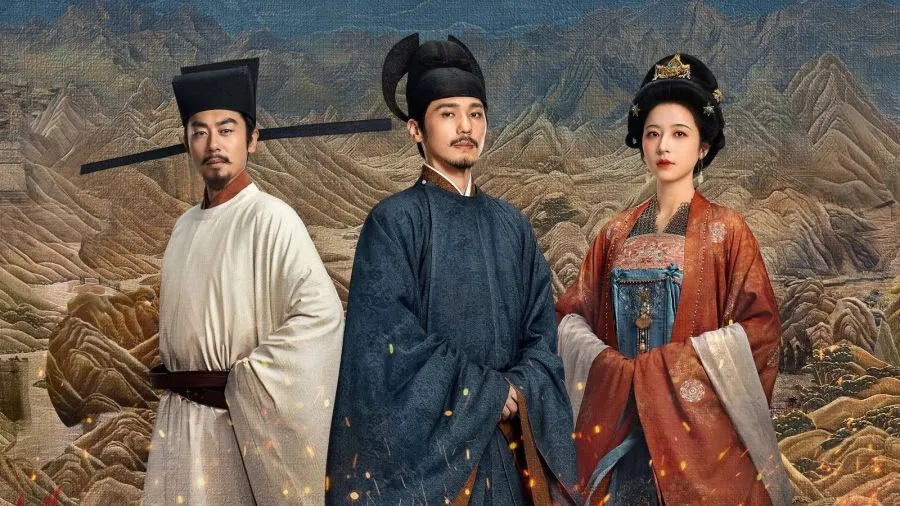
Swords into Plowshares Poster - Courtesy of CCTV

|
DetailsRATING: (7/10)
NATIVE TITLE: 太平年 – Tàipíng nián YEAR: 2026 EPISODES: 48 DURATION: 45’ DIRECTOR: Yang Lei, Lu Beike SCREENWRITER: Dong Zhe |


IN A NUTSHELL
- What to expect: Swords into Plowshares is a historical drama that paints a faithful portrait of the Five Dynasties and Ten Kingdoms period, a turbulent era marked by wars, frequent changes of power, and the rise of young figures destined to leave an indelible mark on Chinese history. Through complex political strategies and intertwined personal destinies, the drama transports the viewer to a world of power, courage, and betrayal where shrewdness and pragmatism often matter more than heroism.
- Strengths: the realism and historical accuracy of the narration, the evocative settings and exceptional visual effects, the excellent cast.
- Weaknesses: the wordy screenplay, the crowded supporting cast, the occasionally intricate interplay between the storylines.
- Recommended if you like: historical dramas focusing on real political events, stories with just a hint of romance, series with very realistic and not very fictionalized protagonists.
- Would I rewatch it? Maybe, but with an energy drink and a good dose of digestive alongside.
Read on to see if this drama is for you.
In an era marked by incessant wars, dynastic ambitions, and fragile political balances, Swords into Plowshares attempts to transform history into storytelling, following the fate of men and kingdoms suspended between ruin and rebirth. The drama takes us into the twilight of the turbulent period of the Five Dynasties and Ten Kingdoms, where generals, kings, and officials navigate a world where every decision can change the course of history. Through battles, court intrigue, and governing ideals, the series aims to recount not only the events of an era, but also the slow formation of a political vision capable of turning swords into plowshares.
In this review of Swords into Plowshares, I will attempt to analyze how this ambition truly translates into a compelling narrative, critically examining the strengths and weaknesses of a drama that constantly shifts between historical reconstruction and television narration.
“One day, you’ll understand that in this world you have no choice but to do many things, but that does not mean they are right.”
Plot
In China, the fall of the long-lived Tang Dynasty ushered in a period of profound political instability, marked by the succession of three dynasties in the space of a few decades. In 936 AD, yet another coup led to the founding of the Later Jin Dynasty by the military governor of Hedong, Shi Jing Tang. The military governor's rise to the throne, however, came at a high price: the Central Plains were effectively subordinated to the Kingdom of Khitan, to which Shi Jing Tang ceded the Sixteen Prefectures of Yan and Yun in exchange for military support, even acknowledging the ruler as his "godfather" and earning himself the humiliating title of "Son-Emperor."
Meanwhile, to the south, in the vassal kingdom of Wuyue, the death of King Qian Yuan Guan forced his successor Qian Hong Zou to confront rampant internal corruption and growing external pressure.
The empire's situation worsens when, in 942 AD, Shi Jing Tang dies, and his son Shi Chong Gui refuses to submit to the Khitan, sparking further political tensions. In an effort to assist his brother and preserve political balance, nineteen-year-old Qian Hong Chu, ninth prince of Wuyue, travels on a mission to the court of Da Jin with minister Shen Wen Qi.
Upon arriving in the capital Bianliang, Qian Hong Chu finds himself caught up in the clashes with the Khitan and encounters three figures destined to profoundly influence his destiny: the idealistic noble Guo Rong, the charismatic Imperial Guard officer Zhao Kuang Yin, and, above all, the legendary statesman Feng Dao, whose pragmatic and far-sighted philosophy of government will leave an indelible mark on the young prince.
The experience radically transformed Qian Hong Chu, who, returning to Wuyue, abandoned his youthful idleness and impetuosity. With the help of his faithful Sun Tai Zhen, he committed himself to combating the corruption of civil officials and the oppression of the nobles over the people. When the crisis engulfs the brothers Qian Hong Zuo and Qian Hong Zong, the young man decided to take the reins of the nation and, albeit reluctantly, ascended the throne.
In the Central Plains, the Later Han Dynasty founded by the measured Liu Zhi Yuan gave way to the Later Zhou Dynasty established by the decisive general Guo Wei. However, with the death of his successor, the visionary Guo Rong, a new political upheaval shook the north: Zhao Kuang Yin's rise to power marked the beginning of the Song Dynasty and paved the way for the future reunification of China.
Under growing pressure from the Song army, Qian Hong Chu makes a decision destined to go down in history: he cedes the thirteen prefectures of Wuyue to the Central Empire, achieving a bloodless unification and ensuring peace for his people after decades of war and fragmentation.

Swords into Plowshares Review (No Spoilers)
Plot and Narrative Pace
Plot-wise, the fact that the series follows two distinct storylines — set in different states, with distinct characters and power dynamics — sometimes complicates the drama's enjoyment. The two narrative lines intersect, but remain structurally separate, and the frequent abrupt cuts from one scene to the next, especially between the end of one episode and the beginning of the next, accentuate the discontinuity. The superimposed location of the events attempts to alleviate the sense of disorientation, but it doesn't always provide immediate orientation, leaving the viewer in a state of constant realignment.
The political plot, moreover, is particularly dense: two kingdoms are involved, numerous institutional figures, complex positions, and intertwined alliances and relationships. In this context, it's easy to confuse roles and positions, especially in the initial episodes, where the atmosphere is dominated by a constant sense of apprehension over the threat of war looming over all states.
Script
In terms of the screenplay, the series is excessively wordy, with dialogues that are often very (too) technical or that dwell on concepts already expressed without developing them into deeper reflections that analyze their concrete consequences. Conversations often limit themselves to reiterating already known facts, without making the transition from observation to analysis that would give impetus to the narrative. This results in a slow pace, in which verbal exposition prevails over action, and words end up describing what the viewer has already understood, rather than opening up new scenarios.
The limitation appears even more evident when considering the enormous potential of the historical context depicted, rich in conflicts, crises, and transformations that could translate into visually striking sequences. However, this potential remains largely untapped: the most dramatic events are evoked rather than shown, narrated rather than staged. The overall impression is that of a story based on epic premises, but one that chooses to keep them on the margins, relying primarily on dialogue rather than visual representation.
As the series' supporters point out, this drama undoubtedly constitutes an excellent historical account, as it faithfully recounts the events surrounding the end of the Five Dynasties and Ten Kingdoms Period and the rise of the Song Dynasty.
In this context, elements of realism are noteworthy, such as the clear contrast between the sophistication of the political discourse of ministers and officials and the impulsive naivety with which the young protagonists approach the same issues, almost as if to underscore the distance between the veteran hardened by the state machine and the idealist lacking the necessary mindset. Equally compelling is the choice to show court officials caught off guard, without a backup plan, exposed to the unpredictability of political contingencies. However, faithfulness to the sources and verisimilitude do not automatically equate to narrative effectiveness.
While acknowledging the series' cultural and educational importance, I beg to differ with the view that it proves successful as an audiovisual product: the already noted verbosity and technical complexity of the dialogue is complemented by a narrative approach that is at times didactic, limiting itself to retracing events as recorded by history, without making any choices regarding focus or dramatic tension that might heighten its impact. The plot twists, while predictable for those already familiar with the historical outcome, lose their edge even for the uninitiated viewer, as the screenplay constantly scatters clues and foreshadowing that make the direction of events more predictable.
The result is a narrative that is accurate on a documentary and realistic level, but rarely capable of surprising or sustaining emotional attention.
Characters
Character-wise, the protagonists of Swords Into Plowshares are portrayed as antiheroes, a choice that in theory could offer interesting narrative insights, but in practice renders them incapable of sustaining the weight of such an ambitious historical narrative. Their virtues are constantly counterbalanced by far-from-ignorable flaws, with the result that no single figure truly embodies a solid moral or strategic center. Their actions produce predictable outcomes that rarely translate into scenes with high emotional impact, thus diluting the story's epic scope.
Female representation appears particularly weak: in attempting to avoid the archetype of the invincible, Machiavellian protagonist common in other historical dramas, the series ends up presenting characters who are superficial, unaware, and uninteresting. Even with respect for the historical context, it's difficult to accept a narrative in which no woman shows concern for the community or outrage over social injustice, resulting in an overall dulling and loss of narrative effectiveness.
Added to this is the proliferation of supporting characters, introduced with formal emphasis but lacking any real impact on the plot. Many of these figures appear briefly and then disappear without a trace, generating unfulfilled expectations and fueling confusion about who truly plays a central role. In an already complex and disjointed structure, this overabundance of unnecessary presences further burdens the structure, weakening the viewer's engagement.

Cast
Among the strengths of Swords Into Plowshares, alongside its solid and rigorous direction, is undoubtedly its cast, the true highlight of the series. The ensemble is composed of professionals capable of lending depth and credibility to even the most verbose passages of the script.
Bai Yu, Zhou Yutong, Zhu Yawen, and Yu Haoming demonstrate preparation and restraint, managing to imbue their characters with a spark of humanity and, at the same time, an aura of a bygone era that makes them perfectly attuned to the historical context of the story.
Impeccable in their determination and inscrutability are veterans Dong Yong and Ni Dahong, respectively in the roles of the seasoned Minister Feng Dao and the tough Generalissimo Hu Jin Si, figures who embody the weight of political and military responsibility with sober authority.
Finally, the younger ones Ren Yilun (already appreciated in Twelve Letters and Love Between Lines) and Wu Haochen (remarkable in The Prisoner of Beauty) are surprising, offering passionate and sincere performances in the roles of the Emperor of Da Jin and the sovereign of Wuyue, capable of transforming secondary roles into truly significant stage presences.
Visual Aspects and Soundtrack
Overall, the drama's visuals represent the high point of the production, but it alternates cinematic ambitions with questionable technical and editing choices that ultimately compromise its effectiveness.
The outdoor sequences, constructed primarily in wide shots, reveal a clearly cinematic directorial approach: the horseback chases, sailing ships, and marching caravans are structured with broad compositions and expertly crafted cuts that enhance the space and the epic dimension of the story. The settings and costumes, marked by sobriety and historical accuracy, contribute to reinforcing the impression of realism, offering a coherent and credible visual context. However, the choice of a highly desaturated palette and overly muted lighting occasionally compromises the legibility of the image: in several scenes, details are lost, and in the most tense moments, it is even difficult to clearly distinguish the characters.
Added to this is the fact that the episodes aren't always adequately visually connected: between the end of one and the beginning of the next, there's often no visual connection to help orient the viewer, and for several seconds the viewer remains suspended, without a clear reference point as to where the action is taking place. The abrupt transitions from one storyline to the next accentuate this sense of spatial discontinuity. When an explicit location cue isn't superimposed during the editing phase, the viewer is forced to mentally reconstruct the context, risking a loss of fluidity and visual immersion.
Some small errors in the sound management are also noticeable: in certain sequences, the dubbing overlaps with the footage in an uneven manner (such as when Zhang Yan Ze's voice abruptly interrupts a horse's neighing), revealing the artificiality of the post-production intervention.
The soundtrack is perfectly consistent with the epic and historical structure of the story, contributing significantly to the construction of the atmosphere. The songs make extensive use of traditional instruments and sounds that recall both ancient military marches and the songs of the Mongolian steppes, evoking an archaic and solemn soundscape. The vocal parts favor performers with a wide range and a powerful timbre, capable of giving the pieces a heroic scope and constant dramatic tension. The result is a skillful fusion of past and present: modern arrangements intertwine with melodies that seem to emerge from a remote time, creating an effect of evocative historical continuity and infusing the images with a sense of grandeur and destiny.
Disturbing Scenes
It's certainly shocking to discover that during the Five Dynasties and Ten Kingdoms era, cannibalism was widespread and civil officers were often arbitrarily subjected to martial law. This provides a glimpse into a political and social context in which famine, war, and personal ambition eroded not only state structures but also moral codes.
However, for a viewer accustomed to historical dramas, the staging isn't as crude as some have suggested. The series depicts public executions, killings, assaults, and skeletons abandoned along the streets, elements that contribute to a context of degradation and violence, but without indulging in graphic complacency or dwelling on macabre details. Even cannibalism, so heavily emphasized in online discussions, appears directly only in one brief and unspectacular scene. Overall, in short, the direction favors a sober realism, avoiding the shock effect and suggesting horror without transforming it into sensational entertainment.

WARNING!
FROM THIS POINT ON THE SPOILER SECTION BEGINS. DO NOT CONTINUE IF YOU DO NOT WANT TO KNOW ALL THE DETAILS OF THE DRAMA.
Swords into Plowshares Review (Spoilers)
What Works: The Story and Visual Impressions
If there's one element that works with undeniable solidity in Swords Into Plowshares, it's the historical power of the events it narrates. The story is rooted in a turbulent period, marked by wars, overthrows of states and governments, rebellions, and betrayals, a time when power carries the concrete weight of weapons and when military figures play a crucial role in decisions made in palace halls or on the battlefield. It's an ambitious portrait, conveying the sense of an unstable world where kingdoms totter and alliances shift rapidly, and this constant precariousness lends the story an epic yet profoundly realistic feel.
In this context, it's particularly engaging to witness the rise of the young Qian Hong Chu, who, from the carefree and rebellious son of the sovereign, gradually transforms into a shrewd strategist and a solid and aware political figure. Its evolution is intertwined with a dense web of intrigue, alliances, and tensions concentrated in a relatively short yet eventful time span, where every decision can determine the survival or fall of an entire state.
While not always maintaining a fast pace and occasionally indulging in a certain verbosity, the story retains an undeniable charm: the suggestion of witnessing a fragment of history in motion. This impression is supported by a historically accurate aesthetic and a cinematic visual design: expansive landscapes, harsh and solemn natural settings, and cities scarred by war are rendered with spectacular images that amplify the sense of grandeur and fate of the era. In these moments, the drama truly succeeds in conveying the vastness of the scenarios and the harshness of the time depicted, offering the viewer a convincing and evocative visual immersion.
What Doesn't Work
The Characters
The characters are the element of Swords into Plowshares that left me most perplexed: in a chorus of unresolved and contradictory personalities, I felt the lack of a truly heroic center of gravity. The attempt to construct ambiguous and fallible figures is, on paper, interesting and even consistent with the work's realistic tone; however, in practice, it ends up leaving a sense of incompleteness and gives the impression of characters who achieve their goals more through favorable circumstances or the mistakes of others than through genuine moral or strategic greatness. The result is a story in which victories appear not as the fruit of extraordinary vision or courage, but as contingent outcomes, devoid of the symbolic force that a historical fresco of such magnitude could — and perhaps should — have offered.

In this respect, the portrayal of women constitutes a further weakness of the drama, as the female characters often appear superficial and lack impact. While in some recent historical dramas, the protagonists appear almost too perfect, capable of influencing events with cunning and strategy, here they seem devoid of any initiative or practical intelligence. While we understand that the historical context imposed stringent norms regarding female virtue and modesty, it is difficult to believe that in such a complex era, there was no room for at least one brilliant, courageous, or shrewd figure.
In episode 8, in particular, Sun Tai Zhen's attitude is striking. On the eve of the battle against Zhang Yan Ze, instead of urging Qian Hong Chu with words of encouragement, he urges him to accept his own uselessness and focus on their marriage, leaving the important matters to others, without worrying too much about the kingdom's problems. It's legitimate for the drama to distance itself from the archetype of the invincible or Machiavellian protagonist depicted in other series, but even from a more realistic perspective, her actions should reflect a modicum of virtue and her speeches should demonstrate a coherent argument capable of generating engagement.
This very approach also ends up impacting the romantic component, which appears surprisingly muted. This is partly due to the very nature of the events narrated and the harshness of the historical context, which leaves little room for romance; partly, however, it is a consequence of the characterization of the protagonist, often portrayed as stubborn, unreasonable, and unresponsive to the political responsibilities that weigh on her partner. The result is a relationship devoid of real emotional or intellectual dialogue, which struggles to become a narrative engine. Thus, rather than offering a sentimental counterpoint to institutional tensions, the female presence remains marginalized, incapable of generating genuine moments of pathos or intrigue, and contributing to the general sense of emotional independence of the male characters that pervades the entire series.
Also on the character level, the narrative introduces a considerable number of secondary figures, often introduced with emphasis — their appearance is accompanied by a superimposition of their name, courtesy name, and institutional role — only to later discover that they have no real impact on the plot. These are fleeting appearances that have no substantial impact on events, and once they leave the scene, they are neither mentioned nor revisited. This formal and seemingly significant introduction generates an implicit expectation in the viewer: each new face seems to promise narrative developments or turning points that, however, never arrive. The result is twofold: on the one hand, it fuels a tension that remains unresolved; on the other, it creates a certain confusion in distinguishing which characters are truly central and which are mere extras invested, for a few minutes, with only nominal importance. In a story already marked by a certain dispersion, this proliferation of weightless figures ends up further burdening the structure, distracting the viewer from what is truly important.
The Script
The drama also exhibits some weaknesses in its script: the writing appears excessively wordy, to the point of negatively impacting the overall narrative pace. The characters speak a lot, but their dialogues often feel technically complex or constructed on redundant concepts that rarely translate into action capable of giving events a compelling twist or enlivening the plot. Conversations often tend to reiterate the same observations about the current situation — the enemy looms, the kingdom is fragile, the people are suffering — without these premises being followed by deeper reflections on the strategic implications or possible solutions. This results in a slow narrative progression, in which verbal exposition systematically prevails over staging, and in which words, rather than opening up scenarios or outlining choices, seem merely to photograph what the viewer has already realized.
The paradox is that the drama has extraordinary narrative potential: it recounts a particularly dark period in Chinese history, marked by war, poverty, famine, and even cannibalism — a context that could give rise to visually striking sequences, such as battles, riots, and large-scale popular movements. Yet this potential remains largely untapped. The war is constantly evoked but rarely shown: we listen to war reports, we pass through devastated cities, we observe lines of refugees seeking shelter, but the armed conflict, the actual battle, remains off-screen. The action is often narrated rather than represented, reported rather than experienced. I confess that initially I continued watching simply to see when the first dynamic scene would finally appear, because in the first seven episodes, with the exception of the debut episode, I only witnessed an endless series of discussions.

Characters and Cast
Primary Characters
Zhao Kuang Yin/Yuan Lang (Zhu Ya Wen), second son of Zhao Hong Yin and an officer in the Imperial Guard of the Da Jin Dynasty. After Shi Chong Gui's accession to the throne, he was appointed Commander of the 18th Infantry Battalion of the Imperial Guard, and when Guo Wei subsequently took power, he was assigned the role of Commander of the Imperial Guard's cavalry units. Following the victory at the Battle of Guanping, Emperor Guo Rong of the Later Zhou Dynasty appointed him Grand Commander of the Imperial Guard, and after his death, the army acclaimed him Emperor Taizu of the Song Dynasty.
Qian Hong Chu/Hu Zi (Bai Yu), ninth prince of Wuyue (a vassal state south of the Central Plains), biological son of King Qian Yuan Guan, known as the "Fisher Prince" for his carefree and naiveté. After his sixth brother, Qian Hong Zou, became king, he was appointed Commander of the Inner Guard, nominal Minister of Public Works of the Da Jin, Chief Secretary of the Grand Marshal's Office, and Officer of the Zhenghai and Zhendong Armies. For facilitating Emperor Gaozu's accession to the throne, the Emperor appointed him General of the Right Guard, with a protocol rank equivalent to the Three Departments. During the Wuyue War against Nan Tang, he was appointed Military Observer and Supervisor of Military Supplies of the Southeastern Front Mobile Army Camp. After quelling Cheng Zhao Yue's attempted rebellion, he was appointed Prefect and then Superintendent of Mercantile Affairs of Taizhou. Following the death of Qian Hong Zou and the coup that deposed his brother Qian Hong Zong, he became King of Wuyue, but renounced the title to allow Zhao Kuang Yin, the first emperor of the Song Dynasty, to unify the empire.
Sun Tai Zhen/Zhen Niang (Zhou Yu Tong) daughter of Lady Yu. To repay Qian Hong Chu for his help in rescuing her son Qian Hong You, Lady Yu sends her to serve the ninth prince, secretly hoping the two would fall in love. In 948 AD, she marries Qian Hong Chu, becoming the queen of Wuyue. During the Later Zhou Dynasty, she is awarded the title of Lady Xiande (meaning "worthy and virtuous") of Wuyue, and Zhao Kuang Yin bestows upon her the title of Lady Xiande Shunmu (meaning "worthy, virtuous, obedient, and harmonious") of Wuyue.
Guo Rong/Jun Gui/Chai Rong (Yu Hao Ming) adopted son of Guo Wei and administrative officer of the mixed (Han and Shatuo) cavalry and infantry troops of Hedong Circuit under the military government of Liu Zhi Yuan. After the latter's accession to the throne, he was appointed General of the Left Division of the Gate Guard. Following the death of Emperor Gaozu and the accession of his adoptive father, he was appointed Military Governor of Zhenning and three years later ascended to power as Emperor Shizong.
Feng Dao/Ke Dao (Dong Yong) Director of the Imperial Gate Secretariat and Court Chancellor in the Later Jin Dynasty, he served as an official under eleven emperors and four dynasties (the last of which was the Later Zhou Dynasty of Emperor Shizong). Thanks to his pragmatic governing philosophy, which prioritized the well-being of the people over rigid dynastic loyalty, he positively influenced Qian Hong Chu's political vision, leading to the first bloodless unification in Chinese history.
Supporting Characters
Khitan
Yelv De Guang (He Zi Ming) Emperor of Khitan and godfather of Shi Jing Tang. After the victorious siege of Bianliang, he re-subjugates Da Jin and is crowned Emperor Liao Tai Zong of Da Liao. However, he realizes that he cannot break the indomitable spirit of the Central Plains people and decides to return to Khitan, but dies suddenly on the road to Luancheng.
Lady Shulv Empress Dowager of Khitan.
Yelv Jieli/Po Dan Imperial Censor of Khitan. During the siege of Bianliang, he is captured by Zhao Kuang Yin during the raid on Zhang Yan Ze's military camp and is subsequently appointed by the Khitan emperor as Commissioner of Han Affairs in the Eastern Capital.
Yelv Talie Khitan official who accompanies Yelv Deguang to Bianliang.
Central Plains
Shi Jing Tang (Hai Yi Tian) new military governor of Hedong. In 936 AD, he ceded the 16 prefectures of Yan and Yun to the Khitan Kingdom to gain the military support needed to overthrow the Later Tang Dynasty and establish the Later Jin Dynasty. He then swore fealty to the ruler Yelu Deguang and, despite being younger than him, recognized him as his godfather, becoming known by the humiliating title of "Emperor-Son" (i.e., emperor subservient to the Khitan).
Li Shi/Lady Li (Zhao Zi Qi) Empress of Shi Jing Tang and mother of Shi Chong Rui.
Shi Chong Rui, Seventh Prince and designated heir of the Da Jin. At the time of his father's death, he was three years old and was entrusted to Feng Dao to protect him from Prince Qi and raise him in his residence.
Shi Chong Gui (Ren You Lun) Prince Qi of Da Jin and son of Shi Jing Tang. In 492 AD, he ascended the throne and refused to submit to the Khitan, sparking three consecutive wars with the northern peoples. Following the defection of the most prominent generals of the Da Jin army, he was forced to surrender to the Khitan and surrender to their sovereign following the siege of Bianliang.
Lady Ding (Luo Xuan) Lady of Chu, Empress of Shi Chong Gui, and mother of the Crown Prince of Da Jin. She was tortured and killed by Zhang Yan Ze to force Feng Dao to submit to Yelv De Guang, allowing him to enter Bianliang.
Fan Zhi/Wen Su (Ji Chen Mu) scholar of the Hanlin Academy, Director of the Administrative Review Section of the Da Jin and close associate of Feng Dao.
Sang Wei Han/Sang Guo Qiao (Huang Chao) Military Governor of the Jinchang Army appointed by Chancellor Feng Prefect of Kaifeng in preparation for the siege of Bianliang.
Zhao Hong Yin (Hao Ping) Deputy Supreme Commander of the Imperial Guards (Cavalry and Infantry) of Da Jin and father of Zhao Kuang Yin.
Zhao Guang Ji, deceased eldest son of Zhao Hong Yin.
Zhao Kuang Yi, third son of Zhao Hong Yin.
He Zhen (Xia Fan Yin) Wife of Zhao Kuang Yin and mother of Zhao Kuang Yin.
Yao Yuan Fu (Yao Zeng Qiang) Deputy Commander of the Imperial Guards of Da Jin, subordinate to Zhao Hong Yin.
Shi Shou Xin (Jiang Xiao Lin) Deputy Commander of the Imperial Guard Infantry and subordinate to Zhao Kuang Yin.
Li Ji Xun (Xu Feng) Commander of the Da Jin's Personal Imperial Guard.
Xu Ding Chen/Xu Xuan (Zhao Zheng Yang) Secretary of the Central Secretariat of Nan Tang (Southern Tang) and head of the Nan Tang delegation to the Da Jin's court.
Zhang Yan Ze (Jia Hong Wei) Grand Commander and Military Governor of the Zhangyi Army. He is known for his violence against civilians, including killing the inhabitants around his military camp to feed his soldiers, but Shi Jing Tang continues to ignore his atrocities until the end. During the third war against the Khitan, he surrenders to the enemy and rebels against the Da Jin. After the conquest of Bianliang, he is appointed provisional Governor of the eastern capital, but then, due to the violence he perpetrated against the inhabitants of Bianliang, the Emperor sentences him to death at Feng Dao's request.
Zhang Shi (Dai Yi), deputy to Zhang Yan Ze. He testifies to the commander's misdeeds before the Emperor but is dismissed and returned to Zhang Yan Ze.
Du Chong Wei, military governor of Shun and Commander-in-Chief of the Yexia Army, the largest army in the Da Jin army. During the third war against the Khitan, he surrenders to the enemy, taking his 200,000 soldiers with him.
Liu Zhi Yuan (Yu Yang), Prince of Beiping and Lord of Taiyuan, Commander-in-Chief of the Jinyang Army and Military Governor of Hedong. After the expulsion of Yelv Deguang, he ascends to the throne in the sixth month of 947 AD as Emperor Gaozu of the Later Han Dynasty.
Li San Niang (Xue Jia Ning), empress of Liu Zhi Yuan.
Liu Cheng Xun (Lin Shao Yang) Prince Wei, eldest son of Liu Zhi Yuan, Prefect of Kaifeng, and Senior General of the Imperial Guard of the Left. He dies mysteriously.
Liu Cheng You (Lin Jun Yi) Prince Zhou, second son of Liu Zhi Yuan.
Guo Wei/Wen Zhong (Jiang Kai) Father of Guo Rong and subordinate of Liu Zhi Yuan. After the accession of Emperor Gaozu to the throne, he is appointed Commissioner for Military Affairs and Supreme Commander of the Imperial Gate Guard. In 951 AD, following a coup d'état, he ascends to the throne as Emperor Taizu of the Later Zhou Dynasty but dies three years later.
Wang Pu (Guo Dong Hai) Secretary of the Guo Residence. When Guo Rong comes to power, he appoints him chancellor.
Guo Tong (Zhou Jia Nan) Guo Wei's second son.
Guo Xin (Qiao Zi Tong) Guo Wei's third son.
Liu Luo Jia (Una You) wife of Guo Rong.
Chai Zong Yi (Luo Jun Xi) Guo Rong's eldest daughter.
Wuyue
Qian Yuan Guan (You Yong Zhi) King Wenmu, ruler of Wuyue and son of the famous King Wusu. He died the same year as Emperor Shi Jing Tang and was succeeded by his son Qian Hong Zuo, who was recognized as regent by Shi Chong Gui.
Huang Wei (Xie Bo) eunuch deputy director of the Eight Halls and palace attendant to the king of Wuyue.
Wu Shi/Lady Wu (Yu Xiao Lei) wife of Qian Yuan Guan and mother of Qian Hong Chu.
Xue Wen (Wan Guo Peng) personal servant of Qian Hong Chu, with him since he was a teenager.
Qian Hong Jun (Guo Chong) adopted son of Qian Yuan Guan and First Prince of Wuyue. He is the Pacification Commissioner of the Eastern Prefecture and acting Supreme Commander of the Army, but is suspended from his duties when Cheng Zhao Yue exposes the scandal involving bribes received by the Shanyue Company from some court officials.
Qian Yuan Yi (Zhang Lei) Fifth General of the Prince's Residence of Jinhua Commandery, fifth brother of the King and biological father of Qian Hong Jun.
Shen Wen Qi/Ru Yu (Zhao Zheng) Supervisor of Secret Military Affairs and associate of Qian Hong Jun. Following Qian Hong Jun's deposition, he is sent to coordinate public works in the Liaoqian Garrison, near Lake Taihu. After the beheading of Ouyang Kuan by the Ninth Prince, he is appointed the new Prefect of Wenzhou and later becomes the Wuyue Envoy to the Central Court.
Qian Hong You/Sun Cheng Zuo/A'Zuo/Sun Ben (Liu Chang) Third Prince of Wuyue, Commander-in-Chief of the Inner Guard Archers and all armies, and Marquis of Xi'an. Accused of high treason by Dai Yun, he is imprisoned and only released when his mother, Lady Yu, threatens Hangzhou with her naval fleet. After being demoted to a commoner, he becomes the young lord of Huanglong Island and on several occasions aids Quan Hong Chu thanks to his extensive merchant network.
Qian Hong Zuo (Wu Hao Chen) Sixth Prince of Wuyue, biological son of Qian Yuan Guan and deputy commander of the Zhenhai and Zhendo military districts. After Qian Yuan Guan's death, he becomes the new ruler of Wuyue. Following Liu Zhi Yuan's accession to the throne, he was appointed Grand Councilor of the Palace, Honorary Grand Commandant (tai wei), Chancellor, and Co-Head of the Office of the Grand Marshal of the Imperial Armed Forces. He died after a few years of reign.
Lady Yang, wife of Qian Hong Zuo and daughter of Yang Ren Quan.
Qian Hong Zong (Zhu Jia Qi), Seventh Prince of Wuyue, biological son of Qian Yuan Guan, and Deputy Commander-General of the Internal Personal Guard. When Qian Hong Zuo came to power, he appointed him Chief Councilor of the Chancellery.
Yuan De Zhao/Ming Yuan (Wang Shuo), Academic Advisor to the Institute of Religious Affairs and Minister of Wuyue.
Du Jian Hui (Jia Rui Ha), Director of the Central Secretariat of Wuyue and father of Du Zhao Da.
Yo Gong Bo, Minister of Revenue of Wuyue.
Shuiqiu Zhao Quan (Bao Jian Feng) Commander of the River Engineering Corps and Minister of Wuyue. After Qian Hong Zuo's accession to the throne, he became the king's most trusted minister and was appointed Vice Chancellor of the Right, Deputy Military Governor of Zhengdong, Grand Commander of the Wuyue Army, and Administrative Officer of the Grand Marshal's Office. During the war against Nan Tang, he was appointed Camp Supervisor of the Southern Campaign and following the victory, was appointed Assistant to the Sovereign, Military Governor of Xuande, and Chief Inspector of the Inner Guard (infantry and cavalry), nominal Prefect of Huzhou, and Duke of Wuxing.
Liu Yan Chen (Chang Di) Commander of the Third Unit of the Personal Guard of the Sovereign of Wuyue. He was appointed Deputy Escort Officer and accompanied Shuiqiu Zhao Quan and Qian Hong Chu to pay homage to the new Emperor Bianliang and deliver the annual Wuyue tribute.
Zhang Jun (Wei Bing Hua), a Wuyue official. During the war against the Nan Tang Deputy, he was appointed Internal Commander of the troops of the Southern Campaign and, after the victory, was awarded the positions of Minister of War, Commander-in-Chief of the Inner Guard Cavalry, nominal Prefect of Xuanzhou, and Marquis of Xuancheng.
Zhao Cheng Tai (Du Le), a Wuyue official. During the war against the Nan Tang Deputy, he was appointed Deputy Military Inspector of the Southern Campaign and, after the victory, was awarded the positions of Deputy Minister of War, Commander-in-Chief of the Inner Guard Infantry, nominal Prefect of Muzhou, and Marquis of Shouchang.
Yang Ren Quan (Hu Yun Qing) Co-Deliberator of the Chancellor's Office, Commander of the Inner Guard Cavalry, and father-in-law of Qian Hong Zuo. During the war against Nan Tang, he was appointed Commander-in-Chief of the Southern Campaign troops and following the victory, he was awarded the positions of Military Governor of Zhongwum, Honorary Commander of the Inner Guard (infantry and cavalry), and Duke of Xuan.
Guo Shi Cong (Zhu Hai Jun) Commissioner for Military Farmland Management of Zhejiang Prefecture, uncle of Tian Jun Yi, appointed Co-Deliberator of the Chancellor's Office after Yang Ren Quan was appointed Commander-in-Chief of the Southern Campaign troops.
Wu Cheng/Zheng Chen (Liu Jian Wei) Minister of Rites, Superintendent of Western Secretariat Affairs, and brother of the late King Qian Yuan Guan. Following Cheng Zhao Yue's attempted rebellion, he was removed from court for political reasons and appointed Prefect of Fuzhou and Military Governor of the Weiwu Army.
Hu Jin Si (Ni Da Hong) Commander of the Right Wing of the Inner Guard Troops (cavalry and infantry) of Wuyue and Qian Yuan Guan's most trusted official. To prevent him from supporting Cheng Zhao Yue's attempted rebellion, Qian Hong Zuo awarded him the title of Grand Marshal with interim powers over all military affairs in the capital.
Hu Jing (Gao Yu Qing) Minister of Public Works of Wuyue and son of Hu Jin Si. He was implicated in the Shanyue Company bribe case, but was not relieved of his duties.
Shen Cheng Li (Yan Lin Fei) Deputy Commander of the Right Division of the Inner Guard Infantry, Nominal Prefect of Chuzhou, Actual Commander of the Xiaoshan Military Camp, and deputy to Hu Jin Si. During Cheng Zhao Yue's attempted rebellion, he will act under the command of Qian Hong Chu to arrest the rebels.
Dai Yun (Chen Zhi Hui) Supreme Commander of the Inner Guard (infantry and cavalry) and uncle of Qian Hong You. After Qian Yuan Guan's death, he is accused of rebellion and summarily executed by Hu Jin Si, so that Qian Hong You could be stripped of his military power and dismissed on charges of high treason.
He Cheng Xun (Wang Zhi Peng) Commander of the First Unit of the Personal Guard of the Ruler of Wuyue. In league with Du Zhao Da and Cheng Zhao Yue, he smuggled military supplies destined for the Wuyue army to the Southern Tang Empire. To avoid detection, he accused Dai Yun of rebellion and had him sentenced to death. Later, thanks to Cheng Zhao Yue, he was appointed Commander of the Fourth Unit of the Inner Palace Guard, but then, during the failed rebellion, he betrayed him and became Qian Hong Zong's right-hand man.
Du Zhao Da (Li Bo), son of Chancellor Du and Chief Supervisor of the Wuyue Inner Palace Garrison. In league with He Cheng Xun and Cheng Zhao Yue, he smuggled military supplies destined for the Wuyue army to the Southern Tang Empire. For this, he was denounced by his two accomplices and executed.
Cheng Zhao Yue (Zhao Jian), Grand Director of the Shanyue Company of Hangzhou (Wuyue). Despite being a commoner, he was given the title of Court Attendant by the king. In league with Du Zhao Da and He Cheng Xun, he smuggled military supplies destined for the Wuyue army to the Southern Tang, but managed to escape by setting fire to the imperial treasury and having Dai Yun accused of high treason. He was appointed Inspector of the Inner Guard when he volunteered to negotiate with Lady Yu for the return of her son, who was accused of high treason. He was later implicated in the embezzlement of Taizhou's tax revenues and the theft of military supplies intended for the troops engaged in the Southern Campaign of Wenzhou. He eventually attempted a coup with the support of Nan Tang, but was discovered and forced to commit suicide.
Li Yuan Qing/Yun Qing (Edward Zhang) Grand Director of the Qinhuai House of Jiangning (Nan Tang) and Commander of the Black Cloud Longsword Military Corps. He is commissioned by his emperor to support Cheng Zhao Yue's coup, but is persuaded by Qian Hong Chu to abandon the attempt with the promise of returning the prisoners of the Southern Campaign to Nan Tang.
Yu Wen Xiu (Li Shuai) Grand Director of the Huanglong Company and brother of Lady Yu.
Lady Yu (Mei Ting) Grand Director of the Huanglong Company and mother of Qian Hong You, Sun Ting Fu, and Cheng You.
Sun Cheng You/A'You (Pei Lun) youngest son of Lady Yu.
Sun Ting Fu, former Chief Grand Marshal of Protocol, deceased husband of Lady Yu, and deceased father of Qian Hong You.
Shen Cong Yue (Yue Ding) Acting Prefect of Taizhou.
Gao Xu (Gao Feng) Magistrate of Ninghai County (Taizhou Prefecture).
Du Hao (Qu Yang) Commissioner for Military Farmland Management of Taizhou Prefecture. He is the brother-in-law of Hu Jin Si.
Wei Lun (Yu Xuan Zi) Assistant Prefect of Taizhou, implicated in the tax embezzlement case brought by the Magistrate, Prefect, and Commissioner for Farmland Management of Taizhou. He is beaten to death on the orders of Qian Hong Chu when he takes over the government of Taizhou Prefecture.
Ge Yan Ping (Li Jun) A custodial officer at the Taizhou Literary Bureau, implicated in the tax embezzlement case brought by the Taizhou Magistrate, Prefect, and Agricultural Land Management Commissioner. He is beaten to death on the orders of Qian Hong Chu when he takes over the government of Taizhou Prefecture.
Chen Kang Nian, Administrative Secretary of Taizhou Prefecture, implicated in the tax embezzlement case brought by the Taizhou Magistrate, Prefect, and Agricultural Land Management Commissioner.
Ge Qiang (Shang Bai) Security Chief of Linhai County (Taizhou Prefecture) and nephew of Ge Yan Ping. He seeks revenge for being disowned by the Ge clan and decides to provide Shen Yin with important information to prove his uncle and Wei Lun's involvement in the prefecture's tax embezzlement case. After Chen Kang Nian's arrest, he is appointed Provisional Administrative Secretary of Taizhou Prefecture.
Chen Xing (Wang Yu Zheng) Chief Registrar (registrar) of the Ninghai Military Agricultural Bureau. He is accused of being an accomplice in Prince Qian Hong You's coup. He is gathering evidence for a tax embezzlement case brought by the Taizhou Magistrate, Prefect, and Agricultural Land Management Commissioner.
Cui Ren Ji/Zi Qian (Tian Lei) Headmaster of the Ninghai County School. Chen Xing entrusts him with evidence of corruption at the Taizhou Magistrate, Prefect, and Agricultural Land Commissioner, and he passes it on to Shuiqiu Zhao Quan and Qian Hong Chu. Qian Hong Chu recognizes his honesty and, during the war against Nan Tang, appoints him Administrator of Logistics for the Six Prefectures and then Deputy Supervisor of Military Affairs in Wenzhou, acting as Prefect. Following Qian Hong Chu's accession to the throne, he becomes one of his most trusted ministers.
Shen Yin/Hu Zi (Jason Wang) Security officer of Ninghai County. He is accused of being an accomplice in Prince Qian Hong You's coup because he wants to expose a case of tax embezzlement by the Taizhou Magistrate, Prefect, and Agricultural Land Commissioner. He was rescued by Qian Hong Chu, who noticed his preparation and appointed him Director of the Office for the Supervision of Military Affairs during the war against Nan Tang. When the Ninth Prince was appointed Prefect of Taizhou, he requested his presence, and he assumed the post of Chief Secretary of the Prefecture. Following Qian Hong Chu's accession to the throne, he became one of his most trusted ministers.
Lu Yan Zhu (Li Mu Feng) Deputy Commander of the Zhongshun Company (a military company established to house the descendants of the Wuyong Company soldiers who had not rebelled against Qian Hong Chu's grandfather in the second year of Tianfu). During the Southern Campaign, Qian Hong Chu decided to take command of the Zhongshun Company and turn it into an effective military corps. He tried to thwart him, but later became his loyal assistant and was assigned to transport military supplies from Wenzhou to the Fuzhou front. He and his company were then assigned to guard Linhai County (Taizhou Prefecture).
Ouyang Kuan (Zhou Ming Zheng) Acting Prefect of Wenzhou. In league with Wang Jian, he stole 78,000 hu of rice from the public granaries destined for the front and smuggled it to the Shanyue Company, pretending to have delivered it to the Six Prefectures Central Logistics Office, headed by Cui Ren Ji. For this act, he was summarily beheaded by the Ninth Prince, sparking the indignation of the court.
Wang Jian (Chen Yi An) Magistrate of Yongjia County (Wenzhou Prefecture).
Zhang Wei (Zhou Ming Zheng) Commissioner for Military Farmland Management of Wenzhou Prefecture.
Nan Tang (Southern Tang)
Li Jing (Zhan Cheng Lin) Emperor of Nan Tang.
Li Jing Sui (Tan Quan) Li Jing's brother and heir apparent to the Nan Tang.
Li Hong Ji son of Li Jing, Prince of Yan, commander of the Runzhou troops.

Favorite Character: Qian Hong Chu
He is the character who experiences the most positive development in the drama, ultimately earning the viewer's sincere respect and esteem.
At first, he is impetuous, stubborn, convinced he can change the world by following his heart rather than strategy. But his very disarming naiveté is also what sets him apart: he is not a cold calculator, not an infallible military genius; he is a boy who learns from his mistakes and understands through experience what it means to rule a kingdom.
What makes him special is the surprising personal growth he demonstrates: he doesn't lose his integrity, he doesn't become cynical, but he gains awareness. In a world dominated by ambitious generals and seasoned ministers, he maintains an almost stubborn sensitivity toward his people, as if every decision were first and foremost a moral issue. And when the most difficult moment arrives—the one in which he must choose between pride and survival—he surprises everyone with a different, silent courage: he forgoes personal glory in order to avoid needless suffering.
He's not the hero who conquers everything by force, but the one who knows how to stop before it's too late. And perhaps that's precisely what makes him so fascinating: among men who want to make their name in history with the sword, he chooses to leave peace. And, let's face it, there's something incredibly romantic—in the highest sense of the word—in a prince who decides to be great not by what he takes, but by what he's willing to sacrifice.
Un-Favorite Character: Cheng Zhao Yue
He is the portrait of unscrupulous ambition, a despicable and calculating figure whose thirst for power overwhelms every moral principle.
The Grand Master of Shanyue society, he weaves a web of interests that extends to the kingdom's most shady dealings and the most serious cases of corruption, always moving in the shadows with such cunning that he is never unmasked.
To prevent his embezzlement from being discovered by the sovereign, he does not hesitate to set fire to the imperial treasury, causing the king a fatal shock and placing the blame on the faithful Supreme Commander of the Inner Guard, Dai Yun, who is accused of high treason. His machinations also overwhelm the innocent Third Prince, who, stripped of his title and imprisoned, risks the death sentence were it not for the saving intervention of his influential mother.
His business savvy even earns him the trust of the inexperienced newly elected ruler, Hong Zou, who appoints him Inspector of the Internal Guard and entrusts him with increasingly delicate tasks.
But his ambition knows no bounds: supported by the enemy envoy of the Nan Tang and the commander of the right wing of the Internal Guard troops, he goes so far as to plan a coup d'état to seize power.
And even on his deathbed, he does not renounce his calculating nature: he sets fire to the offices of his own company, reducing to ashes priceless assets that could have alleviated the state's debts, confirming his selfish and resentful nature to the very end.
RECOMMENDED:
- NIRVANA IN FIRE
- THE LONGEST DAY IN CHANG'AN
- THE LONG BALLAD
- THE LONG RIVER
- THE WIND BLOW FROM LONGXI
Thanks for reading this far!
I hope you enjoyed my article. If you like my work and want to support me, buy me a coffee ☕