
Returning Pearl (2025) Chimese Drama Review | Plot & Interpretation of the Ending
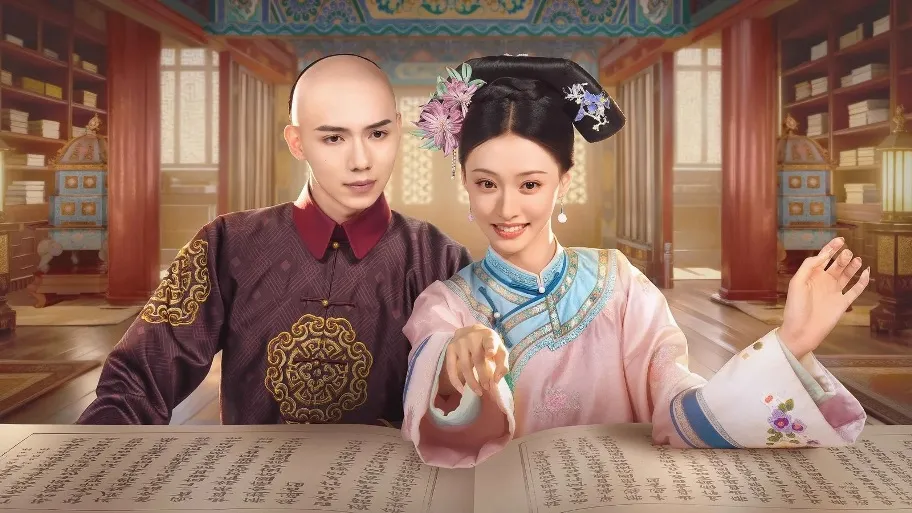
Returning Pearl Poster - Courtesy of Hunan TV

|
DetailsRATING: (7.5/10)
NATIVE TITLE: 还珠 – Huán zhū YEAR: 2025 EPISODES: 30 + Epilogue DURATION: 15’ DIRECTOR: Sun Jia Yang SCREENWRITER: Wen Rui ORIGINAL CREATOR: Qiong Yao (還珠格格 – Princess Returning Pearl) RESPECTED CLICHÉS: 3 – 4 – 5 – 7 – 8 – 9 – 10 – 11 |


IN A NUTSHELL
- What to expect: a retro drama with modern narrative devices that works well, especially on the romantic front. The protagonists' enemies-to-lovers love story is the series' main focus, and it's the most successful of all the subplots, portraying a youthful and passionate love.
- Strengths: the love story between the protagonists, the ensemble performance of the cast, the new elements inserted into an already written plot, the surprising technical quality.
- Weaknesses: the retro narrative dynamics, the slowing down of the narrative pace in the second part, some logical flaws, the double ending.
- Recommended if you like: retro dramas, intense love stories, series with a young cast.
- Would I rewatch it? Yes.
Read on for an explanation of the double ending.
Returning Pearl is part of a trend of dramas that openly play with the collective memory of historical dramas, reviving an imagery familiar to longtime viewers and reworking it with more modern sensibilities. Between palace intrigues, pre-written destinies, and characters aware they are living within a fiction, the series constructs a narrative that constantly oscillates between nostalgia and rewriting.
In this review of the drama Returning Pearl, I’ll walk you through this game of mirrors, analyzing its narrative, thematic, and visual elements to understand whether the series has been able to constructively engage with its legacy, the genre’s clichés, and the expectations of contemporary viewers.
问世间,情为何物,直教人生死相许?
[I ask the world: what is love, that drives people to promise each other in life and in death?]
Plot
Lin Sui Sui is an established actress who insists on starring in the remake of her favorite series, My Fair Princess. Arriving too late on set, however, she is assigned a supporting role, which she accepts only on the condition that the script be modified to include a new male character, with the characteristics typical of leading men from popular dramas, destined to serve as her romantic foil.
During filming, however, a spotlight accidentally hits her in the head, catapulting her into the fictional reality of the drama , where she finds herself at the mercy of the character she herself has just helped create. This character is Jing Yuan, the incorruptible Minister of Justice and the Empress’s nephew and adopted son, whose primary goal is to restore the Ula Nara clan, to which both he and the Empress belong, to its former glory.
Lin Sui Sui soon discovers she has only a limited amount of time to complete the narrative, allowing the story’s key turning points to unfold and the love stories to reach their inevitable happy ending — the only condition that will allow her to return to her reality.
As events unfold, however, the actress develops an increasingly deeper bond with the drama’s characters, including Jing Yuan, with whom she eventually falls in love.
Through lies, court intrigue, and deadly clashes, Lin Sui Sui finally manages to complete the story and obtain permission to leave the fictional world of My Fair Princess, only to discover that her departure will mean Jing Yuan’s permanent disappearance.

Returning Pearl Drama Review (No Spoilers)
This drama is based on the popular TV series My Fair Princess (also known as Return of the Pearl Princess or Princess Returning Pearl), produced between 1998 and 1999 by Yi Ren Communications and Hunan TV, updating the formula with the currently popular transmigration gimmick (already featured in several dramas this year, including A Dream Within a Dream, When Destiny Brings the Demon, and The Journey of Legend).
The protagonist is an actress who finds herself mysteriously catapulted into the script of her favorite series, where, for some reason, she becomes trapped in a sort of narrative video game from which she can escape only by completing the plot, fulfilling the story’s key turning points, and, above all, ensuring love stories have their dutiful happy endings.
Fortunately, the cliché of the disoriented protagonist clinging to the flow of events, hoping the script will follow her wishes and not condemn her to an untimely death, has been overcome this time. The FL in this drama is brilliant, resourceful, and quickly realizes that the only winning strategy is to use her most powerful weapon—acting—to take control of the story, shape destiny, and get the plot back on track.
Plot
The story faithfully reproduces the love stories and palace intrigues of the drama My Fair Princess, with the only slight deviation being the introduction of the typically ruthless and austere ML of modern series, who then softens as he falls in love with the protagonist (although his expression is surprisingly less severe than usual, though I think this is more a portrait crafted by the actor than a real narrative choice).
Otherwise, the narrative proceeds along the well-known lines of romantic drama: the ML’s falling in love at first sight, triggered by the FL’s fake declaration to him solely to ensure her protection; the boy’s tragic childhood, who owes a debt of gratitude to the cruel Empress and is forced to obey her even at the cost of sacrificing his love; and the inevitable constellation of secondary couples with parallel romantic subplots.
To complete the picture, FL — aware that her initial requests led the writers to inflict a painful past on poor ML — makes it her personal mission to improve his future, almost as if it were a form of narrative compensation.
Characters and Love Story
Even the character development, while not particularly complex, works well: the screenwriter provides characterizations that, while basic, allow us to recognize enough unique traits in each character to connect them to their counterparts in the original story and to sustain the plot without ever straying too far from Qiong Yao’s narrative.
The love story between the protagonists is extremely tender and, for this very reason, reinforces the overall romantic tone of the story, underscoring its naiveté, in the most positive sense of the word.
The series also offers a rather positive handling of the conflicts between the protagonists, which are resolved with surprising speed compared to genre standards. Misunderstandings do not turn into irreparable rifts or become artificially prolonged, allowing the relationship to evolve without excessive melodramatic self-satisfaction. This narrative choice restores a more harmonious dimension to the protagonists and leads the viewer towards a comforting epilogue in which the couple can finally find a form of happiness, ending the story on an emotionally satisfying note, consistent with the original promise of the drama.

Cast
The young actors, while perhaps not yet able to compete with the expressive strength of genre veterans, more than make up for it with a sincere stage presence, capable of conveying a vital energy that imbues the narrative with a palpable sense of anticipation and youthful energy.
The cast’s acting may not reach technical perfection, but its strength lies in the emotional authenticity and atmospheric contribution it brings to the story. Overall, the performances effectively support the story, confirming the successful choice of relying on young actors capable of conveying freshness and emotional authenticity without ever coming across as out of place.
Luo Yi Zhou stands out for his expressiveness, although at times his performance perhaps seems a bit too “naive” for his role as the ruthless Minister of Justice and emissary of the Empress.
Hu Lian Xin delivers a convincing performance, not only as a self-assured and pretentious actress, but also in her romantic scenes with Luo Yi Zhou, where her naturalness and spontaneity help create a convincing chemistry with her co-star.
Jin Zi Xuan is also noteworthy, with her unpretentious and at times irreverent acting perfectly suited to her character, and Yan Xu Jia, rigorous yet passionate, capable of conveying the emotional nuances of his role.
Cao Yan Yan and Wei Wei, playing the Empress and Emperor respectively, live up to their prestige, bringing authority and stability to the narrative.
Yuan Zi Ming and Xu Yuan Li Na are more subdued, perhaps due to the calmer and more reserved nature of their characters, but they nevertheless do not detract from the overall performance of the cast.
Visual Aspects and Soundtrack
Aesthetically, Returning Pearl offers a surprisingly refined visual experience for a minidrama (perhaps even more refined than the original 1998 series): the sets and exteriors believably convey the atmosphere of the era, while far from cheap costumes and historically accurate hairstyles help create a coherent and pleasing visual universe.
The solid and professional direction relies on carefully crafted shots and sophisticated visual solutions that enrich the narrative, while the photography and editing are of a quality usually unmatched in dramas of this format. Overall, the visuals construct a compelling scenic world, capable of supporting the plot with elegance and quality without ever appearing too artificial or sloppy.
The soundtrack maintains a rather discreet register, with music that accompanies the scenes without being overly noticeable. The main theme, 不渝 (Unchanging), fits perfectly into the tradition of typical Liu Yu Ning love songs, evoking emotions familiar to viewers of romantic dramas. What sets the piece apart, however, is Luo Yi Zhou’s vocals, which lend unexpected depth and nuance, transforming an otherwise conventional melody into an emotionally engaging and recognizable accompaniment.

WARNING!
FROM THIS POINT ON THE SPOILER SECTION BEGINS. DO NOT CONTINUE IF YOU DO NOT WANT TO KNOW ALL THE DETAILS OF THE DRAMA.
Returning Pearl Drama Review (Spoilers)
What Works: the Script and the New Characters
Although Returning Pearl is a more condensed adaptation of the unforgettable classic My Fair Princess, the reworking of the plot holds up surprisingly well: the insertion of a contemporary character into a story written almost thirty years ago works, albeit leaving some small margins of inconsistency, such as the bizarre appearance of the FL in the story and the inexplicable amnesia of Xia Zi Wei, who forgets she has a maid named Jin Suo.
At the same time, the inclusion of the new character of Jing Yuan as a romantic counterpart to Jin Suo/Lin Sui Sui is effective: his interactions with the drama’s pre-existing characters, particularly those with his stepmother the Empress, appear fluid and convincing, integrating him into the original narrative without being forced.
The introduction of the character of little Xiao Hong Zao is also particularly successful, fulfilling a narrative function that is anything but marginal. It is thanks to her that the two protagonists manage to escape the city when they are wanted, creating what appears to be the first truly believable escape sequence in a drama, free from forced or overly convenient solutions.
But her role goes beyond the practical: the kidnapping of the little girl by a pair of human traffickers becomes an emotional catalyst for the ML, deeply shaken by the FL’s revelation that he, like everyone else, exists only within a script. In silently confronting this situation, the ML seems to reach a deeper awareness: even if born of fiction, in his reality he possesses authentic values, bonds, and emotions, and it is precisely this emotional truth that gives meaning to his existence. A simple yet effective metanarrative reflection, which adds human depth to an often overly hasty narrative format.
The drama also irreverently depicts the struggles of the screenwriters as they grapple with actresses who, despite being assigned secondary roles, demand undeserved privileges and bespoke male counterparts, with characteristics typical of protagonists in more popular dramas.
This device not only generates comical situations and interesting dynamics, but also becomes a tool through which the FL embarks on a journey of personal growth. Initially selfish and focused only on her own desires, she gradually learns to consider the well-being of others, to the point of enduring hardship and sacrifice in order to protect those around her. What initially stems from a need to return to her own reality evolves into a genuine affection for the surrounding characters, transforming Lin Sui Sui into a more mature and deeply empathetic figure, without ever coming across as forced or didactic.

What Doesn't Work: the Retro Plot and the Pace of the Narrative
As you watch, it’s clear that the story on which the drama is based retains a profoundly classical, almost old-fashioned feel: emotional dynamics, conflicts, and resolutions reflect a narrative imagery that belongs to a previous era and that today can seem deliberately nostalgic, if not downright old-fashioned. This aspect, on the one hand, strengthens the connection to the original work, but on the other, limits the narrative’s ability to truly renew itself.
In the first part of the drama, the narrative moves rather quickly, glossing over various details of the FL’s life in the palace and how she manages to gain a certain independence from the Empress despite being her servant. Despite this, the narrative remains coherent and presents events clearly and comprehensibly.
By the end, however, the narrative tends to lose momentum: after Lin Sui Sui realizes she has only three days before she must return to her own reality, the narrative becomes excessively tedious, lingering on previously explored emotional dynamics and allowing the action to drag. This slowdown ends up weighing down the pace just when one would expect greater incisiveness and a shortening of the timescales to accompany the viewer towards the conclusion with greater narrative tension.
Interpretation of the Ending
As for the ending, Returning Pearl chooses to leave the interpretation of the epilogue up to the viewers, offering a conclusion and an alternative ending that lend themselves to different and equally evocative readings.
On the one hand, the entire story could be seen as a dream for Lin Sui Sui, suspended in a coma from which she never truly awakens, with the obvious continuation of her passionate love story with the nonexistent Jing Yuan.
On the other, the story almost seems to suggest a more daring narrative solution: the idea that the author of the original work has ideally written a sequel or reboot of the story of My Fair Princess, finally including the love story between Jing Yuan and Lin Sui Sui/Jin Suo and allowing them to continue to exist together within the screenplay. In this second reading, contemporary Lin Sui Sui may have returned to her own reality, meeting “her” Jing Yuan there, with whom she continued her relationship, in a game of mirrors between fiction and life that closes the series on a melancholic yet emotionally coherent note.
The epilogue seems, in fact, to reference the famous myth 梁祝 (Liáng Zhù, also known as the Legend of the “Butterfly Lovers”, which tells the story of two young lovers separated by social conventions who, upon dying, transform into butterflies to remain together forever). According to this myth, true love cannot be destroyed by authority, adverse circumstances, or even death itself, lending the conclusion a symbolic value that celebrates the resilience and immortality of pure feelings.

Characters and Cast
Primary Characters
Lin Sui Sui/Lin’er/Jin Suo (Hu Lian Xin), famous actress who manages to land a small role in the remake of her favorite series, My Fair Princess, but before filming begins, she has an accident on set and finds herself suddenly catapulted into the fictional reality of the drama.
Jing Yuan/Yuan’er (Luo Yi Zhou), Minister of Justice, nicknamed the King of Hell and the adopted son of the Empress. He is the only son of the sovereign’s late sister and, after losing both his parents, is brought to court by his aunt to atone for his mother’s mistakes and restore their clan to its former glory. Assigned to investigate a human trafficking ring involving the Imperial Laundry Bureau, he meets Lin Sui Sui and falls in love with her.
Supporting Characters
Emperor (Wei Wei) father of Yong Qi and Zi Wei. He grows very fond of Xiao Yan Zi and Zi Wei, but until the very end, he is unable to completely trust them and often falls for the Empress's provocations, risking the two girls' deaths.
Empress (Cao Yan Yan) Jing Yuan's adoptive mother and the main antagonist of the drama My Fair Princess.
Nanny Rong (Liu Su) palace attendant at the Kunning Palace and a close servant of the Empress. She is Lin Sui Sui's main tormentor.
Consort Ling, the Emperor's favorite concubine and the Empress's bitter rival.
Xia Zi Wei (Xu Yuan Li Na) the Emperor's illegitimate daughter and friend of Xiao Yan Zi. After Er Kang saves her from lynching for interrupting the Pearl Princess's procession, she falls in love with her rescuer and, thanks to him, is hired as a palace maid. Eventually, she gains recognition as the Pearl Princess.
Xia Yu He, Zi Wei's deceased mother, who had an affair with the Emperor while he was at Daming Lake.
Jin Suo, Xia Zi Wei's personal maid. In the original story, she accompanied her master to the capital in search of her father, but Lin Sui Sui unknowingly replaces her, erasing the memory of her in the main characters minds.
Xia Yan Zi (Jin Zi Xuan), Xia Zi Wei's friend. In an attempt to help her meet her father and regain her status, she is mistaken for the Pearl Princess, the Emperor's illegitimate daughter. During a hunting trip, she is accidentally wounded by the Fifth Prince, and the Emperor mistakes her for his lost daughter.
Yong Qi (Yan Xu Jia) Fifth Prince and half-brother of Zi Wei. Due to Xiao Yan's lively and cheerful temperament, he falls in love with her, but it won't be easy for him to pursue his love for the woman everyone believes to be his half-sister.
Fu Er Kang (Yuan Zi Ming) eldest son of the Great Scholar Fu Lun and a court official. During the sacrificial procession presided over by the Pearl Princess, he saves Zi Wei from lynching and falls in love with her, unaware that she is the real Pearl Princess.
Fu Er Tai (Zhang Jun Jie), second son of the Great Scholar Fu Lun and brother of Er Kang. His role proves crucial when Princess Sai Ya wants to make Jing Yuan her prince consort, and he manages to win her favor, allowing Jing Yuan to take up with Lin Sui Sui.
Sai Ya (Mo Han), Tibetan princess, daughter of the Native Chieftain visiting the imperial court. She initially falls in love with Jing Yuan, but then decides to make Fu Er Tai her prince consort.
Liu Hong (Bian Chu Xian) and Liu Qing (Pan Liu Xin Ge), a pair of brothers who are friends of Xiao Yan Zi and hide her, Zi Wei, and Sui Sui when the three escape from the imperial prisons with the help of Yong Qi, Er Kang, and Jing Yuan.
Xiao Hong Zao, young girl who helps Lin Sui Sui and Jing Yuan escape the capital after the two escape from the imperial prisons to search for Jin Suo.
Minister Liang (An Jun Qi) minister who tortures Zi Wei, Xiao Yan Zi and Sui Sui at the request of the Empress when the three are incarcerated in the imperial prisons.
Nanny Wu (Jiao Hong Xia) and Nanny Song, superintendents of the Imperial Laundry Bureau and superiors of Lin Sui Sui at the beginning of the drama.
Master Ji, imperial tutor entrusted with the education of Xiao Yan Zi when she is named Pearl Princess, but he is unable to control the impetuous student.

Favorite Character: Lin Sui Sui
Although she's initially presented as a haughty and pretentious actress, accustomed to leveraging her fame and the resulting bargaining power to get what she wants from the production, including the script change that leads to the creation of Jing Yuan, as the story progresses, a much more nuanced portrait emerges of her: a brilliant, resourceful young woman with an extraordinary ability to adapt.
Thrown into the drama world, she quickly realizes that the only way to emerge unscathed is to use her acting skills to take control of the narrative and get the plot back on track.
Although she appears self-centered and primarily concerned with her own safety, she demonstrates profound moral integrity: she never truly bends to the Empress's blackmail and never truly berays Xiao Yan Zi and Xia Zi Wei, even enduring the torture of Nurse Rong and protecting them when the three are arrested for lying to the Emperor.
Over time, she develops a sincere bond with Xiao Yan Zi and Xia Zi Wei and works tirelessly to ensure they have a happy ending with their respective lovers.
The guilt of having created such a painful past for Jing Yuan becomes one of the main drivers of her actions, pushing her to do everything to ensure a happy future for him.
Unable to accept the idea that he must disappear forever because of her choices, in the alternate ending, Lin Sui Sui makes the most radical and consistent gesture in her emotional journey: choosing to stay by his side in the fictional world of My Fair Princess.
Un-Favorite Character: the Empress
She is a cold, sinister, and deeply calculating figure, driven by a single goal: to restore the Ula Nara clan to its former glory, lost due to her elder sister's choice of love, which had compromised their prestige at court.
To achieve this goal, she does not hesitate to manipulate her nephew and stepson Jing Yuan, suppressing his naive, good, and altruistic side and turning him into a ruthless instrument, obedient to his will.
Similarly, she demonstrates total disregard for the wishes and well-being of her consort, the Emperor, going so far as to deprive him of one of the few joys of his life as a ruler: finding his lost daughter and enjoying her company, along with that of the vivacious Xiao Yan Zi.
To consolidate her power, she attempts to orchestrate marriages of convenience between Jing Yuan and the most influential young women at court, firmly opposing his relationship with Lin Sui Sui.
Her cruelty knows no bounds: she plots, frames, tortures and has innocent people killed and targets Xiao Yan Zi, Xia Zi Wei and Lin Sui Sui herself, forced to serve her and earn her trust despite knowing her ruthless nature, risking her life several times due to the torture inflicted on her by the equally ruthless Nurse Rong.
Her final redemption appears belated and forced, coming only after the Emperor threatens to depose her and thanks to the intercession of Jing Yuan, who offers to serve her sentence, thus sealing a redemption seemingly driven more by necessity than by genuine repentance.
RECOMMENDED:
- MY FAIR PRINCESS
- THE ROMANCE OF TIGER AND ROSE
- THE QUEEN OF ATTACK
- A DREAM WITHIN A DREAM
- WHEN DESTINY BRINGS THE DEMON
Thanks for reading this far!
I hope you enjoyed my article. If you like my work and want to support me, buy me a coffee☕