
Product Placement in C-Dramas: When Advertising Blends into the Story
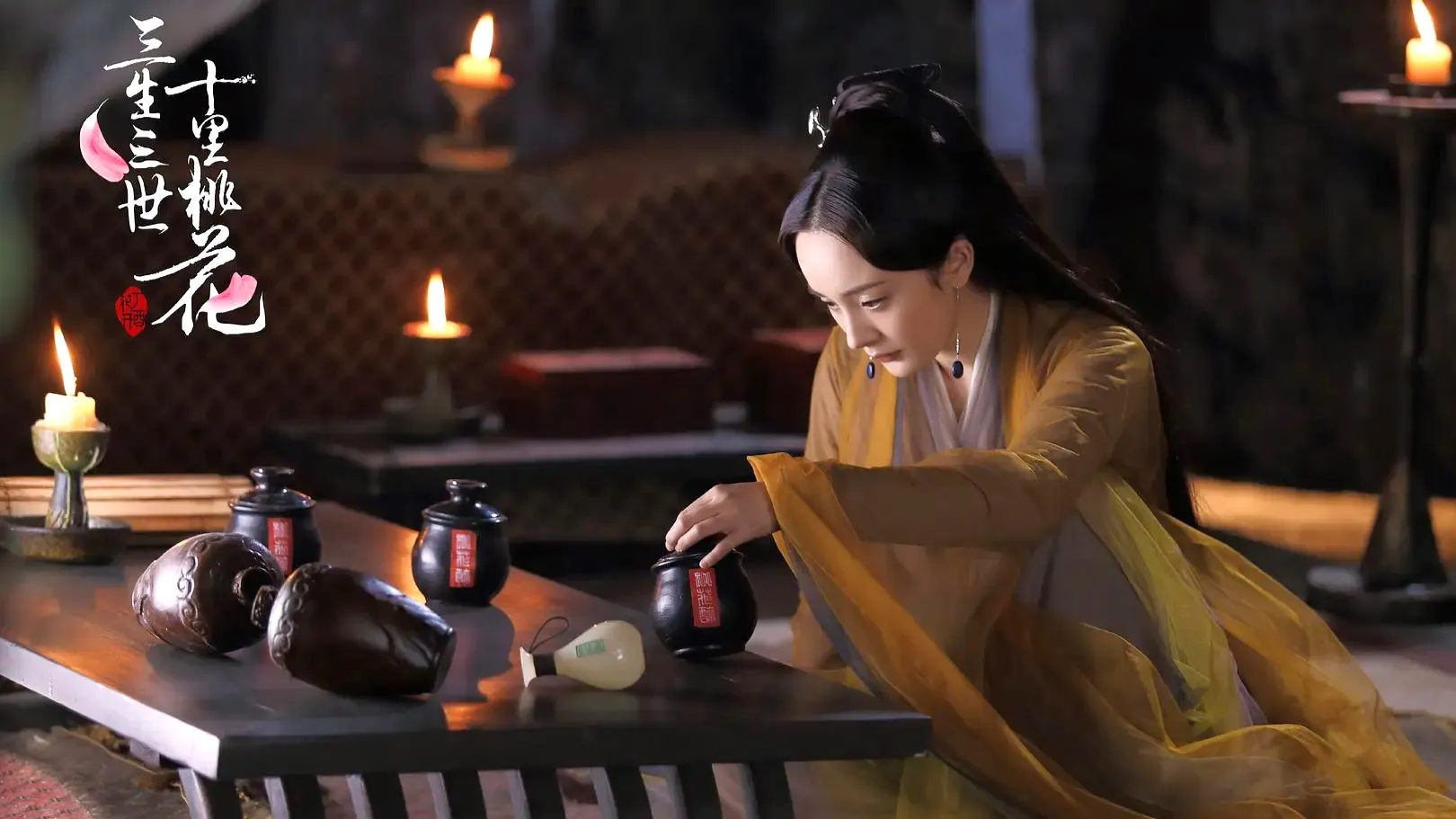
Eternal Love (2017): Bai Qian drinks Taohuazui liquor, one of the sponsors of the series - Courtesy of Douban
IN A NUTSHELL
Short on time? Here's a summary of the article's contents. For a more in-depth analysis of the topic, keep reading.
- Contents: product placement has become a common feature of TV series production in many countries. In China, however, the phenomenon has followed a somewhat different path, gradually becoming part of the viewing experience—amidst experimentation, successes, and controversies surrounding its excessive visibility and poor integration into the storyline.
- Aspects Analyzed:
- The origins of product placement
- How product placement is integrated into dramas
- Criteria for selecting a drama
- Audience perception
- China and South Korea compared
- Conclusion: the real challenge of product placement is striking a balance between commercial visibility and narrative naturalness, so that the product is recognizable without overshadowing the story.
Read on to understand the evolution of this interesting phenomenon.
Introduction
Product placement — the inclusion of brands, products, and services within audiovisual content — has become a common feature of serial production in many countries. In the United States, it has long been an established component of marketing strategies, while in South Korea it has become one of the tools through which the entertainment industry promotes products and lifestyles beyond national borders. In China, however, the phenomenon has followed a somewhat different path, shaped by the peculiarities of the audiovisual industry and the domestic market.
Anyone who watches C-dramas with any degree of frequency has likely learned to recognize some forms of it, but how did we get to this point? And above all, what lies behind those seemingly innocuous shots of products and brands?
Starting from these questions, I attempted to reconstruct how product placement developed in Chinese dramas, how it is actually integrated into productions, and what elements can make a drama attractive to an advertiser. To better explain the peculiarities of the Chinese model, I'll also make a brief comparison with South Korea and touch on the regulatory framework that governs its use.
Because product placement is no longer just an advertising tool: it has now become part of the viewing experience. And while it sometimes manages to integrate seamlessly into the story, other times it reminds us all too clearly that, somewhere, someone is paying us to notice that snack or smartphone.
The Origins of Product Placement in China
From Early Experiments to Integrated Advertising
Product placement did not originate with the explosion of streaming platforms, but has a much longer history. One of the first documented cases is the series Stories of the Editorial Board (编辑部的故事), first broadcast on Chinese television in 1992, in which the Bailong electric kettle (百龙矿泉壶) often appeared as a prop. It appears that the product was deliberately integrated into the broadcast through a commercial agreement between the company and the production, and its presence helped transform it into a commercial phenomenon. 1
In the following years, the insertion of brands through props, dialogue, and settings gradually became one of the primary ways in which advertising was associated with audiovisual content.
Between 2010 and 2011, product placement attracted the attention of Chinese institutions. The State Administration of Radio, Film and Television, then responsible for regulating radio, television, and cinema, identified 植入式广告 (zhírùshì guǎnggào literally "embedded advertising") as a new form of advertising requiring monitoring and regulation. 2
The following year, the agency's deputy director recognized the potential of product placement for the Chinese audiovisual industry, but also highlighted its problems: excessive insertions and unnatural integration methods risked compromising program enjoyment. 3
A minor revolution arrived in 2012, when an amendment to the regulations on radio and television advertising banned the insertion of commercials that interrupted 45-minute episodes halfway through. This measure prevented the broadcast from being interrupted with a separate commercial, but it left the option of inserting advertising within the content intact, making product placement a particularly attractive option for companies. 4
Thus, in the following years, forms of advertising integrated into the content began to become increasingly more elaborate. As early as 2006, the drama My Own Swordsman (武林外传) had demonstrated how an advertisement, even for a nonexistent product, could become part of the series' humor; in 2013, Longmen Express (龙门镖局) revived this approach, replacing fictional products with real brands. The breakthrough came in 2015 with Darker Season 2 (黑者2), when Tencent Video experimented with the so-called 创意中插广告 (chuàngyì zhōngchā guǎnggào, literally “creative in-between advertising”): a short commercial starring the series' own actors and built around its characters and setting. The format gained popularity with the 2016 drama The Mystic Nine (老九门) and, between 2017 and 2018, became a standard component of the marketing of large online productions. Advertising was no longer limited to appearing within the drama: it was an integral part of it, so much so that it occupied a small scene, constructed according to the rules of the series' narrative universe.5

Two characters use the Bailong electric kettle
How Product Placement Fits into C-Dramas
When Advertising Enters History
But how, specifically, are products advertised in dramas? Insertions can take different forms depending on the role assigned to the brand or object within the narrative:
- Insertion into the setting (场景植入, chǎngjǐng zhírù) involves the brand, product, or one of its visual elements being integrated into the setting, for example through a sign, a placard, or another element of the setting;
- Insertion into the plot (情节植入, qíngjié zhírù) involves the product becoming an integral part of the narrated events, contributing to the development of the story or playing a role within it, such as the use of the product that gives rise to an encounter, a misunderstanding, or another event relevant to the plot;
- Insertion into dialogues (对白植入, duìbái zhírù) brings the name of the brand or product directly into conversations;
- Prop placement (道具植入, dàojù zhírù) consists of making the product an object used by the characters throughout the story.
A good example of how product placement can range from simple visual presence to forms of interaction with characters is found in the 2017 series Eternal Love (三生三世十里桃花), where the advertised products were adapted, with varying degrees of convincing results, to the drama's universe. For example, the snack brand Baicaowei (百草味) appears as a sign placed in the mortal world's market, while the name of the fashion platform Mogujie (蘑菇街), transformed into Moguji (蘑菇集), is engraved on a stone in Qingqiu, so as to resemble an inscription part of the fantasy setting.
A more complex case is that of the fruit liqueur Taohuazui (桃花醉), launched by the company Luzhou Laojiao (泸州老窖) in 2016: already present in the story under the same name as a drink linked to the character of Zhe Yan, the product is not merely shown, but becomes a recurring element of the narrative and contributes to the development of the plot. On the prop side, we find Yiyezi (一叶子) cosmetics, whose green bottle is shown in close-up in the hands of the princess of the East Sea, with the brand clearly visible to accentuate its recognizability.
In Eternal Love, advertising also found its way into the script. In one scene, Feng Jiu offers Dijun some Baicaowei nuts, unintentionally ruining his chess game, and then tries to apologize by commenting on how good they are: the product thus becomes part of the comic scene, not just limited to being shown.6
Company Selection Criteria
Why That Drama?
For a company, choosing a drama in which to include its product doesn't simply mean focusing on the most popular series: one of the first criteria to consider is the fit between the drama's audience and the product's potential consumers. In the case of Eternal Love, for example, the large presence of young viewers, fans of the lead actors and readers of the original work, made the series particularly attractive to a brand like Baicaowei, whose products target a consumer segment largely overlapping with that of the drama.
But the analysis doesn't stop at the series' audience: especially in the case of period productions, it's also necessary to evaluate how easily the product can be integrated into the narrative universe without appearing out of place. The method of incorporation can therefore vary based on the object's characteristics: an item not particularly related to the story's content can rely on simple display as a prop, while one more closely related to the narrative universe can be inserted into the dialogue or play a more significant role within the plot. In the case of the Yiyezi cosmetics line, for example, its mere presence on the scene was enough to introduce the product to the general public, while Taohuazui liqueur, based on the eponymous drink featured in the novel, was integrated into the story. Baicaowei, on the other hand, relied on the product's insertion into the dialogue, creating a comical scene whose development is so fluid and consistent with the plot that it appears to be an integral part of the narrative. Furthermore, Bai Feng Jiu's characterization makes her relatable to female viewers of the 1990s generation, which fostered greater identification among potential nuts consumers of that age group.
Furthermore, to get their product noticed, companies tend to try to amplify the effect of product placement through parallel marketing initiatives, often on social media, which exploit the popularity of the series and audience engagement.6

Dilraba Dilmurat, as Bai Feng Jiu, holds the container with Baicaowei nuts
Audience Perception
When Product Placement Becomes Too Obvious
An interesting aspect concerns viewers' perception of product placement. Advertisements aren't necessarily seen as a problem in themselves: what tends to bother audiences is the feeling that the ad interrupts the narrative because it's placed too prominently and artificially.
This feeling can be particularly pronounced in historical dramas, where the presence of modern products often clashes with the setting. In Eternal Love, for example, Baicaowei manages to find a relatively fluid placement within the narrative by inserting them into scenes that, while not having a specific role in the plot development, make the advert enjoyable to watch. In other dramas, however, product placement is much more difficult to ignore: in The Song of Glory (锦绣南歌), a package of Yunifang (御泥坊) cosmetic mud masks is emphatically presented as an anachronistic gift from the protagonist's stepmother to the daughter of an influential minister, while in Good Bye, My Princess (东宫) the online outlet Vipshop (唯品会) is transformed into a real commercial activity within the story's universe and becomes a reference point for the characters' purchases. Another particularly striking example is The Mystic Nine, which, despite being set in Republican China, features Dongpeng Special Drink (东鹏特饮), a modern energy drink, as a recurring feature. This product, precisely because of its nature and the way it's displayed, captures the viewer's attention more than the actual scene in which it's featured. 7
A different case is The Journey of Legend (赴山海), where the product placement doesn't conflict with the historical setting but is disturbing in its persistence: the bottle of Purjoy (纯享) drinkable yogurt is shown in scenes set in the present with such frequency and visibility that it's hard to miss, transforming it from a normal prop into a hard-to-ignore advertising element.
Despite this, even particularly eye-catching ads can sometimes offer the brands involved the opportunity to gain further attention, becoming the subject of comments, jokes, and discussions on social media. In this sense, even advertising perceived as excessive can yield positive results: if viewers comment on it or turn it into a meme, the brand still gains visibility. The problem arises for productions when the attention generated by the product ends up prevailing over the story that is supposed to host it.
The challenge for production companies and brands, therefore, remains to find a balance between commercial visibility and narrative naturalness: an ad must be obvious enough to allow viewers to recognize the product, but not so invasive that the drama is perceived as a simple advertising showcase. Because, when this balance is lost, the risk is that the viewer's attention shifts from the story to the ad, making the promotional message the most memorable aspect of the series.

Cheng Yi, as Xiao Mingming, sips a Purjoy drinking yogurt.
Product Placement in China and South Korea
Two Models Compared
Product placement is certainly not unique to C-dramas: in South Korea, too, PPL has long been an important source of funding for television productions. Its development was fostered by the easing of restrictions on its use in 2010, which allowed broadcasters to use it more widely to diversify their financial resources. PPL offered a new revenue opportunity to address both the country's transition to digital broadcasting and the growing demand for quality content, linked to the globalization of the audiovisual sector.
For South Korean PPL, too, the fundamental rule seems to be to advertise the product without turning dramas into commercials: as in the case of Eternal Love, in fact, the effectiveness of the placement depends on its ability to integrate with the characters and the narrative universe rather than appearing as a foreign body. Brand association can even help build a character’s identity, as happened in the 2010 drama Secret Garden, where the protagonist was the CEO of a department store called Loel Department Store, a name that immediately reminded viewers of the South Korean retail giant Lotte. PPL can also affect the setting of a television series itself: provincial governments often exploit it to attract tourism, transforming their territory into the setting for the story. 8
From the point of view of public perception, even in South Korea there have been cases in which viewers have deemed PPL too obvious or not very credible: in 2016, for example, the K-drama Descendants of the Sun was criticized for some scenes in which the presence of products seemed to prevail over the naturalness of the narrated situation9, while in 2021 viewers of Jirisan complained that some scenes looked more like an advertisement for outdoor clothing than an element that blended in with the history.10
A more concrete difference concerns the way product placement is regulated in the two countries. In South Korea, television regulations dedicate a specific provision to it (Article 59-3 of the Enforcement Decree of the Broadcasting Act) and establish quite detailed limits regarding the programs in which it can be used, the maximum exposure time of the product, and the size of the brand appearing on the scene. It also requires the PPL to be displayed at the beginning of the program and prohibits altering the content of the broadcast. In China, however, product placement falls within the broader framework of advertising laws and the regulation of audiovisual programs, which expressly recognize it and subject it to regulatory oversight. However, Chinese regulations do not provide a system of quantitative and qualitative limits comparable to that in place in South Korea.
Ultimately, however, the issue of product placement in dramas is common to both countries: both Chinese and South Korean productions face the dilemma of creating placements that are clear enough to allow for product recognition, yet not so invasive as to constantly remind viewers they are watching an advertisement.

Jun Ji Hyun and Ju Ji Hoon wear Nepa's outdoor clothing during filming.
Conclusion
Product placement in C-dramas is much more than a simple advertising gimmick: it is the result of the intersection between the commercial demands of the audiovisual industry and the need to insert advertising into stories that must continue to feel, first and foremost, like stories. From its first, almost experimental appearances in the 1990s to the increasingly elaborate forms of contemporary dramas, in China, product placement has learned to adapt to the context in which it is inserted.
We have seen that the choice of placement method depends not only on the product's characteristics and the drama's intended audience, but also on the brand's ability to carve out a credible place for itself within the story's universe. And it is this ability to integrate that makes the difference between successful product placement and forced one, which often annoys the viewer. The problem, in fact, is not necessarily the presence of advertising, but the moment when it becomes so obvious that it interrupts immersion in the story. And in this, Chinese and South Korean PPLs are similar: the context and regulations differ, but the challenge remains the same.
And perhaps this is where the greatest paradox of product placement emerges: creating an advertisement that stands out without seeming like an advertisement. When this balance is achieved, the product can achieve significant commercial benefits; when it fails, it risks giving rise to the least desirable scenario: the promotional message becomes the thing the viewer remembers most about the drama.
Sources
Thank you for reading all the way to the end!
I hope you enjoyed this article and found it helpful.
☕ If you enjoy my content and would like to support Red Taotie, you can buy me a coffee on Ko-fi. Every contribution helps me continue creating reviews and in-depth articles.