
Love Story in the 1970s (2026) Chinese Drama Review | Plot & Cast
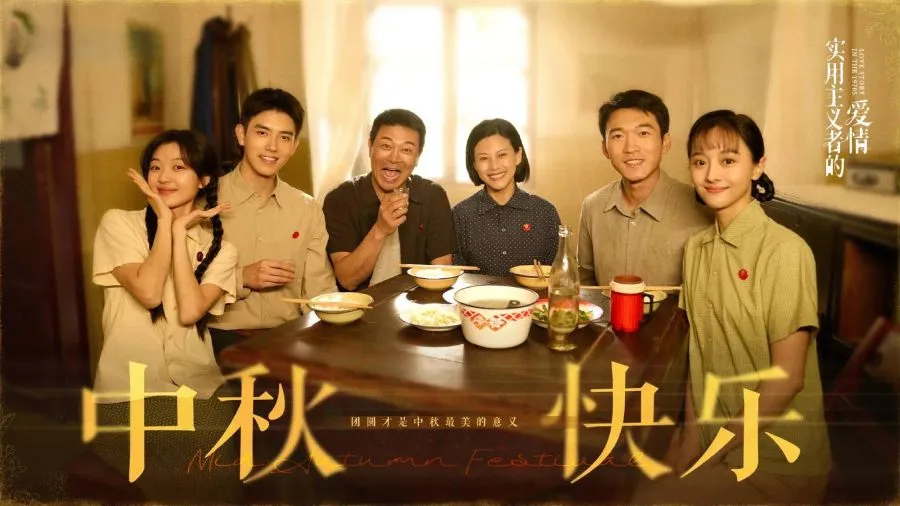
Love Story in the 70s Poster - Courtesy of Tencent Video

|
DetailsRATING: (8/10)
NATIVE TITLE: 纯真年代的爱情 – Chúnzhēn niándài de àiqíng YEAR: 2026 EPISODES: 29 DURATION: 45’ DIRECTOR: Chen Chang SCREENWRITER: Guo Shuang ORIGINAL CREATOR: Meng Zhong De Yi (实用主义者的爱情 - Pragmatist's Love) |


IN A NUTSHELL
- What to expect: Love Story in the 1970s is a historical drama set in 1970s China that delicately tells the story of two young people building their future against the backdrop of a time marked by profound social transformation. Between personal dreams, daily struggles, and complex family ties, the drama intertwines a tender and naive love story with a portrait of a generation trying, with stubborn simplicity, to find its place in a slowly changing nation.
- Strengths: the strong character development, the engaging love stories, the historical accuracy of the settings and props.
- Weaknesses: the weak historical context, the occasional conflicts among the supporting couples.
- Recommended if you like: Chen Feiyu and Qian Sun, tender and naive slow burn romances, ensemble dramas, welcoming and supportive family environments.
- Would I rewatch it? Yes, even right away!
Read on to find out why you should watch this drama.
There's something delicate and almost magical about the atmosphere of Love Story in the 1970s: a story of small gestures, dreams nurtured in silence, and feelings slowly emerging from the folds of everyday life. Set in a complex historical period, the drama chooses to recount not so much major events as the emotions and fragilities of ordinary people trying to find their place in the world.
In this review of the drama Love Story in the 1970s, I'll share with you the impressions the series left me with—such as the touching simplicity of the characters and the melancholic sweetness and quiet intensity of their bonds—trying to convey the atmosphere and emotions that accompanied me throughout the journey.
"What do you think marriage means? One mind falls short. Two minds go further."
Plot
1975, Jiangcheng. Young Fei Ni, the daughter of factory workers, works in a textile factory but dreams of attending university to fulfill her dream of becoming a writer. However, the few places assigned each year at the factory are systematically given away to other applicants, and she fears she will never be able to realize her dream.
An unexpected opportunity presents itself when she volunteers to care for Fang Mu Yang, a zhiqing who has just returned to Jiangcheng after six years in the Great Northern Wilderness. Severely injured in the head while trying to save workers from the collapse of their housing, Fang Mu Yang has become a local hero, but his recovery, complicated by unexpected amnesia, proves anything but simple. With patience and kindness, Fei Ni manages to encourage the boy, who, as memories of their youth resurface, discovers that he has always been in love with her.
So when Fei Ni proposes to him to get married in order to get the public housing that was promised to him once he was discharged from the hospital, but then denied because he was single, Fang Mu Yang gladly accepts the proposal. The girl sees in that union a practical solution to free up her room and allow her older brother to get married.
Meanwhile, Fang Mu Yang's sister, Fang Mu Jing, is also forced into marriage: after risking giving up her career as a university researcher due to her father's inclusion in one of the "Five Black Categories," she agrees to marry the esteemed neurosurgeon Qu Hua to boost her social standing, unaware that he also has a personal motive behind the proposal.
As time passes, amidst daily difficulties, personal challenges, and family turmoil, the relationships between the protagonists transform: Fei Ni ends up genuinely falling in love with Fang Mu Yang, and even the aloof Fang Mu Jing slowly discovers a genuine affection for her husband Qu Hua.
Meanwhile, the changing political climate is leading to a loosening of ideological rigor: Fei Ni finally receives the opportunity to apply to attend university, and Fang Mu Yang's parents return from exile in Yunnan, a joyous event that, however, reopens old wounds.
Between family reconciliations and unexpected changes, Fei Ni and Fang Mu Yang realize how comforting it is, despite the uncertainties of the times they live in, to have someone by their side they can count on and with whom they can embark on an unknown journey toward the future.
Focus: Who Were the Zhiqing?

Review of the Drama Love Story in the 1970s (No Spoilers)
Plot and Screenplay
This drama recounts the struggles of young people in 1970s Maoist China, caught between the weight of tradition and the promises of progress in an era of great transformation. To do so, it chooses to tell a deliberately light-hearted, and in some ways almost stereotypical, love story: the male protagonist falls in love with the female protagonist at school and, after six years in the Great Northern Wilderness, returns to his hometown where fate brings them together again. The feelings that had united them in their youth slowly resurface, aided by his amnesia, which becomes the narrative pretext for their reunion.
The plot is simple and the pace anything but fast-paced, but this very linearity contributes to a sense of authenticity: the screenplay follows the daily lives of the two young people discreetly, without force or rhetorical emphasis, naturally allowing the difficulties faced by the couple, and more generally by the Chinese people, to emerge during that controversial period of national history marked by the Cultural Revolution, capable of introducing significant changes and progress, but also imposing significant sacrifices on the population. The drama thus alternates moments of discouragement with moments of joy, sometimes verging on comedy, with a naturalness that makes the viewing smooth and the story, overall, pleasantly engaging.
The flashbacks that recall the protagonists' adolescence and their conflicted relationship during their school years are inserted with moderation, at just the right moments to illuminate their past and clarify the nature of their bond, without ever feeling out of place or disrupting the narrative flow.
Characters and Main Love Story
In Love Story in the 1970s, all the characters, even the secondary ones, seem to have a precise space within the narrative and are delineated with a care that makes them immediately recognizable. The viewer is able to grasp not only their most obvious character traits, but also intuit their attitude toward life and the motivations that guide their choices, making each character a complex and nuanced figure, far from the simplistic labels of good or evil usually imposed on television series.
This level of characterization allows the viewer to enjoy the variety of approaches that distinguish the main couples and the depth of the family bonds in the drama, characterized by care, affection, and mutual responsibility.
The management of conflicts and misunderstandings between the protagonists and her parents appears balanced and rational, contributing to a coherent, harmonious, and engaging narrative, free of the artificial tensions often exploited by writers to hold the viewer's attention.
The naiveté of the main love story also significantly enhances the drama's enjoyment. The bond between the two protagonists develops gradually and delicately, giving rise to a relationship based on mutual support, respect for individual aspirations, and a love that takes shape over time through shared difficulties. The evolution of the bond between Fang Mu Yang and Fei Ni appears sincere and credible precisely because it stems from a gradual growing closer: his constant patience and silent concern eventually win her heart, thanks also to FL's gradual emotional openness.
The comparison with the other couples present in the drama also helps to highlight a less opportunistic and more sincere conception of feelings on the part of the protagonists, strengthening the overall impression of a love story as tender and spontaneous as it is meaningful.

Cast
One of the aspects I most appreciated in Love Story in the 1970s was undoubtedly the ensemble performances of the cast, which I consider among the best in recent times: each actor found their own narrative space without overshadowing the others, helping to construct a credible and engaging human portrait.
In this context, Chen Feiyu proved to be a particularly effective choice for the role of Fang Mu Yang. His measured, almost restrained performance is perfectly suited to a character marked by difficulties. Furthermore, despite not possessing particularly accentuated facial expressions, the actor always manages to convey a curious mix of innocence and subtle ambiguity — already demonstrated in When Destiny Brings the Demon — that constantly leaves the viewer in suspense, fueling the doubt as to whether his character is truly naive or whether he is consciously pretending to be so.
Alongside him, Sun Qian creates a spontaneous and luminous Fei Ni, capable of combining naivety and determination without ever slipping into caricature. The actress manages to make the character's emotional growth believable, and while she demonstrates evident professional maturity, for me, she will always be linked, with a hint of nostalgia, to the awkward and adorable character of Dr. Cutie, the first drama I saw her in.
The performances of the supporting couple played by Guo Xiao Ting and Wang Tian Chen are also particularly successful: thanks to their intensity, the complex relationship between Fang Mu Jing and Dr. Qu Hua acquires such emotional depth that it becomes one of the dramatic fulcrums of the series, almost on par with the protagonists' story.
A solid and credible supporting cast completes this picture: Wu Yue and Hao Wen Tong effortlessly convey the protective affection of two parents toward their daughter, while Wu You You and Liu Min Tao effectively embody two very different antagonists, one openly conflicted and manipulative, the other biased and authoritarian.
Amid this overall balance, Shi Yun Peng stands out, portraying the naive yet genuine Fei Ting with remarkable ease, lending the narrative some genuinely comic moments.
Visual Aspects and Soundtrack
Visually and aurally, Love Story in the 1970s demonstrates a surprising attention to detail and a truly remarkable stylistic awareness.
The direction is solid and professional, with clean and original shots: I particularly appreciated the opening sequences of some episodes in which the camera lingers on singing birds, simple images that introduce the narrative with a sort of poetic breath.
The exterior settings are surprisingly believable and effectively convey the atmosphere of 1970s urban China, while the sets — furnished with essential furniture and carefully selected props — manage to convey the modesty and practicality of working-class homes without ever giving the impression of artificiality.
Particularly commendable is the work of the makeup department, which opted for an unusually natural approach: the actors' faces do not appear smooth as often happens in period dramas, but retain an almost everyday simplicity that makes the characters more believable. Likewise, the costume department demonstrated remarkable attention to selecting clothing consistent with the protagonists' social context: the garments used accurately evoke the simple and functional aesthetic of the working class of the period, contributing to the visual rationality of the overall ensemble.
The work of the illustrators involved in the series also deserves special mention: the drawings and portraits that appear throughout the story are striking for their precision and vividness and fully convey the artistic talent attributed to the male protagonist.
The drama also achieves a very successful balance in terms of music.
The melody of the opening theme has a sweet and dreamy tone that reminded me of the delicate openings of Studio Ghibli films. Furthermore, all the songs that make up the soundtrack of the series maintain a recognizable sound and a light, almost carefree feel, perfectly in tune with the tender and naive tone of the love story between the two protagonists—among these, my favorite is undoubtedly 实际 (Reality).
I also appreciated the discreet way in which music is used in the more sentimental moments: instead of invading the scene or forcing the emotional tension, it accompanies it with measure, amplifying it without ever overwhelming it.

WARNING!
FROM THIS POINT ON THE SPOILER SECTION BEGINS. DO NOT CONTINUE IF YOU DO NOT WANT TO KNOW ALL THE DETAILS OF THE DRAMA.
Review of the Drama Love Story in the 1970s (Spoilers)
What Works
The Relationships Between the Characters
One detail that makes Love Story in the 1970s extremely compelling is the care with which all the characters are drawn, even the secondary ones: what emerges are not just their strengths or weaknesses, nor their individual character traits, but the way they pursue their dreams, face difficulties, and react to the situations life throws at them. This construction makes them complex and nuanced, not entirely good and not entirely bad, but profoundly human.
This is particularly evident in the relationships between the drama's main couples, but also, and above all, in Fei Ni's family: despite their modest living standards and daily challenges, her parents and older brother do everything they can to ensure she doesn't suffer and can have a happy and promising future. This affection and family solidarity emerge clearly in several situations: when they fear that Fang Mu Yang's financial situation, her mysterious past in the Great Northern Wilderness, and her poor health following her accident could pose a problem for their daughter; when her older brother refuses to return home and marry his fiancée so as not to force Fei Ni to vacate his room; or again in episode 11, when her father, drunk, confesses to Fang Mu Yang that he feels guilty for not being able to organize a lavish wedding party or distribute the traditional wedding candy to the neighbors.
The depiction of everyday life also helps reinforce this sense of authenticity: the poverty of the housing and the equipment of the workers in the textile factory and other factories in the city of Jiangcheng, as well as the patches on their clothes, never convey a sense of squalor or poverty, but rather a sense of familial warmth and shared life in which everything, even the simplest everyday objects, seems to have value. It's a domestic dimension made of small gestures and mutual solidarity that conveys the idea of a meaningful existence despite material hardship, a feeling that today seems almost lost in a society marked by consumerism and individualism.
Finally, what's striking is the natural way in which the misunderstandings between Fei Ni, Fang Mu Yang, and her parents are quickly resolved: the problems are addressed through dialogue and discussion, and the screenplay avoids resorting to artificial tensions, helping to make the narrative credible, harmonious, and emotionally engaging.
Love Stories
One of the drama's highlights is the portrayal of the bond between Fang Mu Yang and Fei Ni. It's touching to see how deeply he cares for her, both publicly and privately, and how he tries, discreetly yet persistently, to support her in pursuing her dreams of independence and her desire to continue her studies. At the same time, Fang Mu Yang works to protect her from the harassment of colleagues and superiors and to offer her, as much as he can, a peaceful and dignified life. Theirs is a tender and naive love, which slowly grows day after day, adversity after adversity, thanks to Fang Mu Yang's patience and gentle perseverance and Fei Ni's practicality.
In this sense, Fei Ni's behavior contrasts surprisingly with the attitude that her rival Ling Yi demonstrates in pursuing her own goals: where Fei Ni ends up giving in to a genuine feeling for Fang Mu Yang and a growing emotional awareness, Ling Yi appears instead willing to resort to any stratagem in order to improve her social status, going as far as abandoning Fang Mu Yang in times of need, manipulating the naive Ye Feng in the hope of making a marriage of convenience and divorcing Ye Feng in order to gain the favor of her former university classmate.

The love story between Fang Mu Jing's sister and the doctor Qu Hua also adds a powerful emotional dimension to the drama, though in this case, it's the conflict that generates much of the engagement. Their relationship is born on questionable foundations: she marries him only to escape her status as the daughter of political criminals, while he decides to marry her because of her striking resemblance to his deceased fiancée.
Once this choice is made, however, Qu Hua sincerely commits to ensuring she lacks nothing, offering her support and protection even when she treats him coldly and prefers to make decisions without involving him. A genuine affection seems to emerge in him—or perhaps a sense of responsibility bordering on remorse for the circumstances that led to their marriage—but this feeling often clashes with her distant attitude. After discovering the truth, she chooses to view their union with a pragmatic and utilitarian perspective.
The result is a relationship riddled with subtle tensions, in which the desire to get closer and the will to keep their distance coexist in a fragile balance that will only find the right balance at the end.
What Doesn't Work: Weak Historical Contextualization
The only real limitation I can identify with Love Story in the 1970s is its choice to focus almost exclusively on the human dimension of the characters, leaving the historical and political context in which the story unfolds in the background. The drama sensitively portrays the daily life of the working class of the time — the material hardships, the solidarity between neighbors, the small tensions and dynamics of factory life — but at the same time seems to avoid directly depicting the political and sociopolitical context that characterized China during the Cultural Revolution.
This choice may also be due to the fact that Chinese audiences are well acquainted with the events and transformations of that period and don't need them explained. Yet, precisely because the series so powerfully conveys the emotions, hopes, and struggles of ordinary people of the time, while watching, I repeatedly felt the desire to see the historical context that formed the backdrop to their lives emerge more clearly.
In this sense, it seems the series deliberately chooses to remain anchored to the intimate dimension of everyday life, allowing the larger political landscape to remain barely perceptible, like a distant echo behind the protagonists' personal experiences—a narrative caution that ultimately attenuates the historical significance of the story.
The only event that features in the plot is a devastating earthquake, clearly inspired by the 1976 Tangshan disaster, although in the series, real geographical references have been replaced with fictional place names. The choice to include this very event—one of the most traumatic of that decade—demonstrates that the authors have not completely ignored the historical dimension, but have preferred to evoke it only in a circumscribed way, strictly functional to the plot.
The sequences dedicated to the earthquake are, in fact, the most intense of those involving the protagonists. The camera, shot from a subjective perspective, offers us the perspective of Fang Mu Yang, who, having just arrived at the disaster site, sees the streets reduced to piles of rubble, the gutted buildings, the bewildered faces of survivors asking for news of the missing, the makeshift field hospitals filled with the wounded, and the volunteers frantically digging through the debris in search of those trapped.
Through these images, the drama powerfully conveys not only the physical devastation of the disaster and the dismay in the eyes of those who come to provide assistance, but also the sense of fear and uncertainty that characterizes the hours following the earthquake, when the pain and destruction are compounded by the constant fear of sudden aftershocks, which continue to shake what remains of the city and threaten to separate Fei Ni and Fang Mu Jing from their husbands forever.

Characters and Cast
Primary Characters
Fei Ni/Ni Ni (Sun Qian) worker in Workshop No. 1 of the Jiangcheng Textile Factory. She is a very bright and determined girl, and her greatest dream is to secure a place at the Workers-Peasants-Soldiers University. Unfortunately, the few places granted annually at the textile factory are constantly being filled, and she despairs of ever seeing her dream come true. She sees a chance for success when she offers to look after Fang Mu Yang, a former classmate who was injured during the rescue operations of some workers trapped in the collapse of their housing.
Fang Mu Yang/Xiao Fang (Chen Feiyu) educated youth (zhiqing) who returns to Jiangcheng after six years in the Great Northern Wilderness. On the night of his return, he is caught in the collapse of the Textile Factory workers' housing, and while saving Wang De Fa, he suffers a serious head injury.
Fang Mu Jing (Guo Xiao Ting) Fang Mu Yang's older sister and researcher at Jiangnan University's Department of Mathematics. Because her father is a "Five Black Categories," she is penalized at work and denied the opportunity to participate in Professor Wu's research project. Therefore, when the esteemed surgeon Qu Hua shows an interest in her, she decides to accept his proposal of marriage.
Qu Hua (Wang Tian Chen) doctor who take care of Fang Mu Jing on the train to Jiangnan. He is a neurosurgeon and the deputy director of Jiangnan People's Hospital. He falls for Fang Mu Jing because of her striking resemblance to his late fiancée Yan Yan and decides to marry her.
Fei Ting (Shi Yun Peng) Fei Ni's older brother. He offers to take his sister's place in the program that sends educated youth to the Great Northern Wilderness and then refuses to return because he fears that Fei Ni will be forced to marry to free up the only available room in their small house. Once back in Jiangcheng, with the help of Fei Ni and Fang Mu Yang, he manages to secure a position as an operations officer in the Propaganda Department of the Textile Factory and win Lin Mei's hand in marriage. However, his secret aspiration is to be a chef, so he agrees to accompany Mr. Li on some catering services outside the factory. However, the two are discovered and reported by Feng Lin, so he sacrifices his job to avoid his partner's dismissal.
Lin Mei (Guo Wei Jie) Fei Ni's best friend and Fei Ting's fiancée. She works at the Hongxing Supply and Marketing Cooperative and hopes to marry Fei Ting someday, but he procrastinates, and she is forced by her mother to see other men. After many ups and downs, she finally manages to fulfill her dream of love and leave her suffocating family.
Supporting Characters
Fei Ming De (Wu Yue) Fei Ni's father. He is a very accommodating man, devoted to his wife and family, whose only interests are Chinese opera, chess, and tai chi.
Wu Bao Ying (Hao Wen Ting) Fei Ni's mother. She is sensitive and understanding and dreams of a happy and dignified future for her children, but becomes melodramatic when she discovers she has been deceived.
Mrs. Chen/Chen Wen Shu (Qian Jie) Fei Ni and Fang Mu Yang's middle school teacher. She is the only one who encourages Fei Ni to pursue her dream of entering university and becoming a writer.
Mrs. Lin (Tian Miao) Lin Mei's mother. She is a sycophant and opportunist and does not hesitate to sacrifice her daughter's future for the benefit of her son.
Mr. Lin (Lan Cheng) Lin Mei's father. He's less brash than his wife, but he also always tries to take advantage of situations and wants his daughter to marry a good match to improve the family's economic and social standing.
Lin Song (Chai Juan Zhe) Lin Mei's older brother. He hopes his sister will marry someone of convenience so he can exploit his brother-in-law's connections and find a better job.
Fang Ai Hong (Wang Ting) Lin Mei's sister-in-law and Lin Song's wife. She agreed to let Lin Mei take her mother-in-law's place at the Supply Cooperative while continuing to work at the mechanical factory, but she never misses an opportunity to reproach her for it and make her feel indebted to her and her husband.
Lin Jian She, Lin Mei's grandson and Lin Song's only son. He's a spoiled and petulant child who repeats every slander he hears from his mother and grandmother.
Xu Hong Qi (Liu Min Tao) administrative director of the textile factory and Fei Ni's superior. After the regime change and Chen Jian Sheng's appointment as Deputy Director, she is demoted and returns to work in Textile Workshop No. 1 alongside Fei Ni.
Ye Feng (Xiao Hao Ran) Xu Hong Qi's son and Fei Ni's colleague at the textile factory. He attends Jiangcheng University and is the captain of the factory basketball team. During a game, he becomes infatuated with Fei Ni, seeing her passionately cheering from the stands. His selfish, chauvinistic, and condescending attitude toward her mother, however, displeases Fei Ni, who prefers Fang Mu Yang. He ends up marrying the opportunistic Ling Yi shortly before the factory management disbands the basketball team and demotes him to the position of canteen worker.
Ling Yi (Li Shu Man) Fang Mu Yang's supposed fiancée. Thanks to Fang Mu Yang, she was able to enter Jiangcheng University, escaping the life of poverty she led in the Great Northern Wilderness. However, after learning of the boy's hospitalization following an accident, she refuses to care for him, instead seeking to get closer to Ye Feng in the hope of a marriage of convenience.
Chen Dong Hua (Guan Zi Jing) secretary to the director of the Textile Industry Bureau and Ling Yi's college senior. Ling Yi turns to him to find a better-paying job for Ye Feng, but ends up believing his false promises and divorces her husband.
Feng Lin (Wu You You) Fei Ni's colleague and neighbor, who attends the Workers-Peasants-Soldiers University. She is particularly hostile toward Fei Ni because of her writing ability and thwarts her in everything. She is saved by Fang Mu Yang the night her apartment collapses due to bad weather. Fearing that he will expose her relationship with Wang De Fa, she tries everything she can to discredit him.
Wang De Fa (Qiang Guo Ming) Fei Ni's neighbor and Feng Lin's lover. While saving him the night Feng Lin's apartment collapses, Fang Mu Yang sustains a head injury.
Mrs. Liu/Liu Jie (He Miao) head of the No. 1 Textile Workshop at the Jiangcheng Textile Factory, Fei Ni's colleague and neighbor. She is always very kind to Fei Ni and is saved by Fang Mu Yang the night her apartment collapses due to bad weather.
Mr. Gao (Li Zhi Qiang) director of the Jiangcheng Educated Youth Office. He is responsible for finding jobs for educated young people returning from the Great Northern Wilderness and assigning them to the public housing provided by the Party.
Wang Xiao Man (Yu Xin He) director of the Propaganda Department of the textile factory, hires Fei Ting to work in her office after Fei Ni and Fang Mu Yang provide her with a television.
Li Xue Bing, chef of the canteen at Jiangcheng No. 1 Textile Factory. He involves Fei Ting in an external catering service, but Feng Lin discovers the matter and reports them, resulting in Fei Ting's dismissal.
Chen Jian Sheng (Liu Ling Zhi) new Deputy Administrative Director of the textile factory, appointed following the death of Mao Zedong and the arrest of the Gang of Four.
Tang Shu Tong (Xu Mei Ling) grandmother of Fang Mu Yang and Fang Mu Jing. She died when Fang Mu Yang was still a teenager, forcing him to enroll in the educated youth program in the Great Northern Wilderness.
Fang Qing Yuan (Hou Chang Rong) father of Fang Mu Yang and Fang Mu Jing. He is a painter and, due to his membership in one of the Five Black Categories, is exiled to a labor and re-education colony (laogai) in Yunnan.
Mu Shan He (Kong Lin) mother of Fang Mu Yang and Fang Mu Jing. She is a professor in the Department of Mathematics at Jiangcheng University, but when her husband is exiled to Yunnan, she doesn't hesitate to follow him, leaving their children, barely out of their teens, alone in Jiangcheng with their grandmother.
Professor Wu (Xiu Qing) Fang Mu Jing's supervising professor at the Department of Mathematics at Jiangnan University and Yan Yan's uncle.
Ding Yang, Fang Mu Jing's colleague who replaces her in the research project she was working on because of Mu Jing's social status.
Professor Zhou, supervising professor of the mathematics project Fang Mu Jing is working on at Jiangcheng University.
Liu Wei (Zheng Zhong Yu) Fang Mu Jing's ex-boyfriend. The two dated during their university days, but he broke up with her because of her social status. They later work together on the research project at Jiangcheng University, arousing Qu Hua's jealousy.
Qu Xue Li (Wu Jian) Qu Hua's father. He is a Chinese army officer who fought in the Korean War and is thus a celebrated national hero.
Gu Ai Zhen (Zheng Xiao Wan) Qu Hua's mother.
Jiang Feng Ying (Cao Yang) Qu Hua's grandmother. She suffers from dementia and mistakes Mu Jing for Yan Yan when she first meets her.
Yan Yan, Professor Wu's granddaughter and Qu Hua's ex-girlfriend. She was Qu Hua's first love, but her severe brain tumor separated them forever. Following the failed operation, Qu Hua fell into a deep depression and refused to undergo surgery for months.
President Fu/Fu Bo Quan (Ma Yue) editor-in-chief of the Jiangcheng Daily newspaper and an old friend of the Fang family. Fang Mu Yang approaches him for a job after being released from the hospital, and he introduces him to Yuan Jia Shang.
Yuan Jia Shang (Wu Chao) Jiangcheng's most famous lianhuanhua (small illustrated books) illustrator. He agrees to take on Fang Mu Yang as an assistant after completing his internship at the Jiangcheng Daily.
Editor Liao (Zhang Zhen Lei) editor of the Jiangcheng Daily.
Mrs. Xu/Xu jie, head waiter at the Deda restaurant where Fang Mu Yang is hired as a waiter.
Lao Gao (Zhang Yue Chi) worker at the Jiangcheng electronics factory whom Fang Mu Yang meets on the black market. He helps him assemble the TV that Fei Ni trades for a job for his brother.
Nurse Zhou, nurse at Jiangcheng People's Hospital who cares for Fang Mu Yang after the accident that caused him to lose his memory.
Doctor Liang, doctor at Jiangcheng People's Hospital who cares for Fang Mu Yang after the accident that caused him to lose his memory.

Favorite Character: Fang Mu Yang
He is a profoundly generous, altruistic, and caring boy, capable of putting the good of others before his own without ever sacrificing his own dignity.
He is not inclined to violence, but he is unwilling to bow to blackmail or abuse: when something is right, he always finds the strength to defend it with determination and surprising moral strength. This same integrity is also reflected in his relationship with art: he deeply loves drawing and telling the world through images, and precisely because he truly believes in his talent, he refuses to compromise at work when it comes to staying true to his vision.
His bond with Fei Ni dates back to their school days. Back then, he was just a boy in love and a bit awkward, trying in every way to attract her attention and defend her from injustice, but often ending up being misunderstood. Six years later, when Fei Ni cares for him in the hospital while he suffers from amnesia, a deep feeling of gratitude and affection for the girl is born in his heart, almost as if the echo of that important youthful bond still lives on in his heart, even without memory.
For this reason, when she proposes a marriage of convenience, he accepts with sincere enthusiasm, promising to protect and support her even knowing his feelings are not reciprocated. And that promise never remains empty: he defends her from Feng Lin's petty plans, tries to give her a peaceful and comfortable life, and, above all, encourages her to pursue her dream of attending university and becoming a writer.
His resilience was initially revealed during the years he spent in the Great Northern Wilderness, where he protected Ling Yi at the darkest moment of her life, saving her from suicide and even giving her his place at the university. With the same devotion, he had supported his parents during their exile due to their father's political persecution, and he continued to harbor a deep affection for his sister, Fang Mu Jing, despite the emotional distance between them.
Generous to everyone he met, he did not hesitate to risk his life for others: he demonstrated this when he was seriously injured saving workers from collapsing housing and when he decided to go to the front lines to provide relief to the victims of the Beishan earthquake.
In every circumstance, his character revealed a rare combination of kindness, quiet courage, and an unwavering sense of responsibility toward others, even when it meant risking his own life.
Un-Favorite Character: Feng Lin
She represents the darker side of human ambition and insecurity with her profoundly selfish, envious, and often ruthless attitude.
On the surface, she is a determined woman proud of her achievements — especially her admission to the Workers-Peasants-Soldiers University — an achievement that makes her feel superior to many of those around her. But behind this ostentatious confidence lies a profound inferiority complex, which emerges particularly strongly in her comparison with Fei Ni. In her eyes, Fei Ni embodies everything she fears she is not: more educated, more talented, a better writer.
It is precisely this frustration that fuels her hostility. Unable to accept the possibility that Fei Ni might obtain a place at the university, she repeatedly attempts to sabotage her, discrediting her in front of the factory director and instilling doubts about her loyalty to Party ideologies.
Her animosity becomes even more dangerous when Fang Mu Yang saves her fiancé during the collapse of the workers' housing. Fearing that he might regain his memory and expose their clandestine relationship, she tries everything she can to remove him from the factory.
However, when she discovers that her quarters have been assigned to none other than Fei Ni and Fang Mu Yang, the resentment escalates into a full-blown personal war. From that moment on, she does not hesitate to resort to any means necessary to destroy the couple, even going so far as to try to have them accused of serious ideological crimes—such as having entered into a marriage of convenience to obtain public housing or reading books banned by the Party.
Her hostility, however, does not stop with them: with the same vengeful spirit, she strikes out at anyone who gravitates towards Fei Ni. It is she who causes Fei Ting to lose her job at the Propaganda Department by exposing her participation in an off-site catering service during working hours.
The lowest point of her moral trajectory emerges later, with the change in management at the factory. In a gesture that reveals all her pettiness, she denounces the former director Xu Hong Qi — the woman who had once supported her — accusing her of having recommended her daughter-in-law for a position she desired.
But this act of denunciation proves fatal: the new management, far from rewarding her ambition, sees only opportunism and disloyalty in her behavior. Thus, the young woman suddenly finds herself marginalized, demoted from an employee to a mere worker—a victim, ultimately, of the same logic of suspicion and rivalry she had so stubbornly fostered.
Focus: Who Were the Zhiqing?
From the mid-1960s, China's life was profoundly affected by the Cultural Revolution (whose full name is 无产阶级文化大革命 or Great Proletarian Cultural Revolution), a policy launched by Mao Zedong in 1966 with the declared aim of defending the ideological purity of socialism and radically transforming society. To carry out the campaign, Mao relied heavily on the student mobilization of the Red Guards (a movement born in 1966 in Beijing's schools and universities), who between 1966 and 1968 took part in the persecution of alleged political enemies, the destruction of symbols of China's historical and religious tradition, and advocated the suspension of higher education, causing a profound upheaval in the education system. For four years, between 1966 and 1970, universities remained closed, and when they reopened, admission was no longer based on passing examinations (高考, gaokao), but on political credibility, social background, and work performance.1
To stem the political chaos and the collapse of industrial production, in 1968 Mao promoted the policy of rural re-education, which took shape in the "Down to the Countryside" Movement (上山下乡). Millions of young university and middle school students — known as zhiqing (知青) or educated youth — were sent to the countryside with the official goal of learning from farmers, contributing to agricultural production, and reducing urban unemployment. The zhiqing were assigned to remote regions such as Inner Mongolia, Yunnan, and Xinjiang, where they had to adapt to extremely harsh living conditions, including heavy agricultural labor, precarious living conditions, and difficulties integrating with local communities.
One of the most emblematic destinations was Beidahuang (北大荒 or Great Northern Wilderness), a vast marshy area located in Heilongjiang province, in northeastern China. Here, approximately 500,000 zhiqing contributed to the reclamation of uncultivated lands, transforming what was considered a wilderness into one of the country's main agricultural areas.2 Life in Beidahuang was extremely harsh, marked by backbreaking work, harsh climate, and isolation; for women, it was even more so, because the daily hardships were compounded by sexual harassment, forced marriages, and violence.
Many zhiqing were told they would remain in the countryside for two years. In reality, most remained for a decade or more, without permission to return home or to change their hukou (户口, the residence registration system that depended on local services such as food rations, jobs, housing, and medical care) from rural to urban. Once they returned, many found that their peers had established careers and degrees, while some of them were even refused city work permits, ending up taking temporary, low-paying jobs. For many Zhiqing, the countryside was not a place of learning and moral awakening, but of isolation, humiliation, and wasted youth. Others, while acknowledging that they had learned important lessons, felt that the social cost to them had been too high.3
---
SOURCES
RECOMMENDED:
- THE LEGEND OF ZHOUHUA
- THE YOUTH MEMORIES
- MELODY OF GOLDEN AGE
- TWELVE LETTERS
- LOVE BETWEEN LINES
Thanks for reading this far!
I hope you enjoyed my article. If you like my work and want to support me, buy me a coffee ☕