
Glory (2025) Chinese Drama Review | Plot & Cast
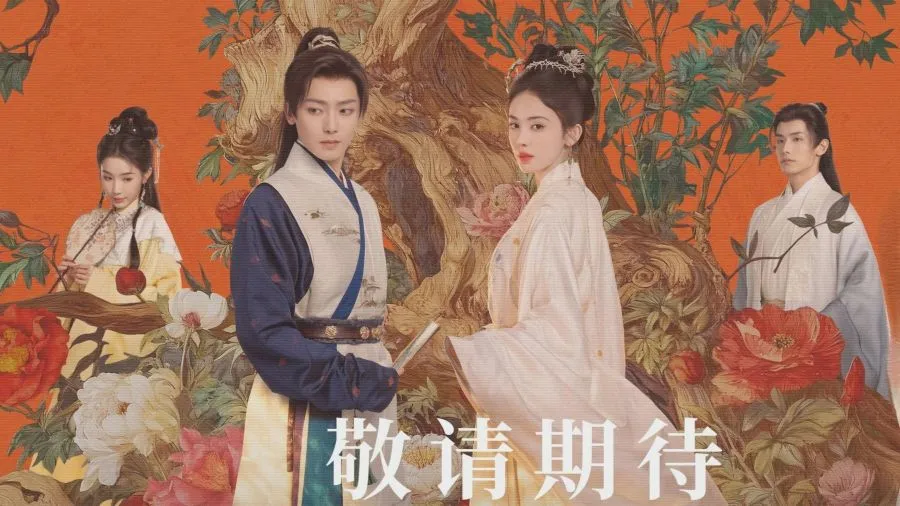
Glory Poster - Courtesy of Hunan TV

|
DetailsRATING: (7/10)
NATIVE TITLE: 玉茗茶骨 – Yù míng chá gǔ YEAR: 2025 EPISODES: 36 DURATION: 45’ DIRECTOR: Zhang Zhi Wei, Guo Hao SCREENWRITER: Zhou Mo RESPECTED CLICHÉS: 1 – 2 – 3 – 4 – 8 – 9 – 10 – 11 – 13 |


IN A NUTSHELL
- What to expect: a historical series set in the Ming era that intertwines criminal cases and the usual power struggles, with the unusual dynamics of a matriarchal family and an interesting insight into tea production.
- Strengths: originality of the story, complexity of the narrative universe and three-dimensionality of the characters, excellent visual quality, focus on tea production.
- Weaknesses: excessive conflict in family and romantic dynamics, the use of forced narrative devices, narrative inconsistencies.
- Recommended if you like: Hou Ming Hao and Gu Li Na Zha, family sagas, cunning protagonists always one step ahead of their antagonists, and refined and historically detailed aesthetics.
- Would I rewatch it? Yes.
Read on to find out why some things about this drama didn’t convince me.
Glory presents itself as a refined and unconventional drama, capable of blending intrigue, visual beauty, and narrative depth. Amidst dark atmospheres, ancient rituals, and fairytale landscapes, the series tells an original and unusual story, inhabited by complex characters and where nothing is ever as it seems. At the center, a matriarchal family with complex dynamics and a wealthy heir sought after by suitors willing to do anything to gain her favor.
In this review of the drama Glory, I will guide you through its refined visual dimension and narrative complexity, focusing on the aesthetics, character development, and the thematic choices that make it a series capable of standing out and leaving its mark.
Plot
Rong Shan Bao is the designated heir to the powerful Rong tea-growing clan of Linji and the favorite granddaughter of Old Madam Rong, the current head of the family.
One evening, while returning to the Rong Residence, she rescues a seriously injured man found in the woods and, discovering that he has lost his memory, decides to keep him as a stablehand. In reality, she recognizes him as Lu Jiang Lai, the Chunning County magistrate who had long been trying to question her regarding an old, unsolved court case, and so she decides to take advantage of his amnesia to prevent its reopening.
Lu Jiang Lai’s presence soon proves invaluable: during the selection of Rong Shan Bao’s future husband, his help proves crucial in uncovering the plots of her various suitors, determined to become the future heirs to the Rong family fortune, and of her sisters, determined to overthrow her and gain leadership of the clan.
Over time, their collaboration develops into an ever-deeper bond, culminating in genuine affection.
Once his memory is restored, Lu Jiang Lai regains his identity and fights alongside Rong Shan Bao against their common enemies, both inside and outside the Rong Residence.
Their relationship seems destined for a happy ending, until Lu Jiang Lai suddenly disappears after his return to the capital, and Rong Shan Bao discovers that he is being held at the residence of the powerful and authoritarian Duke of Yong, who intends to name him his heir.

Glory Drama Review (No Spoilers)
The story of Glory is immediately engaging: two intelligent, capable, and determined protagonists navigate devious and treacherous enemies, so close that the danger of deception becomes apparent at every turn. Amid hidden dangers and attempts at subjugation, the series intertwines criminal cases and the usual power struggles with an unusual in-depth look at one of China’s most classic traditional products: tea. The almost reverential attention to this beverage and the cultivation of the plant from which it derives becomes the common thread, the symbolic lens through which to observe the characters’ relationships, conflicts, and moral discipline.
The narrative is complex and layered, a web of deception and multi-layered plans interwoven with small historical details—such as the custom of the “trial marriage”—giving the story bite and a distinctive style that blends mystery and cultural fascination.
Plot
The plot is original, especially for its focus on a matriarchal family, a rare element in historical dramas. However, this very peculiarity also ends up being its limitation: too often, the matriarchal dynamic generates bizarre, sometimes unrealistic, actions and consequences that struggle to reconcile with the otherwise carefully constructed and believable historical framework. believability.
Furthermore, the drama seems, at times, to slip into a “man versus woman” narrative, in which the suitors of the young women of the Rong family end up becoming, one after another, the occasional antagonists of the story, as they take turns trying to ruin the clan, complaining about the excessively closed family structure and the arrogance of the Rong women. This approach, rather than enlivening the conflict, risks genderizing it, making some dynamics more sexist than truly interesting.
Furthermore, as the episodes progress, logical inconsistencies emerge in the narrative, making the plot at times disorienting, especially when the characters’ choices are inconsistent with their personalities or the abilities attributed to them.
Added to this is the negligent handling of subplots relating to other characters, some of which are potentially rich in depth—forbidden relationships, family secrets, and alliances—but are never truly developed: they remain hinted at, inserted only to the extent that they fuel misunderstandings and tensions between the protagonists. The result is a narrative that alternates moments of brilliant originality with forced twists and ambiguous revelations, often giving the impression that some developments respond more to the need to surprise and fuel the love-hate relationship between the protagonists than to any real internal coherence of the narrative.

Characters and Love Story
The characters demonstrate an appreciable degree of complexity: not only the two protagonists, but also many secondary figures are multifaceted and unconventional, with motivations and logic that often seem to transcend expectations.
However, despite the screenwriters’ evident effort to construct a broad, varied, and well-defined universe, not all of the characters populating it are truly exploited: the narrative always ends up revolving around the protagonists’ relationships, relegating others to functional roles of antagonists or supporters. Potentially rich and interesting figures thus remain marginalized or are drained of impact along the way. The result is a fascinating but uneven narrative mosaic, in which the promised complexity is not always fully realized, leaving the impression of potential only partially expressed.
Even the main love story is at times uncertain because it is built on prolonged ambiguities and dynamics of convenience that make it difficult to distinguish genuine feeling from strategy. This narrative choice, rather than strengthening romantic involvement, ends up weakening it, leaving the viewer more annoyed than emotionally engaged.
Cast
The cast as a whole manages to carry the weight of a narrative universe filled with ambiguous bonds and layered relationships, demonstrating solid staying power even in the most complex scenarios.
Gu Li Na Zha maintains her command of the strong and resolute woman, yet her consistently harsh expression and rare, almost forced smiles make her character difficult to relate to on an emotional level (paradoxically, I found her more engaging in The Journey of Legend, even though her role was much more marginal there).
Hou Ming Hao continues to only half-convince me: while his delicate features and large eyes work well in the more naive and tender expressions — such as in the scene of his character’s rebirth in Back From the Brink — his lack of expressiveness makes him less believable when he’s called upon to embody authority, power, or ruthlessness.
Chen Ruo Xuan‘s performance is more solid, effectively portraying the gentle and kind-hearted scholar with natural ease. Yu Yin stands out, intense in the delicate role of the cognitively impaired sister, and so does Zhao Jia Min, perfectly at ease as the spoiled and envious sister.
Liu Xue Hua‘s performance is solid and hateful enough as Old Madam Rong.
Zhao Yi Qin does not disappoint, and, in line with his strong performances in Hard To Find, Butterflied Lover and Provoke, contributes to the overall tension of the story, although his role only really emerges in the final episodes.
Equally commendable is Cao Jun (who previously appeared this year in The Immortal Ascension and Fight for Love), whose performance is always emotionally and humanly engaging.
Visual Aspects and Soundtrack
Visually, Glory stands out for its remarkable aesthetic: the Ming-style sets, costumes, and accessories are historically consistent and carefully selected to convey the feel of a refined and rigorous era. The cinematography contributes significantly to the nostalgic atmosphere, thanks to a cold, desaturated color palette that gives the scenes a dark, evocative tone. The landscapes are particularly successful, especially the tea plantations, enhanced by shots that highlight their order and vibrant colors.
Amid all this virtuosity, only the makeup betrays the fiction: so perfecting and corrective that it flattens the actors’ faces to the point of almost transfiguring them, thus reducing the naturalness of the performances.
The soundtrack clearly focuses on very strong emotional tones, favoring sweet and deeply sentimental melodies that consistently accompany key moments of the narrative. This choice is consistent with the drama’s romantic setting, although I personally found it a bit too forceful at times. However, the quality of the vocal performances remains undeniable: Wang Youran once again demonstrates a remarkable musical sensibility, capable of conveying emotion with elegance and control, while Hou Ming Hao offers a heartfelt and convincing performance, which contributes to the emotional depth of the main musical themes.

WARNING!
FROM THIS POINT ON THE SPOILER SECTION BEGINS. DO NOT CONTINUE IF YOU DO NOT WANT TO KNOW ALL THE DETAILS OF THE DRAMA.
Glory Drama Review (Spoilers)
What Works: the Dialogue, the Characters and the Visuals
One of Glory‘s greatest strengths is undoubtedly its dialogue, which strikes an unexpected balance between effectiveness and refinement. The lines are sophisticated without being artificial, adhering to the formalism of the period, but never truly rhetorical or redundant. On the contrary, they precisely clarify the characters’ thoughts and intentions, making even the most ambiguous dynamics understandable without resorting to forced explanations. It is precisely through dialogue that the series manages to give voice to the complexity of its characters, transforming verbal exchanges into a solid and functional narrative tool.
And it is precisely the complexity of the characters that represents another strength of the drama: not only the two protagonists, but also many secondary characters, initially appear cunning, mischievous, and driven by hidden and ambiguous motives. This richness is incorporated into an already unique story: a matriarchal family in which male suitors vie for the favors of the wealthy heiress, weaving intrigues and strategies to win her hand. Their interested observations of the Rong Residence—the magnificence, the refinement, the proportions of the house—ironically evoke Elizabeth Bennet during her visit to Pemberley, as their figures veer between formality, ambition, and personal calculation.
However, the characters populating such a carefully constructed narrative universe are not always exploited in a manner consistent with the premise. The story tends to revolve almost exclusively around the protagonists’ relationships, relegating many secondary figures to supporting roles or momentary antagonisms.
Characters like Yan Bao Luo, astute and calculating, remain in the background for much of the story; Wen Can, a potentially interesting figure, is reduced to an almost pathetic figure for much of the drama and, just as he begins to show a certain malice, is quickly sidelined. Even Yun Xi, introduced as a possible main antagonist to Shan Bao, suddenly loses her edge upon reuniting with her daughter, revealing herself to be only a ostensible threat. Yun Yin, on the other hand, maintains her disturbing role: always ready to smear Shan Bao, she is promptly punished, but without contributing any real contribution to the plot’s progression, other than repetitive annoyance.
Overall, Glory offers a human portrait rich in ideas and promise, but often unresolved, in which the anticipated complexity of the secondary characters is sacrificed on the altar of the centrality of the protagonists, leaving the feeling of narrative potential only partially expressed.
Despite the controversy it has sparked, another highly successful aspect of the drama is its visual presentation. Aesthetically, Glory presents itself almost like a moving painting: every set, every dress, every Ming-style accessory is refined and carefully selected to convey the flavor of a refined and rigorous era. The cinematography also envelops everything in a nostalgic atmosphere: cold, desaturated colors cloak the scenes in a veil of gloom, making each frame resemble a yellowed diary page, a faded reminder of a distant past suspended between reality and memory.
The drama also offers landscapes of rare beauty, in which tea plantations emerge as silent protagonists: thick, orderly rows stretch as far as the eye can see, while the bright green leaves seem to vibrate in the light, breathing with the characters. There’s something poetic, almost fairytale-like, about these expanses, which seem to hold ancient secrets and offer refuge and peace even in the heart of the darkest plots.

What Doesn't Work: the Mai Love Story and Narrative Inconsistencies
One of the most problematic elements of Glory lies in the management of the relationship between the protagonists, built on a long chain of lies and mutual exploitation that ends up eroding their emotional credibility (as already happened in The Glory). When the characters move for so long in a gray area of deception and cunning, it’s difficult to understand whether what binds them is a genuine feeling or simply a survival strategy.
Furthermore, the male protagonist’s amnesia, rather than simplifying, amplifies this ambiguity: if before his memory loss, he and the FL were declared enemies, what develops afterward—when she saves him and welcomes him into the Rong Residence—appears fragile and uncertain. Is her devotion the fruit of a feeling that blossoms spontaneously, or is it simply a form of adaptation, a way to ensure protection and stay safe? And are her constant provocations a demonstration of genuine interest or a subtle way to try to gain his trust? Rather than fueling romantic tension, this narrative choice risks draining the relationship of authenticity.
Added to this is one of the typical narrative devices of historical dramas: the oath made by the FL before her ancestors not to be guided by sentimentality, but to put the family’s interests first, with the further warning of the tragic betrayal suffered by the protagonist’s grandmother at the hands of her ruthless husband.
This element, inserted both maliciously and predictably by the screenwriters, serves to make the viewer believe that the relationship between the protagonists is doomed (because the viewer knows Lu Jiang Lai’s hidden agenda from the beginning). Rather than heightening the emotional tension, this device ends up annoying the viewer, especially because, because of this, Rong Shan Bao refuses to give in to her feelings for Lu Jiang Lai until the very end.
Beyond the emotional ambiguities, Glory also stumbles upon some logical inconsistencies that make the plot at times disorienting. Particularly striking is the twist in which the female protagonist, until then portrayed as lucid, shrewd, and far-sighted, is forced to accept Yang Ding Chen as her husband only because she is unable to anticipate his plans. The sense of forced nature is heightened when, to avoid sharing his bed, she chooses to sleep with the male protagonist just as her future husband is murdered: a chain of events that seems more functional to narrative shock than to any real internal coherence.
Equally disconcerting is the revelation of the true reason for the male protagonist’s fall from the cliff: what initially seemed to be the result of a shadowy plot orchestrated against him is later revealed to be a clumsy plan conceived by ML himself to infiltrate the Rong Residence and investigate Yang Yun’s murder. This twist drastically undermines the previously built tension, partially disappointing the viewer’s narrative expectations.
Added to this is Old Madam Rong’s decision to welcome He Xing Ming into her home, despite having already recognized his despicable nature, by accepting his engagement to Rong Yun Shu. Strategically understandable—Yun Shu is, after all, the daughter of a maid, and the union may seem convenient—but logically unconvincing, especially considering that he had been categorically excluded as a suitor for her favorite niece. A choice that, rather than strengthening He Xing Ming’s role as an antagonist, contributes to a sense of inconsistency and illogicality that is difficult to ignore.
Ending
The final twist, revealing that Lu Jiang Lai is actually the son of the Duke of Yong and that he and the heir apparent share the same mother, along with the latter’s sudden death and the Duke’s repeated attempts to force him to accept the title, appear more like superfluous artifices than truly impactful narrative twists.
One gets the impression that these events were inserted to prolong the story and further fuel the idea that the relationship between Lu Jiang Lai and Rong Shan Bao is destined to shatter against insurmountable obstacles. Indeed, given the oath binding Shan Bao to put family interests above any sentimental ties, the outcome of their love story seems obvious: she could never accept becoming the wife of the future Duke of Yong. The resulting dramatic tension thus feels forced rather than truly engaging, ultimately annoying rather than captivating the viewer.
Adding to the ambiguity of the ending is the final revelation that Shan Bao has discovered that the young Duke’s true murderer is his wife, Xie Hui Qing, and deliberately chooses not to expose her. This decision, born out of a desire to help a harassed and humiliated woman regain power after years of oppression at her husband’s hands, may seem understandable and even consistent with the character of the FL, but it also raises questions about her connection to the ML. The fact that Shan Bao doesn’t even share this truth with Lu Jiang Lai further undermines the perception of sincerity in their relationship, raising the suspicion that, even in the moment of reconciliation, the two remain distant.

Characters and Cast
Primary Characters
Lu Jiang Lai/Lu Fu Sheng (Hou Ming Hao) County Magistrate of Chunning. In reality, he is an inspector appointed by the Emperor to monitor the actions of local officials and investigate their crimes. During his childhood, he was a classmate of the grandson of Yingtian Provincial Governor, Luo Zhan, who, due to his incredible talent, subsidized his studies, arousing his nephew’s jealousy and causing his father’s death. To solve the case Wen, he infiltrates the Rong Residence where he falls in love with Ron Shan Bao and, following the solution of the case, is appointed Prefect of Linji.
Rong Shan Bao/Bao’er (Gu Li Na Zha) eldest daughter of the main branch of the Rong Family. She is the designated heir of the Rong Clan and the favorite granddaughter of Old Madam Rong, the current head of the family. According to legend, the Rong Clan descends directly from the Kingdom of Women, and its matriarchal structure was authorized directly by Emperor Gaozu, who granted them a jade seal certifying the decree.
Rong Yun Shu (Zhang Nan), fifth daughter of the Rong family. She is the daughter of the second son of the Rong Family and the maid Lin Ping Xiang. From an early age, she was neglected by her grandmother because of her low birth and developed vision problems that led to semi-blindness. Outwardly gentle and fragile, she has an unquenched desire for revenge that leads her to plot in the shadows to strip Rong Shan Bao of her title and replace her.
Bai Ying Sheng (Chen Ruo Xuan) Rong Shan Bao’s suitor from Wanfeng Academy. He is honest and brilliant, and despite being a poor scholar, he is the Academy’s top student. During his stay at the Rong Residence, he falls in love with Rong Yun Shu and slowly manages to win a place in her heart. After placing seventh in the imperial examination, he is appointed Vice Prefect of Linji.
Yan Bao Lou/Wei Yao (Zhao Yi Qin), Rong Shan Bao’s suitor, hails from the renowned Yan tea-growing family, once very close to the Rong family. About ten years earlier, the Yans moved to Shu, and he entered a Buddhist monastery determined to become a monk, but under pressure from his father, he agreed to participate in the selection process to become Rong Shan Bao’s husband. In reality, Wei Yao is Wei Ke Jian’s son with his first wife, who had escaped arrest by the Wei clan because he was studying in Yizhou.
Supporting Characters
Old Madam Rong (Liu Xue Hua), head of the Rong family. She was awarded the title Lady of Anguo by the Emperor because every year she provides the Imperial Palace with a tribute of tea from the Tea King Tree, an ancient tea plant believed to grant longevity to whoever drinks it.
Rong Yun Xi (Cheng Xiao), second daughter of the Rong family. She is the eldest of the secondary branch of the family. Three years earlier, she had a clandestine affair with An Cha and gave birth to Li’er, but she abandoned her daughter and lover to compete with Rong Shan Bao for leadership of the Rong family.
Cui Wei (Dong Lin Yi), Rong Yun Xi’s personal maid.
An Cha (Meng En), Rong Yun Xi’s lover. He is a kind and honest man and runs a small tea stall that supports himself and his daughter Li’er.
An Li/Li’er, daughter of An Cha and Rong Yun Xi.
Rong Shan Chang (Pan You Cheng), eldest son of the Rong family and older brother of Rong Yun E. He is the son of a concubine of Rong Shan Bao’s father.
Rong Yun E (Zhang Wan Ying) third daughter of the Rong family and younger sister of Rong Shan Chang.
Rong Yun Yin (Zhao Jia Min) fourth daughter of the Rong family and younger sister of Rong Shan Bao. She is spoiled and arrogant and cannot stand the fact that her older sister is the designated heir to the clan, so she allies herself with Rong Yun Xi to try by all means to overthrow her.
Ye Ju (Bai Yi Ru) Rong Yun Shu’s personal maid.
Rong Yun Wan (Yu Yin) sixth daughter of the Rong family and younger sister of Rong Shan Bao and Rong Yun Yin. She is the youngest child of Madam Su, and having been born after a difficult birth, she showed serious cognitive problems from the very beginning. For this reason, she was hidden by the Rong family and entrusted to the care of Nurse Liang, the only one who showed her any affection beyond Rong Shan Bao. She possesses the “tea bone”, the innate gift of recognizing the quality of tea leaves at a glance, a gift that distinguishes all the Rong family matriarchs.
Shen Xiang Ling/Rong Yun Ling (Zhao Zhao Yi) Rong Shan Bao’s cousin and her supporter in sisterly feuds.
Xiu Qiong (Teng Ze Wen) Rong Shan Bao’s personal maid.
Man Zhu (Li Jia Jie) Rong Shan Bao’s personal maid. She is dismissed after Rong Yun Wan’s death for failing to properly supervise her, but in reality, it was she who led the girl to her death under pressure from Rong Yun Yin and Rong Yun Xi.
Jun Dai (Huang Xing Yuan) servant assigned by Rong Shan Bao to Lu Jiang Lai. When Lu Jiang Lai becomes prefect of Linji, he is appointed his assistant at the prefecture and then follows him to the capital.
Yan Jing Yi (Li Qian Yi), housekeeper of the Rong Family
Cheng Guan Yu (Shu Tong), butler of the Rong family. He is an orphan adopted by Yan Jing Yi to escort Rong Shan Bao on her trading trips and, as a result, has secretly fallen in love with his mistress.
Ms. Su, first wife of Rong He Ting and mother of Rong Shan Bao, Rong Yun Yin, and Rong Yun Wan.
Rong He Ting (Wan Si Wei), eldest son of Old Madam Rong and father of Rong Shan Bao. He serves as Deputy Minister of Personnel and, after Ms. Su’s death, remarried to Liu Yi Shu.
Liu Yi Shu (Yu Ming Jia), second wife of Rong He Ting and mother of Rong Shan Hui and Rong Yun Zhen.
Rong Shan Hui, second son of the Rong clan, he lives with his parents and sister in the capital.
Rong Yun Zhen (Rao Jia Di), seventh daughter of the Rong clan, she lives with her parents and brother in the capital.
A’Yi (Yao Yao), tea farmer brought specially from Yunnan by Rong Shan Bao to tend her plantations.
Wen Can (Ma Wen Yuan), god-cousin of Rong Shan Bao and her suitor. He is the son of Ms. Su’s sworn brother.
Yuan Xiao (Wu Zhong Yuan), servant of Wen Can.
Shi Xin, orphan who has become the personal servant of Yan Bao Lou.
He Xing Ming (Li Fei) suitor of Rong Shan Bao, hailing from the renowned He tea-growing family of Huqiu. In reality, he has been waiting for years to exact revenge on her for the wrong she suffered years earlier during a trading expedition, and will try in every way to destroy the Rong family by exploiting the sisterly conflicts.
He Si (Cheng Yi) servant of He Xing Ming.
Song Yi Fan (Gao Ming Chen), suitor of Rong Shan Bao from Luxiang. Since his family is in ruins, he agrees to become the housekeeper Yan’s lover in order to stay at the Rong Residence, but later helps He Xing Ming in his attempt to poison the well that waters the Tea King Tree and is expelled.
Yang Ding Chen (Liu Qing) suitor of Rong Shan Bao, hailing from the renowned Yang tea-growing family of Linji. Yang Yun, Wei Ke Jian’s late wife, was his aunt, and when he discovers that she is staying with the Rong family, he tries to blackmail Rong Shan Bao into marrying him.
Ji Fa (Cui Xu Yu) Yang Ding Chen’s personal servant
Yang Ji Sheng (Liu Ming Ming) Yang Ding Chen’s uncle.
Yang Yi Tang (Liu Qing), twin brother of Yang Ding Chen and adopted son of Yang Ji Sheng. He infiltrates the Rong family to discover Yang Yun’s hideout and get rid of her.
Jie You (Wang Shu Yi), servant of Yang Yi Tang
Wei Ke Jian (Gong Zheng Nan), heir to the renowned Wei tea-growing family of Linji. He went mad in prison after being accused of his wife’s murder, but he has always maintained his innocence, so much so that the Emperor ordered his case reopened.
Yang Yun/Nanny Liang (Wen Yu), wife of Wei Ke Jian, a member of the Yang family. She disappeared about ten years earlier after yet another beating by her mother-in-law and her husband. Her alleged remains were found at the foot of Mount Qingfeng a year after her disappearance, and her husband was convicted of her murder. However, the case has always been shrouded in mystery because the remains found were unrecognizable. In reality, after escaping from the Wei Mansion, she was hidden by Ms. Su and became Rong Yun Wan’s wet nurse.
Wei Ming, man who allegedly helped Wei Ke Jian dispose of his wife’s body, died under mysterious circumstances. He left behind an elderly mother and a young daughter, both suffering from the rare hereditary eye disease that also afflicted him.
Wei Miao Er, Wei Ming’s daughter
Ms. Chang (Shi Yan), Wei Ming’s elderly mother. She will help Lu Jiang Lai prove Yang Yun’s identity and frame Jiang Yi Qian for the false accusations against Wei Ke Jian and the unjust imprisonment of Wei Clan members.
Fan Wen De, former Tonglu County magistrate and presiding judge in the Wei case,. He was arrested for postponing the examination of the body and delaying the resolution of the case due to his intervention in repairing houses damaged by a severe storm that hit the area.
Jiang Yi Qian (Tang Zhen Ye), Provincial Governor of Chunning County. He is a corrupt and despicable man and, to avoid being exposed, he tries in every way to get rid of Lu Jiang Lai.
Zhang Zhong (Zhou Yao), assistant commander of the provincial guards.
Xu Song (Zhang Bai Qiao), prefect of Linji. After his brother-in-law is killed by Lu Jiang Lai, he tries everything he can to thwart him.
Liu Ben (Jiang Chao), constable of Chunning County implicated in the women trafficking operation conducted by Mrs. Zhang. Despite being Prefect Xu’s brother-in-law, Lu Jiang Lai decides to summarily execute him to prevent his connections from saving him from prison.
Lang Zhu Sheng (Bai Chuan), Lu Jiang Lai’s advisor, who takes his place after his disappearance and is tasked with investigating Yang Ding Chen’s death.
Qing Yun (Li Bai Xu), Lu Jiang Lai’s assistant. In reality, he is a clerk of the prefecture assigned by Prefect Xu to spy on Jiang Lai.
Grand Secretary Xu (Li Guang Fu), Lu Jiang Lai’s mentor.
Xu Mei Ying (Sun Qiu Hui), Grand Secretary Xu’s daughter and a friend of Lu Jiang Lai. Her father plans to marry her to him, but dies before formalizing the engagement, and he declines her proposal.
Li Xiu Niang (Dong Xuan), Lu Jiang Lai and Xue Shu Yu’s mother. She was the personal maid of the first Duchess of Yong, Lady Han, who was promoted to the duke’s concubine due to her mistress’ infertility. After giving birth to her first child, the jealous Duchess took him away and harassed her so much that she fled the residence. Pregnant, exhausted, and penniless, she was taken in by Lu Zheng Yuan, who later married her and recognized Lu Jiang Lai as his son.
Lu Zheng Yuan (Zeng Ke Lang), employee of the Luo Residence, who rescued and married Li Xiu Niang after she escaped from the Duke of Yong’s Residence and recognized Lu Jiang Lai as his son.
Luo Chuan Ce (Liu Ze Yu), grandson of Yingtian Provincial Governor Luo Zhan and a classmate of Lu Jiang Lai. Jealous of his grandfather for the consideration he showed him, he constantly humiliated and bullied him, ultimately resulting in Lu Zheng Yuan’s death. After gambling away all his family’s wealth, he survived only thanks to the help of Lu Jiang Lai, who supported his clan.
Xue Mao Tang (Zhang Lei), Duke of Yong. He is the true father of Lu Jiang Lai, who, after the accident that crippled his eldest son, decides to find his younger son and name him his heir.
Lady Chang (Hu Jing), new Duchess of Yong.
Xue Ying Chuan (Sun Jing Jing), haughty daughter of the Duke of Yong, awarded the title of Lady of Jinxiang County by the Empress Dowager.
Xue Shu Yu/Heng Sheng (Cao Jun), Duke of Yong’s heir apparent. In reality, he is the son Lady Han stole from Li Xiu Niang, who, after falling from a horse, was left with a limp and, as a result, lost his father’s favor.
Xie Hui Qing/Wan Niang (Zhang Hui Wen), Young Duchess of Yong, she is the wife of the Duke of Yong’s heir apparent.
Lian Xin, Xie Hui Qing’s personal maid.
Xue Xuan Yu, daughter of Xue Shu Yu. In reality, she is Xue Ying Chuan's daughter, who was taken away from her when she was just born because her husband's death had made her psychologically unstable.
Xue Pei Xun (Liao Fu Heng), son of Xue Shu Yu.
Ji Ping (Liao Hui Jia), Young Duke’s beloved concubine.
Nanny Zheng (Han Shu Mei) and Nanny Lian (Wang Ya Ting), housekeepers of the Duke of Yong’s Residence.
Xue San Gui (Yuan Hong Yang), butler of the Duke of Yong’s Residence.
Luo De Ze (Guo Dong Hai), imperial inspector in charge of collecting the Rong’s tea tribute for the Empress Dowager.
Bo Rui (Mei Ling Zhen), woman paid by Rong Yun Xi to pose as Rong Shan Bao’s wet nurse and reveal that she does not actually possess the “tea bone” that distinguishes all Rong family matriarchs, because the heir to this gift is actually Rong Yun Wan.
Mr. Wang, a merchant who tries to frame Rong Shan Bao for commercial fraud and is later punished by He Xing Ming.

Favorite Character: Bai Ying Sheng
He is one of those characters who conquers in silence, demonstrating great moral and intellectual prowess.
His genuine, unflashy kindness and unwavering honesty coexist with a selflessness that never veers into naiveté and a lively, sharp intelligence.
His wisdom is evident not only in his academic achievements—the best student at Wanfeng Academy and seventh in the Imperial Examination—but above all in his ability to observe and read people and situations, and to know when to act.
Unlike other suitors, who get lost in rivalries and crude calculations, he is able to see beyond their schemes, unmasking their strategies and foiling their plans. He demonstrates great clarity in perceiving Rong Yun Shu’s deceptions and in feigning an alliance with Jiang Yi Qian while, in reality, working undercover for Rong Shen Bao.
Despite his acumen, however, he retains a rare empathy. Faced with the painful story of Yun Shu—half-blind, marginalized, raised amid indifference and contempt—he acts not with superiority, but with a sincere tenderness that quickly transforms into love. A stubborn and silent feeling, capable of withstanding betrayal, rejection, and wounded pride, without ever fading.
Underestimated for his meekness and modest origins, he ends up surprising everyone when, at the decisive moment, he unhesitatingly takes the side of justice, helping to unmask He Xing Ming and denounce Jiang Yi Qian’s crimes before the imperial envoy.
In his journey, marked more by consistency than by fanfare, he embodies a quiet and rare strength: that of someone who remains faithful to their values even when no one seems to be looking.
Un-Favorite Character: Old Madam Rong
She is a figure obsessed with the clan’s prosperity, an inflexible and authoritarian woman who has transformed her own experience of betrayal and disillusionment into a rigid and closed worldview.
Convinced that sentimentality is a weakness and that men are, by nature, unreliable, she imposes on her nieces a life path marked by sacrifice and dedication, educating them from childhood to discipline and burdening them with disproportionate responsibilities. Rong Shan Bao is the most obvious example: sent at just thirteen to escort shipments of tea to the kingdom’s borders, exposed to bandits and hostile territories, she soon finds herself crushed by the burden of managing the plantations and trade, deprived of any margin for fun or lightheartedness.
She also governs the family’s emotional choices with the same harshness: she forces Shan Bao to swear that she will never allow feelings to prevail over the good of the clan, effectively denying her the opportunity to freely express her love for Lu Jiang Lai. Fear of her judgment also pushes Rong Yun Xi to renounce his love for An Cha and even the daughter born from that relationship, forced to grow up apart from her mother and visited only on rare occasions.
Behind a facade of order and discipline, she fuels a fierce competition for power among her nieces, which she verbally condemns but in practice encourages with favoritism, pressure, and humiliation.
Any deviation from the path she dictates is experienced as a personal affront and punished with contempt, verbal abuse, and, in the most extreme cases, corporal punishment and banishment from the Rong Residence.
Even the decision to marry off Shan Bao is unilateral, based on criteria of the suitors’ docility and economic utility, without any consideration for her niece’s wishes.
Although she shows some timid glimpses of openness in the finale, she remains a figure deeply marked by the shadow of control and suspicion, more capable of imposing than loving, and incapable of understanding how her choices have created fractures that are difficult to heal.
RECOMMENDED:
- A GIRL LIKE ME
- THE SWORD AND THE BROCADE
- THE AUTUMN BALLAD
- BLOSSOMS IN ADVERSITY
- THE GLORY
Thanks for reading this far!
I hope you enjoyed my article. If you like my work and want to support me, buy me a coffee☕