
Flourished Peony / In the Name of Blossom (2025) Chinese Drama Review | Plot & Cast
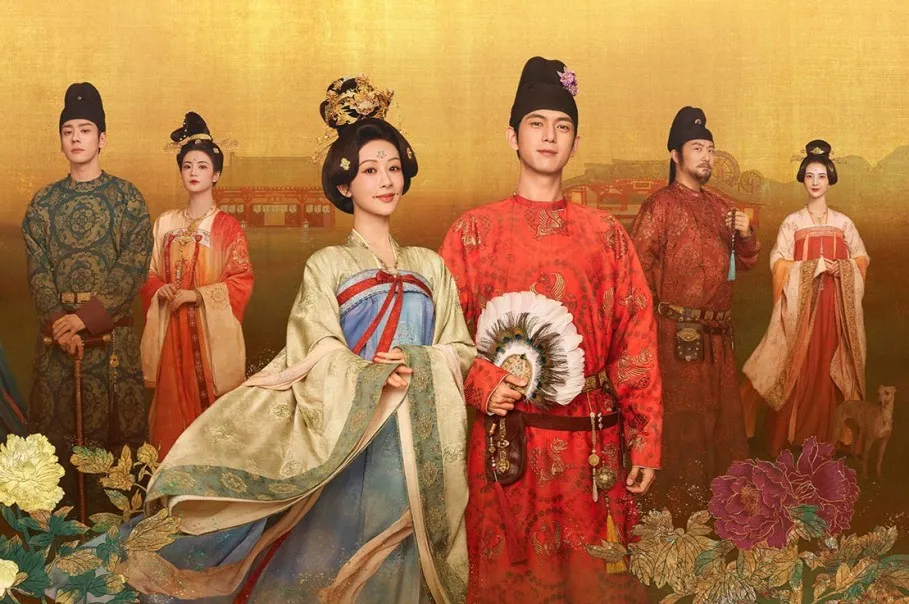
Flourished Peony Poster - Courtesy of Hunan TV

|
DetailsRATING: (8.5/10)
NATIVE TITLE SEASON 1: 国色芳华 – Guó sè fāng huá NATIVE TITLE SEASON 2: 锦绣芳华 – Jǐnxiù fāng huá YEAR: 2025 EPISODES: 32 (season 1) + 24 (season 2) DURATION: 45’ DIRECTOR: Ding Zi Guang SCREENWRITER: Zhang Yuan Ang, Jia Bin Bin, Ma Yu Xin, Li Yu Xuan ORIGINAL CREATOR: Yi Qian Chong (国色芳华 - National Beauty) RESPECTED CLICHÉS: 1 – 4 – 5 – 6 – 7 – 8 – 9 – 10 – 11 – 12 – 13 – 15 |


IN A NUTSHELL
- What to expect: Flourished Peony is a historical drama set in the Tang era that deals with the theme of women's condition in the past, but does not do so in a rhetorical way and accompanies the narration with the business vicissitudes of the protagonist, twists and an interesting subplot of political intrigue that keeps you on the edge of your seat from beginning to end.
- Strengths: the characters, the focus on the condition of women in the Tang era, the relationship between the protagonists and the evolution of their love story.
- Weaknesses: the abuse of romantic clichés in the second season, the excessive dilation of the story towards the end.
- Recommended if you like: Yang Zi and Li Xian, historical dramas set in the Tang era, independent and courageous female protagonists, slow-burn romances with some clichés.
- Would I rewatch it? Absolutely yes, even if it pained me to see the protagonist and the other female characters so often trampled upon.
Read on to find out what made me give the drama such a high rating.
In a series that blends poetry and female drama, Yang Zi masterfully plays He Wei Fang, a woman with the delicacy of an ancient flower and the tenacity of someone who never bows to fate.
In this review of Flourished Peony (and its sequel In the Name of Blossom), I’ll analyze the series’ strengths, focusing on the protagonists’ performances, the narrative construction, and the effectiveness of the genre’s inevitable clichés. If you're a fan of stories with strong, independent heroines, then read on: Flourished Peony (and its epilogue In the Name of Blossom) might be the drama you've been looking for!
Plot
To obtain the miracle pill that could save her mother’s life, the merchant daughter He Wei Fang agrees to marry Liu Chang, the heir of the family of officials Liu in Luoyang.
For a year, He Wei Fang endures the abuse of her in-laws, who squander her wealth to gain favors, and the coldness of her husband, still in love with his childhood sweetheart, Princess Li You Zhen. However, everything changes when she discovers that the Lius are responsible for her mother’s death because they provided her with a fake cure.
He Wei Fang then decides to take revenge and uses Li You Zhen and the high official Jiang Chang Yang’s visit to Luoyang to obtain a divorce from Liu Chang. Her in-laws, however, refuse to give up her dowry and attempt to kill her, forcing her to feign death and flee to Chang’an, home to her mother’s ancestral estate, the Fragrance Garden.
Here, she tries to start over, but without a household registration to prove her identity, it’s not easy, and circumstances push her to trust the wrong person. Fortunately, she runs into Jiang Chang Yang who, intrigued by her, helps her obtain a household registration and agrees to become her financier, allowing her to enter the flower trade.
Working at the Chang’an flower market, the girl makes many friends, but also makes several enemies, including Princess Li You Zhen, who wants to prevent Liu Chang from rekindling his relationship with her.
Thanks to her skill in growing peonies and her resourcefulness, He Wei Fang manages to overcome all the obstacles that stand between her and her business success and wins the heart of the frivolous Jiang Chang Yang, who, to protect her, goes so far as to arrange a fake marriage between them.
The girl will thus discover that behind his apparent superficiality, the official hides a noble purpose: to help the Emperor, his old study companion, counter the excessive power of the corrupt Prince Ning and the aristocratic faction that supports him.
Moved by a newfound sense of justice, He Wei Fang decides to support her husband in his battle, having also realized that she has genuine feelings for him.
Focus: Administrative Division of the Empire in the Tang Era (618 – 907 A.C.)

Flourished Peony / In the Name of Blossom Review (No Spoilers)
Flourished Peony is a historical drama set in the Tang Dynasty. Its main theme is the condition of female subjugation, which sees women confined to the inner courts and forced to obey the wishes of their fathers and then their husbands’ families, never able to exploit their abilities and forced only to serve their husbands and raise their children.
This theme is complemented by a subplot about the excessive power of the aristocracy, which oppresses other social classes, occupying all public offices and caring only for their own wealth, ignoring the well-being of the people and the development of the country.
Plot and Narrative Pace
The plot is very captivating (it reminded me a bit of the drama The Autumn Ballad with Jeremy Tsui and Qiao Xin, which I recommend watching) and maintains a good pace throughout the first season, but the second season feels a bit superfluous.
The events become so repetitive as to become monotonous: the attempts to kill the FL or close her shops are countless, and it’s hard to understand why, given that the second season was supposed to focus primarily on the ML’s plans to help the Emperor eradicate corruption at court.
It’s a bit like what happened with Lost You Forever: they wanted to offer us two seasons, but the second is decidedly more subdued than the first and has to resort to misunderstandings and romantic back-and-forth to prolong the story.
The series is historically accurate both in its aesthetics and in its portrayal of the characters’ mentality and attitudes, especially in relation to women’s obligation to submit and their duty of obedience to their husbands and their families.
We finally have a drama that addresses the condition of women in the past in a non-rhetorical and believable way (perhaps too much so for an entertainment product, given the number of times the protagonist and the women around her are debased and abused by any male).
Characters
The construction of the characters, especially the main ones, is excellent and I must admit it’s been a while since I’ve seen such a realistic female protagonist.
He Wei Fang isn’t the classic “Mary Sue” who can predict her enemies’ plans and foil them by turning them against the enemies, but she knows how to quickly analyze the situation and address it, finding the best solution to emerge (relatively) unscathed.

Cast
As for the cast, it was definitely up to the production standards and contributed enormously to the series’ enjoyment.
Yang Zi is an excellent actress, and I find her expressiveness to be one of the most talented drama actresses of her generation (also notable in the role of Xiao Yao in Lost You Forever). Her credibility always comes across clearly in both the dramatic and love scenes, and I greatly appreciated her chemistry with the male lead.
Li Xian gave a surprising performance, and I greatly appreciated his acting in the romantic scenes. His connection with Yang Zi was palpable, so much so that the two truly seemed to understand each other during intimate moments.
Zhang Ya Qin and Wei Zhe Ming confirmed their status as two great professionals who shine even in challenging roles such as antagonists (I recommend enjoying their acting skills in An Ancient Love Song and Lady Revenger Returns from the Fire, respectively).
Guan Yue and Guo Zhe‘s performances as the protagonists’ closest collaborators are delightful.
Visual Aspects and Soundtrack
Kudos to the costume and hair departments, who did a truly excellent job of historical reconstruction (which, however, was the subject of controversy by the author of the book “Chinese Makeup Bundle (Tang Dynasty)”). The sets and settings are also meticulously crafted, but my compliments especially go to those responsible for the garden design and the grandiose battle scene featured in episode 22 of In the Name of Blossom.
The intense soundtrack boasts several songs with a remarkable emotional impact, including Lingering Fragrance o Everlasting Fame (流芳) sung by Tan Weiwei, The Blue Bird Returns (青鸟归) performed by Terry Lin, and Rainbow Glow (霓光) performed by the always excellent Yisa Yu.
From a directorial perspective, I was impressed by the drama’s attempt to keep the settings and lighting as realistic and historically accurate as possible. However, I must point out that the night scenes are far too dark: you can barely see anything of what’s happening, and you risk missing important details!
I think there were some editing errors, as the opening and closing shots of episodes are sometimes missing, so much so that, unless you watch the episodes in quick succession, you can’t remember where you were in the narrative.
I’d like to point out the (very welcome) brief summary of Flourished Peony at the beginning of In the Name of Blossom because, given the time between the first and second seasons, it’s likely that you won’t remember much of what happened in the previous season.

WARNING!
FROM THIS POINT ON THE SPOILER SECTION BEGINS. DO NOT CONTINUE IF YOU DO NOT WANT TO KNOW ALL THE DETAILS OF THE DRAMA.
Flourished Peony / In the Name of Blossom Review (Spoilers)
What Works
The Plot and the Implied Message
The most interesting aspect of this drama, which from the beginning makes no secret of being a female-led but also feminist story, is that it is women who save women.
Only women, in fact, can understand the suffering and frustration that comes from being born into a society where women are considered inferior and where talent is recognized only in men, and only those with a prestigious family background. In this story, therefore, men — or rather, those who respect women and don’t treat them like animals — only intervene occasionally upon request, such as when Jiang Chang Yang helps He Wei Fang with her divorce or with the household registration. But they can never cross the line, as when Liu Chang intervened unwantedly to save He Wei Fang from a harassed client.
The true heroines of this story are, in fact, women: they are the ones who, through their own strength and by helping each other, achieve results that men don’t expect and often refuse to acknowledge, as when Lu Geng Chun’s father insists that she abandon her plan to become a doctor and get married, or He Wei Fang’s father insists that she take care of her husband and the house despite her brilliant business successes.
The story offers us a complex universe of female figures: combative women like He Wei Fang, Zhu Fu, and Xiao Chun, or resigned women like Qin Shen Yi, Lian Zhou, and Consort Shu, and invites us to explore a female world made of successes, failures, contradictions, hidden desires, and unresolved pains.
Like that of the insecure Shen Yi, who is unable to recognize her own abilities and cannot imagine her life away from a man who beats her but makes her appear indispensable and respectable in the eyes of others and her family.
Or that of the lost Lian Zhou who agrees to offer herself to the vicious and violent nobleman Pei Zhong because she has never overcome the feeling of helplessness that comes from the ruin of her family at the hands of a corrupt official and the impossibility for a woman of her social class to wear the beautiful embroidered dresses that her father’s workshop made for the royal family.
Or that of the noble Consort Shu who, despite being the Emperor’s favorite concubine, lives in uncertainty and terror of being cast aside and not being loved by her husband as she does.
The message this drama conveys is indeed feminist, but in a certain sense also transversal because He Wei Fang often repeats that one must live for oneself, for one’s own goals and ideals, and not for others, exactly as she does when Jiang Chang Yang “dies” at the hands of Prince Ning.

Characters Construction
I found the brotherly and complicit relationship between the Emperor, the protagonist, Master Xu, and all of the latter’s former students to be very beautiful: it made the fight against Prince Ning even more engaging and meaningful.
I also particularly appreciated the emotional complexity of He Wei Fang’s two main antagonists. Although they weren’t the drama’s set villains (that role was reserved to Prince Ning), they demonstrated that desperation can lead to moral degeneration just as easily as greed or the thirst for power.
Trapped in a loveless and abusive marriage, Li You Zhen became, over time, ruthless and unscrupulous in order to survive. Her love for Liu Chang, which had blossomed when they were both young and naive, was never realized due to her father’s political interests, which had driven him to sacrifice his daughter’s happiness to increase his power at court.
The unexpected, yet facilitated, death of her husband gave her the opportunity to reunite with her beloved, but her corrupted personality transformed her into someone Liu Chang could no longer love.
Her hope for a better life, however, rests entirely on that once-tender and romantic love, and she has no intention of giving it up, even if it means fighting strenuously to obtain it.
She believes that by erasing He Wei Fang from her beloved’s life, he will return to love her, but the reality is quite different: he no longer appreciates her and feels oppressed by that marriage and by the control she and her father exert over him.
Liu Chang, however, has become her obsession, the only way out, at least partially, of her father’s interference in her life, so she must keep him tied to her even though she knows she’s wronging him.
And perhaps she is still naively attached to that youthful love that she initially believed she could rekindle, but which has since become nothing more than a bittersweet memory.
As the plot unfolded, it seemed to me that Li You Zhen was increasingly resembling Princess Cui Ming Yue from Si Jin: selfish and indifferent to the suffering of others. However, the substantial difference between the two is that while Cui Ming Yue had never faced any hardship and had always done what she wanted thanks to her mother’s loving support, Li You Zhen had to submit to her father’s decisions and accept a forced marriage into a family that didn’t appreciate her, forever giving up her youthful love.
Liu Chang is an equally unfortunate, though more devious, figure.
He initially acts arrogantly toward He Wei Fang, humiliating her because of her low social class and her submissive, complacent nature. However, when he discovers that she is passionate and refuses to submit to her in-laws’ control any longer, he suddenly becomes infatuated with her. Despite Li You Zhen’s offer to break the arranged marriage that has always been a barrier to his life, he stubbornly refuses to grant his wife a divorce.
To prevent He Wei Fang from leaving him, he first attempts to rape her, then tries to burn the divorce agreement she obtained in court. However, when her parents try to kill her, he shows mercy and lets her escape.
He prides himself on being an upright and honest man, but ignores the atrocities his parents commit behind his back and the injustices they inflict on poor He Wei Fang. He shows not even a shred of pity for the County Princess, forced by her father to marry a man she doesn’t love and, as a woman, forced to endure the oppression of her husband’s family.
Only when Prince Ning forces him to marry Li You Zhen, threatening his father’s life and locking him in prison after breaking his leg, does he understand He Wei Fang’s state of mind within the Liu family: trapped, powerless, and despised because of his social inferiority.
He then decides to no longer rebel against fate and to set aside his pride and ideals to become his father-in-law’s fixer and gain enough power to no longer be humiliated or dominated by anyone.
This tactic, however, backfires as He Wei Fang begins to despise him even more, partly because of his cowardly attempts to get rid of Jiang Chang Yang.
His obsession with her, however, grows, pushing him to try to win her favor using despicable means, such as watching indifferently as the Princess sets a fire in the Fragrance Garden so he can save her at the last minute, or taking advantage of Jiang Chang Yang’s alleged murder to imprison her in his residence.
Only at the end, when Prince Ning is rendered powerless, does he manage to regain his sanity and reclaim his former values, accepting his demotion to a commoner and acknowledging his bond with Li You Zhen.
Unfortunately for him, however, inexorable karma will destroy his future shortly after regaining his freedom.

What Doesn't Work: Season Two's Sequel of Clichés
I was, however, a bit annoyed by the series of clichés inserted into the second season, which, besides being exasperating, seemed deliberately inserted to drag things out.
The story of Mr. Wu poisoning He Wei Fang’s mother (how likely was it that one of the ML’s servants was the FL’s mother’s killer?), the FL’s stabbing of the ML, the misunderstandings surrounding the broken jade hairpin and the supposed marriage between Jiang Chang Yang and Xiao Xue Xi that lasted from episode 6 to episode 14, and then the ML’s attempt to push the FL away by lying about his feelings to keep her safe in episodes 16 and 17—these are all clichés I hoped not to find in this drama, whose first half was almost perfect in terms of the script.
Another detail of In the Name of Blossom that perplexed me was the fact that, in the last 24 episodes, He Wei Fang managed to solve his shops’ business problems with disarming ease.
In the blink of an eye and without even Jiang Chang Yang’s financial support, she managed to revive the Fragrance Garden’s business after the fire that had practically destroyed it (only the few plants that the ML had recovered from the burning greenhouse were saved), to help the inhabitants of Shengxian become economically self-sufficient by entering the medicinal plant trade, to open a new medical center for the poor, to provide lamp fuel for exam candidates of humble origins through an innovative oil extraction method she had perfected, and to provide General Yu Zheng’s Hedong Army with military supplies capable of competing with those possessed by the Empire’s Central Army.
Finally, fans of high-passion scenes will probably have been satisfied: if Flourished Peony had chosen a narrative more focused on the commercial vicissitudes of the protagonist, In the Name of Blossom has decided to generously explore the emotional dynamics between ML and FL, dedicating itself, from episode 17 onwards, with considerable zeal to the representation of the intimacy between the protagonists

Characters and Cast
Primary Characters
He Wei Fang/Mu Dan/Jiang Xiao Hua/Feng Xiao Hua (Yang Zi), daughter of the wealthy apothecary He of Luoyang. Following her mother’s sudden illness, she agrees to marry the heir of the Liu family in exchange for the precious Zixi Pill. At the Liu Residence, however, she is treated coldly by her husband and exploited and humiliated by her in-laws. When she finally discovers that the Lius caused her mother’s death by providing her with a fake cure, she got divorced, but her in-laws refuse to give up her dowry and try to kill her. Having miraculously escaped assassination, she decides to fake her death and move to Chang’an, where she starts over with the help of Jiang Chang Yang.
Jiang Chang Yang/Sui Zhi/Jiang Da Shan (Li Xian) Deputy Director of the Imperial Canteen Department and Floral Envoy. He is the Emperor’s confidant and Prince Ning’s right-hand man, and is widely known as the most corrupt official in Chang’an. In reality, he secretly collaborates with the Emperor to purge the court of dishonest ministers serving the Prince.
Zhu Fu/Da Fu/A’Fu (Guan Yue) daughter of Mrs. Sun, helps her mother run an incense stall in the Western Market. She is forthright and resolute, and doesn’t hesitate to use forceful means to get her point across. After her mother enters into a business partnership with He Wei Fang, she becomes her apprentice, and over time the two become close friends. While at Mu Dan’s side, she falls in love with Chuan Yu, and the two eventually marry.
Lu Geng Chun/Xiao Chun (Sun Mei Lin) daughter of the Director of the Flower Guild and an aspiring doctor. He Wei Fang helps her keep her traveling doctor’s practice a secret, and in return, she treats the wound on her hands that she sustained while defending herself from the Liu family’s second assassination attempt. The two become great friends and He Wei Fang entrusts her with the management of the Qing Shu Zhai Medical Practice for women (Hall of Serenity and Rest) first and then of the Wu Yong Tang Medical Hall for the indigent (Hall of Rediscovered Simplicity).
Liu Chang/Zi Shu (Wei Zhe Ming) heir to the Liu family of Louyang and husband of He Wei Fang. He is a boastful scholar who despises He Wei Fang because of her social status, but refuses to grant her a divorce. He has always been in love with the Princess of Ji’an County, and for this reason decides to have no contact with his wife, only to later fall in love with her. After He Wei Fang’s presumed death, he becomes engaged to Li You Zhen, but when he discovers that his ex-wife is still alive, he refuses to marry the Princess. He later agrees to marry her and is appointed Deputy Commissioner (later Commissioner) of Tribute Transportation.
Li You Zhen (Zhang Ya Qin) Princess of Ji’an County, daughter of Prince Ning. After her husband’s death, she returns to her childhood sweetheart Liu Chang, hoping to rekindle their relationship. However, he no longer feels anything for her and begins to fall in love with his wife, so he tries to push her away. To force him to divorce He Wei Fang and marry her, she decides to be caught engaging in equivocal behavior with him during a banquet at the Liu Mansion.
Supporting Characters
Yu Lu (Liao Yin Yue) He Wei Fang’s personal maid. He Wei Fang and her mother are so fond of her that they named the Qiongtai Yulu, a prized peony variety, after her. She dies trying to help He Wei Fang free herself from the Liu family’s control.
Mr. He (Li Jin Rong) father of He Wei Fang. He’s the most famous apothecary in Luoyang and often uses his wife‘s (Yuan Ran) prized peony varieties as the active ingredient in his medicines. During the epidemic that followed the flood in Luoyang, he is forced by the nobles to sell them large quantities of medicines, leaving the population without treatment. For this reason, Wu Hong poisons his wife, holding her responsible for the deaths of his family.
He Yi Niang (Chen Si Si) concubine of He Wei Fang’s father and Man’er’s mother. She reveals to He Wei Fang the truth about the illness that caused her mother’s death.
Man’er (Tan Chu Lun) He Wei Fang’s younger brother and designated heir to the He family.
Jiang Yan Tang (Zhao Yan Song) Jiang Chang Yang’s father. Initially, he solemnly promised not to marry anyone other than his legitimate wife, but later fell in love with Lady Bai and decided to abandon the marital home to live with her.
Feng Ruo Xin (Ding Zi Ling) Jiang Yan Tang’s legitimate wife and Jiang Chang Yang’s mother. She died of depression following her husband’s abandonment.
Lady Bai (Han Xin Tong) Jiang Yan Tang’s concubine and Fan’er’s mother. On the evening of Feng Ruo Xin’s death, she went into labor, and Jiang Yan Tang preferred to stay by her side rather than bid his wife farewell. This increased Jiang Chang Yang’s resentment toward her, so much so that after their father’s death, the two have had no further contact.
Fan’er (Yun Ji) Lady Bai’s son and Jiang Chang Yang’s younger brother. He was born after a difficult birth and suffers from a rare bone disease that requires special and expensive treatment, for which Lady Bai seeks Jiang Chang Yang’s help.
Lady Feng (Dong Jie) Jiang Chang Yang’s maternal aunt, who lives in Jizhou Prefecture. She has been a widow for many years and, after her husband’s death, has pursued a career in shipping. For this reason, she is very sympathetic to He Wei Fang, appreciates her, and hopes she will become her step-niece.
Chuan Yu (Guo Zhe) Jiang Chang Yang’s bodyguard. He falls in love with Da Fu and marries her.
She Yan (Mu Tong) Jiang Chang Yang’s subordinate, who dies in a trap set by Prince Ning at the Imperial Exam’s top-ranked students’ promotion party.
Zhen Qing Yun/Yun Niang (Xie Xin) Manager of the Wan Guan Tang (Hall of Infinite Riches) pawnshop and the Huan Yun Lou (Tower of Joyful Clouds) entertainment venue. In reality, she is one of Jiang Chang Yang’s secret guards.
Wu Hong (Zhou Pu) former attendant at the Jiang residence and director of the orphanage opened by Jiang Chang Yang on the outskirts of Chang’an. He is the one who poisoned He Wei Fang’s mother to avenge the deaths of his family members in the plague that broke out in Luoyang after a flood.
A’Kang (Li Zhen Zhen) sickly orphan rescued by Wu Hong during the Luoyang plague and placed in Jiang Chang Yang’s orphanage.
Liang Zhou (Bao Chen Xi) daughter of failed Jiangnan merchants, is adopted by Prince Ning to be assigned as a concubine to Jiang Chang Yang and thus control him. After attempting to poison He Wei Fang, she is sent back to Prince Ning’s residence, who assigns her to Pei Zhong, thus sealing her end.
Tang Si Lang (Zhao Rui) Fourth Young Lord of the Tang family and a friend of Jiang Chang Yang.
Qin Wu Niang/Qin Shen Yi (Shao Yun) Wang Qing’s wife. She was sold by her father to her husband and has since run his restaurant business alone. She endures daily beatings from her husband and watches helplessly as he seduces girls in need and sells them to brothels. She helps He Wei Fang escape her husband’s greed when he lures her with the promise of a false household registration. Thanks to her, Shen Yi manages to obtain a divorce and financial independence, but her insecure and submissive nature drives her back into Wang Qing’s arms, leading to a tragic end.
Wang Qing (Xin Peng) innkeeper and husband of Qin Wu Niang. He is often drunk and beats his wife, who is forced to run their inn alone. As if that weren’t enough, he seduces desperate girls with his gentle ways and then sells them to brothels. After He Wei Fang obtains a divorce for his wife, he repeatedly attempts to slander her until he succeeds in having her convicted of falsifying the household registation and takes over her shop, Hua Man Zhu (Floral Haven). He is eventually killed by Wu Niang, tired of being harassed and humiliated by him.
Qin Liu Lang (Gu Zi Cheng) Qin Wu Niang’s younger brother. After his sister’s death, He Wei Fang takes him in to the Fragrance Garden, cure him, and treating him like a brother.
Sun Da Niang (Yang Kun) incense seller at the flower market who is paid by Wang Qing to complain about the peonies sold by Mu Dan and Shen Yi and discredit their business. She later agrees to go into business with the two girls and create incense made from the flowers of the Huai Xiu Xiang peony, also offering them the help of her daughter Zhu Fu.
Lu Wan Rong (Sun Wei) Director of the Flower Guild and father of Lu Geng Chun. He is a very conservative man and does not allow women to join the guild, but his passion for flowers is genuine and he eventually recognizes He Wei Fang’s talent in caring for and enhancing them.
Cao Yu Ying (Ma Yi) Deputy Director of the Flower Guild and owner of a flower shop in Chang’an’s Eastern Market. After a failed attempt to discredit He Wei Fang’s shop, he is relieved of his official duties by Lu Wan Rong. At the request of County Princess Ji’an, he again attempts to slander He Wei Fang by exploiting the death of his secret concubine, Mrs. Wu, but again fails.
Tang Da Niang (Tian Miao) Superintendent of the Fragrance Garden. A corrupt official stripped her of her family’s lands and forced her into service with a nobleman who accused her son of theft, forcing him into hiding.
A’Tao (Kui Yuan) is a multi-instrumentalist at the Fragrance Garden. She is the daughter of a fallen noble family who was sold as a musician to an entertainment house.
A’Man (Peng Dou Dou) embroiderer at the Fragrance Garden. She was sold by her gambler father to the Pingkang House, but she loves embroidery and would like to earn a living from her work.
Jin Niang (Wang Qing) cook and expert winemaker at the Fragrance Garden. Her husband has pawned her off at a tavern where, however, her skills are not appreciated by the owner.
Princess Shou Chang (Sun Shuang) the Emperor’s late sister, died in a fire set by an emissary of Prince Ning while she, the future Emperor, and Jiang Chang Yang were in Mengzhou investigating the Prince’s embezzlement of funds for evacuees.
San Lang (Qu Zhe Ming) Jiang Chang Yang’s childhood friend but, in reality, he is the Emperor. He appointed Jiang Chang Yang Deputy Director of the Imperial Mess Department and Floral Envoy to allow him to approach Prince Ning by pretending to be a corrupt official.
Huangfu Ling Ge (Shen Meng Chen) Noble Consort Shu, the Emperor’s favorite concubine and friend of He Wei Fang.
Prince Lang, son of Consort Shu.
Li Xian (Tu Song Yan) Prince Ning, the Emperor’s elder brother and father of Li You Zhen. His fiefdom is Luoyang, but his web of corruption extends throughout the kingdom. His goal is to dethrone his brother and establish himself as legitimate Emperor.
Pei Zhong (Chen Yi Long) Captain of the High Prefecture Guards and Prince Ning’s chosen husband for Xiao Xue Xi. He is a violent and vicious man who has no qualms about using unorthodox methods to force General Xiao’s consent to their marriage: he invites Xue Xi to an inn and then drugs her in an attempt to rape her. Fortunately, Jiang Chang Yang understands his intentions and reaches his friend along with He Wei Fang, avoiding the worst. He later kidnaps He Wei Fang and, in an attempt to kill Jiang Chang Yang, poisons the girl, but she is saved thanks to Xiao Chun’s intervention.
Wu Ping Zhi (Sun Rui) Li You Zhen’s deceased husband and Prince Ning’s former son-in-law. He is killed by the Princess after an argument, and his murder is disguised as a fire.
Liu Shen (Zhang Lei) assistant to the Governor of the Eastern Capital (Luoyang) and He Wei Fang’s father-in-law. When his son becomes Prince Ning’s future son-in-law, he moves to Chang’an and is appointed Minister of Revenue, but is dismissed after He Wei Fang and Jiang Chang Yang expose his fraudulent trading scheme involving the sale of spoiled millet at the Western Market.
Tian’er (Huang Zhen) servant of the Liu Residence who repeatedly attempts on He Wei Fang’s life on the orders of the Lius.
Qiu Shi (Wang Tian Yu) Liu Chang’s personal servant.
Chen Liu Shou (Liu Ling Zhi) Governor of the Eastern Capital (Louyang) and a supporter of Prince Ning.
Chen Zhang (Qiu Bai Hao) son of the Governor of the Eastern Capital (Luoyang) and a candidate for the Imperial Examination. After failing the exam, Jiang Chang Yang appoints him Keeper of the Luoyang Warehouses at Prince Ning’s request.
Li Xing/Wen Qing (Tong Meng Shi) administrative secretary of the Imperial Academy and He Wei Fang’s maternal cousin. His mother never accepted her sister’s marriage to a merchant and has since severed ties with her. He helps his cousin escape Wang Qing and offers to ransom her and marry her after she is sentenced to slavery for falsifying the household registation.
Xu Zu Ping (Zhang Qi) Director of the Imperial Academy, tutor to the Emperor, and staunch opponent of Prince Ning at court. His dream is to open the Imperial Examination to scholars of humble origins like himself, but Prince Ning thwarts him in every way, even attempting to kill him.
Zhang Qian (Fu Jia) scholar of humble origins from Yangzhou and an Imperial Examination candidate. He is hired by Liu Chang to spy on Xu Zu Ping and Jiang Chang Yang for Prince Ning. He is ultimately poisoned by him.
Cui Mao (Zhao Hui) Minister of Personnel. Accused of fraud in the awarding of official positions and sentenced to exile. To save the lives of his family, he agrees to reveal to Jiang Chang Yang the details of the network of corrupt officials linked to Prince Ning.
Cheng Lang (Wang Shan Shui) disciple of Xu Zu Ping, fellow student of the Emperor, and former Imperial Censor demoted and sent to Luoyang as superintendent of the Ministry of Taxation. After Chen’s dismissal, Liu Shou becomes the new Governor of Luoyang.
Doctor Fu (Zhao Wei Guo) Director of the Imperial Medical Hall and author of the kingdom’s leading medical textbook. He helps Lu Geng Chun solve the most complex medical cases she faces while working at the Wu Yong Tang Medical Hall.
Ren Jing Chao (Ren Wei) Metropolitan Prefect of the Capital Prefecture. At the request of the Princess of County Ji’an, he adjudicates the case of He Wei Fang’s falsification of the household registration, sentencing her to slavery at the capital’s military camp, under the command of General Yuan.
General Yuan (Jing Xi) Commander of the Military Camp where He Wei Fang is sent to serve her sentence for falsification of the household registration. Li You Zhen asks him to have He Wei Fang raped by some recruits, but the mute girl (Qi Xue Ru), who had befriended Mu Dan, learns of the plan and reports it to her, only to be murdered.
Zhang Shang Shu (Zhou Jie) Minister of War and supporter of Prince Ning. Thanks to Jiang Chang Yang, he is convicted of embezzlement and deposed.
Lu Chu (Luo Lei) Deputy Minister of Revenue. He is also appointed Commissioner of Tribute Transportation after Liu Chang is dismissed for illegally transporting a large quantity of bronze and iron in the form of statues of deities. He and his entire family were killed by Prince Ning for openly criticizing him at court.
Zhu Si Nong Qing (Zhao Wen Ming) Minister of Agriculture and supporter of Prince Ning. He was dismissed following the fraud in the Imperial Examination.
Zheng Shou De, Prefect of Ruzhou and supporter of Prince Ning. On the latter’s recommendation, he was appointed Minister of Revenue after Liu Shen was dismissed due to the scandal involving spoiled millet sold at the Western Market.
Zhang Chou Feng (Bi Han Wen) Official of the Ministry of Revenue who pretends to help Prince Ning frame Jiang Chang Yang, but is actually an ally of the Emperor.
General Yu Chang (Chen Zhi Hui) Military Governor of Hedong and commander of the Hedong Army. He was killed by Prince Ning’s men at the Imperial Examination Promotion Party held in the Garden of Fragrances.
General Yu Zheng (Ni Han Jin) son of General Yu Chang and deputy commander of the Hedong Army. After winning the Battle of Dongwei Pass and quelling Prince Ning’s rebellion, he is awarded the title of Prince Jun.
General Xiao Wen Yan (Yang Ping You), military governor of Hexi, commander of the Hexi Army, and father of Xiao Xue Xi. To gain his favor, Prince Ning plans to marry his daughter to Pei Zhong. However, he prefers to reject the marriage agreement, pretending to agree to provide Li Xian with his military support in the event of a rebellion.
Xiao Xue Xi (Xu Ling Yue), daughter of General Xiao and childhood friend of Jiang Chang Yang. She saves He Wei Fang from Tian’er during her second assassination attempt on Mount Qingliang. She is secretly infatuated with Jiang Chang Yang, but decides to give up on him when she realizes that he and He Wei Fang love each other.
Magistrate Yu (Li Xiao Ning) County Magistrate of Shengxian. He is an upright and honest official, but is rendered powerless by the corruption of his superiors and forced to watch his fellow citizens suffer hunger and disease. Thanks to He Wei Fang’s help, he manages to revive his county by becoming her trading partner.
Magistrate Du (Wang Lu) County Magistrate of Zhangxian who attempts to extort tribute from He Wei Fang for trade in her territory and then attempts to kill her when she threatens to report him to higher authorities.

Favorite Character: Jiang Chang Yang
Despite his apparent greed and debauchery, he is a man driven by profound moral values that drive him to sacrifice his own reputation in order to eradicate the rampant corruption at court and serve the people.
His family history and the painful death of his beloved mother, forgotten by his father despite his vow of eternal love, have always driven him to shun love and abhor marriage as if it were the worst of punishments.
His disposition and the need to maintain an image of apparent licentiousness, however, have never encouraged him to act disrespectfully or libertinely toward the courtesans he frequently associates with to fuel his bad reputation.
His respect for women is also evident when he stops Wang Qing from beating Wu Niang at Huan Yun Lou, when he rejects Xiao Xue Xi’s marriage proposal because he knows he isn’t in love with her and doesn’t want to ruin her future happiness, and when he avoids going to He Wei Fang’s aid because he understands she can handle herself.
His profound kindness also appears indisputable: he opens an orphanage to console Wu Hong for the death of his family, he throws himself into the flames to recover Mu Dan’s peonies despite being terrified of fire due to the fire that killed Princess Shou Chang, and he almost allows himself to be killed by Prince Ning to eliminate the threat, not to mention his discreet and tender presence always at He Wei Fang’s side.
In him, He Wei Fang finds a loving and faithful companion who respects her abilities and her person without needing her to owe him explanations or thanks.
Un-Favorite Character: The Lius
They are petty, greedy, and willing to do anything to obtain the power and prestige their social class demands.
They despise He Wei Fang because she belongs to a lower social class than they do, but they exploit her wealth to gain favors from other noble families and corrupt officials.
They do not hesitate to appropriate their daughter-in-law’s dowry, yet at the same time, they humiliate and debase her, forcing her to live modestly in an old, remote wing of the residence.
They reproach her for being unable to win her husband’s favor when they themselves are pitting them against each other, forcing her to take responsibility for the questionable actions they take to favor their son.
They pretend to support their son in pursuing his goal of becoming an official by passing the Imperial Examination, but instead of supporting him morally, they try every way to make it easier for him to achieve his goal, bribing officials and making important friends.
They first force Liu Chang to marry He Wei Fang because of her wealth and the fact that a fortune teller had predicted that the girl would bring great fortune to the family. Then they force him to marry Princess Li You Zhen to please Prince Ning and obtain pardon for the crime of commercial fraud committed by Liu Shen to avoid endangering the family.
To achieve their goals, they have no qualms about sacrificing the ideals and future happiness of their firstborn and making the lowest compromises to please the powerful.
Administrative Division of the Empire in the Tang Era (618 – 907 A.C.)
| Chinese Name | Translation | Function | Government |
|---|---|---|---|
道 (dào) |
District (or Circuit) |
Regional subdivision (macroregion) created for administrative, control, and fiscal purposes at the beginning of the Tang era. Initially there were ten. |
观察使(guānchá shǐ) |
州 (zhōu) |
Prefecture |
Local administrative unit that includes multiple counties and has fiscal, military, and judicial functions. |
刺史 (cìshǐ) |
县 (xiàn) |
County |
Basic local administrative unit. |
县令 (xiànlìng) |
RECOMMENDED:
- A DREAM OF SPLENDOR
- THE AUTUMN BALLAD
- BLOSSOMS IN ADVERSITY
- BROCADE ODYSSEY
- TREASURES AROUND
Thanks for reading this far!
I hope you enjoyed my article. If you like my work and want to support me, buy me a coffee ☕