
Deaths in the World of C-dramas: 4 Cases that Rocked China’s Entertainment Industry
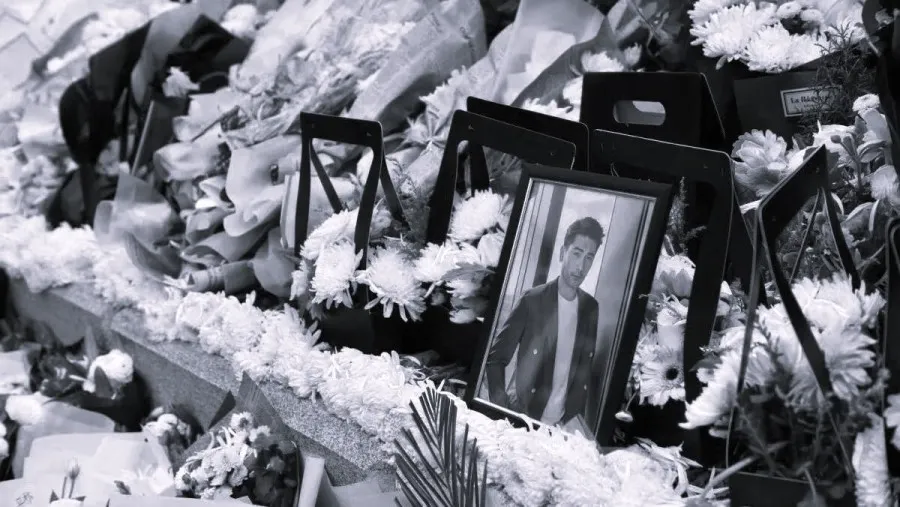
Memorial for Godfrey Gao outside the "Chase Me" studios - Courtesy of Reuters
IN A NUTSHELL
- Contents: following the recent death of actor Yu Meng Long, I decided to report four emblematic cases of deaths in the world of c-drama, to shed light on these tragic events and try to analyze their causes and responsibilities.
- Cases Listed:
- Qiao Ren Liang
- Ren Jiao
- Godfrey Gao
- Yu Meng Long
- Conclusion: the tragic deaths of Qiao Ren Liang, Ren Jiao, Godfrey Gao and Yu Meng Long bring to light the most controversial aspects of the Chinese entertainment system, raising questions about an industry that often seems to put people's well-being on the back burner.
Read on to learn the details of these tragic deaths.
The sudden death of a celebrity always has repercussions that go beyond the headlines: it shakes fans, colleagues, and the industry, casts scrutiny on working practices and personal conditions, and forces uncomfortable questions about the relationship between industry professionals and the controversial mechanisms that govern the entertainment world.
Following the recent passing of actor Yu Meng Long, I decided to report on four emblematic cases of deaths in the world of c-drama over the past ten years. I examine their dynamics, the confirmed (or officially reported) causes of death, and the consequences they have had on the entertainment world and on national and international fandom, in order to understand the repercussions of these tragic events and the responsibility of the media world for the deaths of beloved public figures.
Qiao Ren Liang
The Hard Battle Agains Depression
Qiao Ren Liang (乔任梁 also known as Kimi Qiao) was a Chinese actor and singer born in 1987. He rose to fame in 2007 after competing in the television talent show My Hero 2, where he finished second. His music albums and television and film roles made him a household name, especially among younger audiences. His best-known works include appearances in Legend of Lu Zhen, To Youth 2, Our Ten Years, and the EP Start Today (今天开始), which reached the top ten of the China Album Sales Chart in 2008.1
On September 16, 2016, Qiao was found dead in his apartment in Shanghai. Authorities and his agency confirmed that the cause of death was likely suicide, linked to severe depression. In the following days, it emerged that the artist was going through a difficult personal period: some media outlets cited professional pressure and psychological difficulties.2
The news caused a great shock among fans and industry insiders. Messages of condolence and disbelief multiplied on Weibo and in international communities: Qiao’s death sparked discussions on topics such as artists’ mental health, media pressure, and agency liability. Her music and projects received posthumous tributes, and some projects were reconsidered or delayed out of respect.
The episode sparked a public debate in China — still relatively taboo — on depression and the psychological support of young stars.

Ren Jiao
The Hidden Dangers on Set
Ren Jiao (任嬌) was an actress and model born in 1988, nicknamed “Little Angelababy” for her resemblance to her more famous colleague Angelababy. She graduated from the Beijing Film Academy and made her film debut in the 2015 horror film Midnight Whisper (半夜叫你別回頭). She later played minor roles in other Asian films, including the 2016 film iGirl (夢情人), alongside Ekin Cheng and Chrissie Chau, and the 2017 film The Express.
On October 15, 2017, her naked and lifeless body was found in the bushes outside the hotel in Suzhou where she was staying. According to official sources, she fell from the balcony of her thirteenth-floor room due to alcohol intoxication or a drug overdose, which, combined with a depressive episode, led to her suicide. However, the lack of transparency lamented by the public fueled suspicions that it was crime.
Surveillance footage showed her conversing with The Legend of the Condor Heroes star Yang Xuwen, who was in Suzhou filming at the time and who, that same night, allegedly took her to his hotel room. The actor was reportedly questioned at length by the police, but no evidence of his guilt emerged, and he was subsequently declared innocent. In the absence of clear evidence of intentional death, Ren Jiao’s case has been closed, but the matter remains shrouded in suspicion and public speculation.3
The actress’s death, in addition to causing immense public grief over the premature end of a young artist’s career, has called into question both the management of privacy in performers’ accommodations and the dynamics between colleagues.
The event sparked a tremendous outpouring of grief among fans, but also suspicion and calls for the case to be reopened, especially following the validation of the rape and alcohol abuse charges against former EXO member Kris Wu (吳亦凡), which have served as a warning for all the unsolved cases in the Chinese entertainment industry.4

Godfrey Gao
Safety in the Television Environment
Gao Yi Xiang (高以翔 better known as Godfrey Gao) was a 35-year-old Taiwanese model and actor who grew up in Canada. In 2011, after returning to Taiwan, he became the first Asian model to represent the fashion brand Louis Vuitton. He made his debut as the lead in the drama Volleyball Lover, but became best known in Asia for his role in Remembering Lichuan, which earned him the nickname the “nation’s husband” by the Chinese media. His image as a “supermodel” and charismatic actor made him very popular both at home and abroad.
On November 27, 2019, Godfrey Gao collapsed during filming of the sports reality show Chase Me, broadcast on Zhejiang Television, and died in Ningbo Hospital after three hours of resuscitation attempts. The show’s producers claimed that his death was caused by cardiac arrest.
Official reports and journalistic investigations indicated that Gao and his colleagues had been subjected to grueling 17-hour filming shifts during those days, including late-night recording sessions, which had exposed the participants to excessive and prolonged physical exertion. Local authorities and the production company issued statements of condolence, but the case sparked widespread controversy over the safety and professional practices of reality television shows in China.5
Gao’s death sparked immediate public outrage: colleagues and industry stars demanded accountability from the production, while some viewers denounced forced filming conditions and the lack of health protections for industry workers. Calls for clarification and stricter controls on the shows circulated on Chinese social media. It was a wake-up call for the television industry: many broadcasters and producers revised safety protocols, schedules, and insurance for participants in sports/variety programs.
Fans organized tributes and memorials. International media coverage highlighted the case as an example of the physical and psychological pressures that often accompany working in front of the cameras.

Yu Meng Long
The Shadows in the World of Chinese Entertainment
Yu Meng Long (余梦龙 English name Alan Yu), born in 1988, was an actor and singer who rose to fame in 2013 after participating in the singing competition Super Boy. His charm and dedication quickly secured him a place in the world of television series, leading him to play central roles in several beloved dramas, including Go Princess, Go!, Eternal Love, The Legend of White Snake, The Moon Brightens for You, and the recent Feud.
Over the years, he had built a loyal fanbase, and while his international fame wasn’t on par with A-list stars like Xiao Zhen, he was still widely loved for his charm and stage presence.
After a series of rumors circulated, on September 11, 2025, his agency officially confirmed his death following a fall from the window of a Beijing building, which was later discovered to be an apartment in the Chaoyang District owned by a friend.6
Police immediately stated that the fall appeared accidental and was most likely due to the actor’s high blood alcohol level. However, investigations are still ongoing to clarify the circumstances. Many national and international newspapers (Straits Times, Hindustan Times, The Star, Global Times) picked up the story in the hours that followed, and photos and recordings began circulating on social media, raising fans’ suspicions about the accuracy of the authorities’ reconstruction of events.7
The public’s emotional reaction was strong: messages of condolence, collages of memories, and requests for clarification abounded on social media. The artist’s mother also spoke out, issuing a public statement asking the community not to spread speculation and to respect the family’s grief.
The case, however, remains controversial. Theories persist regarding possible “external machinations”8 or coercive behavior by those present, but there is no tangible evidence to support them, and the police have stated that the evidence collected (videos, witness statements, and on-site investigations) does not support any criminal charges.9

Final Thoughts
Although these four cases are different in terms of dynamics, context and causes, some themes recur when dealing with sudden or tragic deaths in the world of c-drama:
- Work pressure and questionable safety standards. The Godfrey Gao case has reignited the debate about production companies’ liability. Exhausting filming, prolonged rehearsals, and unsafe work environments have been criticized as factors that increase the health risks for stars, especially in formats requiring intense physical exertion.
- Mental health and stigma.The death of Qiao Ren Liang has highlighted the importance of mental health among artists. In China (and beyond), depression and psychological problems are often underestimated and stigmatized: these tragedies are prompting more open discussion about psychological support and mental health services for young people.
- Fanbases play a central role.Fan communities react with intense emotion and often contribute to highlighting the case: collective mourning, digital tributes, petitions for answers, and, in some cases, angry reactions and requests for clarification from agencies and production companies. Fan bases organize online funerals (with commemorative hashtags, song covers, and photo collages) that become an integral part of public mourning and often represent a moment of collective reflection.
- Impact on the industry economy.Depending on the timing and the artist’s role in ongoing projects, death can lead to schedule changes, suspension of promotions, and editorial restructuring. Even after the loss, the memory of the artist tends to persist through revivals, tributes, and sometimes posthumous growth in interest thanks to commemorations, sales of tribute merchandise, and post-death releases.
Conclusion
These painful episodes demonstrate how, behind the glittering spotlight of the C-drama industry, lies a convoluted system in which media pressure, audience expectations, internal rigidities, and market dynamics often contribute to creating a fragile foundation where the price of fame can become unsustainable.
The tragic deaths of Qiao Ren Liang, Ren Jiao, Godfrey Gao, and Yu Meng Long bring to light the most controversial aspects of the Chinese entertainment system, raising questions about an industry that, despite captivating millions of viewers, sometimes appears trapped by rules and practices that overshadow the well-being of those who bring it to life, ignoring the human fragility that lies beneath the celebrity.
The loss of a beloved figure is always a complex moment for the family, fans, and the industry. However, the fanbase’s reaction, while a manifestation of instinctive emotion, also has important social consequences: it transforms a private matter into a collective event, bringing with it demands for truth, breaking taboos, and—hopefully—changes in the practices and power dynamics of the industry, as well as greater attention to the mental and physical health of entertainment workers.
Sources
Thanks for reading this far!
I hope you enjoyed my article. If you like my work and want to support me, buy me a coffee☕