
C-Drama Locations: North China's Most Famous Film Studios
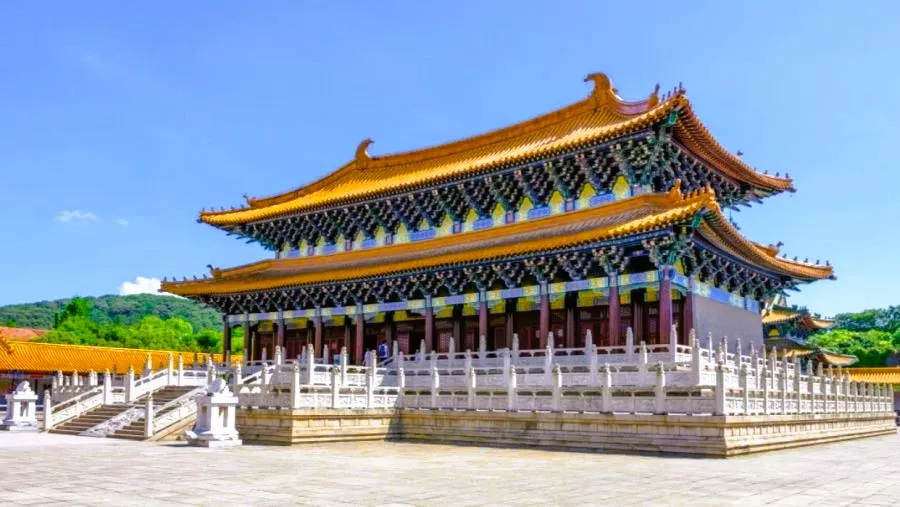
Wuxi Studios: Tang Dinasty City - Courtesy of rcdb.com (© Wolfgang Payer)
IN A NUTSHELL
- Contents: while southern China has seen the birth of some of the most monumental film studios for historical dramas, the north of the country boasts filming facilities linked to the national audiovisual industry and institutional television and film productions. Here, the settings are more specific and meet the needs of specific historical productions or works with an international scope set in Chinese cities.
- Locations described:
- Shanghai Film Park
- Huayi Brothers Movie World
- Wuxi Studios
- Shiqiu Film And Television Base
- China Film and Television Base
- Zhenbeipu Western Film Studio
Context and Development
While the south has seen the emergence of some of the most spectacular and tourist-friendly campuses, northern China boasts equally strategic production hubs, often linked to the capital and major centers of the national audiovisual industry. Here, the filmmaking infrastructure is intertwined with the state media system, training academies, and a production tradition that predates the recent explosion of C-dramas.
The north also features permanent sets, historical reconstructions, and large sound stages, but with different characteristics and vocations than the southern complexes. Some sites are more geared toward large-scale institutional television and film productions, others focus on specific historical settings or international productions.
In this second article, I will explore the Shanghai Film Park, Wuxi Studios, the China Film and Television Base, and all the major film studios in northern China, describing them as stops on an ideal itinerary for fans of international productions and analyzing their role in the tourism evolution of that part of the country.
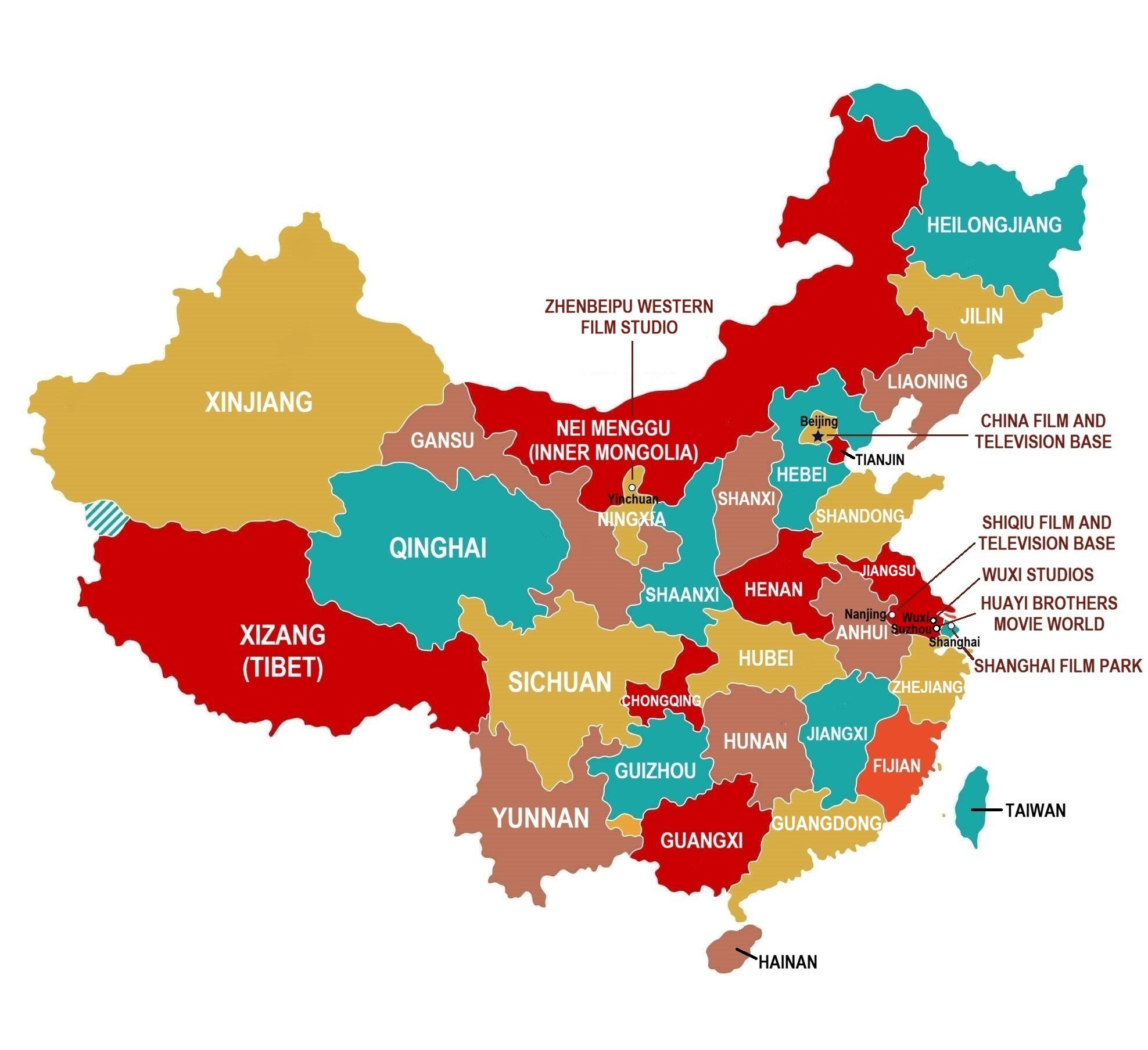
NOTE:: The complete list of Chinese sound stages is potentially endless. The locations mentioned here—visually identified in the map at the end of the article—are the most well-known, that is, those most cited in travel guides and those most frequently featured in television and film productions. If you plan to visit one of the parks mentioned in the article, always refer to the facility's official website and/or the websites of the tour operators that organize trips there to ensure you have access to the most recent and up-to-date information.
Shanghai Film Park

Where It Is Located and Numbers
The Shanghai Film Park (上海影视乐园) is a film campus located in Chengdun City (Songjiang District, Shanghai), known for its faithful reconstructions of 1930s cityscapes. The park, funded by the Shanghai Film Group Corporation, covers approximately 800,000 square meters — of which 150,000 are built-up — and is classified as a Level 4A national tourist attraction.
Formerly known as the Shanghai Chedun Film and Television Base, it was founded in 1992 to address the Chinese film and television industry's need to credibly recreate "old Shanghai" at a time when reconstructed locations were in short supply and many historic sites had not been restored. From the earliest planning stages, the park involved experts in history and film: thanks to a careful analysis of period photographs and documents, entire neighborhoods from the early 20th century were reproduced with extraordinary attention to detail.
Officially opened to the public in 1998, the Shanghai Film Park has gradually transformed from a simple production base to a full-fledged cultural hub, where film and television productions coexist with tourism, guided tours, and immersive experiences.1
While it may not reach the imposing scale of Hengdian World Studios — located about five hours south — it remains one of the Shanghai area's most interesting attractions and is listed among China's top ten film and television production bases. People come here not just to observe sets, but to take a genuine journey back in time: old city streets, spacious sound stages, and shops where you can rent costumes and props from the Republican era all contribute to a surprisingly realistic atmosphere.
The park's true strength is its specialization in a specific historical period—the Republican era. Strolling among the cafés, art deco facades, and retro signs, you truly feel like you've stepped onto the set of a film set in Shanghai's golden age, when the city was a crossroads of cultures, bridging tradition and modernity.
Location and Attractions
The park offers an impressive variety of sets dedicated to Shanghai's past: from the reconstruction of 1930s Nanjing Road to the backlot with traditional townhouses, from the old city center to elegant European-style buildings, passing through Suzhou Creek, Peace Plaza, the Zhejiang Road Bridge, the Catholic chapel, the racecourse, the shopping mall, the lakeside area, and several sound stages.
Nanjing Road
Approximately 400 meters long, it is a faithful reproduction of the famous commercial artery of 1930s Shanghai. The road is lined with several European-style and Haipai buildings, housing department stores, banks, cafes, newspaper offices, and clothing boutiques. The facades, adorned with retro neon signs, vintage posters, and decorated shop windows, recreate the lively and cosmopolitan atmosphere of the city of that time. Vintage cars and rickshaws complete the scene, transforming every stroll into a blast from the past.
Shikumen Lilong
This residential area covers an area of approximately 8,000 square meters and faithfully reproduces the typical urban layout of Shanghai's lilong—traditional alleys of the old city—with dozens of shikumen—terraced houses characterized by a large carved stone entrance gate—combining traditional Jiangnan architectural elements with Western influences. Among small courtyards, attics, grocery stores, barbershops, and clothes drying in the sun, visitors can enjoy authentic remnants of life in the working-class neighborhoods of Republican Shanghai and immerse themselves in the daily life of the era.

Zhejiang Road Bridge
A full-scale reconstruction of the famous steel bridge over the Suzhou River, this "fish-belly" bridge symbolically connects the Nanjing Road commercial district with the lilong residential area. The metal lattice structure with its industrial, retro appeal—which even features vintage trams—has been the backdrop for numerous iconic scenes from Republican-era television series and is now one of the park's most popular photo spots.
Train Station
This scenic station recreates the style of 1940s train stations, with a retro-style building, a wooden waiting platform, and over 200 meters of track. A four-car steam locomotive, powered by a winch system to simulate its movement, adds even more realism. Often used in films and TV series for dramatic departure scenes, secret meetings, or shootouts, it is now an evocative place where you can relive the romantic charm of early 20th-century travel.
Villa Moller
An elegant villa with a garden in Nordic-Norwegian style, inspired by the original building that stood in 1936 on South Shaanxi Road in the Jing'an District, Villa Moller is striking for its red brick façade, intertwined pinnacles, and imposing glass windows. Inside, there are 106 rooms furnished in different styles, with details inspired by the world of cruises. Also known as the "Dream Apartment," it tells the story of British Jewish tycoon Eric Moller and has been chosen as a location for several television productions. Today, it is one of the most photographed spots, perfect for fairytale-like shots inspired by the bourgeoisie of yesteryear.
Catholic Cathedral
An imposing Gothic building combining elements of three famous historic churches in Shanghai—Xujiahui Cathedral, Sheshan Basilica, and Yangjingbang Catholic Church—this cathedral is distinguished by its brick structure, soaring spires, pointed-arch windows, and stained-glass windows. The interior, which features an altar and carved columns, evokes a solemn and evocative atmosphere. Besides being the setting for famous wedding scenes and secret rendezvous in series such as Romance in the Rain and Blossoms Shanghai, it is now a popular spot for retro European-style photographs, celebrating the elegance of Shanghai's bygone era.1
Other Attractions
Beyond these spectacular locations, the Shanghai Film Park is full of cinematic elements and references: in the film museum, you can admire wax figures of famous stars such as Zhou Xuan, Ruan Lingyu, Shangguan Yunzhu, Gong Li, and set reconstructions of classic films such as Sunrise (日出) from 1956.2
Walking through the sets, you may happen to come across a film crew at work and watch to the live filming that takes place almost daily within the area.
In addition to the filming locations, you can explore exhibitions dedicated to costumes and props, participate in guided activities, and even have wedding photoshoots in period costume, for a retro-inspired album.
Visitors can also browse the dressing rooms and board the panoramic tram that travels around the park along a charming circular route.

Hosted Productions
The Shanghai Film Park is steeped in a strong Haipai culture and is one of the main film and television production bases for productions set in the early 1900s: if a Chinese film features Shanghai in the 1930s or 1940s, it was most likely filmed here.
Over the years, the complex has been expanded to meet new filming needs and has served as the backdrop for over 430 films and more than 980 TV series. Its sound stages have hosted world-famous works such as Stephen Chow's Kung Fu Hustle, Ang Lee's Lust, Caution, Rob Cohen's The Mummy: Tomb of the Dragon Emperor, Wong Ching-po's Once Upon a Time in Shanghai and the Ip Man franchise, as well as the television series Romance in the Rain, The Disguiser, Awakening Age, Blossoms Shanghai.3
What to Know Before your Visit
The park is not just a tourist attraction, but a fully operational film studio, where films and dramas set in Republican China are created.
As with any active studio, some areas may be temporarily closed for maintenance or reserved for ongoing productions. This is a detail to check if you plan to visit the facility.
To best enjoy your visit, it's advisable to choose a weekday, as weekends and holidays can be particularly crowded, which can affect the overall experience and photography opportunities.
From a practical standpoint, be careful with the paving, as several paths are made of stone slabs or dirt sections and could pose obstacles for those not wearing appropriate footwear.
Furthermore, before departure, it is always advisable to check the opening hours through the official channels, as they may be subject to change based on the season or holidays. Tickets, once purchased, are non-refundable and non-changeable, except in cases of force majeure attributable to the park.1
Useful information
Address:No. 4915 Beisong Highway, Chedun Town, Songjiang District, Shanghai (上海市松江区车墩镇北松公路4915号)
Opening hours:
8:30am - 5:00pm (weekdays - last admission at 4:00pm)
8:30am - 5:30pm (holidays - last admission at 4:30pm)
Huayi Brothers Movie World

Where It Is Located and Numbers
Huayi Brothers Movie World (华谊兄弟电影世界 - also known as HB Movie World) was the first theme park created by Huayi Brothers Media Corp. and is inspired by Huayi Brothers' television and film productions (modeled after Disneyland and Universal Studios).
Huayi Brothers Media Corp. is currently one of China's largest production companies: it owns a television production company, a film studio, a talent agency, a record label, a cinema chain, and theme parks (including Huayi Brothers Movie World) that combine entertainment with industrial production.
Located on the southern shore of Yangcheng Lake, in the industrial district of the prefecture-level city of Suzhou, Huayi Brothers Movie World opened its doors on July 22, 2018 and has quickly become one of the city's top attractions. The park allows tourists to explore environments and atmospheres reminiscent of the group's films and characters, offering an immersive and fun experience.4
Location and Attractions
The complex is composed of five distinct themed zones inspired by several prominent films produced by Huayi Brothers:
- The Starlight Avenue. The park's main street that serves as the entrance boulevard: imposing, lively, and richly detailed, it recalls Disneyland's famous Main Street, with its meticulously crafted facades, glittering shopfronts, and souvenir shops inspired by iconic scenes from Huayi Brothers productions. It's the perfect place to begin your adventure, filled with music, color, and a touch of magic.
- The If You Are the One Zone. This romantic corner recalls the charming city of Otaru, on the island of Hokkaido. Here, the atmosphere is intimate and poetic: canals, Japanese-style views, and meticulous details create the perfect backdrop for a cinematic stroll.
- The Assembly Call Zone. Here, you can take a leap back in time, among the city streets of the 1940s and 1950s: period architecture, vintage signs, and charming settings tell a poignant and nostalgic chapter in Chinese history.
- The Sky Kingdom Zone. A faithful reproduction of the city of Luoyang, it offers an immersive journey through monumental settings and epic atmospheres that make every visitor feel like they're part of a major film production.
- The Tai Chi Zone. With its large-scale live outdoor show, capable of involving up to two thousand people, it combines martial arts, spectacular choreography, and stage effects in a breathtaking collective experience.
HB Movie World is the perfect place for those who want to feel like they're in a movie, but with a healthy dose of adrenaline. From breathtaking roller coasters to 4D adventures, gravity-defying simulations and dark rides, every attraction seems to catapult visitors straight into iconic scenes from the Huayi Brothers films.
Every day, you can enjoy theatrical performances, stunt performances, and behind-the-scenes moments that show how films and special effects are made, engaging the audience firsthand. And when the sun goes down, the park changes: light shows, projection mapping, and visual effects transform the atmosphere into something even more spectacular.4
Hosted Productions
Among the titles produced by Huayi Brothers that inspired the park's locations are the films If You Are the One, Assembly, Tai Chi and Detective Dee: The Four Heavenly Kings.4
What to Know Before your Visit
Evening shows begin at 4:00 PM, and many visitors recommend queuing early to secure a spot for the most popular shows.
During off-peak periods or during routine maintenance, some rides may be temporarily closed; it's always worth checking the schedule for the day.
The park boasts a total of 34 rides, 11 live shows, 24 restaurants, and 48 themed shops, almost all of which are accessible with a single admission ticket. However, be careful, as some attractions require an additional fee.
And for those who want to explore the park even more conveniently, you can rent a vehicle for a security deposit—a handy option, especially on crowded or hot days.4
Useful information
Official Website:https://www.huayistudios.com/
Address:
No. 188, Yangcheng Lake Avenue, Suzhou Industrial District, Jiangsu Province (江苏省苏州市工业园区阳澄湖大道188号)
Opening hours:
9:30am - 5:30pm (weekdays)
9:30am - 9:00pm (holidays)
Wuxi Studios

Where It Is Located and Numbers
Not far from Suzhou is the prefecture-level city of Wuxi, which in recent years has become a major hub for audiovisual production. The historic Taihu Lake Film and TV Studio Town (also known as CCTV Wuxi Film Studios) was located here, built in 1987 by China Central Television (CCTV). It was later incorporated into the Wuxi National Digital Film Industrial Park, founded by the China Research Institute of Film Science & Technology (CRIFST), and now covers a total area of 6,000,000 square meters.
The CCTV studio was one of the first large-scale outdoor soundstages in China. Built in 1987 for the outdoor filming of the television series Journey to the West, it is now one of the largest film campuses in the world, with over 100 hectares of land and more than 200 hectares of water. Thanks to its breathtaking natural scenery, historic buildings, and state-of-the-art filmmaking facilities, the Taihu Lake Film and TV Studio Town attracts numerous productions and a large number of domestic and international tourists every year.5
The Wuxi National Digital Film Industrial Park (affectionately nicknamed "Huallywood"), located on the former Xuelang Steelworks production site, is an example of urban redevelopment and tourism development in a disused industrial area. Officially completed in 2010 and inaugurated in 2012, the park today represents the flagship of Chinese digital film production, with its cutting-edge technical equipment and specialized visual effects (VFX) staff. It integrates large soundstages with high-budget production infrastructure, such as underwater special effects studios and the country's largest LED virtual production lab, and offers a complete journey from filming to post-production to final product promotion.6
Location and Attractions
The former CCTV studios are located on the shores of the famous Taihu Lake, on the western outskirts of Wuxi (Binhu District). They consist of four main locations:
- The Tang City. Built in 1990 for the filming of the television series Tang Ming Huang, it is located in the northern part of the park, on Mount Dafu, and covers an area of approximately 150,000 square meters, with 30,000 square meters of buildings. Its main attractions include the Tang Poetry Stele Forest, the Mount Li Painting Pavilion, the Tang Palace District, Thatched Cottage, the performing stage, the Imperial Garden, and the bamboo grove.
- The Three Kingdoms City. Built in 1994 for the filming of the TV series Romance of the Three Kingdoms, it is located in the southern part of the complex, overlooking Lake Taihu to the north and Mount Qinglong to the west. It occupies approximately 350,000 square meters, with over 90,000 square meters of buildings. Major attractions include the City Gate Tower, the Racecourse, Cao Cao's Command Platform, Caiying Pier, Chibi Arena, the Palace of the King of Wu, Ganlu Temple, Wuying Pier, Yudianjiang Platform, Wanghu Pavilion, Qixing Altar, Juxian Hall, the Water Pavilion, and the ancient city walls. The area also features over twenty ancient warships and a 5,000-square-meter space dedicated to the spectacular reconstruction of "Chibi's Fire," with special effects and live performances.
- The Water Margin City. Built in 1997 to host the filming of the TV series Water Margin, it is located in the central area and recreates the settings of the classic novel Water Margin. Its settings include the Daxiangguo Temple, the execution ground, the watermill, Dongjing Town, Gao Qiu mansion, Gaotang Prefecture, Xunyang Tower, Qiaohupan Pier, the imperial palace, Liangshan, local government office (yamen) and numerous historic streets and neighborhoods. There are also more than ten Song-style vessels, including official ships and warships, as well as tourist boat services.
- The European City.

These locations are home to numerous historically inspired buildings and offer picturesque lake views, which visitors can enjoy while sailing on traditional boats or attending opera and art performances against the backdrop of the lake.
Historical reenactments and artistic performances are offered daily—including horseback battles, traditional songs and dances, and special effects shows—as well as visually stunning productions inspired by classic literary masterpieces such as Romance of the Three Kingdoms and Water Margin, capable of entertaining and surprising audiences.7
These locations are complemented by other film-related backlots, including residential complexes reminiscent of Old Beijing's siheyuan (traditional courtyard dwellings typical of northern China) and Old Shanghai Street, with buildings inspired by the Ming and Qing eras.
The Wuxi National Digital Film Industrial Park also houses a vibrant "movie city", with an entertainment area, a multiplex cinema, exhibitions showcasing costumes, props, and vehicles, themed attractions, shops, and restaurants—all designed to entertain both adults and children.
It also houses China's only film-themed bookstore. Unanimously considered one of the most beautiful bookstores in Jiangsu, you can purchase small souvenirs or actual works of art inspired by the movies.
The facility also features sets that meet a wide range of production and entertainment needs, including augmented reality, digital characters, and even animatronic dinosaurs.6
Hosted Productions
Wuxi Studios has been used for filming famous films and major television series, as well as hosting annual film industry events such as the Taihu Lake Film and Culture Industry Investment Summit.
As a historic location, these studios have hosted over 250 classic films and television series, including The Legend of Lady Yang and Nothing Gold Can Stay.
The Three Kingdoms City was built to host the filming of the Romance of the Three Kingdoms series and includes many historical settings related to the period in which the story is set.
The Water Margin City of Robbers was the filming location for the Water Margin series and is perfect for productions requiring a water setting. Its three main areas are highly versatile: the Old Town area, the Old Capital area, and the Liangshan Hill area.
The Tang City, with its Tang-era-inspired buildings, is often used to film dramas set between 618 and 907 AD.
The recent adoption of highly advanced digital technology has allowed the studios to contribute to the production of over 1,200 modern films and TV series, including high-profile films such as The Captain, The Doctor, and The Wandering Earth.
What to Know Before your Visit
In 2007, Wuxi Studios was recognized as a National Level 5A Tourist Attraction and features several visitable areas, including the former CCTV Studios towns, which can be explored via paid guided tours.
Single-town tickets or day passes that include access to multiple sets and shows can be purchased at the park's ticket office and specialized tour agencies.
Useful information
Address:No. 128, Shanshui West Road, Binhu District, Wuxi City, Jiangsu Province ( 江苏无锡市滨湖区山水西路128号)
Opening hours:
8:30am - 5:30pm (last admission at 4:30pm)
Shiqiu Film And Television Base

Where It Is Located and Numbers
Established in 2007 at the initiative of the Jiangsu Radio and Television General Station, the Shiqiu Film and Television Base (江苏广电石湫影视基地) currently covers an area of approximately 855 hectares in Lishui District, Nanjing. Situated between the Litang Basin to the north and the Xiheng Mountain Range to the west, the facility occupies a large area surrounded by nature.
The surrounding landscape, consisting of gentle slopes and a dense network of lakes and rivers, offers picturesque scenery and a relaxing atmosphere, making it ideal not only for filming but also for hiking and leisure stays, offering a complete tourist experience.8
Location and Attractions
The Shiqiu Film and Television Base is home to four large, world-class studios, each with unique features:
- Studio No. 1 is the studio where popular Jiangsu Broadcasting programs are filmed, including the popular show If You Are the One. The space, spanning several thousand square meters, is equipped with makeup rooms, wardrobes, and other functional spaces. The building that houses it resembles a tower from an ancient fortified city, offering a striking visual impact even from the outside.
- Expansion Area is where new forms of entertainment are experimented: live shows, stage performances, music festivals, outdoor gatherings, and many other activities. The area also stands out for its youth training programs, such as the "Eight Rites and Four Ceremonies Classical Study Camp," which helps young people cultivate their filmmaking dreams.
- Studio No. 2, also very large, is one of the base's most advanced film studios and is home to the popular TV quiz show Who's Still Standing?, a huge hit with audiences. It features makeup rooms, a wardrobe, prop storage, and several rehearsal rooms.
- Studio No. 3 is a Republic of China-style set completed in 2017 and accommodates both interior and exterior filming. The area recreates some of the iconic sites of old Nanjing in 1:1 scale, offering realistic and versatile backdrops for film productions. The film The Flowers of War starring Christian Bale was shot here. Strolling through the reconstructed streets and squares, you often feel like you're in the midst of iconic scenes from famous films: a perfect opportunity for memorable photographs.
- Studio No. 4, also built in 2017, is inspired by the architectural styles of the early 1900s. Its outdoor area is divided into three main streets, including traditional streets from the late Qing Dynasty, bustling 1930s-style commercial streets, and fifty-four historic buildings. The combination of different eras creates a truly evocative experience. Several productions have been filmed here, including the television series Years of Passion, which chronicles China's forty years of reform and opening up.
In addition to the four large sound stages, the park offers other must-see attractions:
- A scenic Republic of China-style street, perfect for strolling and taking evocative photos.
- A large Catholic cathedral, built for the filming of the 2011 film The Flowers of War and now used primarily for wedding photo shoots.
- The Happiness Villa Hotel (Xingfu Shanzhuang), which serves as accommodation for the actors. The building is inspired by the style of schools from the Republican era and is often mistaken for a stage set. With 171 rooms, it can accommodate approximately 370 people, has a restaurant, meeting rooms, and function spaces for film crews, and offers visitors the opportunity to spend a night immersed in a historical and cinematic atmosphere.8
Hosted Productions
Although the structure is best known for hosting the filming of the 2011 film The Flowers of War, the site has been chosen as the location for other major works such as the 2014 film Blind Massage and the television series The Disguiser, The Patriot, Battle of Changsha, Years of Passion and Love Again.8
What to Know Before your Visit
The structure is partially free to visit and is also a location specializing in wedding photography and beauty photography for adults and children.
Useful information
Official Website:https://www.jiangsufilm.com/
Address:
No. 1 Yingshi Avenue, Lishui District, Nanjing City, Jiangsu Province (江苏省南京市溧水区影视大道1号)
Opening hours:
9:00am - 5:00pm (last admission at 4:00pm)
China Film and Television Base

Where It Is Located and Numbers
The China (Huairou) Film and Television Base, also known as the Film Capital of China, is located in Yangsong Township (Huairou District, Beijing). It is the film studio of China Film Group Corporation, China's largest state-owned audiovisual production and distribution company, and comprises the China Film Group Digital Production Base, Xingmei Jinsheng Film and Television City, and over a dozen other facilities dedicated to post-production and film and television production.
It covers 150,000 square meters and combines modern post-production buildings with period-style structures specifically designed for filming. Built on the site of the former Feiteng Film and Television City (now Xingmei Jinsheng Film and Television City), construction began in 2005 and was completed in 2008 with a total investment of 2 billion yuan (approximately $290 million).
Today, the China Film and Television Base is the true beating heart of the film and television industry in Northern China: in addition to hosting complex post-production operations, it also offers sets and filming locations, making it a fascinating destination for those who want to discover how films and television series are created.9
Location and Attractions
The China Film Group Digital Production Base, located on the eastern side of the film and television base, is the hub of film and television pre- and post-production. It handles advanced services such as digital processing, film development and printing, animation, advertising production, and equipment rental.
The base has 16 photography studios, a 16,000-square-meter warehouse for costumes, props, and equipment, a 10,000-square-meter set design laboratory, an optical disc lab, 52 sound editing rooms, 10 special effects rooms, 6 color correction studios, more than a dozen animation and 3D compositing studios, as well as mixing, Foley recording, dialogue recording, and a 410-square-meter music studio.9
On the western side of the studios is the Xingmei Jinsheng Film and Television City (星美今晟影视城), the accessible scenic part of the complex. It consists of:
- An ancient city populated by approximately 200 Ming and Qing-style buildings, including traditional houses (siheyuan), restaurants, teahouses, pawn shops, traditional theaters, pavilions, water pavilions, inns, civilian residences, prisons, princely residences, local government offices (yamen), temples, and city walls. Here is also China's only full-scale "Taihe Hall" (Hall of Supreme Harmony) set, capable of hosting complete filming of court scenes.
- Several themed locations, including Jiangnan Water Town, Northern Town, and the Imperial Garden, as well as sets reproducing gardens, theaters, and other buildings. All the buildings are constructed of solid wood using the traditional mortise-and-tenon (sunmao) technique, with a level of detail that makes them extremely realistic.
- An area dedicated to film services and infrastructure, including warehouses, costume workshops, and other production facilities that support crews throughout the production process, from set preparation to filming.
Strolling through these settings, visitors can admire glimpses of Ming and Qing-era streets, the grace of Jiangnan's waterscapes, and simultaneously discover the behind-the-scenes world of the audiovisual world.
Guides illustrate scenes from films and series shot here, explain the production processes, and reveal behind-the-scenes curiosities, helping visitors ideally cross the fine line between reality and fiction.
And, with a little luck, you might even encounter a movie or television star filming a scene just steps away, making the experience even more magical and immersive.10
Hosted Productions
This scenic park has been used as a set for many highly successful television and film productions, including: My Fair Princess, The Bronze Teeth, Love Story in Shanghai, The Grand Mansion Gate, Moment in Peking.10
Given the national importance of the China Film Group Corporation, the film base has collaborated on numerous international productions, including The Great Wall with Matt Damon and Man of Tai Chi with Keanu Reeves.11
Useful information
Address:No. 1, Fengxiang Garden No. 2, Yangsong Town, Huairou District, Beijing (北京市怀柔区杨宋镇凤翔二园1号)
Opening hours:
8:30am - 6:30pm (last admission at 5:30pm)
Zhenbeipu Western Film Studio

Where It Is Located and Numbers
Zhenbeipu Western Film Studios (镇北堡西部影城) is located at the foot of Mount Helan, about 35 kilometers west of Yinchuan, in the Ningxia Hui Autonomous Region.
Today, they are one of the most famous filmmaking centers in northwestern China, but their history is surprising: the area was originally home to two strategically important military forts, destroyed by a violent earthquake during the Qing Dynasty.
In 1993, the site was acquired by Ningxia Huaxia Western Film Co. Ltd., at the initiative of writer Zhang Xianliang, who recognized its cinematic potential and gradually transformed it into a large open-air set, showcasing the views and architecture typical of northwestern China's tradition.
In December 2011, Zhenbeipu Western Film Studio was classified as a national 5A-level tourist attraction by the China National Tourism Administration (CNTA).12
Location and Attractions
The complex covers approximately 107,650 hectares and comprises three main sections with over 40 attractions, organized into as many themed scenic areas:
- The Qing Dynasty Town, located to the north of the complex, features retro-style shops and traditional brick buildings decorated with finely crafted stone carvings;
- The Ming Dynasty Town, to the south, is recognizable by its round entrance gate built of clay bricks and flanked by classic watchtowers that make it extremely distinctive;
- Old Yinchuan Street, located to the east, is a succession of buildings that reproduce the ancient local style and take visitors on an immersive journey through the region's history;12
Today, Zhenbeipu Studios is not only a film set but also one of the area's top tourist attractions: here, you can visit a faithful replica of the famous New Dragon Gate Inn from the film of the same name, the livestock market from Red Sorghum, complete with stalls and wine jars, and a movie museum where you can admire costumes, scripts, and cameras from productions filmed here.
There are also exciting martial arts shows in the dedicated arena, with daily performances that entertain both adults and children, as well as shops, restaurants, and numerous other entertainment options, in a seamless balance between cinema and historical memory.13
Hosted Productions
Over the years, this window onto the history of northern China has been chosen as the location for numerous period films that have also achieved international recognition, including The Herdsman (1982), based on a novel by Zhang Xianliang himself, Red Sorghum (1987), starring Gong Li, the wuxia film New Dragon Gate Inn (1992) and Ashes of Time (1994) by Wong Kar-wai.14
What to Know Before your Visit
It is important to remember that the population of the area is predominantly of Hui ethnicity and professes the Muslim faith, so during your visit it is good manners to respect local customs and traditions and adapt to the habits of the locals.
Useful information
Address:Zhenbeibao Town, Xixia District, Yinchuan City, Ningxia Hui Autonomous Region (宁夏回族自治区银川市西夏区镇北堡镇)
Opening hours:
8:00am - 6:00pm (summer)
9:00am - 5:00pm (winter)
What Tour Operators Don't Say
Visiting a film studio is always a fascinating experience: walking among monumental sets, recognizing glimpses you've already seen on screen, and feeling, for a few hours, like you've stepped into your favorite drama. It's important to remember, however, that the locations open to the public don't always coincide with the production site: many sets are optimized for tourists, and accessible environments may be dramatized versions, while the more technical and functional areas remain behind the scenes, out of sight of visitors.
Furthermore, tourism and production aren't always perfectly compatible. Filming may restrict access to some areas, and there's no guarantee you'll be able to watch the crew at work. If you're planning a visit, always check the official websites and, if applicable, the filming schedules: you might be lucky enough to glimpse a scene in progress or an actor heading to the set, but it's also possible that the areas you want to see are temporarily closed to the public.
It is precisely in this balance between spectacle and reality, between dream and industrial machine, that the allure of film studios lies. Behind every reconstructed imperial palace and every period street lies a complex, dynamic, and ever-changing system — and it is perhaps this, even more than the sets, that makes the journey so compelling.
Where are the film studios mentioned in the article located?
Sources
Thanks for reading this far!
I hope you enjoyed my article. If you like my work and want to support me, buy me a coffee☕