
When stars end up under fire: 5 more cases of Chinese actors involved in scandals potentially compromising
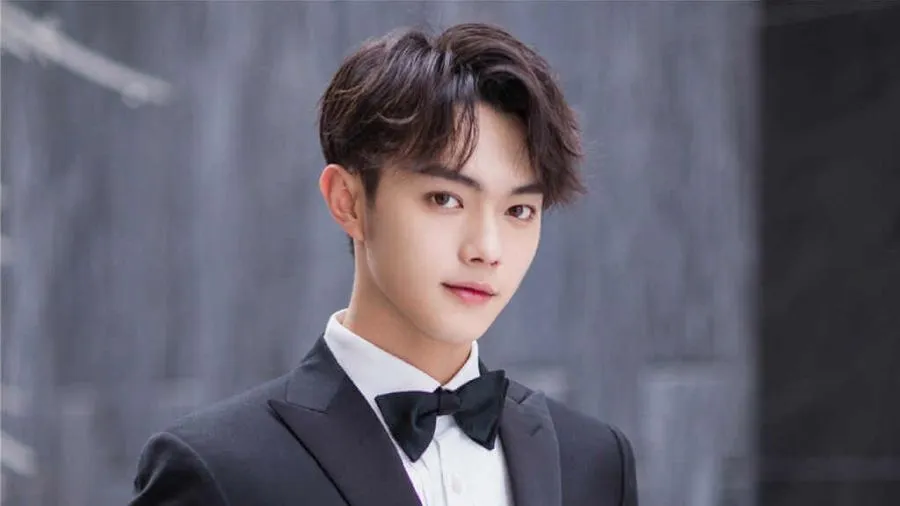
Xu Kai - Courtesy of cpophome.com
IN A NUTSHELL
- Contents: in this second part of my in-depth look at the protagonists of c-dramaland, I will report five more cases — rather recent — of Chinese actors involved in public scandals that have risked — or still risk—compromising their careers.
- Cases Listed:
- Li Yi Feng — repeatedly soliciting prostitutes
- Zhang Hao Wei — organization of a prostitution network
- Eleanor Lee — accusations of anti-patriotism
- Xu Kai — accusations of cheating and predatory conduct toward women
- Esther Yu — accusations of bullying and boycotting colleagues
- Conclusion: these events demonstrate how, for Chinese actors, success depends not only on talent, but also on the ability to maintain an impeccable image and navigate a hypersensitive media landscape.
To learn more about these events and their public implications, keep reading.
Introduction
While last week I analyzed five cases of Chinese actors involved in scandals that helped define industry standards, this second part examines five more — much more recent — episodes that clearly demonstrate how the impact of social media, celebrities' vulnerability to manipulation and accusations, and the role of fandom can rapidly compromise a star's public image, regardless of their actual guilt or innocence.
If the early scandals helped establish the rules of celebrity behavior, the cases analyzed here highlight how these same rules are becoming increasingly weighty in a fast-paced and unpredictable media ecosystem, suggesting potential important evolutions in the relationship between stars, audiences, and the industry.
Li Yi Feng
Repeatedly Soliciting Prostitutes and Loss of Professional Credibility.

In September 2022, Li Yi Feng (李易峰) — a highly successful actor known for starring in dramas such as Swords of Legends, The Lost Tomb, and Noble Aspirations, but especially for playing Mao Zedong in the 2021 film The Pioneer — was arrested by Beijing police on suspicion of repeatedly soliciting prostitutes.
A few hours after his arrest, the Beijing Public Security Bureau publicly announced his detention, adding that he had confessed to the crime. Despite his and his agency’s denial of the charges, Li Yi Feng was sentenced to a non-custodial sentence, but the greatest repercussions were on his career.1
Shortly after the official announcement, the story went viral on Weibo, with related hashtags reaching 2 billion views.
The news prompted an immediate reaction from the star’s platforms and commercial partners: international brands like Prada and local brands like Lukfook suspended or canceled their contracts with him, his content was removed from streaming platforms, and his public image was severely compromised.2
Domestic media reported the case, giving wide coverage to the “cleanup” operation conducted by institutions in the entertainment industry and reporting the call for celebrities to behave more “morally” and to “deliberately oppose the decadent ideas of money worship, hedonism, and extreme individualism” put forward by Beijing’s main media regulator.3
The Li Yi Feng scandal has reinforced the idea that a loss of moral integrity can result in serious professional harm.
Zhang Hao Wei
Exploitation of Prostitution, Tax Evasion and Voluntary Removal from Showbiz.

In August 2024, actor Zhang Hao Wei (张昊唯) — best known for his role as the Crown Prince in the popular drama Joy of Life — found himself at the center of a serious scandal, accusing him of tax evasion and alleged involvement in a network for the exploitation of prostitution.
The case was sparked by a paparazzo who released a recording of the then thirty-three-year-old and an unidentified woman. In the audio, Zhang claimed that his colleague Dai Xiang Yu (戴向宇) had confessed to him that he feared his involvement in the prostitution case that had engulfed Li Yi Feng (see above) could soon be exposed by the media.4
The recording went viral within hours, forcing Dai Xiang Yu to intervene personally: after categorically denying any involvement, the actor demanded that Zhang apologize within three days to avoid legal action.5
Zhang later stated that he didn’t know Dai Xiangyu personally, that the audio had been manipulated, and that it was a joking conversation between friends during a basketball warm-up. His position became more precarious when a second, even more compromising recording surfaced. In this new file, the actor discussed the possibility of entering the “ladies” business — a term interpreted as “prostitutes” — even considering hiring or training a “madam” with the aim of recruiting women from various regions of the country.6
Further complicating the situation, around the same time, a paparazzo had hinted that an actor, fresh from a highly successful drama, was under investigation for tax irregularities, and several gossip blogs suggested that the actor in question was Zhang Hao Wei.
His agency firmly denied all allegations, maintaining that it had always fulfilled its tax obligations in a “reasonable and legal” manner and that it immediately reported the matter to the police, also handing over the allegedly incriminating recordings to the authorities, as the allegations raised involved far from marginal criminal matters.
Zhang Haowei announced a temporary suspension of his activities to focus on legal matters, but the scandal has profoundly affected his career: some upcoming productions have reduced promotion related to him, while others have cut scenes in which he appeared and, in the most drastic cases, even replaced him with AI — as occurred in the drama Brocade Odyssey.
The scandal has fragmented the reaction of the audience and of the artist’s fandom. While many social media users reacted harshly, expressing shock and condemnation at the seriousness of the accusations, a significant portion of fans adopted a more cautious stance, pointing out the inconsistencies in the recordings released online and highlighting documents and statements in which the actor claims to be the victim of a plot orchestrated by someone from his past.
Alongside the outpouring of support, a strong sense of concern also emerged: Zhang’s decision to put his career on hold to address the legal disputes has fueled fears for his professional future.
This case has demonstrated how even vague suspicions raised by gossip sites can jeopardize a celebrity’s career.
Eleanor Lee
Accusations of Anti-Patriotism and Near Career End.

In April this year, Singaporean actress Eleanor Lee (李凯馨) — the daughter of television host Quan Yi Feng and actor Peter Yu, who rose to fame in 2015 after appearing in an Apple China commercial directed by award-winning Hong Kong director Ann Hui — found herself at the center of a media storm, engulfed by rumors accusing her of expressing offensive views toward the Chinese people.
The scandal erupted when an anonymous user claiming to be her former assistant posted a 31-second audio recording on the Chinese social media platform Weibo. In the recording, punctuated by loud background noise, a female voice can be heard declaring that she is «doing this not for fame, but for money» and that «most people in China are idiots».7
The post immediately sparked a stir on Chinese social media, causing the topic to trend and prompting the artist’s agency to publish an official statement declaring the recording to be fake and that Eleanor Lee never uttered those words.8
After the matter was brought to the attention of the authorities, the author of the post, Xiao Pang (小胖), issued a public apology on Weibo.
The former assistant expressed her regret, admitting that her behavior had led to serious misunderstandings and attacks against the star. She justified her actions by explaining that she had had a dispute with the artist’s studio after her employment contract was terminated and that she wanted to use Lee’s stolen and conveniently altered recordings as leverage to negotiate with the company.
Feeling ignored, in July 2024, Xiao Pang decided to publicly release the recordings, even adding fabricated content, without realizing the severity of the consequences of her actions and the negative impact it would have on the star’s reputation.9
After the woman’s admission of guilt, Eleanor Lee nevertheless pursued the case in court, obtaining a judge’s ruling in her favor. The court ruled that Xiao Pang must post an apology on a designated Weibo space for 60 consecutive days, reimburse legal fees, and compensate the celebrity for the mental and monetary damages caused.10
Following this incident, the actress risked being removed from the cast of the upcoming drama The Journey of Legend and replaced with AI — as happened to her colleague Zhang Hao Wei. According to several media outlets, this incident also caused a delay in the series’ broadcast (apparently scheduled for release in May 2025).
The scandal had immediate repercussions on the star’s career and her relationship with her fans. After the audio recording was released, some of her supporters expressed resentment, accusing her of betraying her fans, while others called for legal clarification.
The court victory marked a point in favor of her innocence, but the media shock has left its mark: her standing in the industry appears to have fallen somewhat, and her path to redemption will depend greatly on her ability to regain credibility.
The affair is an example of how false accusations spread on social media can be taken very seriously by the public and undermine the existing relationship of trust between the audience and the artist.
Xu Kai
Accusations of Infidelity and Sudden Collapse in Popularity.

In August of this year, Xu Lisha (許荔莎), the ex-girlfriend of Xu Kai (許凱) — star of dramas such as Story of Yanxi Palace, Arsenal Military Academy, Ancient Love Poetry, and the recent Moonlit Reunion — made shocking revelations about the artist, accusing him not only of cheating on her but also of frequently engaging in inappropriate behavior with other women.
The actress stated on social media that in 2022, Xu Kai had been staying at a hotel with his young colleague Zhao Qing (赵晴) while he was still romantically involved with her, and that he had repeatedly pretended to be drunk in order to intentionally approach other women. She also reported having suffered numerous betrayals and intimidations during their relationship.11
Xu Kai promptly denied the allegations, receiving support from his agency and his mentor, producer Yu Zheng, who dismissed Xu Lisha, claiming she acted maliciously to attract media attention. He further clarified that the meeting between Xu Kai and Zhao Qing was purely professional, related to discussing a script, and that the relationship between Xu Kai and Xu Lisha, which began after their collaboration in 2021, had been sporadic and intermittent.12
The controversy escalated with the intervention of another of Xu Kai’s exes, influencer Da Jin, who confirmed Xu Lisha’s claims, accusing the actor of using drunkenness to push boundaries with women. Da Jin also reported having suffered physical violence during their relationship, resurfacing old rumors about the star’s alleged aggressive behavior.
The case was accompanied by the publication of images, videos, and chats that further ignited public debate, including the involvement of Zhao Qing, who was accused on social media of being Xu Kai’s “mistress” and of having an “affair” with him.13
In recent months, evidence has also emerged that the actor used a villa in Hengdian (the city home to the largest film set complex in the country) as an illegal gambling den.14
The scandal had immediate and severe effects on Xu Kai’s career: his upcoming series suffered a drastic decline in popularity, and his name was removed from the cast of a drama scheduled to begin filming at the end of September 2025.
The matter is currently far from resolved, but its negative effects on the actor’s professional life are already being observed: suspension of work, divisions within the fandom between those who believe he is innocent and those who believe he is guilty, and potentially psychologically and financially challenging legal proceedings.15
This demonstrates how even an artist’s romantic experiences and demeanor can influence their professional destiny and success with the public.
Esther Yu
Bullying Accusations and Partial Exclusion from the Sector.

In recent months, Esther Yu (虞书欣), once celebrated as the “princess of C-pop,” has found herself at the center of a media storm that has engulfed her public image. The actress — known for starring in hit series such as Love Between Fairy and Devil, My Journey to You, and Love Game in Eastern Fantasy — has been accused by numerous colleagues of bullying behavior, arrogant attitudes, and alleged maneuvers to damage the reputations of other actors.
The first to speak out was Zhao Zhiwei (趙志偉), who revealed in a livestream how his career had been compromised for years by misunderstandings surrounding his participation in the reality show Grade One: Graduation Season, where interactions with his colleague had raised speculation about their alleged relationship. According to the artist, an ambiguous post by Esther Yu then fueled the false idea that he had cheated on her, making him a target of the actress’s fans.
The complaints reportedly also involved other famous colleagues. The once-close relationship with her Love Between Fairy and Devil co-star, Wang He Di (王鹤棣), reportedly deteriorated due to Esther Yu’s attitude, while Xu Kai‘s ironic reaction after she stepped on his foot during a variety show reportedly ignited the ire of the actress’s most ardent fans, drawing blame and criticism towards him.16
The most serious issues, however, concern the alleged rivalry with Zhao Lusi (赵露思) and the alleged psychological abuse of her colleague Zhang Hao Yue (张昊玥).
In August 2024, Zhao Lusi was hit by accusations of forging a government seal related to the awarding of the title “Ambassador of Shaanxi Farmers,” which was quickly denied by the authorities. The circumstances of the incident and the specific nature of the accusations, however, led fans to investigate and uncover the involvement of the Qianjiang Video news agency, linked to Yuehua Entertainment — Esther Yu’s studio — and already known for its hostile articles against Zhao Lusi.17
These suspicions were compounded by the testimony of actress Zhang Hao Yue, who accused Esther Yu of isolating and ridiculing her during the show Grade One: Graduation Season, to the point of forcing her to seek therapy and abandon the entertainment industry due to the psychological trauma she suffered.
The star’s image was further tarnished by news of the investigation into her parents, who were accused of financial irregularities and placed on debtor lists with spending restrictions. Although the actress distanced herself from family affairs, the public was unhappy with the spread of photos of her purchasing luxury handbags, combined with her apparent disregard for criticism from colleagues.
The decline in her popularity was clearly evident at the beginning of the month of November, when her single 梦 (Dream) received a cold reception, causing her to lose over 160,000 followers in a single day.
Many users criticize her silence regarding the bullying allegations, perceiving them as a wait-and-see strategy rather than an acceptance of responsibility, although some argue that the allegations need to be verified and require objectivity.
In September, several CCTV-affiliated media outlets removed content related to her, marking the first step toward her potential inclusion on the industry’s “blacklist.” Brand partnerships were severed, live broadcasts were cancelled, and the postponement of the drama A Journey to Glow has left the actress in an extremely fragile position.18
This is the most serious image crisis of the actress’s entire career: from a bright and beloved star, she has become one of the most controversial figures in the Chinese scene. Her future in entertainment will depend on her ability to openly address the accusations and regain the trust of an increasingly skeptical public.
The implications are clear: in a context like that of Chinese entertainment — where the public image and moral conduct of stars are crucial — even an accusation of bullying can result in the loss of endorsements, project delays, and a temporary ban from the screen.
Final Thoughts
The analysis of these events highlights some recurring features in the cases of Chinese actors involved in scandals, while also offering a snapshot of the reactions of the Chinese market and public to the misconduct of such closely followed public figures:
- Immediate loss of commercial relationships: in almost all cases, sponsors and commercial partners reacted immediately and negatively, terminating contracts, removing content, and suspending promotion of productions involving the actors in question.
- Removal from platforms: in several instances, the artist has been progressively rendered invisible by the platforms—posts deleted, catalogs purged, music and videos removed. This often translates into the celebrity being placed on a veritable blacklist, making immediate resurgence difficult.
- Ban from social media: even the internal policies of social media platforms have impacted the survival of artists because, under institutional and commercial pressure, social media platforms often tend to dissociate themselves from problematic content and institute shadow bans for celebrities involved in scandals.
- Opposing fandom reactions: faced with accusations, while some fans unconditionally defend their idol, others distance themselves, and sometimes these very dynamics contribute to reversing the situation or amplifying the crisis (as in Xiao Zhan's 227 incident) — although in the most serious episodes, fan support is not enough to reverse the crisis.
- Consequences calibrated on the error committed: sexual offenses (Kris Wu, Li Yi Feng,) or criminal offenses (Zheng Shuang) lead to almost total cancellation; tax or political image problems (Fan Bing Bing, Zhang Zhe Han) lead to internal ostracism but allow for a retreat into foreign markets; morally incorrect behavior (Xiao Zhan, Xu Kai, Esther Yu) implies a drop in popularity and a temporary loss of job opportunities, but these are reversible outcomes.
Counclusion
From this overview of scandal-ridden Chinese actors, a clear picture emerges: in the Chinese entertainment ecosystem, reputation, morality, and public perception are not secondary factors, but rather true pillars of the industry.
Thus, while market reactions — withdrawal of sponsorships, cancellation of content, and promotional pauses — transform private affairs into measurable professional losses, fandoms can be both supportive elements and factors in further downfall when organized activism generates image backlash.
For Chinese actors, in short, success doesn't depends solely on talent, but also on the ability to maintain an unassailable image and navigate a hypersensitive media landscape. Especially since the future of those involved in a scandal is never guaranteed: some find a second chance, others rebuild their careers abroad, and still others disappear from the industry entirely.
In an ever-evolving industry, one certainty remains: reputation is the true currency of contemporary Chinese entertainment.