
The Immortal Ascension (2025): A Truly Endless Journey to Immortality | Review & Cast
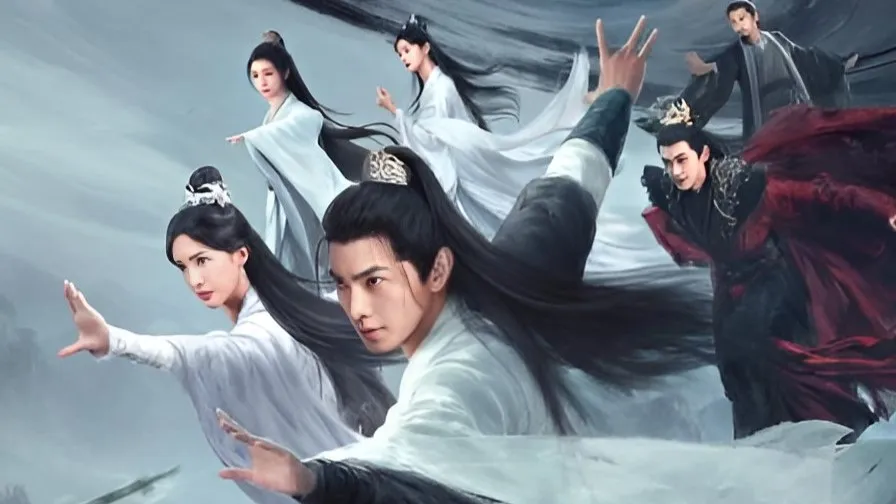
The Immortal Ascension Poster - Courtesy of Youku

|
DetailsRATING: (6/10)
NATIVE TITLE: 凡人修仙传 – Fánrén xiūxiān chuán YEAR: 2025 EPISODES: 30 DURATION: 60’ DIRECTOR: Yang Yang SCREENWRITER: Wang Yu Ren, Jia Dong Yan ORIGINAL CREATOR: Wang Yu (凡人修仙传 – A Record of A Mortal’s Journey to Immortality) |


IN A NUTSHELL
- What to expect: The Immortal Ascension brings the journey towards immortality back to center stage… but don't expect impossible loves and moral dilemmas that test the heart and spirit. At the center of the story is Han Li, a cold, pragmatic antihero obsessed with survival, willing to dedicate every moment of his existence to the pursuit of eternal life. The story accompanies the viewer on his long journey of self-development, where personal ambition, mistrust, and the desire for power often end up prevailing over human bonds and more traditional heroic ideals. Between spectacular CGI battles, video game fantasy atmospheres, and a constant feeling of melancholy estrangement, the series builds a world that is aesthetically fascinating but deliberately cold on an emotional level, almost as if to suggest that, in the pursuit of immortality, people gradually sacrifice their humanity.
- Strengths: the extraordinary CGI fight scenes, the perfect coordination of Yang Yang and the other actors in the acrobatics on wires, the interesting premise.
- Weaknesses: the characterization of the protagonist, the useless love "square", the videogame-like pace of the story.
- Recommended if you like: Yang Yang, pure xianxia with little romance, CGI battles with spectacular magic effects and monstrous beasts, antiheroes.
- Would I rewatch it? No, in fact, I don't think I'll watch season two.
Read on to find out if this drama is still worth watching.
The Immortal Ascension is a tale that transports the viewer to a rarefied and silent world, dominated by ambition, solitude, and a restless quest for spiritual elevation. From landscapes suspended in fog, battles with unreal glows, and almost dreamlike atmospheres, the series alternates visual wonder and emotional detachment, leaving the viewer with a sense of cold melancholy. It is a story that fascinates more for what it evokes than for what it actually makes you feel: an austere and contemplative journey in which the desire to transcend mortality seems to slowly consume every human impulse.
In this review of the drama The Immortal Ascension, after watching all episodes, I will analyze the characters, the script, and the special effects, trying to understand why this series should be counted among the most memorable titles of 2025.
Plot
Han Li is an ordinary boy, the son of two poor farmers from the village of Wuliguo in the Kingdom of Yue. To earn some money and increase his family's prestige, he decides to follow in his uncle's footsteps and attempt to join the Seven Mysteries Martial Arts Sect with his childhood friend Zhang Tie.
At the selection test, however, both are rejected. Unexpectedly, they are nevertheless welcomed as disciples by the physician Mo Ju Ren, a friend of the sect leader Wang, known as "Wondrous Hands" for his extraordinary medical skills.
Thus Han Li and Zhang Tie begin their training, but only Han Li proves capable of cultivation, being the only one of the two with a Spiritual Root.
When Zhang Tie suddenly disappears, Han Li begins to suspect that his master is hiding something. From that moment on, he decides to train in secret, honing his fighting techniques and taking potent pills derived from the doctor's recipes.
After barely surviving his first battle, Han Li goes to the doctor's house to find a cure for the curse he had placed on him. It is there that he meets Mo Cai Huan, Mo Ju Ren's third daughter, who, after healing him, falls in love with him.
Despite this, Han Li remains steadfast in his resolve to pursue immortality and leaves for the Tainan Valley, where, thanks to a stroke of luck, he manages to join the Yellow Maple Valley Sect.
Despite possessing a "false" Spiritual Root, he advances surprisingly quickly in cultivation and, after numerous trials, stands out as one of the sect's most promising disciples.
During one of these challenges, he has a close encounter with Nan Gong Wan, Grand Master of the Moon Shadow Sect. A mutual attraction develops between the two, but their destinies seem unrelated.
Over time, fellow sect member Chen Qiao Qian also develops feelings for him, but Han Li remains focused on his path, refusing to let emotions distract him.
After facing numerous enemies, foiling the Black Demon Cult's plot, and participating in the war against the Six Demonic Sects, Han Li finally understands a fundamental truth: immortality is not a goal to be achieved, but a continuous path of transformation and rebirth.

The Immortal Ascension Drama Review (No Spoilers)
Plot and Screenplay
I can't hide the fact that I'm not a huge fan of pure xianxia: the classic path to immortality and the internal dynamics of cults rarely truly engage me. Yet I must admit that The Immortal Ascension managed to exceed even my worst expectations, so much so that I barely made it to the end, and when I did, I wish I hadn't.
Aside from a few clichés that I personally find overused — like the usual evil entity in the form of a dark cloud that manipulates events without ever truly revealing itself, a bit like the Dark Wizard from Guardians of the Dafeng or the Master of Dark Energy from Back From the Brink — and a disproportionate amount of abstruse names and terminology, the main problem with this drama is that its plot seemed exceptionally flat and monotonous.
The CGI opening, in which Han Li appears engaged in a spectacular battle against a fantastical creature, raises high expectations. However, the drama almost immediately abandons that energy, retreating into a lengthy flashback that drastically slows the narrative pace, dampening the somewhat overenthusiastic spirits of the viewers (and the evidently itching fingers of the CGI technicians), and giving the feeling that all the spectacle displayed in the opening minutes is more about attracting attention than truly representing the tone of the series.
The plot structure also contributes to this feeling of slowness. The story focuses almost exclusively on the protagonist's ordeals and follows a "level" structure, almost reminiscent of a video game: Han Li improves his cultivation, faces an obstacle, overcomes it, and starts over again until the next test, which becomes progressively more difficult based on his level of advancement. A mechanism that might work in novel form, where the reader closely follows the character's development, but which in drama format ends up appearing static and lacking any real narrative progression.
The deeper themes touched upon by the story — from the discrimination of minorities to the sacrifice of the masses for the well-being of a few, including the value of personal commitment in achieving one's goals — seem destined to remain barely sketched. The drama introduces them, but rarely truly develops them through characters or events, often giving the impression that they were inserted primarily to give greater depth to an otherwise banal story.
Reading around online, I also discovered that I wasn't the only one to notice how, at a certain point, the drama seems to morph into a sort of Harry Potter set in the world of immortal cultivators. There are scenes reminiscent of Harry's visit to Diagon Alley with Hagrid, learning to fly (here on a leaf rather than a broomstick), spell lessons, potion lessons, and even tending magical plants. More than just inspiration, some sequences truly feel like a xianxia reinterpretation of the British saga's imagery.
Not even the lighter moments seem to really work. The comic scenes and lighthearted interludes are often inserted abruptly, without a narrative structure that makes them feel natural, and thus end up breaking the atmosphere, appearing more forced than funny. The same problem affects much of the dialogue, which attempts to lend philosophical weight to the story but often sounds empty, rhetorical, and lacking in heart.
Characters and Romance
The characterization of the characters is another aspect that left me perplexed. On the one hand, their often cynical and pragmatic attitude undoubtedly makes them more human: many act out of self-interest, survival, or ambition, and this contributes to creating a world in which cultivation is not idealized as a heroic path, but as a constant struggle for power and personal advancement. On the other hand, however, this approach ends up making most of the characters emotionally distant and cold, to the point that even Wang Chan, the series' main antagonist, doesn't seem all that much crueler than the other characters.
Han Li himself perfectly embodies this approach: he is obsessively focused on achieving immortality and approaches every situation with an almost mechanical lucidity, as if everything outside of his cultivation were secondary. The problem is that this characterization, while consistent with the character, often ends up making him emotionally apathetic: even when faced with tragic events or the deaths of people close to him, Han Li rarely seems truly shaken.
His constant mistrust also contributes to creating a strong emotional barrier between himself and others. Han Li avoids deep connections, has difficulty trusting those around him, and tends to treat almost every relationship as temporary or utilitarian. While this attitude makes sense within the ruthless world of the series, it also makes the narrative very monotonous: it's difficult to create strong emotional involvement around a protagonist whose interactions almost always remain superficial and devoid of genuine passion.
The romantic component also suffers greatly from this dynamic. Han Li consistently appears aloof towards women who show interest in him, only to then find himself attracted to the one woman who seems to keep him at a distance. A fairly classic choice, which here seems more justified only because most of the female characters are written in an extremely passive manner. With the exception of Nan Gong Wan, many of the female characters in the series have a submissive, submissive attitude, almost exclusively defined by their feelings for the protagonist. Instead of being charming or memorable, they often end up appearing pathetic or irritating, lacking any real narrative initiative. Therefore, honestly, I'm not surprised that Han Li ends up attracted to the one woman who demonstrates character, independence, and a truly commanding screen presence.

Cast
The cast's performances are overall good, though they alone aren't enough to compensate for a rather bland plot and a script that rarely truly fleshes out the characters.
Yang Yang proves himself to be a very talented actor with a convincing stage presence: he acts naturally and effortlessly, without ever appearing forced. However, his extremely "clean" charm, while undoubtedly remarkable, ends up making him almost too neutral, especially in a role that's already written with a very restrained emotional tone.
Jin Chen is also very convincing, and I find her particularly suited to proud and aloof characters like Nan Gong Wan (much like Xu Feng Qiao in Song of Youth): she manages to convey authority and elegance without weighing down the character with excessive severity.
Zhao Qing, on the other hand, manages to be adorable in practically every role, and here too she made me very fond of her Mo Cai Huan, just as I did with Zhou Yang Ling in Les Belles. Her performance adds a modicum of emotional warmth to a series that, otherwise, often tends to keep its characters at a distance.
Wang Duo is as charming and magnetic as ever in the role of the antagonist: his character maintains a disturbing aura, but also comes across as much more human and ambiguous than one might expect, a bit like the enigmatic Gu Qing Zhang in A League of Nobleman.
Finally, a special mention goes to Xu Hai Qiao who, at the age of forty-two, still manages to have an ethereal elegance in the role of the immortal, with a refined stage presence that makes him extremely credible in the role.
Visual Aspects and Soundtrack
The real strength of The Immortal Ascension is undoubtedly the CGI fights, which alone are worth watching the entire series. The wired action sequences are spectacular, dynamic, and surprisingly immersive, with a level of technical craftsmanship that truly deserves praise. Much of the credit goes to the actors, but also to the work of martial artist Mu Ning, who was also responsible for the choreography of The Legend of Shen Li, whose contribution is clearly felt in the fluidity and construction of the fights.
Some of the natural settings chosen for the series are also striking. The scenes set among mountains and valleys, especially those where cult members hike or practice outdoor cultivation, often manage to create an evocative and contemplative atmosphere. It's a shame, however, that this charm is marred by the rather mediocre rendering of the green screen backgrounds, especially in scenes without combat or magical effects, where the artificiality of the environments is much more evident.
The various sets that constitute the story's main locations are interesting and well-crafted, such as the headquarters of the Seven Arcana Sect—represented by the evocative staircase of the Jiuxietan Scenic Area—the Pavilion of Treasures, and Doctor Mo's home in Shenshou Valley, all places that contribute to the drama's visual identity.
On the other hand, the costumes, designed by Huang Wei, who is usually much more imaginative and creative in her productions, are less surprising: here, the outfits appear rather banal and devoid of any truly memorable elements.
Further detracting from the drama's aesthetic is the rendering of real animals in CGI, which in several scenes are unconvincing and end up breaking the immersion created by the more successful visual effects.
On the other hand, the soundtrack is probably one of the aspects I appreciated most about the drama and, in my opinion, one of the most interesting soundtracks of the season. Unlike many other background music that end up flattened by a few repetitive and interchangeable sounds, here the songs manage to stand out from each other in terms of rhythm, atmosphere, and musical identity, while maintaining a strong overall coherence. The result is an extremely catchy soundtrack that accompanies the viewing experience without ever becoming monotonous.
The soundtrack alternates pieces with very different flavors. On the one hand, there are modern, almost hip-hop songs like 咒 (Spell), which seems to be in direct dialogue with 夜遊神 (Night Wanderer) from A Dream Within a Dream, or like 上计 (Best Plan), where the more pressing and contemporary rhythm gives energy to the drama's most lively sequences.
On the other hand, we find lighter, more contemplative pieces like 不问 (Don’t Ask), perhaps one of the songs that best represents the OST's musical balance: here, traditional Chinese and Western instruments alternate in a measured and harmonious dialogue, creating a slow, delicate, and almost carefree melody that effortlessly accompanies the story's quieter moments.
The more melancholic pieces are particularly successful, such as 瞬间 (A Moment), where the soft, expansive melody elegantly supports Tan Weiwei's intense, velvety voice, or 蜉蝣志 (Mayfly Will), where the slightly faster pace accompanies Shi Yan's heartfelt performance, conveying a more restless melancholy.
Finally, among the most memorable pieces, 千帆 (A Thousand Sails) stands out, probably the most epic and tragic piece, in which the piano and strings create a dramatic and solemn arrangement that particularly enhances Clare Duan's singing performance.
Paradoxically, I found the soundtrack much richer and more engaging than the narrative itself: while the drama often tends to become repetitive and static, the soundtrack continually reinvents the atmosphere of the scenes, adding emotional nuances that the screenplay alone rarely manages to convey.

WARNING!
FROM THIS POINT ON THE SPOILER SECTION BEGINS. DO NOT CONTINUE IF YOU DO NOT WANT TO KNOW ALL THE DETAILS OF THE DRAMA.
The Immortal Ascension Drama Review (Spoilers)
What Works
The CGI Fight Scenes
The real strength of The Immortal Ascension — and, personally, also the main reason I think it's worth watching the series — are the CGI fight scenes, which manage to add a sense of adventure, spectacle, and dynamism that's often missing from the rest of the narrative. To be completely honest, it was precisely these sequences that convinced me to continue with the series despite the difficulties I had with the plot and characters.
It's clear that a great deal of work went into the fights, both technically and choreographically. The battles are very fluid, legible, and well-constructed in space, with movements that combine traditional martial arts, magical effects, and fantasy creatures without giving the impression of visual chaos that often characterizes the more CGI-heavy xianxia. The actors also seem to have prepared carefully, managing to create believable fights that, by nature, require a strong imaginative component and remarkable physical coordination, which former dancers Yang Yang and Jin Chen certainly do not lack.
Of course, you have to be at least somewhat predisposed to this type of aesthetic to truly appreciate it, as many sequences are clearly reminiscent of the cinematics of a fantasy video game: energy attacks, spiritual weapons, gigantic creatures, and battles suspended between heaven and earth dominate much of the action. For fans of the genre, however, this approach can be extremely engaging.
Among the scenes I enjoyed most are definitely Han Li's battle against the lone cultivators of the Azure Vein Society in episode 6, particularly effective in showcasing the protagonist's speed and cunning; the fight against the Dark Tide Dragon in episode 11, probably one of the most visually spectacular moments of the series; the fight against the Crimson Jade Spider in episode 19, which manages to create good tension thanks to the almost horror-like atmosphere of the sequence; and finally the clashes against the followers of the Cult of the Black Demon in episodes 23 and 24, where the direction manages to give a broader perception of the danger of the conflict and the scale of the narrative world.
What Doesn't Work
The Characterization
As mentioned, one of the most alienating aspects of The Immortal Ascension, in my opinion, is the characterization, which is extremely cold and emotionally distant.
The most obvious example is Han Li himself: the only thing the protagonist truly focuses on is his continued advancement in cultivation and accumulation of power. The problem is that the drama struggles to make this journey interesting, especially because his evolution follows an almost mechanical progression, like that of a video game character or a Pokémon that simply continues to level up.
Making it even less engaging is the fact that Han Li seems to be able to get out of virtually any situation with minimal consequences. If you pay attention, he rarely gets injured during battles, and when he does, he recovers almost immediately thanks to his miracle pills. This constant feeling of invulnerability significantly reduces the narrative tension, as the protagonist often appears too protected by the script to arouse any real concern in the viewer.
In my opinion, however, there are at least two other character-related flaws that make the screenplay unrealistic and unappealing: the lack of a true backstory and the lack of ideals capable of sustaining the protagonist's great endeavor.
The very scant attention paid to the characters' pasts prevents the viewer from forming a genuine emotional connection with them. We know very little about the supporting characters: their backgrounds, personal motivations, or relationships with others are rarely explored. As a result, most of the characters in the drama end up feeling like little more than simple narrative support for Han Li, extras who come and go without truly leaving their mark. And I must admit that, while I'm not a big fan of flashbacks, I tragically missed them in this case.
This feeling of alienation is further accentuated by Han Li's behavior, who not only has no friends, but also seems unwilling to even form connections. The protagonist tends to push away anyone who shows affection or appreciation towards him, interacting with others almost exclusively when they can be useful to him in his cultivation. This choice is consistent with the character, but it inevitably ends up weakening the human element of the story.

Added to this is the lack of true ideals to support his goal. Han Li wants to become immortal primarily for personal fulfillment, without this ambition having any positive impact on others or being associated with a greater cause. There's nothing wrong with a selfish protagonist per se—in fact, it's interesting to see a character less idealized than usual—but the drama never manages to compensate for this selfishness with sufficient emotional or philosophical depth. The result is a protagonist who, rather than being complex, often appears arid and superficial.
Another aspect that left me rather perplexed is the impression that the series almost tends to treat romance as something undesirable or even harmful. I'm not so much bothered by the lack of a real love story — I don't believe a drama necessarily needs one — as by the way the relationships between Han Li and the female characters are constructed.
Han Li seems to systematically reject all the girls who show interest in him, only to then find himself attracted to the one woman who treats him coldly and distantly. Even in this case, however, his relationship with Nan Gong Wan never truly evolves organically on a sentimental level. Their first meeting in the Bloody Proving Ground immediately escalates into a situation of forced intimacy caused by the aphrodisiac mist released by the Dark Tide Dragon's scent sac, and from that moment on, the drama seems to take their attraction for granted, but it is given very little emotional development.
Even the other characters' infatuations remain almost always suspended, without any real narrative evolution, more like platonic loves left in the background than relationships capable of truly impacting the story or the characters themselves.
Other Flaws of the Screenplay
Another aspect of The Immortal Ascension's script that I found particularly annoying is the handling of comedy, often inserted at the most inappropriate moments and with such an over-the-top tone that it completely disrupts the story's atmosphere.
The problem isn't so much the presence of lighthearted scenes per se — indeed, in such a dark and monothematic drama, they could have even helped make the viewing experience more dynamic — but rather the way they're integrated into the narrative. Many gags seem disconnected from the emotional context of the scenes and end up transforming potentially tense or dramatic moments into unintentionally ridiculous asides.
A clear example is the Mo Residence story arc. Initially, the drama suggests that Doctor Mo's wives are plotting against Han Li to avenge her husband's death, creating a certain tension around the situation. However, the subplot resolves in an almost farcical manner when it's revealed that their sole objective is to keep Han Li at the residence to use him as a bodyguard against the enemies the doctor has accumulated over the years. To convince him, the women resort to rather absurd ploys — such as sending him to kill random people or promising him their daughters in marriage — completely undermining the credibility and tone of the story.
The same problem arises during the battle against Tie Luo. While Han Li fights against the followers of the Black Fiend Cult in a theoretically very dangerous situation, the drama continually interrupts the tension with the Meng brothers' skirmish with a possessed Meng Wu. The scene even culminates with Meng Si hitting her on the head, giving rise to a sibling drama that completely clashes with the gravity of the ongoing conflict. Instead of lightening the scene, these moments end up trivializing it and making it unintentionally comical.
Perhaps the most emblematic case, however, remains the argument between Li Hua Yuan, Fu Yun Zi, and Wang Yu during the war between the Immortal Sects and the Demonic Sects. Although the conflict is presented as extremely serious and the disciples sent to the front have very little chance of survival, the three suddenly start arguing over the price of magical supplies and even decide to settle the matter with a game of mahjong. The scene is likely intended to showcase the immortals' pragmatism and cynicism, but the end result is so over the top that it borders on involuntary parody.
Several subplots also suffer from similar structural problems. Despite often being among the most engaging and exciting parts of the drama, they are inserted in a slurred manner and seem to appear almost out of nowhere to break the monotony of the main narrative.
This is the case, for example, of Han Li's "accidental" discovery of the Black Fiend Cult and the subsequent extermination of its followers, or the story surrounding Qu Hun's possession. Both are decidedly more engaging storylines than the protagonist's long and repetitive journey of cultivation, because they finally introduce more concrete conflicts, mystery, and greater narrative tension. However, the drama never really manages to integrate them organically into the main plot: instead of appearing as natural developments in the story, they almost seem like separate episodes or particularly elaborate fillers that suddenly burst into the story to temporarily enliven it, only to then disappear without leaving any truly profound consequences on the overall narrative structure.

Characters and Cast
Primary Characters
Han Li (Yang Yang) the son of a poor farming couple from Wuliguo Village, was known at home as Er Leng Zi (Blockhead). Driven by a desire for revenge, he decides to join a martial arts sect, but is rejected and ends up at the mercy of the physician Mo, who forces his cultivation and attempts to exploit his power to cure himself of the poison that is causing him to age prematurely. Once freed from the physician’s yoke, he becomes a solitary cultivator because his “false” Spiritual Root prevents him from entering one of the Seven Immortal Sects, but his good fortune favors him once again, allowing him to enter the Yellow Maple Valley Sect.
Nan Gong Wan (Jin Chen) shizu of the Moon Shadow Sect. She has completed the Core Formation Stage and practices the Maiden Cycle Technique. She becomes infatuated with Han Li in the Bloody Trial Ground.
Mo Cai Huan (Zhao Qing) Mo Ju Ren’s third daughter, is the only one of his daughters who has decided to follow in her father’s footsteps and become a doctor. She treats Han Li with Sunwarmed Jade after he is struck by his father’s Silver Demon Palm. After her family is exterminated by the Five Color Sect, she moves to Yan Stronghold where she opens a medical clinic. There, she reunites with Han Li and helps him escape from Wang Chan. In the capital of the Yue Kingdom, she crosses paths with Han Li again and helps him free the rogue cultivators kidnapped by the Black Fiend Cult.
Chen Qiao Qian (Zhao Xiao Tang) disciple of the Yellow Maple Valley Sect, sole heir of the Chen Clan and fiancée of Lu Ming Yuan. She falls in love with Han Li because he protects her from her fiancé’s bullying and saves her in the Bloody Trial Ground.
Wang Chan (Wang Duo) heir of the Ghost Spirit Sect. He possesses the rare Dark Spiritual Root and practices the Blood Spirit Spell cultivation technique. He is at the intermediate level of the Foundation Establishment Stage. To gain the support of the Yan Clan, he promises to heal Yan Ru Yan if Yan Yun Shan grants him her hand in marriage. He also kidnaps Dong Xuan Er and returns her to her father to curry his favor.
Supporting Characters
Seven Mysteries Sect
Wang Jue Chu (Hou Xiao) leader of the Seven Mysteries Sect, a longtime enemy of the Wild Wolves.
Li Fei Yu (Edward Zhang) attendant and later Deputy Chief of the Outer Blade Hall of the Seven Mysteries Sect. To increase his spiritual power, he takes the Bone Agony Pill, and Han Li helps him control its side effects with herbs, and the two become friends.
Jia Tian Long (Cao Cheng) leader of the Wild Wolves.
Jin Guang, a low-level cultivator hired by the Wild Wolves gang to defeat the Seven Mysteries Sect. He hails from the Ye Clan of Qinling, and his weapon is the Flying Sword Talisman. He possesses the Ascension Token, which allows its holder to enter the Yellow Maple Valley Sect without having to take the Ascension Trial and obtain the Foundation Pill. Han Li takes possession of it after killing him and uses it to gain admission to the Yellow Maple Valley Sect.
Mo Residence
Mo Ju Ren (Chin Shih Chieh) Lanzhou physician known as “Wondrous Hands” for his talent in the medical arts. After saving Sect Leader Wang, the latter bestowed upon him the gift of Shenshou Valley. Due to the poison corrupting his body, he is aging faster than normal, so he makes a pact with Yu Zi Tong, who promises him immortality in exchange for the body of a cultivator. His secret technique is the Silver Demon Palm, which inflicts damage that can only be healed with Sunwarmed Jade, an ancestral heirloom of the Mo Family and the dowry of Mo Cai Huan.
Yu Zi Tong (Liu Di) entity who speaks to Physician Mo. He is a former cultivator who is seeking a body to possess and has promised Physician Mo that he will become immortal if he provides him with the body of a cultivator.
Madam Li (Li Jia Wei) First Lady of the Mo Residence.
Madam Liu (Yang Qing Qian) Third Lady of the Mo Residence.
Madam Yan (Yan Dan Chen) Fourth Lady of the Mo Residence.
Madam Wang (Dai Yu) Fifth Lady of the Mo Residence.
Mo Yu Zhu (Zhang Yue) eldest daughter of Mo Ju Ren.
Mo Feng Wu (Wang Ruo Xi) second daughter of Mo Ju Ren.
Nanny Wu (Zhang Li Qiu) maid of the Mo Residence.
Zhang Tie/Qu Hun (Hu Yu Xuan / Han Jian Yi) Han Li’s best friend in Wulinguo Village. After discovering that Mo Ju Ren wants to use Han Li to break the curse that has caused him to age prematurely, the doctor transforms him into a mindless Armored Puppet. Han Li entrusts him to the care of the Mo Family, but one day he suddenly runs away because he is possessed by the spirit of a cultivator of the Beast Taming Sect.
Yellow Maple Valley Sect
Zhong Ling Dao (Wang Ting Hui) leader of the Yellow Maple Valley Sect.
Hong Fu (Liu Yan) shizu of the Yellow Maple Valley Sect and Dong Xuan Er’s true mother.
Dong Xuan Er (Jin Jia Yue) disciple of Grand Master Hong Fu. She has reached the Foundation Establishment Stage and possesses the gift of enchantment, allowing her to captivate people and make them do whatever she wants. She often goes painting in the Herb Garden, where she meets Han Li, with whom she later attends Yan Ru Yan’s engagement party. When Wang Chan sees her, he realizes she is Yun Lu’s daughter and decides to kidnap her to return her to her father.
Li Hua Yuan (Li Nai Wen) shizu of the Yellow Maple Valley Sect and Han Li’s shifu.
Song Meng (Cao Jun) disciple of Master Li Hua Yuan and Han Li’s shixiong. He is part of the Song Clan and has completed the Foundation Establishment Stage.
Liu Jing (Zhang Xiang) disciple of Master Li Hua Yuan and Han Li’s shixiong.
Zhong Wei Niang (Na Yi) disciple of Master Li Hua Yuan and Han Li’s shijie. She is in love with Liu Jing.
Wu Xuan (Li Sheng Jia) disciple of Master Li Hua Yuan and Han Li’s shixiong. He is in love with Dong Xuan Er and dislikes Han Li because she seems to prefer his company.
Lu Ming Yuan (Li Yue) disciple of the Yellow Maple Valley Sect, whom Han Li antagonized at the Tainan Valley Bazaar when he saved Han Yun Zhi from his bullies. He is the winner of the Tianwu Arena and should therefore receive a Foundation Pill, but Sect Leader Zhong decides to give it to Han Li, exacerbating his hatred for his comrade. When Han Li intervenes to defend Chen Qiao Qian from his bullies, he takes the opportunity to challenge him, but is killed.
Chen Rong (Li Xi Zi) and Chen Mu (Liu Tian Bao) members of the Chen Clan and disciples of the Yellow Maple Valley Sect, are killed in a clash with the Head of the Black Fiend Cult.
Wu Mian (Wang Guan) Han Li’s shishu in the Yellow Maple Valley Sect. He works in the Qianji Library, where volumes on the fundamentals of cultivation and achemy are kept. He is killed by Ye Fei when he discovers that he is in contact with the Demonic Sect.
Ye Fei (Qu Gao Wei) Han Li’s shishu in the Yellow Maple Valley Sect and overseer of the Baiji Hall, the hall where disciples are assigned tasks that allow them to earn the crystals that serve as currency in the immortal world. In reality, he is the heir of the dark Bamboo Sect and masters the Great Deployment Art, the cultivation technique that allows one to control an army of puppets.
Master Xu (Yin Zhu Sheng) overseer of the Lushan Hall, where the texts of advanced alchemy are kept and where the alchemical furnace can be used.
Master Mu (Che Bao Luo) Han Li’s shibo in the Yellow Maple Valley Sect and keeper of the Herb Garden where Han Li asks to work to earn the crystals that serve as currency in the immortal world.
Wang Yu (Jia Bing) shopkeeper of the Wan Bao Lou (House of Treasure) Emporium. Here, Han Li obtains the magical artifacts he uses in the Bloody Trial Ground and purchases his spirit beast, which helps him find his cave after reaching the Foundation Establishment Stage.
Moon Shadow Sect
Ni Chang (Ying Er) leader of the Moon Shadow Sect and shijie of Nan Gong Wan.
Qing’er (Xu Jin Xi) and Yu’er (Liao Yu Chen) disciples of Nan Gong Wan.
Xuan Le (Chen Bai Rong) disciple of the Moon Shadow Sect who volunteers to lead a scouting party and report on the invasion of the Demonic Sects. In reality, he plans to seize the Yan Stronghold gem mine to plunder its vault.
Yan Ru Yan (Liu Ke Jun) daughter of the Yan Stronghold Clan leader. Her father, a cultivator who has completed the Core Formation Stage, urges her to join the Moon Shadow Sect. She possesses the rare Celestial Spirit Root but suffers from a congenital heart disease that can only be cured by balancing her power with that of a cultivator with a Dark Spirit Root or with the Blood Spirit Flower, which, however, has the side effect of blocking the Qi refinement process at the Core Formation stage.
Spirit Beast Mountain Sect
Elder Han (Sun Bo Yang) elder of the Spirit Beast Mountain Sect and friend of Li Hua Yuan and Hong Fu.
Zhong Wu (Zhang Hai Yu) senior disciple of the Spirit Beast Mountain Sect. He is in league with Wang Chan and helps him destroy the Blood Spirit Flower to blackmail Yan Yun Shan.
Zhong Shu (Liu Yuan Fan) senior disciple of the Spirit Beast Mountain Sect and an accomplice of Zhong Wu.
Lv Tian Meng (Chang Di) disciple of the Spirit Beast Mountain Sect who has reached the Foundation Establishing Stage. He helps Xuan Le plunder the Yan Stronghold’s gem mine vault.
Han Yun Zhi (Liang Yong Ni) rogue cultivator who Han Li saves from Lu Ming Yuan’s tyranny. She manages to pass the Tainan Valley Spirit Root Trial and joins the Spirit Beast Mountain Sect. She meets Han Li again at the Bloody Trial Ground, where he helps her find the Solarflame Blossom she needs to cure her ailing brother.
Ghost Spirit Sect
Wang Tian Gu, leader of the Ghost Spirit Sect and father of Wang Chan.
Hong Fen (Shi Yu Fei) member of the Ghost Spirit Sect and Wang Chan’s aunt.
Ku Lou/Skull (Han Xiao Yu) member of the Ghost Spirit Sect and husband of Hong Fen.
Elder Tong (Deng De En) and Elder Gui (Zhang Da Bao) elders of the Ghost Spirit Sect at the initial level of the Core Formation Stage. They assist Wang Chan and defend him from higher-level cultivators.
Black Fiend Cult
Emperor of Yue (Wu Yue) ruler of the Yue Kingdom. To circumvent the Seven Sects’ ban on royal families pursuing immortality, he begins practicing the dark arts with his twin brother and becomes a demonic cultivator. He is the leader of the Black Fiend Cult and practices the Yin Mystic Art, which allows him to increase his cultivation by absorbing the blood of other cultivators and using the Blood Condensing Five-Element Pill.
Tie Luo/Bullhead (Yu Kang) general of the Lanzhou Cavalry who has become the elemental guardian of metal, one of the Blood Guard who defend the leader of the Black Fiend Cult. He has completed the Foundation Establishment Stage.
Bing Yao/Ice Demon (Zu Ka Er) elemental guardian of water, one of the Blood Guard who defend the leader of the Black Fiend Cult. He has completed the Foundation Establishment Stage.
Taoist Qing Wen (Chen Zhen) rogue cultivator and member of the Azure Vein Society, hopes to join one of the Seven Sects and convinces other solitary cultivators to share their magical artifacts with him so he can then steal them. When he discovers that Han Li possesses the Ascension Token, he attempts to steal it, but the boy manages to get the better of him. He is saved by Bing Yao and becomes the elemental guardian of wood, one of the Blood Guard who defend the leader of the Black Fiend Cult. In this new form, he reaches the final level of the Foundation Establishment Stage.
Wu Jiu Zhi/Ye She (Wang Hai Xiang) rogue cultivator and member of the Azure Vein Society. He aids Qing Wen when he attempts to steal the Ascension Token from Han Li, but the boy overcomes him. He is saved by Bing Yao and becomes the elemental guardian of earth, one of the Blood Guard who defend the leader of the Black Fiend Cult. In this new form, he reaches the final stage of the Foundation Establishment Stage.
Young Prince Xin (Ding Qiao) son of Prince Xin (Liu Xiu), noble of the capital of the Yue Kingdom. He is secretly a member of the Black Fiend Cult and helps their leader kidnap rogue cultivators for his own sinister purposes. He commits suicide after being captured by Han Li.
Butler Wang (Cao Ming Hua) stewart of Prince Xin’s Residence. He is actually the leader of the Five Color Sect who murdered Doctor Mo’s family and has now joined the Black Fiend Cult. He is killed by Han Li.
Xiao Zhen (Shao Xiao Jiang) elderly cultivator who has reached the Qi Refining Stage and knows the Aura Concealment technique. He is kidnapped by the Black Fiend Cult and rescued by Han Li.
Xiao Cui Er (Zhang Wan Er) Xiao Zhen’s granddaughter. She has reached the fifth level of the Qi Refinement Stage and helps Han Li find the rogue cultivators kidnapped by the Black Fiend Cult.
Li Ying Ning (Dong Qian Rui) daughter of one of the rogue cultivators kidnapped by the Black Fiend Cult, was orphaned following her mother’s death. She is adopted by Mo Cai Huan.
Other Characters
Fu Yun Zi (Yan Feng) shizu of the Clear Void Sect and a friend of Li Hua Yuan and Hong Fu.
Yun Lu (Xu Hai Qiao) shizu of the Joyful Union Sect. He has reached the Nascent Soul Stage and possesses the gift of enchantment. He is Dong Xuan Er’s true father and Wang Chan’s uncle.
Yan Yun Shan (Zong Feng Yan) leader of the Yan Stronghold Clan. Three hundred years ago, her clan was part of the Ghost Spirit Sect, then decided to side with the Seven Sects and defend the borders of the Yue Kingdom from the threat of the Demonic Sects. To save the life of her only daughter and ensure the continuation of her lineage, she agrees to enter into a marriage alliance with Wang Chan.
Elder Liu (Miao Liang) elder of the Yan Stronghold Clan and advisor to Yan Yun Shan.
Wan Xiao Shan (Guan Yun Peng) young rogue cultivator whom Han Li meets on his way to the Tainan Valley and decides to join him. He is killed by the Taoist Qing Wen when he tries to steal the Ascension Token from Han Li.
Hu Ping Gu (Zhou Xiao Fei) rogue cultivator and member of the Azure Vein Society, helps Qing Wen steal the Ascension Token from Han Li, but is killed in a fight with the boy.
Meng Wu (Li Mei Yi Bing | Guo Xin Yu) young rogue cultivator whom Han Li meets in the Tainan Valley and who sells him the second volume of the Art of Longevity. The two will meet again in the capital of the Yue Kingdom, where Han Li goes to protect the Qin family, and where she will help him free the rogue cultivators kidnapped by the Black Fiend Cult.
Meng Da (Su Yu Jie), Meng Er (Cao Zan), Meng San (Sun Yi Meng), and Meng Si (Liu Wen Huan) Meng Wu’s brothers, who will help Han Li in his fight against the Black Fiend Cult.
Qin Yan (Luo Guang Xu) patriarch of the Qin Family. He is the descendant of Li Hua Yuan’s shixiong, who sacrificed his life to protect him, and thus enjoys the protection of the Yellow Maple Valley Sect master.
Qin Gui (Zhu Hui) stewart of the Qin Residence. Initially hostile to Han Li, he completely changes his attitude when he finally realizes he is an immortal.
Qi Yun Xiao (Zhang Yao) young creator of formations and magical artifacts from the Yuanwu Kingdom. He is the owner of the Yun Xiao Pavilion and the inventor of the Five Phases Reversing Array, which Han Li purchases to protect his cave and uses repeatedly in battle against enemies. Han Li later asks him to create artifacts with materials obtained from the Blackflood Drake and help restore the Teleport Array found in the Yan Stronghold mine.
Xin Ru Yin (Rong Zi Xi) Qi Yun Xiao’s lover and a formation expert. She was born with the Dragon’s Roar Body, which causes her meridians to deteriorate as her cultivation level increases. She will help Han Li restore the Teleport Array found in the Yan Stronghold mine.

Favorite Character: Mo Cai Huan
She is probably one of the kindest and most sincere characters in The Immortal Ascension. From her first appearance on the screen, she appears sensible, thoughtful, and deeply altruistic, very different from the rest of the Mo family. Unlike her sisters, obsessed with money and financial security, she chooses to dedicate herself to the study of medical art with a genuine desire to help and heal people.
When Han Li shows up at the Mo Residence bearing the news of her father's death, she is the only one who doesn't pester him or demand anything from him. Instead, she decides to help him, curing him of the poisoning caused by his fight with Mo Ju Ren using the Jade of Solar Warmth bequeathed to her by her father. It is precisely through this silent kindness that her bond with Han Li is born.
After saving him, she asks to travel by her side, but Han Li refuses, having become completely absorbed in his quest for immortality. Despite the pain, she understands his choice and bears no grudge, once again demonstrating an emotional maturity rare in the series.
Even after the massacre of the Mo family at the hands of the Five Color Sect, she does not give in to despair. She survives, rebuilds her life in Yan Stronghold, and opens a medical clinic, continuing to dedicate herself resolutely to her work as a healer.
Ten years later, she meets Han Li again and, despite being abandoned a second time, courageously helps him again during his escape from Wang Chan. After moving to the capital of the Yue State, she once again proves herself strong, capable, and resourceful, supporting Han Li once again without ever expecting anything in return.
Her kindness is also evident in her choice to adopt the daughter of a reclusive cultivator killed by the Black Demon Cult, a gesture that confirms that she is driven more by compassion than self-interest.
What makes the character particularly touching, however, is the discreet and silent way she expresses her love for Han Li. During their encounters, she often reminds him to be strong and capable of managing on her own so as not to become a burden to him, even though in reality she simply wants to ask him to stay. Yet she never does: she doesn't complain about his coldness, she doesn't impose her feelings on him, and she continues to let him pursue his dream of immortality, regretting only that she, as a mere mortal, will never truly be able to share eternity by his side.
Un-Favorite Character: Han Li
He is a decidedly unusual protagonist for a xianxia, and while not a negative character, he often appears as an ambiguous, cold, and dull figure. Intelligent, cunning, and capable of quickly adapting to the most dangerous situations, he is, however, guided almost exclusively by selfishness and the instinct of self-preservation.
His obsession with achieving immortality ends up completely dominating his existence. He appears willing to use any means to advance in cultivation and rarely truly questions the moral implications of his actions, as long as they allow him to survive or gain an advantage.
It is precisely this constant focus on his own goal that makes him emotionally distant from everything around him. Throughout the series, he seems barely interested in the events involving other characters, and even the deaths of those close to him rarely elicit a truly intense reaction. Rather than experiencing human relationships, he seems to consider them secondary elements along his journey.
He analyzes every situation in terms of personal advantage: he constantly weighs risks and benefits, seeks to exploit every circumstance to his advantage, and rarely acts without having something to gain. Even when he decides to help someone, he often gives the impression of doing so more out of strategic necessity or to preserve his image in the eyes of influential people than out of genuine empathy.
His extremely suspicious nature further contributes to making him a difficult character to approach: he distrusts everyone, avoids truly opening up to others, and always maintains an emotional distance both inside and outside his sect. This constant isolation turns him into a profoundly solitary protagonist, but also rather monotonous.
Even from a moral perspective, his character appears deliberately nuanced. Despite perfectly understanding the difference between good and evil, he rarely seems interested in doing the right thing unless it brings him a concrete advantage. Rather than being driven by ideals or profound values, he seems driven primarily by a desire for personal revenge and the desire to elevate himself above others.
Even his relationships with female characters reflect this emotional coldness. He seems constantly prejudiced and annoyed by women who show interest in him, while the only figure he seems truly attracted to—probably more on a practical than a sentimental level—is the very woman who treats him with the greatest detachment.
It's clear that his character is intended to embody the model of the antihero, far from the more noble and altruistic archetypes of the genre. However, as interesting as this choice may seem on paper, the end result is often that of a protagonist who is petty, selfish, and aloof rather than truly fascinating.
Focus:
Cultivation Levels in the Xianxia Universe
| Low Level | Intermediate Level | Upper Level |
|---|---|---|
Qi Refining Stage |
Void Refining Stage |
Tribulation Transcendence Stage |
Foundation Establishment Stage |
Body Unit Stage |
|
Core Formation Stage |
Great Ascension Stage |
|
Nascent Soul Stage |
||
Spirit Transformation Stage |
| Low Level | Qi Refining Stage |
|---|---|
| Low Level | Foundation Establishment Stage |
| Low Level | Core Formation Stage |
| Low Level | Nascent Soul Stage |
| Low Level | Spirit Transformation Stage |
| Intermediate Level | Void Refining Stage |
| Intermediate Level | Body Unit Stage |
| Intermediate Level | Great Ascension Stage |
| Upper Level | Tribulation Transcendence Stage |
RECOMMENDED:
- THE TAOISM GRANDMASTER
- ONCE UPON A TIME IN LINGJIAN MOUNTAIN
- THE UNTAMED
- DOULUO CONTINENT
- BEAUTY OF RESILIENCE
Thanks for reading this far!
I hope you enjoyed my article. If you like my work and want to support me, buy me a coffee☕