
Moonlit Reunion (2025): Two Big Names for a Drama That's Only Half Convincing | Review & Ending
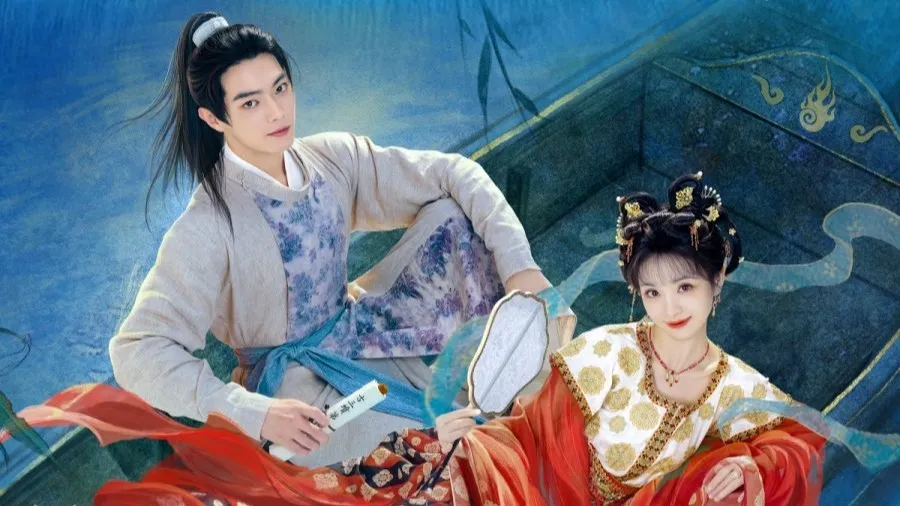
Moonlit Reunion Poster - Courtesy of Tencent Video

|
DetailsRATING: (7/10)
NATIVE TITLE: 子夜归 – Zǐyè guī YEAR: 2025 EPISODES: 38 DURATION: 45’ DIRECTOR: Lv Hao Ji Ji SCREENWRITER: Liu Yue, Sun Lin ORIGINAL CREATOR: Fu Hua (梅夫人宠夫日常 – Mrs. Mei’s daily life pampering her husband) RESPECTED CLICHÉS: 1 – 2 – 3 – 4 – 5 – 6 – 7 – 8 – 9 – 11 – 12 – 13 – 15 |


IN A NUTSHELL
- What to expect: Moonlit Reunion is a fantasy drama that blends the classical aesthetics of the Tang period with supernatural elements typical of the xianxia genre and combines a mix of realistic and dreamlike atmospheres with a plot that ranges between the themes of the struggle between good and evil, love thwarted by fate and the internal conflict between duty and personal desire.
- Strengths: the friendships between the main characters, the secondary love stories, the spectacular aesthetics.
- Weaknesses: the slow narrative pace, the monotony of the demon-catching subplots, the accentuated melodrama of the main love story.
- Recommended if you like: Xu Kai and Tian Xi Wei, xianxia with two strong and dominant protagonists, painful love stories, series with valid and funny secondary characters.
- Would I rewatch it? Probably, but only if I had nothing else to watch.
Read on to find out the final twist.
With its mysterious atmosphere, Moonlit Reunion transports us to Tang-era Chang'an, in a world suspended between reality and legend, where the boundary between the human and the supernatural dissolves under the silvery moonlight. At the heart of the story is a love that defies roles and conventions, but also secrets, rivalries, and twists that make this drama magical and captivating.
In this review of the drama Moonlit Reunion, after watching all episodes, I will explore the plot, the fantasy elements, the chemistry between the protagonists, and all the dynamics that make Moonlit Reunion such a highly anticipated, yet controversial, title.
Plot
According to legend, there's a mysterious place in Chang'an known as the Demon Market, where magical creatures dwell. It is ruled by the Cat Lord and the Snake Lord, and except for them and their deputies, no demon is allowed to venture into the mortal world, lest they run afoul of the Celestial Masters of Changxi Palace, their sworn enemies.
In the past, these Masters led the Xuanjian Division, the imperial bureau responsible for solving supernatural cases. However, they became so entangled in their rivalry with the demons that they eventually retreated into isolation in the mountains of Qu County.
Since then, the Demon Market has been responsible for ensuring the peaceful coexistence of spirits and mortals, and the Xuanjian Division has played no real role until the arrival of Mei Zhu Yu.
He is a forgotten member of the prestigious Mei family and a Celestial Master who has returned to Chang'an to investigate the death of his parents, which occurred eighteen years earlier in an occult fire that destroyed much of the city.
Upon arrival, Mei Zhu Yu meets Wu Zhen, the eccentric daughter of the Duke of Henan and younger sister of the Empress, who, on New Year's Eve eighteen years earlier, secretly assumed the office of Cat Lord.
Amid strange events, demonic possessions, and shadowy characters, the relationship between Wu Zhen and Mei Zhu Yu grows ever closer until, despite the doubts of their friends and his moral dilemmas, the two decide to marry.
Their true identities, however, soon come to light, causing tension, but never as much as the discovery that sealed within Wu Zhen's mortal body is the spiritual core of Xie Sha Gui Ying, the powerful demonic entity responsible for the devastating fire in Chang'an eighteen years earlier.
To save his wife, Mei Zhu Yu decides, risking his life, to travel back in time to the night the Cat Lord transferred his powers to her. However, to definitively resolve the matter, he will have to deal with the inevitable return of Xie Sha Gui Ying.

Moonlit Reunion Drama Review (No Spoilers)
Plot and Narrative Pace
Moonlit Reunion was adapted from the novel 梅夫人宠夫日常 (Mrs. Mei’s Daily Life Pampering Her Husband), a beloved title online with a solid community of devoted readers. This immediately sparked intense curiosity about the drama and growing hype, fueled by the casting of Xu Kai as the male lead (a decision that, in hindsight, proved counterproductive in light of the scandal involving the actor, which ultimately halted much of the series' promotional activity).
Unfortunately, all these expectations were largely disappointed, largely due to flaws in the script. Despite an original and potentially rich starting point, the story drags wearily throughout its 38 episodes, offering few truly impactful moments and numerous weaknesses.
The first 15 episodes, for example, are almost devoid of significant developments: the ML investigates without real conviction—and with rather poor results—the great fire that occurred in Chang'an eighteen years earlier, in which his parents died, while the FL is busy preventing the Demon Market from being discovered by mortals, while simultaneously defending itself from the constant attacks of its numerous enemies.
Potentially central elements such as the enmity between Changxi Palace and the Demon Market are almost completely sidelined, making way for the exhausting love affairs that end up taking up most of the running time. The narrative lingers, at times exasperatingly, on the emotional torments of the protagonists and supporting characters, as well as on the obsessive demon hunt waged by Mei Si Lang and Shuang Jiang.
The few sequences that truly manage to liven up the pace are the lighter ones: poor Si Lang constantly bullied by Liu Tai Zhen, Shuang Jiang outwitted by the cunning Hu Zhu, or the constant bickering between Mei Si Lang and Xuan Hui, which introduce at least a modicum of variety and dynamism.
The subplots related to the capture of demons are further burdensome: they are reiterated with almost identical patterns to the point of giving the impression that some episodes are little more than self-contained episodes. These segments also introduce an excessive number of secondary characters, often completely irrelevant, who contribute nothing to the main plot and disappear without a trace.
As if that weren't enough, the narrative makes excessive use of flashbacks, replaying the same key scenes over and over again in an attempt to amplify their emotional impact. The result, however, is the opposite: instead of heightening the immersion, these repetitions end up further slowing the pace, giving the feeling that they're inserted more to lengthen the episodes than out of any real narrative necessity.

Cast
Overall, the performances of the cast remain at a good level, with results that especially reward the supporting characters, often more impactful than the protagonists.
Tian Xi Wei, while undoubtedly a delightful figure on screen, is unconvincing as the demon leader: her features, so sweet and delicate, struggle to convey the severity and arrogance required of a haughty princess and an imperturbable demon. Her commitment is evident, but her idea of evil translates at best into a disgruntled childish pout, making it all too clear that this role truly doesn't belong to her.
As already mentioned — and those who have read my review of Arsenal Military Academy will know — I'm not a big fan of Xu Kai, and even in this case his performance fails to change my mind. His Mei Zhu Yu appears consistently distant, almost absent: for long stretches, his performance slips into anonymous flatness, only to abruptly veer into excessive melodrama whenever Wu Zhen and his love for her come into play, creating an imbalance that ultimately penalizes the character.
I was equally unimpressed by Tan Ching Yao's performance, from whom I expected a little more flair in a supposedly more central role. Instead, his acting remains surprisingly bland, in line with what we saw in Les Belles, failing to leave a significant impression.
Wang Jia Yi stands out most strongly, giving a solid and convincing performance as the resolute and inscrutable Liu Tai Zhen, lending the character a credibility that seems lacking elsewhere. Likewise, Yi Da Qian brings his usual cheerful and light-hearted energy to the screen, captivating from his very first appearances — a quality I appreciated the first time I saw him in the drama The Long Ballad.
A special mention goes to Zhou Zhan, whose acting skills are far from negligible, and who will always remain inextricably linked in my heart to his character Jun Jiu Ling.
Visual Aspects and Soundtrack
The drama's visuals are absolutely excellent. The excellent Fang Si Zhe's attention to detail in the costumes is notable, blending traditional lines and fabrics with more ethereal patterns and details, reflecting the distinctive traits of the various characters. The cinematography is remarkable, playing heavily on cool tones, twilight lighting, and sets reminiscent of both classic Chinese paintings and international fantasy productions. The prosthetic makeup that brings the numerous characters populating the Demon Market to life is admirable, and the CGI is appreciable, despite its ups and downs. Finally, I must admit that, despite the inconsistent quality of the CGI, I really enjoyed the battle scenes between Wu Zhen and the other demons.
The soundtrack appears aligned with the themes of the romantic drama and a little melancholic with the only exceptions of the songs 逆刃 (Against the Blade) performed by Zhang Yun Jing which sounds vaguely epic and 入梦 (Entering a Dream) performed by Chen Tian which is ethereal and dreamlike.

WARNING!
FROM THIS POINT ON THE SPOILER SECTION BEGINS. DO NOT CONTINUE IF YOU DO NOT WANT TO KNOW ALL THE DETAILS OF THE DRAMA.
Moonlit Reunion Drama Review (Spoilers)
What Works
Friendship Relationships between Characters
Among the aspects that work best within the series are undoubtedly the friendship dynamics, constructed with a care and sensitivity that the writers seem to have overlooked for the relationship between the protagonists.
Perhaps the most successful is the unexpected understanding between Mei Si Lang and Xuan Hui. While it's not particularly surprising that the cheerful Mei Si Lang is able to accept the true nature of the little snake he rescued from Qiu Pond, what's truly striking is the reverse: seeing a proud and deeply distrustful demon like Xuan Hui develop such a sincere attachment to a mere mortal. A bond that goes far beyond simple gratitude and that leads him not only to support Mei Si Lang in her attempt to realize his dream of love, but even to sacrifice his own life for him.
No less interesting is the relationship between the Cat Lord and the Snake Lord. Initially presented as rivals, the two reveal a solid and credible bond, which translates into a balanced management of the Demon Market: they manage to contain internal tensions and prevent demons from causing problems in the mortal world, demonstrating a shared leadership as effective as it is rare. Added to this is a more intimate dimension, made up of mutual support in everyday life, sincere concern, and a complicity that further enriches their relationship.
Completing the picture, the clear and intentional contrast between negative male figures, such as Pei Ji Ya and Wu Zi Shu, and positive figures, embodied by Mei Zhu Yu and Mei Si Lang, is also particularly interesting. This contrast, despite its simple construction, helps give a modicum of depth to a plot otherwise overly focused on romantic interactions.
Secondary Love Stories
It's precisely on the romantic level that one of the series' most striking paradoxes emerges clearly: the secondary love stories are decidedly more engaging than the main one, to the point of becoming one of the few real reasons to continue watching.
This occurs with the naive and lighthearted relationship between Hu Zhu and Shuang Jiang, the more tormented and problematic one between Mei Si Lang and Liu Tai Zhen, but above all with the tender story between Princess Yuan Zhen and Hua'er, the Spirit of the White Camellia — in my opinion, the most touching, despite being the most neglected in the script.
It's precisely this dynamic that's most striking: while the main romantic plot struggles to make an impact, the story of the shy princess who, lost in the woods, receives the unexpected help of the shy Spirit of the White Camellia manages to strike a much deeper chord. Even the gesture of having the tree transplanted into the palace garden, so she could always have it by her side during her long, solitary days in the inner courtyards, embodies a delicacy missing from the relationship between Wu Zhen and Mei Zhu Yu.
That ethereal entity soon becomes her only companion and confidant, until it transforms — thanks to the strength of her love — into a young man, a charming prince born from a pure and silent bond.
Just when this fragile balance seems to find its form, the attack of the ink demons summoned by Pei Ji Ya's dark magic brutally shatters that dream, leaving the princess alone, heartbroken, and trapped in her memories. It's a moment that strikes with an emotional force rarely matched by dramas elsewhere.
It's no coincidence that** Hua'er's death remains, in my opinion, the most heartbreaking scene of the entire series** — the one that leaves the greatest mark. (And one almost wonders if it isn't Quan Yi Lun's destiny to play roles with such tragic endings, given that his character's death in An Ancient Love Song was equally heartbreaking!)

What Doesn't Work
The Demon Hunt
At first glance, Moonlit Reunion seems to fit perfectly into the recent trend of paranormal investigation dramas, yet despite its solid premise and potentially rich narrative, the screenplay consistently struggles to capitalize on its potential.
A clear example is the subplots related to supernatural cases which, although starting from interesting ideas, suffer from a weak construction: the resolutions often seem excessively rapid and simplistic, depriving the episodes of any real investigative tension. With the exception of Shan Po Suo's case (episodes 5 and 6), which manages to integrate more effectively into the narrative, most of the cases remain disconnected from the main plot, serving more as filler than as a structural element. This gives the impression that these storylines exist primarily to lengthen the narrative and showcase supernatural powers, as well as reaffirm Wu Zhen's role as the Cat Lord of the Demon Market, without significantly contributing to the overall development of the story.
In addition to this, there is a superficial handling of the rivalry between Changxi Palace and the Demon Market: introduced as one of the central conflicts, it ends up being compressed into just four episodes (26 to 29), effectively marginalizing the rest of the narrative. For much of the running time, the focus shifts to the machinations of Chang Minge, head of Changxi Palace, whose goal is simply to obtain the powers of the Cat Lord. Likewise, the abilities of the Celestial Masters remain surprisingly understated: they emerge only sporadically, and almost exclusively through Mei Zhu Yu, who uses them sparingly and always in a discreet manner to assist Wu Zhen in capturing the demons. Even the Celestial Masters' professed deep hatred for demons dissipates too quickly, becoming meaningless immediately after the revelation that Chang Minge practiced dark arts to acquire demonic powers.
The Villains
This leads to one of the drama's most glaring flaws: the lack of true antagonists capable of seriously challenging the Cat Lord's authority.
Throughout the series, the FL — despite her inexperience — faces surprisingly weak threats, easily neutralized even by a half-demon like herself, who hasn't yet fully mastered the powers inherited from the deceased Cat Lord. This results in a constant lack of tension, which gradually deprives every confrontation of its weight.
Xuan Hui is a prime example of this: presented as a figure driven by a deep resentment towards the Cat Lord and the Snake Lord for their unjust imprisonment, he ends up revealing himself to be a veritable paper tiger. His plan for revenge is fragile, easily unmasked, and quickly thwarted by Liu Tai Zhen; forced into hiding alongside Mei Si Lang, he develops a bond of friendship that leads him to abandon any plans for revenge, until he is finally pardoned and pardoned.
Not even Pei Ji Ya manages to truly make an impact: although his plan initially appears more complex, it is foiled with almost disarming — and in some ways inexplicable — ease by Mei Zhu Yu and Wu Zhen, only to then die senselessly at the hands of Wu Zi Shu, leaving more questions about his narrative function than any real impact on the plot.
The unmet expectations are further compounded with Chang Ming: as a Master of the Dark Arts and the mastermind behind Pei Ji Ya's actions, one would expect a more complex storyline and worthy antagonism, but even then, he is dismissed with surprising ease during the first direct confrontation with Wu Zhen and Mei Zhu Yu, failing to truly impact the narrative.
Even Wu Zi Shu, initially introduced as an ambiguous and potentially pivotal figure — torn between his role as Wu Zhen's close friend and that of the villainous Xie Sha Gui Ying — ends up disappointing: his evolution doesn't follow the dark trajectory one might have imagined, but rather remains trapped, as Elder Hui points out, in a romantic dream tied to the FL, leading to a death as pointless as it is theatrical.
The only character who seems to come close, at least momentarily, to a worthy antagonist is Elder Hui himself. Initially the most determined to subvert the order of the Demon Market and bring Xie Sha Gui Ying back to life, as well as the most ruthless adversary of the Cat Lord and the Snake Lord, he suffers a first defeat in episode 12 that puts his significance into perspective. However, his reappearance and temporary revenge in episodes 36 and 37 had rekindled my hope for a worthy final showdown—a hope quickly dashed, however, when the FL eliminates him with a single blow in the final episode.
To round out the picture, Xie Sha Gui Ying, who should have embodied the ultimate villain, the inescapable and unbeatable one (the "final boss," to use video gamer parlance), instead remains a fleeting presence for much of the narrative, only to be dispatched too quickly in the very last episode by Wu Zhen.
Overall, rather than a progression of increasingly threatening antagonists, the series offers a sequence of adversaries progressively depleted of weight, incapable of building a real narrative escalation and, consequently, of sustaining the series' dramatic tension.

Ending
In the latest episodes, several inconsistencies emerge that are difficult to explain and seem to conflict with some of the "rules" previously established by the narrative itself.
If, as explicitly stated by the ML, the Celestial Masters' techniques cannot be used by demons and vice versa, it's difficult to understand how Wu Zhen manages to wield the Changxi Mace without difficulty — a weapon passed down from the Masters of the Changxi Palace and, theoretically, linked to their power.
Equally perplexing is the manner in which the Demon Market's leaders change appearance: if the Snake Lord had to assume the appearance of the deceased Liu Tai Zhen to change her face and avoid arousing the suspicions of those around her, why does Mei Zhu Yu's father, in her memories, appear visually different from the Cat Lord, despite the two being the same person—as Mei Zhu Yu himself recognizes?
Adding to these inconsistencies is another interesting question: who really killed the ML's mother? Considering that, after leaving the Demon Market, Xie Sha Gui Ying was engaged in a direct confrontation with the Cat Lord, while Qiang Yi Jun was wreaking havoc in Chang'an, the dynamics of the event remain unclear and lacking a convincing answer.
These cracks in the narrative's internal logic converge in an ending that, rather than surprising or challenging what we've seen up to that point, ends up confirming all the weaknesses that have already emerged along the way. The resolution, in fact, seems almost too linear: the FL and the ML manage to defeat with extreme ease an enemy that had been presented as invincible, while Mei Zhu Yu survives — no one knows how — a mortal wound inflicted to his chest by the Changxi Mace.
The result is a conclusion perfectly consistent with the overall thrust of the series, but precisely for this reason, unsatisfying: a story that, from start to finish, never truly challenges the omnipotence and apparent immortality of its protagonists, depriving the clashes of any real tension and the finale of any convincing emotional impact.
The only positive note remains the happy ending and the revelation that the protagonists will soon become parents — a reassuring epilogue that concludes the story on a lighter note, but it's hardly enough to compensate for the critical issues that have emerged.

Characters and Cast
Primary Characters
Wu Zhen/Cat Lord/Xiao Mao (Tian Xi Wei) Princess of Qinghe County, second daughter of the Duke of Henan, younger sister of the Empress, and Cat Lord of the Demon Market. When she was still a child, one New Year’s Eve, she accidentally met Mei Zhu Yu and exchanged lanterns with his. After the great fire broke out, she arrived at the temple of the goddess Guanyin, where the battle between Xie Sha Gui Ying and the Cat Lord was raging. She became embroiled in the battle, receiving the latter’s powers and the core of the demonic spiritual entity.
Mei Zhu Yu (Xu Kai) Tenth Celestial Master of Changxi Palace, Superintendent of the Xuanjian Division, and a descendant of the Mei Family. After his parents’ death, he was banished from Chang’an and sent to Qu County, where he lived in poverty for a time. He later met Master Si Qing, who took him in and trained him in the Celestial Masters’ fighting techniques, making him one of Changxi Palace’s most brilliant students. His search for the truth, however, led him back to Chang’an, where he returned to search for clues about the great fire that nearly destroyed the city eighteen years earlier and claimed the lives of his parents.
Mei Si Lang/Xiao Si (Yi Da Qian) Fourth Young Lord of the Mei Family cousin of Mei Zhu Yu and friend of Wu Zhen. He has always been in love with Liu Tai Zhen, to whom he has been engaged since childhood, but is unaware that she has actually been replaced by the Snake Lord.
Liu Tai Zhen/Snake Lord (Wang Jia Yi) daughter of Minister Liu Gong Shen and Snake Lord of the Demon Market. She is forthright and resolute, but is always willing to help Wu Zhen both in the Demon Market and in the mortal world. She is engaged to Mei Si Lang but does not want to marry him, so she tries every way to push him away. In reality, she can’t trust men after being betrayed by Duan, her ex-boyfriend, who, after discovering her demonic nature, tried to kill her and revealed her secret to everyone. Once a year, she is forced to take refuge on Mount Luwei, away from prying eyes, to shed her skin. This is how Mei Si Lang discovers her true identity, but she will accept her anyway.
Wu Zi Shu/A’Shu/Qiang Yi Jun (Wu Jun Ting), an ancient military code transformed into a demon, a childhood friend and deputy to the Cat Lord. He runs a bookstore in Chang’an and is the custodian of the Demon Market library. In reality, he is Qiang Yi Jun, Xie Sha Gui Ying’s right-hand man, who helped sow panic in Chang’an during the New Year’s Eve in the seventh year of the Ren’an era, but has since lost his memory.
Supporting Characters
Demon Market
Hu Zhu (Fan Shi Ran) fox demon and deputy to the Cat Lord. She is the manager of Ruyi Pavilion, an entertainment venue in Chang’an that Wu Zhen uses as a cover for his activities at the Demon Market. With Mei Zhu Yu’s arrival in the city, she finds herself dealing with Shuang Jiang and, despite initial distrust, grows very fond of him.
Ling Xiao (Lai Wei Ming) flower demon and deputy to the Snake Lord. He is the owner of the Yuzhen Pavilion fragrance shop, which Liu Tai Zhen uses as a cover for his activities at the Demon Market.
Zhu Ying (Chen Tong) deputy to the Snake Lord.
Xuan Hui (Zhou Zhan) is an Obsidian Snake demon and junior to the Snake Lord. He descends from the ancient Ying Long lineage and, after reaching a suitable level of cultivation, is destined to become a winged dragon. He was imprisoned for years in the Demon Prison for killing demons shortly after assuming human form, but it turns out he did so to protect himself from their harassment, and so he is pardoned. He becomes close friends with Mei Si Lang, who took him in after a clash with the Snake Lord.
Elder Jin (Jiang Zhong Wei) elder who heads the Jin Sect, one of the Four Sects of the Demon Market.
Elder Zi (Ji Ling Chen) elder who heads the Zi Sect, one of the Four Sects of the Demon Market.
Elder Bai (Mo Xiao Qi) elder who heads the Bai Sect, one of the Four Sects of the Demon Market.
Elder Hui (Chang Shih) elder who heads the Hui Sect, one of the Four Sects of the Demon Market. He is a thousand-year-old mouse demon who never accepted Wu Zhen’s appointment as the new Cat Lord.
Qi Shi (Li You Chuan) rat demon belonging to the Hui Sect and Elder Hui’s assistant. He is killed by Wu Zi Shu, and his demonic spirit is used as an ingredient in the elixir to transform Wu Zhen into a full demon.
Xie Sha Gui Ying/Ying da ren (voiced by Tu Te Ha Meng) demonic spiritual entity who established the Demon Market to protect immortal creatures from the expansion of human activity. When the Cat Lord and the Snake Lord took control of the Demon Market and decided to no longer allow demons to escape, he attempted to rebel, but the Cat Lord stopped him by sacrificing his life and imprisoning his core in Wu Zhen’s body.
Fu Zhao (Dong Si Cheng) male demon born from a bat-shaped earring, has developed a conscience over time. He ventures alone into Chang’an in search of entertainment, driving his companion mad with despair. Eventually, Wu Zhen takes him to the Demon Market.
Fu Xi (Huang Ri Ying) female demon born from a bat-shaped earring, developed a conscience over time. After losing her partner, she ventured alone to Chang’an in search of entertainment, searching for him, wreaking havoc in the city. Eventually, she was taken by Wu Zhen to the Demon Market.
Yun Yi (Fan Jing Yi) shadow demon born from a centuries-old lantern. She was a courtesan in a brothel in Chang’an and, to lighten her sad days, loved to write poetry. After falling in love with Xie Lou Bai, she gave him her writings, asking him to publish them, but he took possession of them and then killed her. The lantern containing her spirit then fell into the hands of Liu Tai Zhen, who, with the help of Wu Zhen and Mei Zhu Yi, allowed her to exact revenge.
Shan Po Suo (Liu Meng Meng) vine demon who sucks the life essence out of people, turning them into empty shells. Elder Hui wants to use her to kill Wu Zhen, but she is protected by Mei Zhu Yu, who is poisoned by the demon’s mist. Mei Zhu Yu ultimately eliminates her.
Cushion Demon (Sun Si Cheng) young demon who inhabits an abandoned shrine. Wu Zhen uses him to test Shuang Jiang’s magical abilities and then offers him hospitality at the Demon Market.
Hua’er/White Camellia Spirit (Quan Yi Lun) spirit born from the white camellia tree that grows in the Imperial Palace garden. Yuan Zhen is particularly fond of him because he saved her when she was lost in the woods years before, and he is her refuge in the solitude of the palace. He will die to save the Princess from one of the demons created by Pei Ji Ya’s cursed ink. Wu Zhen will place his spirit in a pin that he will give to his niece so that he can always be with his beloved.
An Bi Luo (Jiao Gang) Chang’an’s most famous incense maker and head of the jury at the Incense Competition, is possessed by the spirit of a goose that seeks revenge for his cruelty to animals and forces him to submit a fragrance to the Incense Competition that will disqualify him in the eyes of all. Wu Zhen tries to exorcise it with the help of Ling Xiao, but something goes wrong and the girl is saved only by Mei Zhu Yi.
Dream Demon (Ma Zhao Zhuang) fish demon who causes havoc at Mei Zhu Yu and Wu Zhen’s wedding and nearly kills the bride. Eventually, he is taken by Wu Zhen to the Demon Market.
Spirit of the Immortal Herb Zhu Yu/Medical Gu (He Luo Luo) spirit born from the Immortal Herb Zhu Yu cultivated by the Cat Lord. Wu Zhen and Mei Zhu Yu encounter him on their journey to find the miraculous herb and convince him to stop harming mortals.
Changxi Palace
Si Qing (Qiu Xin Zhi) Celestial Master, deceased head of the Changxi Palace and shifu of Mei Zhu Yu.
Chang Ming (Li Jun Xian) Celestial Master, head of Changxie Palace from Mei Zhu Yu’s shixion. He is actually the master of dark arts who taught Pei Ji Ya the Occult Mastery Technique. Use the Art of Transformation, a forbidden art practiced by occult cultivators.
Xiao Mu (Zhao Qing He) Celestial Master of Changxi Palace and er shixion of Mei Zhu Yu.
Chi Hua (Cheng Yu Feng) Celestial Master of Changxi Palace and san shixion of Mei Zhu Yu.
Lu Yang (Yang Rui Zheng) Celestial Master of Changxi Palace and wu shixion of Mei Zhu Yu.
Yuan Ji (Zhang Ce) Celestial Master of Changxi Palace and qi shixion of Mei Zhu Yu.
Shuang Jiang (Dan Jing Yao) Celestial Master of Changxi Palace and shidi of Mei Zhu Yu.
Mortal World
Wu Chun Dao (Yin Zhu Sheng) Duke of Henan, father of Wu Zhen and the Empress. He is idle and absent-minded, but very fond of his daughters. Having been an outside disciple of the Chanxi Palace, he is obsessed with the magical objects he purchases during his frequent travels, often being defrauded.
Ming Zhuang (Kuang Yu Ting) maid of the Wu Residence who takes care of Wu Zhen’s needs.
Empress (Huang Yi) daughter of Wu Chun Dao and older sister of Wu Zhen. Since her mother’s death, she has acted as a mother to Wu Zhen, and is therefore very fond of her. She often scolds her sister for her excessively eccentric behavior, fearing it might scare off potential suitors, and urges her to find a husband every time they meet at the palace.
Consort Mei (Hai Ling) Concubine of the Emperor, member of the Mei family and distant cousin of Mei Zhu Yu. Despite their opposing roles within the harem, she and the Empress are very close friends, and in disputes with the Emperor, she always takes the queen’s side.
Princess Yuan Zhen (Pei jia Xin) Empress’s daughter and Wu Zhen’s niece. She is very fond of her aunt, and in the solitude of the imperial palace, her only solace is the white camellia tree she had planted in the center of her garden after a trip with her parents.
Emperor (Bao Jian Feng) Wu Chun Dao’s son-in-law and Wu Zhen’s brother-in-law. He is very gentle and diplomatic and often suffers from his wife’s rebukes. For this reason, he sides with his sister-in-law and often helps her escape her sister’s rebukes.
Eunuch Feng (Fu Chen Yang) the Empress’s attendant.
Pei Ji Ya (Zhu Zheng Ting) First Young Lord of the Pei Mansion and Wu Zhen’s cousin. Due to a congenital illness, he was forced to move to Kun with his family, but his heart remained in Chang’an with his beloved cousin. After learning the Occult Domination Technique from a master of the dark arts and recovering from his illness, he returns to Chang’an to ask for Wu Zhen’s hand, but finds her already in love with Mei Zhu Yu. He therefore tries everything he can to kill his rival to gain his cousin’s favor, but she discovers his plans and strips him of his powers. He is ultimately killed by Wu Zi Shu.
Xiao Wu (Chen Yi Nuo) and Xiao Zhen (Wang Hao Yue) Pei Ji Ya’s personal maids.
Huang Yi (Li Pei En) Commander of the Left Jingwu Guard and a friend of Wu Zhen.
Xu Luan (Zhang Jing Wei) Chief of the Xuanjian Division and Mei Zhu Yu’s superior. After Mei Zhu Yu solves the Shan Po Suo case, he is relieved of his duties and sent back to his hometown of Yong as Prefect.
Nie Li Shi (Erfan Aziz) coroner for the Xuanjian Division and Mei Zhu Yu’s colleague.
Wen Hua (Yang Yi Kai) servant of Mei Zhu Yu.
Yu Xuan Qing (Zhang Zhi Xi) Mei Zhu Yu’s late mother. At 16, she fell in love with Mei Yu Heng after he saved her from drowning, but her family did not approve of their relationship. The two then decided to run away together and opened a small tea shop in Chang’an, but on the night of the devastating fire, Mei Zhu Yu found her dead of mysterious causes.
Mei Yu Heng (Tan Jian Chang | Xu Hai Qiao) Mei Zhu Yu’s late father. He was a humble merchant who, after marrying his wife, opened a teahouse in a narrow alley in Chang’an to support her and their son. In reality, he was the previous Cat Lord, the one who bestowed his powers on Wu Zhen on New Year’s Eve when the supernatural fire broke out.
Liu Gong Shen (Lu Xing) Minister of Personnel and Liu Tai Zhen’s father. When his daughter was still a child, she fell from a cliff, but was found unharmed a few days later and everything seemed fine. In reality, it was the Snake Lord who assumed his late daughter’s appearance, seeking a new identity.
Xie Lou Bai (Xie Xing Yang) fifth Young Lord of the Xie family and the finest scholar in Chang’an. His father is an official in the Ministry of Personnel, and he aspires to marry Wu Zhen, but she finds him annoying.
Xie Yao (Kong Xue Er) Young Lady of the Xie family. She falls in love with Mei Zhu Yu at first sight, but abandons him after Wu Zhen saves her from the fire set by Xuan Hui during the Lantern Festival.

Favorite Character: Mei Si Lang
He is a naive, gentle, and kind-hearted young man, capable of looking beyond appearances without being influenced by prejudice.
His open and friendly nature leads him to welcome everyone with sincere kindness, avoiding conflict whenever possible, but never holding back when it comes to protecting the people he cares about.
His love for Liu Tai Zhen is constant, patient, and respectful: he stays by her side without ever overstepping his bounds, willing to wait for her, and enduring even the most difficult moments of their relationship with extraordinary calm.
Not even when the Dream Demon pushes him to publicly declare his love to Liu Tai Zhen, ridiculing him in front of everyone, does he renounce his values, choosing to defend the freedom of the woman he loves and refusing to force her into marriage, even at the cost of challenging his father's authority.
His openness emerges even more forcefully when he discovers Liu Tai Zhen's true nature: far from being frightened or disgusted, he welcomes her with disarming care, caring for her during her moult and showing her an affection that goes beyond all appearances.
The same spirit guides his relationship with Xuan Hui, whom he rescues and cares for without hesitation, offering him aid despite his demonic identity, and even attempting to mediate between him and Liu Tai Zhen, in a desperate attempt to avoid a conflict.
Capable of forgiving, understanding, and standing by others even in the most difficult moments, he embodies a rare form of humanity: one that is not corrupted by suspicion or fear, but continues to choose kindness.
Even in the face of loss — as demonstrated by his sincere grief over Xuan Hui's death and his thoughtful gesture of wanting to arrange for his burial — he does not lose his optimism, even becoming exhilarated by the news of the appearance of a new small Obsidian Serpent demon in the Demon Market.
Un-Favorite Character: Pei Ji Ya
He is a figure marked by a difficult past, which, however, does not justify the questionable choices he makes throughout the narrative.
The illness that marked his childhood could have made him more empathetic; instead, it pushes him to take a morally reprehensible path, resorting to black magic to regain his health, without any regard for the consequences of his actions.
His obsession with his cousin further reveals the more selfish aspects of his character: determined to win her hand at all costs, he completely ignores her wishes, reducing the emotional bond formed during childhood to a pretext for imposing his own desires. This attitude is also reflected in his concept of love: he neither cares about Wu Zhen's thoughts nor respects her opinions, convinced that a beneficial union is sufficient to guarantee her happiness.
The character's moral decline reaches its nadir in his attempt to kill Mei Zhu Yu, guilty only of receiving Wu Zhen's attentions. It's an act that highlights not only his jealousy, but also his complete inability to distinguish between dreams and rights.
Blinded by his own desires, he acts without scruples, slavishly carrying out his evil master's orders and becoming complicit in atrocious actions, without ever truly questioning their significance.
His journey ends with a punishment that, however deserved, leaves a sense of ineffectiveness: the one who inflicted it on him is an equally corrupt character, rendering any possibility of redemption or true awareness vain. More than a moral parable, his remains the portrait of a man incapable of evolution, trapped in his own obsessions and the consequences of his own choices.
RECOMMENDED:
- TILL THE END OF THE MOON
- MY SASSY PRINCESS
- LOVE BETWEEN FAIRY AND DEVIL
- BACK FROM THE BRINK
- TILL THE END OD THE MOON
- WHEN DESTINY BRINGS THE DEMON
Thanks for reading this far!
I hope you enjoyed my article. If you like my work and want to support me, buy me a coffee ☕