
When Stars End Up Under Fire: 5 Cases of Chinese Actors Involved in Scandals That Have Inflamed Social Media
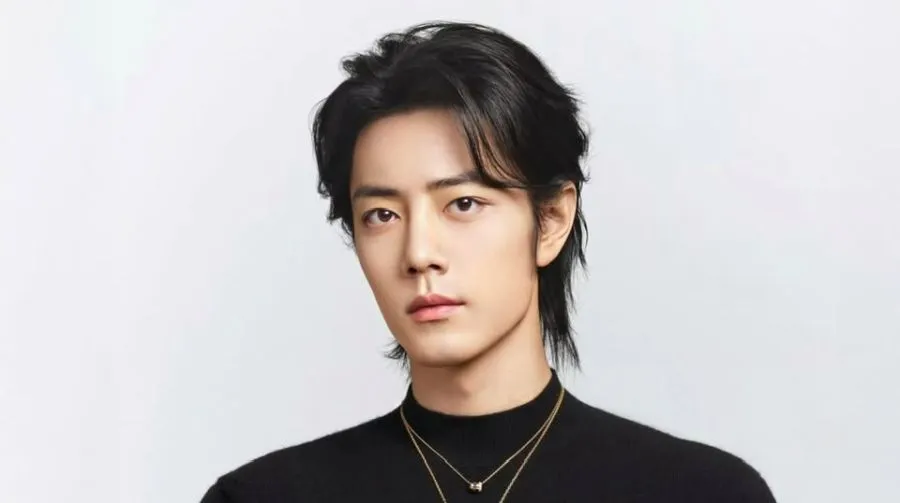
Xiao Zhan - Courtesy of viki.com
IN A NUTSHELL
- Contents: in this first part of my in-depth look at the protagonists of c-dramaland, I will retrace five emblematic cases of Chinese actors involved in scandals that have contributed to profoundly shaping the public's perception of controversial star behavior.
- Cases Listed:
- Fan Bing Bing — large-scale tax evasion
- Xiao Zhan — accusations of cancel culture and an aggressive fanbase
- Zheng Shuang — use of surrogate motherhood and child abandonment
- Kris Wu — multiple sexual assault
- Zhang Zhe Han — unpatriotic behavior
- Conclusion: in the digital era, the management of scandals in Chinese showbiz has become increasingly complex, with celebrities increasingly exposed to the consequences of their controversial behavior and increasingly harshly penalized.
To find out the details of the scandals and their consequences, keep reading.
Introduction
After analyzing the functioning of the C-drama market and the crucial role of the Chinese audience in determining the success or failure of a series, this week we'll focus on the importance of actors' moral conduct and the consequences their personal or media "slips" can have on television productions.
In recent years, the Chinese entertainment industry has witnessed several reputational storms involving celebrities of varying degrees of notoriety: personal accusations, behavior deemed "unacceptable," smear campaigns, and court cases.
Not all slips, however, have had the same impact: some have marked the end (or near-end) of a career, others have proved to be merely temporary setbacks, and still others have turned out to be baseless gossip or even deliberate attempts to discredit the celebrity involved.
In this first part, we retrace five emblematic cases — from Fan Bing Bing to Zhang Zhe Han — of Chinese actors involved in scandals that have helped define the industry's unwritten rules: what is tolerable, what is not, and how quickly an entire career can unravel.
These episodes highlight the emergence of a new moral and behavioral model linked to the digital ecosystem, in which public perception has progressively redefined the media image of stars and the very way scandals are addressed.
Fan Bing Bing
From a Tax Evasion Conviction to a Difficult Return to the Scene

Although dating back to 2018, the Fan Bing Bing (范冰冰) case remains a must-see reference when discussing scandals in the Chinese entertainment industry. That year, the actress — who appeared in international franchises such as X-Men and Iron Man — was at the center of a vast tax investigation launched by Chinese authorities following reports of numerous actors using so-called “yin-yang” contracts, or split contracts — dual agreements in which one stipulates the actual financial terms, while the other, reporting reduced compensation, is submitted to the tax authorities.
Her sudden disappearance from the public eye, coinciding with the opening of the investigation, fueled fan concern for weeks. By the time she resurfaced, the star was already facing serious accusations: inspectors had discovered that, during the filming of the movie Air Strike, she had evaded approximately 7.3 million yuan. Furthermore, she and the companies she legally represented had accumulated 248 million yuan in tax arrears, of which 134 million had been evaded.1
A few hours after the announcement of her sentence to pay 883.9 million yuan — about $179 million — in taxes and fines, Fan Bing Bing broke her silence by posting a long letter to her followers on Weibo, in which she confessed “shame” and “deep sorrow” over her behavior, assuring that she had given it much thought during her disappearance. Her reappearance dominated Chinese media for days and sparked heated discussions on social media.2
Although CCTV emphasized that the artist had not committed any crime, but merely had to pay a fine, public opinion was harsh. Many deemed her apology insufficient, arguing that an ordinary person would have been jailed for a much lower amount. Others, while relieved by her return, believed she was still unfit to continue her career without consequences.3
The result was an almost immediate fall from grace: Fan Bing Bing was effectively excluded from the Chinese mainstream for years.
Since 2022, the actress has attempted a slow return to the international scene, participating in festivals such as Cannes and Berlin and collaborating with European productions. However, the domestic market has remained almost completely closed to her: major national projects have excluded her, and her recent activity has focused primarily abroad.
Her relaunch is now taken as an example of a “partial comeback”: a return possible only beyond China’s borders, where the same institutional and commercial barriers imposed at home on celebrities involved in tax or moral scandals do not apply.
Xiao Zhan
When Fandom is the Origin of Scandal

The so-called 227 Incident (also known as the Xiao Zhan Incident) erupted between late February and early March 2020. It was an online controversy pitting members of the fanbase of then-young star Xiao Zhan (肖战) — recently fresh from the success of the drama Legend of Zang Hai — against the community linked to the international fanfiction platform Archive of Our Own (better known as AO3).
Following the global success of The Untamed, a novel titled 下坠 (Falling) featuring Xiao Zhan and Wang Yibo was published on the platform Archive of Our Own. When the author linked some chapters of his story on Weibo, the reaction from Xiao Zhan’s fans was harsh: many accused him of feminizing the actor and creating a work with explicit pornographic content, damaging the image of their idol. For this reason, they reported the matter en masse, ultimately forcing the authorities to block Archive of Our Own in mainland China.
This sparked a back-and-forth exchange of accusations of harassment, “cancel culture,” and the unlawful exploitation of online reports between Xiao Zhan’s fandom and Archive of Our Own users, culminating in a boycott campaign by AO3 users of the actor’s works and brands.4
It was a difficult time for Xiao Zhan: his public image was damaged by the controversy, and many observers noted the reputational cost of associating with a fandom perceived as aggressive.
From the fans’ perspective, the affair sparked reflections on the limits of digital activism: it has shown how coordinated actions can sometimes harm the very idols they are intended to protect, and how organized support risks turning into a form of coercion, especially when requests for financial contributions become, in effect, a moral obligation for supporters.
The episode highlighted the significant impact that organized fan action can have on an artist’s public perception and reputation, sometimes leading to negative consequences.
Zheng Shuang
Surrogacy, Tax Evasion and Moralk Judgments

In January 2021, Zheng Shuang (郑爽) — an actress who rose to prominence in 2014 for her role in the popular drama Swords of Legends — was embroiled in a scandal with criminal implications.
After her breakup with producer Zhang Heng and the ensuing controversy, it emerged that she had resorted to surrogacy in the United States to have their two children. Upon investigating the matter, journalists discovered that the children were born less than a month apart, and since Zheng Shuang had never appeared pregnant in public, it became clear that the children had been born through “surrogacy” — a practice illegal in China.
Making the case even more serious was the revelation that, after the separation, Zheng Shuang had attempted to convince the mother of the second child to terminate the pregnancy in the seventh month and, subsequently, abandoned both children to the care of the clinic where they had been born.5
Further investigations by the authorities also revealed that between 2019 and 2020, Zheng Shuang had failed to declare personal income of 191 million yuan (approximately $26 million), thus evading taxes amounting to 45.27 million yuan.6
The media outcry was immediate: brands and sponsors terminated their contracts with the star, promotional posts for her work were deleted, and the actress’s visibility rapidly plummeted.
Following the aforementioned scandals, several of her productions were halted, and production companies did not hesitate to sue her for damages, causing her financial ruin.
Zheng Shuang suffered a drastic reduction in commercial collaborations and a significant loss of financial and positional standing in the entertainment industry, but her fans also suffered trauma. Many of her supporters faced the sudden disappearance of their idol from the media and publicity, along with an avalanche of negative comments on Weibo and other Chinese social media platforms from users who deemed the actress’s behavior “horrible,” “irresponsible,” and “immoral”.
The case demonstrates how, in the Chinese context, serious personal issues can transform into devastating professional crises.
Kris Wu
Sexual Crimes Conviction and Cancellation from the System

One of the most controversial scandals of recent years — which resulted in the protagonist being sentenced to 13 years in prison — is probably the one involving Kris Wu (吴亦凡), a well-known Chinese-Canadian singer and actor.
Born in China in 1990, Kris Wu spent his childhood between China and Canada before making his debut in entertainment in 2012 as singer of the K-pop group EXO. In 2014, he left the group to move to China, where he began a solo career, also establishing himself as an actor and the face of major international brands such as Louis Vuitton and Porsche.
In July 2021, in a post on Weibo, eighteen-year-old student Du Meizhu accused then-thirty-year-old Wu Yi Fan of induced her, then just seventeen, to have sex with him after having given her an excessive dose of alcohol.7
The girl also shared screenshots of chats forwarded to her by other victims of Wu — some of whom were minors — according to which he allegedly lured them by offering them job opportunities in the music industry, then engaging them in drinking games and encouraging them to spend the night with him.8
The artist’s production studio initially firmly denied all charges, claiming that Du Meizhu had falsified evidence to gain publicity. However, in November 2022, the Chaoyang District Court (Beijing) sentenced Wu to 11 years and 10 months for sexually abusing three women between November and December 2020 after getting them drunk, and to 1 year and 10 months for arranging meetings for group sex.
According to authorities, between 2019 and 2020, the actor also evaded 95 million yuan in taxes by concealing personal income through domestic and foreign companies associated with him.9
The consequences of the artist’s arrest were immediate: his music was removed from platforms, his appearances were canceled, and many of the productions involving him were canceled or reworked. Numerous Chinese and international luxury brands — including Louis Vuitton, Bulgari, and Porsche — terminated their commercial contracts with him, setting a precedent for the swift and harsh reaction, commensurate with the seriousness of the accusations.10
From a career perspective, the blow was fatal for the star: definitive elimination from music catalogs and the small screen, loss of engagements, and significant media isolation caused the artist to be effectively “erased” from the Chinese scene.
Fans were divided between those who denied or downplayed the incident and those who expressed dismay and grief, causing uproar on social media such as Weibo, where authorities closed 145 accounts—some of which had published posts in favor of the actor—for spreading what they called “information harmful to the maintenance of social order.”11
In the wake of the Kris Wu scandal, a #MeToo-like movement exploded on Chinese social media, fueled by the hashtag #GirlsHelpGirls, with many women denouncing the silence on the issue of sexual abuse and the tolerance of inappropriate behavior by male celebrities. Online discussions also pointed the finger at the “capitalists” of the entertainment industry, accused of covering up cases by exploiting money and power.
The authorities, instead, focused on restoring the morality of public figures. In line with the government’s goal of “building morality in society,” celebrities were required to maintain an irreproachable image, avoiding any “immoral conduct”—even acts considered minor, such as smoking or getting tattoos. Already in 2018, the National Administration of Radio and Television had ordered programs to exclude actors “lacking moral integrity,” vulgar, or involved in scandals, thus reaffirming the link between public visibility and ethical compliance.12
The episode demonstrates how a “violation of morality” is sufficient to cause the public, business partners, and authorities to react harshly toward public figures.
Zhang Zhe Han
Controversial Photos and Accusations of Anti-Patriotism

In August 2021, photos of Zhang Zhe Han (张哲瀚) — an actor who rose to fame for his leading role in the drama Word of Honor — taken three years earlier in Japan at locations deemed “sensitive”, surfaced on social media.
The locations included the controversial Yasukuni Shrine, dedicated to the Japanese soldiers who fell in battles from 1868 to 1954, including the First and Second Sino-Japanese Wars.
The actor also appeared in photos taken at a wedding at the Nogi Shrine, the shrine of Imperial Japanese Army General Maresuke Nogi. In one of the incriminating images, Zhang Zhe Han was in the company of former Indonesian first lady Dewi Sukarno, herself a controversial figure in China for defending a hotel in the land of the rising sun’s decision to present books denial of the Nanjing Massacre.13
The release of the photos sparked a wave of outrage: platforms and brands removed content associated with him, many productions removed references to his participation, and his career in China came to an almost immediate halt.14
In response to Zhang’s justifications, the People’s Daily newspaper and organizations such as the China Association of Performing Arts and the National Radio and Television Administration argued that celebrities are obligated to understand the country’s history and must share the nation’s suffering, calling for a boycott of the actor.
As a result, Zhang Zhe Han was effectively excluded from the Chinese mainstream scene: his content was removed, commercial collaborations were terminated, and fans watched with profound disappointment as their idol’s career suddenly collapsed.15
In this case, the scandal was fueled by nationalistic sensibilities and the reaction of institutions and the market to perceived “non-aligned” behavior.
The affair highlights how political and nationalistic factors can have a direct impact on a celebrity’s professional destiny.
Counclusion
The cases analyzed demonstrate how scandal management in China has become progressively more complex and how genuine precedents have been established.
In recent years, the system has undergone even more marked evolution. Recently, the influence of social networks, the rapidity of digital media, the role of fandoms, and evolving regulations have generated new and even more complex dynamics that are redefining the relationship between celebrities, the public, and the industry.
The second part will explore this new scenario, in which even an unfounded accusation can jeopardize a career and in which scandal management becomes almost more important than the scandal itself.
Sources
Thanks for reading this far!
I hope you enjoyed my article. If you like my work and want to support me, buy me a coffee☕